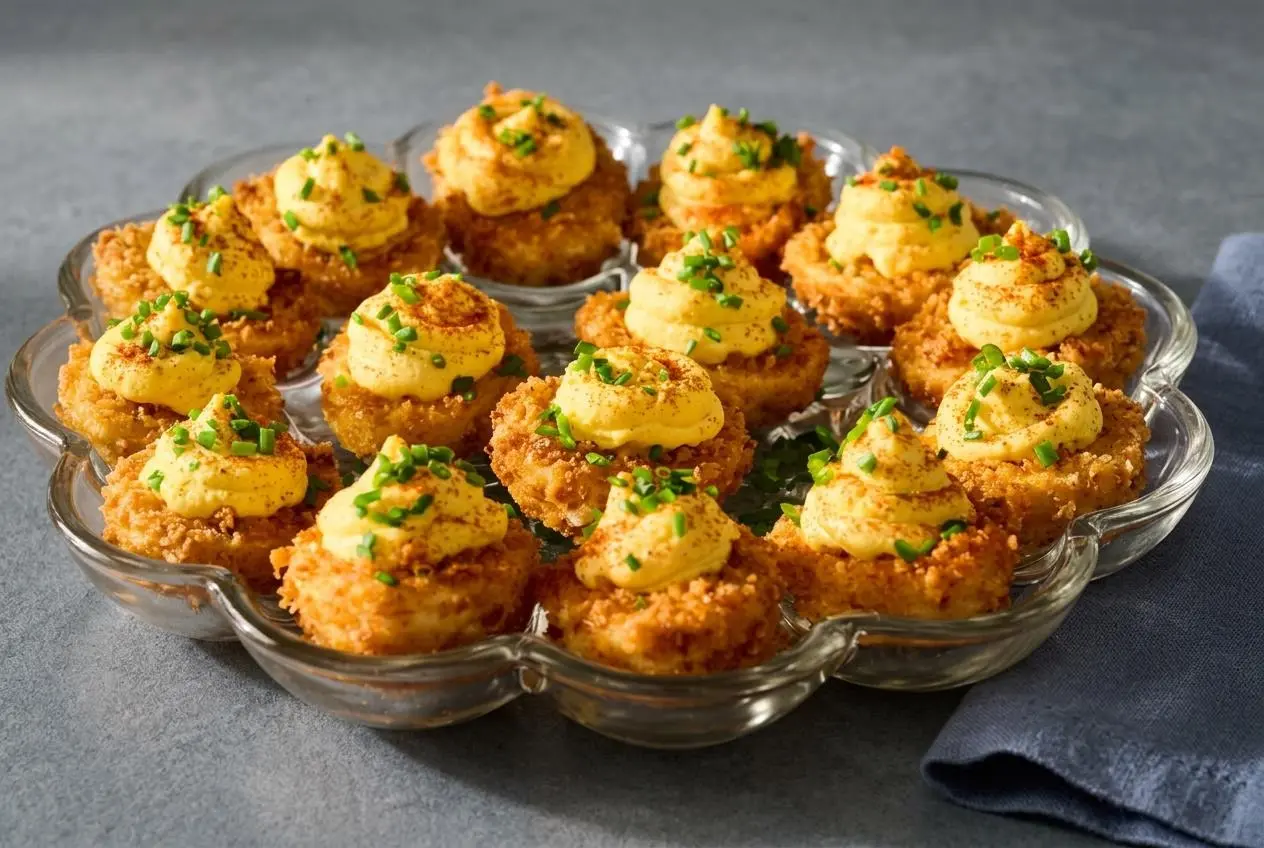
For fried deviled eggs, bread hard-boiled egg white halves in seasoned flour, beaten egg, and panko-parmesan crumbs, then fry at 350°F for 1 to 2 minutes. Let the crunchy shells cool slightly before piping in the tangy yolk filling.
These fried deviled eggs keep the familiar mustardy, creamy center and give the outside a golden crust. You fry the empty whites, not the filled eggs, so the yolk mixture stays creamy while the breading turns crisp.
They’re a welcome addition to Easter brunch, a holiday appetizer platter, or game day. The contrast works best when you fill them just before serving, after the fried whites lose their piping-hot heat. The crunch comes first.
Set a wire rack over a rimmed baking sheet before frying so every batch has a place to drain.
Key Ingredients and Why Each One Matters
Egg whites provide the structure, while yolks and mayonnaise create the creamy filling. Mustard and pickle juice add tang, flour and beaten egg anchor the coating, and panko with parmesan delivers savory crunch. Paprika and chives finish each half with color and aroma.
- 12 hard-boiled large eggs, plus 2 raw eggs
- 1/3 c. mayonnaise
- 2 tbsp. yellow mustard
- 2 tsp. dill pickle juice (from a jar of pickles) or distilled white vinegar
- 1/4 tsp. black pepper
- 3/4 tsp. kosher salt, plus more to taste
- A few dashes of hot sauce (optional)
- Vegetable oil, for frying
- 1 c. all-purpose flour
- 1 c. panko breadcrumbs
- 1/4 c. grated parmesan cheese (about 2 oz.)
- Paprika, for sprinkling
- Chopped chives, for sprinkling
Panko and parmesan: Panko’s coarse flakes create an open, craggy coating rather than a compact breadcrumb shell. Grated parmesan nestles among those flakes, adding salty flavor and toasted aroma. Use finely grated cheese so it distributes evenly instead of leaving clumps.
Mayonnaise, mustard, and pickle juice: Mayonnaise binds the mashed yolks into a pipeable filling. Yellow mustard brings sharpness and color, while pickle juice adds acidity and dill flavor. Distilled white vinegar supplies a cleaner tang if you prefer that option. Measure the liquid carefully; excess brine can loosen the filling.
Flour and raw eggs: The flour gives slippery boiled whites a dry surface for the beaten egg to grip. That egg layer then holds the panko in place. Each coating has a separate job, so skipping the flour makes the crust more likely to slide.
Frying oil and seasoning: Vegetable oil keeps the flavor neutral. Canola or refined peanut oil are optional alternatives suitable for frying. Use a thermometer rather than judging readiness by smoke. Remember that parmesan adds salt, too, so taste the filling before adding extra seasoning.
I blot both the curved surface and the hollow of each egg white with paper towels before letting it touch the flour.
How to Make Fried Deviled Eggs Step by Step
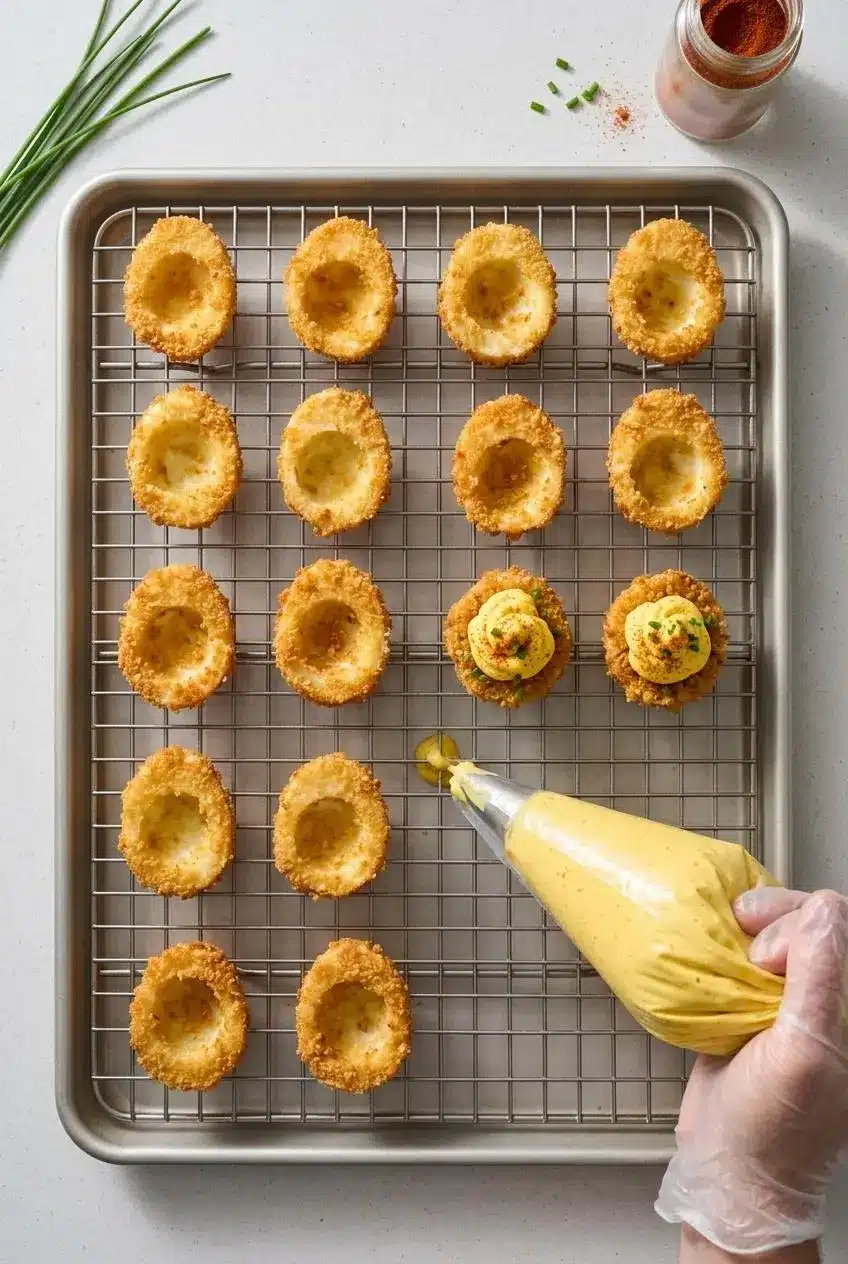
This batch makes 24 halves, serving 6 to 8. Keep the filling separate while you bread and fry the whites, and arrange the coating bowls in order to avoid missed layers.
- Peel and halve the hard-boiled eggs lengthwise, fork-mash their yolks in a medium bowl, then mix in the mayonnaise, mustard, pickle juice or vinegar, pepper, 1/4 teaspoon salt, and optional hot sauce before transferring the filling to a zip-top bag with a 1/4-inch opening cut from one bottom corner.
The mixture should look mostly smooth and hold together rather than flow like a sauce. - Bring a 1 1/2-inch depth of vegetable oil to 350°F in a large Dutch oven over medium-high heat, checking it with a deep-fry thermometer.
A steady thermometer reading signals that the oil is ready for breading to brown promptly. - Arrange three shallow bowls containing flour mixed with the remaining 1/2 teaspoon salt, the 2 raw eggs whisked together, and panko mixed with parmesan, then cover each dry white with flour, beaten egg, and crumbs in that order, letting excess egg drain and gently pressing the final coating into place.
The curved surface should have an even crumb covering, with the center hollow still open enough to hold filling. - Lower the coated whites into the oil in batches, fry for 1 to 2 minutes, then lift them onto a cooling rack, sprinkle with salt, and allow them to cool slightly.
Look for a golden crust and wait until the halves feel barely warm before filling them. - Pipe a generous mound of the yolk mixture into each fried white and finish with paprika and chopped chives.
The filling should sit neatly inside the hollow with the crunchy rim still visible.
When breading, use one hand for the dry mixtures and the other for beaten egg. This keeps your fingers from gathering thick clumps that pull crumbs away from the whites. Brush loose crumbs out of the cavities rather than packing them down.
Leave space between pieces in the Dutch oven. Crowding lowers the oil temperature and makes it harder to turn or lift the delicate halves without knocking off their crust. Let the thermometer return to the frying temperature between batches.
The rack matters after frying: air can circulate beneath the crust instead of trapping steam against its underside. Keep the halves uncovered, and don’t rush the cooling cue. Hot whites can loosen the mayonnaise-based filling.
Pro Tips and Troubleshooting for Crispy Results
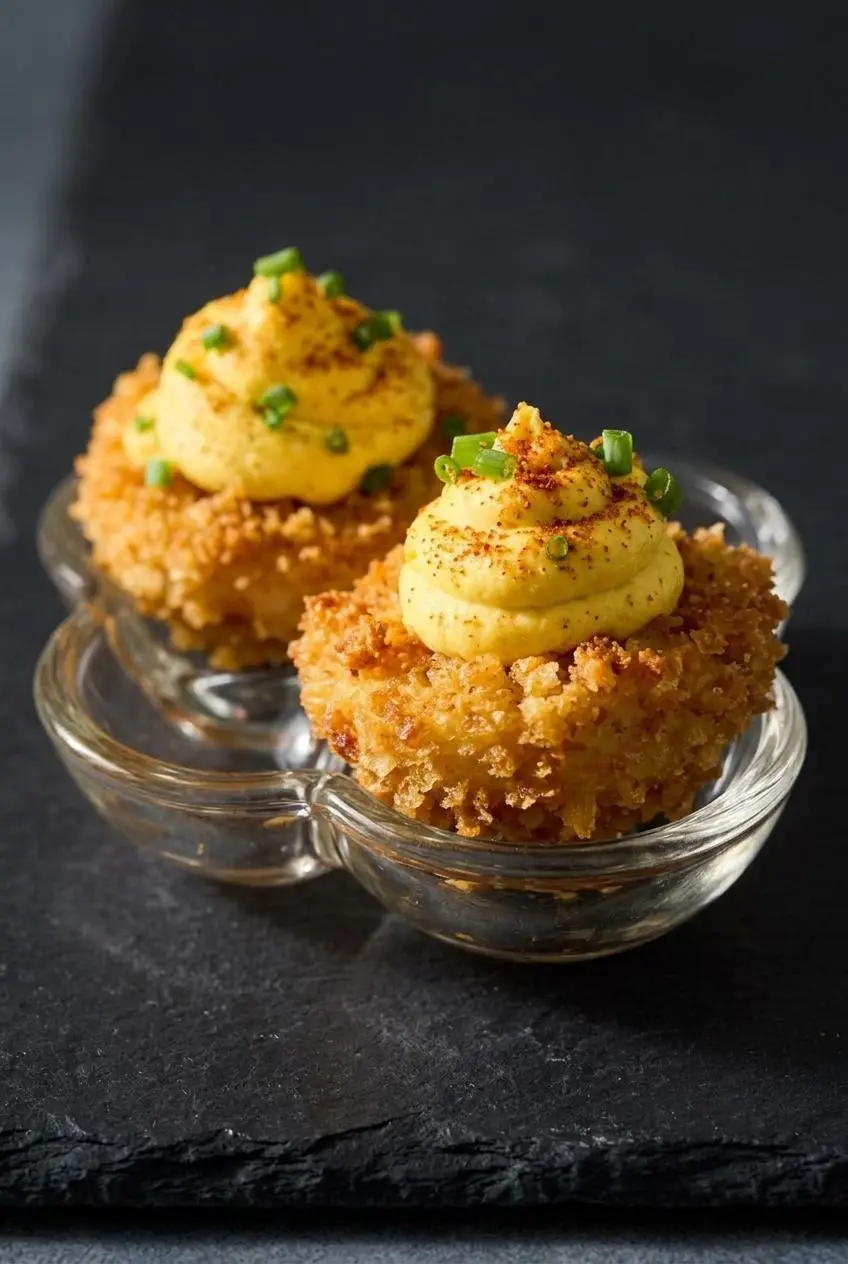
Cleanly peeled whites, a dry surface, and controlled heat make the biggest difference between a crisp shell and a coating that slips away.
Boiling and Peeling Eggs Without Tearing the Whites
If you’re starting with raw eggs, cook them until both whites and yolks are firm, then transfer them directly to an ice bath. Eggs that aren’t freshly laid often peel more easily. For a pressure-cooker option, follow this method for Instant Pot boiled eggs.
Crack the cooled shell gently all over and begin peeling at the wider end. Work under the thin membrane, lifting shell away without digging into the white. A little water can help release stubborn fragments.
After peeling, blot away the slick moisture film left by the ice bath. Dry the whites again after separating them from the yolks, especially inside the hollows. Flour should cling as a light dusting, not turn into wet paste.
The Secret to Velvety Filling and Extra-Savory Crunch
For an optional smoother finish, push the cooked yolks through a fine-mesh sieve with the back of a spoon before mixing the filling. This breaks up firm bits that a fork can miss and helps prevent a clogged piping-bag corner.
For a richer variation, work a little softened butter into the sieved yolks before adding the mayonnaise. Keep it soft, not melted, and add it sparingly so the filling retains its tang. A light dusting of smoked paprika mixed into the panko-parmesan coating adds smoky aroma without changing the main method.
Common Mistakes and How to Fix Them
- Breading clumps or slides off: Wet whites or a missing flour layer weaken adhesion. Blot thoroughly, flour every surface, and let excess beaten egg drip away before adding crumbs.
- Filling looks greasy or runny: The whites may still be too hot. Let subsequent batches cool until barely warm before piping, and keep unneeded filling chilled.
- Whites turn tough or rubbery: They’re already cooked, so extended frying only toughens them. Remove each half as soon as the coating reaches golden brown within the stated frying window.
- Crumbs darken too quickly: Check for overheated oil. Reduce the heat and restore the target temperature before adding another batch.
- The bottom crust softens: Trapped steam is often the culprit. Drain on a rack without stacking or covering the fried halves.
Flavor Variations and Breading Swaps
Keep these changes optional and separate from the panko-parmesan method above. Different coatings brown differently, so watch the crust rather than assuming every swap behaves identically.
Southern Jalapeno and Bacon Fried Deviled Eggs
Fold finely diced, well-drained pickled jalapenos into the filling for a backyard barbecue version. Finish the piped eggs with crisp chopped bacon and a light dusting of sweet barbecue seasoning. Taste before adding extra salt because the toppings bring their own.
Leave part of the batch mild and vary the toppings for a deviled egg flight that lets guests choose their favorite flavor.
No-Panko Coatings and Pan-Fried Options
- Seasoned flour: A final flour coating gives a thinner, less craggy shell than panko. Expect a different texture, not the same flaky crunch.
- Fine yellow cornmeal: Use it as the outer coating for a firmer, sandy crunch with a distinct corn flavor.
- Crushed buttery crackers: Fine crumbs make a rich coating, but their seasoning can add salt and their crust may brown quickly.
- Crushed pork rinds: These offer a bold, savory alternative for the outer crumbs. They don’t remove the flour from the earlier dredging stage.
- Shallow pan-frying: Less oil means turning the halves carefully to brown their curved surfaces. The coating may color less evenly than in the Dutch oven.
- Air fryer adaptation: Lightly oil the breaded whites and arrange them without touching. Treat this as an alternative rather than a direct timing swap; watch for browned crumbs and expect a drier crust.
Open-Faced Fried Whites vs. Whole Stuffed Fried Eggs
The open-faced approach fries empty halves before adding filling. It keeps the filling creamy and gives you easy access to every cavity for a clean finish.
A whole-egg croquette uses a thicker, often cheese-enriched filling, paired halves pressed together, and breading around the closed egg. That requires a separate formulation and careful sealing. Open halves avoid that seam and make the frying and filling stages easier to manage.
Make-Ahead, Storage, and Serving Guide
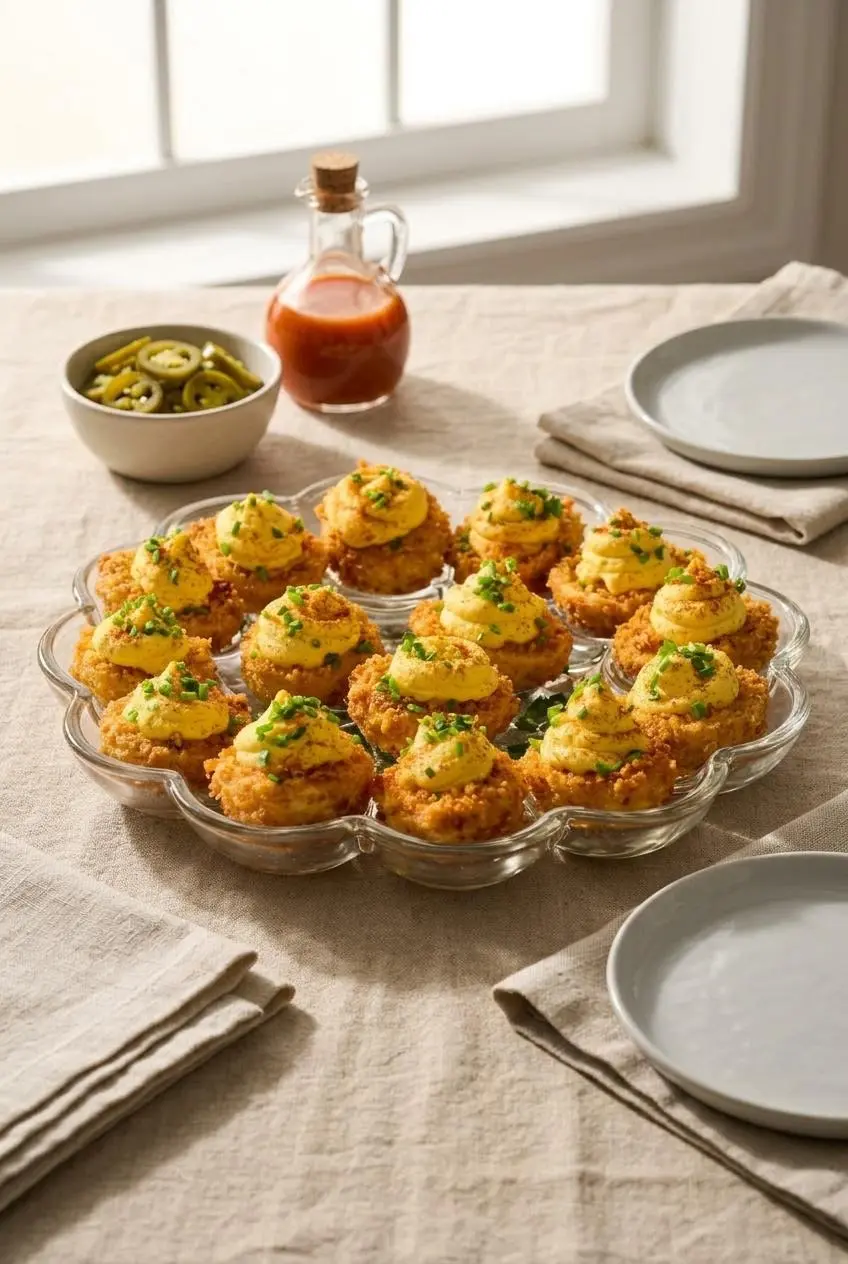
Protect the texture by keeping moist filling away from the crust until serving. Fully assembled eggs soften in the refrigerator, so freshly fried and filled gives the best contrast.
Smart Party Prep
Organize component prep separately from final assembly: keep peeled whites covered and chilled, and keep the filling in a sealed zip-top bag in the refrigerator. Set out the coating bowls, thermometer, and rack before heating the oil.
Save breading, frying, and piping for close to serving. Work in manageable batches rather than filling the entire platter while the last whites are still in the fryer.
Food Safety, Storage, and Recrisping Leftovers
Refrigerate perishable dishes within 2 hours, or within 1 hour when temperatures exceed 90°F. Keep waiting portions chilled and bring out smaller platters instead of leaving the full batch on the table.
Refrigerate leftovers in covered containers, separating unfilled fried whites from yolk filling when possible. Expect the crust to soften. If refreshing plain fried whites in an oven or air fryer, keep the filling out, watch the crumbs closely, and let the whites cool slightly before piping. Don’t try to recrisp assembled eggs.
Best Ways to Serve at Parties and Holidays
Serve freshly assembled halves while the shells are barely warm. For Easter brunch or Sunday lunch, add crisp vegetables and fresh herbs to balance the rich filling.
For game day, pair a small platter with crispy fried chicken wings, sliders, and crunchy crudités. At showers or holiday gatherings, offer hot sauce and drained pickled jalapenos alongside so guests can adjust the heat.
Conclusion
Golden panko-parmesan shells and tangy, creamy yolks give this familiar appetizer a satisfying contrast. Sieving the yolks is an optional finishing touch when you want especially smooth piping.
Dry the whites thoroughly before dredging, then let the fried halves cool slightly on a rack before filling. Those two habits help every batch arrive crisp, creamy, and ready to share.
Frequently Asked Questions
What Is a Fried Deviled Egg?
It’s a deviled egg with a breaded, fried white. The empty hard-boiled halves get a flour, egg, and panko-parmesan coating, then receive creamy seasoned yolk filling after frying and cooling slightly.
How Do You Keep Breading on Deviled Eggs When Frying?
Dry the whites thoroughly, coat them in flour before beaten egg, and let excess egg drip off. Gently press on the panko and maintain the frying temperature so the crust sets promptly.
How Long Can Fried Deviled Eggs Sit Out?
Keep serving time within the room-temperature limits explained above, with extra care in hot weather. Put out small batches and keep the rest chilled rather than treating the platter as an all-afternoon appetizer.
Can You Make Fried Deviled Eggs Ahead of Time?
Keep the components separate and chilled during preparation, but save frying and filling for close to serving. Assembled eggs lose their crisp crust in the refrigerator.
What Kind of Oil Is Best for Frying Deviled Eggs?
Vegetable oil is the choice here because its neutral flavor lets the parmesan and filling stand out. Canola or refined peanut oil are optional alternatives; use a thermometer to control the frying heat.
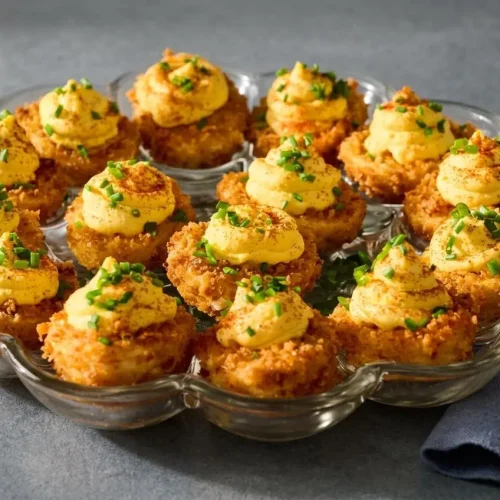
Fried Deviled Eggs

Equipment
- zip-top plastic bag
- Large Dutch oven
- Deep-fry thermometer
- Cooling Rack
Ingredients
- 12 hard-boiled large eggs plus 2 raw eggs
- 1/3 c. mayonnaise
- 2 tbsp. yellow mustard
- 2 tsp. dill pickle juice (from a jar of pickles) or distilled white vinegar
- 1/4 tsp. black pepper
- 3/4 tsp. kosher salt plus more to taste
- A few dashes of hot sauce (optional)
- Vegetable oil for frying
- 1 c. all-purpose flour
- 1 c. panko breadcrumbs
- 1/4 c. grated parmesan cheese (about 2 oz.)
- Paprika for sprinkling
- Chopped chives for sprinkling
Instructions
- Peel and halve the hard-boiled eggs lengthwise, fork-mash their yolks in a medium bowl, then mix in the mayonnaise, mustard, pickle juice or vinegar, pepper, 1/4 teaspoon salt, and optional hot sauce before transferring the filling to a zip-top bag with a 1/4-inch opening cut from one bottom corner. The mixture should look mostly smooth and hold together rather than flow like a sauce.
- Bring a 1 1/2-inch depth of vegetable oil to 350°F in a large Dutch oven over medium-high heat, checking it with a deep-fry thermometer. A steady thermometer reading signals that the oil is ready for breading to brown promptly.
- Arrange three shallow bowls containing flour mixed with the remaining 1/2 teaspoon salt, the 2 raw eggs whisked together, and panko mixed with parmesan, then cover each dry white with flour, beaten egg, and crumbs in that order, letting excess egg drain and gently pressing the final coating into place. The curved surface should have an even crumb covering, with the center hollow still open enough to hold filling.
- Lower the coated whites into the oil in batches, fry for 1 to 2 minutes, then lift them onto a cooling rack, sprinkle with salt, and allow them to cool slightly. Look for a golden crust and wait until the halves feel barely warm before filling them.
- Pipe a generous mound of the yolk mixture into each fried white and finish with paprika and chopped chives. The filling should sit neatly inside the hollow with the crunchy rim still visible.