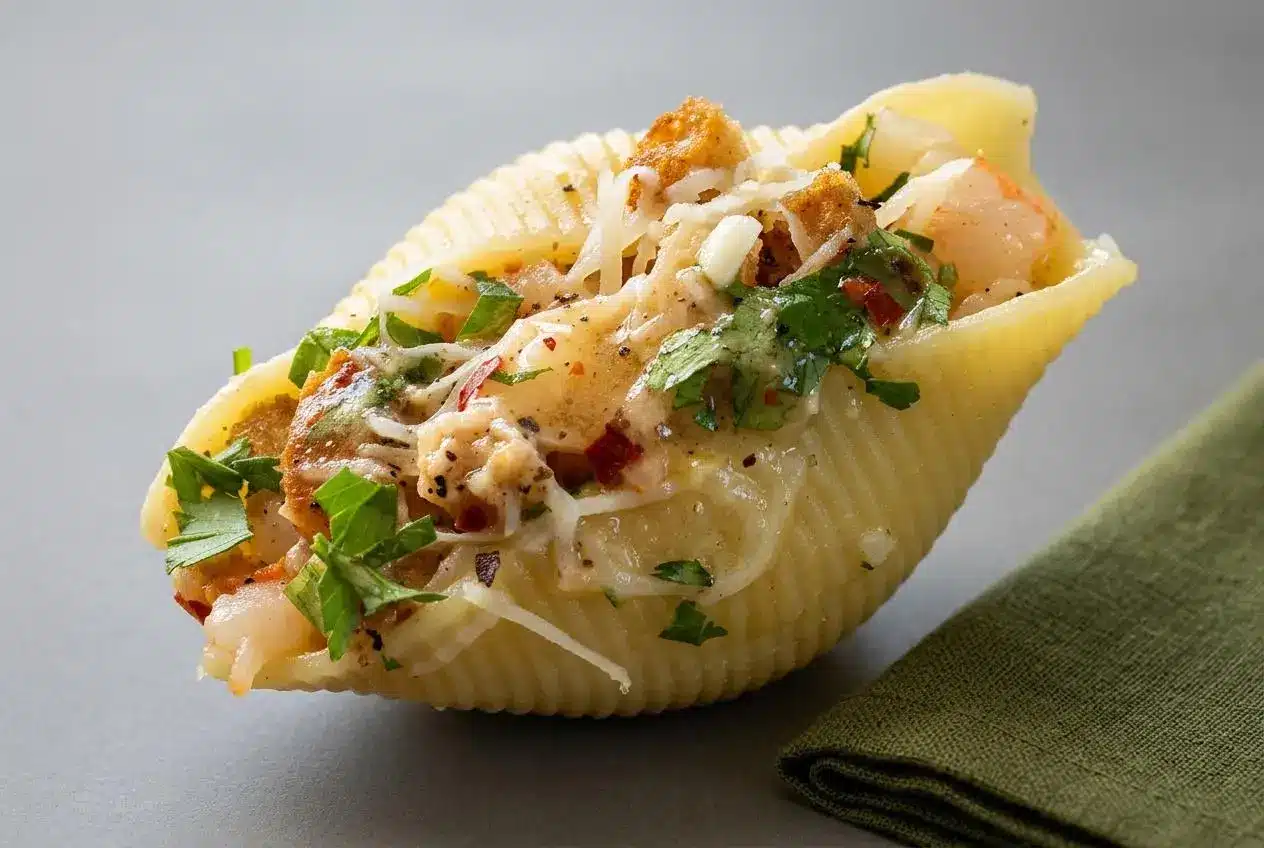
These shrimp scampi stuffed shells tuck chopped garlic-butter shrimp, toasted bread cubes, lemon, parsley, and Parmesan inside tender jumbo pasta. A brief bake warms the filling while the reserved pan sauce keeps the shells buttery and moist.
Garlic sizzling gently in butter gives this dinner its inviting aroma, but the toasted bread makes the filling special. Instead of a heavy cheese center, you get juicy shrimp and golden bread cubes that soak up the lemony sauce.
The dish takes about 45 minutes, with the pasta boiling while the bread toasts. It makes 8 to 10 stuffed shells, enough to serve as a starter or a smaller main course with sides. Save room for that buttery sauce.
Set a large bowl beside the skillet so you can transfer the toasted bread promptly without letting it darken.
Key Ingredients and Their Roles
Butter and olive oil carry the garlic flavor, toasted bread holds the sauce, and shrimp gives the filling its tender bite. Lemon and parsley brighten the richness, while grated cheese adds savory depth and the pasta keeps everything tucked together.
- 4 Tbsp. butter, divided
- 4 Tbsp. olive oil, divided
- 1 cup bread cubes from a good loaf of bread, cut into roughly ¼-inch pieces
- 8 to 10 jumbo pasta shells
- 4 cloves garlic, minced
- ¼ tsp. kosher salt
- ½ tsp. fresh ground black pepper
- ½ cup dry white wine
- ¼ tsp. crushed red pepper flakes, or more to taste
- 10 oz. raw shrimp, peeled and deveined, tails removed, cut into ¼ to ½-inch pieces
- juice of 1 lemon
- ½ cup grated Parmesan or Pecorino Romano cheese, divided
- ¼ cup fresh parsley, minced, divided
The bread is a sauce holder, not a dense stuffing. Roughly ¼-inch cubes fit between the shrimp pieces and absorb the garlic-lemon butter. Toasting them first gives them enough structure to soften without immediately collapsing into mush. Keep them in cubes rather than crushing them into crumbs.
The filling carries the bright flavor of classic shrimp scampi into baked pasta. Butter supplies richness, olive oil helps coat the bread and shrimp, and fresh lemon cuts through the buttery finish. Dry white wine adds tang and pan liquid; chicken broth or seafood stock can replace it if preferred.
Start with raw shrimp so you control their cooking from the beginning. Cutting them into ¼ to ½-inch pieces helps them cook evenly and makes the shells easier to fill. Remove every tail before chopping so each bite contains only tender shrimp.
Dividing the ingredients builds flavor at different stages. Some butter and oil toast the bread, while the rest forms the scampi sauce. Cheese seasons the filling and finishes the tops; parsley goes inside for freshness and over the finished shells for a brighter finish. Pecorino Romano has a sharper, saltier character than Parmesan, so taste before adjusting the seasoning.
I’d boil 2 or 3 extra shells as insurance against a split seam while draining.
How to Make the Shrimp Scampi Stuffed Shells Step by Step
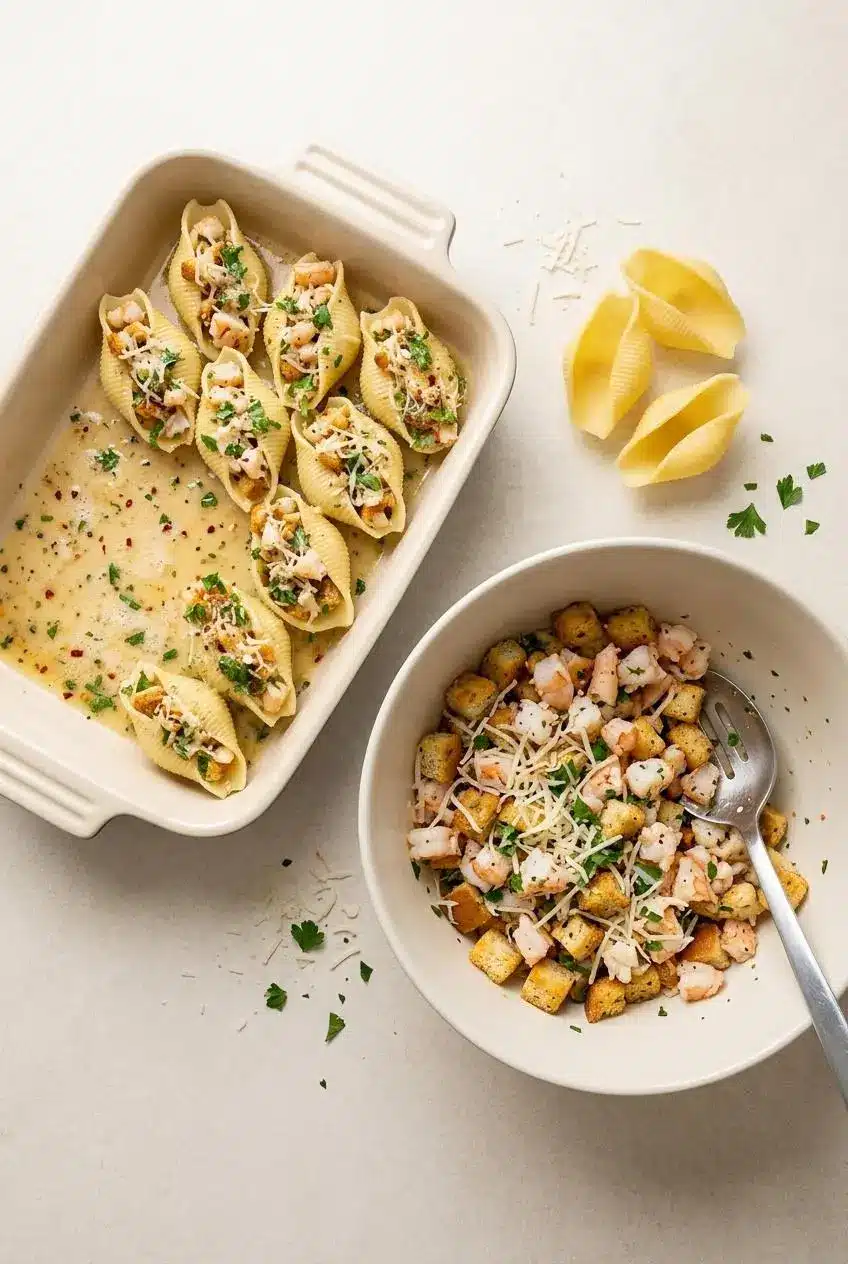
Have a heavy skillet, slotted spoon, and ovenproof dish ready. The key is controlling the moisture and treating the oven as a final warming step, rather than a long bake.
Toast the Bread Cubes and Boil the Jumbo Shells
Low heat lets the bread develop a golden surface and nutty aroma without scorching. Meanwhile, cook the shells to the package’s serving tenderness. They need that full stovetop cooking because their brief oven time won’t soften firm pasta very much.
Simmer the Garlic Scampi Sauce and Sauté the Shrimp
Keep the garlic pale and fragrant, then reduce the wine slightly before adding the shrimp. Watch the shrimp rather than relying only on the clock: small pieces change quickly. Move the skillet off the burner as soon as they turn pink.
Stuff the Shells and Bake Until Warm
A slotted spoon lets you transfer the shrimp without flooding the bread. Keep the remaining liquid for the tops and bottom of the dish, where it protects the pasta from drying out. Follow the complete cooking sequence below.
- Toast the bread in a roomy heavy skillet over low heat with 2 tablespoons butter and 2 tablespoons olive oil, stirring frequently for about 15 minutes, then transfer it to a large bowl to cool and keep the skillet unwashed.
Look for golden edges, a crisp surface, and a warm, nutty aroma. - Boil the jumbo shells according to the package directions for pasta served with sauce while the bread cooks, then drain gently and set aside.
The shells should feel tender and flexible enough to open without splitting. - Set the oven to 350°F.
The assembled shells will need a short warming bake rather than prolonged cooking. - Return the skillet to medium heat with the remaining butter and olive oil, then stir in the garlic for about 1 minute.
Stop short of any browning; the garlic should smell fragrant and remain pale. - Pour in the wine and add the salt, black pepper, and crushed red pepper flakes, allowing the mixture to simmer for about 2 minutes.
The liquid should reduce slightly while remaining plentiful enough to form a sauce. - Sauté the chopped shrimp in the sauce for about 2 minutes, take the skillet off the burner immediately when they turn pink, and stir in the lemon juice after slight cooling.
The shrimp should have just changed color rather than tightened into firm, chewy pieces. - Lift the shrimp and garlic into the bread bowl with a slotted spoon, then mix in 2 tablespoons pan liquid, all but 2 tablespoons cheese, and all but 1 tablespoon parsley before tasting and adjusting the seasoning.
The filling should hold together loosely, with moistened bread cubes and distinct pieces of shrimp. - Fill 8 to 10 shells evenly and arrange them in an ovenproof dish that holds them comfortably, then spoon a little sauce over each, pour the remaining liquid around their bases, and scatter the reserved cheese on top.
The bottoms should sit in sauce rather than against a dry baking dish. - Bake for about 10 minutes until warm throughout, allowing longer for refrigerated shells, then spoon the hot pan juices over each shell and finish with the reserved parsley.
The centers should be warm and the pasta edges moist, without waiting for a deeply browned top.
Expert Tips and Troubleshooting for Perfect Shells
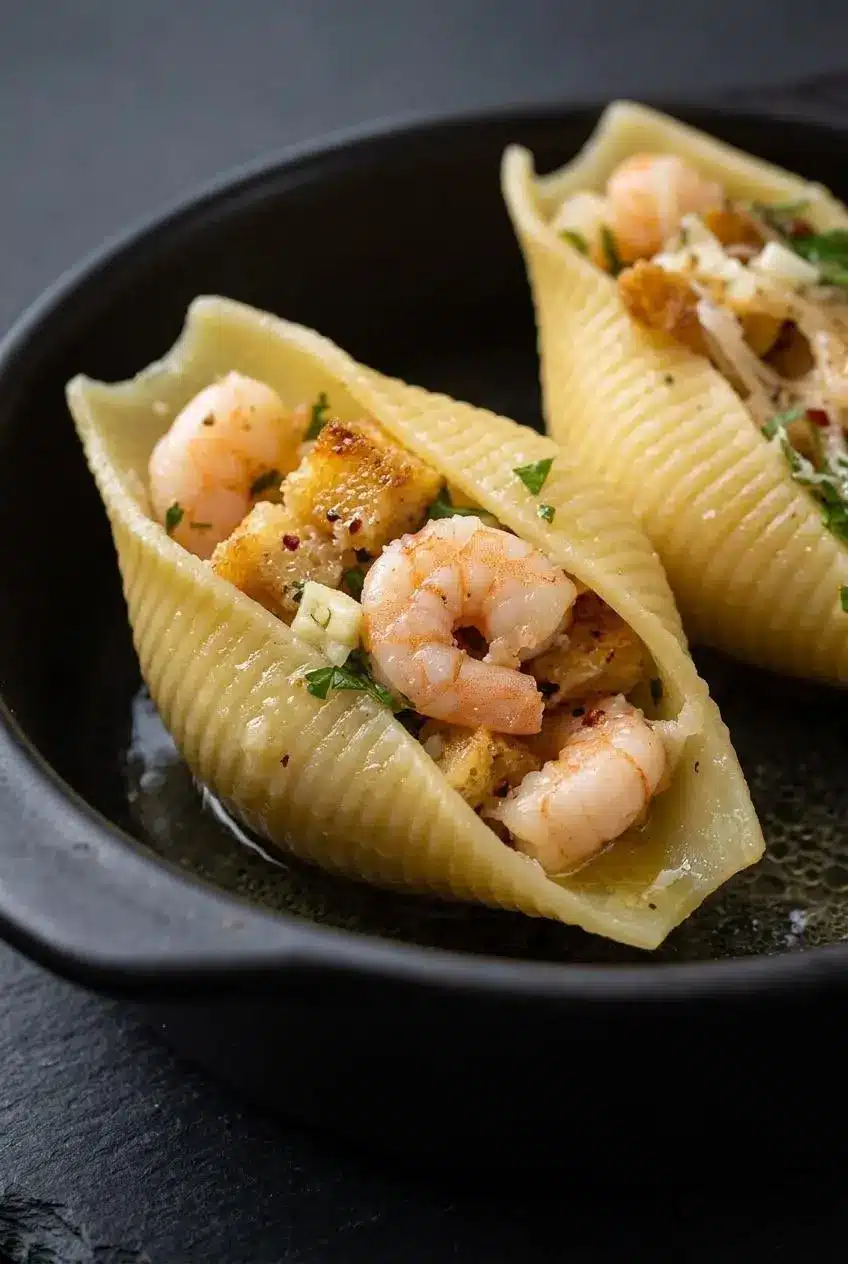
Most texture problems come from excess heat, rough handling, or leaving the sauce behind in the skillet.
- Rubbery shrimp: The skillet and oven both add heat, so don’t give the shrimp a full extra sauté after they change color. Use the brief cooking approach for tender garlic butter shrimp, and avoid baking longer just to brown the cheese.
- Torn shells: Stir gently during boiling and ease them into the colander rather than dumping them forcefully. Once drained, separate them carefully while still pliable and arrange them without stacking tightly.
- Bitter garlic: Medium heat should release its aroma without turning the minced pieces brown. If the skillet feels too hot after toasting, let it settle before starting the sauce.
- Dry pasta edges: Reserve the pan liquid and distribute it around the shells as well as over them. A dry baking dish leaves exposed pasta with nothing to keep it moist.
- Soggy filling: Transfer the solids with a slotted spoon and measure the liquid added to the bread. Pouring everything into the bowl at once removes your control over the texture.
Pink color is a useful cooking cue, but the finished shrimp should also have pearly or white, opaque flesh, rather than translucent centers. Timing varies with the size of the chopped pieces and the heat of the skillet.
Popular Variations and Easy Swaps
Choose a creamy variation when you want a richer baked pasta, or keep the toasted-bread filling when lemon, garlic, and shrimp should lead.
- Toasted-bread filling: Distinct shrimp pieces and buttery bread cubes give the filling texture without a creamy cheese center.
- Ricotta filling: Soft cheese creates a smoother, more cohesive center and mellows the lemon-garlic flavor.
- Alfredo underneath: A cream sauce surrounds the shells while leaving the shrimp filling recognizable inside.
Creamy Ricotta Shrimp Stuffed Shells
For a softer filling inspired by ricotta stuffed shells, fold whole-milk ricotta and mozzarella or Parmesan into the cooled garlic-shrimp mixture before filling the pasta. Treat this as an optional cheese-forward adaptation, not an addition to the ingredient list above.
Add the ricotta gradually so the mixture remains spoonable rather than loose. Because cheese changes the balance, taste before adding more salt or lemon. Mozzarella gives a stretchy finish; Parmesan keeps the flavor sharper and more savory.
Shrimp Scampi Shells With Alfredo Sauce
Spread warm garlic Alfredo sauce across the baking dish, arrange the shrimp-filled shells over it, and spoon extra sauce over the tops. This version feels richer and less tangy than the wine-and-lemon pan sauce alone. Avoid crowding the dish so sauce can settle between the shells.
For a different shortcut, prepare frozen cheese-filled shells following their package directions and top them with stovetop shrimp scampi near serving. That makes shrimp-topped cheese shells rather than shrimp-stuffed pasta, and the packaged shells need their own cooking schedule.
Broth Swap and Fresh Lemon Zest
- Wine-free sauce: Optionally replace the ½ cup dry white wine with ½ cup low-sodium chicken broth or seafood stock, plus an extra squeeze of lemon juice to restore tang. Taste before adding more salt.
- Extra citrus aroma: Grate fresh lemon zest into the warm toasted bread before adding the shrimp. The warm butter carries the fragrant oils, adding lemon aroma without another pour of acidic juice.
Make-Ahead, Storage, and Serving Suggestions
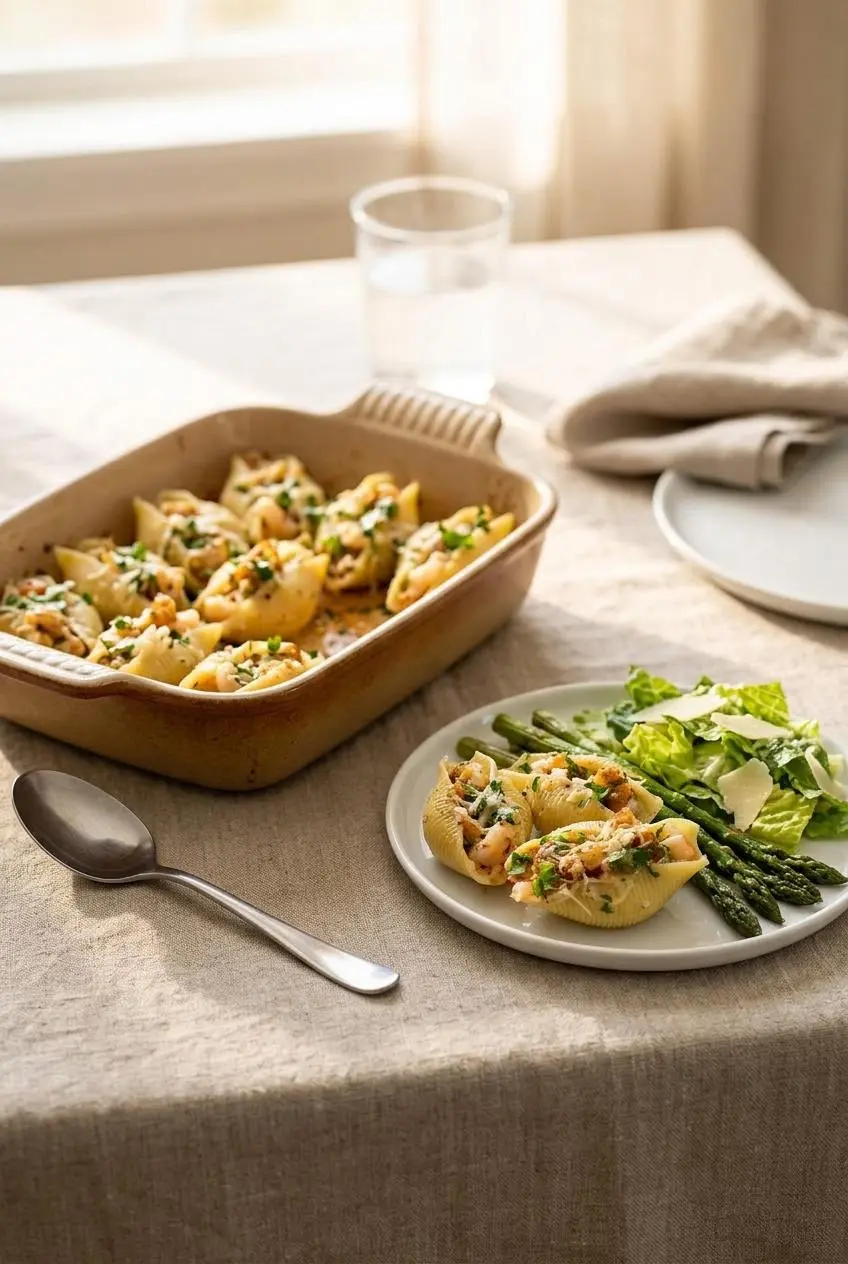
You can assemble the shells before baking, which leaves the final oven step for serving time. Arrange them with their pan sauce and cheese, cover the dish tightly with plastic wrap, and refrigerate. Reserve the finishing parsley separately.
Remove the plastic wrap before baking and use an ovenproof dish suitable for the temperature change. Refrigerated shells need longer than freshly assembled ones; check the center rather than judging by warm sauce at the edges. Spoon the pan liquid over them before serving.
Refrigerate leftovers promptly in a covered container, keeping the sauce with the shells. For reheating, place the portion you need in a covered ovenproof dish with a splash of broth or melted butter. Heat until thoroughly hot throughout, checking the center, rather than using high microwave power that can toughen the shrimp. The added moisture helps protect the pasta edges.
For a starter, plan on 2 to 3 shells per person. For a main course, 4 to 5 shells with crisp Caesar salad and roasted asparagus makes a fuller plate. Since the batch yields 8 to 10 shells, plan around your guests’ appetites and the rest of the menu.
Conclusion
Buttery garlic sauce, toasted bread, and fresh lemon make these stuffed shells feel special without a long bake. About 45 minutes brings tender pasta and shrimp to the table.
Pull the shrimp off the burner as soon as they turn pink, and save the pan sauce for the dish. Try lemon zest or a creamy variation another time, but give that bright, buttery filling a turn first.
Frequently Asked Questions
How Do You Keep Shrimp From Getting Rubbery in Stuffed Shells?
Cut raw shrimp into ¼ to ½-inch pieces so they cook evenly. Sauté for about 2 minutes, just until pink, and remove the skillet from the burner immediately. Keep the final 350°F bake to about 10 minutes for freshly assembled shells, checking that the filling is warm and the shrimp are opaque.
Can I Make Creamy Shrimp Scampi Stuffed Shells With Ricotta or Alfredo Sauce?
Yes. For a creamy center, fold whole-milk ricotta into the cooled shrimp mixture before stuffing. For sauce around the pasta, spread warm Alfredo beneath the shells and spoon some over the tops. Both are optional, richer alternatives to the toasted-bread version.
What Can I Substitute for White Wine in Shrimp Scampi Sauce?
Use low-sodium chicken broth or seafood stock in an equal amount, as described above. Add a fresh squeeze of lemon juice for brightness, then taste before adjusting the salt. Broth supplies savory flavor but lacks wine’s acidity.
Can I Assemble Shrimp Scampi Stuffed Shells Ahead of Time?
Yes. Stuff the shells, arrange them with the pan sauce and cheese, cover tightly with plastic wrap, and refrigerate. Remove the wrap before baking, allow extra oven time for the cold filling, and add the reserved parsley just before serving.
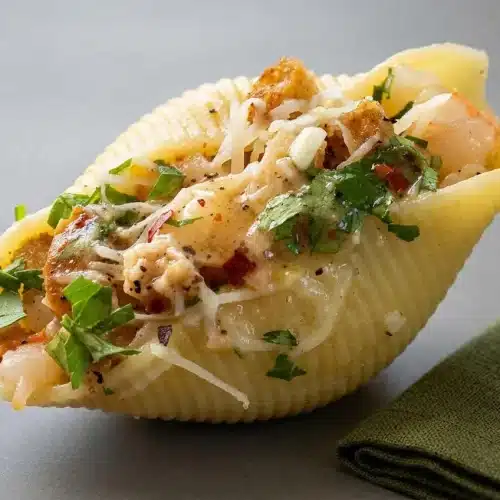
Shrimp Scampi Stuffed Shells

Equipment
- heavy skillet
- Slotted spoon
- ovenproof dish or pan
Ingredients
- 4 Tbsp. butter divided
- 4 Tbsp. olive oil divided
- 1 cup bread cubes from a good loaf of bread cut into roughly ¼-inch pieces
- 8 to 10 jumbo pasta shells
- 4 cloves garlic minced
- ¼ tsp. kosher salt
- ½ tsp. fresh ground black pepper
- ½ cup dry white wine
- ¼ tsp. crushed red pepper flakes or more to taste
- 10 oz. raw shrimp peeled and deveined, tails removed, cut into ¼ to ½-inch pieces
- juice of 1 lemon
- ½ cup grated Parmesan or Pecorino Romano cheese divided
- ¼ cup fresh parsley minced, divided
Instructions
- Toast the bread in a roomy heavy skillet over low heat with 2 tablespoons butter and 2 tablespoons olive oil, stirring frequently for about 15 minutes, then transfer it to a large bowl to cool and keep the skillet unwashed. Look for golden edges, a crisp surface, and a warm, nutty aroma.
- Boil the jumbo shells according to the package directions for pasta served with sauce while the bread cooks, then drain gently and set aside. The shells should feel tender and flexible enough to open without splitting.
- Set the oven to 350°F. The assembled shells will need a short warming bake rather than prolonged cooking.
- Return the skillet to medium heat with the remaining butter and olive oil, then stir in the garlic for about 1 minute. Stop short of any browning; the garlic should smell fragrant and remain pale.
- Pour in the wine and add the salt, black pepper, and crushed red pepper flakes, allowing the mixture to simmer for about 2 minutes. The liquid should reduce slightly while remaining plentiful enough to form a sauce.
- Sauté the chopped shrimp in the sauce for about 2 minutes, take the skillet off the burner immediately when they turn pink, and stir in the lemon juice after slight cooling. The shrimp should have just changed color rather than tightened into firm, chewy pieces.
- Lift the shrimp and garlic into the bread bowl with a slotted spoon, then mix in 2 tablespoons pan liquid, all but 2 tablespoons cheese, and all but 1 tablespoon parsley before tasting and adjusting the seasoning. The filling should hold together loosely, with moistened bread cubes and distinct pieces of shrimp.
- Fill 8 to 10 shells evenly and arrange them in an ovenproof dish that holds them comfortably, then spoon a little sauce over each, pour the remaining liquid around their bases, and scatter the reserved cheese on top. The bottoms should sit in sauce rather than against a dry baking dish.
- Bake for about 10 minutes until warm throughout, allowing longer for refrigerated shells, then spoon the hot pan juices over each shell and finish with the reserved parsley. The centers should be warm and the pasta edges moist, without waiting for a deeply browned top.