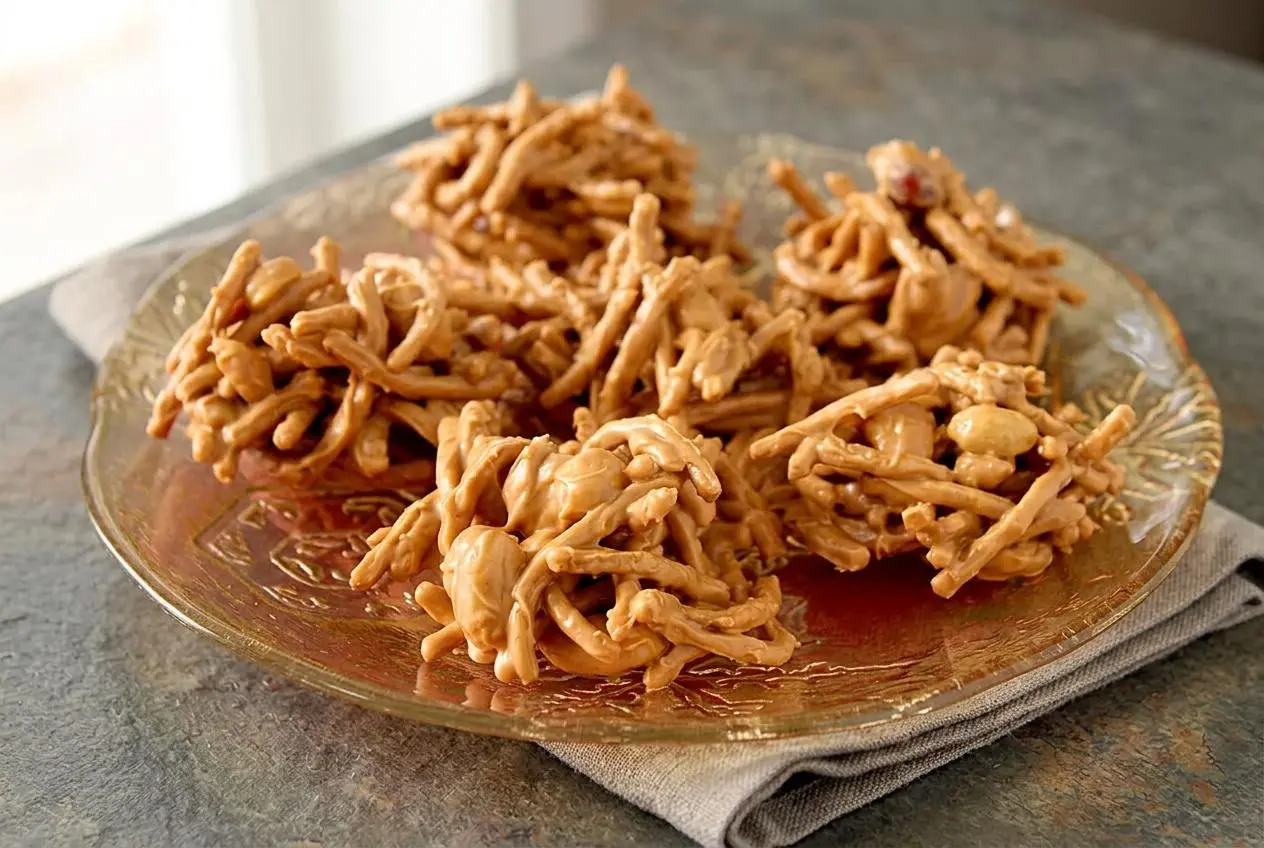
Peanut butter haystacks are sweet, salty, four-ingredient no-bake clusters. Coat crispy chow mein noodles and salted peanuts with melted butterscotch morsels and creamy peanut butter, scoop onto lined baking sheets, and refrigerate until firm.
With their craggy edges and creamy coating, peanut butter haystacks deliver a satisfying crunch without turning on the oven. Butterscotch brings caramel-like sweetness, while salted peanuts keep each bite balanced. They’re part candy, part cookie, and happily imperfect in shape.
Allow 10 minutes for prep and 5 minutes for melting, plus chilling until set. The batch makes about 24 pieces for dessert trays or sharing. Gentle heat helps the coating turn glossy, and careful folding keeps the noodles intact. The crunch is worth protecting.
Set out the lined baking sheets before melting anything so you can portion the mixture while the coating is still fluid.
Ingredients and Why Each One Matters
Butterscotch gives the clusters sweetness and structure, peanut butter adds richness, chow mein noodles build their spiky crunch, and salted peanuts bring a savory contrast that balances the coating.
- 2 cups Butterscotch Morsels (I prefer Ghirardelli; no artificial flavorings)
- 3/4 cup creamy peanut butter
- 10 oz chow mein noodles
- 1 cup salted peanuts
Butterscotch morsels form the coating that holds everything together once chilled. Choose morsels with a flavor you enjoy on their own, because their caramel-like sweetness comes through clearly. They can look unchanged even after softening, so appearance alone won’t tell you when they’re ready to stir.
Conventional creamy peanut butter gives a more predictable texture than an oil-separated natural variety. Stabilized peanut butter blends evenly into the morsels; loose oil can leave the finished clusters softer or greasy. Stir the peanut butter smooth before measuring, but don’t substitute a visibly oily mixture and expect the same firmness.
Crispy chow mein noodles are the ready-to-eat crunchy kind sold in cans or bags. Soft refrigerated noodles and noodles intended for boiling won’t work here. Check that they taste crisp before coating them, since melting the butterscotch won’t restore stale noodles.
Salted peanuts add a denser crunch between the delicate noodle strands. Their salt also breaks up the sweetness, so each bite tastes more balanced than the coating alone.
I check that the morsels smell fresh and stir the peanut butter smooth before measuring so the coating starts with an even consistency.
How to Make Peanut Butter Haystacks Step by Step
Use gentle heat for the coating, then a light hand when mixing. Have a large bowl, double boiler, and lined cookie sheets ready before you begin.
- Cover the cookie sheets with parchment or wax paper.
The lining should lie flat so the soft clusters have an even surface to rest on. - Warm the butterscotch morsels in the upper pan of a double boiler over hot, nonboiling water, stirring occasionally as they soften.
Continue until stirring leaves a smooth mixture without firm pieces. - Reduce the heat to low and blend in the creamy peanut butter.
The coating should look glossy and fall from the spoon in a thick ribbon. - Place the chow mein noodles and salted peanuts in a large bowl, add the warm coating, and fold gently from the bottom.
Stop when the noodles and peanuts look evenly covered without large pockets of bare ingredients. - Portion rounded tablespoonfuls onto the prepared sheets and refrigerate until firm.
The finished clusters should hold their shape when lifted from the paper.
Double Boiler vs. Microwave Melting Method
- Double boiler: The stovetop method gives you steady control over gentle heat. Keep the water below a boil and prevent splashes from entering the morsels.
- Microwave alternative: Use a microwave-safe bowl and reduced power, heating in short bursts and stirring between them. Once the morsels become smooth, blend in the peanut butter.
Stir before adding more heat. Butterscotch chips can retain their outlines while soft, and chasing a completely melted appearance without stirring can overheat them.
Coating, Scooping, and Setting the Clusters
Lift the mixture from the bottom of the bowl and turn it over gently rather than beating it in circles. This coats the noodles while preserving their long, spiky shape.
Work while the coating remains fluid. Rounded tablespoonfuls give substantial clusters; smaller portions make bite-sized treats and increase the yield. Use firmness, rather than a fixed chilling time, as your setting cue.
Expert Tips and Troubleshooting Common Mistakes
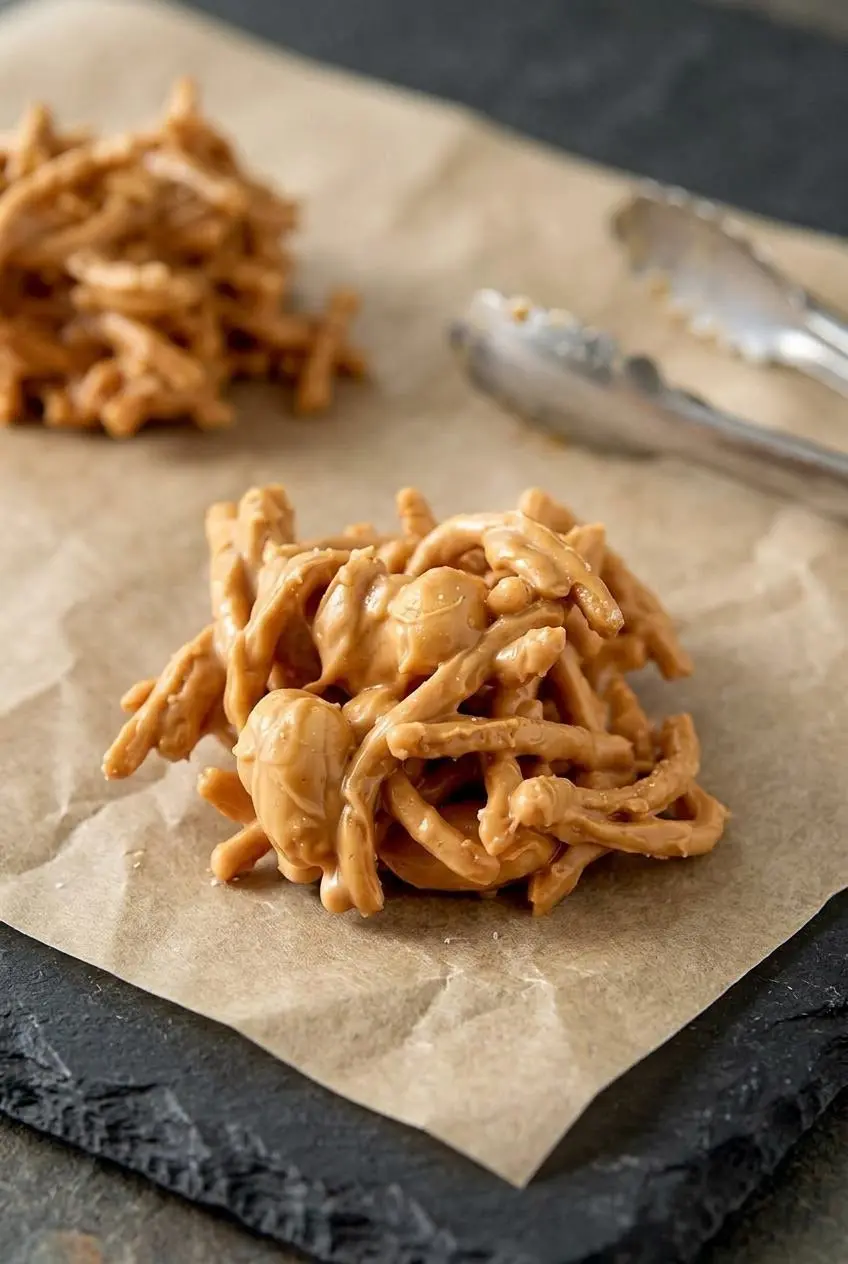
Most problems begin with excessive heat or a coating that’s too fluid to hold a mound. Check the texture before adding more heat or changing the mixture.
- The coating turns thick or grainy: Remove it from the heat and stir gently. If it’s merely thick, a small amount of extra creamy peanut butter may loosen it enough to coat the noodles, though it can also soften the final set. A scorched smell means starting over is the better choice.
- The clusters flatten into puddles: The coating may still be too warm. Pause briefly until it thickens enough to cling to the noodles, then resume portioning before it becomes stiff.
- Portioning feels messy: Use small kitchen tongs or two forks to lift and mound the coated noodles. Let excess coating drain back into the bowl rather than collecting a pool beneath each cluster.
- The noodles break into crumbs: Switch from vigorous stirring to broad, gentle folds. Stop mixing once everything looks coated; extra stirring won’t improve the finished texture.
- The clusters stay soft: Move the tray to the refrigerator and check that the peanut butter wasn’t oil-separated. A warm kitchen can soften the coating even after it has set.
Best Substitutions and Flavor Variations
Keep these optional changes separate from the classic recipe. Different crunchy ingredients change both the shape and the balance of coating to crunch.
Best Swaps for Chow Mein Noodles
An equal volume is a useful starting point for crunchy substitutes, but their shapes pack differently. Fold gently and watch how much coating clings to each piece.
- Corn flakes: Give a thin, flaky crunch and flatter clusters; handle them gently to avoid crushing them.
- Rice Chex: Create airy, chunky bites, with coating catching inside the cereal’s open texture.
- Thin pretzel sticks: Preserve the haystack shape while adding a firmer bite and more salt.
- Crispy shoestring potatoes: Make fine, salty clusters; choose ready-to-eat potato sticks rather than fresh potatoes.
- Coarsely broken Ritz crackers: Give a buttery, crumbly bite, though they won’t retain the noodles’ sturdy, spiky structure.
No-Butterscotch and Chocolate Peanut Butter Haystacks
Replace the butterscotch morsels with the same amount of semi-sweet chocolate chips, milk chocolate chips, white chocolate chips, or peanut butter chips. Semi-sweet chocolate provides a stronger contrast to the sweet peanut butter coating; the other choices lean sweeter.
For a three-ingredient version, omit the separate salted peanuts. Crunchy peanut butter can add small peanut pieces, although it won’t duplicate the bigger crunch of whole peanuts.
Adding Mini Marshmallows or Flaky Sea Salt
- Mini marshmallows: Fold them in with the dry ingredients for soft, chewy pockets among the crisp noodles. Keep them out of the melting bowl.
- Flaky sea salt: Sprinkle lightly over freshly portioned clusters to sharpen the sweet-salty contrast.
- Vanilla: If desired, stir a little pure vanilla extract into the blended coating off the heat for added aroma.
For another chewy-crunchy option, try peanut butter cereal treats.
Holiday Serving and Decorating Ideas
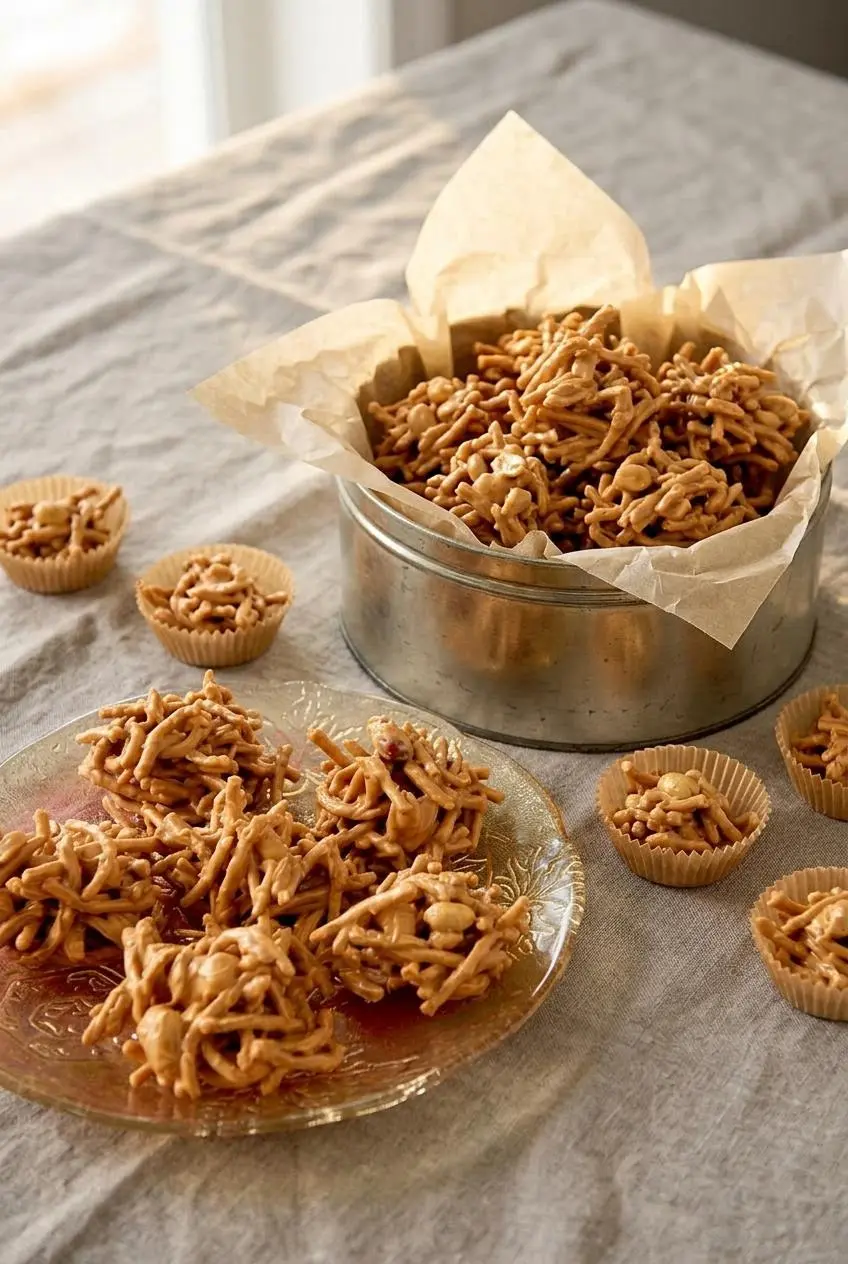
Add decorations while the coating is soft, then let the clusters firm completely before arranging or packing them.
- Easter bird nests: Make a shallow indentation in each freshly portioned mound with the back of a spoon, then tuck candy-coated chocolate eggs into the center. Avoid pressing so hard that the noodles crumble.
- Halloween monsters: Press edible candy eyeballs into the glossy coating before it sets. Uneven noodle strands give each little monster its own expression without elaborate decorating.
- Christmas cookie exchanges: Pack firm clusters into parchment-lined tins, leaving room so the lids don’t crush their pointed edges. Add no-bake peanut butter balls for a contrasting smooth texture.
Small paper candy cups help keep the clusters separate on serving trays and catch any loose noodle pieces.
Storage and Texture Protection
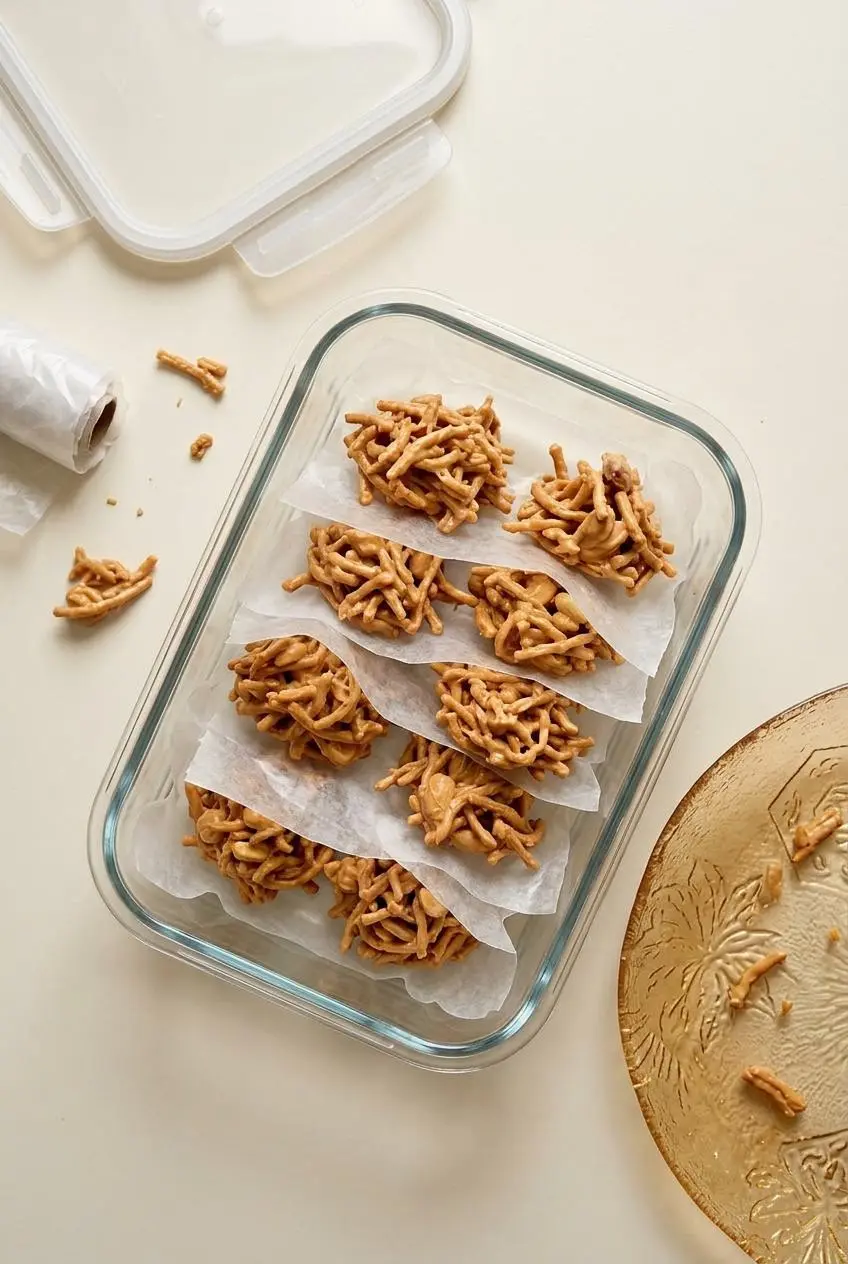
Choose storage conditions based on your kitchen’s temperature, not just the season. Cool winter room temperature can keep set clusters firm, while a warm summer kitchen may call for refrigeration.
Let the coating set completely before transferring the haystacks to a tightly closed container. Separate layers with parchment or wax paper so the clusters don’t stick together or snag on neighboring noodles.
Use a container deep enough to protect their pointed tops, and avoid pressing the layers down to make more room. Keep the container away from heat and moisture, which can soften the coating or compromise the crunch.
Conclusion
These no-bake clusters take about 15 minutes of hands-on preparation and melting, followed by chilling. Their appeal is all in the contrast: creamy coating, salty peanuts, and crisp noodle strands.
Melt gently, fold carefully, and let the coating firm before packing. Keep them classic or add a light sprinkle of flaky salt for a sweet-salty finish.
Frequently Asked Questions
What Can I Substitute for Chow Mein Noodles in Haystacks?
Try crispy corn flakes, Rice Chex, thin pretzel sticks, or ready-to-eat shoestring potatoes. Start with an equal volume and expect a different shape and bite, especially with fragile flakes.
Can I Make Peanut Butter Haystacks Without Butterscotch?
Yes. Use the same amount of semi-sweet chocolate chips, milk chocolate chips, white chocolate chips, or peanut butter chips instead. Melt gently and stir frequently.
How Should I Store Set Peanut Butter Haystacks?
Place firm clusters in a tightly closed container with parchment or wax paper between layers. Keep them at cool room temperature or refrigerate them when the kitchen is warm.
Why Won’t My Peanut Butter Haystacks Harden?
A warm kitchen or oil-separated natural peanut butter can leave the coating soft. Use conventional stabilized peanut butter and refrigerate the portioned clusters until firm.
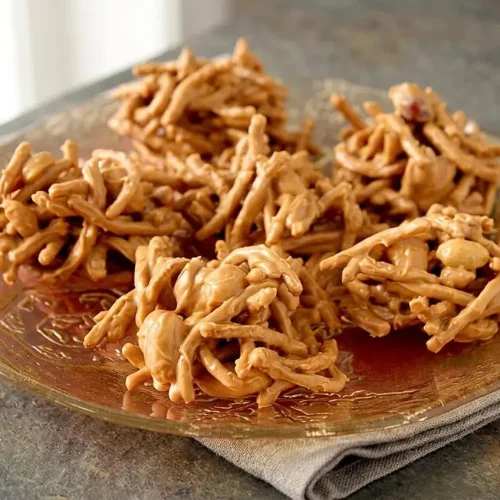
Peanut Butter Haystacks

Equipment
- Cookie sheets
- Parchment or wax paper
- Double Boiler
Ingredients
- 2 cups Butterscotch Morsels (I prefer Ghirardelli; no artificial flavorings)
- 3/4 cup creamy peanut butter
- 10 oz chow mein noodles
- 1 cup salted peanuts
Instructions
- Cover the cookie sheets with parchment or wax paper. The lining should lie flat so the soft clusters have an even surface to rest on.
- Warm the butterscotch morsels in the upper pan of a double boiler over hot, nonboiling water, stirring occasionally as they soften. Continue until stirring leaves a smooth mixture without firm pieces.
- Reduce the heat to low and blend in the creamy peanut butter. The coating should look glossy and fall from the spoon in a thick ribbon.
- Place the chow mein noodles and salted peanuts in a large bowl, add the warm coating, and fold gently from the bottom. Stop when the noodles and peanuts look evenly covered without large pockets of bare ingredients.
- Portion rounded tablespoonfuls onto the prepared sheets and refrigerate until firm. The finished clusters should hold their shape when lifted from the paper.