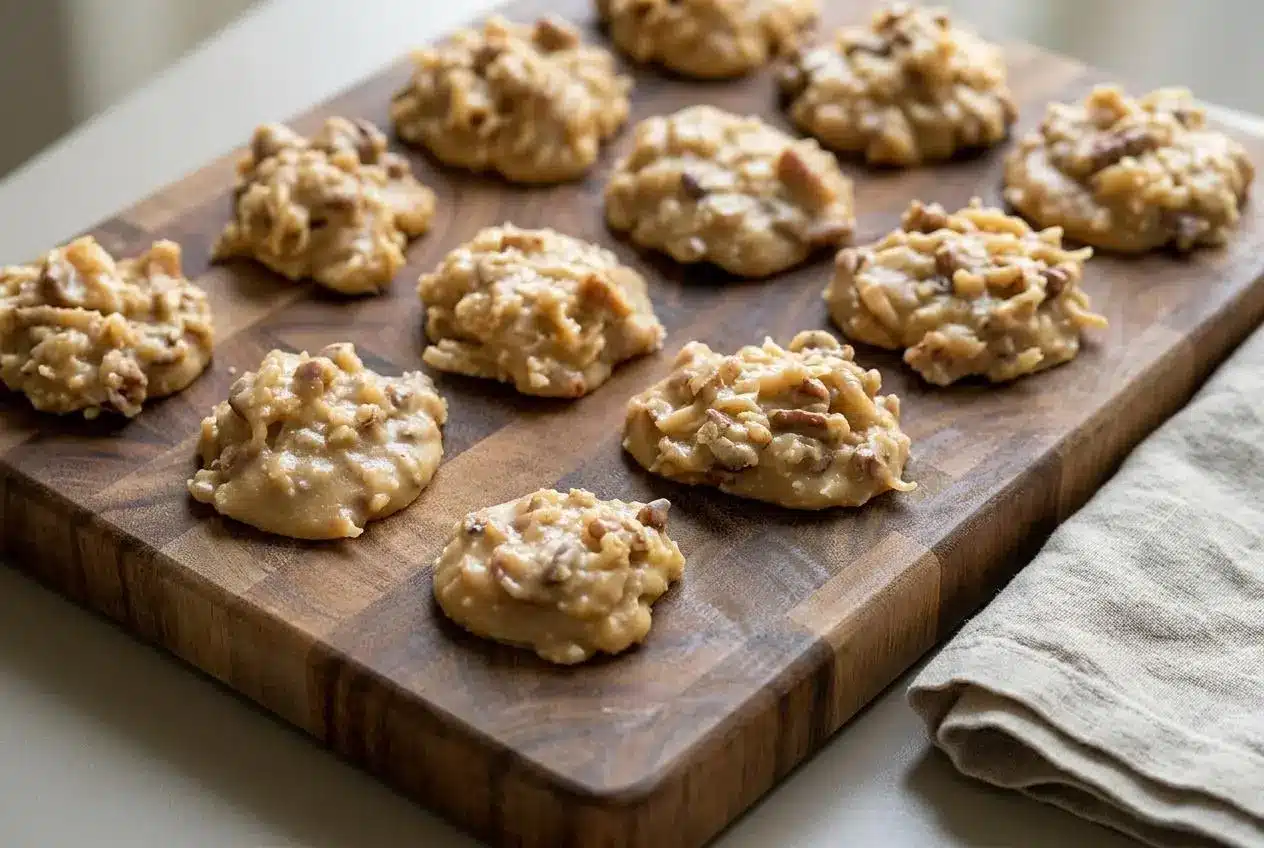
No bake coconut pecan praline cookies are stovetop drop cookies made with a buttery sugar syrup, pecans, and shredded coconut. Boil the syrup for 3 minutes, then stir in the flavorings, nuts, and coconut until the mixture thickens enough to scoop and set without an oven.
These no bake coconut pecan praline cookies sit somewhere between Southern pralines and chewy coconut cookies. Brown sugar brings butterscotch depth, while pecans break up the sweetness with nutty crunch. Toasting the nuts is an optional way to deepen that flavor.
They’re a welcome choice when you want a generous dessert tray without baking in batches. The hands-on preparation takes about 20 minutes, followed by setting time. The trick is knowing when that glossy syrup is ready to scoop.
Choose a large saucepan with room above the mixture so the bubbling syrup doesn’t crowd the rim.
Why You Will Love These No Bake Coconut Pecan Praline Cookies
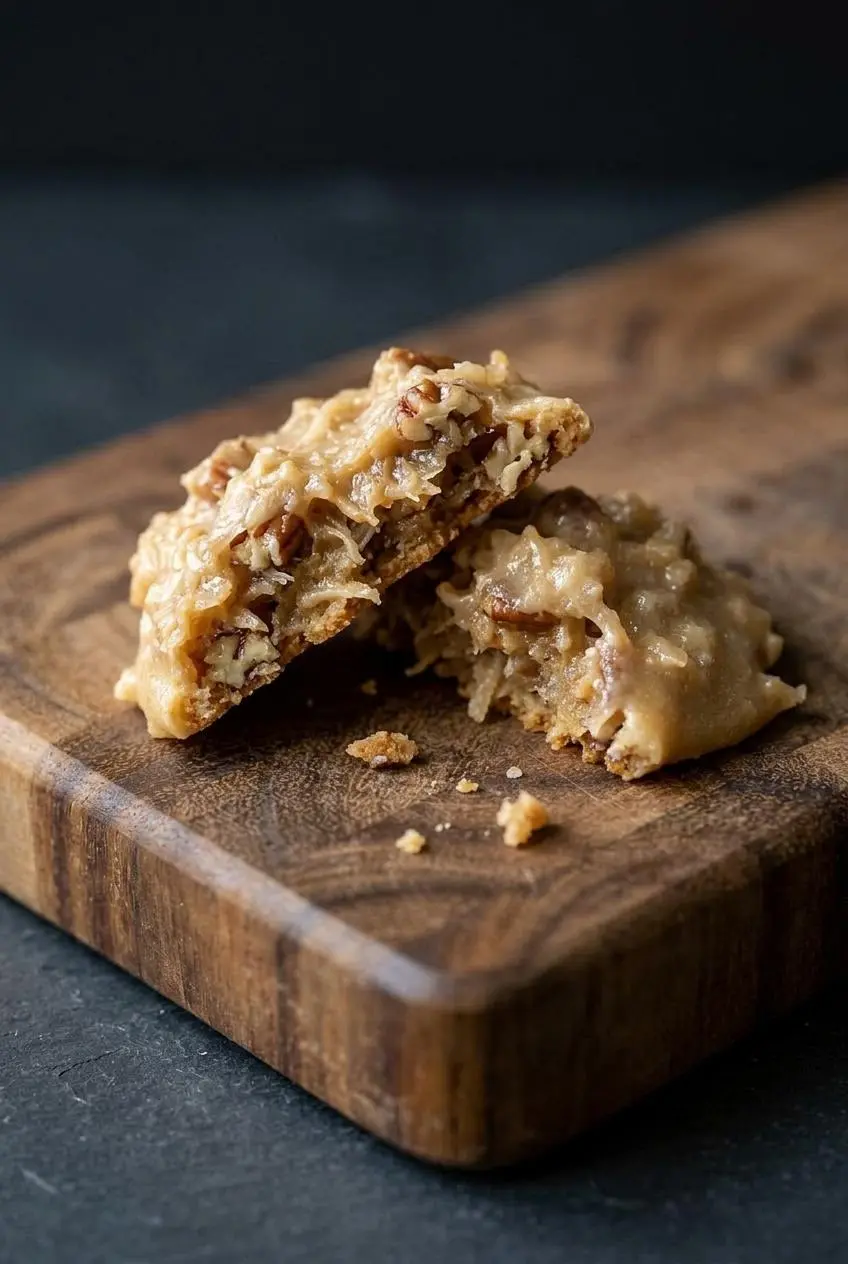
You get the richness of pecan pralines in scoopable, coconut-filled mounds, without turning on the oven. Expect a chewy center with pecan crunch, rather than the texture of a flour-based baked cookie.
The recipe serves 18 to 24, making it useful for holiday trays or summer gatherings. Allow time for the cookies to firm up before packing or stacking them; the 20-minute prep estimate doesn’t include that rest.
If coconut and caramel are your favorite combination, no-bake Samoa cookies offer another oven-free option. These praline cookies put buttery brown sugar and pecans at the center instead.
Key Ingredients and Their Roles
Sugars create the praline coating, butter and milk add richness, and corn syrup helps control crystallization. Coconut and pecans give the cookies their shape and chew, while vanilla and salt round out the caramel flavor.
- 2 cups pecans
- 2 cups sweetened shredded coconut
- 1 1/2 cups sugar
- 1 cup brown sugar
- 1/2 cup evaporated milk
- 1/2 cup light corn syrup
- 1/2 cup (1 stick) unsalted butter
- 1 teaspoon vanilla extract
- 1/2 teaspoon salt
Granulated and brown sugar: Granulated sugar supplies sweetness and structure as the syrup cools. Brown sugar adds molasses flavor and a deeper butterscotch character. Keep both amounts intact because changing the sugar balance also changes how the coating behaves.
Light corn syrup: This helps discourage large sugar crystals, keeping the coating from becoming unpleasantly gritty. It also contributes to the chewy texture. Leaving it out isn’t a flavor-only adjustment.
Evaporated milk and butter: Evaporated milk adds concentrated dairy flavor and body without the added sugar of sweetened condensed milk. Butter gives the syrup its rich finish. The milk mixture can still scorch, so pay attention to the bottom of the pan as you stir.
Pecans and coconut: The nuts provide crunch, while the coconut strands catch the syrup and help hold each mound together. Neither needs to become a smooth paste; the distinct pieces are part of the appeal.
Vanilla and salt: Vanilla softens the edges of the cooked-sugar flavor, and salt balances the sweetness without making the cookies taste salty.
I measure everything and line the baking sheets with wax paper before turning on the stove, because the mixture needs attention once it starts boiling.
How to Make No Bake Coconut Pecan Praline Cookies Step by Step
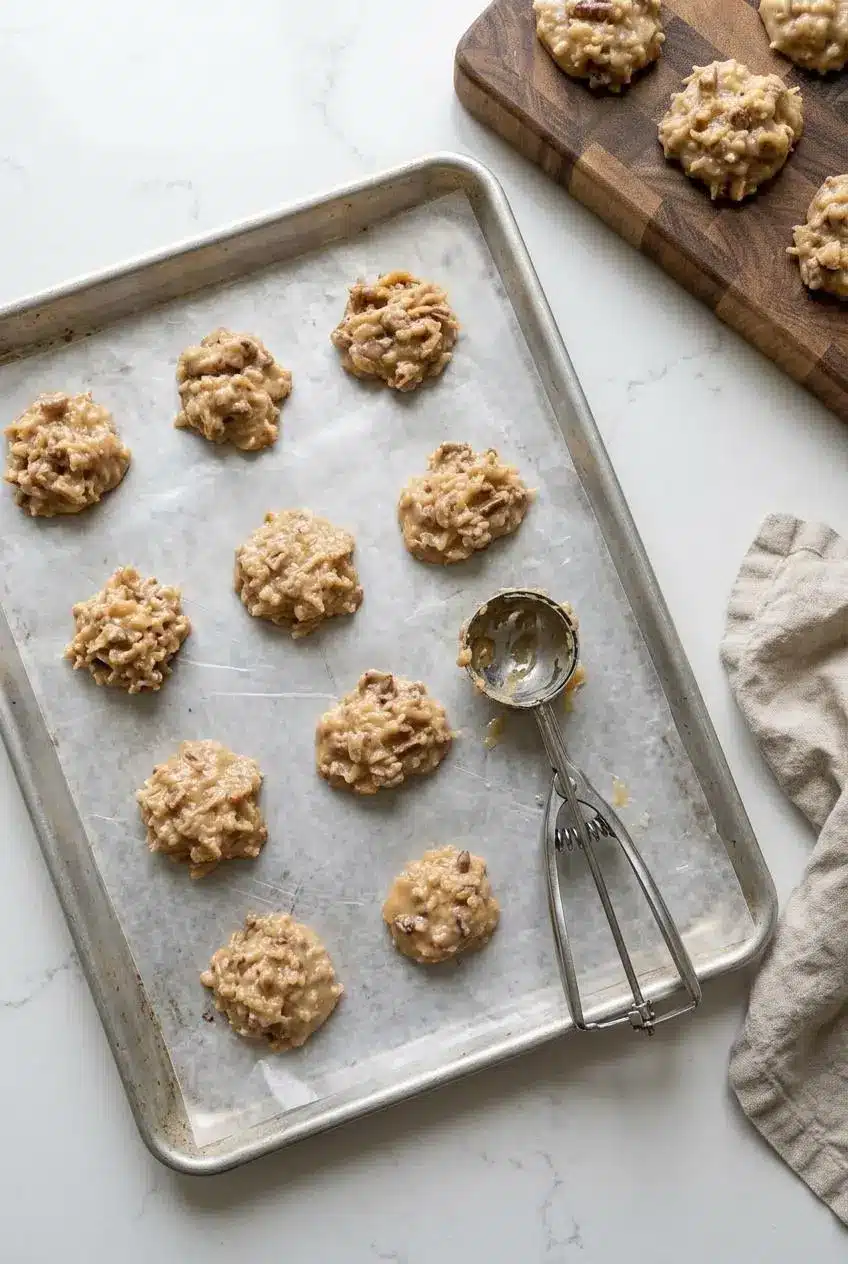
Have the coconut, pecans, vanilla, and salt within reach before cooking. Use the timed method below, then watch the mixture’s consistency during the cooling stir rather than scooping while it’s still fluid.
- Heat the granulated sugar, brown sugar, evaporated milk, corn syrup, and butter in a large saucepan over medium-high heat, stirring to combine.
Keep stirring until the butter disappears into a smooth, evenly blended syrup. - Maintain a full boil for 3 minutes, take the saucepan off the burner, mix in the vanilla and salt, and fold in the coconut and pecans before stirring for another 3 to 4 minutes.
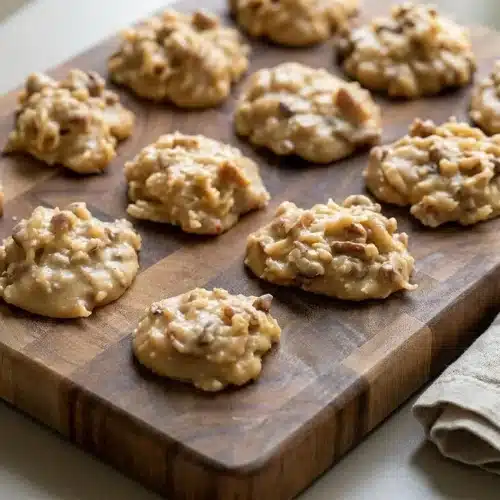
The coating should cool noticeably and become thicker, with less of its initial glossy sheen. - Portion the thickened mixture onto wax paper-lined baking sheets using a tablespoon or small ice cream scoop.
Each scoop should form a mound instead of spreading into a thin puddle. - Leave the cookies undisturbed until fully set, using the freezer to help them firm if necessary.
They’re ready to lift when the coating holds together and the bottoms release from the paper.
Step 1: Melt the Sugars, Milk, Corn Syrup, and Butter
Stir across the bottom and into the corners of the saucepan, not just through the center. Even heating helps blend the sugars and melted butter before the boil. Look for a uniform syrup without separate pools of butter.
Step 2: Boil for 3 Full Minutes
Start the timer when bubbles rise vigorously across the surface and don’t disappear with stirring. A few bubbles around the edge aren’t a full boil. The mixture develops a rich butterscotch aroma as it cooks; a sharp, burnt smell signals scorching rather than useful browning.
Step 3: Stir in Coconut and Pecans Until Thickened
Move the pan off the heat before adding the vanilla and salt. After folding in the coconut and pecans, continue stirring for 3 to 4 minutes. The syrup should cling more closely to the pieces and look slightly creamy or matte. That change helps keep the cookies from spreading flat.
Step 4: Scoop onto Wax Paper and Let Set
Work steadily once the coating thickens. A tablespoon makes modest mounds; a small ice cream scoop helps keep portions consistent. Allow roughly 1 to 2 hours for cooling and setting, but check the texture before lifting them. Kitchen warmth can affect how quickly they firm.
Expert Tips and Troubleshooting Common Mistakes
Most texture problems begin with the boil or the cooling stir. Check those stages before changing ingredients. Humid air can also leave candy-style cookies tacky, so a cool, dry workspace helps.
Toast the Pecans and Coconut for Deeper Flavor
For an optional flavor boost, toast the pecans and coconut in a dry skillet over medium heat before starting the syrup. Stir often and remove them when fragrant and lightly golden. Toasting them separately gives you better control because coconut can brown before the pecans are ready.
This adds roasted flavor, but it isn’t required for the cookies to set. Keep the toasted ingredients ready nearby so you don’t interrupt the syrup cooking.
Why Your Cookies Are Too Runny or Sticky
- The timer started too early: Counting from the first edge bubbles can leave the syrup undercooked. Begin the full cooking interval only after the entire surface reaches a rolling boil.
- The mixture was too thin when scooped: Pause portioning and continue the off-heat stirring until the syrup clings to the coconut and nuts.
- The kitchen is warm or humid: Move the tray away from steam and warm appliances, and chill it to help the coating firm.
- The scooped cookies stay soft: Use the freezer to help them set, but remember that cold firms the coating rather than correcting an undercooked syrup.
Why Your Cookies Turned Dry or Crumbly
- The syrup cooked too long: Extra boiling drives off moisture. Have the timer ready and remove the pan promptly when the cooking interval ends.
- Crystals entered the coating: Avoid scraping dried, crusty sugar from the saucepan walls into the cooling mixture.
- The mixture set before portioning: Have the lined trays beside the pan and scoop steadily once the coating thickens. Don’t keep stirring until it becomes stiff.
If a batch turns too crumbly to lift neatly, use the pieces as a dessert topping rather than trying to force them back into cookies.
Easy Variations and Customizations
Keep these changes optional and separate from the main method. Coconut type and added oats affect how much syrup remains available to bind each mound.
Salted Unsweetened Coconut Variation
Unsweetened flaked coconut gives a less sweet bite, though the sugar coating remains rich. Larger flakes also produce a more noticeable chew than fine shreds. A light sprinkle of flaky sea salt immediately after scooping adds contrast while the surface is still tacky.
Adding Rolled Oats for Extra Chew
Quick-cooking or old-fashioned rolled oats can create a heartier texture when folded in with the coconut and pecans. They also absorb syrup, so adding them freely can make the cookies dry or difficult to scoop.
For a cookie designed around oats rather than an experimental adjustment, try no-bake peanut butter oatmeal cookies. Keep the praline recipe unchanged when dependable texture is the priority.
Evaporated Milk vs Sweetened Condensed Milk
- Evaporated milk is concentrated milk without added sugar, allowing the measured sugars and corn syrup to control this mixture.
- Sweetened condensed milk already contains substantial sugar and has a thicker consistency, so it changes both sweetness and the sugar-to-liquid balance.
- Condensed milk shortcuts need their own proportions and cooking method; don’t substitute it cup for cup here.
Storage, Make-Ahead, and Serving Suggestions
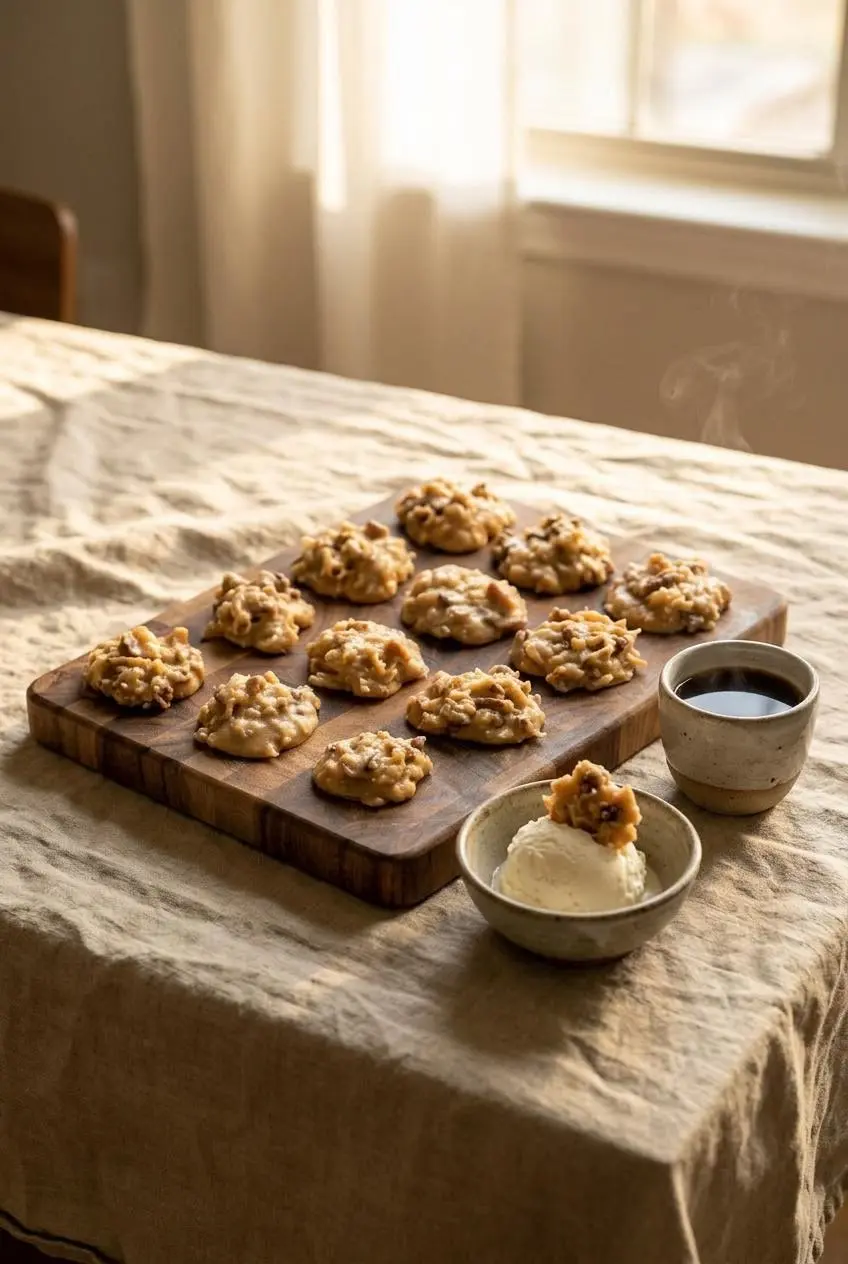
Let the cookies cool and set completely before putting them in a container. Packing warm cookies traps moisture and encourages sticking.
Use a tightly sealed container with wax paper or parchment between layers. Keep it away from the stove, dishwasher, direct sun, and other warm or humid spots. Refrigeration can help preserve a firmer texture when the kitchen is warm.
For make-ahead preparation, measure the ingredients and line the trays before cooking. If you’re assembling gifts, finish the setting stage before packing the cookies, and keep them separate from moist desserts. No specific room-temperature storage limit is established here, so avoid treating them as an indefinitely shelf-stable candy.
- Holiday platters: Pair them with chocolate fudge, peppermint bark, or Almond Joy cookies for contrasting textures.
- Coffee service: Offer modest portions with hot black coffee or espresso to balance the rich sweetness.
- Ice cream topping: Crumble a cookie over vanilla ice cream just before serving so the pecans retain their crunch.
Conclusion
These buttery praline cookies reward a little attention at the stove with chewy coconut and plenty of pecan crunch. Give the syrup a full rolling boil, then let the cooling stir bring it to a scoopable consistency.
Keep the trays ready and resist portioning while the coating is still thin. Once you’re comfortable with that texture cue, try the toasted pecan and coconut option for a deeper roasted finish.
Frequently Asked Questions
Why Did My No Bake Coconut Pecan Praline Cookies Not Set?
The syrup may have been underboiled, or the mixture may have been scooped before it cooled and thickened. Chill the tray or use the freezer to help it firm. For the next batch, check both the rolling boil and the off-heat stirring stage.
Do I Need a Candy Thermometer to Make These Praline Cookies?
No. This method uses a timed rolling boil followed by texture cues. Start timing only when the surface bubbles vigorously throughout; a timed boil doesn’t guarantee an identical temperature in every pan or kitchen.
Can I Use Sweetened Condensed Milk Instead of Evaporated Milk?
No, not as a direct swap. Its added sugar and thicker consistency change the balance of this syrup. Choose a method specifically developed for condensed milk instead.
How Long Do No Bake Praline Cookies Last and How Should I Store Them?
A verified storage duration isn’t established for this recipe. Once fully cooled, keep the cookies in a sealed container with paper between layers, protect them from warmth and humidity, and refrigerate when needed to maintain their texture.
No Bake Coconut Pecan Praline Cookies

Equipment
- Large saucepan
- tablespoon or small ice cream scoop
- wax paper-lined baking sheets
Ingredients
- 2 cups pecans
- 2 cups sweetened shredded coconut
- 1 1/2 cups sugar
- 1 cup brown sugar
- 1/2 cup evaporated milk
- 1/2 cup light corn syrup
- 1/2 cup unsalted butter (1 stick)
- 1 teaspoon vanilla extract
- 1/2 teaspoon salt
Instructions
- Heat the granulated sugar, brown sugar, evaporated milk, corn syrup, and butter in a large saucepan over medium-high heat, stirring to combine. Keep stirring until the butter disappears into a smooth, evenly blended syrup.
- Maintain a full boil for 3 minutes, take the saucepan off the burner, mix in the vanilla and salt, and fold in the coconut and pecans before stirring for another 3 to 4 minutes. The coating should cool noticeably and become thicker, with less of its initial glossy sheen.
- Portion the thickened mixture onto wax paper-lined baking sheets using a tablespoon or small ice cream scoop. Each scoop should form a mound instead of spreading into a thin puddle.
- Leave the cookies undisturbed until fully set, using the freezer to help them firm if necessary. They’re ready to lift when the coating holds together and the bottoms release from the paper.