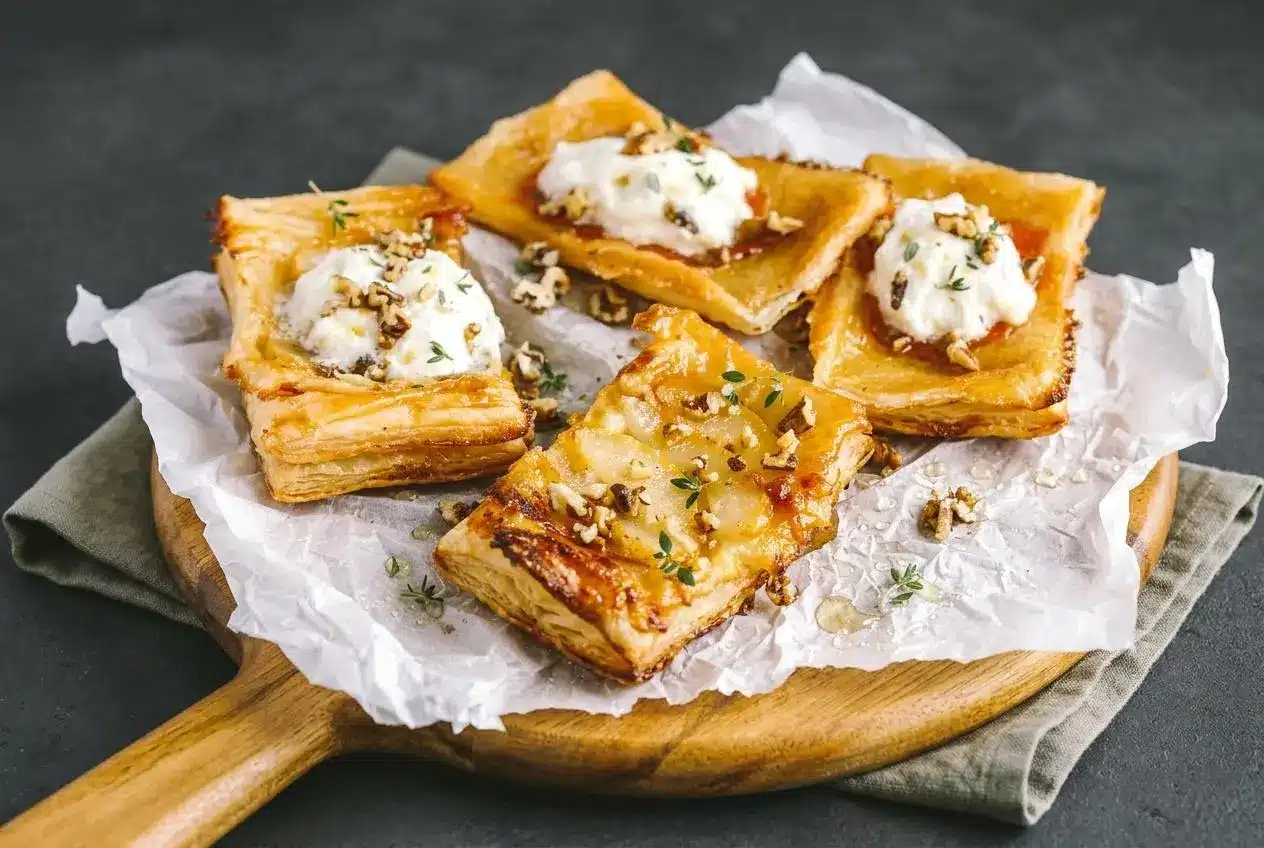
Make upside down puff pastry tarts by arranging honey, fruit or savory fillings, and cheese on parchment, covering with cold pastry rectangles, and baking at 400°F until golden. Flip while warm to reveal the caramelized topping beneath the flaky crust.
These individual tarts bake filling-side down, leaving the pastry free to rise into buttery layers. Apricots bring a bright, tangy sweetness, while thin pear slices pair beautifully with creamy brie. The honey bubbles around the edges as the pastry turns golden.
You get the pleasure of a caramelized fruit tart without shaping a crust or fitting dough into tart pans. One sheet of pastry makes a mix of desserts, and the same technique works for savory appetizers. The warm flip makes the difference.
Have a wide spatula and serving plate ready before the tarts leave the oven so you can turn them while the honey is still fluid.
Ingredients You Need and Why Each One Matters
Puff pastry supplies the flaky structure, honey and brown sugar create the caramelized topping, and fruit adds moisture and brightness. Brie brings richness, cinnamon adds warmth, and the egg wash gives the crust color. Walnuts, thyme, and whipped cream finish the tarts with crunch, aroma, and softness.
- 8-12 tsp liquid honey
- 1 sheet pre made frozen puff pastry, defrosted
- 2-3 apricots, sliced into 5-6 slices each
- 10-15 thin slices of pear
- 2-3 sliceds of brie cheese
- 4-6 tsp brown sugar
- cinnamon
- 1 egg + splash of water for an egg wash
- coarse or regular sugar
- chopped walnuts, fresh thyme and whipped cream for serving
Puff pastry: Defrost it following the package directions, but keep it cold enough to feel firm rather than sticky. Its alternating fat and dough layers need that cold start to rise distinctly. Dough that stretches or smears under the knife has become too warm to handle neatly.
Apricots and pears: Choose ripe fruit that still holds its shape when sliced. Very soft fruit can collapse into a wet layer beneath the dough. Thin slices soften more evenly than chunky pieces and make the finished tart easier to cut. Soft berries tend to release more loose juice, so they aren’t the strongest choice for this method.
Honey, brown sugar, and cinnamon: Liquid honey spreads into a base for the fruit, while brown sugar adds a deeper caramel flavor. Cinnamon brings warmth without needing to dominate the fruit. Keep the honey beneath the filling rather than spreading it across the exposed parchment.
Brie and finishing ingredients: Brie gives the pear tarts a creamy, gently savory contrast to the sweet topping. The egg wash encourages a glossy golden crust; the sugar sprinkled over it adds surface crunch if desired. Whipped cream softens each bite, walnuts add texture, and fresh thyme gives the fruit a fragrant finish.
I keep the defrosted puff pastry in the refrigerator until cutting time so the layers stay firm and the rectangles lift cleanly.
How to Make the Upside Down Puff Pastry Tarts Step by Step
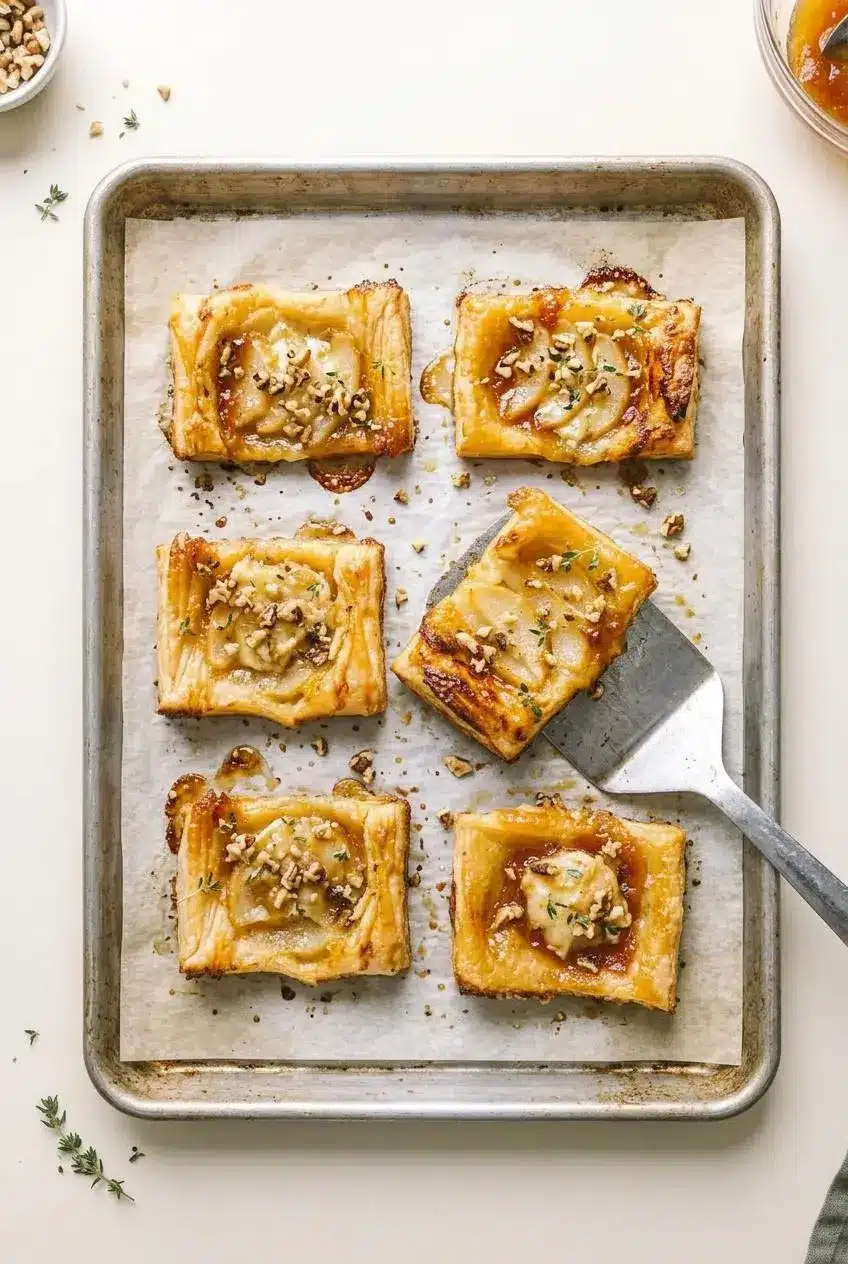
Prep: 10 minutes. Cook: 30 minutes. Total: 40 minutes. Yield: 4–6 tarts. Use a large rimmed sheet pan, parchment paper, and a fork.
Build each filling pile smaller than its pastry rectangle, leaving room around it for a crimped border. Space the piles so the dough can expand without touching neighboring tarts. For the pear-and-brie combination, the brie belongs over the pear slices, beneath the pastry.
- Set the oven to 400°F and cover a large rimmed sheet pan with parchment paper.
The raised rim will contain bubbling honey, and the parchment should lie flat beneath the tarts. - Divide the cold puff pastry sheet into 4–6 rectangles with a sharp knife.
Keep the pieces evenly sized, with clean edges and no stretched corners. - Build 2–3 apricot fillings and 2–3 pear fillings on the parchment, using 2 tsp honey beneath each, 5–6 apricot slices for each apricot tart or thin pear slices for each pear tart, then 1 tsp brown sugar and a pinch of cinnamon over each filling.
Keep the fruit in compact, gently overlapping layers so each pile fits beneath its pastry rectangle. - Cover every filling with a pastry rectangle and press the exposed borders firmly against the parchment using a fork.
A continuous crimped edge helps contain the juices and steam beneath the dough as the fruit softens. - Coat the pastry tops with the egg-and-water wash, add a sprinkle of sugar if desired, and bake for 25–30 minutes.
Look for a well-risen, deep golden-brown crust with bubbling honey around the edges rather than pale, soft-looking dough. - Allow the baked tarts to rest on the sheet pan for a few minutes, then lift each with a wide spatula and turn it filling-side up onto a plate.
The topping should still look glossy, with warm honey holding the softened fruit together.
Brush the broad top surface of the pastry without flooding the fork marks or cut edges. A light coating gives color without weighing down the dough. During baking, use both the clock and the crust: a puffed but pale tart still needs more browning.
Turn each tart individually rather than trying to invert the whole pan. Support the pastry underneath with the spatula and make one controlled turn. The caramelized fruit will be hot, so keep your fingers away from the filling.
Expert Tips and Troubleshooting for Crisp Pastry
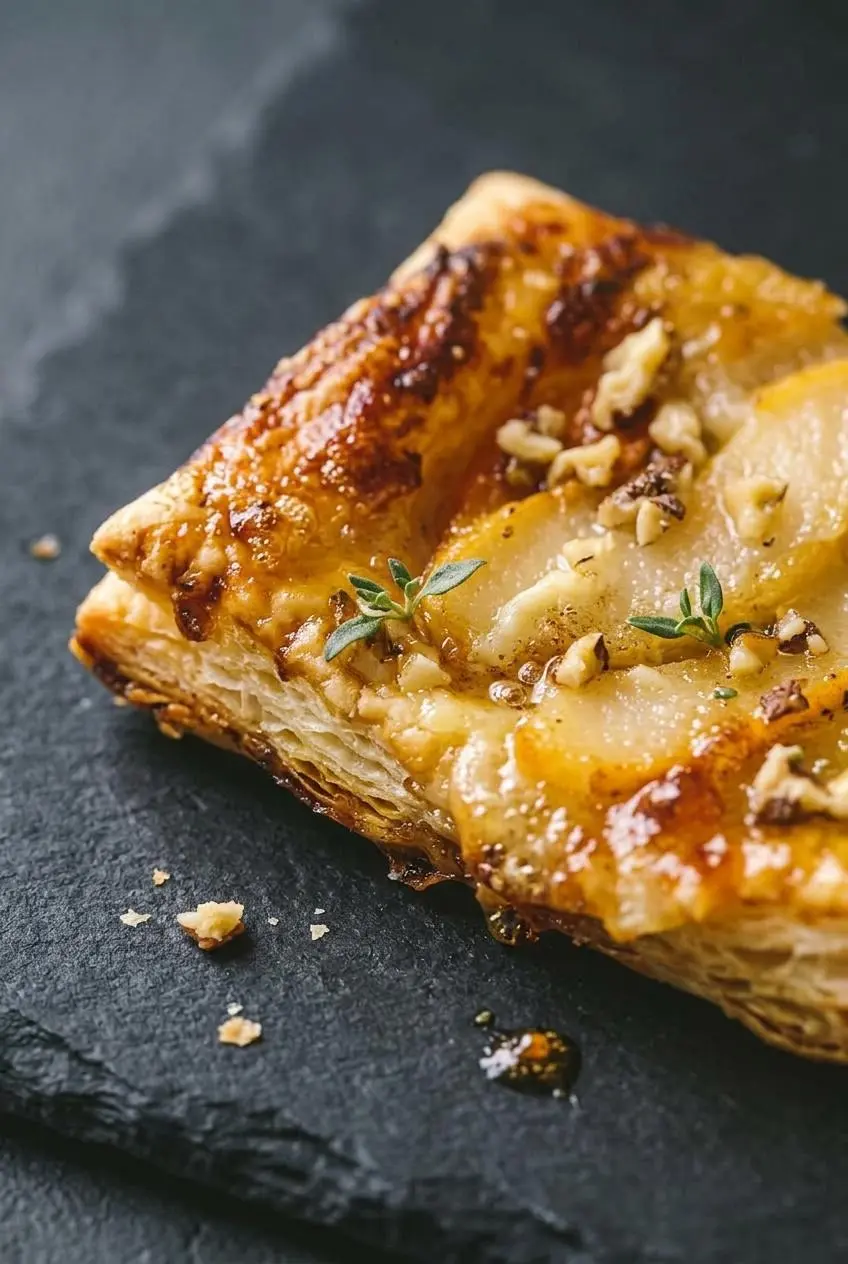
Most problems come from excess moisture, warm dough, or waiting too long to turn the tarts. Adjust those details before adding more filling or changing the baking temperature.
How to Prevent a Soggy Bottom
- Wet filling: Very ripe fruit releases loose juice that can soak the pastry where it touches the topping. Choose firm fruit, blot wet cut surfaces, and arrange thin slices rather than a deep mound.
- Dense, greasy pastry: Warm dough loses its neat layers during handling. Keep it chilled until assembly and avoid repeatedly stretching the rectangles over oversized fillings.
- Pale, soft crust: Removing the tarts as soon as they puff can leave the dough underbaked. Wait for pronounced golden-brown color as well as height.
- Uneven puffing: Deep fold creases can create uneven thickness. Gently roll folded pastry on a lightly floured surface into an even 8×10 or 10×12 inch rectangle, about 1/4 inch thick, before cutting.
For an optional moisture buffer, scatter a light dusting of finely ground walnuts or almond flour over the fruit before covering it with pastry. It may help absorb some juice, but it won’t compensate for an overloaded filling. A tiny pinch of flaky sea salt in the honey can also balance the sweetness without changing the tart’s character.
Keep fruit slices thin enough to soften and separate easily under a fork. For savory versions, break up whole onion rings into half-moons or diced pieces so one bite doesn’t pull off the entire topping.
Timing the Flip for Easier Release
A brief rest lets the bubbling honey thicken enough to cling to the fruit. Aim to flip after about 1–3 minutes, while the topping remains warm and glossy. Don’t wait until the pan feels cold: cooled sugar can make the fruit cling firmly to the parchment.
- Filling slides off: The honey may still be very runny. Give the tarts their brief rest and support the whole rectangle while turning.
- Fruit stays on the paper: The caramel may have cooled too much. Ease the parchment away gently rather than tugging the tart upward.
- Honey spreads between tarts: Oversized honey pools or crowded fillings encourage merging. Keep each pool centered beneath its own fruit pile.
Sweet and Savory Variations to Try
Keep these combinations optional. The adaptable pattern is a liquid base, thin produce or filling, cheese or seasoning, and cold puff pastry. This individual sheet-pan approach echoes the filling-first idea of French tarte tatin without using a skillet.
Cut one pastry sheet into 4–6 dessert rectangles, or use 9 smaller squares for party appetizers. Smaller pieces need proportionally smaller fillings; piling them high makes sealing and flipping harder. Watch their color closely rather than assuming every size finishes together.
- Tomato, pesto, and mozzarella tarts: Spread a restrained layer of pesto, add thin tomato slices blotted dry, and top with well-drained fresh mozzarella before covering with pastry.
- Apricot and thyme: Keep the fruit-and-honey combination and use fresh thyme at serving for a fragrant contrast.
- Pear and brie: Pair thin pear slices with creamy brie for a tart that works as dessert or a sweet-savory starter.
Savory Onion, Gruyere, and Hot Honey Tarts
Use hot honey beneath thinly sliced yellow onions, fresh thyme, and shredded or sliced Gruyere. The cheese brings nutty richness, while the honey adds sweetness and gentle heat. Keep the onion layer shallow so it softens beneath the pastry.
Cut the onion into thin half-moons or diced pieces instead of leaving full rounds intact. This makes the topping much easier to bite through. After flipping, look for softened, browned onion edges rather than expecting the deep flavor of onions slowly caramelized in a skillet.
Caramelized Apple and Cinnamon Tarts
Combine honey with a dab of melted butter, brown sugar, cinnamon, and thinly overlapped slices of crisp apple. Arrange the fruit neatly with its red skin edges facing upward before covering, keeping the slices flat rather than standing them on edge.
Choose apples that hold their shape, and avoid thick wedges that may remain firm while the dough browns. For another way to pair spiced apples with flaky dough, try these caramel apple puff pastries.
Prosciutto, Goat Cheese, and Jam Appetizer Tarts
Replace the honey with a thin layer of fruit or pepper jam, then add loosely folded prosciutto and crumbled goat cheese. Leave enough exposed pastry around the filling to make a firm border. A drizzle of balsamic glaze after turning adds a tangy finish.
Keep the prosciutto folds loose and bite-sized rather than stacking a dense bundle. Pepper jam gives these appetizers a sweet-hot edge; fruit jam makes a softer contrast to the salty meat and tangy cheese.
Serving Suggestions, Storage, and Reheating
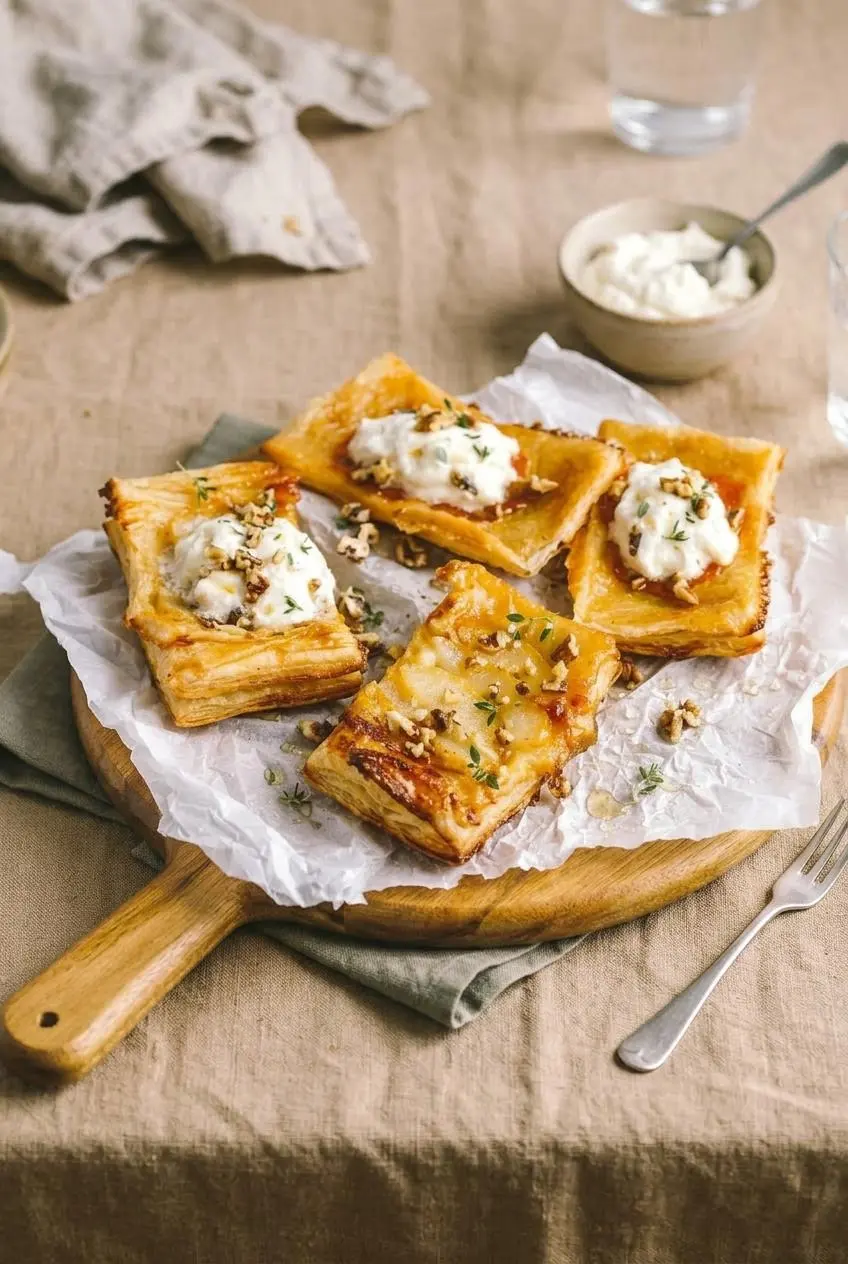
Serve the fruit tarts warm, once the topping has settled enough to eat comfortably. Add whipped cream, vanilla bean ice cream, toasted chopped walnuts, or fresh thyme just before serving. Keeping cold toppings separate preserves the pastry’s crisp edges.
Savory onion or prosciutto tarts pair well with a crisp Greek salad for lunch. For a party, arrange the smaller tarts on a platter without stacking them, which can trap steam and crush their raised layers.
For leftovers, let the tarts stop steaming before placing them in a covered container in the refrigerator. Store whipped cream and other toppings separately. Avoid sealing hot pastry tightly, since condensation softens the crust.
To re-crisp chilled tarts, place them filling-side up on a parchment-lined pan and warm them in the oven until heated through and crisp at the edges. Watch the caramelized topping so it doesn’t scorch. The microwave is a poor choice for texture because it tends to leave puff pastry soft or chewy.
Freshly baked tarts have the strongest contrast between crisp crust and soft filling. If serving stored tarts, warm only the portions you plan to serve and add the finishing toppings afterward.
Conclusion
Golden pastry, softened fruit, and a glossy honey topping all come together on one sheet pan. Keep the dough cold, the filling shallow, and the crust well browned for the best texture.
Flip after a brief rest while the honey is still warm. Next time, try the optional ground-walnut layer or the onion-and-Gruyere combination, keeping that same crisp pastry finish in mind.
Frequently Asked Questions
How Do You Stop Puff Pastry From Getting Soggy on the Bottom?
Use firm fruit in thin slices rather than soft, watery berries or thick chunks. Bake at 400°F until the pastry browns fully, not merely until it rises. Turn the tarts after their brief rest so the filling faces upward and steam can escape.
Can I Make Upside Down Puff Pastry Tarts Ahead of Time and Reheat Them?
Freshly baked tarts give the crispest result; refrigerate baked leftovers in a covered container once they stop steaming. Rewarm them on a parchment-lined pan in the oven until heated through and crisp. Keep whipped cream and other finishing toppings separate until serving.
Can I Use Phyllo Dough Instead of Puff Pastry?
Phyllo isn’t a direct substitute for this method because its individual sheets are much thinner and require different handling. Use puff pastry for the substantial, buttery layers that support the honey and fruit topping.
What if My Puff Pastry Comes in a Folded Square Instead of a Sheet?
Defrost it following the package directions, keeping the dough cool enough to handle without sticking. Gently roll it on a lightly floured surface into an even 8×10 or 10×12 inch rectangle, about 1/4 inch thick, before cutting.
How Do You Keep Onion or Fruit Slices Easy to Bite in Upside Down Tarts?
Slice fruit and onions thinly so they soften evenly beneath the pastry. Cut onion rounds into half-moons or diced pieces rather than leaving complete rings. Keep the filling shallow so a fork can cut through the topping and crust together.
Upside Down Puff Pastry Tarts

Equipment
- Large sheet pan
- Parchment Paper
- Fork
Ingredients
- 8-12 tsp liquid honey
- 1 sheet pre made frozen puff pastry defrosted
- 2-3 apricots sliced into 5-6 slices each
- 10-15 thin slices of pear
- 2-3 sliceds of brie cheese
- 4-6 tsp brown sugar
- cinnamon
- 1 egg + splash of water for an egg wash
- coarse or regular sugar
- chopped walnuts, fresh thyme and whipped cream for serving
Instructions
- Set the oven to 400°F and cover a large rimmed sheet pan with parchment paper. The raised rim will contain bubbling honey, and the parchment should lie flat beneath the tarts.
- Divide the cold puff pastry sheet into 4–6 rectangles with a sharp knife. Keep the pieces evenly sized, with clean edges and no stretched corners.
- Build 2–3 apricot fillings and 2–3 pear fillings on the parchment, using 2 tsp honey beneath each, 5–6 apricot slices for each apricot tart or thin pear slices for each pear tart, then 1 tsp brown sugar and a pinch of cinnamon over each filling. Keep the fruit in compact, gently overlapping layers so each pile fits beneath its pastry rectangle.
- Cover every filling with a pastry rectangle and press the exposed borders firmly against the parchment using a fork. A continuous crimped edge helps contain the juices and steam beneath the dough as the fruit softens.
- Coat the pastry tops with the egg-and-water wash, add a sprinkle of sugar if desired, and bake for 25–30 minutes. Look for a well-risen, deep golden-brown crust with bubbling honey around the edges rather than pale, soft-looking dough.
- Allow the baked tarts to rest on the sheet pan for a few minutes, then lift each with a wide spatula and turn it filling-side up onto a plate. The topping should still look glossy, with warm honey holding the softened fruit together.