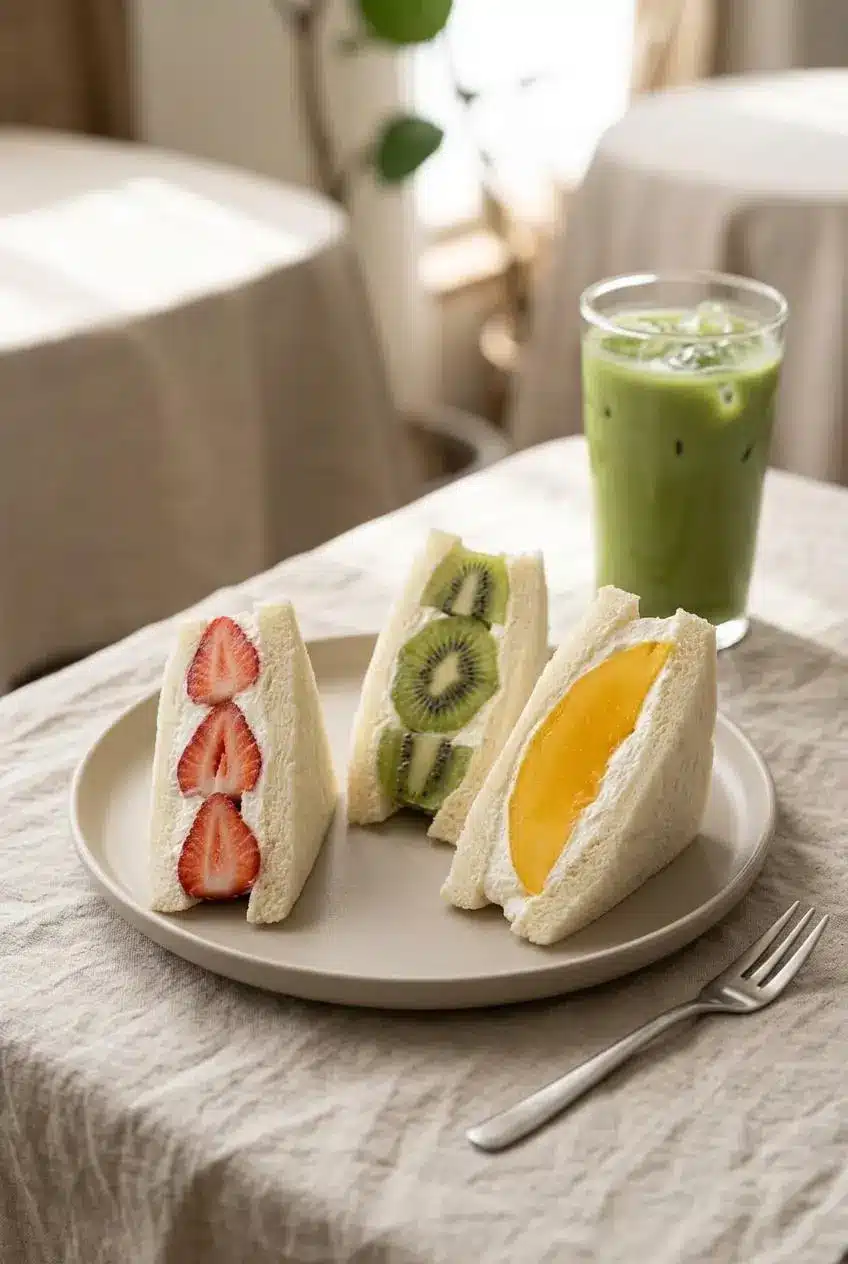
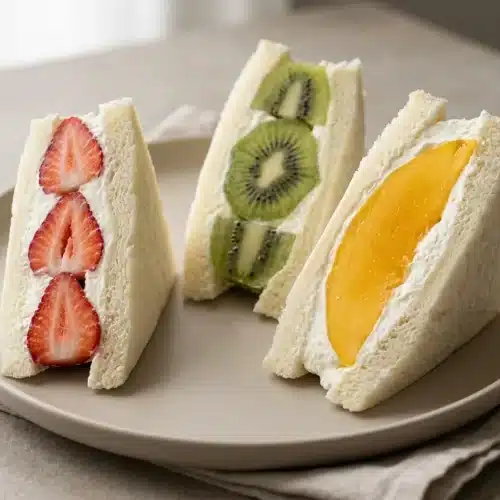
A Japanese fruit sandwich, or fruit sando, combines crustless milk bread, sweetened whipped cream, and fresh fruit. Chilling the wrapped sandwich firms the filling before slicing, helping you reveal a neat, colorful fruit cross-section.
Think of a japanese fruit sandwich as a no-bake shortcake you can hold: pillow-soft bread, cold sweet cream, and bright strawberries, mango, and kiwi. The bread stays untoasted, so every bite feels tender rather than crisp.
The satisfying part is cutting through the sandwich and finding fruit nestled neatly in cream. You don’t need elaborate decorating skills, just thoughtful placement and patience while it chills. The diagonal makes the difference.
Set out your plastic wrap and marker before assembly so you can record the cutting line while the fruit placement is still visible.
Essential Ingredients and Their Roles
Milk bread provides a tender structure, whipped cream cushions the fruit, and powdered sugar balances its tartness. Strawberries, mango, and kiwi bring contrasting colors, fresh flavor, and distinct shapes that make each cut appealing.
- 8 slices Japanese milk bread (shokupan)
- 2 cups (1 pint) heavy cream
- 3-5 tablespoons powdered sugar
- 6 strawberries
- 1 mango
- 3 kiwis
Use cold heavy cream for a filling that whips into firm peaks and supports the fruit. Heavy cream has the richness and whipping ability this sandwich needs; milk or half-and-half won’t produce the same structure.
Start with the lower end of the powdered sugar range, especially when your mango is sweet. The sugar sweetens the cream, but proper whipping supplies most of the filling’s structure. Extra sugar won’t rescue runny cream.
I’d give peeled mango and kiwi a thorough blot with paper towels so the cream clings to the fruit instead of sliding over a wet surface.
Japanese Milk Bread (Shokupan) and Best Substitutes
Shokupan has a fine, soft crumb that feels almost cake-like against whipped cream. Choose slices substantial enough to hold the filling without bending, but avoid slices so thick that the bread overwhelms the fruit.
If you can’t find shokupan at an Asian bakery or market, try one of these untoasted alternatives:
- Thick-sliced Texas toast bread: Choose plain, soft slices, not garlic-seasoned or already toasted bread.
- Soft white Pullman loaf: Its even crumb and square shape make trimming and assembly straightforward.
- Crustless brioche: This gives a richer, sweeter bite, so start conservatively with the powdered sugar.
Best Fruits to Use and Watery Fruits to Avoid
Firm fruit that holds its shape works better than fruit that releases juice as soon as you cut it. Ripeness matters as much as the variety.
- Strawberries: Choose firm berries and remove their leafy tops without hollowing out the centers.
- Mango: Use ripe flesh that cuts cleanly rather than collapsing into pulp.
- Kiwi: Peeled whole kiwi creates a round cross-section; avoid fruit too soft to hold its shape.
- Watermelon and very juicy citrus: Keep these out of the filling because released juice can wet the cream and bread.
How to Make a Japanese Fruit Sandwich Step by Step
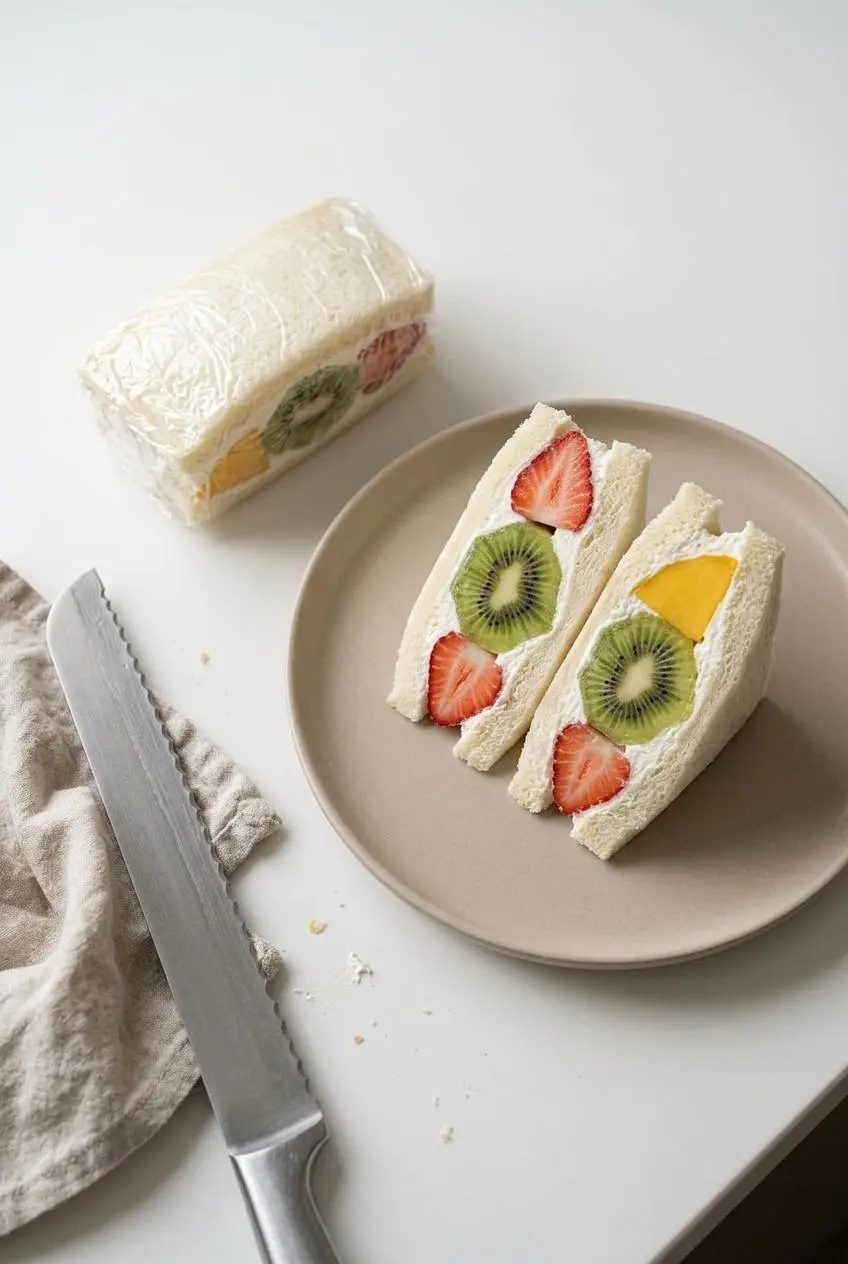
This method makes four sandwiches from the eight bread slices. A bowl, whisk or hand mixer, plastic wrap, marker, and serrated knife cover the main tasks; a piping bag makes filling around the fruit easier.
- Prepare the bread and fruit by trimming away the crusts, removing the strawberry tops, peeling the mango and kiwis, and cutting the fruit for assembly.
The fruit pieces should hold their shape and have dry surfaces after blotting with paper towels. - Whip the cold heavy cream with 3 tablespoons powdered sugar using a whisk or hand mixer, adding more sugar within the listed range if you prefer a sweeter filling.
Stop when the cream looks smooth and forms upright peaks that stay in place when you lift the whisk. - Build four sandwiches by spreading cream on four bread slices with a slightly raised center, positioning fruit along a diagonal, filling around and over it with the remaining cream, adding the other bread slices, and wrapping each sandwich individually with a marked cutting line.
The filling should surround the fruit without open pockets, and the snug wrap should hold the bread in place without squeezing cream out. - Leave the wrapped sandwiches in the refrigerator for at least 1 hour, or let them chill overnight.
The filling should feel set enough to support the fruit rather than shift under gentle handling. - Cut each chilled sandwich along its marked diagonal with a serrated knife, then peel away and discard the plastic wrap.
A gentle sawing motion should reveal fruit centers surrounded by cream without flattening the bread.
Prepping the Fruit and Whipping the Cream
Before peeling or cutting, wash the fruit under running water without soap or detergent, trim away damaged areas, and promptly refrigerate cut fruit you aren’t using immediately.
Drying deserves attention after peeling, too. Gently blot mango and kiwi with paper towels, including their cut surfaces. You want the cream to meet fruit, not a film of juice.
As the cream thickens, check it more frequently. A lifted whisk should leave a peak that stands without drooping. Stop while the texture remains smooth; graininess signals that you’ve gone too far.
Diagonal Assembly and Wrapping Technique
Imagine a line from one bread corner to the opposite corner. Center the fruit you want to reveal on that line, so the knife passes through its middle rather than skimming an edge. Fill the surrounding spaces without overcrowding.
A slightly taller mound of cream in the center cushions the larger pieces. Pipe cream into gaps beside and beneath the fruit, or work it in carefully with a spoon. Empty pockets leave weak spots when you cut.
Wrap snugly, not forcefully. Once the upper bread slice hides your arrangement, a marker line on the outside of the wrap preserves the planned cutting direction.
Chilling and Slicing for a Clean Cross-Section
Let the refrigerator firm the filling before you reach for the knife. Warm, freshly whipped cream moves more easily under pressure, carrying the fruit with it.
Use light, controlled sawing strokes rather than pressing straight down. Between cuts, wipe the serrated blade with a clean, warm, damp cloth and remove excess moisture. This clears cream from the teeth before it can smear across the next fruit center.
Remove every piece of plastic wrap after cutting, including any small strips along the cut edges.
Common Mistakes and Troubleshooting
Most messy fruit sandos come from excess moisture, soft cream, or too much pressure. Fix the filling before assembly whenever possible.
- Wet bread: Fruit juice is often the culprit. Blot the fruit thoroughly, avoid watery melon, and spread cream across the bread so fruit doesn’t rest directly on an uncovered patch.
- Runny cream: If the peak bends over immediately, the cream needs more whipping. Chill the bowl if the mixture has warmed, then continue until it holds upright peaks.
- Grainy cream: Over-whipping can take the mixture past its smooth, spreadable stage. Stop the mixer as soon as you notice roughness rather than continuing in hopes of making it firmer.
- Sliding fruit: Wet surfaces or oversized pieces make assembly unstable. Dry the fruit, choose pieces that fit comfortably between the bread, and fill the spaces around them with cream.
- Holes in the cut face: Trapped air leaves gaps beside the fruit. Direct the piping bag into those spaces before covering the filling.
- Squashed sandwiches: Tight wrapping doesn’t mean crushing. Pull the wrap snug around the bread without pressing down on the center.
- Smeared slices: A warm filling or cream-coated blade can spoil the cut. Chill fully, saw gently, and wipe the knife between cuts.
Save juicy fruit and irregular trimmings for a rainbow fruit salad instead of squeezing them into an already full sandwich.
Popular Fruit Sando Variations
Keep these changes optional. The mixed-fruit sandwich above needs no extra ingredients to hold together when the cream is properly whipped.
Japanese 7-Eleven Style Strawberry Sando
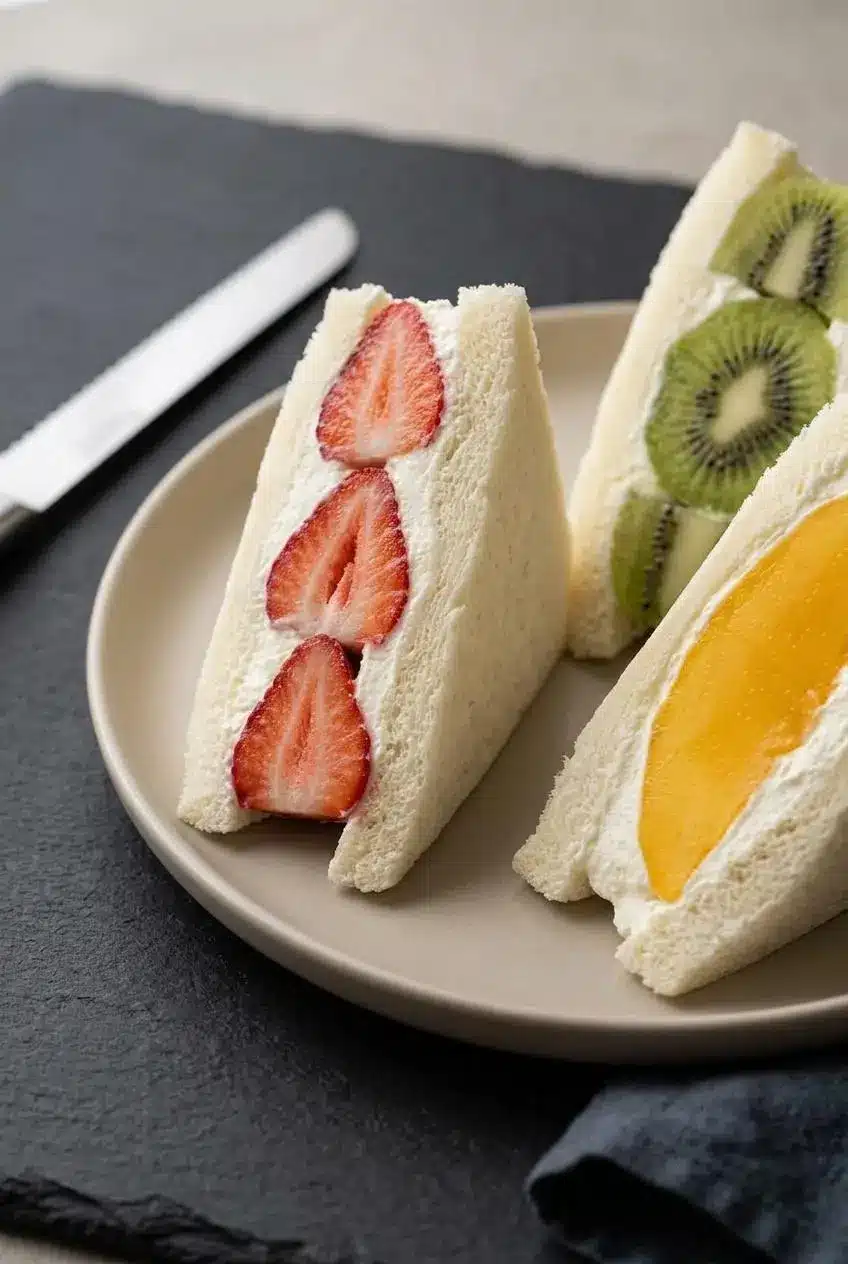
For a konbini-inspired version, use strawberries as the fruit filling. Choose berries of similar size and arrange them neatly along the diagonal, with their centers on the cutting line.
This gives you a repeating red-and-white cross-section with a consistent texture throughout. It’s a homemade interpretation of the Japanese convenience-store treat, rather than a claim to duplicate a particular packaged product.
Stabilized Mascarpone Cream
For an optional richer filling, blend mascarpone into the cold cream before whipping. It can give the cream more body and a denser, bakery-style texture. Vanilla is another optional addition if you prefer a more dessert-like aroma.
Keep the same smooth, upright-peak target. Mascarpone doesn’t replace careful fruit drying or chilling, and the standard whipped cream remains a lighter-tasting choice.
- Tropical emphasis: Highlight the mango and kiwi on the cutting line, using strawberries for contrasting color.
- Cinnamon-sugar crust sticks: Toast the trimmed bread crusts and serve them with creamy strawberry fruit dip.
- Breadcrumbs: Dry and crush the crusts for another kitchen use rather than discarding them.
Make-Ahead, Storage, and Serving Ideas
The required chilling period makes this a practical dessert to assemble before serving. The method allows chilling from at least an hour through overnight; that is an assembly window, not a tested shelf-life claim.
Keep each sandwich wrapped during chilling to protect the bread from drying refrigerator air. After cutting, cover any remaining halves and return them to the refrigerator. For the best texture, serve once the filling has set rather than planning extended storage.
Keep the refrigerator at 40 °F or below and keep these cream-filled sandwiches chilled until serving.
Unsweetened iced matcha, Japanese green tea, or black coffee balances the sweet cream nicely. Serve the halves cold on small plates so the filling stays firm as you eat.
For a picnic or bento, protect wrapped halves in a rigid container inside a chilled insulated bag with ice packs. Bring them out when you’re ready to eat rather than leaving them on the picnic table.
For a café-style brunch, pair the chilled sandwiches with freshly made Japanese souffle pancakes. The contrast between warm pancakes and cold fruit cream makes the spread feel especially inviting.
Conclusion
A fruit sando turns soft bread, whipped cream, and fresh fruit into a cake-like treat without turning on the oven. Dry fruit and smooth, firm cream give it a strong start.
Chill the wrapped sandwiches before following your marked cutting line. Try the optional mascarpone filling when you want more richness, or enjoy the lighter whipped-cream version with a cup of tea.
Frequently Asked Questions
What Is in a Japanese Fruit Sandwich?
It contains crustless Japanese milk bread, heavy cream sweetened with powdered sugar, and fresh fruit. This version uses strawberries, mango, and kiwi.
What Is the Japanese 7-Eleven Fruit Sandwich?
It’s a Japanese convenience-store sweet sandwich made with soft bread, sweet cream filling, and fruit. Strawberry versions inspire the neatly arranged homemade style here; packaged varieties can differ.
Are Japanese Fruit Sandwiches Healthy?
Think of them as a sweet, shortcake-like treat rather than assuming they’re a health food because they contain fruit. This version also includes heavy cream, powdered sugar, and white milk bread; no calculated calorie estimate is available.
How Do You Keep a Fruit Sando From Getting Soggy?
Choose firm fruit, dry its peeled and cut surfaces thoroughly, and avoid very watery fillings. Use firm whipped cream and keep the sandwich wrapped while it chills.
What Bread Can I Use if I Cannot Find Japanese Milk Bread?
Plain thick-sliced Texas toast bread, a soft white Pullman loaf, or brioche can work. Use them untoasted, remove the crusts, and choose a tender crumb rather than a chewy or crusty loaf.
Japanese Fruit Sandwich

Equipment
- bowl
- Whisk or hand mixer
- Piping bag
- Plastic wrap
- Serrated Knife
Ingredients
- 8 slices Japanese milk bread (shokupan)
- 2 cups heavy cream (1 pint)
- 3-5 tablespoons powdered sugar
- 6 strawberries
- 1 mango
- 3 kiwis
Instructions
- Prepare the bread and fruit by trimming away the crusts, removing the strawberry tops, peeling the mango and kiwis, and cutting the fruit for assembly. The fruit pieces should hold their shape and have dry surfaces after blotting with paper towels.
- Whip the cold heavy cream with 3 tablespoons powdered sugar using a whisk or hand mixer, adding more sugar within the listed range if you prefer a sweeter filling. Stop when the cream looks smooth and forms upright peaks that stay in place when you lift the whisk.
- Build four sandwiches by spreading cream on four bread slices with a slightly raised center, positioning fruit along a diagonal, filling around and over it with the remaining cream, adding the other bread slices, and wrapping each sandwich individually with a marked cutting line. The filling should surround the fruit without open pockets, and the snug wrap should hold the bread in place without squeezing cream out.
- Leave the wrapped sandwiches in the refrigerator for at least 1 hour, or let them chill overnight. The filling should feel set enough to support the fruit rather than shift under gentle handling.
- Cut each chilled sandwich along its marked diagonal with a serrated knife, then peel away and discard the plastic wrap. A gentle sawing motion should reveal fruit centers surrounded by cream without flattening the bread.