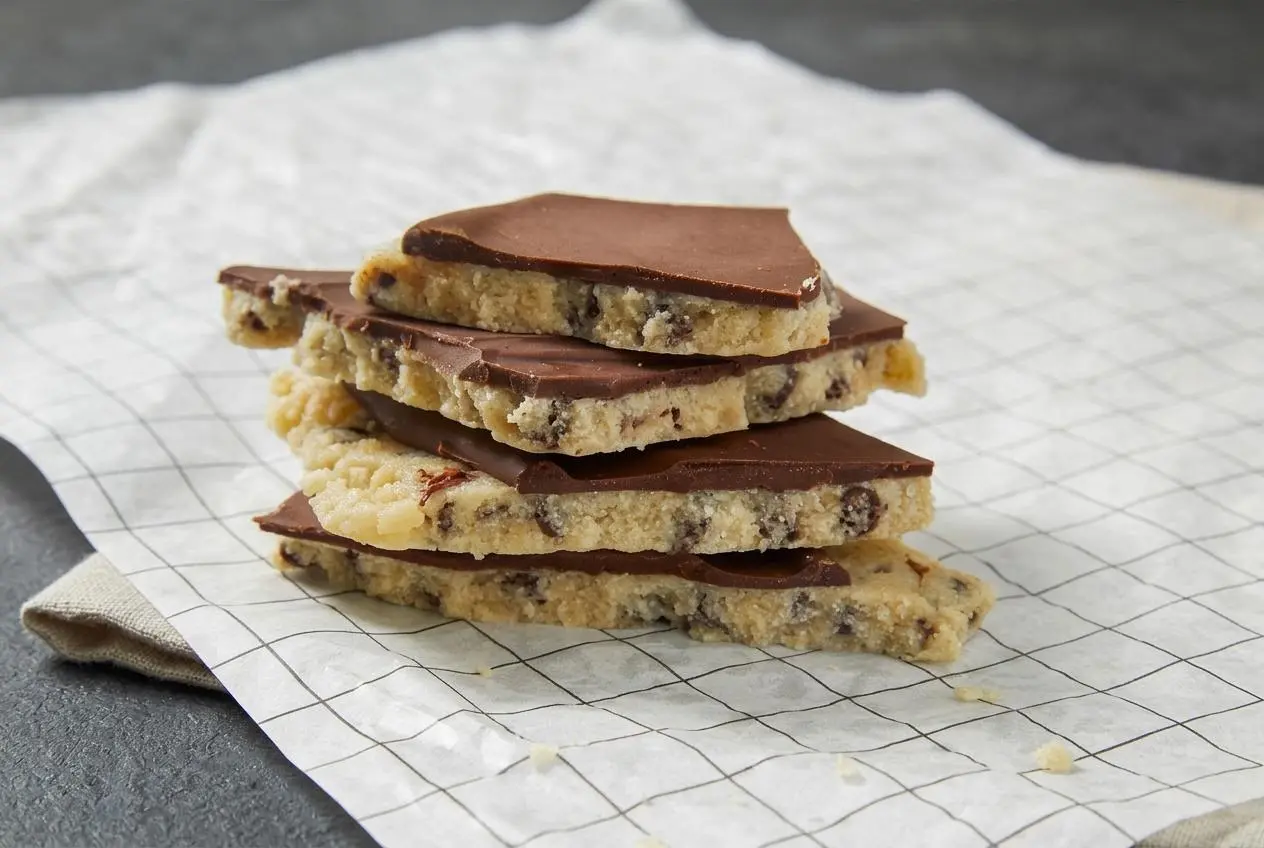
Cookie dough bark is an egg-free, no-bake freezer treat with a crisp chocolate snap over buttery, chewy almond flour dough. Press the dough onto a lined sheet, freeze it, add melted chocolate, and freeze again until firm enough to break into pieces.
This cookie dough bark turns chocolate chip dough into a layered dessert you can pick up with your fingers. Mini chips dot the tender bottom layer, while a semisweet chocolate coating gives each cold piece a satisfying crunch.
Plan on 20 minutes of active prep plus freezing time, with enough for 6 servings. You won’t need an oven, but you do need patience between layers. The first freeze makes the difference.
Clear a flat spot in the freezer for the baking sheet before you start mixing.
Ingredient Roles and Smart Substitutions
Almond flour gives the dough structure and richness, coconut oil binds it, and brown sugar adds sweetness and chew. Vanilla brings cookie-like aroma, salt balances the chocolate, and divided chips create both pockets of chocolate and a crisp coating.
- 1-2/3 cups almond flour
- 3 tablespoons packed brown sugar
- 1/2 teaspoon salt
- 1/2 cup coconut oil, melted and slightly cooled
- 1 teaspoon vanilla extract
- 1-1/2 cups miniature semisweet chocolate chips, divided
Core Ingredients Explained
Almond flour contributes a tender, nutty texture rather than the stretchy structure of wheat dough. Fine almond flour makes a more even layer than coarse almond meal. For this uncooked dessert, choose a product labeled suitable for ready-to-eat use and follow its package directions rather than assuming every flour can be eaten unbaked.
Packed brown sugar brings molasses flavor and a slightly granular, chewy bite. Break up any firm sugar lumps as you mix the dry ingredients so you don’t find concentrated sweet spots later.
Coconut oil coats the almond flour and firms when cold, helping the pressed dough hold together. Vanilla rounds out the flavor, while salt keeps the sweet chocolate from tasting flat.
The chocolate division matters: 1/2 cup goes into the dough, and the remaining 1 cup becomes the topping. Keep those portions separate so you have enough chocolate to cover the surface.
I’d let the melted coconut oil cool to lukewarm before mixing; the mini chips should stay distinct, not leave chocolate streaks through the dough.
Flour, Oil, and Sweetener Substitution Guide
Swaps change how this dough presses and freezes. Use the original measurements for the almond flour version, and treat substitutions as texture adjustments rather than guaranteed equal replacements.
- Oat flour: Finely ground oat flour offers an almond-free direction, though its texture will differ. Choose a product intended for uncooked use, start with less than the almond flour volume, and add gradually until the dough holds together when pressed.
- Wheat flour: Choose commercially heat-treated all-purpose flour labeled for ready-to-eat use, not untreated flour from a baking bag. Add it gradually because it behaves differently from almond flour; classic edible cookie dough is another option if you prefer a spoonable wheat-flour treat.
- Coconut flour: Don’t replace almond flour cup for cup. Coconut flour absorbs much more moisture and can turn this dough dry and crumbly.
- Butter: Melted unsalted butter or vegan butter can provide a chilled, solid fat, but water content varies and the bite may be softer. Coconut oil gives the intended freezer texture; liquid oils such as avocado oil aren’t equivalent binders.
- Maple syrup: Liquid sweetener produces a smoother, softer dough than packed brown sugar. It also adds moisture, so an equal-volume swap won’t necessarily produce the same consistency.
For dietary adaptations, check every ingredient label, including chocolate and replacement flour. Removing almonds alone doesn’t establish that the finished treat meets every allergy requirement.
How to Make the Cookie Dough Bark Step by Step
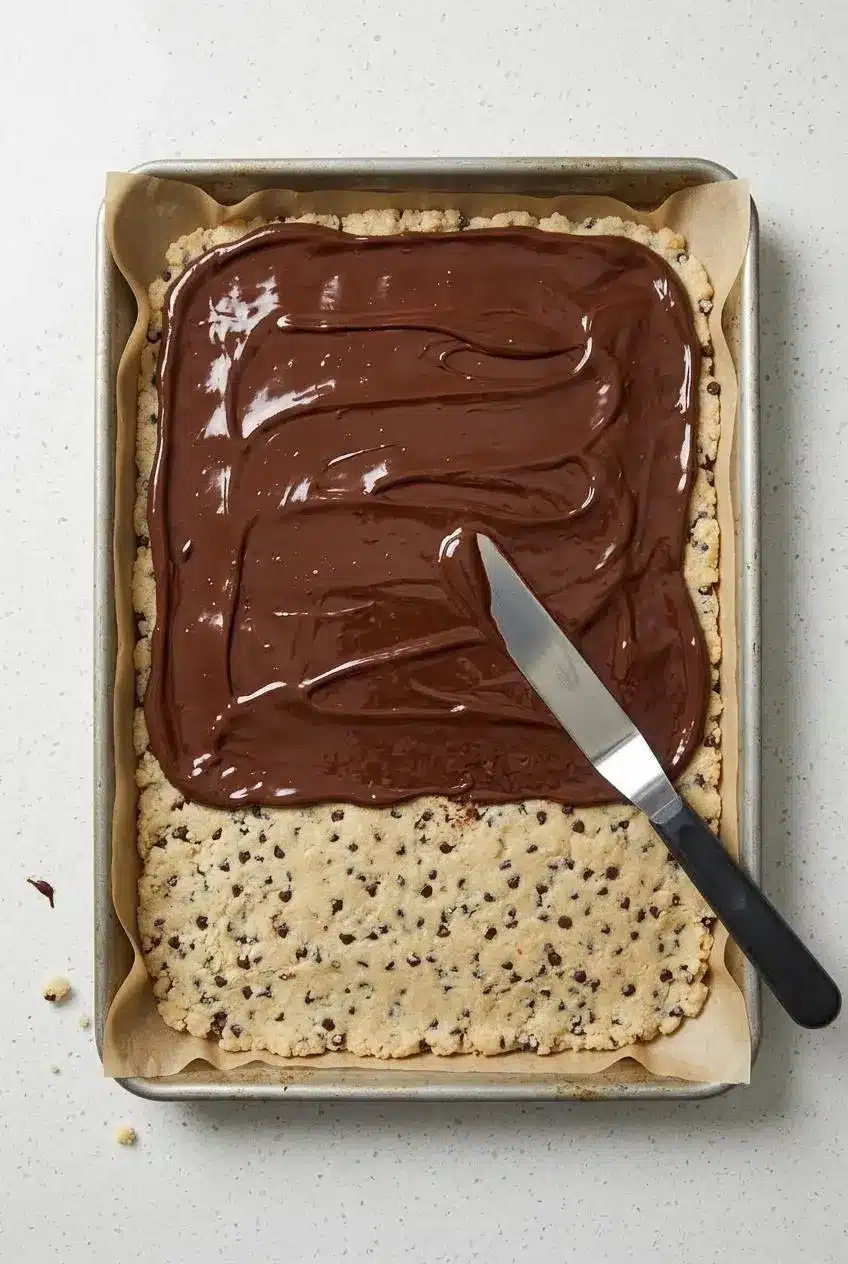
Build the dough first, chill it before coating, and let the finished layers become fully firm. Have a 15x10x1-inch baking sheet, parchment paper, a large bowl, a spatula, and an offset spatula ready.
- Cover the bottom of a 15x10x1-inch baking sheet with parchment, then mix the almond flour, brown sugar, and salt in a large bowl before working in the slightly cooled melted coconut oil and vanilla with a spatula and folding in 1/2 cup of chocolate chips.
The evenly moistened dough should resemble damp sand that holds together when squeezed, with intact chips rather than melted streaks. - Transfer the mixture to the lined sheet, compress it into a level layer with clean hands, and place it in the freezer for 20 minutes.
A firmly packed surface with even edges helps the dough stay separate from the warm chocolate coating. - During that first freeze, gently melt the reserved 1 cup of chocolate chips, then distribute the melted chocolate across the chilled dough with an offset spatula.
A continuous coating without exposed patches gives the bark an even chocolate layer, while light spreading pressure keeps the dough underneath intact. - Return the coated sheet to the freezer for 1 hour, then break the firm bark into serving pieces.
The chocolate should feel set and fracture cleanly rather than bend, with the dough supporting each piece.
Pressing matters as much as mixing. Loose crumbs won’t magically bind in the freezer, so compress the corners and edges as carefully as the center. Keep the layer level rather than leaving a thick ridge around the pan.
When spreading the topping, move the chocolate instead of scraping the dough. An offset spatula lets you work with a lighter touch and reach the edges without dragging crumbs into the coating.
Pro Tips and Troubleshooting Common Issues
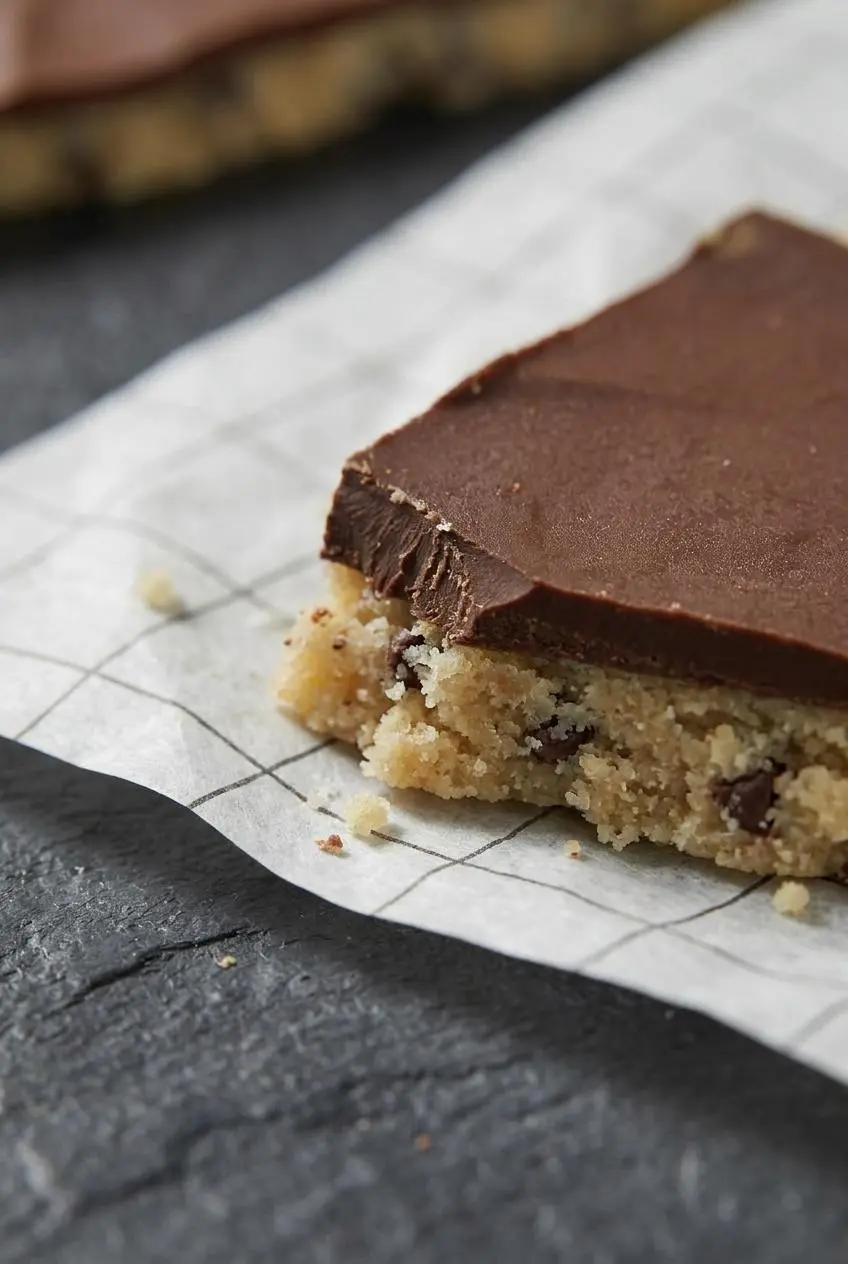
Most texture problems come from warm ingredients, uneven pressing, or incomplete chilling. Check those before changing the ingredient balance.
Keys to a Smooth Chocolate Snap
Melt chocolate gently in a dry microwave-safe bowl, pausing frequently to stir. Stop heating when a little unmelted chocolate remains and let the bowl’s warmth finish the job. Mini chips can hold their shape even when soft, so stir before deciding they need more heat.
Keep water away. A wet spatula or steam dripping from a lid can make melted chocolate stiff and grainy. If you use a double boiler, keep the bowl above the water and prevent steam or splashes from reaching the chocolate.
The specified pan gives you a broad, thin layer. A smaller pan makes thicker, fudgier pieces that may need additional chilling, so use firmness rather than the clock alone to judge an adapted batch. Uneven thickness creates patches that set at different rates.
Quick Fixes for Soft Bark or Seized Chocolate
- The bark bends: Give the topping its full final freeze, preferably with the sheet uncovered, and check the thickest area. If it remains soft, a fat substitution or an under-measured flour portion may have changed the structure.
- The dough looks oily before pressing: Recheck the measurements and stir thoroughly. If the mixture still won’t hold a pressed shape, work in almond flour gradually as a texture repair rather than pouring in more oil.
- The melted chocolate is smooth but too thick: A little coconut oil can loosen it for spreading. Add cautiously because extra oil makes the finished coating softer.
- The chocolate turns grainy or separates: Stop heating. Oil may loosen thick chocolate, but it won’t reliably restore water-seized or scorched chocolate to a snappy coating; start a fresh topping batch if it remains lumpy.
- The dough crumbles when broken: Loose packing can leave weak spots. Compress the dough firmly before freezing next time, and let a finished piece lose its rock-hard edge before trying to bite it.
Delicious Variations and High-Protein Options
Keep these adaptations separate from the measured recipe above. Change one feature at a time so you can judge its effect on sweetness, firmness, and texture.
High-Protein Cookie Dough Bark
Vanilla or cookie dough protein powder can add another flavor dimension, but it also changes the dough’s moisture needs. Blend it into the dry mixture gradually, then check whether the dough still compresses into a cohesive clump.
Plant-based powders, including pea protein, often thicken a mixture differently from whey. Brand formulas vary too much for a universal scoop-to-liquid rule. If your adapted dough turns chalky, add moisture cautiously, using a little melted coconut oil or milk, and stop as soon as it holds together.
Extra oil softens the frozen structure, while milk changes the dough’s composition. For a measured powder-based dessert rather than an experimental bark adaptation, try protein cookie dough.
Vegan and Maple-Sweetened Option
Choose dairy-free chocolate chips and check that your brown sugar meets your dietary preferences for a vegan adaptation. Coconut oil already supplies the fat without dairy butter.
For maple flavor, replace the brown sugar with pure maple syrup cautiously and assess the dough before pressing. Expect a smoother, softer bite because syrup adds liquid. Maple syrup alone doesn’t make the whole dessert free of refined sugar; the chocolate must fit that preference too.
Fun Flavor Mix-Ins and Toppings
- Salted nut butter: Swirl creamy peanut butter or almond butter through the dough for richer flavor, then scatter flaky sea salt and lightly toasted almond slivers over the wet topping.
- Mint chocolate: Add peppermint extract sparingly or finish with crushed peppermint candies. A heavy hand can overpower the vanilla.
- Dark chocolate: Use dark chocolate for the coating if you prefer less sweetness, keeping the original dough-chip portion separate.
- Crunchy toppings: Scatter crushed cookies, cacao nibs, or chopped nuts over the melted chocolate and press lightly so they stay attached.
Make-Ahead, Freezer Storage, and Serving Ideas
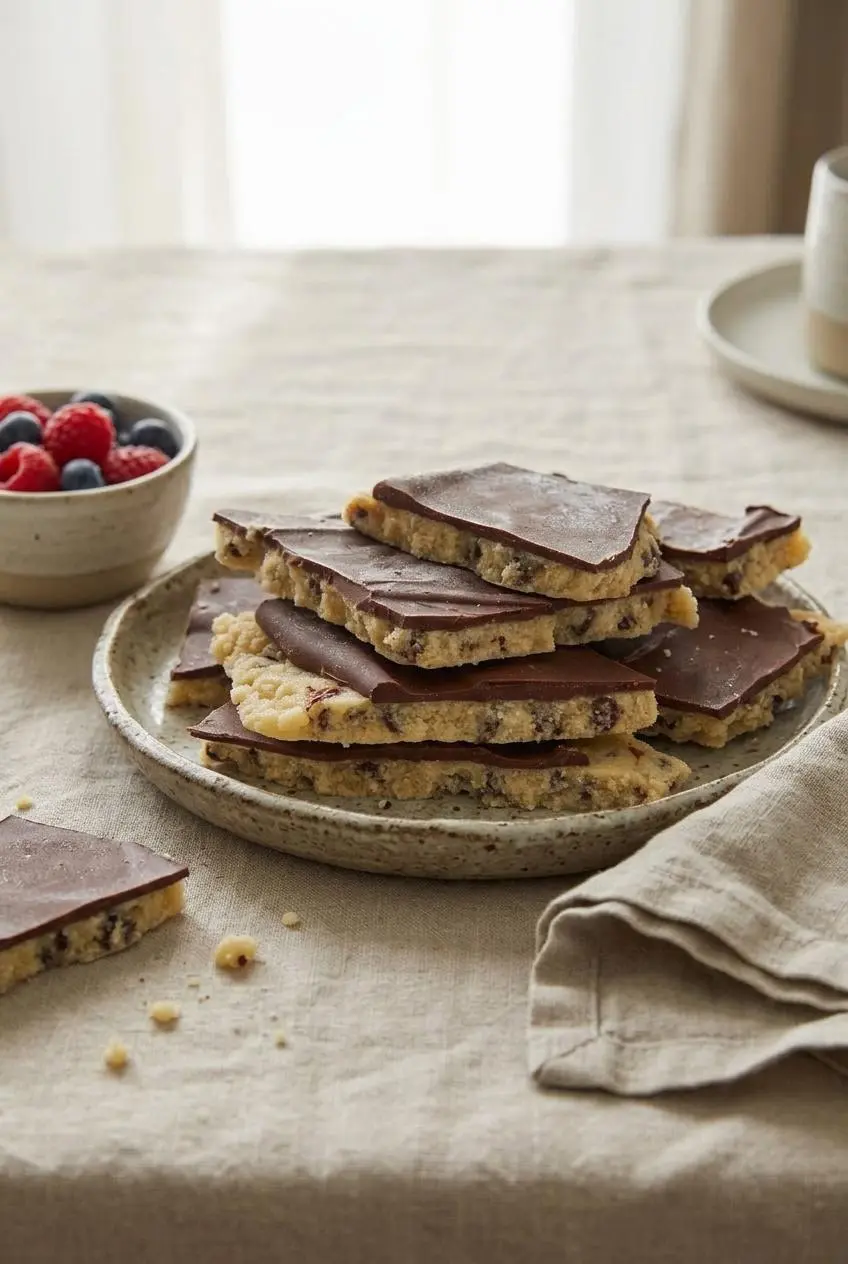
Once the bark has set, portion it before packing so you can take out only what you want to serve.
Keep the pieces in a tightly closed freezer container or freezer bag, with parchment between layers to prevent sticking. The coconut oil base softens as it warms, so keep the bark frozen until serving rather than treating it like a room-temperature cookie.
Serve straight from the freezer for a firmer snap, or let a piece soften just until the dough yields comfortably to a bite. There’s no need to bring the entire batch out for a snack.
Rustic shards work well for movie nights. For a dessert tray, use smaller pieces and replenish the tray from the freezer rather than setting out everything at once. Fresh berries balance the richness, and crumbled bark adds chocolate crunch over vanilla ice cream.
Conclusion
This egg-free, no-bake treat delivers two textures in every piece: a crisp chocolate coating and a chewy, cookie-flavored center.
Keep the melted coconut oil lukewarm, pack the dough evenly, and respect both freezing stages. Add a nut butter swirl or flaky salt if you like, then serve it cold enough to keep that satisfying snap.
Frequently Asked Questions
Is Cookie Dough Bark Safe to Eat Raw?
It’s intended to be eaten unbaked, but use ingredients suitable for ready-to-eat preparation and follow their package directions. This version contains no eggs; don’t add raw shell eggs, which can carry Salmonella. Almond flour isn’t an automatic safety guarantee.
Can I Use All-Purpose Flour or Oat Flour Instead of Almond Flour?
Yes, as an adaptation. Choose oat flour suitable for uncooked use or commercially heat-treated wheat flour labeled ready to eat. Start with less flour and add gradually until the dough holds together; don’t assume the almond flour measurement transfers directly.
What Can I Substitute for Coconut Oil in Cookie Dough Bark?
Melted unsalted butter or vegan butter can work because they firm when chilled, though the texture may differ. Liquid oils such as avocado oil won’t provide the same chilled structure.
Why Did My Cookie Dough Bark Not Harden in the Freezer?
It may need to complete the final freeze, especially if the layer is thick. If it stays soft, check for excess oil, too little almond flour, or a fat substitution that doesn’t firm like coconut oil.
Can I Use Coconut Flour Instead of Almond Flour?
Not as a cup-for-cup replacement. Coconut flour absorbs much more moisture and can make this dough dry and crumbly. Use a recipe specifically developed for coconut flour rather than trying to force it into these measurements.
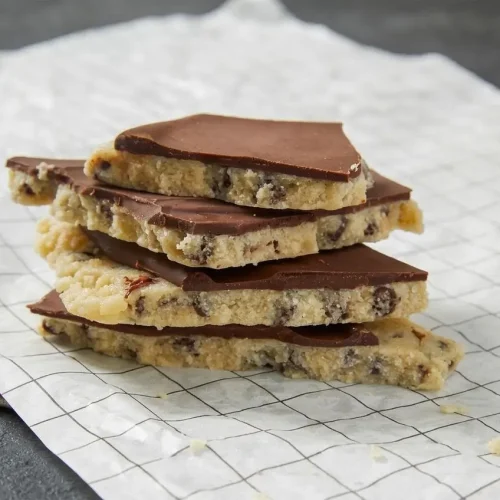
Cookie Dough Bark

Equipment
- 15x10x1-inch baking sheet
- Parchment Paper
- large bowl
- Spatula
- Offset spatula
Ingredients
- 1-2/3 cups almond flour
- 3 tablespoons packed brown sugar
- 1/2 teaspoon salt
- 1/2 cup coconut oil melted and slightly cooled
- 1 teaspoon vanilla extract
- 1-1/2 cups miniature semisweet chocolate chips divided
Instructions
- Cover the bottom of a 15x10x1-inch baking sheet with parchment, then mix the almond flour, brown sugar, and salt in a large bowl before working in the slightly cooled melted coconut oil and vanilla with a spatula and folding in 1/2 cup of chocolate chips. The evenly moistened dough should resemble damp sand that holds together when squeezed, with intact chips rather than melted streaks.
- Transfer the mixture to the lined sheet, compress it into a level layer with clean hands, and place it in the freezer for 20 minutes. A firmly packed surface with even edges helps the dough stay separate from the warm chocolate coating.
- During that first freeze, gently melt the reserved 1 cup of chocolate chips, then distribute the melted chocolate across the chilled dough with an offset spatula. A continuous coating without exposed patches gives the bark an even chocolate layer, while light spreading pressure keeps the dough underneath intact.
- Return the coated sheet to the freezer for 1 hour, then break the firm bark into serving pieces. The chocolate should feel set and fracture cleanly rather than bend, with the dough supporting each piece.