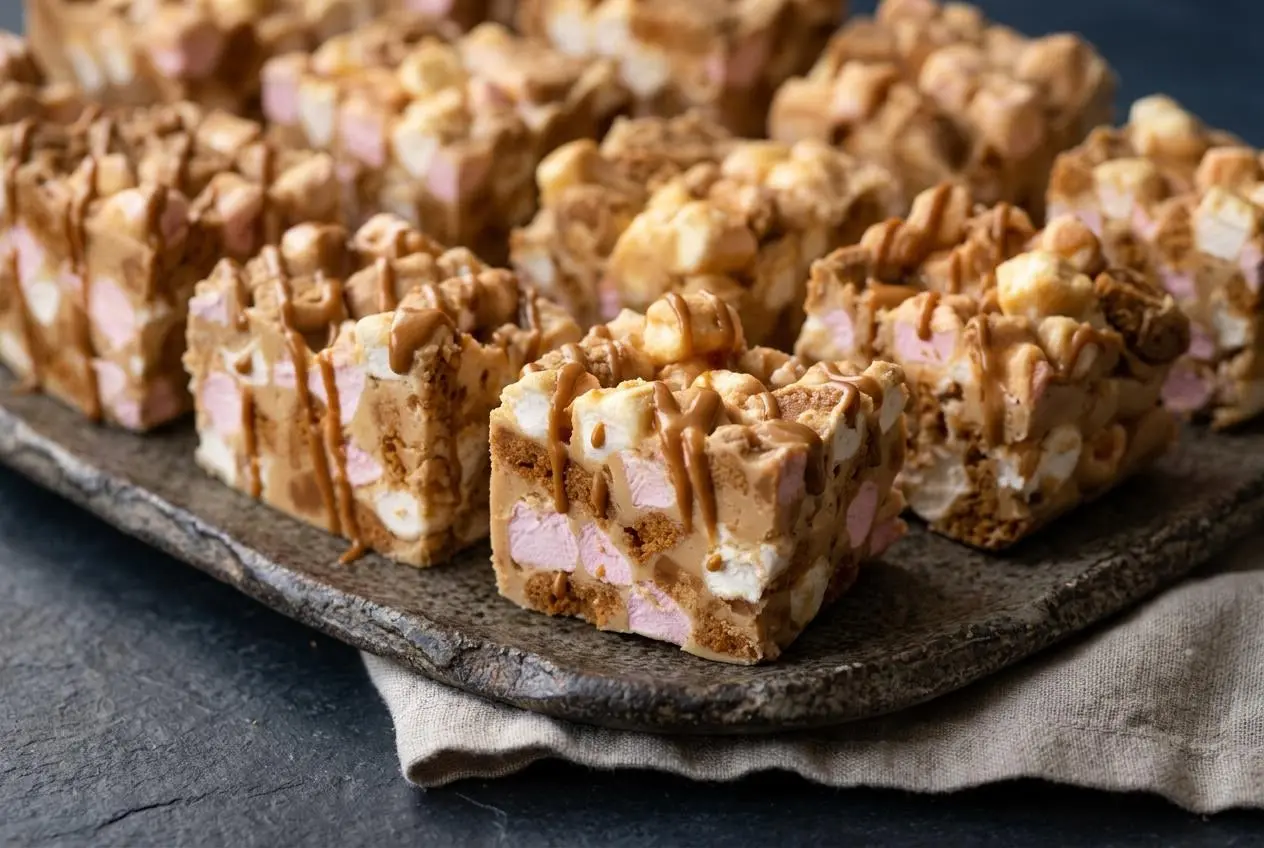
Biscoff rocky road is a no-bake dessert with 10 minutes of prep: melt white chocolate, Biscoff spread, and butter, fold in cookies, mini marshmallows, and fudge pieces, then press into a pan and chill for 1 hour.
This biscoff rocky road combines a creamy, fudge-like coating with spiced caramel cookie crunch and pillowy marshmallows. It’s a British-style traybake, meaning a dessert made in a pan and cut into portions, rather than American rocky road ice cream.
Butter softens the chocolate’s snap, while cookie butter carries that warm speculoos flavor through every bite. Fudge pieces add little pockets of sweetness, and there are useful US substitutes below. The chunky cookies make the difference.
Have the chopped cookies and other mix-ins ready before melting so the chocolate doesn’t sit hot while you prep.
Ingredients and Smart Substitutions
White chocolate provides structure and vanilla sweetness, Biscoff spread adds warm spice, and butter softens the bite. Cookies bring crunch, marshmallows add a pillowy contrast, and fudge pieces contribute a soft, sweet chew.
- 400g (14 oz) White Chocolate
- 125g (2/3 cup) Smooth Biscoff Spread + 2 tbsp for decoration
- 50g (1/4 cup) Unsalted Butter
- 130g (4.5 oz) Mini Marshmallows
- 200g (7 oz) Lotus Biscoff Biscuits, chopped
- 75g (1/2 cup) Fudge Pieces
Core Ingredients Explained
The white chocolate forms the coating that holds everything together. Choose chocolate you enjoy eating, since its flavor stays prominent. Break a bar into small pieces for more even melting; large chunks can remain solid while the surrounding mixture gets too hot.
Smooth Biscoff spread blends into the chocolate without adding extra cookie fragments. Together, the spread and unsalted butter make the set coating softer than plain white chocolate. Expect a rich, fudge-like bite, although a refrigerator-cold slab can still crack if you force a knife through it.
Mini marshmallows distribute more evenly than large marshmallows. Keep them separate from the melting bowl until you’re ready to fold them in. The extra 2 tablespoons of spread are for the finishing drizzle, not the melted coating.
- Lotus Biscoff cookies: These crisp, unfilled cookies provide the caramelized sugar flavor and distinct crunch used here.
- Biscoff sandwich cookies: Their cream filling adds richness and a different texture; use them only as an optional cookie variation.
- Generic speculoos cookies: These belong to the same spiced-cookie family, but their spice level, sweetness, and thickness vary by brand.
I’d keep the cookies in chunky, bite-sized fragments rather than crush them finely, so each bar has a clear crunch instead of a sandy texture.
Best US Substitutes for Fudge Pieces
British baking fudge pieces are small cubes of soft fudge, often vanilla flavored. They’re different from chocolate chips and can be harder to find in US baking aisles. These optional alternatives change the flavor or chew, so choose the result you prefer.
- Kraft caramel bits: Convenient small pieces with a caramel flavor and a firmer chew, particularly when chilled.
- Finely chopped soft vanilla caramels: A caramel-flavored alternative; chop them small so they don’t dominate each bite.
- Chopped milk chocolate fudge: Closer to the soft texture of fudge pieces, with an added chocolate flavor.
- White chocolate chips: Add sweet, creamy pockets rather than the chew of fudge.
- Butterscotch chips: Offer a pronounced butterscotch flavor and a firmer texture than soft fudge.
How to Make the Biscoff Rocky Road Step by Step
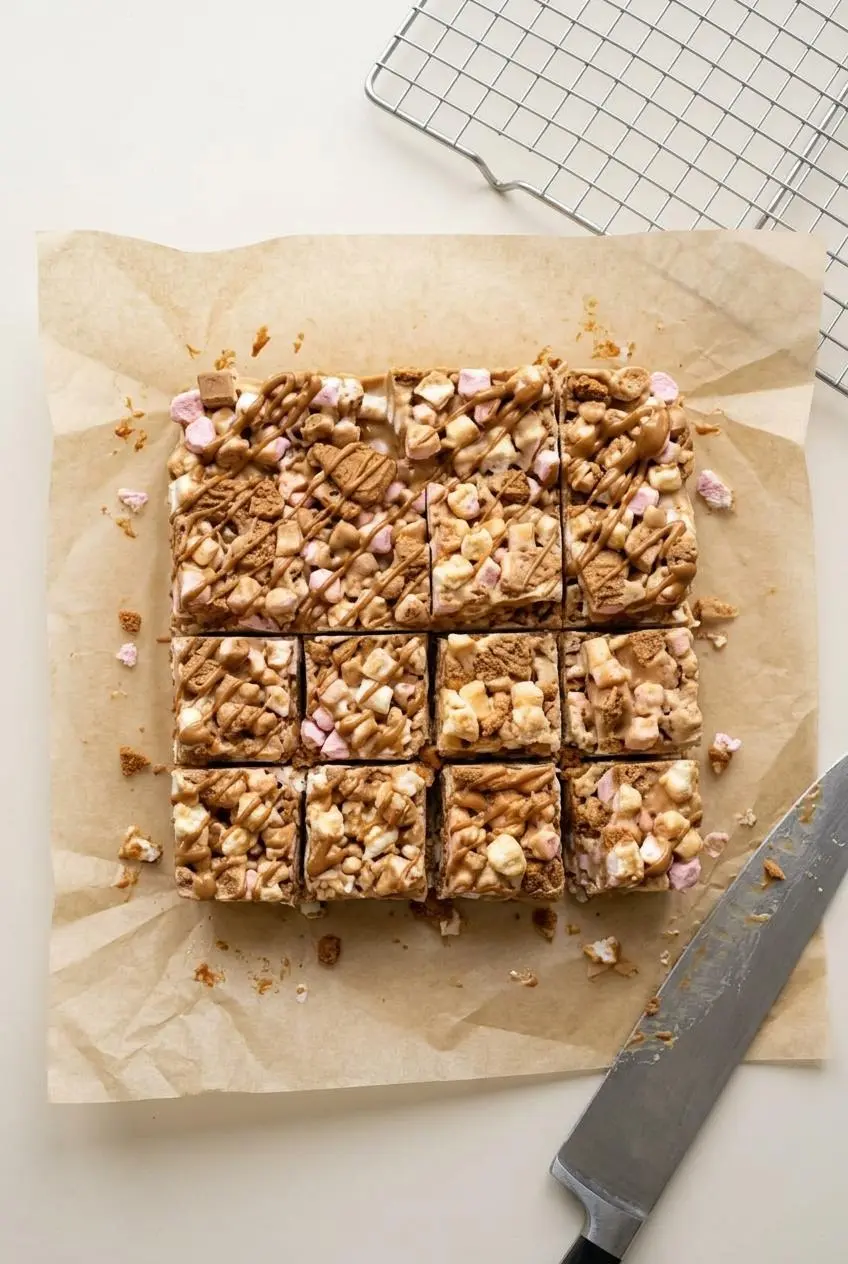
Allow 10 minutes for active prep and 1 hour for chilling, for a total of 1 hour 10 minutes. The recipe makes 16 bars. You’ll need an 8-inch (20 cm) square pan, a large microwave-safe mixing bowl, a spatula, and a microwave-safe piping or food bag.
- Prepare the 8-inch square pan with grease and parchment across the bottom and sides, leaving an overhang, then microwave the white chocolate, Biscoff spread, and butter together in 10-second bursts, stirring thoroughly after every burst.
Stop heating once stirring produces a glossy, ribbon-smooth mixture without solid chocolate pieces. - Fold the mini marshmallows, chopped Biscoff cookies, and fudge pieces through the melted coating with a spatula.
Keep turning the mixture until the mix-ins look evenly coated and distributed, without crushing the cookie chunks. - Pack the mixture into the lined pan, pressing firmly into the corners and leveling the surface, then refrigerate for 1 hour.
The slab should feel firm enough to lift with the parchment rather than sag or pull apart. - Lift out the slab, cut it into 16 bars, arrange them on a cooling rack over newspaper, then microwave the reserved 2 tablespoons of Biscoff spread in a microwave-safe piping or food bag for 20 seconds, snip a small opening, and drizzle zigzags over the bars.
Let the decoration set completely so it stays in place when you handle the bars.
If the melted coating still feels hot, let it cool briefly before adding the marshmallows. It should remain fluid enough to coat the cookies. Don’t wait until it begins to set, or folding becomes difficult and the mixture can pack unevenly.
When pressing, focus on the corners as well as the center. Air pockets around the edges make those pieces more likely to crumble. Use the spatula to move coated chunks into empty spaces rather than simply flattening the top.
Expert Tips and Troubleshooting Guide
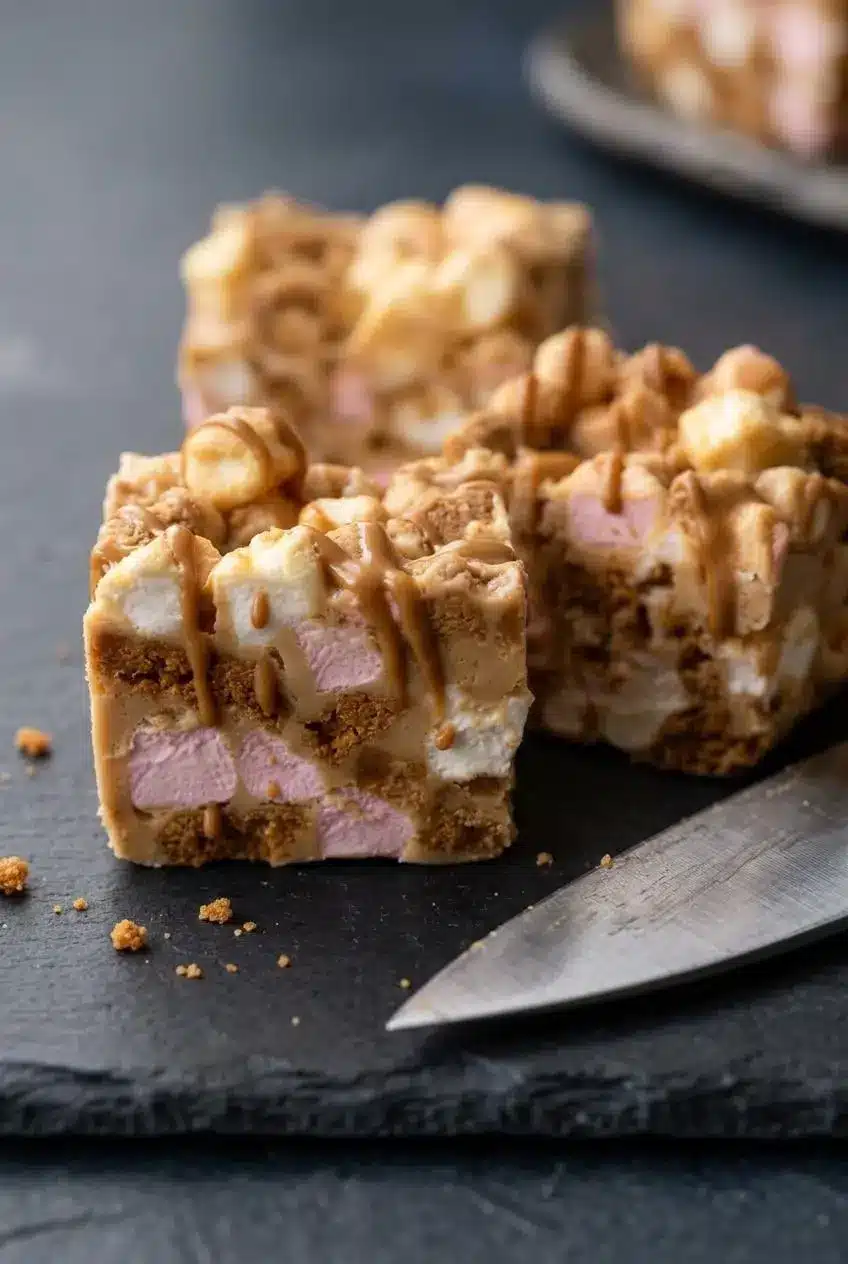
Gentle heat and firm packing prevent most texture problems. Use these cues to catch trouble before the mixture goes into the pan.
- Grainy chocolate: Excess heat or accidental moisture can make white chocolate thick and grainy. Use a dry bowl and spatula, select low microwave power, and stir between short bursts rather than heating continuously.
- Small unmelted pieces: Stir thoroughly before adding another burst of heat. The warmth already in the bowl may finish melting them without further microwaving.
- An oily-looking coating: Stop heating and stir gently as the mixture cools slightly. More heat can worsen separation; aim for an evenly glossy coating, not visible pools of fat.
- Scorched flavor or stubborn graininess: Don’t try to hide it under the cookies. Start the coating again if it tastes burnt or won’t become smooth with gentle stirring.
- Sticky marshmallow streaks: The coating was too hot. Let it cool before folding, or chill the marshmallows beforehand to help them hold their shape.
- Crumbly edges: Loose packing leaves gaps between chunks. Press the mixture firmly into every corner while the coating is still workable.
- Cracked slices: Very cold chocolate resists the knife. Let the slab soften slightly at room temperature, then use a sharp knife with steady downward pressure rather than sawing.
Delicious Variations and Mix-In Ideas
Keep these changes optional and separate from the ingredient list above. The goal is to adjust flavor and crunch without crowding out the coating that holds the bars together.
- Cinnamon and flaky sea salt: Add a little cinnamon to emphasize the speculoos spice and a pinch of salt for contrast with the sweet coating.
- Popcorn: Replace some cookie pieces with plain popped popcorn for a lighter crunch; avoid adding so much that the coating can’t bind it.
- Condensed milk fudge style: Choose a dedicated rocky road fudge method rather than pouring condensed milk into this mixture, which would change how it sets.
- Sandwich cookies: Replace some plain cookies with chopped Biscoff sandwich cookies for pockets of creamy filling.
- Cookie crumb topping: Scatter crushed speculoos crumbs over the drizzle before it sets so they adhere.
Milk Chocolate or Caramelized White Chocolate Swap
You can replace half or all of the white chocolate with milk chocolate or caramelized white chocolate. Keep the total chocolate amount unchanged. These swaps alter the flavor balance, but caramelized white chocolate isn’t necessarily lower in sugar or less sweet.
- White chocolate: Gives a creamy vanilla background that lets the spiced cookies stand out.
- Milk chocolate: Adds cocoa flavor, which can make the sweetness feel less dominant while softening the Biscoff’s prominence.
- Caramelized white chocolate: Also called blonde chocolate, it brings toasted caramel and butterscotch notes similar to Australian Caramilk.
Sweet and Salty Pretzel and Nut Additions
Salted pretzels, roasted almonds, or honey-roasted macadamias add contrast to the rich coating. Pretzels give a crisp, salty bite; almonds add a toasted crunch; macadamias bring a buttery texture with extra sweetness from the honey coating.
Replace some of the cookie pieces rather than adding an unrestricted amount of extra mix-ins. Break pretzels into manageable pieces and roughly chop nuts so you can cut the slab without hitting large, hard chunks.
Storage and Gifting Tips
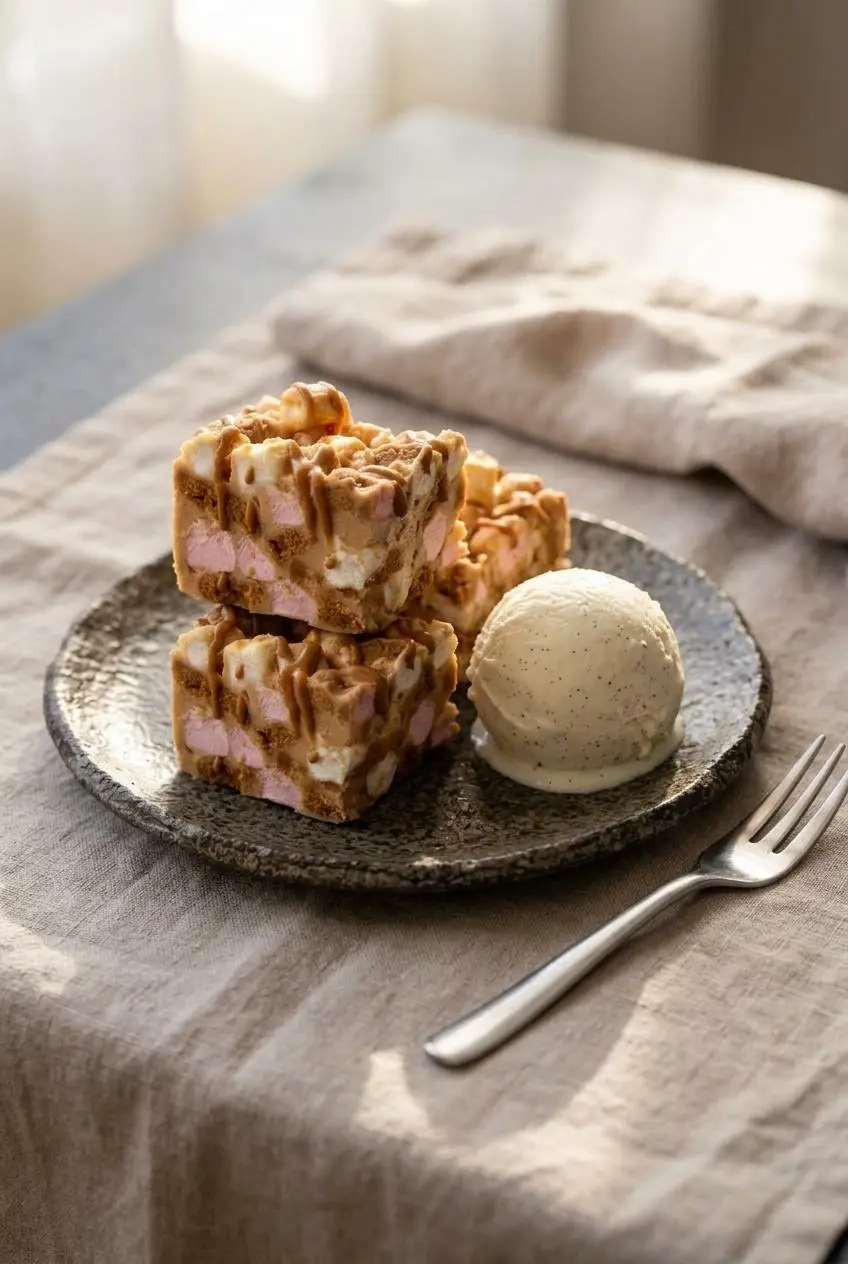
Protect the bars from heat and moisture to preserve their texture. Once the drizzle has set, place them in a tightly closed container with parchment between layers to prevent sticking.
Keep them chilled when your kitchen is warm enough to soften the coating. Avoid leaving them uncovered in the refrigerator, where they can pick up odors and moisture. Bring out the portions you plan to serve rather than repeatedly moving the whole batch between warm and cold conditions.
- Holiday gifts: Package set bars individually in food-safe cellophane bags with ribbon, and keep the packages away from warm windows or heaters.
- Party platters: Cut smaller squares for easier sharing alongside other treats.
- Plated dessert: Serve a slightly softened bar with vanilla bean ice cream for a creamy contrast to the cookies.
Conclusion
This no-bake treat delivers a soft chocolate coating, warm Biscoff spice, and plenty of cookie crunch with 10 minutes of active prep. Gentle melting in short bursts gives you the smooth coating that makes it work.
Pack the pan firmly and let the chilled slab soften slightly before slicing. Keep the classic flavor or add a little salt and cinnamon, then enjoy those distinct layers of crunch and chew.
Frequently Asked Questions
What Can I Use Instead of Fudge Pieces in the US?
Replace the 75 g (1/2 cup) of fudge pieces with caramel bits, finely chopped soft vanilla caramels, chopped milk chocolate fudge, or butterscotch chips. For the closest soft texture, choose fudge; caramels and chips give a firmer bite.
How Should I Store Biscoff Rocky Road?
Keep the set bars in a tightly closed container, with parchment separating stacked layers. Keep them chilled in warm conditions and protect them from moisture to preserve the cookie crunch.
Can I Use Milk Chocolate Instead of White Chocolate?
Yes, replace half or all of the white chocolate with milk chocolate, keeping the total chocolate amount the same. The cocoa flavor changes the sweetness balance and makes the Biscoff flavor a little less prominent.
How Do I Stop the White Chocolate and Biscoff Mixture From Seizing?
Use dry utensils and microwave on low power in short bursts, stirring thoroughly between each one. Stop heating as soon as stirring makes the mixture glossy and smooth.
Is Biscoff Basically a Graham Cracker?
No. Biscoff is a crisp Belgian speculoos cookie with caramelized sugar flavor and warm cinnamon spice. A typical honey-wheat graham cracker has a different flavor and texture, so it won’t give these bars the same spiced crunch.
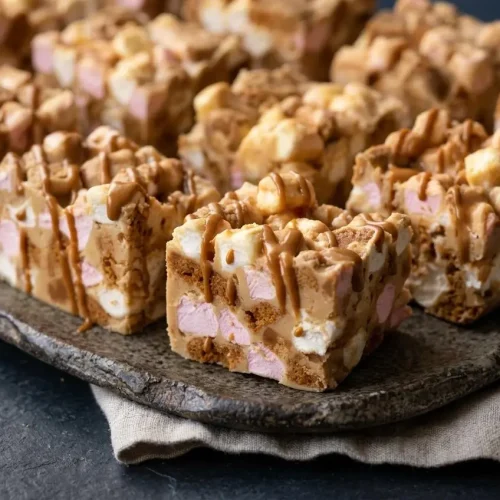
Biscoff Rocky Road

Equipment
- 20cm (8″) Square Baking Tin
- Large Mixing Bowl
- Spatula
- 1 x Disposable Piping Bag/Plastic Food Bag
Ingredients
- 400 g White Chocolate (14 oz)
- 125 g Smooth Biscoff Spread (2/3 cup) + 2 tbsp for decoration
- 50 g Unsalted Butter (1/4 cup)
- 130 g Mini Marshmallows (4.5 oz)
- 200 g Lotus Biscoff Biscuits (7 oz) chopped
- 75 g Fudge Pieces (1/2 cup)
Instructions
- Prepare the 8-inch square pan with grease and parchment across the bottom and sides, leaving an overhang, then microwave the white chocolate, Biscoff spread, and butter together in 10-second bursts, stirring thoroughly after every burst. Stop heating once stirring produces a glossy, ribbon-smooth mixture without solid chocolate pieces.
- Fold the mini marshmallows, chopped Biscoff cookies, and fudge pieces through the melted coating with a spatula. Keep turning the mixture until the mix-ins look evenly coated and distributed, without crushing the cookie chunks.
- Pack the mixture into the lined pan, pressing firmly into the corners and leveling the surface, then refrigerate for 1 hour. The slab should feel firm enough to lift with the parchment rather than sag or pull apart.
- Lift out the slab, cut it into 16 bars, arrange them on a cooling rack over newspaper, then microwave the reserved 2 tablespoons of Biscoff spread in a microwave-safe piping or food bag for 20 seconds, snip a small opening, and drizzle zigzags over the bars. Let the decoration set completely so it stays in place when you handle the bars.