Dill pickle soup combines potatoes and carrots in savory chicken broth with diced dill pickles, tart brine, and a creamy sour cream and flour thickener. This version serves eight and takes about 40 minutes, with tender vegetables and a rich, tangy finish.
A bowl of dill pickle soup tastes warm and savory first, then bright and pleasantly sour. Butter rounds out the broth, carrots bring sweetness, and the potatoes soften enough to give each spoonful body without turning the whole pot into a purée.
The trick is to cook the potatoes fully before adding the acidic ingredients, then work the sour cream mixture into the broth gradually. That gives you better control over texture and seasoning. The smooth finish starts with the whisk.
Taste the pickle brine before cooking so you know whether its saltiness or sharpness will need extra attention.
Essential Ingredients and Flavor Dynamics
Potatoes and flour give the broth body, butter and sour cream add richness, and carrots soften the pickle brine’s sharp edge. Chicken broth builds savory flavor, while Old Bay, pepper, and cayenne provide aromatic warmth; the optional garnishes add freshness and crunch.
- 5-1/2 cups chicken broth
- 1-3/4 lbs russet potatoes, peeled and quartered
- 2 cups chopped carrots, smaller dice
- 1 cup chopped dill pickles (smaller dice ~ about 3 large whole dills)
- 1/2 cup unsalted butter
- 1/2 cup all-purpose flour
- 1 cup sour cream
- 1/4 cup water
- 2 cups dill pickle juice
- 1-1/2 teaspoons Old Bay seasoning
- 1/2 teaspoon table salt
- 1/2 teaspoon coarsely ground pepper
- 1/4 teaspoon cayenne pepper
- Optional garnishes: sliced dill pickles, fresh dill and black pepper
The flour thickens the liquid as it cooks, while butter adds a rounded, rich mouthfeel. You aren’t making a separate roux here: the butter cooks with the vegetables, and the flour enters later in the sour cream paste. Smooth mixing matters more than browning flour.
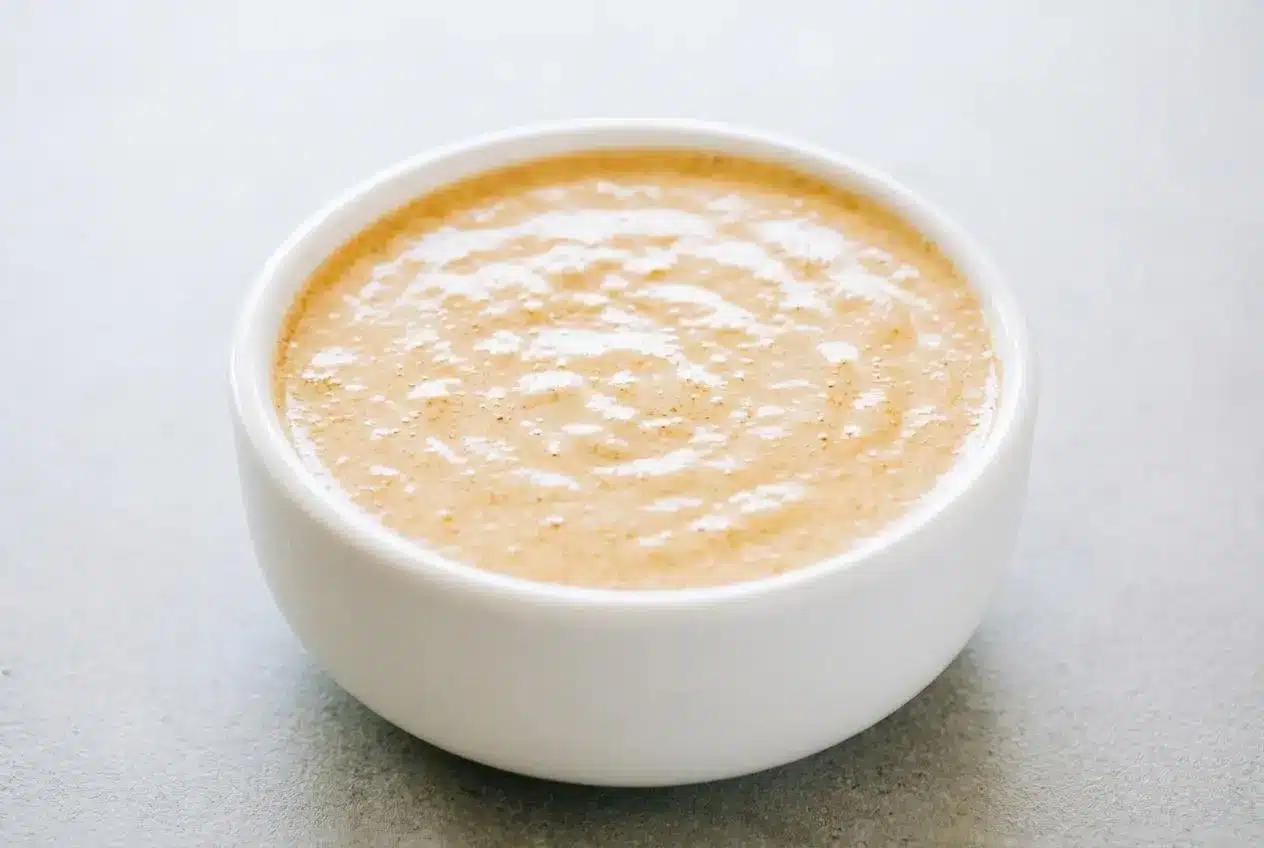
Sour cream brings richness and its own cultured tang. Water loosens the paste enough to help it disperse, but the mixture should still look thick and uniform before it reaches the pot. Scrape around the bottom of the bowl so no dry flour hides beneath the cream.
Old Bay gives this version a distinctive American seasoning profile. Its savory spice blend complements the dill pickle brine, while coarsely ground pepper and cayenne add warmth. Chicken broth, pickle juice, and Old Bay all contribute salt, so taste carefully before considering any seasoning beyond the measured recipe.
I prefer a small, even dice for the pickles so their tang spreads through each spoonful instead of arriving in one oversized bite.
Why Pickle Selection Dictates Your Broth Flavor
Naturally fermented Polish dill pickles are a good choice when you want rounded sourness rather than a sharply vinegary finish. Polish pickle soup, known as zupa ogórkowa, traditionally draws its character from sour fermented cucumbers. This creamy, Old Bay-seasoned version takes that tangy idea in an American direction.
Fermented pickles develop lactic acidity in a salt brine. Vinegar-packed dills get their sharper acidity from added vinegar. Either style can contribute pickle flavor, but they won’t produce identical broth, even when you measure the same amount of juice.
- Fermented Polish dills: Choose these for a deeper sour flavor; check the label for fermentation rather than relying on the word “Polish” alone.
- Standard kosher dills: These work when you enjoy their flavor, but “kosher dill” describes a style and does not necessarily mean naturally fermented.
- Sweet or bread-and-butter pickles: Avoid these for this recipe because their sweetness changes the intended savory, tart balance.
Use brine from pickles you enjoy eating. Taste it separately before measuring, then pour it into the soup gradually during the finishing stage. The listed amount stays the same, but gradual pouring gives you a chance to notice a particularly assertive brine before adjusting the finished soup.
Choosing the Right Potatoes for Body and Bite
Russets suit this soup because their starchy flesh softens readily and breaks down a little during whisking. That released starch supports the flour thickener, leaving a creamy broth with tender potato pieces rather than a thin liquid surrounding firm vegetables.
Peel and quarter the potatoes as listed. Try to keep the quarters reasonably similar in size, and test one of the largest pieces before moving on. A fork should slide into its center without a hard or chalky spot.
Waxy potatoes tend to stay intact more firmly. They can give soup distinct pieces, but they won’t release the same amount of starch or create quite the same texture. For this method, russets provide the useful combination of body and bite.
How to Make the Dill Pickle Soup Step by Step
Allow about 10 minutes for preparation and 30 minutes for cooking. Have a large pot, medium bowl, and whisk ready, and use potato tenderness rather than the clock alone to decide when to add the pickles.
- Place the potatoes and carrots in a large pot with the chicken broth and butter, then bring the liquid to a boil and cook until the potatoes soften throughout.
A fork should enter the center of a large potato quarter easily, and the butter should have melted into the broth. - Stir the diced pickles into the boiling vegetable mixture and maintain steady bubbling.
The pickle pieces should spread evenly among the softened carrots and potatoes. - Use a medium bowl to blend the flour, sour cream, and water into a uniform paste.
The mixture should look smooth and thick, with no visible pockets of dry flour. - Whisk the paste into the bubbling soup in 2-tablespoon portions, dispersing each addition before adding the next and avoiding a violent rolling boil.
Small flour beads should dissolve as you whisk, while some potato pieces break down and give the broth more body. - Pour in the pickle juice gradually, stir in the Old Bay, salt, coarsely ground pepper, and cayenne, and cook for 5 more minutes at a controlled bubble.
The broth should become evenly creamy, with fragrant steam carrying both pickle tang and savory spice. - Take the pot off the heat and serve the soup immediately.
Each bowl should contain tender vegetables in a creamy broth with evenly distributed pickle pieces.
Keep the whisk moving through the liquid rather than repeatedly striking the potato quarters. Some breakdown is useful, but you still want recognizable pieces. If the soup starts splashing heavily or foaming up around the edges, lower the heat enough to regain controlled bubbling.
The final cooking stage gives the flour time to finish thickening and the seasonings time to mingle. The aroma should shift from mainly sour pickle juice to a fuller combination of broth, dill, and warm spices.
Expert Tips for Smooth and Creamy Texture
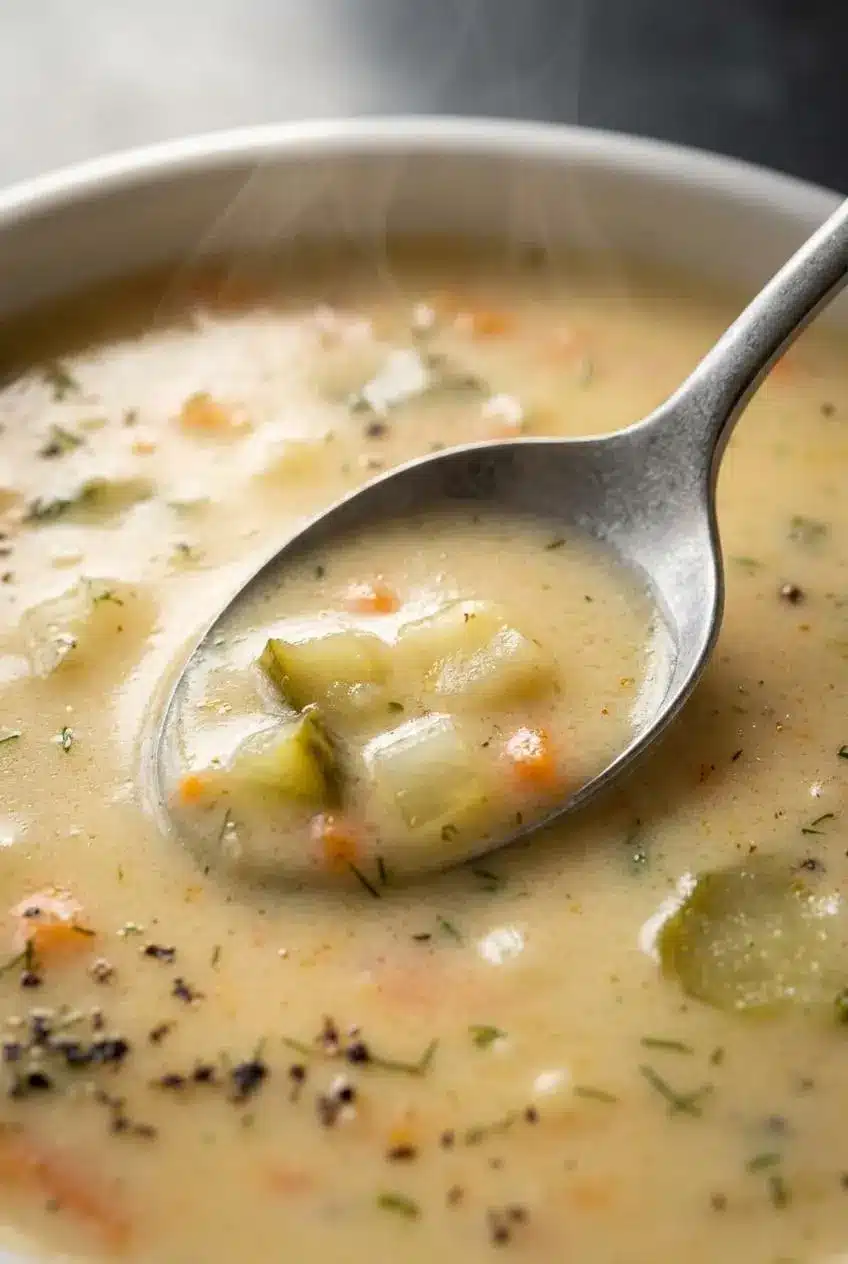
A smooth paste and controlled heat give you the best chance of a creamy finish. Whisk thoroughly before adding the dairy mixture, then introduce it gradually rather than dropping one cold lump into the pot.
For extra temperature control, you can temper the paste first. Whisk a ladleful of hot broth into the sour cream mixture gradually, stirring until it loosens evenly. Then incorporate the warmed mixture into the pot in small portions. This optional technique helps ease the temperature change, but it doesn’t replace active whisking or careful heat control.
Avoid aggressive boiling after the sour cream goes in. Keep enough movement in the liquid to cook the flour, but reduce the heat if the surface churns hard. The goal is controlled bubbling, not a pot that needs constant rescue from overflowing.
- Too salty: Concentrated broth, brine, or seasoning may be responsible. Dilute gradually with unsalted chicken broth or a splash of water, then taste again before adding anything else.
- Too sour: A vinegar-forward brine can dominate the dairy. Add unsalted broth first, then consider an extra spoonful of sour cream or a tiny pinch of sugar to soften the perceived sharpness.
- Grainy or separated: Abrupt heating and strong acidity can make the dairy mixture lose its smooth appearance. Remove the pot from the heat and whisk gently; this may improve the texture, but it won’t necessarily undo firm curds.
- Flour lumps: Dry pockets in the paste or additions that are too large can leave little beads. Continue whisking through the broth while maintaining controlled heat, pressing stubborn lumps against the pot’s side.
- Too thin: The potatoes may not have broken down enough to support the thickener. Lightly crush a portion against the side of the pot and stir them back through rather than sprinkling raw flour into the finished soup.
Make one correction at a time. Extra broth changes both saltiness and thickness, while sour cream changes richness and tang. Taste after each adjustment so you don’t trade one imbalance for another.
Flavor Additions and Variations
Keep these changes optional and separate from the ingredient list above. Each moves the soup in a different direction, so choose the flavor or texture you want rather than adding everything at once.
- Horseradish: Stir in a little grated fresh horseradish or prepared horseradish with the pickle brine for pungent warmth that cuts through the creaminess.
- Leeks: Cook cleaned, sliced leeks separately until tender, then stir them into the soup for a mellow onion flavor.
- Celery root: Use peeled, cubed celery root as an optional potato alternative for an earthy, celery-like flavor; cook it until fork-tender and expect different thickening.
- Cauliflower: Substitute cauliflower for the potatoes if you prefer that vegetable, recognizing that the broth will lose some potato starch and the timing will change.
The vegetable swaps are alternatives, not a promise that the finished soup meets a particular carbohydrate target. The flour remains part of the recipe, and changing the potatoes changes both texture and yield.
Polish Kielbasa Dill Pickle Soup
Cooked smoked kielbasa adds a savory, smoky counterpoint to the sour broth. Brown sliced kielbasa separately in a skillet, drain excess fat, and fold it into the soup during the final five-minute cooking stage.
Diced bacon offers another option. Cook it separately until done, drain it well, and add it near the finish. Both meats bring salt, so taste the soup before adding any seasoning beyond the listed amounts.
For another hearty comfort meal with a Polish connection, try hearty golumpki soup, especially when you want meat-and-cabbage flavors instead of pickle tang.
Dairy-Free and Vegan Adjustments
For a vegan adaptation, replace the chicken broth with flavorful vegetable stock, the butter with plant-based butter, and the sour cream with smooth cashew cream. Changing all three matters; replacing sour cream alone does not make the soup vegan.
To prepare the cashew component, soften raw cashews by soaking them, then drain and blend them with water and a little lemon juice until completely smooth. Use that cream in place of sour cream while retaining the flour-and-water thickening approach.
Cashew cream brings a mild, nutty richness rather than the exact flavor of cultured dairy. Taste before adding more lemon because the pickle brine already supplies acidity. Check packaged broth, butter alternatives, and seasonings for ingredients that fit your dietary needs; cashews also make this version unsuitable for someone avoiding tree nuts.
What to Serve with the Dill Pickle Soup
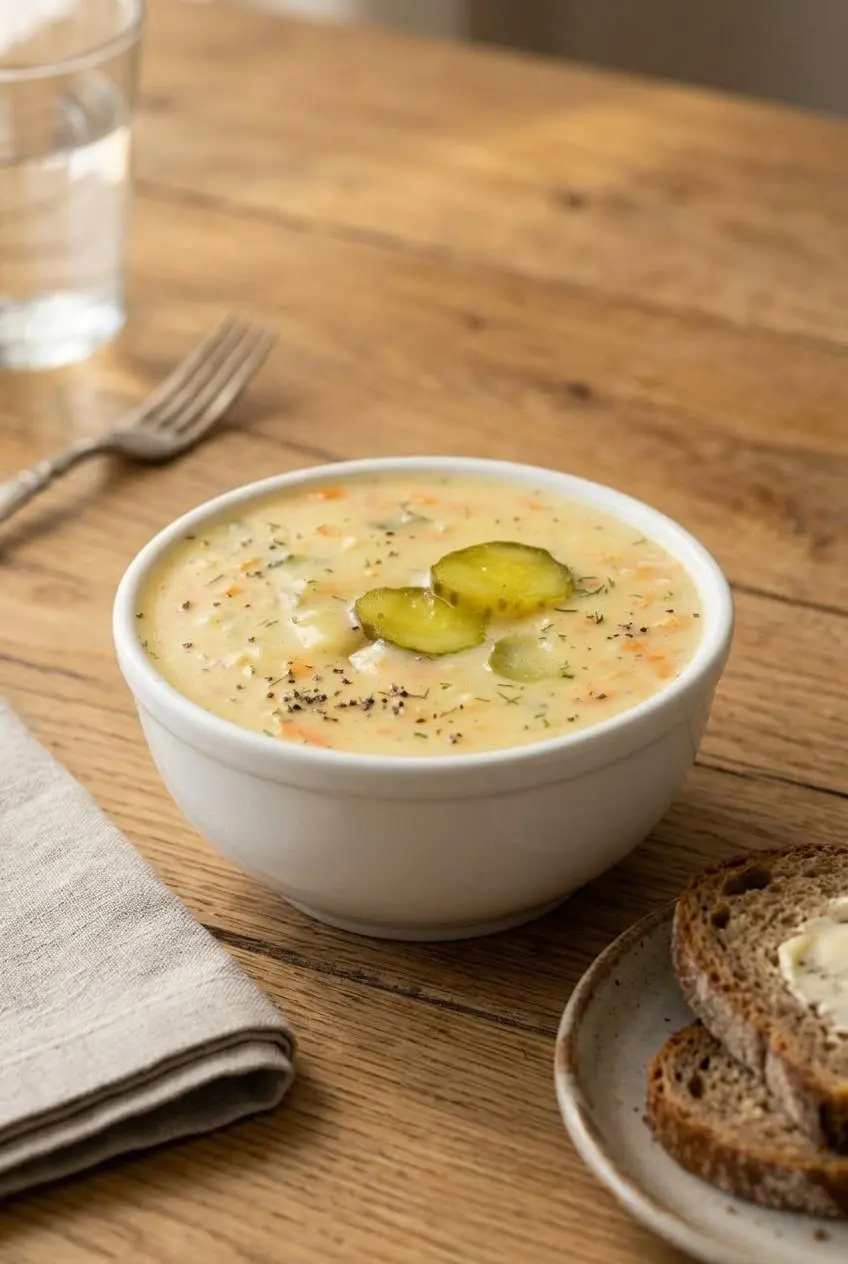
Choose sides that give the creamy broth something to contrast with. Crusty bread and fresh vegetables usually do more for this meal than another rich accompaniment.
- Warm rye bread: Its sturdy texture and earthy flavor work well for dipping.
- Seeded sourdough or pumpernickel: Serve sliced alongside the bowls, with butter if desired.
- Crisp cucumber salad: Keep the dressing restrained so it doesn’t compete with the soup’s acidity.
- Pierogi or roasted green vegetables: Choose pierogi for a heartier meal or vegetables for a lighter contrast.
Add the optional sliced pickles, fresh dill, and black pepper just before serving. Fresh dill brings a clean herbal aroma, while pickle rounds supply a crisp bite against the soft potatoes.
Storage and Reheating Guidelines
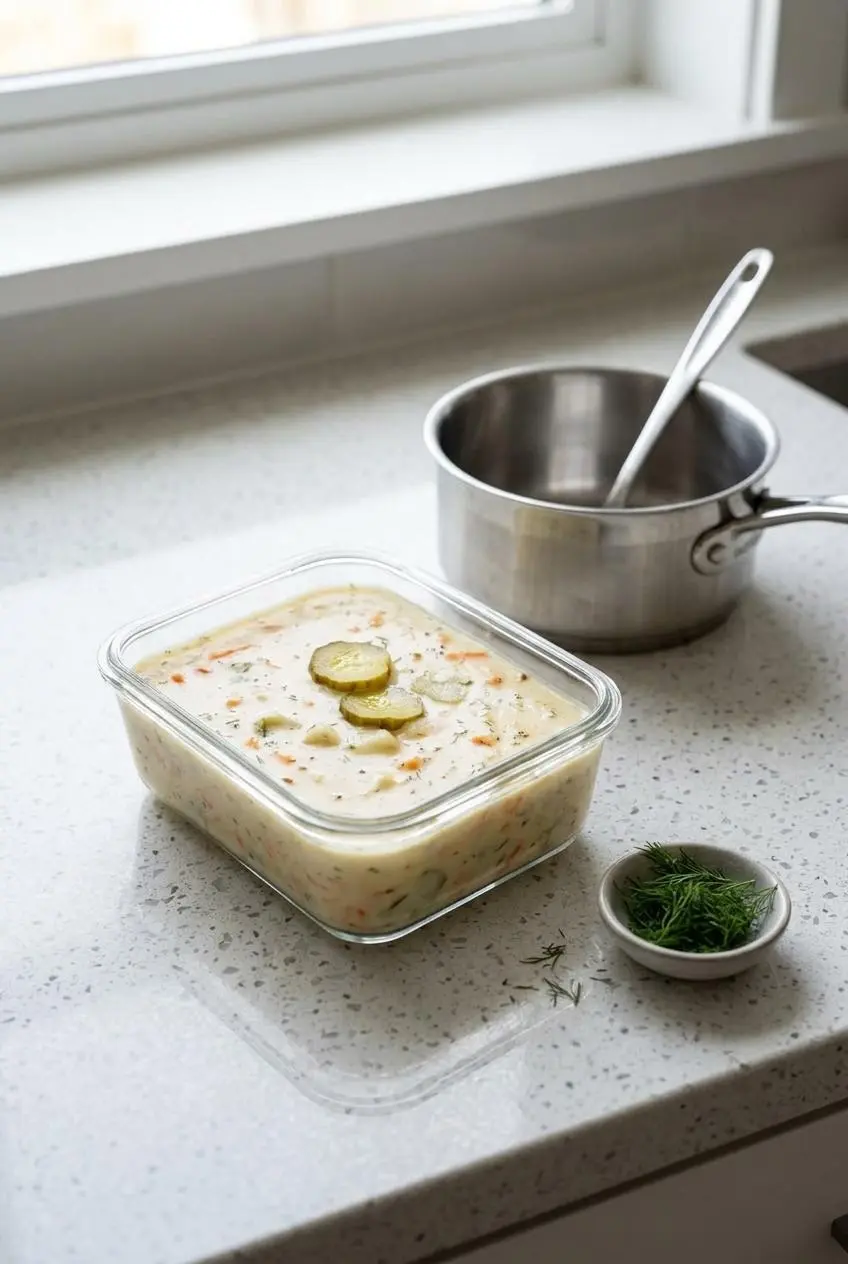
Portion leftovers into shallow containers and refrigerate promptly rather than leaving the full pot on the counter until completely cold. Keep the soup covered and use refrigerated leftovers within three to four days, with proper cooling and chilled storage.
For reheating, transfer the portion you need to a saucepan and warm it over medium-low heat, stirring through the bottom and edges. Whisk through any uneven thickening, and add a splash of broth or water if the chilled soup has become too dense.
Heat gently and thoroughly without forcing a hard rolling boil. Keep fresh dill and extra pickle garnishes separate until serving so they retain their aroma and crunch. Reheating cannot correct improper storage, so prompt chilling matters more than trying to rescue a neglected pot later.
Conclusion
Creamy pickle soup balances savory broth, tender potatoes, and bright brine in a comforting bowl. A smooth sour cream paste, gradual additions, and controlled heat help you keep that balance.
Finish with fresh dill and cracked black pepper if you like, then serve while the broth is warm and fragrant. Keep a slice of bread nearby for the last spoonful.
Frequently Asked Questions
What Pickles Are Best for Dill Pickle Soup?
Naturally fermented Polish dill pickles offer a rounded sour flavor that suits this soup. Standard kosher dills also work if you like their flavor; taste the brine because acidity and salt vary. Avoid sweet and bread-and-butter pickles when you want the savory, tangy result described here.
How Should You Store Leftover Soup?
Divide it into shallow containers, refrigerate promptly, and keep it covered. Follow the refrigerated storage window above rather than relying on smell alone. Reheat gently while stirring, and add fresh garnishes after heating.
Why Did My Sour Cream Curdle in the Soup?
A sudden temperature change, vigorous boiling, and strong acidity can contribute to a grainy or curdled texture. For better control, optionally temper the paste with warm broth before adding it gradually to the pot. If separation occurs, remove the soup from the heat and whisk gently; firmly formed curds may remain.
How Do You Adjust the Tartness If It Is Too Sour?
Dilute the soup gradually with extra unsalted chicken broth, tasting between additions. An additional spoonful of sour cream can soften the sharpness and restore richness. If needed, try a tiny pinch of sugar to balance the perceived sourness without making the soup sweet.
Dill Pickle Soup

Equipment
- Large Pot
- Medium bowl
- Whisk
Ingredients
- 5-1/2 cups chicken broth
- 1-3/4 lbs russet potatoes peeled and quartered
- 2 cups chopped carrots smaller dice
- 1 cup chopped dill pickles smaller dice ~ about 3 large whole dills
- 1/2 cup unsalted butter
- 1/2 cup all-purpose flour
- 1 cup sour cream
- 1/4 cup water
- 2 cups dill pickle juice
- 1-1/2 teaspoons Old Bay seasoning
- 1/2 teaspoon table salt
- 1/2 teaspoon coarsely ground pepper
- 1/4 teaspoon cayenne pepper
- sliced dill pickles, fresh dill and black pepper optional garnishes
Instructions
- Place the potatoes and carrots in a large pot with the chicken broth and butter, then bring the liquid to a boil and cook until the potatoes soften throughout. A fork should enter the center of a large potato quarter easily, and the butter should have melted into the broth.
- Stir the diced pickles into the boiling vegetable mixture and maintain steady bubbling. The pickle pieces should spread evenly among the softened carrots and potatoes.
- Use a medium bowl to blend the flour, sour cream, and water into a uniform paste. The mixture should look smooth and thick, with no visible pockets of dry flour.
- Whisk the paste into the bubbling soup in 2-tablespoon portions, dispersing each addition before adding the next and avoiding a violent rolling boil. Small flour beads should dissolve as you whisk, while some potato pieces break down and give the broth more body.
- Pour in the pickle juice gradually, stir in the Old Bay, salt, coarsely ground pepper, and cayenne, and cook for 5 more minutes at a controlled bubble. The broth should become evenly creamy, with fragrant steam carrying both pickle tang and savory spice.
- Take the pot off the heat and serve the soup immediately. Each bowl should contain tender vegetables in a creamy broth with evenly distributed pickle pieces.