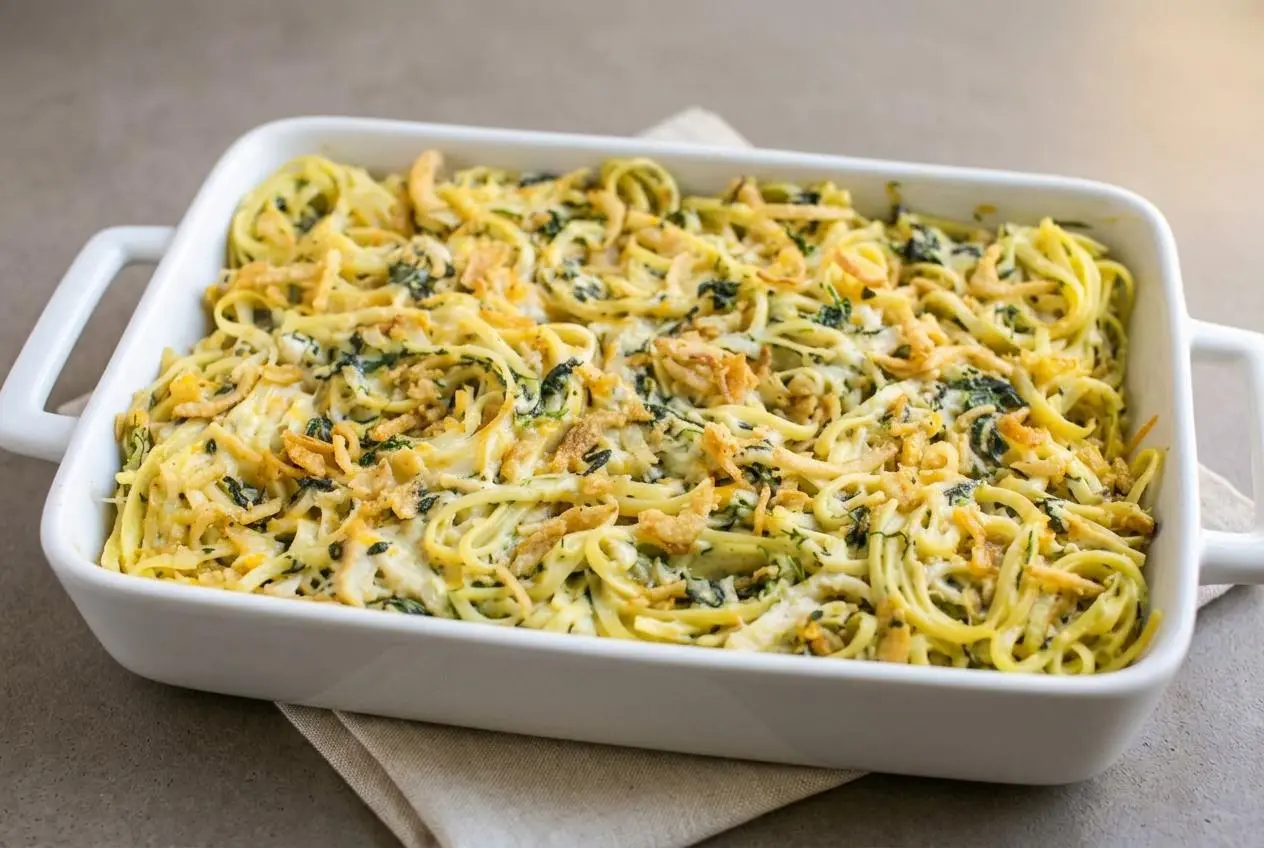
Monterey chicken spaghetti is a creamy baked casserole made with cooked chicken, spaghetti, Monterey Jack, spinach, sour cream, and condensed cream of chicken soup. French fried onions add savory flavor inside and a golden, crunchy topping after baking.
A forkful of monterey chicken spaghetti brings together soft melted cheese, tender chicken, and the satisfying crunch of fried onions. It’s a Southern-style comfort dinner that turns cooked chicken into a generous pasta bake.
The covered baking stage keeps the pasta moist, while a final uncovered finish crisps the topping. The spinach adds color without overwhelming the creamy sauce. That golden onion layer is worth watching.
Squeeze the thawed spinach before mixing anything else so excess water never reaches the sauce.
What Is Monterey Chicken Spaghetti
Monterey Jack, spinach, and French fried onions give this chicken spaghetti its particular character. The cheese melts into a mild, buttery coating, Parmesan adds a sharper savory edge, and sour cream balances the richness with tang.
If you enjoy classic chicken spaghetti, this version offers a different cheese, vegetable, and topping combination. The onions mixed into the filling soften during baking; those scattered on top stay crisp because they go on near the end.
It fits a family dinner because you cook the pasta, combine the filling, and let the oven finish the dish. A 9×13 baking dish makes 12 servings, with plenty of creamy pasta to pair with a vegetable side.
Essential Ingredients and Flavor Keys
Spaghetti carries the creamy sauce, chicken adds substance, and spinach brings color. Monterey Jack supplies a smooth melt, Parmesan deepens the savory flavor, sour cream adds tang, and the egg helps bind the filling. Garlic, onion powder, soup, and fried onions round out the seasoning and crunch.
- 12 oz spaghetti
- 2 chicken breasts (cooked and chopped)
- 1 cup Monterey Jack Cheese (shredded)
- 1/2 cup parmesan cheese (shredded)
- 1 cup sour cream
- 1 egg (beaten)
- 10 oz package chopped spinach (thawed)
- 3 cloves garlic (minced, or one tablespoon garlic powder)
- 2 10 oz cans cream of chicken soup
- 1 teaspoon onion powder
- 6 oz french fried onions (divided, this is equal to one can )
Use the condensed soup directly from the cans rather than preparing it with water. Its concentrated consistency gives the sauce body. A lower-sodium cream of chicken soup is an optional way to reduce saltiness, especially when the chicken already has seasoning.
The beaten egg helps bind the creamy filling as its proteins set in the oven. It supports a cohesive texture, but it cannot compensate for wet spinach or guarantee that dairy will never separate.
I prefer to separate squeezed spinach with my fingers before adding it so it distributes evenly instead of staying in dense clumps.
The Cheese and Dairy Foundation
Monterey Jack provides the soft, mild cheese flavor, while Parmesan adds depth without taking over. Sour cream loosens the condensed soup enough to coat the spaghetti and supplies a welcome tang.
Freshly shredded Monterey Jack generally melts more smoothly than pre-shredded cheese, which often includes anti-caking coatings. Either can work here, but shredding a block gives you better control over the texture.
Beat the egg thoroughly before stirring in the filling ingredients. That spreads it throughout the sauce rather than leaving streaks that could set into visible bits during baking.
Selecting and Prepping the Chicken
Start with fully cooked chicken, since this casserole’s method does not include cooking raw breasts. Chop the meat into bite-size pieces so it mixes comfortably with the long pasta strands.
- Cooked chicken breasts: Baked or poached breasts work well when chopped evenly.
- Rotisserie shortcut: Use cooked breast meat from a rotisserie chicken, removing the skin and bones first.
- Homemade preparation: Prepare tender shredded chicken if you prefer softer strands rather than chopped pieces.
If you’re starting with fresh chicken breasts, cook them before assembling the casserole. Keep the pieces manageable; large chunks make the pasta harder to toss and portions less even.
How to Make the Monterey Chicken Spaghetti Step by Step
Allow about 20 minutes for prep, followed by 30 minutes of covered baking and a final 5 minutes uncovered. Heat the oven to 350°F and have a greased 9×13 baking dish and foil ready before assembling.
- Boil the spaghetti using the package’s al dente guidance.
A strand should bend easily but still offer slight resistance when bitten. - Whisk the egg in a medium bowl while the spaghetti cooks, then incorporate the cooked chopped chicken, sour cream, condensed soup, Parmesan, Monterey Jack, thoroughly squeezed spinach, half the fried onions, garlic, and onion powder.
The filling should look thick and evenly mixed, with no visible streaks of egg. - Drain the cooked spaghetti well, then fold it through the chicken filling until the strands are coated.
Spread apart any tangled bundles so the sauce reaches the pasta throughout. - Fill the greased 9×13 baking dish with the pasta mixture and secure foil over the top.
An even layer helps the center and edges heat more consistently. - Place the covered dish in the 350°F oven for 30 minutes.
The sauce should be hot and beginning to bubble around the edges when you lift the foil. - Lift off the foil and distribute the reserved fried onions across the surface.
A scattered, even layer gives the topping room to brown rather than steam in piles. - Finish baking uncovered for another 5 minutes, or until the onions become crisp and golden brown.
Watch for deep golden edges and remove the dish before the topping turns dark.
The two onion additions serve different purposes. The first brings savory onion flavor into the filling; the second provides contrast against the soft pasta and creamy cheese sauce. Adding all the onions at the beginning sacrifices that crisp finish.
Tips for Creamy Texture and Common Mistakes
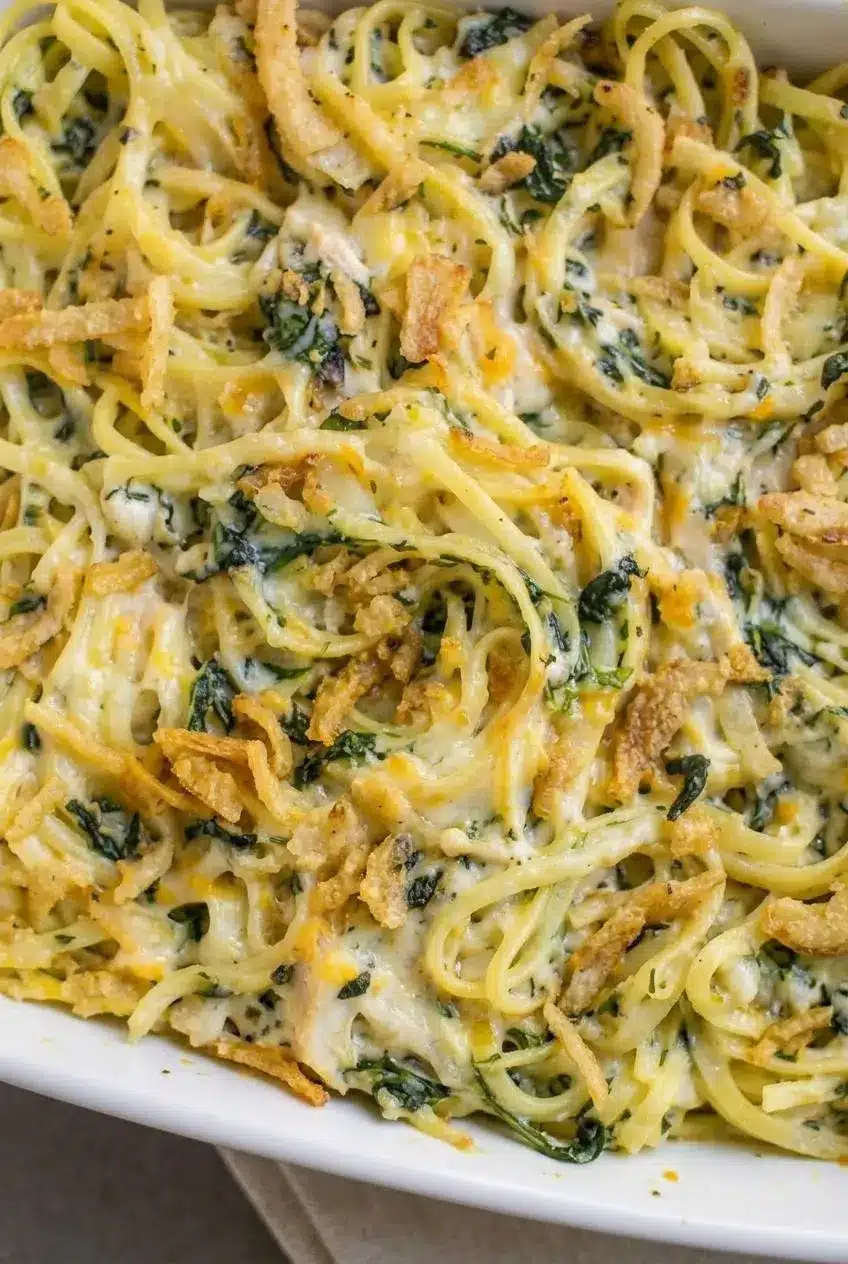
Moisture control matters more than adding extra cheese. Pay attention to the spinach, pasta, and foil, and the filling has a much better chance of staying creamy rather than soupy or dry.
- Watery filling: Thawed spinach can hold liquid even after draining. Gather it in a clean kitchen towel or sturdy paper towels, squeeze firmly over the sink, reposition it, and squeeze again until it stops dripping readily.
- Mushy spaghetti: Pasta that becomes fully soft in boiling water continues softening in the oven. Stop at al dente, checking a strand rather than relying solely on the package timer.
- Dry edges: Baking uncovered for the entire cooking time exposes the pasta to drying heat. Keep the foil secure during the initial bake and uncover only for the topping.
- Burned onions: The fried topping already has color before it enters the oven. Watch closely during the final uncovered minutes rather than waiting for every onion piece to turn dark brown.
- Uneven spinach distribution: Squeezed greens tend to form a compact ball. Break that ball into loose pieces before stirring it into the filling.
- Salty flavor: Condensed soup, Parmesan, fried onions, and seasoned chicken all contribute salt. Choose a lower-sodium soup if desired, and avoid automatically adding extra seasoning.
Let the finished casserole rest for about 5 minutes before scooping. This brief pause helps the filling settle and cling to the pasta, though it should remain creamy rather than slice like a firm lasagna.
Make-Ahead, Freezing, and Reheating Instructions
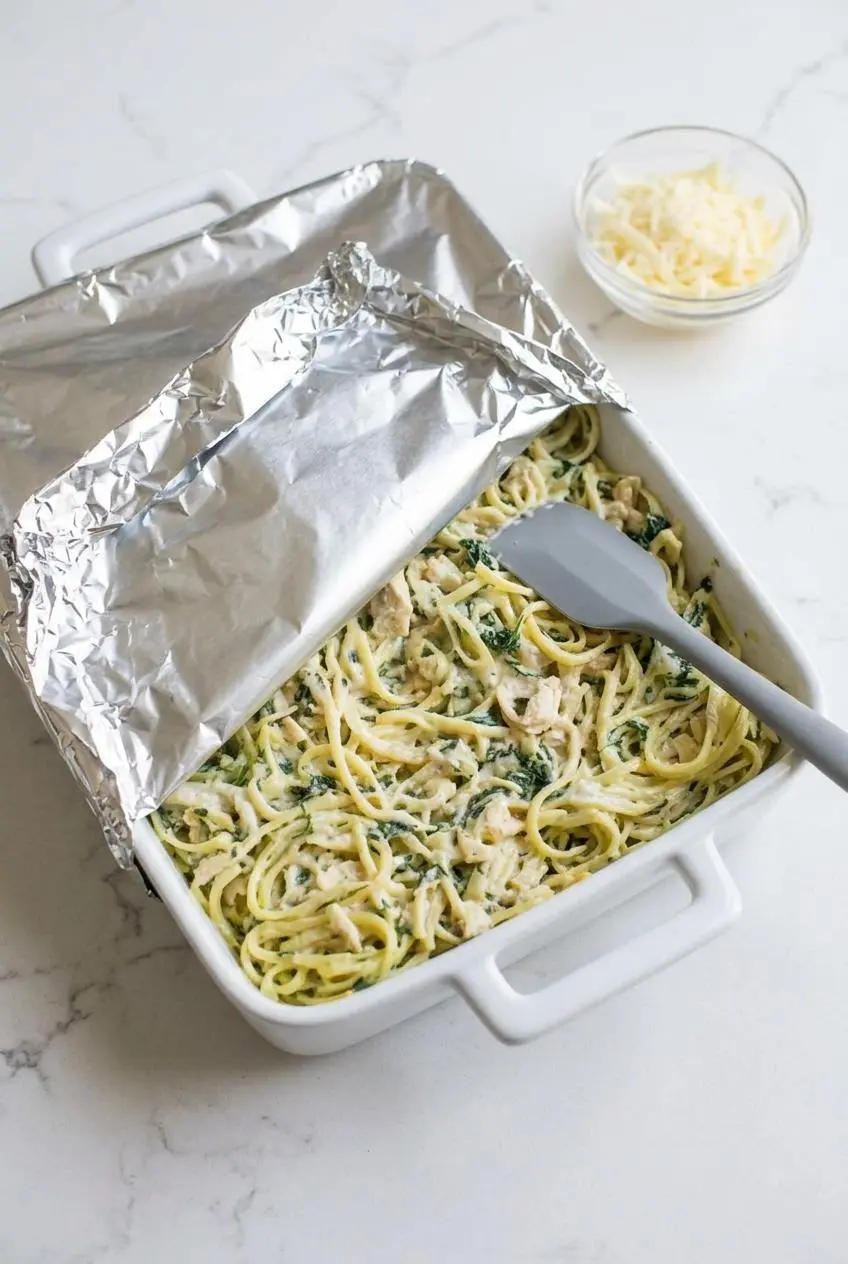
Keep the final onion topping separate when preparing the casserole ahead. It absorbs moisture against the filling and won’t retain its freshly baked crunch.
- Assemble ahead: Combine the filling and pasta, transfer them to the prepared dish, cover, and keep chilled until baking. Reserve the topping separately.
- Prepare for freezing: Use a freezer-compatible baking container, omit the final onion layer, and wrap securely with freezer-suitable wrapping. Label the container so the baking directions stay handy.
- Protect baked leftovers: Divide them into shallow containers and refrigerate promptly instead of leaving the full dish on the counter to cool completely.
For a frozen casserole, thaw it in the refrigerator and keep it chilled until ready to bake. Use an oven-compatible dish, bake covered at 350°F, and add the reserved topping once the filling is thoroughly heated; a chilled casserole may need additional baking time.
Reheat individual portions covered, adding an optional splash of milk or broth if the pasta has absorbed much of the sauce. Check that the center reaches 165°F when reheating leftovers, using a food thermometer rather than judging only by hot edges.
Expect the reheated onion topping to be softer than it was fresh from the oven. Keeping reserved onions separate gives you a better texture when finishing an unbaked casserole.
Smart Substitutions and Recipe Variations
Choose optional swaps based on the flavor you want, and avoid changing several parts at once. The creamy filling and crisp onion finish should still remain the focus.
Spicy Pepper Jack and Rotel Options
- Pepper Jack: Replace some or all of the Monterey Jack with Pepper Jack for a similar melting texture and a spicy kick.
- Rotel: Fold in well-drained diced tomatoes with green chiles for tomato brightness and heat; retained canning liquid can thin the sauce.
- Mild green chiles: Add drained canned diced green chiles for a gentler chile flavor without the tomatoes.
Drain any canned vegetable addition thoroughly before mixing. The filling already contains moisture from sour cream, soup, and spinach, so extra liquid is more likely to dilute it than improve it.
Greek Yogurt and Soup Swaps
- Plain whole-milk Greek yogurt: Use it in place of sour cream for creamy tang, understanding that brand and thickness can change the finished texture.
- Cream of mushroom soup: Substitute the same amount of condensed soup for a more earthy, savory flavor.
- Cream of celery soup: Substitute the same amount for a lighter vegetable flavor while retaining the condensed sauce structure.
Choose plain, unsweetened yogurt, not flavored yogurt. For the soup swaps, use condensed soup rather than a ready-to-eat soup, which may make the filling too loose.
What to Serve with Chicken Spaghetti
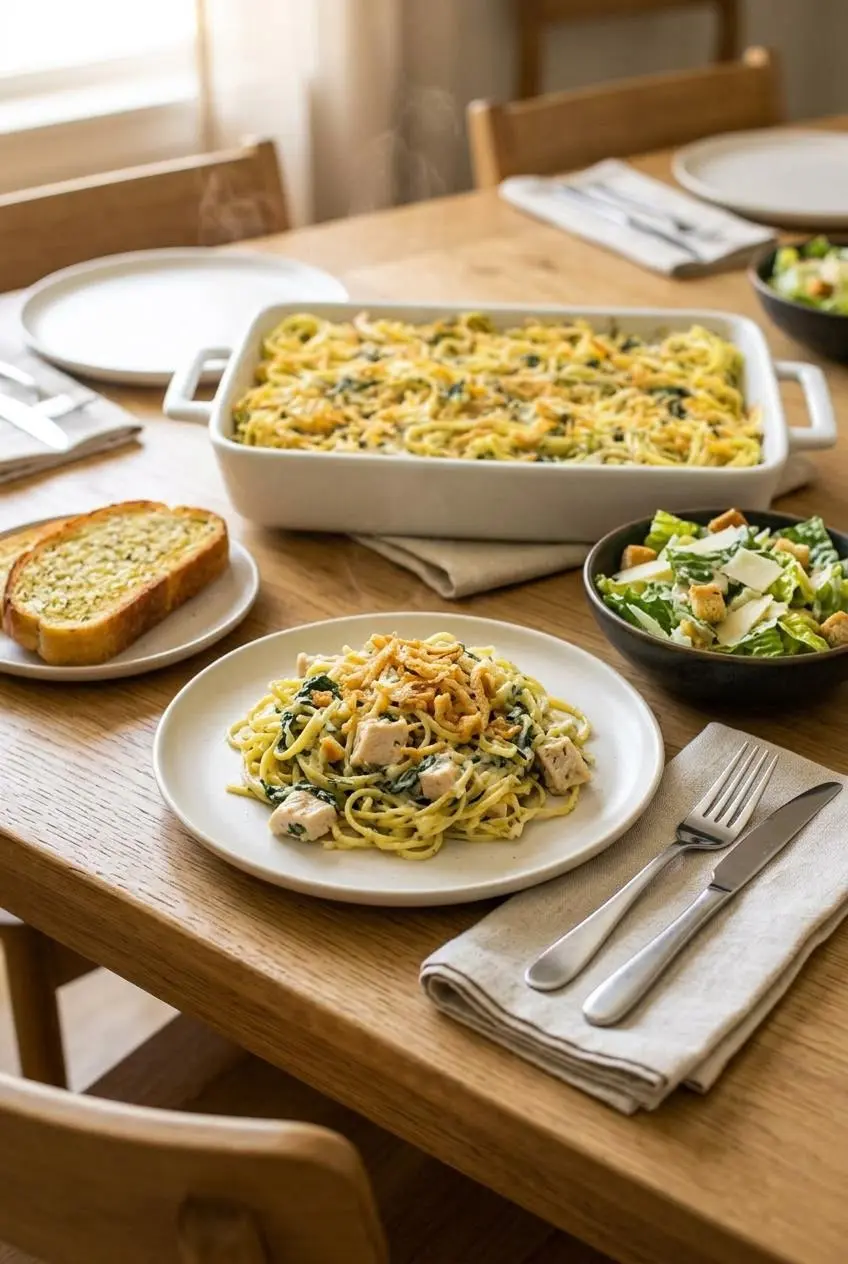
A crisp or green side balances the rich pasta without competing with its cheesy filling. Choose something you can prepare while the casserole bakes.
- Romaine Caesar salad: Crisp leaves add a refreshing contrast; keep the dressing light if you want the meal to feel less rich.
- Steamed green beans: Their clean vegetable flavor works well alongside the savory sauce.
- Roasted broccoli: Browned edges complement the fried onion topping.
- Warm garlic bread: Serve alongside a salad or vegetable when you want a heartier dinner.
Conclusion
This casserole brings creamy pasta, tender chicken, and savory onion crunch together in one baking dish. Monterey Jack keeps the flavor mellow, while Parmesan and sour cream give the filling depth.
Squeeze the spinach thoroughly and watch the onions during the final uncovered minutes. Those two details make a real difference, so give them a little attention before bringing the dish to the table.
Frequently Asked Questions
Can Monterey Chicken Spaghetti Be Frozen Before Baking?
Yes, assemble it without the final fried onion topping and wrap it securely in a freezer-compatible container. Follow the thawing and baking guidance above, keeping the reserved topping separate until the filling is hot.
Why Do You Add an Egg to Chicken Spaghetti?
The beaten egg helps bind the creamy filling as it sets during baking. It encourages a cohesive sauce, but thoroughly drained spinach still matters because the egg cannot absorb excess water.
How Do I Keep Chicken Spaghetti from Being Watery?
Squeeze the thawed spinach firmly with a clean towel, then loosen the compressed greens before mixing. Drain the spaghetti well, use the soup without added water, and let the baked casserole settle briefly before serving.
What Can I Substitute for Sour Cream?
Plain whole-milk Greek yogurt is an optional substitute that provides thickness and tang. Choose an unsweetened variety and expect some texture variation rather than an identical result.
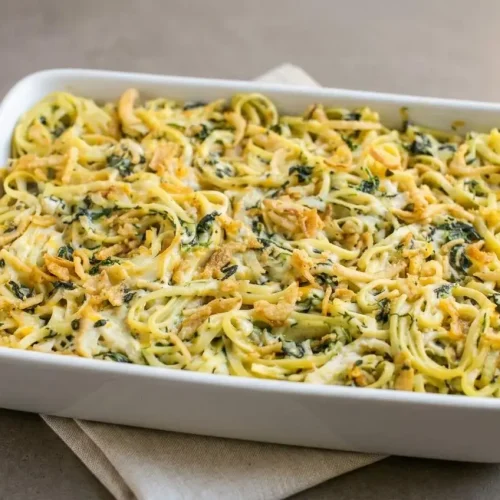
Monterey Chicken Spaghetti

Equipment
- 9×13 Baking Dish
- Medium bowl
- Aluminum Foil
Ingredients
- 12 oz spaghetti
- 2 chicken breasts cooked and chopped
- 1 cup Monterey Jack Cheese shredded
- 1/2 cup parmesan cheese shredded
- 1 cup sour cream
- 1 egg beaten
- 10 oz package chopped spinach thawed
- 3 cloves garlic minced, or one tablespoon garlic powder
- 2 cans cream of chicken soup 10 oz each
- 1 teaspoon onion powder
- 6 oz french fried onions divided, this is equal to one can
Instructions
- Boil the spaghetti using the package’s al dente guidance. A strand should bend easily but still offer slight resistance when bitten.
- Whisk the egg in a medium bowl while the spaghetti cooks, then incorporate the cooked chopped chicken, sour cream, condensed soup, Parmesan, Monterey Jack, thoroughly squeezed spinach, half the fried onions, garlic, and onion powder. The filling should look thick and evenly mixed, with no visible streaks of egg.
- Drain the cooked spaghetti well, then fold it through the chicken filling until the strands are coated. Spread apart any tangled bundles so the sauce reaches the pasta throughout.
- Fill the greased 9×13 baking dish with the pasta mixture and secure foil over the top. An even layer helps the center and edges heat more consistently.
- Place the covered dish in the 350°F oven for 30 minutes. The sauce should be hot and beginning to bubble around the edges when you lift the foil.
- Lift off the foil and distribute the reserved fried onions across the surface. A scattered, even layer gives the topping room to brown rather than steam in piles.
- Finish baking uncovered for another 5 minutes, or until the onions become crisp and golden brown. Watch for deep golden edges and remove the dish before the topping turns dark.