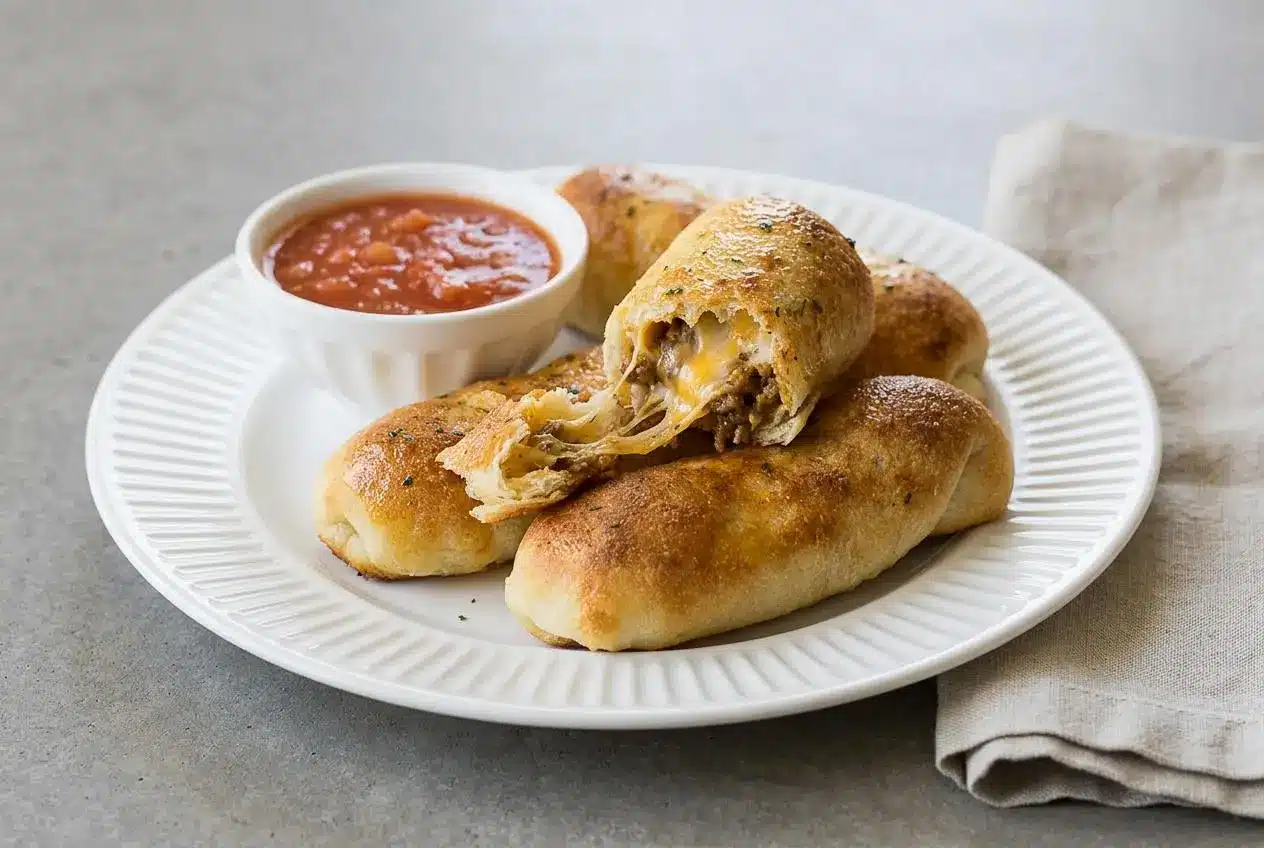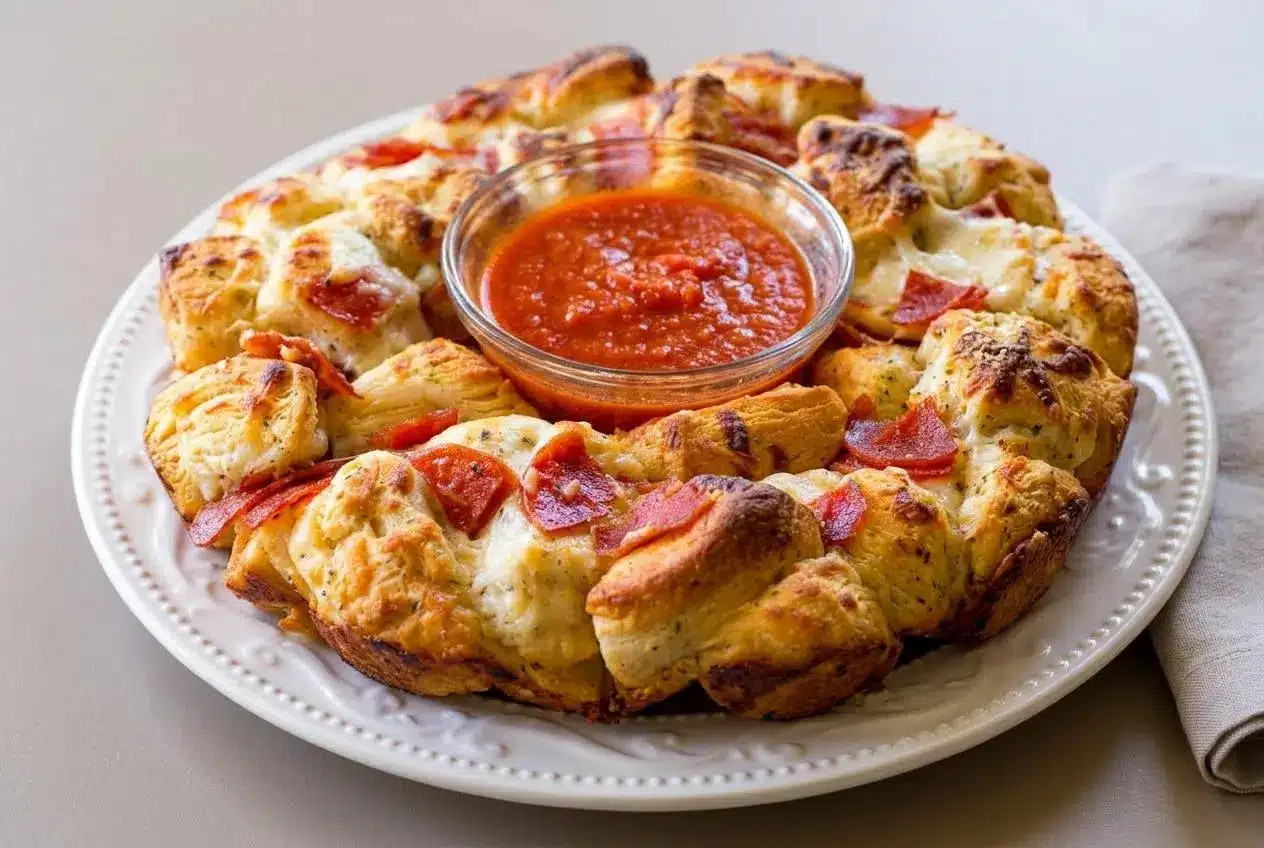
Pizza monkey bread is a savory pull-apart bread made with quartered refrigerated biscuits, pepperoni, mozzarella, Parmesan, and garlic butter. Bake it at 350°F in a greased Bundt pan for 35 to 45 minutes, then pull off warm pieces and dip them in marinara.
Think of pizza monkey bread as pizza flavors tucked between soft biscuit bites, with golden cheese around the edges. Everything gets tossed together before baking, so you don’t need to roll out a crust or arrange individual toppings.
It’s a shareable centerpiece for game day, movie night, or a casual dinner. Preparation takes about 10 minutes, and the key to a good bake is giving the middle enough time without scorching the top. Those crisp cheese edges are worth waiting for.
Set out the foil before you start so you can cover the browned top without hunting through a drawer mid-bake.
Ingredients for Pizza Monkey Bread
Biscuits give the bread its tender structure, cheese binds the bites, and pepperoni adds savory flavor. Butter and olive oil carry the garlic and herbs across the dough, while marinara brings a tangy contrast when you dip.
- 2 (16.3 ounce) cans refrigerated biscuits (quartered)
- 6 ounces pepperoni, quartered
- 2 cups shredded mozzarella
- 1/2 cup Parmesan cheese, shredded or grated
- 1/4 cup butter (melted and slightly cooled)
- 2 tablespoons olive oil
- 2 teaspoons Italian seasonings
- 2 teaspoons minced garlic ((or 1/2 teaspoon garlic powder))
- marinara for dipping
Mozzarella supplies the stretchy melt, while Parmesan adds a sharper, salty finish. Slightly cooled melted butter coats the biscuit pieces without exposing the chilled dough to unnecessary heat. Keep the marinara separate so its moisture doesn’t interfere with the biscuit crumb.
I separate any biscuit quarters that cling together before tossing, so the garlic butter reaches their cut sides.
How to Make Pizza Monkey Bread
This makes 8 servings, with about 10 minutes of preparation and 40 minutes of baking. Use the baking range and center texture rather than the clock alone to decide when it’s ready.
- Heat the oven to 350°F, then combine the biscuit quarters, pepperoni, mozzarella, Parmesan, slightly cooled butter, olive oil, Italian seasonings, and garlic in a large bowl, leaving the marinara aside.
Toss until the dough pieces have a glossy coating and the cheese and pepperoni spread throughout the mixture. - Transfer the coated mixture to a thoroughly greased 10-inch Bundt pan or a greased 9×13-inch baking dish.
Distribute the pieces evenly so one section isn’t noticeably deeper than another. - Bake for 35 to 45 minutes, tenting the pan with foil after 20 minutes or once the top has browned.
The foil shields the golden cheese and exposed biscuit edges while heat continues reaching the interior. - Check the bread every 5 minutes toward the end of baking and remove it only when the inner biscuits have cooked through.
A biscuit checked in the thickest section should have a set crumb rather than a shiny, sticky dough center. - Loosen the baked bread’s edges with a knife, turn the Bundt ring onto a plate, then turn it again onto the serving platter and pull off pieces for dipping in warm marinara.
The browned top should face upward, with melted cheese holding the biscuit bites together.
Use gentle lifting and folding motions when tossing rather than squeezing the dough. Some cheese will remain loose in the bowl; transfer it along with the biscuits instead of leaving that flavorful coating behind.
Essential Ingredients and Smart Substitutions
The most useful substitutions preserve the balance between dough, melting cheese, and relatively dry toppings. Wet additions can change the bake more than a different seasoning or pepperoni variety.
Butter contributes dairy richness and encourages flavorful browning. Olive oil helps distribute the coating over the irregular biscuit pieces. Together, they carry the garlic and Italian seasoning into the spaces between bites without requiring a separate sauce inside the bread.
Biscuit Dough vs Fresh Pizza Dough
Refrigerated biscuits produce a soft, tender pull-apart texture without a separate yeast rise. Cut each biscuit into roughly equal quarters so the pieces cook at a similar pace; a large intact piece can stay doughy after its neighbors have finished.
Fresh homemade or store-bought pizza dough is an optional alternative, but it produces a chewier bread with more crust-like resistance. Divide it into evenly sized, bite-sized pieces and shape them into loose balls before coating.
Follow the dough’s own handling and rising directions rather than treating it exactly like canned biscuits. Its thickness and readiness affect baking, so don’t assume the biscuit timing transfers unchanged. Check an interior piece for a cooked crumb.
Selecting Cheeses for Maximum Pull
Low-moisture shredded mozzarella works well because it melts into stretchy strands without bringing the extra liquid associated with fresh mozzarella. Pre-shredded mozzarella is convenient and suits the tossed assembly.
Freshly grated Parmesan disperses readily and brings a savory bite. Shredded Parmesan, which is also listed as an option, leaves more distinct flecks. Either way, mozzarella handles the stretch while Parmesan supplies the sharper flavor.
The blend won’t prevent all oil from separating during baking. Pepperoni, butter, and cheese all contribute fat, so avoid adding extra oil just because the mixture looks uneven at first. Toss it thoroughly instead.
Pepperoni and Savory Mix-Ins
Quartering regular pepperoni helps distribute it between biscuit bites rather than creating broad layers that separate the dough. Mini pepperoni offers a similar scattered effect without the same cutting work.
- Turkey pepperoni: Use it as an optional swap for a different pepperoni flavor and texture; fat content varies by brand.
- Plant-based pepperoni: Choose it for a meatless variation, checking the package ingredients to suit your needs.
- Oil-heavy pepperoni: Blot visible surface oil before tossing, rather than adding more fat to compensate for sticky pieces.
If you prefer a separate pizza-inspired dish with a different herb profile, chicken pesto flatbread offers another direction without changing this bread’s moisture balance.
Equipment Guide: Bundt Pan and Alternatives
A 10-inch Bundt pan gives the bread its ring shape and exposes dough to heat along the center tube as well as the outer wall. A baking dish works too, but its shallower shape changes how quickly the bread cooks.
Preparing Fluted Pans for Clean Release
Coat the pan’s outer wall, bottom, center tube, and every ridge with butter or cooking spray. If using softened butter, work it into the grooves with a pastry brush. Hold the empty pan under the kitchen light and look for missed patches.
A worn or scratched coating can make release harder even with careful greasing. Choose a pan with an intact surface, and avoid scraping a nonstick finish with a sharp blade.
For a more stable turn-out, let the baked ring settle in its pan for 5 to 10 minutes. Loosen accessible edges, then place a flat plate over the pan. Wearing oven mitts, hold the plate and pan firmly together and turn them as one unit over a clear counter.
Use a second plate to turn the bread right side up. Don’t attempt to catch a hot ring as it falls, and keep the platter level during both turns.
Baking in a 9×13 Dish or Cast-Iron Skillet
A greased 9×13-inch baking dish is the straightforward alternative. Spread the mixture across the dish rather than piling it in the middle, and serve directly from the pan instead of inverting.
An oven-safe cast-iron skillet is another optional choice if it comfortably holds the mixture with room for expansion. Cast iron can brown the underside strongly, so watch the bottom crust as well as the exposed cheese.
- Bundt pan: Follow the stated baking range and test the thickest part of the ring.
- 9×13-inch dish: A shallower layer may finish sooner; begin checking around 25 to 30 minutes rather than assuming it needs the full Bundt bake.
- Cast-iron skillet: Use layer depth and center texture to guide timing; a crowded, deep skillet won’t behave like a shallow baking dish.
Troubleshooting Common Monkey Bread Mistakes
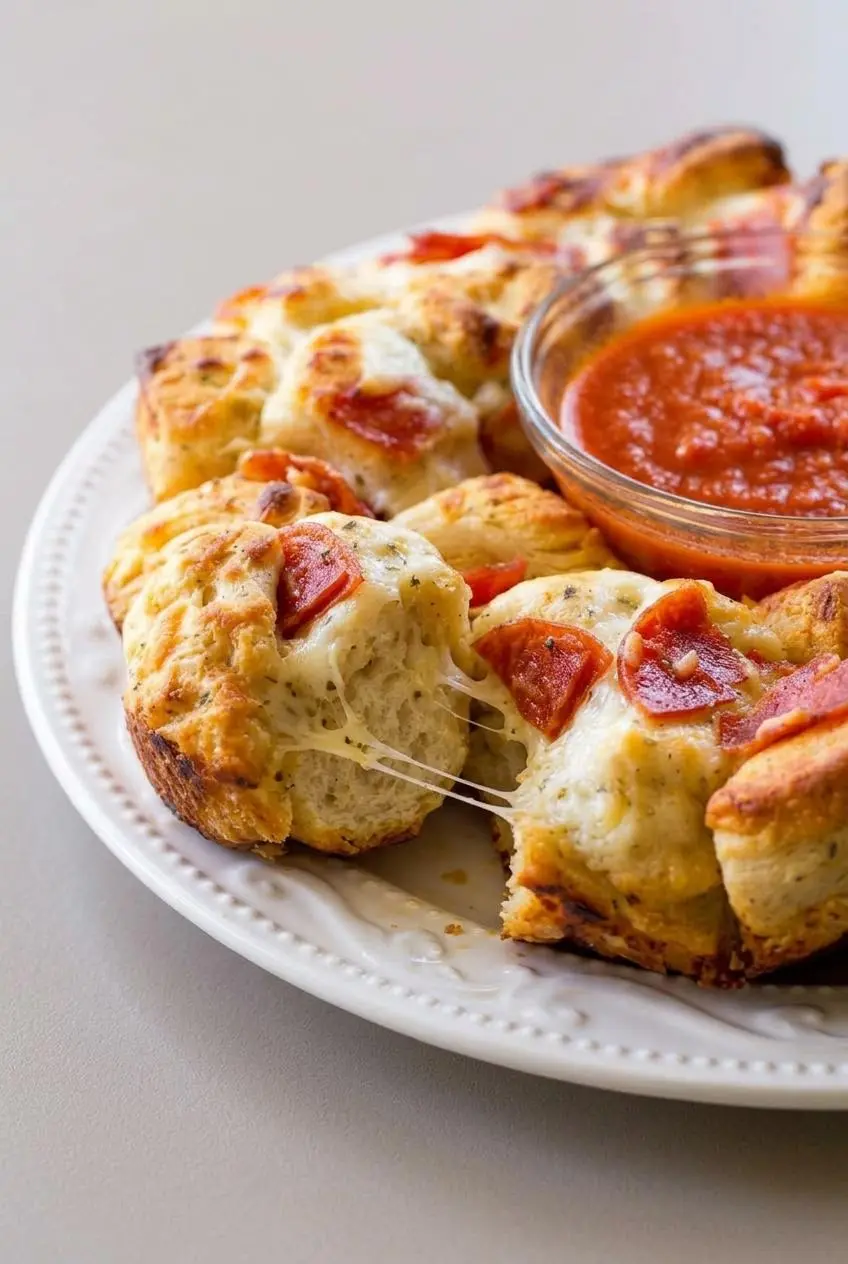
A browned exterior can hide unfinished dough, and an intact ring can still cling to one pan ridge. Check the specific problem before changing the recipe.
Fixing Doughy Raw Centers
- Golden top, sticky middle: The exterior has browned before the deepest biscuits have cooked; keep the top tented and continue baking in the pan.
- Unclear skewer result: Melted cheese can coat the skewer; test a biscuit in the thickest section and look specifically for gummy dough, not just a smear of cheese.
- Unevenly baked bites: Oversized pieces or tightly clumped quarters can delay cooking; separate and cut the dough evenly during preparation.
Insert a wooden skewer between exposed pieces and into an interior biscuit. If the result is ambiguous, gently open a small seam with a fork to inspect the crumb without breaking apart the entire ring.
A cooked biscuit interior should look set and feel tender, not paste-like. Springiness on the outside is helpful, but it doesn’t prove that the middle is ready. Garlic aroma and bubbling cheese signal progress, not complete doneness.
Preventing Dough from Sticking to Fluted Ridges
- Outer edges won’t release: A missed groove may be holding the crust; ease a thin silicone spatula or butter knife along the accessible edge without gouging the pan.
- The center tube grips the ring: Loosen that inner edge too, rather than freeing only the outside wall.
- A section stays behind: Lift it out gently and place it back against the ring; avoid forceful shaking that tears the remaining bread.
If the bread doesn’t release during inversion, return the pan upright and loosen it again. A gentle tap may help, but the sound of a tap doesn’t confirm release. Check before lifting the pan away.
Balancing Sauce to Avoid Soggy Texture
- Wet, heavy pockets: Marinara mixed into the raw dough adds moisture where the biscuits need to bake; keep it on the side for dipping.
- Greasy seams: Oil-heavy toppings or added fat can collect between bites; blot visibly oily pepperoni and stick with the listed fat amounts.
- Soft crust after serving: Sauce poured over the whole ring softens the exterior; let each person dip individual pieces instead.
Creative Flavor and Dietary Variations
These optional versions change the flavor or filling, not the official ingredient list. Keep additions restrained enough that coated dough remains the main component.
Cheese-Stuffed Pepperoni Bites
For a stuffed variation, flatten individual biscuit pieces slightly, place a small mozzarella cube inside, and pinch the dough closed before coating. Seal each seam firmly so the cheese stays enclosed as the dough expands.
Stuffed pieces are thicker than plain quarters. Check the dough surrounding the filling, since melted cheese alone doesn’t show whether the biscuit has cooked through.
Vegetarian Garden Herb Variation
Replace the pepperoni with a restrained combination of chopped bell peppers, sliced black olives, and well-drained sliced mushrooms. Pat wet additions dry so they don’t introduce puddles between the dough pieces.
Keep the garlic and Italian seasoning for a savory herb profile. For a topping-free bread option alongside it, garlic bread rolls keep the focus on buttery garlic flavor.
Spicy Calabrian Garlic Pull-Apart
- Crushed red pepper flakes: Add them to the coating for dry heat without extra moisture.
- Minced Calabrian chiles: Drain excess packing oil before adding them for a deeper chile flavor.
- Hot honey garlic butter: Brush lightly over the baked crust for a sweet-spicy finish instead of saturating the raw dough.
Make-Ahead, Storage, and Reheating Instructions
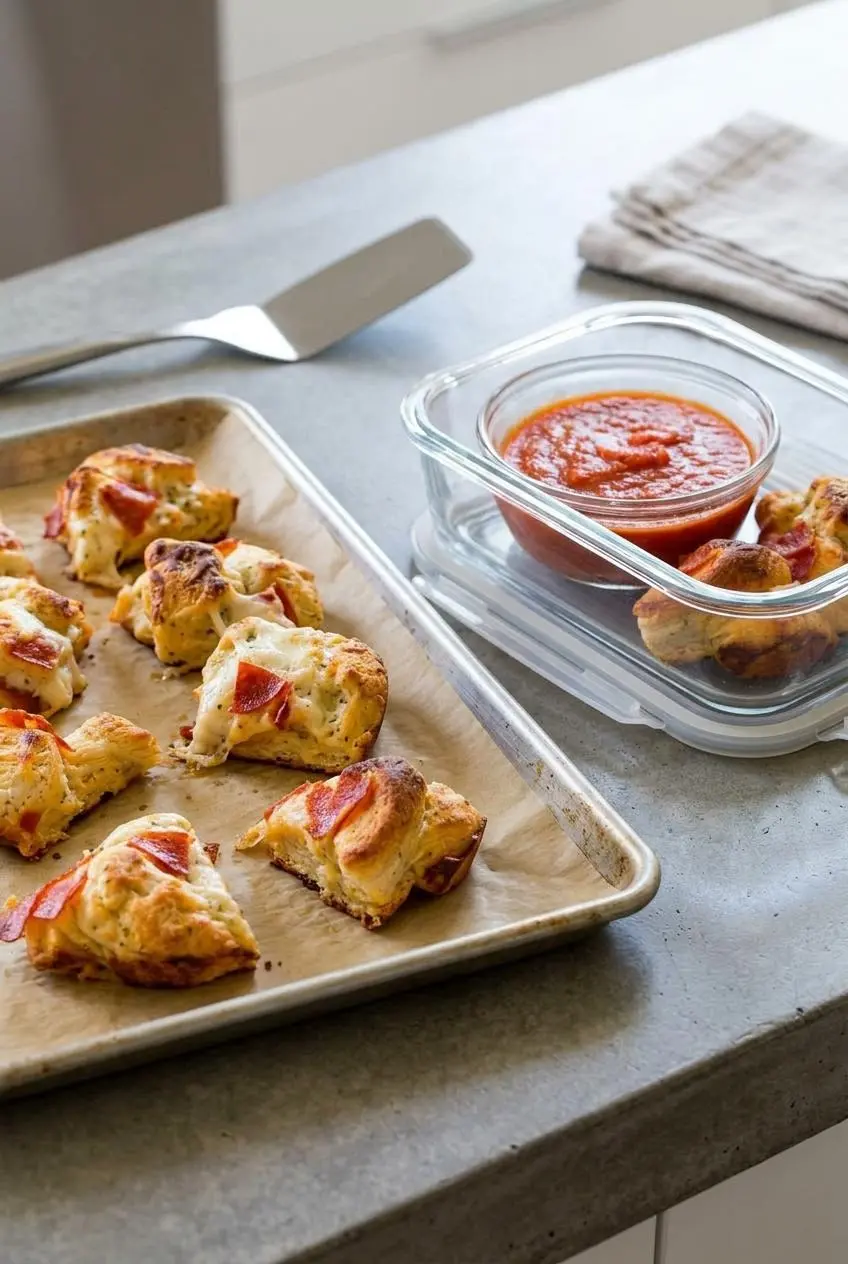
For party preparation, focus on getting the ingredients ready separately and protecting the bread’s texture afterward. The biscuit mixture works best when assembled close to baking.
Why Assembling Raw Dough Ahead Fails
Leaving raw biscuit pieces mixed with moist toppings can make them sticky and difficult to separate. Saucing the mixture adds another source of moisture and makes the eventual crumb less predictable.
Quarter the pepperoni, shred the cheeses, and measure the seasonings separately. Keep refrigerated ingredients chilled, and open and cut the biscuits when you’re ready to assemble. This reduces last-minute work without relying on holding a fully mixed raw pan.
Refrigerating Leftovers
Refrigerate leftover bread in a covered container rather than leaving the serving platter out. Divide a large remaining ring into smaller portions for easier storage and reheating.
Store marinara separately to protect the biscuit crust from moisture. A shallow container also helps avoid crushing the bread’s top under a tightly fitted lid.
Reheating for Maximum Crispness
Use an oven or air fryer when you want to refresh the exterior. Arrange portions with space around them and check frequently so exposed cheese doesn’t scorch before the middle heats through.
If the crust darkens too quickly in the oven, cover it loosely with foil, then uncover near the end to let surface moisture escape. Warm the marinara separately. A microwave is convenient, but it won’t restore crisp edges the way dry heat can.
Serving Suggestions for Gatherings
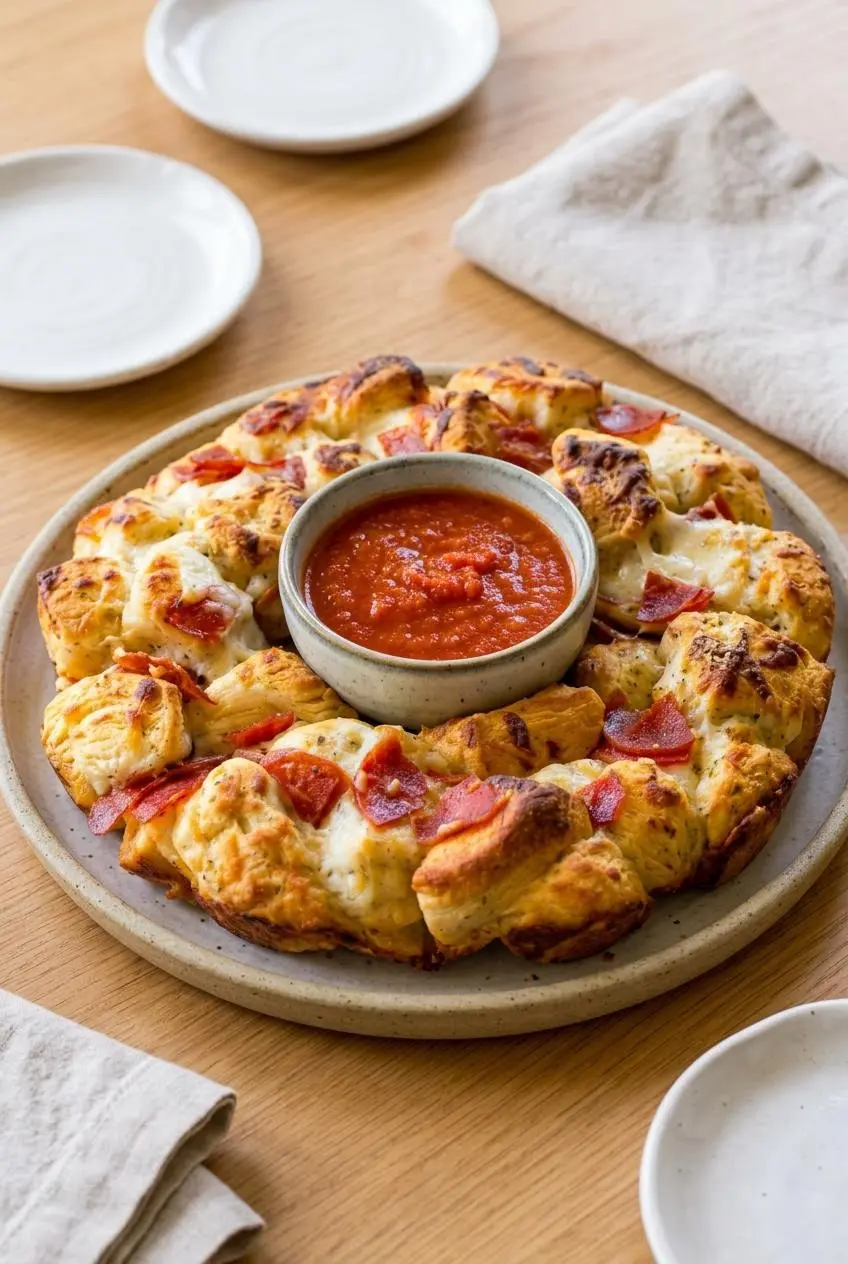
Serve the bread warm, when the mozzarella still stretches and the browned edges offer a little crunch.
- Game day: Place the ring on a broad platter with a stable bowl of warm marinara in the center opening.
- Movie night: Offer smaller pull-apart portions with individual dipping bowls to keep sauce off the remaining bread.
- Buffet spread: Set out serving tongs and napkins, with marinara beside the platter so guests can reach it easily.
Warm garlic butter or a creamy herb dip can be optional alternatives, though marinara provides the tangiest contrast to the rich cheese and pepperoni.
Conclusion
Golden biscuit bites, stretchy mozzarella, and garlic-coated edges make this a satisfying bread to share. Even dough pieces and thorough pan greasing help it bake and release well.
Tent the browned top while the center finishes cooking, then serve the bread warm with marinara alongside. Keep the dipping bowls close and let everyone choose their favorite edge.
Frequently Asked Questions
Can You Use Pizza Dough for Monkey Bread?
Yes, fresh homemade or store-bought pizza dough is an optional substitute that gives a chewier result. Shape evenly sized, bite-sized balls and follow the dough’s handling and rising directions. Check the interior dough rather than assuming it will finish on the biscuit schedule.
Can I Make Pizza Monkey Bread Without a Bundt Pan?
Yes, use a greased 9×13-inch baking dish and serve directly from it. An oven-safe cast-iron skillet is another optional choice if it has room for the dough to expand. A shallow layer may bake faster, so check the center earlier.
Why Is My Pizza Monkey Bread Doughy in the Middle?
The outside can brown before heat reaches the thickest dough, especially when pieces clump together. Keep the browned top tented with foil and continue baking until an interior biscuit has a set crumb. Check for sticky dough specifically, since melted cheese can also cling to a skewer.
Can You Prepare Pizza Monkey Bread Ahead of Time?
You can streamline preparation by readying the pepperoni, cheese, and seasonings separately. Keep refrigerated ingredients chilled and combine them with the biscuit dough close to baking. For bread that has already been baked and refrigerated, reheat portions before serving and warm the marinara separately.

Pizza Monkey Bread

Equipment
- 10-inch bundt pan
- large bowl
Ingredients
- 2 cans refrigerated biscuits 16.3 ounce each, quartered
- 6 ounces pepperoni quartered
- 2 cups shredded mozzarella
- 1/2 cup Parmesan cheese shredded or grated
- 1/4 cup butter melted and slightly cooled
- 2 tablespoons olive oil
- 2 teaspoons Italian seasonings
- 2 teaspoons minced garlic or 1/2 teaspoon garlic powder
- marinara for dipping
Instructions
- Heat the oven to 350°F, then combine the biscuit quarters, pepperoni, mozzarella, Parmesan, slightly cooled butter, olive oil, Italian seasonings, and garlic in a large bowl, leaving the marinara aside. Toss until the dough pieces have a glossy coating and the cheese and pepperoni spread throughout the mixture.
- Transfer the coated mixture to a thoroughly greased 10-inch Bundt pan or a greased 9×13-inch baking dish. Distribute the pieces evenly so one section isn’t noticeably deeper than another.
- Bake for 35 to 45 minutes, tenting the pan with foil after 20 minutes or once the top has browned. The foil shields the golden cheese and exposed biscuit edges while heat continues reaching the interior.
- Check the bread every 5 minutes toward the end of baking and remove it only when the inner biscuits have cooked through. A biscuit checked in the thickest section should have a set crumb rather than a shiny, sticky dough center.
- Loosen the baked bread’s edges with a knife, turn the Bundt ring onto a plate, then turn it again onto the serving platter and pull off pieces for dipping in warm marinara. The browned top should face upward, with melted cheese holding the biscuit bites together.