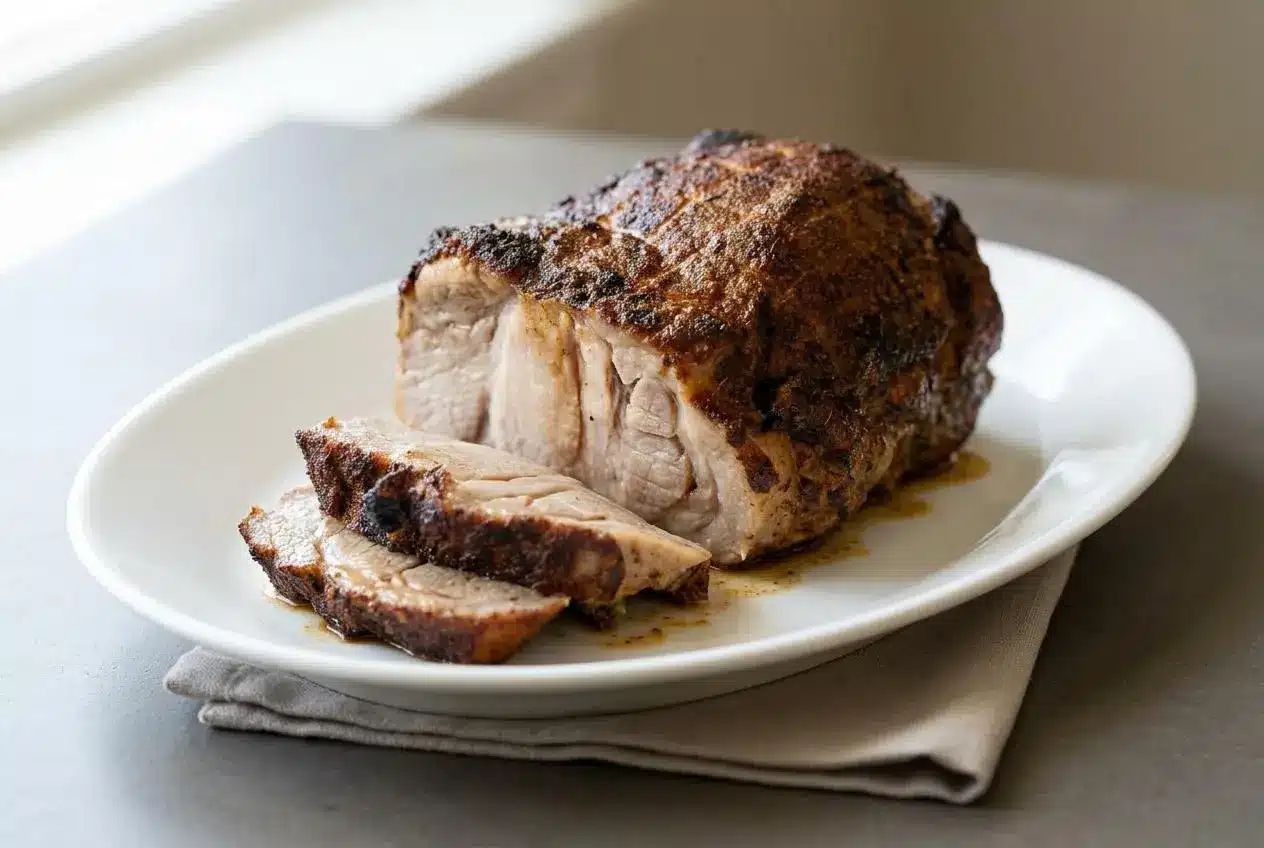
For juicy pork, season a boneless shoulder roast with herbs, roast at 425°F for 15 minutes, lower the oven to 375°F, and cook until the center reaches 145°F before resting.
This pork roast recipe makes tender, juicy slices with a deeply savory crust of thyme, sage, garlic, and paprika. The high heat brings the rub to life, while the lower temperature cooks the center gently.
As it roasts, the kitchen fills with the warm scent of toasted herbs and pork drippings. That crisp, fragrant crust is worth the wait.
Set the roast fat side up so the melting fat can baste the meat as it cooks.
Choosing the Best Pork Cut for Roasting
For this style of oven roast, boneless pork shoulder butt is the most forgiving choice. Its marbling and connective tissue help the meat stay moist through the hot start and moderate finishing roast.
Shoulder Butt Versus Loin
- Pork shoulder butt: This cut has visible marbling and enough connective tissue to remain succulent during a longer roast. It is the best choice for the timing and temperatures in this recipe.
- Pork loin: Pork loin is much leaner, so it cooks faster and can dry out if treated like shoulder. Use a thermometer closely and do not roast it for the same duration.
- Flavor and texture: Shoulder gives you richer slices with a soft, yielding texture. Loin produces cleaner, leaner slices when cooked with a shorter roasting plan.
If you bought a leaner cut such as chops instead of shoulder, use a method designed for baked pork chops rather than extending this roast’s cooking time.
Boneless Versus Bone-In Timing
A boneless roast cooks more evenly and is easier to carve into neat slices. A bone-in shoulder can bring extra flavor, but the bone changes how heat moves through the meat, so timing becomes less predictable.
With either cut, start checking temperature before relying on the clock. Thickness, roast shape, fat distribution, and oven accuracy all affect when the center is ready. Keep the thermometer probe in the thickest portion and away from bone or heavy seams of fat.
Essential Seasonings and Ingredients
Each ingredient builds the roast’s savory crust, from salt for seasoning and paprika for color to dried herbs that perfume the rendered pork fat.
- Olive oil spray
- 1 tablespoon Diamond Crystal kosher salt
- 1/2 teaspoon black pepper
- 1 tablespoon garlic powder
- 1 tablespoon paprika (regular or smoked)
- 1 teaspoon dried sage
- 1 teaspoon dried thyme
- 3 pounds boneless pork shoulder butt roast
Diamond Crystal kosher salt seasons the roast deeply without making the crust harsh. Black pepper adds gentle bite, garlic powder gives the rub an even savory flavor, and paprika brings warm color. Smoked paprika adds a subtle campfire character, while sage and thyme balance the pork’s richness with woodsy herbal aroma.
Patting the pork dry matters. A dry surface lets the olive oil spray and seasoning cling evenly, while excess surface moisture can slow browning and leave the rub patchy.
I prefer dried garlic powder here because it flavors the crust evenly without the risk of small pieces of fresh garlic scorching during the hot opening roast.
How to Roast Pork to Tender Perfection
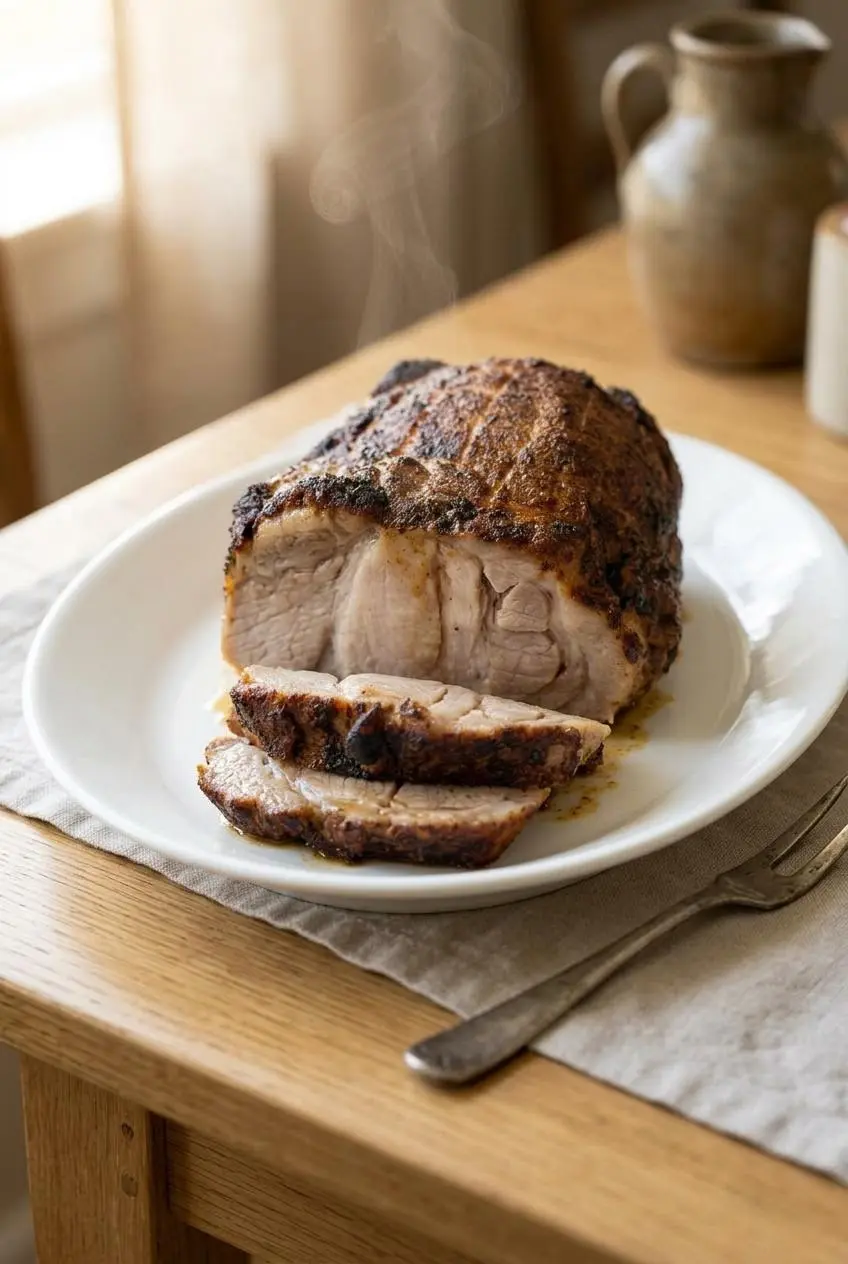
This method uses two oven temperatures: a hot beginning to brown the herb crust, then gentler heat to cook the shoulder evenly. The raised rack keeps the underside from sitting in rendered fat, so it roasts instead of steams.
- Cover a rimmed baking sheet with foil, set a wire rack inside it, and coat the rack with olive oil spray.
The rack should hold the roast above the pan so drippings collect below rather than soaking the bottom of the meat. - Stir the kosher salt, black pepper, garlic powder, paprika, sage, and thyme together in a small bowl.
Mix until the herbs and spices look evenly distributed with no concentrated patches of salt. - Dry the pork thoroughly with paper towels, place it fat side up on the prepared rack, and press the seasoning mixture over every side before spraying the top with olive oil.
The rub should form an even coating, with the fat cap still visible beneath the seasoning. - Heat the oven to 425°F and leave the seasoned roast at room temperature while the oven heats, about 30 minutes.
This brief pause takes the chill off the exterior and helps the roast begin cooking more evenly. - Place an oven-safe meat thermometer probe in the center of the roast, roast for 15 minutes at 425°F, then reduce the oven to 375°F and continue until the thermometer reaches 145°F.
Expect the herb coating to deepen in color and smell toasty during the first stage; this roast took about 75 minutes total, or about 25 minutes per pound. - Remove the roast, tent it loosely with foil, and rest it for 15 to 20 minutes before removing any butcher twine and slicing.
The roast should feel firm but gently spring back when pressed, and resting keeps more juices in each slice.
Keep the roast uncovered while it browns. If the crust begins darkening faster than you want during the lower-temperature stage, loosely tent the top with foil rather than wrapping the whole pan tightly.
Internal Temperature Cues for Perfect Pork Roast
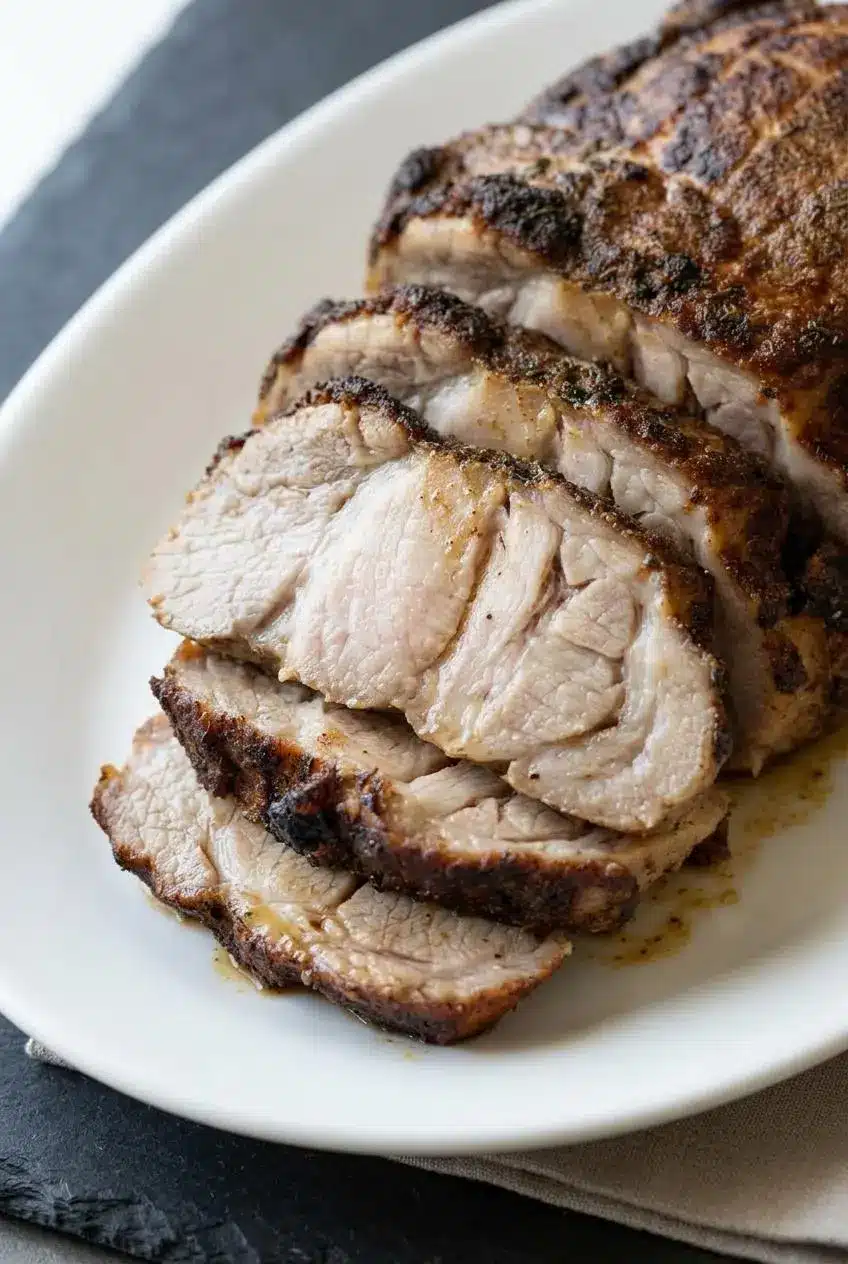
Use the thermometer as the deciding factor, not oven time alone. Pork shoulder can vary widely in thickness, and a probe gives you a clear read on when to pull the roast before the slices turn dry.
For whole pork roasts, 145°F followed by a 3-minute rest is the minimum cooking and resting standard. A pale pink blush can remain in the center at this temperature and does not automatically mean the meat is underdone.
Probe Placement and Doneness Monitoring
Slide the probe into the thickest center portion of the roast. Avoid large fat pockets, which can give a misleading reading, and avoid touching bone if you use a bone-in cut.
Near doneness, the roast will release clear, aromatic juices when tested, and the surface will look browned with a dry, set crust. If the probe feels like it is entering a seam of fat, reposition it and check again.
Carryover Cooking and Resting Science
Resting is part of the cooking process, not a decorative pause. Residual heat continues moving inward after the roast leaves the oven, while the meat fibers relax and hold onto more of their juices.
Loosely tent the pork with foil so the crust does not soften too much. Slice too soon and the board will collect the juices that should have stayed in the roast.
Carving Against the Grain
Look for the direction of the muscle fibers before slicing. Cut across those lines, not alongside them, to shorten the fibers and make each bite feel more tender.
For a classic roast presentation, carve thin slices after the rest. For pulled pork, shoulder needs a separate low-and-slow cooking approach that takes the meat to a much softer, shreddable texture.
Delicious Recipe Variations
These optional ideas change the flavor or serving style without altering the official ingredient list or roasting method above.
Sheet Pan Pork Roast with Root Vegetables
Turn the roast into a fuller dinner by tossing carrots, potatoes, and shallots with olive oil, salt, and pepper. Arrange them around the base of the pan, keeping the pork elevated on its rack so the meat stays dry-roasted while the vegetables catch the savory drippings.
Cut the vegetables into similarly sized pieces so they roast at the same pace. Give them space where possible, since crowding can leave them soft instead of browned.
Sweet Dijon and Brown Sugar Glaze
For a sweet-savory finish, brush Dijon mustard with brown sugar or honey over the roast during the final 10 to 15 minutes. The glaze will darken quickly, so keep an eye on the crust as the sugars caramelize.
You can also use Dijon as an optional binder beneath the herb rub before roasting. It adds tang and helps the seasonings adhere, though it will create a different crust than the olive oil spray method.
Slow Cooker and Dutch Oven Braising Options
- Slow cooker: Cook pork shoulder with moisture until it becomes soft enough to pull apart with forks rather than slice.
- Dutch oven: Braise the shoulder in a covered pot for a softer exterior and rich pan juices instead of a dry-roasted herb crust.
- Shredded pork: For a dedicated fork-tender approach, try this pulled pork recipe.
Storing and Reheating Leftovers
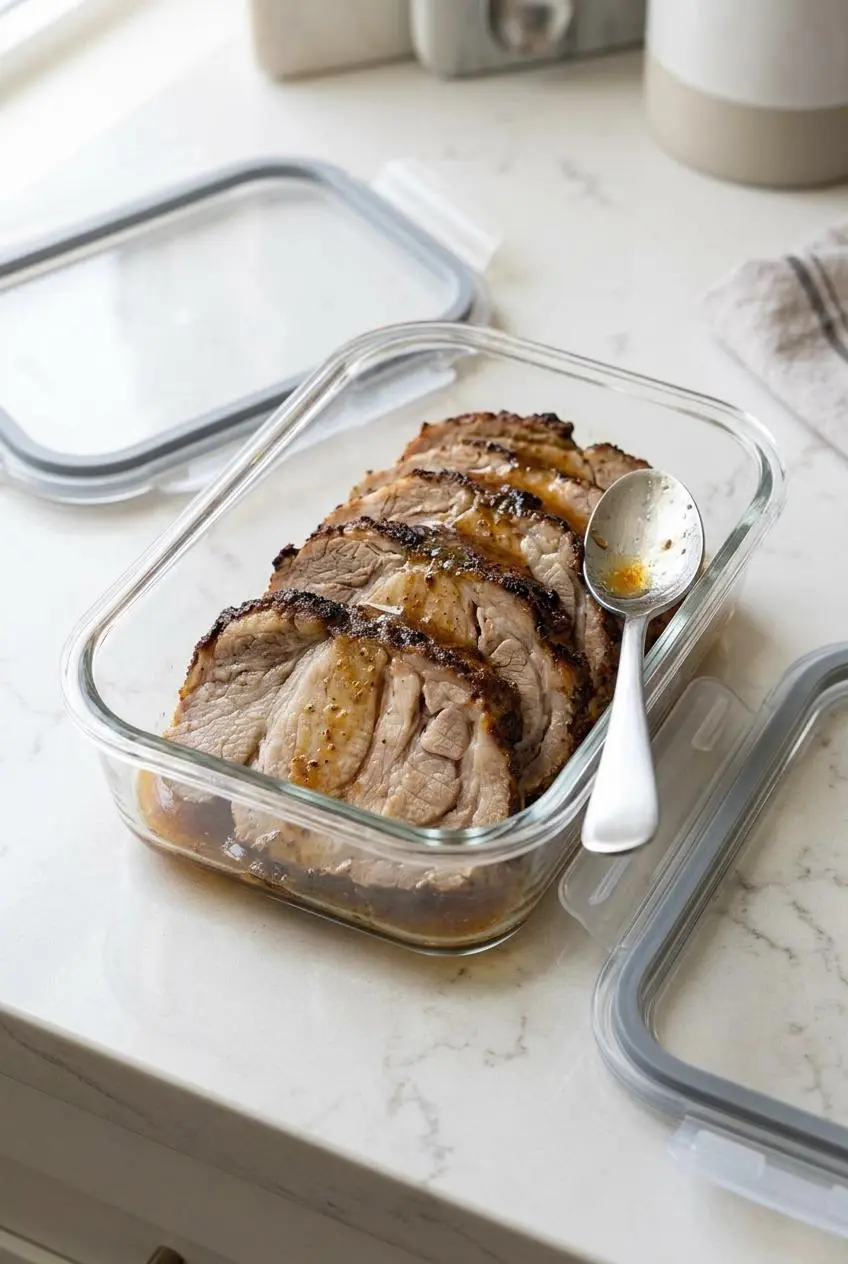
Cool leftover pork promptly, then keep it chilled in an airtight container with any collected juices or pan drippings. Storing the meat in thicker slices or in one larger piece helps protect it from drying out.
Keeping Leftover Pork Moist
Separate only what you plan to reheat, leaving the remaining pork tightly covered. A little of the resting juices in the container helps preserve the roast’s flavor and keeps the edges from becoming leathery.
If you have pan drippings, spoon them over sliced pork before covering it. The fat and juices add back moisture that leaner slices can lose after chilling.
Gentle Reheating to Maintain Moisture
Warm slices in a covered skillet or covered baking dish with a splash of broth or pan drippings over low heat. Heat only until the pork is hot, then serve promptly.
A high-power microwave can tighten the meat fibers and parch thin slices. If using one, use lower power and cover the pork so it warms more gently.
Conclusion
The high-to-low oven method gives this roast a browned herb crust, tender center, and richly savory drippings. Start with marbled shoulder, keep the fat cap facing up, and let the wire rack do its work.
Watch the thermometer, rest the meat before carving, and slice across the grain. Serve it with the sides you love and enjoy every juicy slice.
Frequently Asked Questions
What Is the Best Cut of Meat for a Pork Roast?
Boneless pork shoulder butt is the best choice for this recipe because its marbling helps it stay moist during roasting. It has more fat and connective tissue than pork loin. It handles the high-heat start and longer roast more forgivingly. Pork loin can work, but it needs a shorter cook and closer temperature monitoring.
How Long Do You Cook a Pork Roast per Pound?
After the 15-minute roast at 425°F, plan on about 25 minutes per pound at 375°F for a boneless shoulder roast. A 3-pound roast may take around 75 minutes total in the oven. Thickness and oven calibration can change the timing. Pull the roast based on its internal temperature rather than the clock.
Should You Cover a Pork Roast When Baking in the Oven?
Roast it uncovered on a wire rack to build a browned, savory crust. Covering from the start traps steam and softens the exterior. Loosely tent with foil during the resting period. If the top darkens too quickly, place foil loosely over the roast during the final stage.
Is It Safe if Roast Pork Is Slightly Pink in the Center?
Whole pork can retain a pale pink center when it reaches the proper temperature. Pork roasts cooked to 145°F and rested for at least 3 minutes meet the USDA minimum cooking standard for safety and quality.
Can I Use a Pork Loin Instead of a Shoulder Roast?
Yes, but use a different timing approach. Pork loin is leaner and cooks much faster than shoulder. Do not use the same per-pound estimate intended for pork shoulder. Monitor the center closely with a thermometer. Remove it promptly once it reaches the proper temperature to avoid dry slices.
Pork Roast Recipe

Equipment
- Rimmed baking sheet
- Aluminum Foil
- Wire rack
- Oven-safe meat thermometer probe
Ingredients
- Olive oil spray
- 1 tablespoon Diamond Crystal kosher salt
- 1/2 teaspoon black pepper
- 1 tablespoon garlic powder
- 1 tablespoon paprika regular or smoked
- 1 teaspoon dried sage
- 1 teaspoon dried thyme
- 3 pounds boneless pork shoulder butt roast
Instructions
- Cover a rimmed baking sheet with foil, set a wire rack inside it, and coat the rack with olive oil spray. The rack should hold the roast above the pan so drippings collect below rather than soaking the bottom of the meat.
- Stir the kosher salt, black pepper, garlic powder, paprika, sage, and thyme together in a small bowl. Mix until the herbs and spices look evenly distributed with no concentrated patches of salt.
- Dry the pork thoroughly with paper towels, place it fat side up on the prepared rack, and press the seasoning mixture over every side before spraying the top with olive oil. The rub should form an even coating, with the fat cap still visible beneath the seasoning.
- Heat the oven to 425°F and leave the seasoned roast at room temperature while the oven heats, about 30 minutes. This brief pause takes the chill off the exterior and helps the roast begin cooking more evenly.
- Place an oven-safe meat thermometer probe in the center of the roast, roast for 15 minutes at 425°F, then reduce the oven to 375°F and continue until the thermometer reaches 145°F. Expect the herb coating to deepen in color and smell toasty during the first stage; this roast took about 75 minutes total, or about 25 minutes per pound.
- Remove the roast, tent it loosely with foil, and rest it for 15 to 20 minutes before removing any butcher twine and slicing. The roast should feel firm but gently spring back when pressed, and resting keeps more juices in each slice.