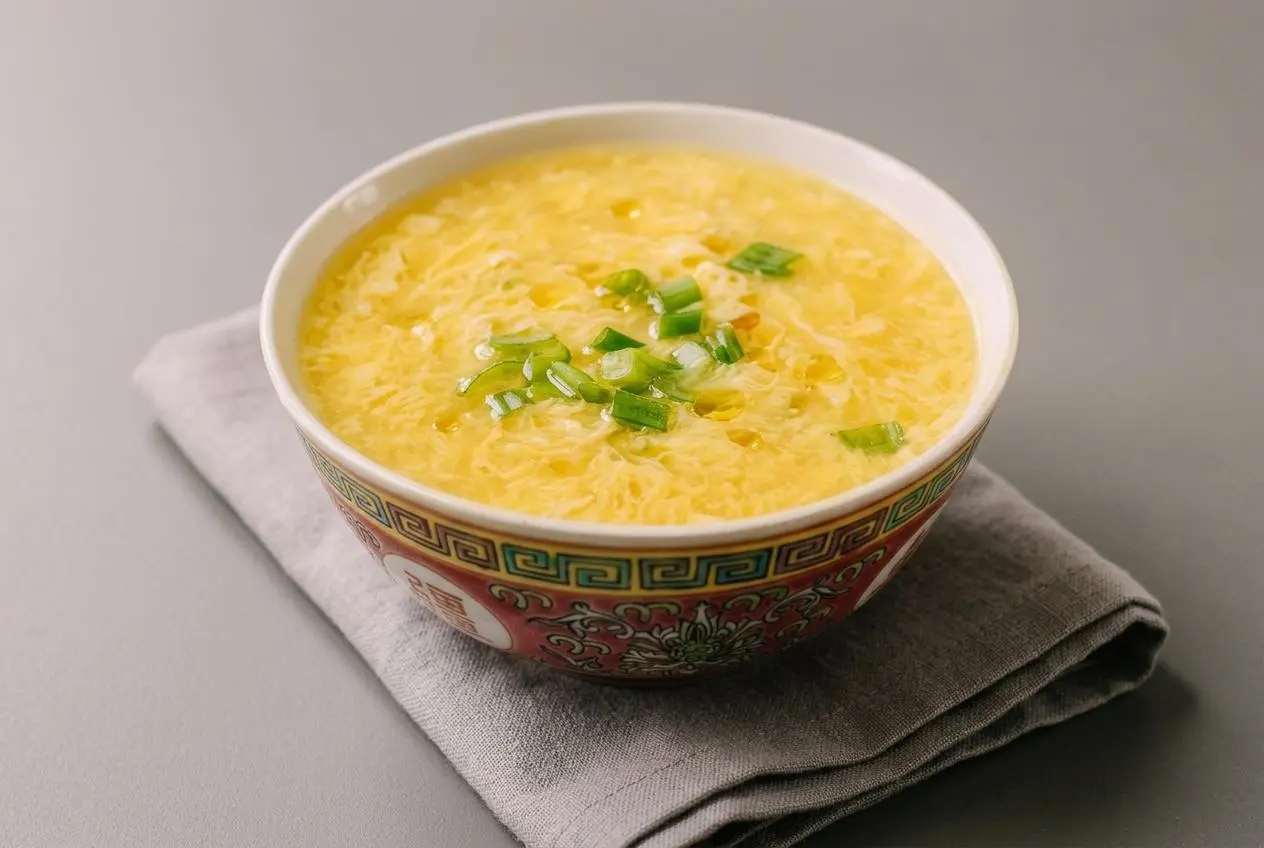
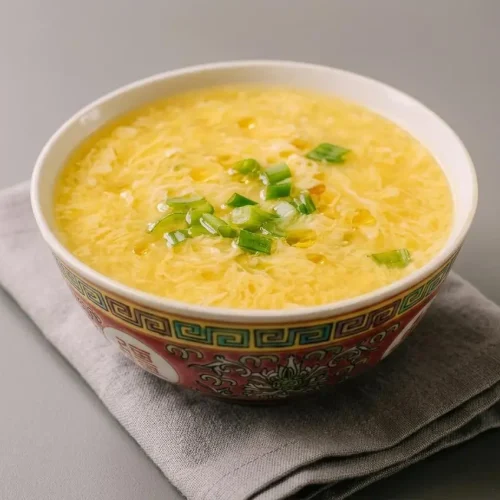
Egg drop soup is a classic Chinese soup of seasoned chicken broth, lightly thickened with starch, and swirled with delicate egg ribbons.
Egg drop soup brings silky, savory warmth to the table in 15 minutes. The broth is golden, lightly peppery, and comforting without feeling heavy.
The key is calm heat and a slow pour, not fancy equipment. Those tender egg ribbons are closer than they look.
Wait for small, lazy bubbles rather than a rolling boil before adding the eggs.
Essential Ingredients for Authentic Egg Drop Soup
Each ingredient builds the soup’s balance: stock creates savory depth, starch gives the broth body, eggs form ribbons, and seasonings add aroma, warmth, color, and freshness.
- 4 cups chicken stock ((about 1 liter, organic or homemade preferred!))
- 1/2 teaspoon sesame oil
- 3/4 teaspoon salt
- 1/8 teaspoon sugar
- 1/8 teaspoon white pepper
- 1/2 teaspoon turmeric
- 3 tablespoons cornstarch ((mixed with 1/3 cup water))
- 3 eggs ((lightly beaten))
- 1 scallion ((chopped))
- 1/4 teaspoon MSG ((increase amount to personal preference))
Chicken stock is the backbone here, so choose one with a flavor you enjoy on its own. Sesame oil gives the broth its toasted finish, while salt, sugar, white pepper, and MSG create the familiar savory balance found in many Chinese restaurant-style soups. Turmeric adds the sunny yellow tone associated with takeout egg drop soup without making the broth taste strongly spiced.
I prefer a stock with moderate salt because it leaves room to adjust the seasoning once the broth is hot and its flavor is fully noticeable.
The Broth and Aromatic Base
A flavorful chicken stock gives the soup its body even before the eggs go in. If using a salty boxed stock, hold back on extra salt until you taste the simmering broth. The seasoning should taste savory and rounded, with a gentle white-pepper warmth rather than a sharp bite.
White pepper works especially well because it blends into the pale golden broth instead of leaving dark flecks. Sesame oil brings aroma, so add it with the seasonings rather than cooking it hard for a long stretch. For an optional ginger note, steep a few fresh ginger coins in the broth as it heats, then remove them before adding the slurry.
Cornstarch Slurry for Perfect Viscosity
The cornstarch slurry does more than thicken the soup. It gives the broth enough viscosity to support the egg strands, so they drift near the surface as soft egg flowers instead of dropping into dense clumps at the bottom.
Stir the cornstarch and water together again right before pouring because starch settles quickly. Add it while stirring the broth, then let the soup return to a gentle simmer. When the liquid looks lightly glossy and coats a spoon with a delicate veil, it is ready for the eggs.
Cornstarch gives a smooth, familiar texture and holds the broth well while serving. Tapioca starch is an optional alternative for a clearer, glossier finish, though it can become more elastic as it sits. Use it only as a variation, not as part of the main ingredient list.
Egg Preparation and Seasoning Finishing Touches
Beat the eggs lightly with a fork until the yolks and whites are loosely combined. Leaving some variation between white and yellow creates the pretty marbled ribbons that make this soup so inviting.
Skip vigorous whisking. Excess air can make the surface foamy and prevent the ribbons from looking clean and feathery. The chopped scallion goes on at the end, adding a fresh oniony lift against the rich broth.
How to Make Egg Drop Soup with Silky Ribbons
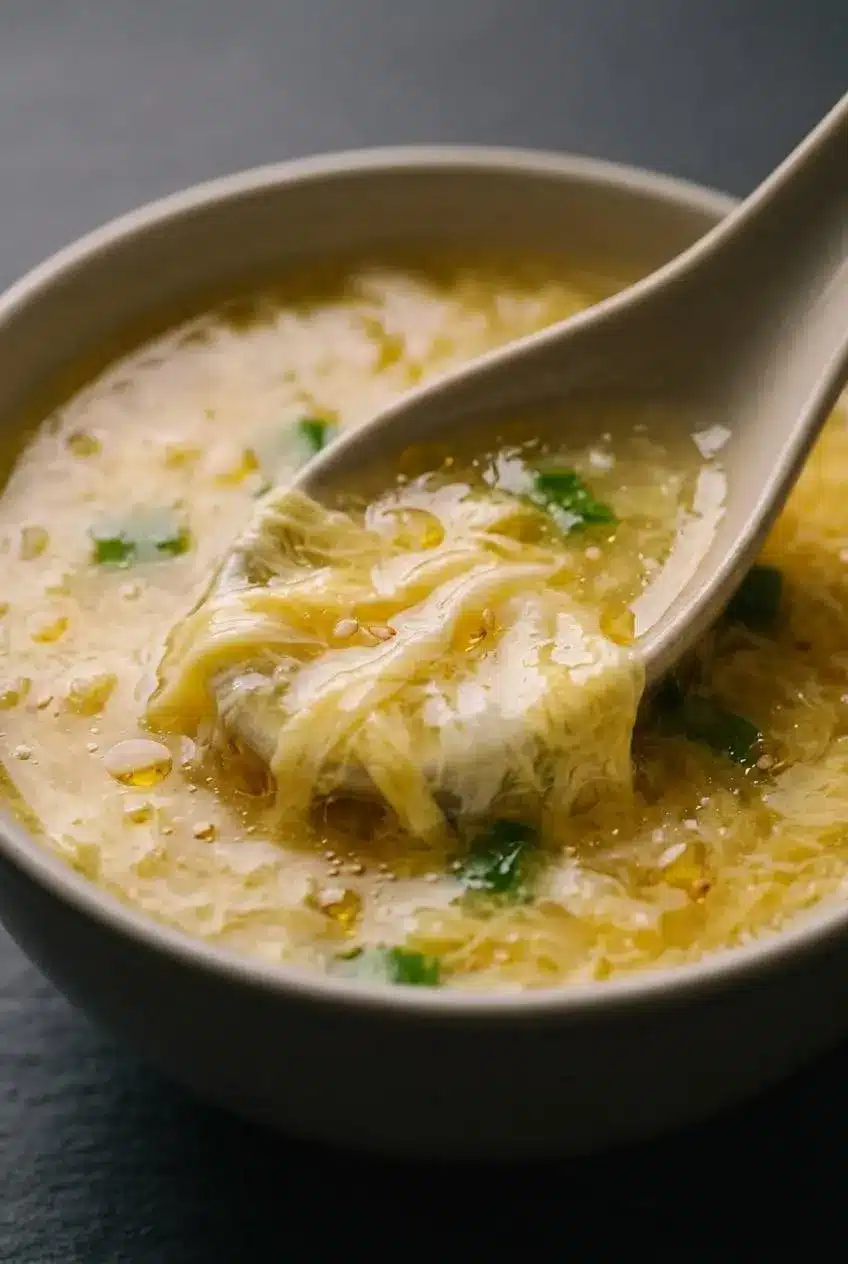
Keep the broth at a soft simmer throughout the process. You should hear a quiet murmur from the pot, not an active hiss or aggressive bubbling.
- Heat the chicken stock in a medium soup pot until small bubbles rise steadily, then stir in the sesame oil, salt, sugar, white pepper, MSG, and turmeric.
Taste the hot broth and adjust the seasoning until it is savory, gently peppery, and evenly golden. - Stir the cornstarch mixture until smooth, then pour it into the simmering broth in a thin stream while stirring continuously.
The broth should become lightly thickened and glossy without any starchy lumps. - Move a ladle through the soup in one slow circular motion and drizzle in the lightly beaten eggs in a narrow, steady stream.
Let the ribbons turn pale yellow on the surface before disturbing them, then stop stirring once the egg has set. - Ladle the soup into bowls and scatter the chopped scallion over each serving.
The finished soup should hold floating egg flowers in a warm, silky broth.
For finer ribbons, pour the eggs from a measuring cup with a spout while moving the ladle slowly around the pot. For a wider egg-flower effect, pour a slightly thicker stream and stir more gently. You can also pour the egg across a pair of chopsticks held over the pot, which breaks the stream into thin threads before it reaches the broth.
Do not rush the final moment. The eggs set within seconds, and stirring immediately can tear them apart. Letting them rest briefly gives you distinct ribbons instead of a cloudy soup full of tiny shreds.
Troubleshooting Common Mistakes and Texture Issues
Most egg drop soup problems come down to heat, stirring speed, or slurry handling. Each one is easy to correct once you know what the broth is telling you.
Why Soup Becomes Cloudy or Murky
- Cloudy broth: The eggs were stirred before they had time to set. After pouring, pause for a moment so the egg proteins can form ribbons on the surface.
- Murky, foamy soup: The pot was boiling too hard. Lower the heat until the surface shows gentle bubbles rather than a rolling boil.
- Streaky broth: Eggs entered in a heavy rush. Use a narrow stream and keep the ladle moving slowly in one direction.
A soft simmer keeps the broth clear because it cooks the egg gradually. A violent boil breaks the egg into tiny pieces and disperses them through the liquid.
Preventing Dense or Rubbery Egg Clumps
- Large rubbery clumps: The eggs were poured too fast or into overly hot broth. Reduce the heat slightly and pour in a thinner stream.
- Solid pieces of egg: Too much egg landed in one spot. Pour from a spouted cup or across chopsticks to control the flow.
- Heavy egg sinking to the bottom: The broth was too thin when the eggs went in. Let the slurry activate before starting the circular ladle motion.
Egg ribbons need moving liquid, but not a whirlpool. A relaxed circular stir gives the egg something to wrap around while leaving enough calm space for each strand to set.
Fixing Thin Broth or Overly Thick Soup
- Thin broth: Mix a little fresh cornstarch slurry and stir it into the simmering soup gradually until the body feels right.
- Overly thick broth: Loosen it with a splash of warm chicken stock, stirring gently so the egg ribbons stay intact.
- Starchy lumps: The slurry settled before it was added or hit the broth too quickly. Whisk it smooth first, then stream it in while stirring.
Make consistency adjustments before pouring the eggs whenever possible. Once the ribbons are in the pot, use a gentle hand so the finished soup stays silky rather than broken up.
Storing and Reheating Leftovers
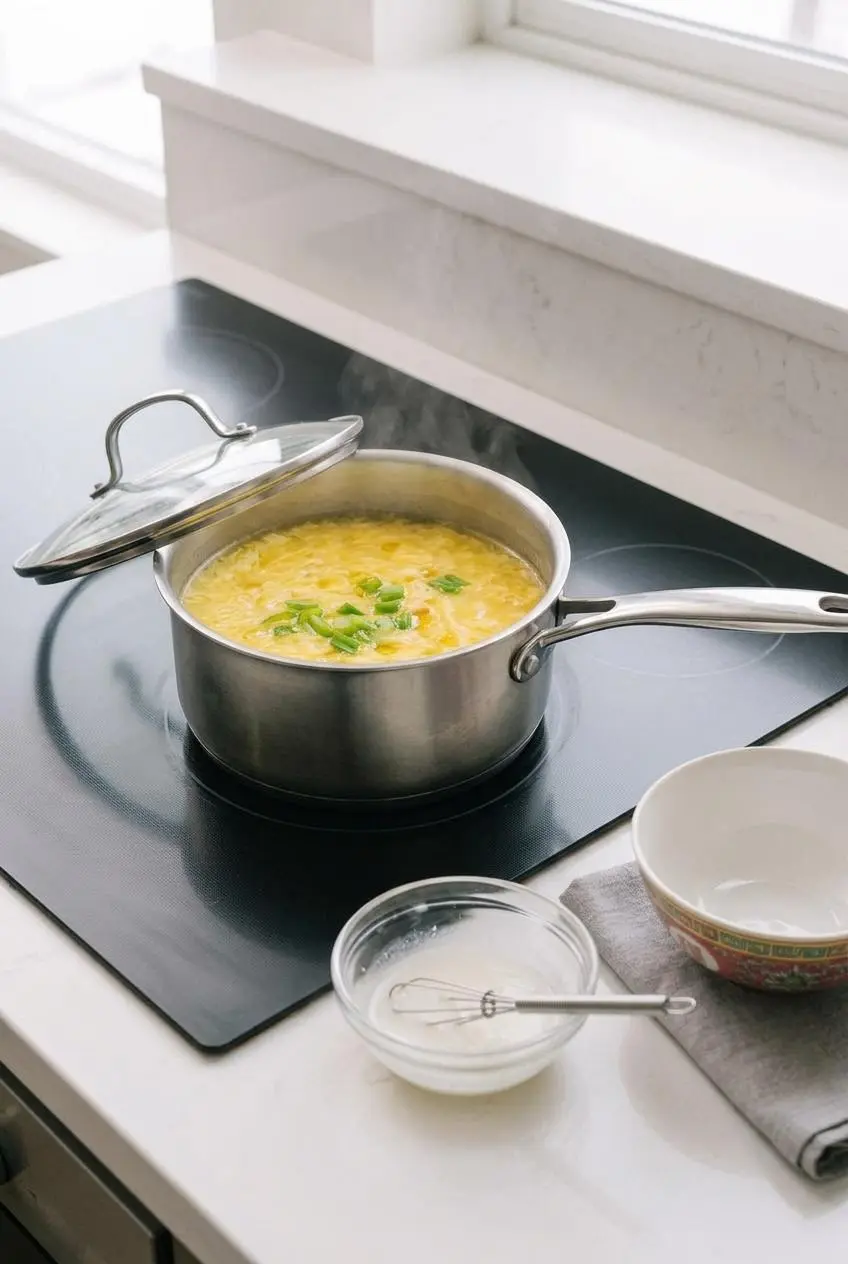
Egg drop soup tastes best freshly made, when the ribbons are soft and the broth has its fullest body. If you have leftovers, cool them promptly, transfer them to a covered container, and keep them chilled.
Reheat only the portion you plan to serve in a saucepan over medium-low heat. Avoid bringing it to a hard boil, which can toughen the egg and make the broth look less clear. For leftover soup, reheat leftovers to 165 °F before serving.
Restoring Viscosity During Reheating
The broth may seem thinner after chilling because the starch structure changes as the soup rests. Bring it back to a gentle simmer, then stir in a small amount of freshly mixed cornstarch slurry if it needs more body.
Add the slurry gradually and stop once the broth looks lightly glossy again. Keeping the heat moderate preserves the tender egg flowers much better than aggressively boiling the soup.
Delicious Variations and Serving Suggestions
The core soup is wonderfully adaptable, but keep any additions separate from the main method so you can choose the version that suits the meal.
Tomato Egg Drop Soup
For a homestyle tomato egg drop soup, simmer fresh diced ripe tomatoes in the chicken broth before adding the slurry. The tomatoes soften into the soup and give the savory broth a gentle sweet-tart edge. Add the eggs only after the tomatoes have flavored the broth and the liquid has thickened.
This variation has a brighter, lighter character than the classic golden version, while the ribbon technique stays exactly the same.
Sweet Corn Egg Drop Soup
Sweet corn egg drop soup is a popular banquet-style variation with a fuller, sweeter texture. Stir in creamed corn and whole corn kernels before thickening the broth, then finish with the egg ribbons as usual.
For a meatless version, use mushroom-infused vegetable broth instead of chicken stock. The earthy flavor pairs especially well with white pepper, sesame oil, and scallions while keeping the soup vegetarian.
Complete Meal Pairing Ideas
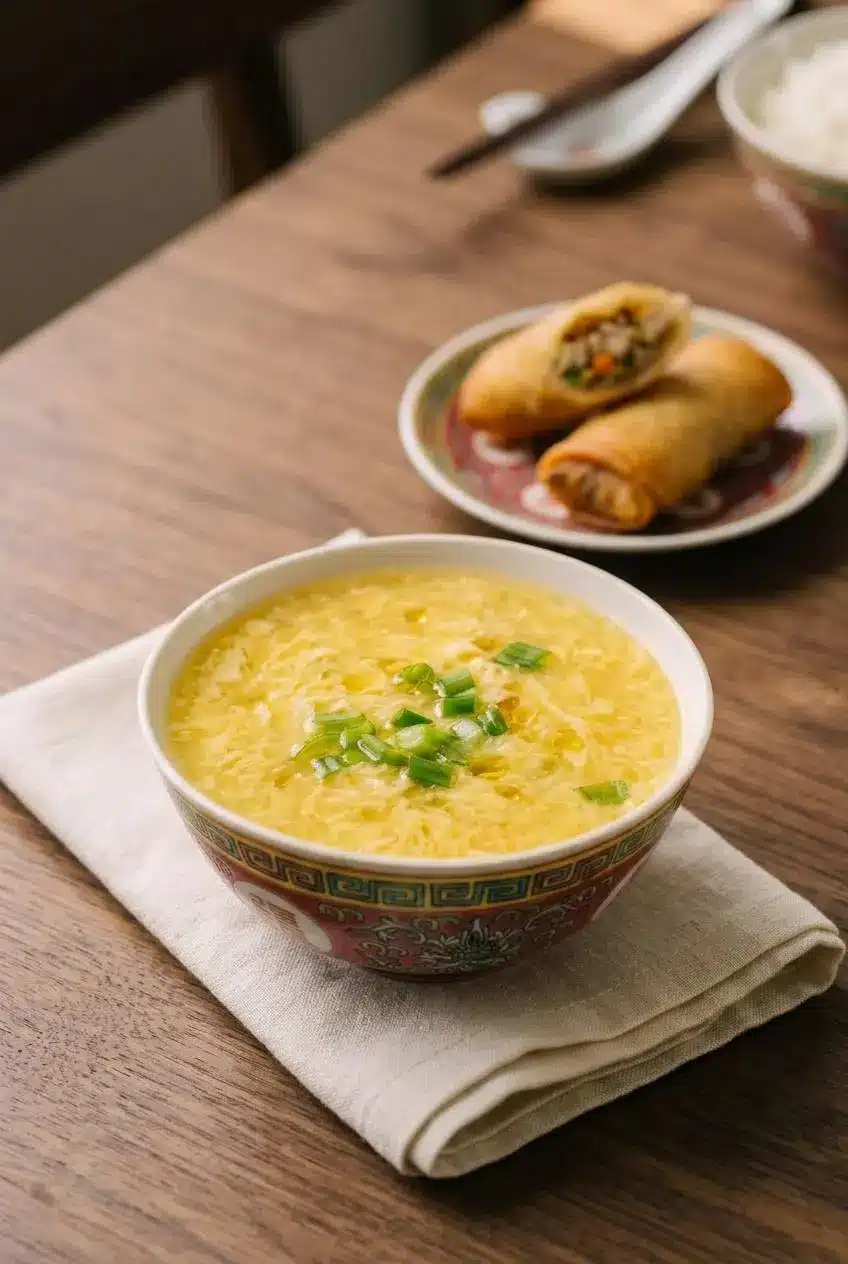
Serve a small bowl as a comforting starter before vegetable potstickers, crisp spring rolls, or egg fried rice. For a more substantial dinner, pair it with savory beef noodle soup and let the egg drop soup play the lighter opening role.
Finish each bowl with extra scallions and a pinch of white pepper right before serving. The fresh garnish wakes up the warm broth and makes the golden color stand out beautifully.
Conclusion
Homemade egg drop soup comes together quickly, but the small details make the difference: season the broth well, thicken it before adding eggs, and keep the heat gentle.
With a slow circular stir and a controlled egg stream, you can make soft, floating ribbons that feel every bit as comforting as your favorite takeout bowl.
Frequently Asked Questions
Why Is My Egg Drop Soup Cloudy Instead of Clear?
Cloudy soup usually means the eggs were stirred before they set or the broth was boiling too vigorously. Keep the pot at a gentle simmer. Pour the eggs slowly. Pause briefly before stirring again so the ribbons can form.
Why Do You Add Cornstarch Before Adding the Eggs?
Cornstarch thickens the broth before the egg goes in, giving the ribbons enough buoyancy to stay suspended. Thin broth lets egg sink and gather into heavier pieces. Lightly thickened broth supports wide, feathery egg flowers. Add the slurry first, then wait for the broth to look glossy.
How Do Chinese Restaurants Get That Bright Yellow Color?
A small amount of turmeric gives the broth its familiar golden color while keeping the flavor mild. Turmeric enhances the natural yellow from the egg yolks. A few drops of yellow food coloring can also create that takeout-style appearance. Use either option lightly so the savory broth remains the focus.
Can I Reheat Leftover Egg Drop Soup?
Yes. Warm it gently in a saucepan over medium-low heat rather than boiling it hard. Heat only the amount you plan to serve. Stir carefully to avoid breaking up the egg ribbons. If the chilled broth seems thin, add a small amount of fresh cornstarch slurry while it simmers.
Egg Drop Soup

Equipment
- medium soup pot
- Ladle
Ingredients
- 4 cups chicken stock ((about 1 liter, organic or homemade preferred!))
- 1/2 teaspoon sesame oil
- 3/4 teaspoon salt
- 1/8 teaspoon sugar
- 1/8 teaspoon white pepper
- 1/2 teaspoon turmeric
- 3 tablespoons cornstarch ((mixed with 1/3 cup water))
- 3 eggs ((lightly beaten))
- 1 scallion ((chopped))
- 1/4 teaspoon MSG ((increase amount to personal preference))
Instructions
- Heat the chicken stock in a medium soup pot until small bubbles rise steadily, then stir in the sesame oil, salt, sugar, white pepper, MSG, and turmeric. Taste the hot broth and adjust the seasoning until it is savory, gently peppery, and evenly golden.
- Stir the cornstarch mixture until smooth, then pour it into the simmering broth in a thin stream while stirring continuously. The broth should become lightly thickened and glossy without any starchy lumps.
- Move a ladle through the soup in one slow circular motion and drizzle in the lightly beaten eggs in a narrow, steady stream. Let the ribbons turn pale yellow on the surface before disturbing them, then stop stirring once the egg has set.
- Ladle the soup into bowls and scatter the chopped scallion over each serving. The finished soup should hold floating egg flowers in a warm, silky broth.