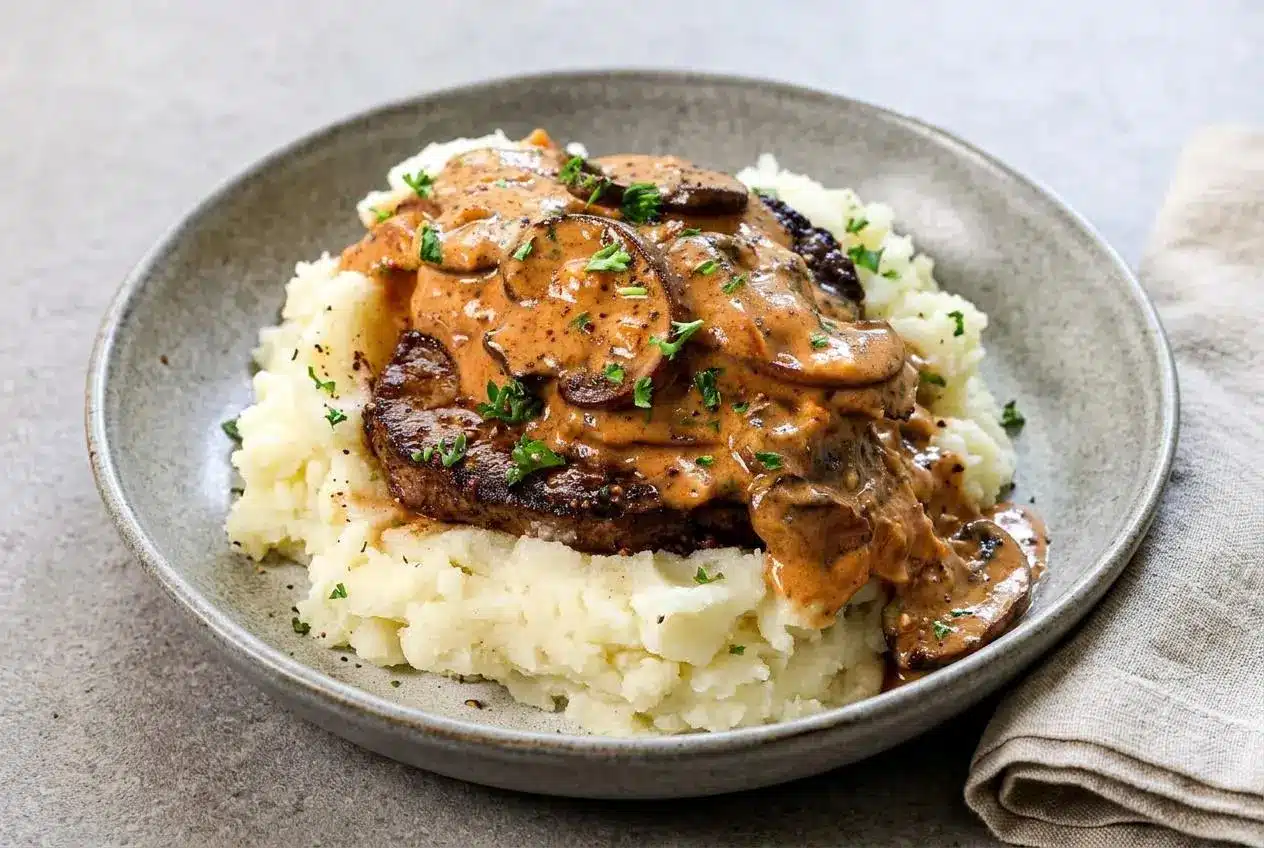
Steak Diane is tender beef medallions seared in a skillet and served with a savory sauce of shallots, Dijon mustard, beef broth, mushrooms, and cream.
This steak diane brings the rich sizzle of browned beef fond together with a velvety mustard cream sauce, all from one skillet. Shallots and mushrooms browning in butter give the kitchen an unmistakably savory aroma.
It feels special enough for company but fits into a 35-minute dinner. The sauce is the real showstopper.
Use a wide, heavy-bottomed skillet so the steaks and mushrooms have room to brown instead of steam.
What Makes Steak Diane a Timeless Classic
Steak Diane remains a favorite because it turns fast-cooking beef into a restaurant-style meal without complicated equipment. The skillet does the heavy lifting: browned bits left by the steaks dissolve into the broth and become the deeply savory foundation of the sauce.
The dish is often associated with mid-century dining rooms, when tableside sauces and polished steak dinners had plenty of flair. At home, its appeal is more practical. You get tender medallions, a rich sauce, and a dinner that feels celebratory without requiring an all-evening project.
Diane sauce combines pan drippings with shallots, garlic, Dijon mustard, Worcestershire sauce, beef broth, and heavy cream. Mushrooms and parsley round out the flavor, making the sauce earthy, tangy, and silky rather than heavy or flat.
Like traditional steak frites, this dish relies on good browning and quick timing. The difference is that Steak Diane turns every flavorful bit in the pan into a spoonable cream sauce.
Essential Ingredients for Restaurant-Quality Steak Diane
Each ingredient earns its place: beef provides tenderness, butter carries flavor, mushrooms add earthiness, and Dijon, broth, and cream create a balanced sauce with body and brightness.
Steaks
- 4 5-6-ounce beef tenderloin steaks ((fillet mignon))
- 1 teaspoon kosher salt
- 1 teaspoon freshly cracked pepper
- Unsalted butter and vegetable or canola oil for cooking
Steak Diane Sauce
- 4 tablespoons unsalted butter, (divided)
- 1 tablespoon olive oil
- 6 ounces cremini mushrooms, (sliced ¼-inch thick)
- 1 large shallot or 2 smaller/medium, (minced)
- 1 tablespoon tomato paste
- 3 garlic cloves, (minced)
- 1/8 teaspoon red pepper flakes
- 3 tablespoons flour
- 1 14.5 oz. can reduced-sodium beef broth
- 1 tablespoon Worcestershire sauce
- 2 teaspoons reduced sodium soy sauce
- 1 teaspoon Dijon mustard
- 1 teaspoon beef bouillon ((base, crushed cube, or powder))
- 1/2 tsp EACH dried oregano, dried thyme ((or 1 ½ tsps fresh))
- 1/3 cup heavy cream
- 3 tablespoons fresh parsley ((or 1 tsp dried))
For serving
- Mashed potatoes (this recipe makes a generous amount for the potatoes!)
- Fresh parsley
- Chives (optional)
Choose Dijon mustard for sharp tang that cuts through the cream and butter. Worcestershire sauce, soy sauce, beef bouillon, and tomato paste build savory depth without needing alcohol. Vegetable or canola oil can handle the initial high heat, while butter brings rich flavor but is less likely to scorch when paired with oil.
For a mushroom-free version, leave out the cremini mushrooms and use extra shallot for more aromatic depth. For a gluten-free sauce, replace the flour with a cornstarch slurry added gradually near the end; the sauce will thicken differently, so stop when it lightly coats a spoon.
I wipe cremini mushrooms with a barely damp towel instead of rinsing them, because excess water keeps their edges from browning properly.
Choosing Your Beef: Tenderloin vs Budget Cuts
Beef tenderloin, often sold as filet mignon, is the classic choice because it is naturally tender and mild enough to let the sauce shine. Look for evenly cut medallions around 1 inch thick so they cook at the same pace and develop a browned crust before the center overcooks.
- Tenderloin: The most tender option, with a lean texture and delicate flavor. It is ideal when tenderness is the priority.
- Top sirloin: A more economical choice with robust beef flavor. Trim it well and slice against the grain after cooking for the best texture.
- Strip steak: More marbled than tenderloin, with a firmer bite and excellent beefy character. Cut it into medallion-size portions if needed.
- Ribeye: Richest and most marbled, giving the sauce extra beef flavor. Its fat renders quickly, so watch the pan closely.
Whichever cut you choose, dry the surface thoroughly and avoid overcrowding the skillet. Moisture and a crowded pan work against browning, while an even, dry steak gives the fond a head start.
Building the Diane Pan Sauce Base
The sauce begins with browned drippings, then layers in shallot, tomato paste, garlic, and red pepper flakes. The flour cooks briefly in butter to form a roux, which thickens the broth and gives the finished sauce enough structure to cling to the steak and potatoes.
Dijon brings tang, while Worcestershire sauce and reduced-sodium soy sauce contribute salty, fermented depth. Heavy cream is essential here because it gives the sauce a smooth, stable richness that low-fat milk cannot match. Parsley adds freshness at the end, keeping the sauce from tasting overly rich.
How to Make Classic Steak Diane Step by Step
The method moves quickly once the skillet is hot. Keep the steaks, mushrooms, and sauce stages separate so each component gets proper browning instead of competing for space in the pan.
Prepping and Searing the Medallions
Patting the medallions dry matters more than it may seem. A dry surface browns quickly; a damp one releases steam and turns the sear pale. Pressing each steak to an even thickness also helps it cook more predictably.
A meat thermometer gives the clearest doneness cue. The recipe’s medium-rare target is 130°F, reached in about 2 minutes per side for these medallions. The steak should yield slightly when pressed, then rest loosely under foil while the sauce comes together.
Caramelizing Mushrooms and Aromatics
Cook the mushrooms after the steaks, when the skillet holds flavorful beef drippings. Arrange them as close to a single layer as possible, then let them sit long enough to brown before turning. Moving them constantly releases moisture and delays that golden color.
Remove the mushrooms before cooking the shallots. This gives the shallots time to soften gently in clean butter, while the tomato paste, garlic, and pepper flakes get a brief sauté that wakes up their aroma without burning the garlic.
Simmering and Emulsifying the Cream Sauce
Whisk the broth in gradually after the flour has cooked. Scrape the skillet as you whisk so the browned fond melts into the sauce instead of staying stuck to the pan. A gentle simmer thickens the broth mixture before the cream goes in.
Lower the heat before adding heavy cream. The finished sauce should look glossy and coat the back of a wooden spoon in a thin, even layer. Keep it at a gentle warmth after the cream is added rather than letting it boil hard.
- Blot the steaks dry, press each one into an even 1-inch thickness, and season all over with kosher salt and freshly cracked pepper; season right before cooking if the steaks have not had time to sit at room temperature or dry brine in the refrigerator.
The surface should feel dry and the seasoning should cling evenly to the meat. - Heat a large, heavy-bottomed skillet over medium-high heat, then add 1 tablespoon butter and 1 tablespoon vegetable or canola oil before placing in the steaks.
Cook about 2 minutes per side for medium-rare, or until a meat thermometer reads 130°F, then transfer the steaks to a plate and tent loosely with foil. - Melt 2 tablespoons butter with 1 tablespoon olive oil in the drippings over medium heat, raise the heat to medium-high, and add the mushrooms in as even a layer as possible.
Cook for 3 minutes per side until golden brown, rearranging as they shrink, then move them to a plate. - Melt the remaining 2 tablespoons butter over medium heat and cook the shallot for 3-4 minutes, then stir in the tomato paste, garlic, and red pepper flakes for 30 seconds.
The shallot should be soft and the skillet should smell deeply savory, with the garlic fragrant but not browned. - Stir in the flour and cook for 1 minute, then reduce the heat to low and slowly whisk in the beef broth, Worcestershire sauce, soy sauce, Dijon mustard, beef bouillon, oregano, and thyme.
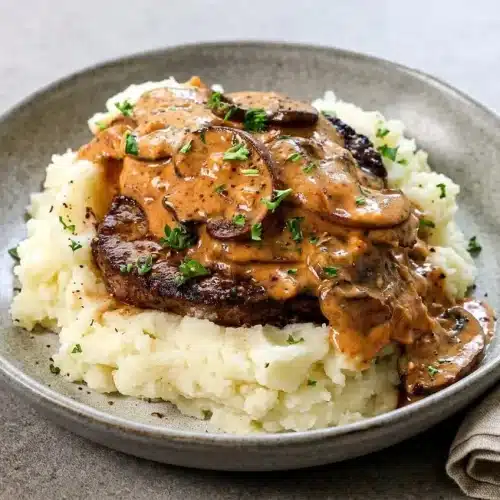
Simmer until the sauce thickens, then stir in the heavy cream, parsley, and mushrooms and warm gently until smooth. - Set the steaks over mashed potatoes, spoon the mushroom sauce over the top, and finish with fresh parsley or optional chives.
Taste the sauce before adding more salt and pepper, since the broth, soy sauce, and Worcestershire already provide seasoning.
Pro Tips for Flawless Sear and Silky Sauce
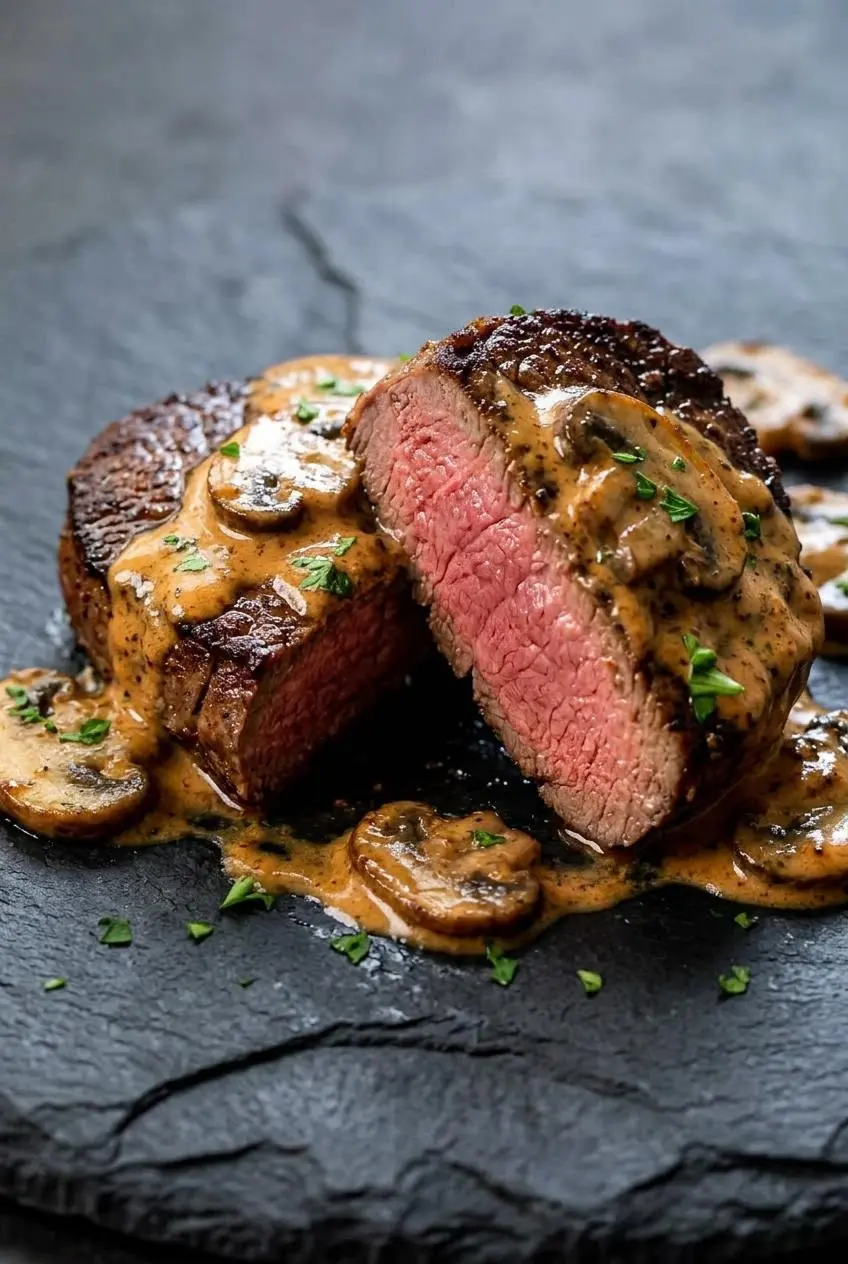
Small heat-control decisions make the difference between a glossy skillet sauce and a greasy, separated one. Use these fixes when the pan starts heading in the wrong direction.
- Mushrooms look pale and wet: They likely went into a crowded or damp pan. Wipe them clean rather than rinsing, spread them out, and give one side uninterrupted contact with the skillet before turning.
- The steak has little crust: Surface moisture or a pan that was not hot enough is usually the culprit. Dry the meat well and wait until the butter and oil look hot before adding the medallions.
- The sauce looks split: High heat can push cream sauces apart. Take the skillet off the heat and whisk in a warm splash of beef broth until the sauce looks smooth again.
- The sauce is too thick: Whisk in broth a little at a time over low heat until it returns to a pourable consistency.
- The sauce tastes muted: Taste before seasoning. A small pinch of salt, more cracked pepper, or extra parsley can sharpen the finished flavor.
If you want a more traditional spirit-deglazed variation, add 1/4 cup cognac or brandy after sautéing the aromatics, then cook it over medium-high heat before adding flour. It adds warm, rounded depth, but the alcohol-free version already has plenty of savory character from the broth, Worcestershire, soy sauce, and bouillon.
For a brighter finish, stir minced fresh tarragon and finely grated lemon zest into the sauce off the heat. Add them sparingly so they lift the cream rather than overpowering the Dijon and mushrooms.
For another quick high-heat skillet dinner, these garlic butter steak bites use the same useful principle: give beef space in a hot pan so it browns instead of steams.
Storing and Gently Reheating Steak Diane
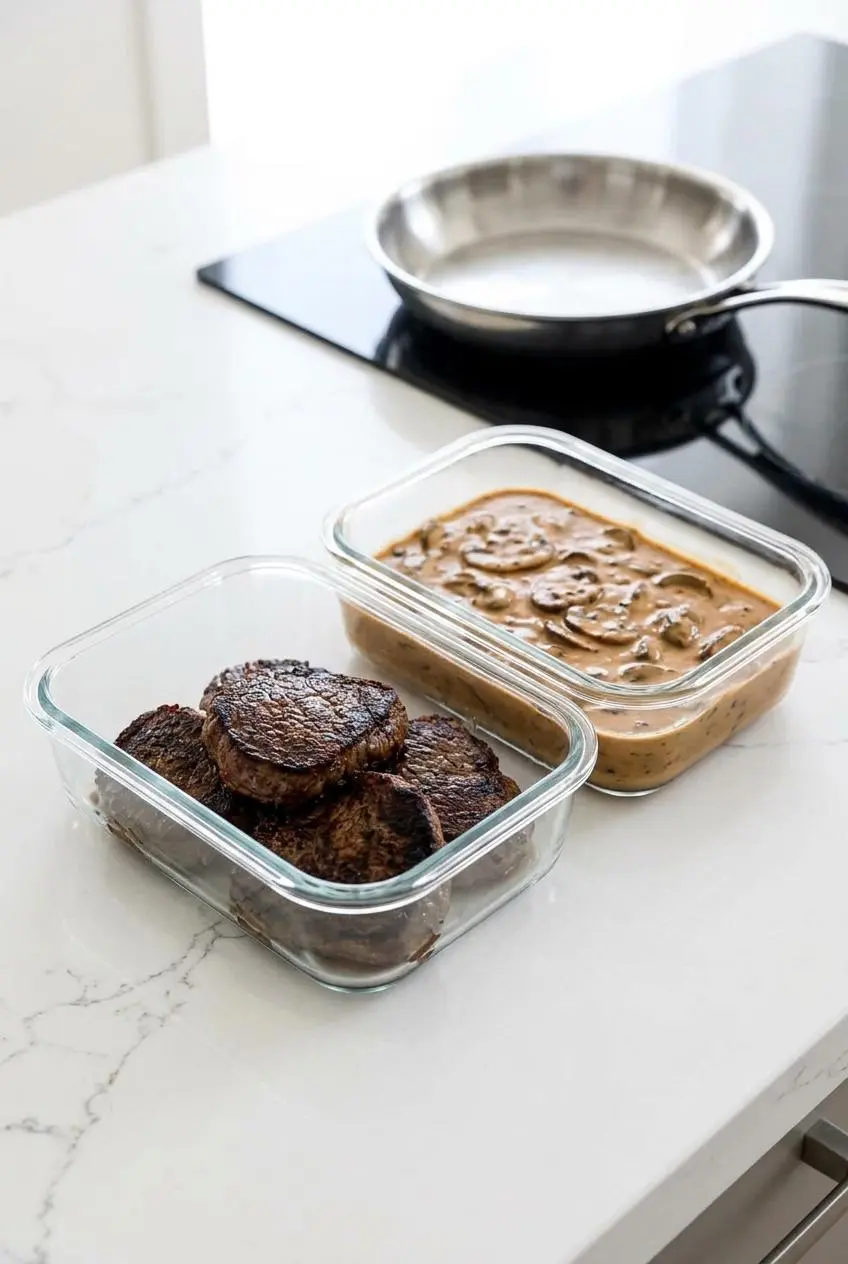
For the best texture, keep leftover steaks and sauce in separate airtight containers and chill them promptly once cooled. Separating them prevents the medallions from sitting in sauce and continuing to soften while stored.
Warm the sauce in a skillet over low heat, loosening it with a splash of beef broth if it has thickened. Add the steak only long enough to warm through, then serve immediately. High-power microwave reheating can quickly take tenderloin from rosy and tender to firm and dry.
If you are preparing for guests, chop the shallot, garlic, parsley, and mushrooms beforehand, then cook the steak and finish the sauce close to serving time. That approach keeps the sear crisp and the cream sauce at its smoothest.
Perfect Sides and Serving Suggestions
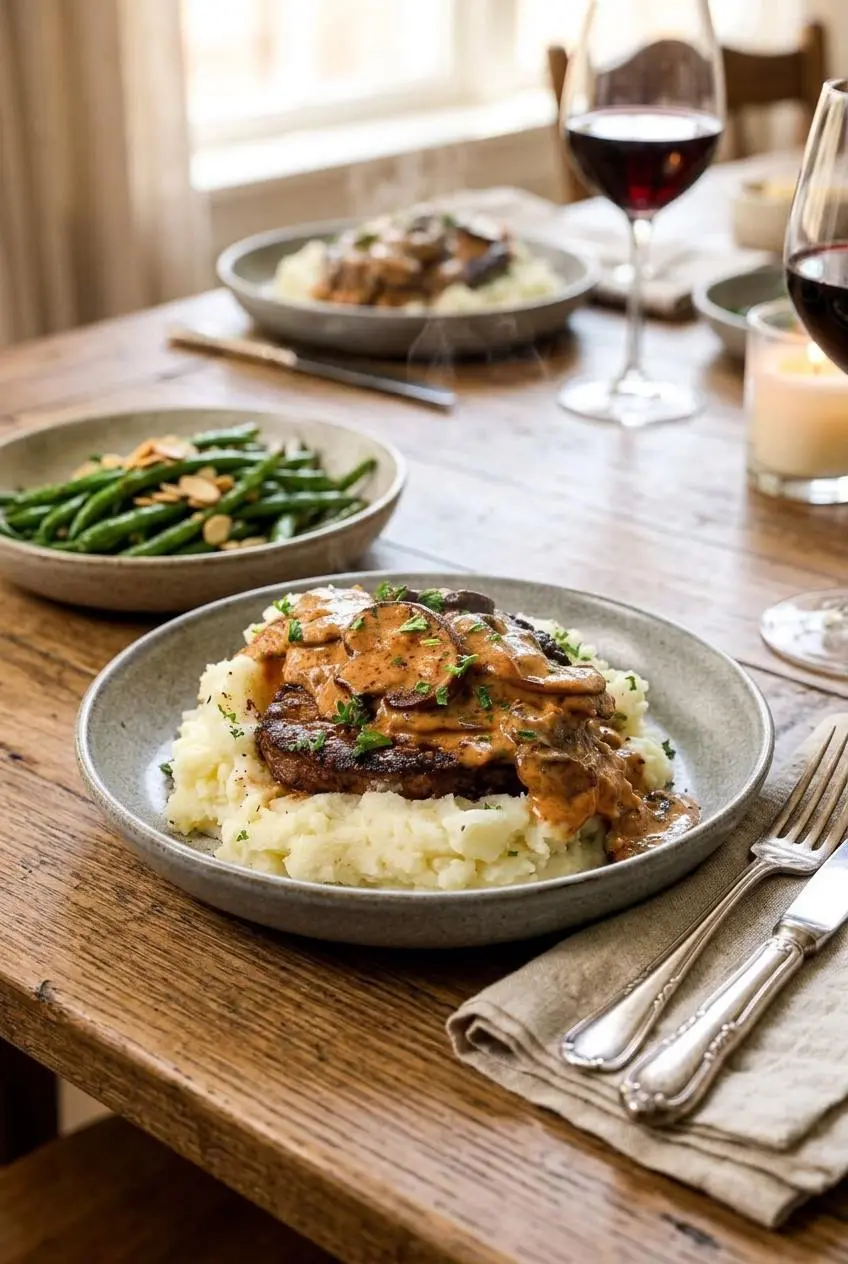
Steak Diane needs something ready to catch every spoonful of sauce, plus a fresh side to balance the butter and cream.
- Garlic mashed potatoes: The classic choice for catching the mushroom Dijon sauce without competing with it.
- Buttered egg noodles: Their soft, broad shape holds the sauce beautifully. For a pasta-forward dinner, try creamy steak fettuccine.
- Roasted asparagus or green beans: Crisp-tender vegetables bring color and a clean contrast to the rich pan sauce.
- Sautéed spinach: A quick, lightly seasoned green side that works especially well when serving the steak over potatoes.
- Warm crusty bread: Perfect for the last bit of sauce left on the plate.
Serve the steaks whole for a classic presentation, or slice them after resting and fan the pieces over mashed potatoes. Spoon the mushrooms and sauce over the beef just before bringing it to the table so the crust stays as intact as possible.
Conclusion
Steak Diane delivers tender, quickly seared beef and a velvety pan sauce in about 35 minutes. Build flavor in stages, brown the mushrooms well, and keep the cream at gentle heat for the smoothest finish.
The key move is a fast sear followed by a proper rest before the steak meets the sauce. Add fresh tarragon and lemon zest if you want a brighter finish, then enjoy every last spoonful.
Frequently Asked Questions
What Cut of Steak Is Best for Steak Diane?
Filet mignon is traditional because beef tenderloin is exceptionally tender and cooks quickly. Top sirloin, strip steak, and ribeye medallions also work well when you want more beef flavor or a lower-cost option. Choose steaks of similar thickness, dry them thoroughly, and slice firmer cuts against the grain after cooking. Those details matter as much as the cut itself.
Can I Make Steak Diane Sauce Ahead of Time?
You can prepare the sauce components in advance by slicing mushrooms and chopping the shallot, garlic, and parsley. For the best texture, cook the steak and finish the cream sauce close to serving. If you have leftover sauce, keep it chilled in an airtight container and rewarm it gently over low heat with a splash of broth. Avoid a hard boil once the cream is in the pan.
How Do I Prevent the Cream Sauce From Splitting?
Lower the heat before stirring in the heavy cream, and keep the sauce at a gentle warmth afterward. Vigorous boiling is the usual cause of separation. If the sauce starts to look oily or grainy, remove it from the heat and whisk in a warm splash of beef broth. The sauce should return to a smooth, glossy texture.
What Is the Difference Between Steak Diane and Steak au Poivre?
Steak au Poivre centers on a bold crust of coarsely crushed peppercorns, often paired with a cognac cream sauce. Its flavor is pepper-forward and assertive. Steak Diane takes a more layered direction with Dijon mustard, Worcestershire sauce, shallots, mushrooms, and herbs. It is savory and peppery, but the mustard and mushroom pan sauce lead the flavor.
Steak Diane

Equipment
- Stainless Steel Fry Pan 10 in.
- Garlic Press
- Kitchen Knife Set
- Meat Thermometer
Ingredients
Steaks
- 4 5-6-ounce beef tenderloin steaks ((fillet mignon))
- 1 teaspoon kosher salt
- 1 teaspoon freshly cracked pepper
- Unsalted butter and vegetable or canola oil for cooking
Steak Diane Sauce
- 4 tablespoons unsalted butter (divided)
- 1 tablespoon olive oil
- 6 ounces cremini mushrooms (sliced ¼-inch thick)
- 1 large shallot or 2 smaller/medium (minced)
- 1 tablespoon tomato paste
- 3 garlic cloves (minced)
- 1/8 teaspoon red pepper flakes
- 3 tablespoons flour
- 1 14.5 oz. can reduced-sodium beef broth
- 1 tablespoon Worcestershire sauce
- 2 teaspoons reduced sodium soy sauce
- 1 teaspoon Dijon mustard
- 1 teaspoon beef bouillon ((base, crushed cube, or powder))
- 1/2 tsp EACH dried oregano, dried thyme ((or 1 ½ tsps fresh))
- 1/3 cup heavy cream
- 3 tablespoons fresh parsley ((or 1 tsp dried))
For serving
- Mashed potatoes (this recipe makes a generous amount for the potatoes!)
- Fresh parsley
- Chives (optional)
Instructions
- Pat the steaks dry on both sides with paper towels. Press each medallion with the palm of your hand to flatten it to about a 1-inch even thickness. Season all sides with the kosher salt and freshly cracked pepper. (Season the steaks right before cooking if you don’t have 60 minutes for them to sit at room temperature or to dry brine longer in the fridge.)
- Heat a large, heavy-bottomed skillet over medium-high heat. Once hot, add one tablespoon of butter and one tablespoon of oil. Add the steaks and cook to the desired temperature, about 2 minutes per side for medium-rare (internal temperature of 130°F using a meat thermometer). Remove the steaks to a plate to rest and tent with foil.
- Melt two tablespoons of butter with one tablespoon of olive oil over medium heat in the pan drippings. Increase the temperature to medium-high, add the mushrooms, and stir to coat them evenly with the butter and oil. Arrange them in a single layer, as best you can (they will shrink as they cook, allowing you to rearrange them). Cook the mushrooms for 3 minutes per side, or until golden brown. Remove the mushrooms from the skillet to a plate.
- To the now-empty skillet, add two tablespoons of butter and melt over medium heat. Add the shallot and sauté for 3-4 minutes to soften. Add the tomato paste, garlic, and red pepper flakes and sauté for 30 seconds. (If using cognac, add 1/4 cup after sautéing and cook over medium-high heat to deglaze the pan.)
- Add the flour and cook for 1 minute, scraping up the browned bits on the bottom of the pan. Reduce the heat to low and slowly whisk in the beef broth. Add the Worcestershire sauce, soy sauce, Dijon mustard, beef bouillon, oregano, and thyme. Bring to a simmer until thickened (it will thicken a little more with the cream). Stir in the heavy cream, parsley, and mushrooms, and warm through.
- Plate the steaks with mashed potatoes and serve the sauce over the top, garnished with fresh parsley or chives. Season to taste (taste first!) with salt and pepper.