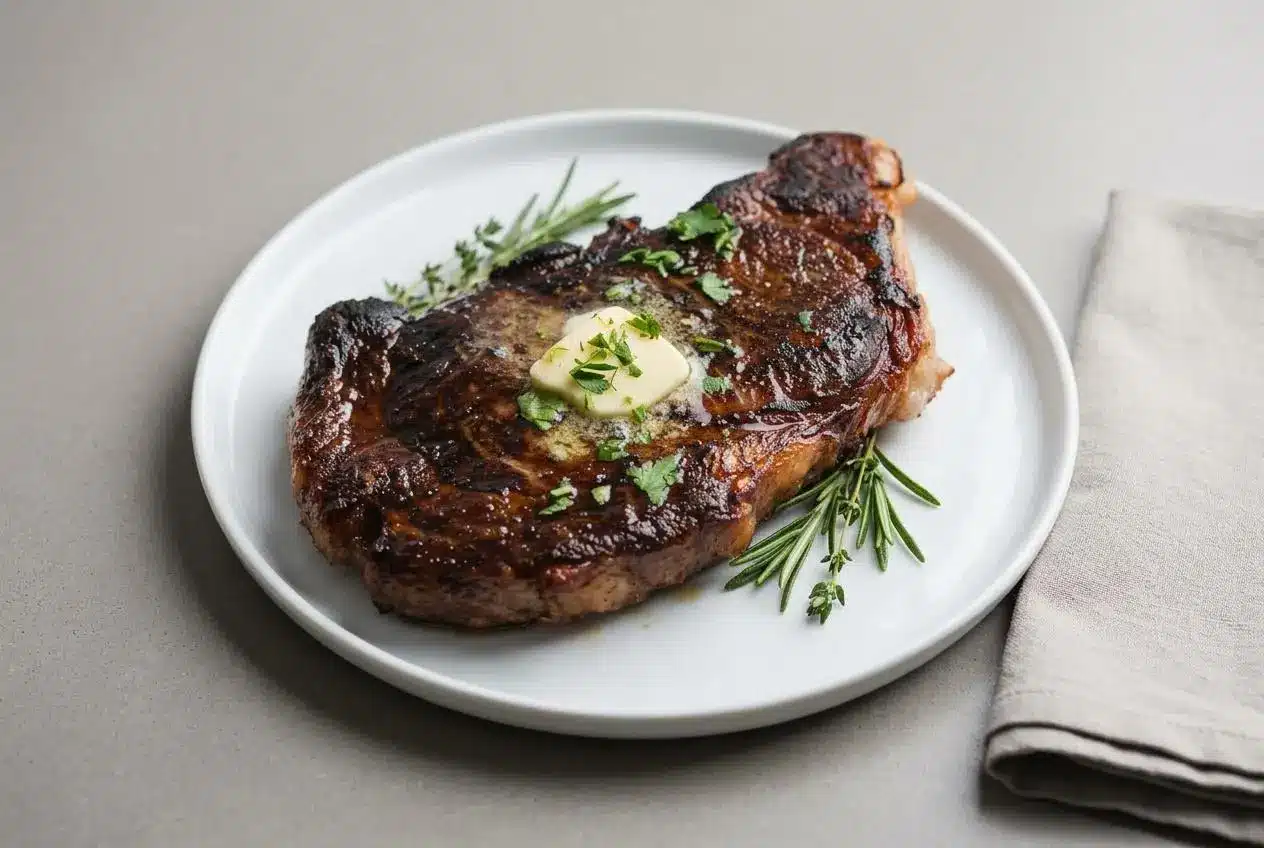
Sous vide steak cooks gently in a temperature-controlled water bath, then gets a fast cast iron sear for a browned crust and evenly cooked center. Set the bath to your preferred doneness, cook the sealed steaks, dry them thoroughly, and sear briefly.
This sous vide steak recipe turns a New York strip into tender, juicy beef with no thick gray ring around the edges. The steak may look pale when it leaves the bag, but the skillet changes everything.
Precision cooking gives you room to focus on the finish instead of guessing at the center. That sizzling crust is worth the extra minute.
Use a pot deep enough for the circulator’s minimum water line, and keep an eye on the water level during the cook.
Why Sous Vide Steak Delivers Flawless Results
Sous vide works because the water bath holds the steak at a steady temperature instead of blasting it with intense heat from the outside in. The entire steak gradually reaches the same internal temperature, creating edge-to-edge doneness rather than a cool center surrounded by overcooked layers.
A traditional skillet steak needs careful timing because the surface heats much faster than the middle. With an immersion circulator, the bath does the gentle cooking first. The cast iron skillet then has one job: build a savory brown crust through the Maillard reaction.
The result is especially helpful with thick steaks. You can cook the center precisely, then use a quick final sear without turning the outer layer gray and dry. The steak stays rosy and juicy from edge to edge.
Ingredients
Each ingredient supports the steak’s flavor and finish: salt seasons the beef, pepper adds warmth, herbs bring aroma, butter adds richness, and olive oil helps form a deeply browned crust.
- 1 lb. New York strip steaks (2 1/2-lb. steaks)
- 1/2 teaspoon coarse sea salt
- 1/2 teaspoon coarse black pepper
- 2 herb sprigs (rosemary, thyme, or oregano)
- 2 tablespoons of butter
- 2 tablespoons of olive oil
New York strip has enough marbling to stay flavorful while keeping a pleasantly firm steak texture. Coarse salt and pepper season the exterior without masking the beef, while rosemary, thyme, or oregano perfume the butter inside the bag.
I prefer rosemary for strip steak because its piney aroma stands up well to the beef and stays noticeable after the high-heat sear.
How to Make Sous Vide Steak
- Fill a large pot with water and make sure it is deep enough to reach the circulator’s marked water line.
Leave enough room for the steak bags to sit fully beneath the water without crowding the pot. - Attach the immersion circulator and heat the water to 125-128°F for medium-rare steak.
The water should circulate steadily before the bags go in. - Season both sides of each steak with the coarse sea salt and coarse black pepper, then place each steak in its own medium Stasher bag or FoodSaver bag.
Separate bags allow water to move freely around every steak. - Set 1 tablespoon of butter and 1 herb sprig on each steak before sealing the bags.
The butter and herbs will gently scent the beef as it cooks. - Press out as much air as possible and seal each bag tightly.
A well-sealed bag should cling closely to the steak rather than balloon above it. - Lower the sealed steaks into the heated bath and cook at 125-128°F for 2-4 hours.
After 2 hours, the centers should be evenly warmed through; stop by 4 hours to protect the steak’s texture. - Lift the steaks from the water bath after cooking and place them on a plate.
They will look pale and damp at this stage, which is normal before searing. - Heat a cast iron skillet over medium-high heat, then add the olive oil once the skillet is hot.
The oil should loosen and shimmer across the pan. - Sear the steaks for 1 minute per side, then remove them from the skillet right away.
The exterior should develop a dark brown crust while the center remains at the bath temperature. - Slice and serve the steaks immediately after the sear.
The browned crust should stay crisp while the interior remains tender and evenly cooked.
Best Cuts of Beef for Sous Vide
Thicker steaks give sous vide its biggest advantage. Choose steaks about 1 1/2 to 2 inches thick when possible. That thickness gives you enough buffer to create a dark crust in the skillet without warming the center too far past your target doneness.
- New York strip: A strong all-around choice with a balanced amount of marbling, a beefy flavor, and a satisfying chew.
- Ribeye: Richer and more forgiving because of its abundant marbling. The fat softens beautifully in the water bath and gives the steak a lush texture.
- Tenderloin or filet mignon: Leaner and exceptionally tender, with a mild flavor that benefits from a careful, fast sear and a buttery finish.
- Bone-in steaks: These work well, but cover any sharp bone edges before bagging so they do not puncture the plastic.
Leaner, more fibrous cuts benefit from a different approach than a thick strip or ribeye. For example, marinated flank steak relies more on slicing across the grain and bold seasoning than the buttery tenderness of a thick sous vide steak.
Sous Vide Steak Time and Temperature Guide
Time determines how fully the steak heats through, while temperature determines its final doneness. For steaks around 1 1/2 to 2 inches thick, a bath time of 1 to 4 hours works well, with 1 1/2 to 2 hours offering an especially pleasing texture.
This recipe uses 125-128°F for a medium-rare result with a red, tender center. If you prefer a slightly warmer medium-rare steak, use the temperature range below.
Target Temperatures for Every Doneness
- Rare: 120°F to 125°F (49°C to 52°C). Expect a deep red center with a very soft, supple texture.
- Medium-rare: 129°F to 134°F (54°C to 57°C). The center will be warm red to pink-red, juicy, and tender.
- Medium: 135°F to 144°F (57°C to 62°C). Expect a pink center with a firmer bite and less visible red.
- Well-done: 155°F (68°C) or higher. The steak will be fully cooked through with a firmer, more traditional texture.
Choose the temperature based on the texture you want, then give a thick steak enough time for the heat to reach the middle. A heavily marbled ribeye tolerates the longer end of the range well, while a lean filet is usually best when removed closer to the earlier end.
Cooking Steaks From Frozen
This guide is written for refrigerated steaks. A steak that is still solid needs additional bath time for heat to reach the center evenly, so avoid relying on the timing for a fresh steak when starting from a fully frozen piece of beef.
For the most predictable result, use steaks that are evenly chilled, sealed properly, and similar in thickness. That makes it easier to match the final sear to the center temperature you chose.
Food Safety and Maximum Holding Times
Very low-temperature cooking calls for careful time control and clean handling. Keep the water bath circulating, use intact bags, and avoid extended holding at lower bath temperatures.
For tender steaks such as strip, ribeye, and filet, do not leave them in the bath beyond 4 hours. The beef can become overly soft and lose the steak-like bite you want. When cooking for people who need specific food-safety advice, use beef handling and cooking temperature guidance suited to your situation.
Essential Equipment and Bag Preparation
You need an immersion circulator, a deep pot or water container, sealing bags, tongs, and a heavy skillet for the finish. A vacuum sealer is useful, but it is not required.
For the water displacement method, place the seasoned steak, butter, and herb sprig in a heavy-duty zipper bag. Close the zipper almost all the way, leaving a small opening at one corner. Slowly lower the bag into the water while keeping that opening above the surface. Water pressure pushes air upward and out of the bag. Once the steak is submerged and the air is expelled, seal the final corner.
Keep the bag opening above the water until it is fully sealed. Then clip the bag to the side of the pot if needed, making sure the water can circulate around both sides of the steak.
How to Achieve the Perfect Golden Sear
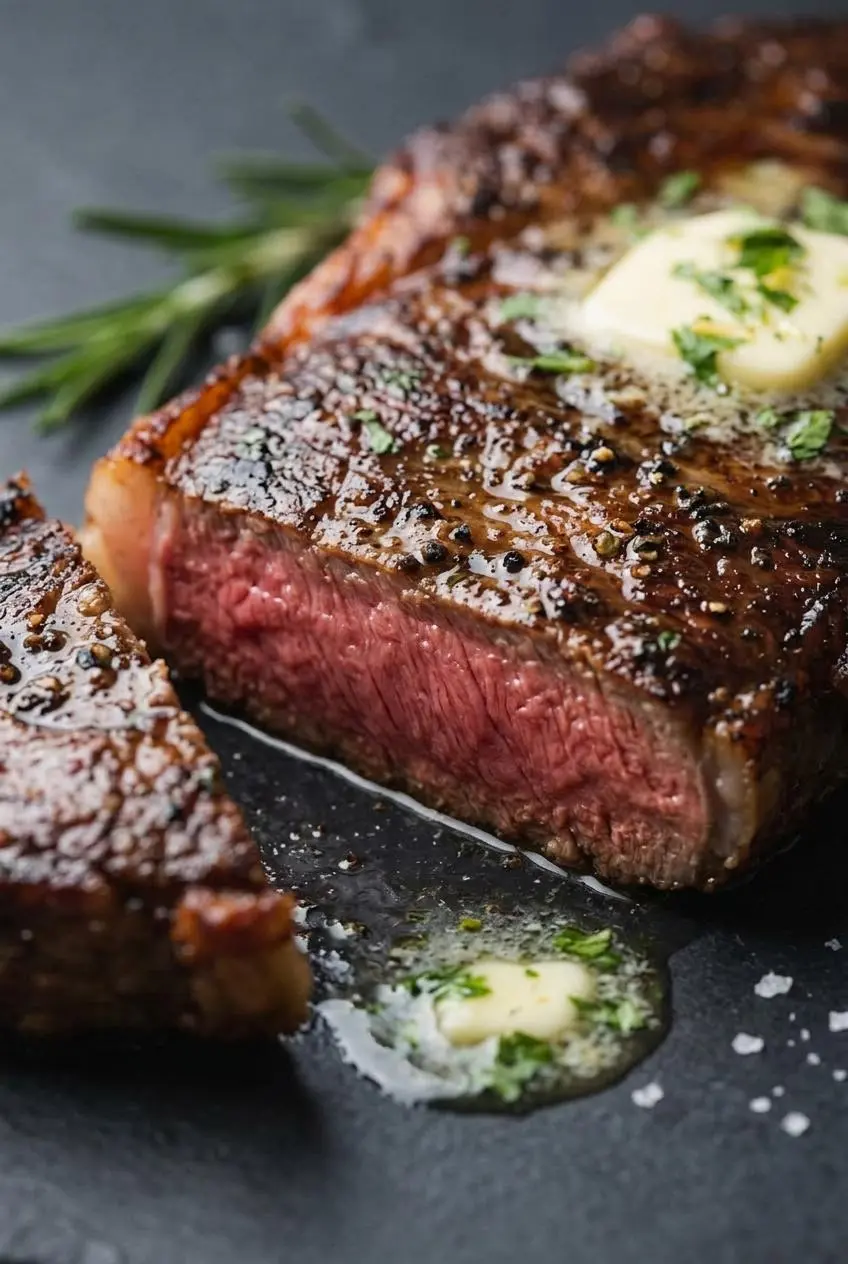
The steak will not look especially appealing when it comes out of the bag. That pale surface is expected. The sear brings back the color, roasted aroma, and crisp crust that make the tender interior feel like a proper steakhouse dinner.
The Surface Moisture Drying Step
Pat every surface thoroughly dry with paper towels before the steak hits the skillet. Water on the exterior must evaporate before browning can begin, so a wet steak steams instead of sears.
For an extra buffer against a gray ring, you can chill the sealed cooked steak briefly in an ice-water bath before opening it. Dry it completely afterward. The cooler exterior gives you a little more protection while the skillet builds color.
Cast Iron High-Heat Execution
Use a heavy cast iron skillet and let it get properly hot before adding the oil. Look for oil that shimmers lightly, with faint wisps of smoke beginning to rise. That is the moment to add the steak.
Olive oil does the high-heat work in this recipe. Butter can burn quickly when used as the primary searing fat, so save it for a lower-heat finishing touch. Sear for 45 to 60 seconds per side, staying within the recipe’s 1-minute maximum per side.
- Flat-top griddle: An optional outdoor alternative that gives the steak broad, even contact with a hot surface. Keep the sear just as brief.
- Steak press: Use gentle pressure only if a steak curls at the edges. Pressing too hard can squeeze out juices and prevent an even crust.
- Thin steaks: They brown quickly but have less protection from overcooking. A thicker cut is easier to finish well.
Butter Basting and Aromatic Finishing
For an optional steakhouse-style finish, lower the heat slightly during the final moments of searing. Add butter and fresh herbs, then tilt the skillet so the melted butter pools at one edge. Spoon the foaming butter over the steak until the herbs smell fragrant.
Keep this finish brief. The goal is a richer crust and a herb-scented surface, not additional cooking. A compound butter added to the hot sliced steak is another optional way to bring in smoky salt or minced herbs without risking a burnt skillet.
Common Mistakes and How to Avoid Them
- The bag floats: Trapped air prevents even contact with the water. Reseal the bag using the water displacement method, or secure it with a heavy metal clip or a clean ceramic plate.
- The steak has a soft, mushy texture: It likely stayed in the bath too long. Stick to the recipe’s 2-4 hour window for tender cuts.
- The crust is weak: The steak was probably damp or the pan was not hot enough. Dry the beef thoroughly and wait for shimmering oil before searing.
- A gray band appears under the crust: The steak spent too long in the skillet. Use high heat and keep the sear under 1 minute per side.
- The steak tastes slightly cured: Salt was applied far too far ahead of cooking. Season close to bagging for a more natural beef texture.
- The pan smokes heavily before the steak goes in: The skillet is overly hot or the oil has begun to scorch. Carefully reduce the heat, wipe out burnt residue, and begin again with fresh oil.
Storing and Reheating Sous Vide Steak
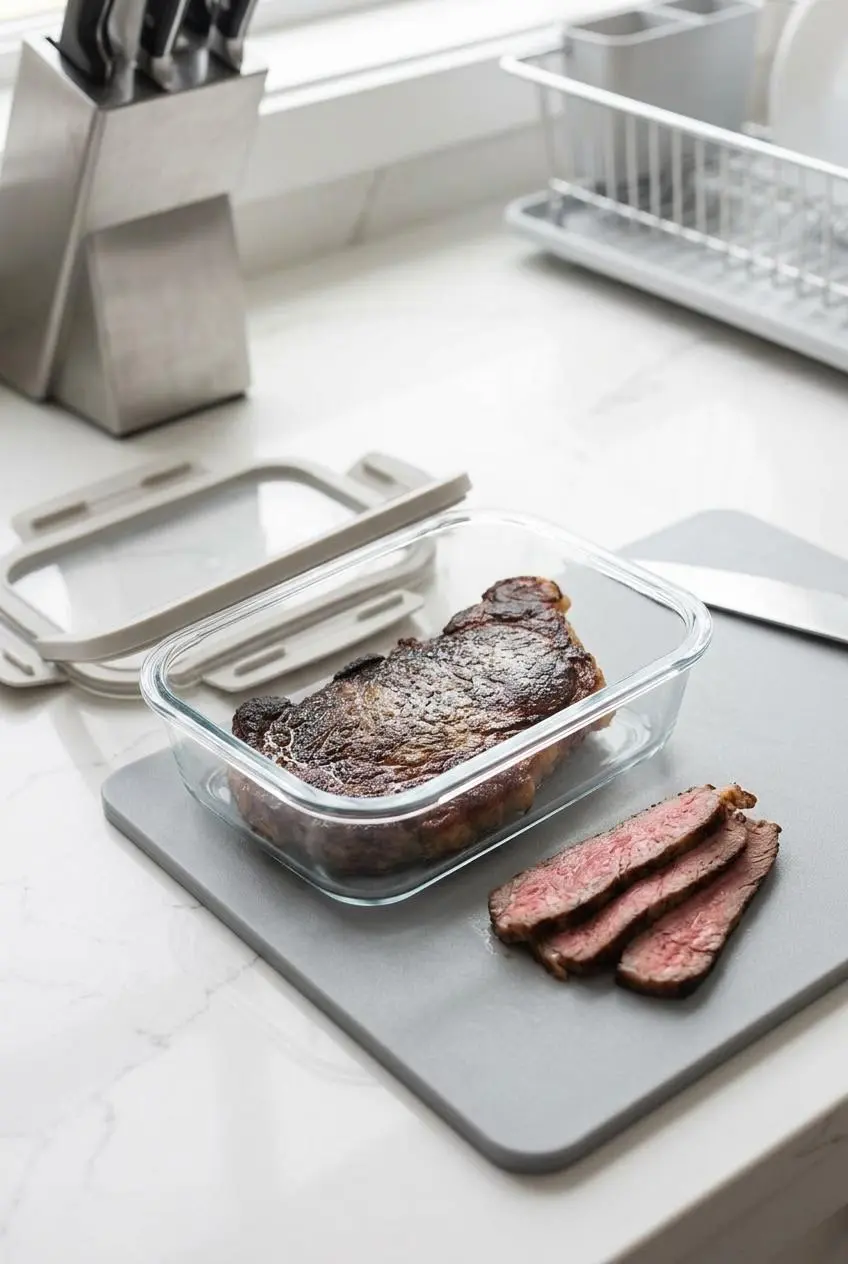
If you are saving cooked steak, cool it promptly, keep it covered and chilled, and reheat only the portion you plan to eat. A gentle water bath set slightly below the original cooking temperature helps warm the steak without pushing the center into a higher doneness.
Finish reheated steak with another quick sear after drying the exterior. For a cold option, slice leftover steak thinly against the grain and use it in a chilled steak salad, where its tender texture works especially well.
Delicious Sides and Serving Ideas
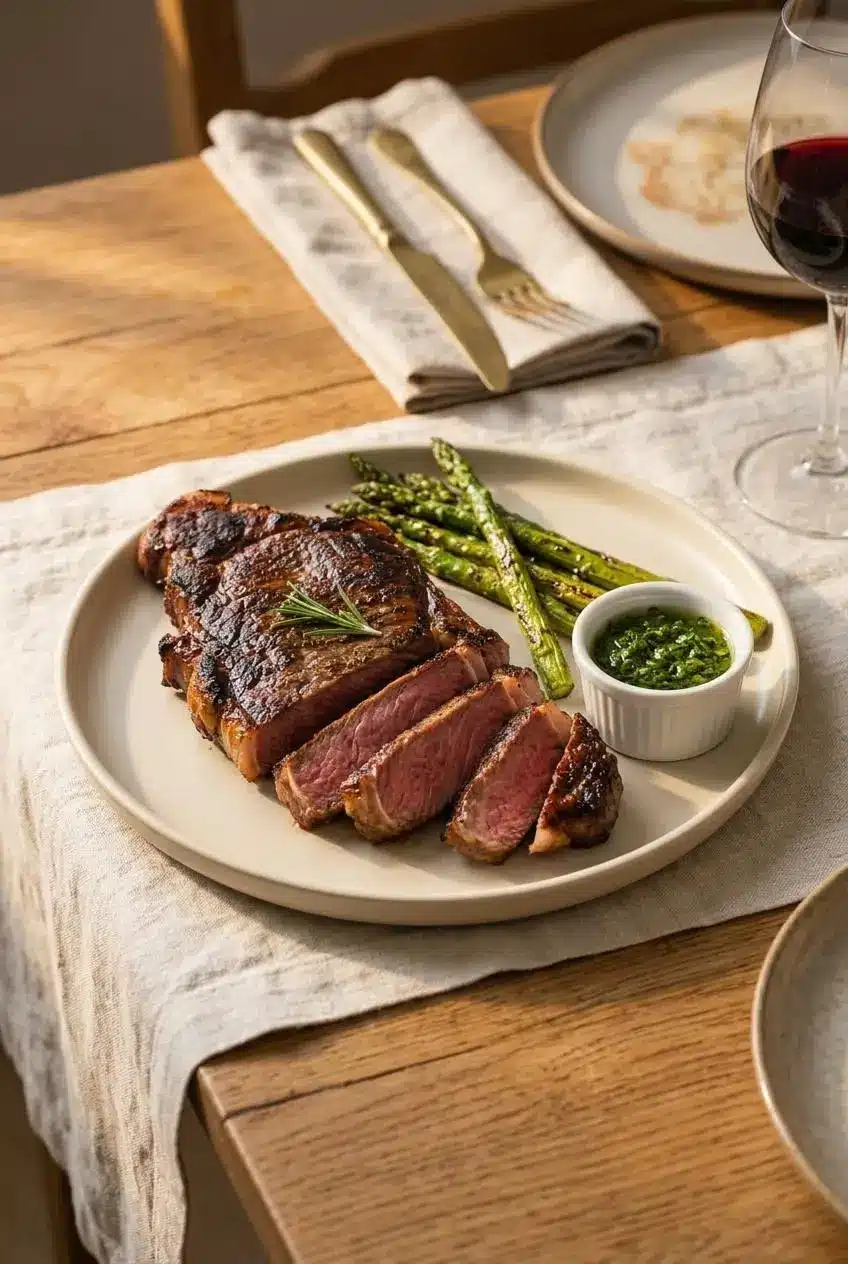
Sous vide steak needs almost no resting time after the sear because the temperature is already even throughout the meat. Give it a minute or two for the crust to settle, then slice across the grain and serve while the exterior is still crisp.
- Roasted asparagus adds a fresh, lightly charred contrast to the rich beef.
- Creamy garlic mashed potatoes catch the buttery juices and make the plate feel especially comforting.
- Fresh chimichurri cuts through the steak’s richness with herbs and tang.
- A seasoned steakhouse potato salad makes a satisfying side for a casual dinner or cookout.
Conclusion
Sous vide takes the guesswork out of cooking steak by bringing the center to a controlled doneness before the skillet ever gets involved. Thick cuts, a properly sealed bag, and a quick sear create the best balance of tenderness and crust.
Dry the steak thoroughly before it meets the hot pan, then keep that final sear fast. Once you see the brown crust form, dinner is in very good shape.
Frequently Asked Questions
How Long Should You Sous Vide a Steak?
For steaks about 1 1/2 to 2 inches thick, cook for 1 1/2 to 2 hours for an excellent texture. This recipe cooks the steaks for 2-4 hours at 125-128°F. Do not exceed 4 hours for tender cuts such as strip steak, ribeye, or filet, or the texture can become overly soft.
What Are Common Mistakes With Sous Vide Steak?
Searing a wet steak prevents rapid browning and creates steam. Searing longer than 1 minute per side can form a gray, overcooked ring below the crust. Floating bags heat unevenly, so remove trapped air and keep the steak submerged. Leaving tender steak in the bath too long can make it mushy.
Can You Sous Vide Steak Straight From Frozen?
This method is designed around refrigerated steaks and the stated cooking window. When starting with a fully solid steak, allow for the fact that the center needs more time to reach the bath temperature. For the most consistent doneness, use steaks of similar thickness and start with an evenly chilled steak.
Do You Need to Rest Sous Vide Steak After Searing?
Only a brief rest is needed after searing. Because the steak reaches an even temperature in the water bath, it does not need the long resting period typical of a skillet-only steak. Slice once the crust has settled and the steak is comfortable to handle.
Why Must You Dry the Steak Before Searing?
Surface moisture turns to steam in the skillet and delays browning. A dry exterior can quickly develop the dark, savory crust created by the Maillard reaction. Pat the steak dry on every side, including the edges, before it goes into the hot oil.
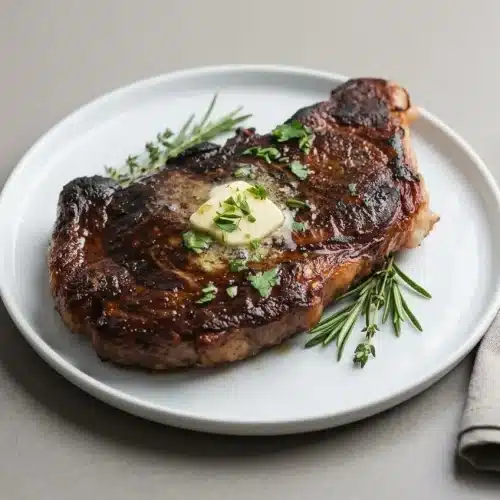
Sous Vide Steak Recipe

Equipment
- Sous Vide Immersion Circulator
- Large Pot or Water Container
- Vacuum Bag or Stasher Bag
- Cast Iron Skillet
- Tongs
Ingredients
- 1 lb. New York strip steaks (2 1/2-lb. steaks)
- 1/2 teaspoon coarse sea salt
- 1/2 teaspoon coarse black pepper
- 2 sprigs herb sprigs (rosemary, thyme, or oregano)
- 2 tablespoons butter
- 2 tablespoons olive oil
Instructions
- Fill a large pot with water and make sure it is deep enough to reach the circulator’s marked water line. Leave enough room for the steak bags to sit fully beneath the water without crowding the pot.
- Attach the immersion circulator and heat the water to 125-128°F for medium-rare steak. The water should circulate steadily before the bags go in.
- Season both sides of each steak with the coarse sea salt and coarse black pepper, then place each steak in its own medium Stasher bag or FoodSaver bag. Separate bags allow water to move freely around every steak.
- Set 1 tablespoon of butter and 1 herb sprig on each steak before sealing the bags. The butter and herbs will gently scent the beef as it cooks.
- Press out as much air as possible and seal each bag tightly. A well-sealed bag should cling closely to the steak rather than balloon above it.
- Lower the sealed steaks into the heated bath and cook at 125-128°F for 2-4 hours. After 2 hours, the centers should be evenly warmed through; stop by 4 hours to protect the steak’s texture.
- Lift the steaks from the water bath after cooking and place them on a plate. They will look pale and damp at this stage, which is normal before searing.
- Heat a cast iron skillet over medium-high heat, then add the olive oil once the skillet is hot. The oil should loosen and shimmer across the pan.
- Sear the steaks for 1 minute per side, then remove them from the skillet right away. The exterior should develop a dark brown crust while the center remains at the bath temperature.
- Slice and serve the steaks immediately after the sear. The browned crust should stay crisp while the interior remains tender and evenly cooked.