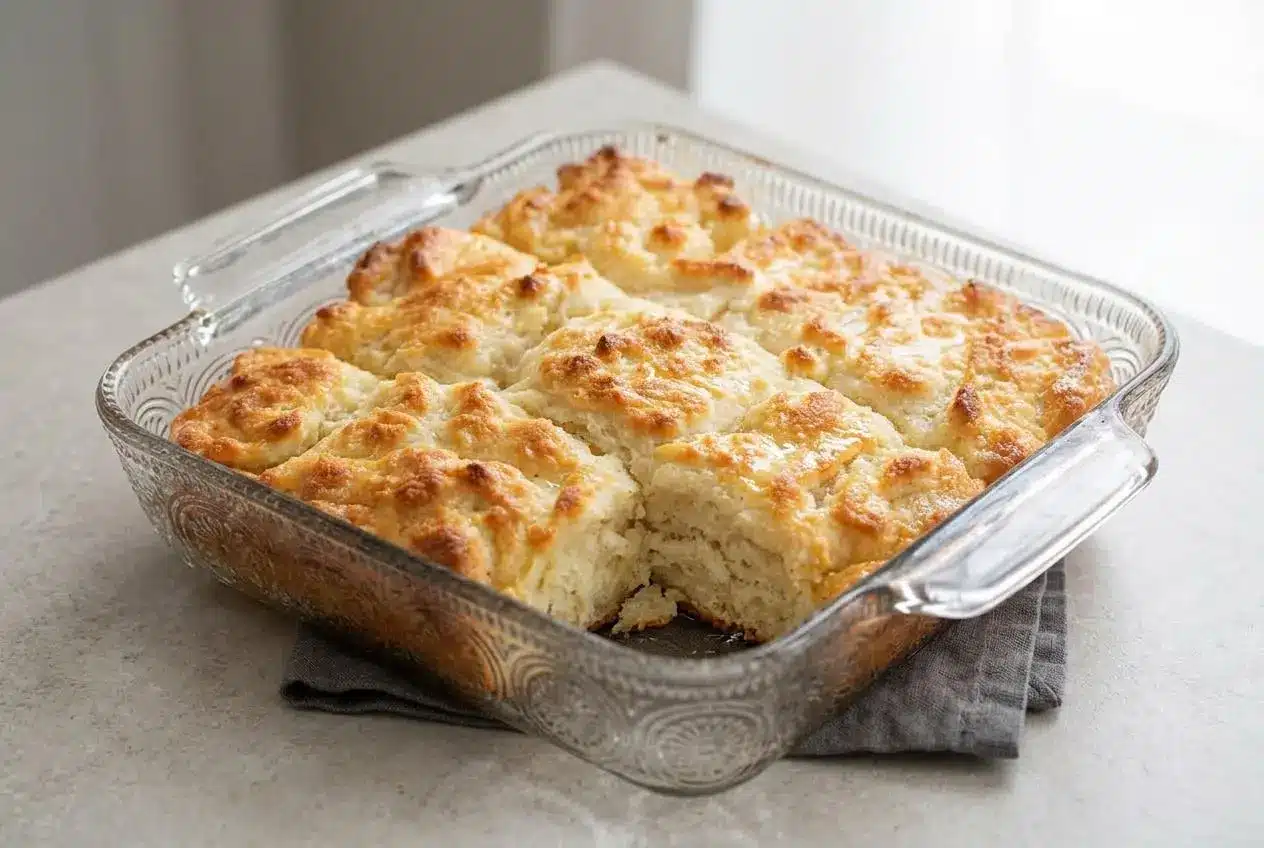
Butter swim biscuits are tender buttermilk biscuits baked in a melted butter bath, giving them crisp golden edges and soft centers in 28 minutes of baking.
Butter swim biscuits skip the usual step of cutting cold butter into flour. Instead, a sticky dough bakes directly over melted butter, which bubbles around the edges and creates a rich, browned crust.
The contrast is the whole point: a crisp underside, pillowy middle, and buttery corners that practically beg for jam or gravy. The pre-cut squares make every edge count.
Set the buttermilk out while the oven heats so it blends smoothly into the warm butter instead of making it seize.
Key Ingredients for Butter Swim Biscuits and Smart Substitutions
Flour gives the biscuits structure, baking powder creates lift, buttermilk keeps the crumb tender, and melted butter delivers richness and the crisp-edged finish.
- 2 ½ cups (312.5 g) all-purpose flour
- 4 teaspoons baking powder
- 1 tablespoon granulated sugar
- 2 teaspoons kosher salt
- 2 cups (490 g) buttermilk
- ½ cup (1 stick / 113 g) unsalted butter, melted
All-purpose flour holds up to the wet dough while still baking into a soft interior. Sugar rounds out the tang of the buttermilk without making the biscuits sweet, and kosher salt keeps the buttery flavor from tasting flat. Unsalted butter gives you control over the seasoning while it browns the bottom and outer edges.
I use buttermilk that has lost its refrigerator chill because cold dairy can firm up melted butter before the dough has a chance to spread evenly.
The Chemistry of Buttermilk and Leaveners
Buttermilk brings acidity and moisture to the dough. When it meets double-acting baking powder, the batter starts building the tiny pockets that become a light, tender crumb in the oven. There is no kneading, rolling pin, or biscuit cutter involved, which is exactly why a gentle stir matters so much.
Use room-temperature buttermilk when possible. It mixes more evenly into the flour and is less likely to cause the melted butter in the pan to clump or cool too quickly. The dough should look shaggy, sticky, and quite wet. That texture is right for this style of biscuit.
If you do not have buttermilk, stir 2 tablespoons of fresh lemon juice or white distilled vinegar into 2 cups of whole milk. Let it stand for 5 minutes, until it looks lightly curdled, then use it in the dough. The mixture will not be identical to cultured buttermilk, but the added acid helps the baking powder perform as intended.
Flour Options and Self-Rising Adjustments
All-purpose flour is the best match for the stated proportions because it gives the dough enough strength to rise while staying tender. Avoid adding extra flour to make the dough feel more like a roll-out biscuit dough. A wetter batter is what lets the butter move around the cut lines and crisp the sides.
- For self-rising flour, omit the baking powder and kosher salt entirely. Self-rising flour already contains leavening and salt, so adding both can make the biscuits overly salty and affect their rise.
How to Bake Butter Swim Biscuits for Fluffy Centers and Crisp Edges
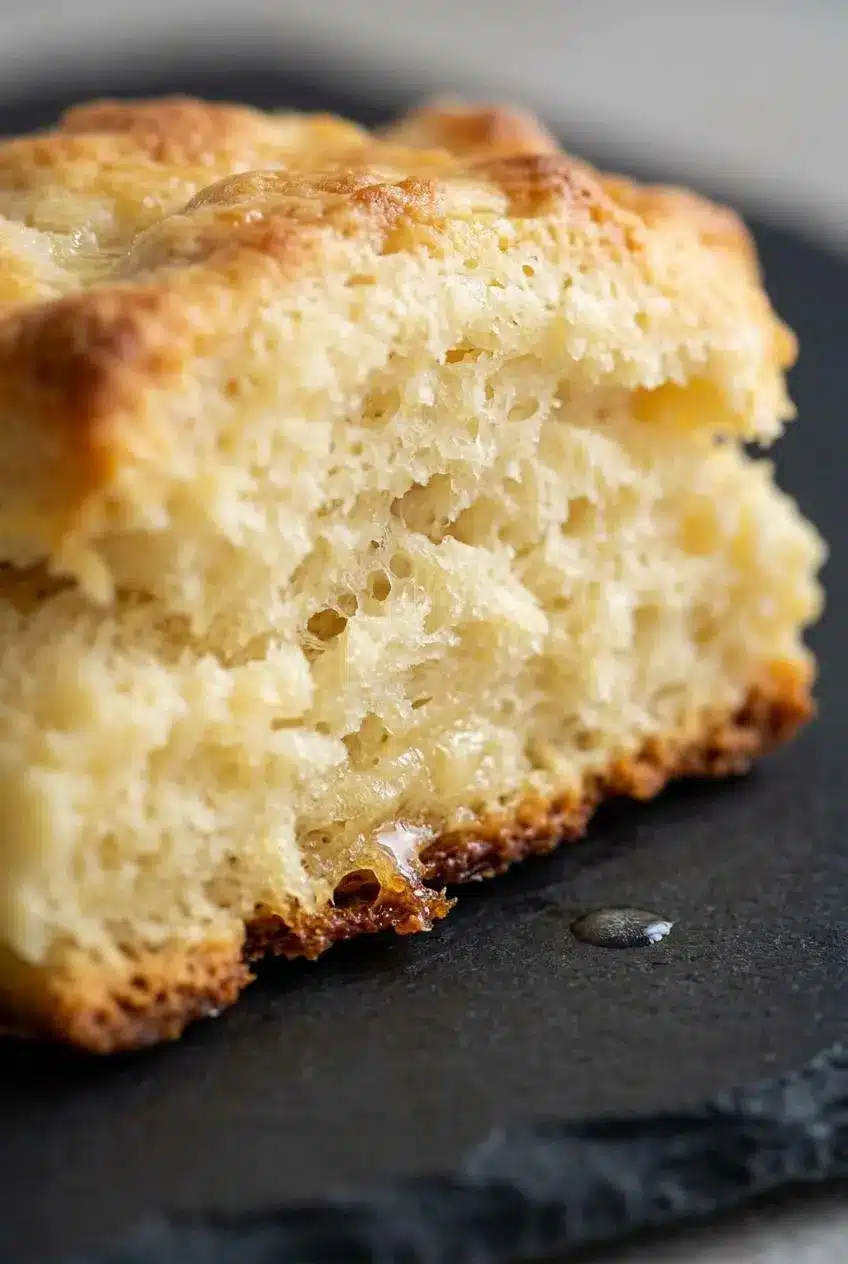
The key is gentle mixing followed by an even spread in a butter-lined 8×8-inch dish. Score the dough before baking so the bubbling butter can travel through the channels and brown the sides of each square.
- Heat the oven to 450°F before mixing the dough.
A fully heated oven gives the baking powder a strong early lift and helps the butter begin bubbling around the pan edges. - Whisk the flour, baking powder, sugar, and salt together in a medium bowl.
Break up any visible lumps so the leavening and seasoning are distributed evenly through the flour. - Add the buttermilk and stir just until no large pockets of dry flour remain.
Stop while the dough is still sticky and rough-looking, because continued stirring can make the finished crumb dense. - Pour the melted butter into an 8×8-inch baking dish, then place the dough over it and spread it gently to all four corners with a spatula or clean hands.
Keep the layer even so the squares bake at the same pace and the butter can bubble around the perimeter. - Cut the unbaked dough into 9 squares in a 3-by-3 pattern, then bake for 28 minutes.
The tops should turn golden brown, and the butter should actively bubble along the scored lines and pan borders. - Let the biscuits stand in the dish before separating and serving them.
The remaining butter will settle into the crumb, leaving the centers soft rather than greasy.
Do not let the butter sit in a hot pan until it turns deeply brown before the dough goes in. A lightly melted butter bath gives you a clean buttery flavor, while overly browned butter can make the edges taste bitter. Once baked, wait until the bubbling calms before lifting out a square so the crust stays intact.
Troubleshooting Common Biscuit Mistakes
Most problems come down to dough texture, leavening, pan depth, or an oven that colors the top faster than it cooks the center. These quick fixes keep the butter bath working in your favor.
- The middle is doughy: The dish may be too deep, the oven may run cool, or the biscuits may have come out as soon as the tops browned. Loosely tent the pan with aluminum foil and continue baking until a toothpick inserted into the center square comes out clean.
- The biscuits are dense or rubbery: The dough was likely stirred too long. Mix only until the flour is moistened, even if the batter looks uneven and sticky. It should not resemble firmer traditional buttermilk biscuits meant for rolling and cutting.
- The rise is weak: Check the baking powder before you begin. Stir a little into warm water. Fresh baking powder should bubble vigorously; little or no bubbling means it may no longer provide enough lift.
- The tops darken too quickly: Cover the dish loosely with foil so the centers can finish without pushing the tops toward overbrowning.
- The butter tastes scorched: Melt it only until fluid and pourable. Butter that becomes very dark before baking can overpower the mild tang of the dough.
Pan dimensions matter. An 8×8-inch dish produces taller squares with a thicker, fluffy center, while a 9×9-inch glass or ceramic dish spreads the dough slightly thinner for more crunchy surface. A metal pan conducts heat more quickly, so watch the butter and bottom crust closely.
Sweet and Savory Biscuit Variations
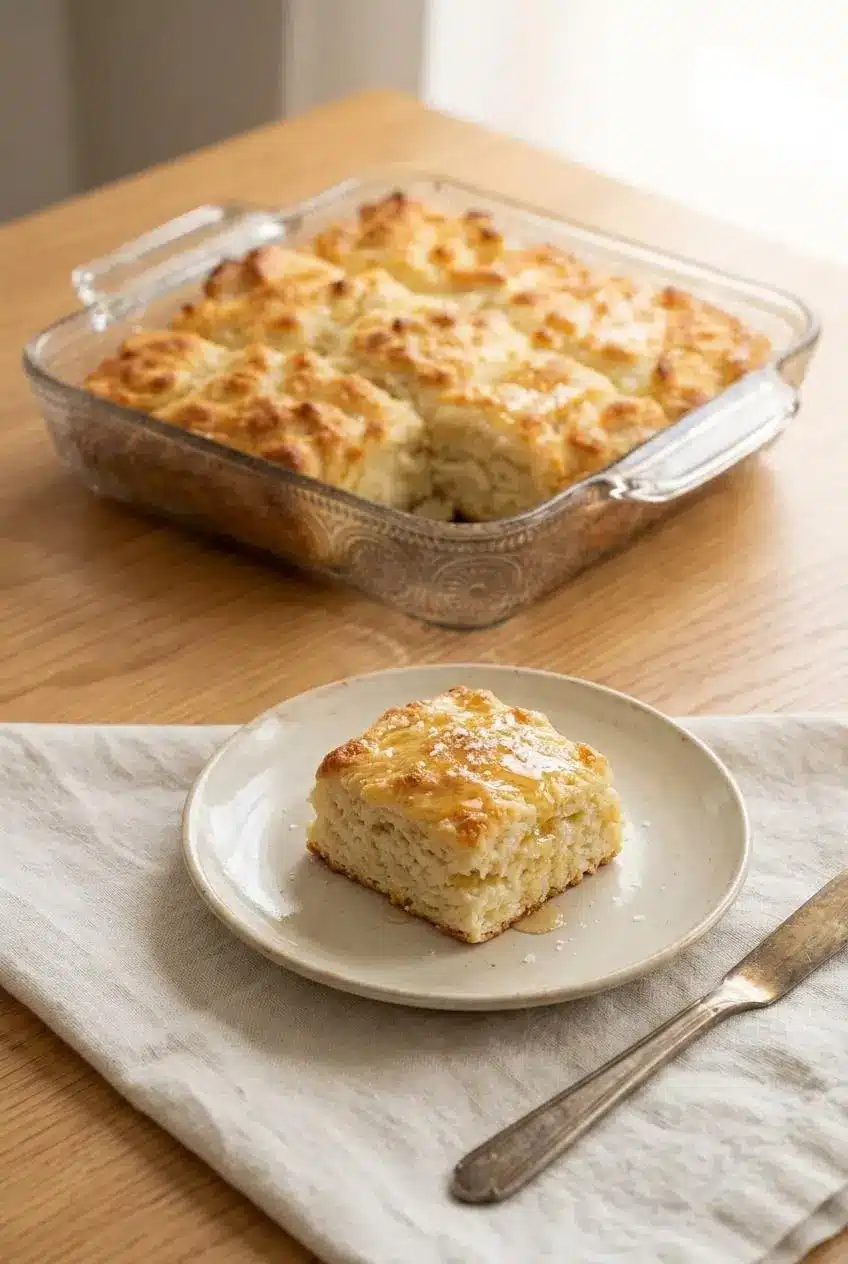
Keep the main dough method intact, then fold optional add-ins in gently with the buttermilk. Choose additions that do not release excessive liquid, and spread the dough carefully so the butter bath can still reach the edges.
For a sweet-salty finish, brush warm biscuits with honey and scatter flaky sea salt over the surface right after baking. For a richer spread at the table, try homemade honey butter while the biscuit centers are still warm.
- Cinnamon sugar swirl: Scatter cinnamon sugar over part of the dough, then lightly ripple it through before spreading. It gives the biscuits a cobbler-like breakfast feel without turning the batter runny.
- Peach jam serving idea: Split a warm square and add peach jam for a bright, fruity contrast to the salty butter crust.
- Hearty dinner pairing: Serve the biscuits beside chicken stew, brisket chili, or sausage gravy, where the crisp edges hold up especially well under a spoonful of sauce.
Blueberry Lemon Swirl Biscuits
Gently fold fresh blueberries and lemon zest into the wet dough just before spreading it into the buttered dish. Keep the stirring brief to avoid crushing the berries and staining the whole batter. Once the baked biscuits have cooled, drizzle them with an optional powdered sugar and lemon juice glaze for a bright finish.
Fresh berries add pockets of jammy sweetness, while lemon zest keeps the flavor lively rather than heavy. If you enjoy fruit-filled biscuit dough, the same gentle handling works well for berry-focused bakes, too.
Sharp Cheddar and Jalapeno Biscuits
For a savory version, stir shredded sharp cheddar, cracked black pepper, and finely diced pickled jalapeños into the dry ingredients before adding the buttermilk. The cheddar melts into salty pockets, and the jalapeños add tang and heat without introducing much extra moisture.
These are especially good with eggs at breakfast or alongside a bowl of chili at dinner. Keep the jalapeños finely diced so each square slices cleanly through the scored channels.
Storage and Reheating Guidelines
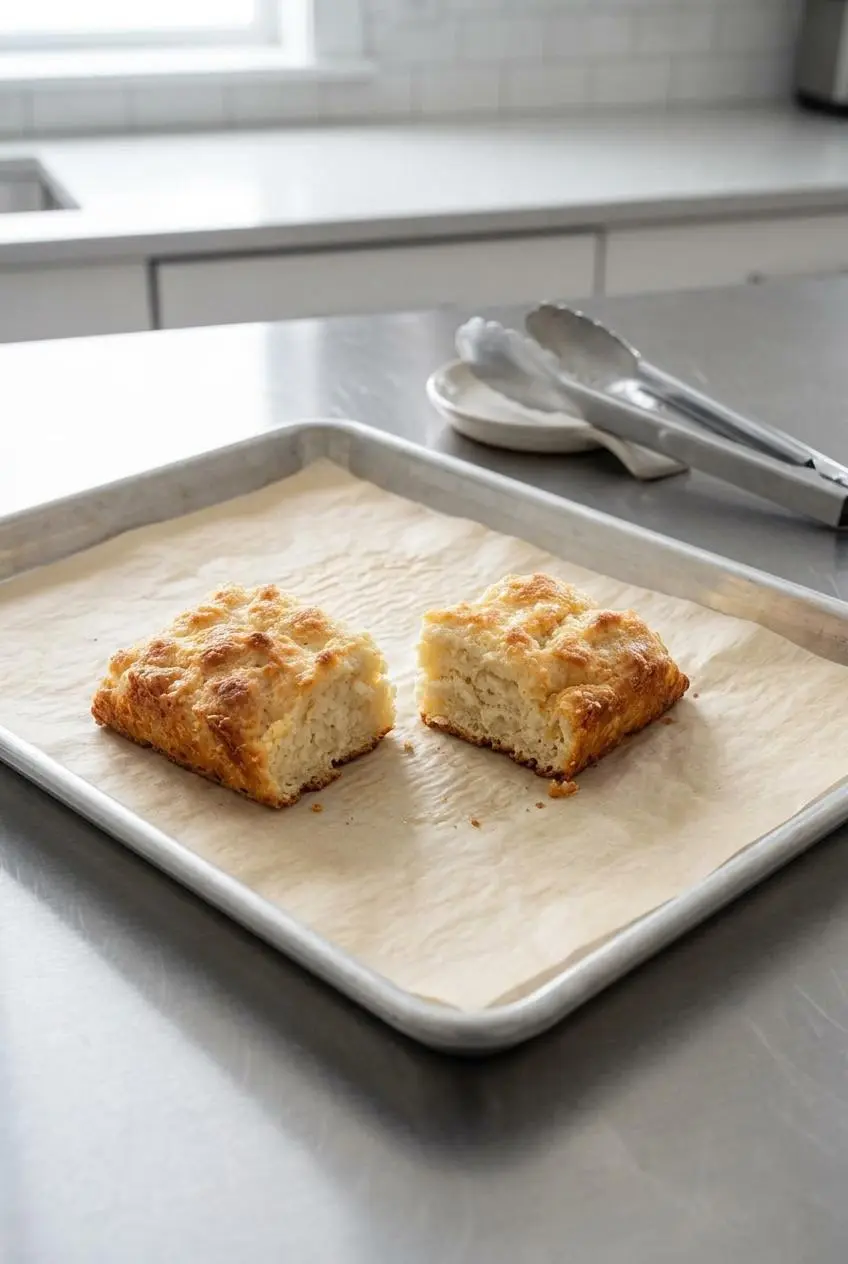
Let leftover biscuits cool completely, then keep them in an airtight container or wrapped in foil to protect the crust from humidity. For the best texture, avoid sealing them while still warm, since trapped steam softens the browned edges.
Rewarm individual squares in an oven or air fryer until the center is hot and the edges regain their crunch. The microwave is convenient, but it tends to make the butter-rich crust soft and the crumb rubbery. Reheat only what you plan to serve so the remaining biscuits keep their texture.
If the biscuits seem greasy after storage, place them on a baking sheet or air fryer basket rather than a deep dish. That allows the outside to crisp again instead of sitting in melted butter.
Conclusion
These biscuits deliver the comfort of buttermilk biscuits without working cold butter into flour or shaping individual rounds. Room-temperature buttermilk, a gently mixed dough, and clean score lines set up the best rise and crisp edges.
Let the butter settle into the warm squares before serving, then add honey and flaky sea salt if you want a sweet-salty finish. A golden edge and soft middle make a very convincing case for reaching for a second square.
Frequently Asked Questions
Can I Make Butter Swim Biscuits Without Buttermilk?
Yes. Stir 2 tablespoons of lemon juice or white distilled vinegar into 2 cups of whole milk. Let the mixture stand for 5 minutes, until it looks lightly curdled, then add it to the dough in place of buttermilk.
Why Are My Butter Swim Biscuits Soggy or Doughy in the Middle?
A deep pan, a cool oven, or removing the biscuits when only the tops look done can leave the center underbaked. Loosely tent the pan with foil and continue baking until the center square is set and a toothpick comes out clean.
How Do You Reheat Butter Swim Biscuits So They Stay Crispy?
Use an oven or air fryer to warm the biscuits until the centers are hot and the edges crisp again. Avoid the microwave when possible because it softens the buttery crust and can make the crumb chewy.
What Is the Best Baking Dish to Use for Butter Swim Biscuits?
An 8×8-inch glass or ceramic baking dish gives you tall biscuits with soft centers and crisp borders. A 9×9-inch dish also works, producing slightly thinner squares with more surface crunch. Use the toothpick test in the center square to judge doneness.
Butter Swim Biscuits

Equipment
- Mixing Bowl
- Whisk
- 2-Quart baking dish
Ingredients
- 2 ½ cups all-purpose flour (312.5 g)
- 4 teaspoons baking powder
- 1 tablespoon granulated sugar
- 2 teaspoons kosher salt
- 2 cups buttermilk (490 g)
- ½ cup unsalted butter, melted (1 stick / 113 g)
Instructions
- Heat the oven to 450°F before mixing the dough. A fully heated oven gives the baking powder a strong early lift and helps the butter begin bubbling around the pan edges.
- Whisk the flour, baking powder, sugar, and salt together in a medium bowl. Break up any visible lumps so the leavening and seasoning are distributed evenly through the flour.
- Add the buttermilk and stir just until no large pockets of dry flour remain. Stop while the dough is still sticky and rough-looking, because continued stirring can make the finished crumb dense.
- Pour the melted butter into an 8×8-inch baking dish, then place the dough over it and spread it gently to all four corners with a spatula or clean hands. Keep the layer even so the squares bake at the same pace and the butter can bubble around the perimeter.
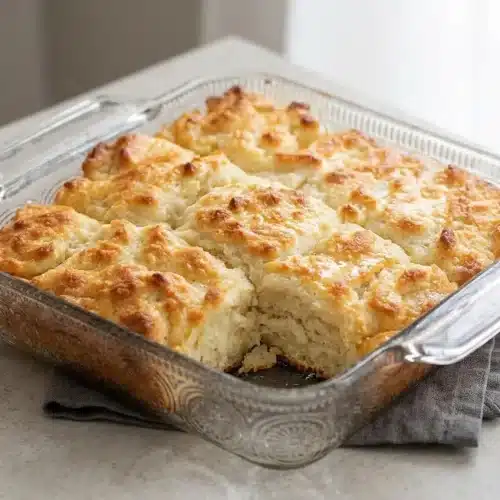
- Cut the unbaked dough into 9 squares in a 3-by-3 pattern, then bake for 28 minutes. The tops should turn golden brown, and the butter should actively bubble along the scored lines and pan borders.
- Let the biscuits stand in the dish before separating and serving them. The remaining butter will settle into the crumb, leaving the centers soft rather than greasy.