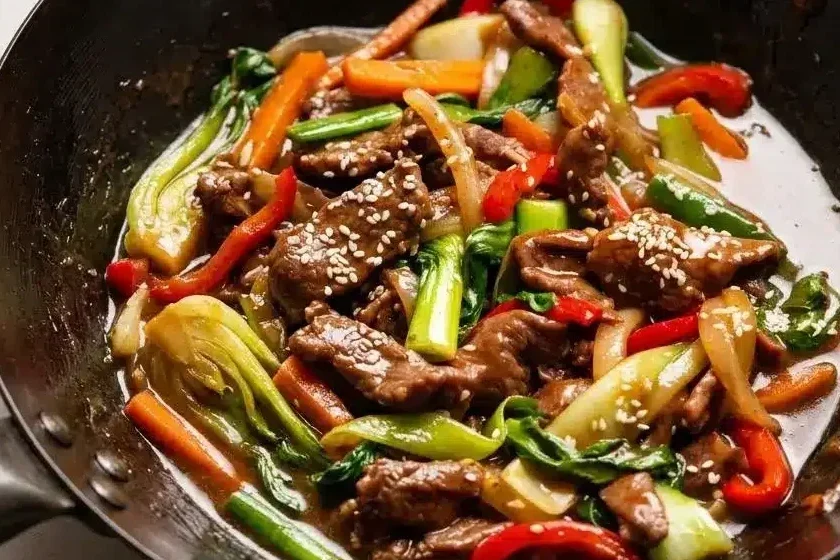
For tender beef stir fry, slice steak across the grain, coat it with baking soda for 20 minutes, rinse well, and sear it over high heat before tossing it with vegetables and glossy soy oyster sauce.
This beef stir fry recipe brings together quickly cooked steak, crisp-tender bok choy, carrots, bell pepper, and a savory sauce that clings to every bite.
Hot oil should hiss the moment the aromatics hit the pan, followed by the warm scent of garlic, soy, and toasted sesame. The sauce is the finishing move.
Set out every chopped ingredient and whisk the sauce before heating the pan, because the cooking moves fast once the oil is hot.
Essential Ingredients and Smart Substitutions
Each ingredient contributes a distinct job: tender beef, deep savory flavor, gentle sweetness, fragrant aroma, crisp texture, and a sauce with enough body to coat the vegetables.
Velveting the beef (tenderising)
- 7 oz / 200 g beef rump steak or flank, or any other quick cooking steak cut
- 1/2 tsp baking soda / bi-carbonate soda, for velveting
Sauce
- 2 tbsp soy sauce, light or all-purpose NOT dark soy
- 1 tbsp oyster sauce
- 2 tbsp Chinese cooking wine OR Mirin
- 1 tsp white sugar
- 1/2 tsp sesame oil, toasted (brown) not untoasted (yellow)
- Pinch white pepper, substitute with black pepper
Sauce thickener
- 3 tsp cornstarch / corn flour
- 1/2 cup water, separated
Stir Fry
- 1 1/2 tbsp peanut oil
- 1 garlic clove, finely minced with a knife
- 1/2 small onion, sliced (yellow, brown or white)
- 1/2 red capsicum / bell pepper, sliced into 7mm / 1/3" thick slices
- 1 small carrot, peeled, halved lengthwise and sliced thinly on the diagonal
- 2 bok choy, cut leaves from stems, cut thick stems lengthways to make them all roughly the same width
- 2 green onion, cut into 1.5"/3cm pieces, firm white end separated from soft green parts
To Serve
- Steamed white rice
- Sesame seeds (optional)
Rump and flank steak have robust beef flavor and cook quickly when cut thinly. Baking soda softens the beef’s surface before searing. Light soy sauce brings salt, oyster sauce adds rounded umami, and cornstarch turns the liquid sauce into a silky glaze. Bok choy and bell pepper keep the finished stir fry fresh and crisp.
Use light or all-purpose soy sauce here. Dark soy sauce is richer in color and more intense, so it does not work as a direct replacement.
I like to choose flank steak with clearly visible muscle lines because it makes slicing across the grain much easier to judge.
Best Cuts of Beef: Flank, Sirloin, and Budget Alternatives
Flank steak is a favorite for stir fry because its pronounced grain makes it easy to slice correctly, and it develops a rich, beefy flavor over high heat. Rump steak works similarly and is an excellent quick-cooking choice in this recipe.
Top sirloin is a tender, lean option with a finer grain and mild flavor. It is especially useful when you want neat strips that cook evenly. Flat iron steak is naturally tender and stays juicy, while skirt steak has a stronger beef flavor but benefits from very thin slicing because its fibers are more noticeable.
For any cut, look for the long, parallel lines running through the meat. Thin slices cut across those lines will feel tender rather than stringy once cooked.
Building the Master Stir Fry Sauce
The sauce balances several flavors without becoming heavy. Soy sauce supplies salt and depth, oyster sauce gives it a savory backbone, and Chinese cooking wine or Mirin adds roundness. Sugar keeps the salty elements in check, while toasted sesame oil provides its nutty finish.
Cornstarch needs to be fully mixed into the remaining sauce before the water goes in. If it sits at the bottom of the bowl, stir again just before pouring, since cornstarch settles quickly and can otherwise form lumps in the hot pan.
Choosing and Prepping Crisp Vegetables
Uniform cuts matter because the pan is hot and the cooking window is short. Slice carrots thinly so they soften in the same minute that bell pepper becomes bright and tender at the edges.
Keep bok choy stems and leaves separate. The stems need direct heat to retain their snap, while the leaves only need a brief toss at the end. Separate the firm white portions of the green onions from their soft green tops for the same reason.
The Art of Velveting: Tender Beef Every Time
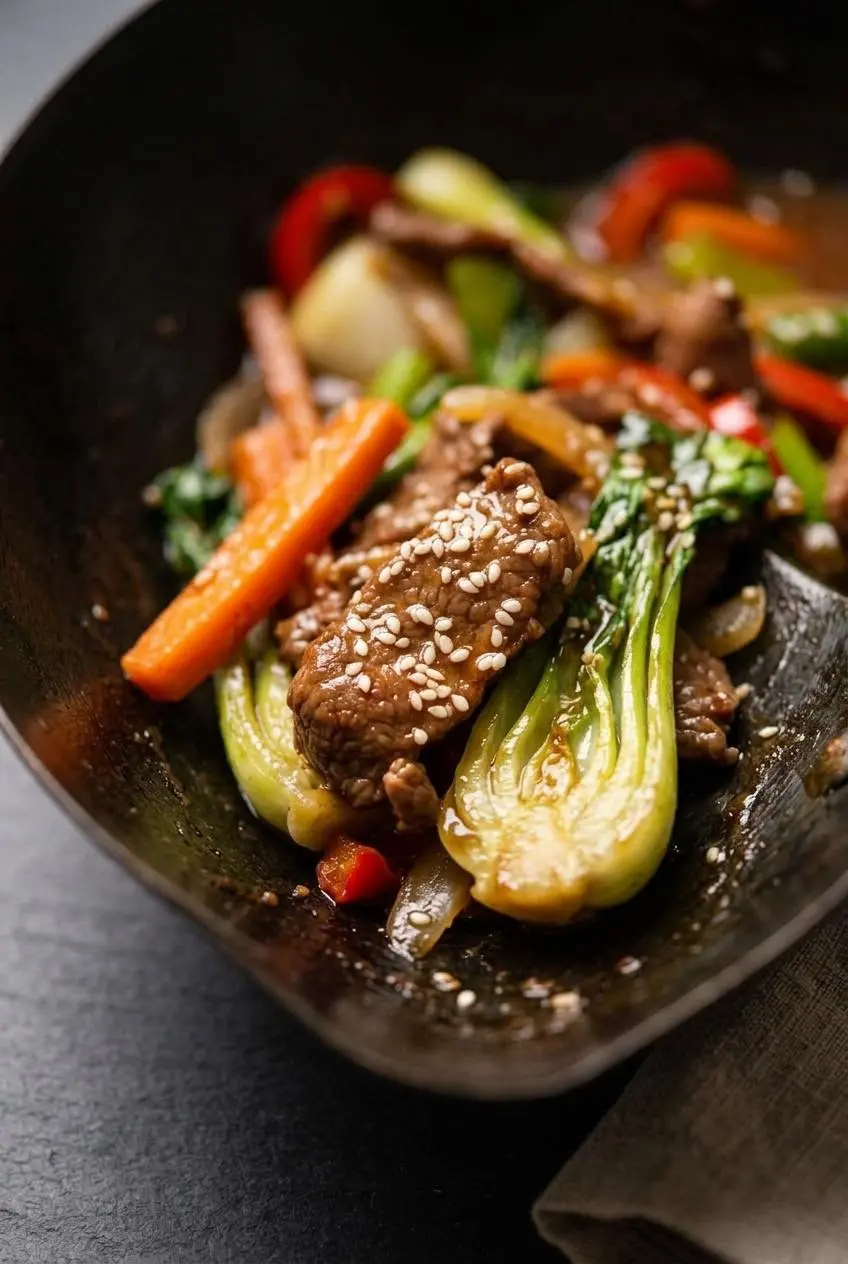
Velveting gives lean steak a softer bite without a long marinade. Baking soda raises the pH at the beef’s surface, which helps keep muscle proteins from tightening as aggressively during high-heat cooking. The result is steak that stays tender instead of squeezing out its moisture in the pan.
This technique works well for flank, rump, sirloin, and other quick-cooking cuts. The key is restraint: use the stated amount, keep the treatment brief, rinse it off thoroughly, and cook the beef quickly.
How to Slice Beef Across the Grain
Find the grain by looking for the lines of muscle fibers running in one direction. Position the steak so those lines run side to side, then cut thin strips straight across them. Each strip should cross many short fibers rather than contain one long chewy strand.
If the steak feels soft or difficult to control, chill it briefly until firmer before slicing. A slightly firm piece of beef cuts more cleanly, helping you make even strips that sear at the same speed.
The 20-Minute Baking Soda Method
Scatter the baking soda over the sliced beef and toss until the strips are evenly coated. Set a timer for 20 minutes and do not extend it. Leaving baking soda on too long can give the beef an unpleasantly soft, spongy texture.
After 20 minutes, rinse the beef well under cold running water in a colander. Shake off the water and pat the strips so they are damp but not dripping. This rinse removes the baking soda and helps prevent a metallic aftertaste.
The beef then receives a small portion of the prepared sauce before it enters the pan. That light coating gives the strips flavor while the remaining sauce thickens around the vegetables later.
How to Make Beef Stir Fry
Cook this stir fry in a large nonstick skillet or wok over high heat. Keep the ingredients moving, but give the beef enough contact with the pan to develop light browning before the vegetables and sauce go in.
Velvet beef (tenderise)
- Place the sliced beef in a bowl, sprinkle it with the baking soda, and toss with your fingers until coated.
Leave it for 20 minutes only so the surface tenderizes without becoming soft. - Transfer the beef to a colander and rinse it thoroughly under cold tap water, then shake and pat away excess moisture.
The strips should look clean and lightly damp rather than soaked before returning to the bowl.
Cook stir fry
- Whisk together the sauce ingredients, then spoon out 1 1/2 tablespoons to coat the rinsed beef.
Stir the cornstarch into the remaining sauce until smooth, then mix in the water. - Heat the peanut oil in a large nonstick pan or wok over high heat, then add the onion and garlic for 10 seconds.
The oil should sizzle sharply and the garlic should smell fragrant without browning. - Add the coated beef and stir fry it quickly over the high heat.
Move on when the strips change from deep red to light brown on the outside but are not cooked through. - Add the bell pepper, carrot, bok choy stems, and white green onion pieces, then stir fry for 1 minute.
The vegetables should stay brightly colored, with carrots and stems retaining a crisp-tender snap. - Pour in the prepared sauce and stir continuously as it heats.
Once the liquid bubbles, it will quickly become thicker and begin to cling to the beef and vegetables. - Add the bok choy leaves and green onion tops, then toss for 30 seconds to 1 minute.
Stop when the leaves are just wilted and the sauce has a smooth, glossy sheen. - Serve immediately with steamed white rice and sesame seeds, if desired.
The finished stir fry should be saucy enough to coat the rice without pooling thin liquid underneath.
Keys to Restaurant-Quality Flavor and Troubleshooting
High heat, dry ingredients, and quick timing create the savory seared character that makes stir fry so satisfying. A home skillet can do the job well when you avoid crowding it and let each ingredient meet the hot surface.
How to Avoid Watery Stir Fry and Soggy Veggies
- Watery sauce: The pan was likely too cool or too crowded, so the ingredients released moisture and steamed. Preheat the pan until the oil sizzles and avoid piling cold ingredients into one spot.
- Chewy beef: The strips may have been cut with the grain, left too long with baking soda, or cooked past their light-brown stage. Slice thinly across the grain, follow the 20-minute limit, and keep the sear brief.
- Limp bok choy: The leaves went in too early. Cook stems with the carrots and pepper, then add the leaves only after the sauce begins to bubble.
- Weak browning: Moisture is usually the culprit. Pat the rinsed beef and washed vegetables dry before cooking so they can sear rather than steam.
If your skillet is narrow, work in a clear center zone. Push the aromatic vegetables to the edges while the beef contacts the hottest middle area, then combine everything when the sauce goes in.
Fixing Overly Salty or Thin Sauces
If the sauce seems thin, keep stirring until it reaches a steady bubble. Cornstarch thickens when heated, and the glossy coating can appear suddenly. If needed, add a little more cornstarch mixed first with cold water, never dry cornstarch directly into the pan.
If the flavor tastes too salty, loosen the sauce with a splash of water or unsalted broth and let it bubble briefly again. A small touch of sweetness can also restore balance, but add it cautiously since the recipe already includes sugar.
Low-sodium soy sauce can be a helpful choice when you prefer more control over saltiness, though the finished flavor may be slightly gentler.
Make-Ahead Prep, Storage, and Reheating
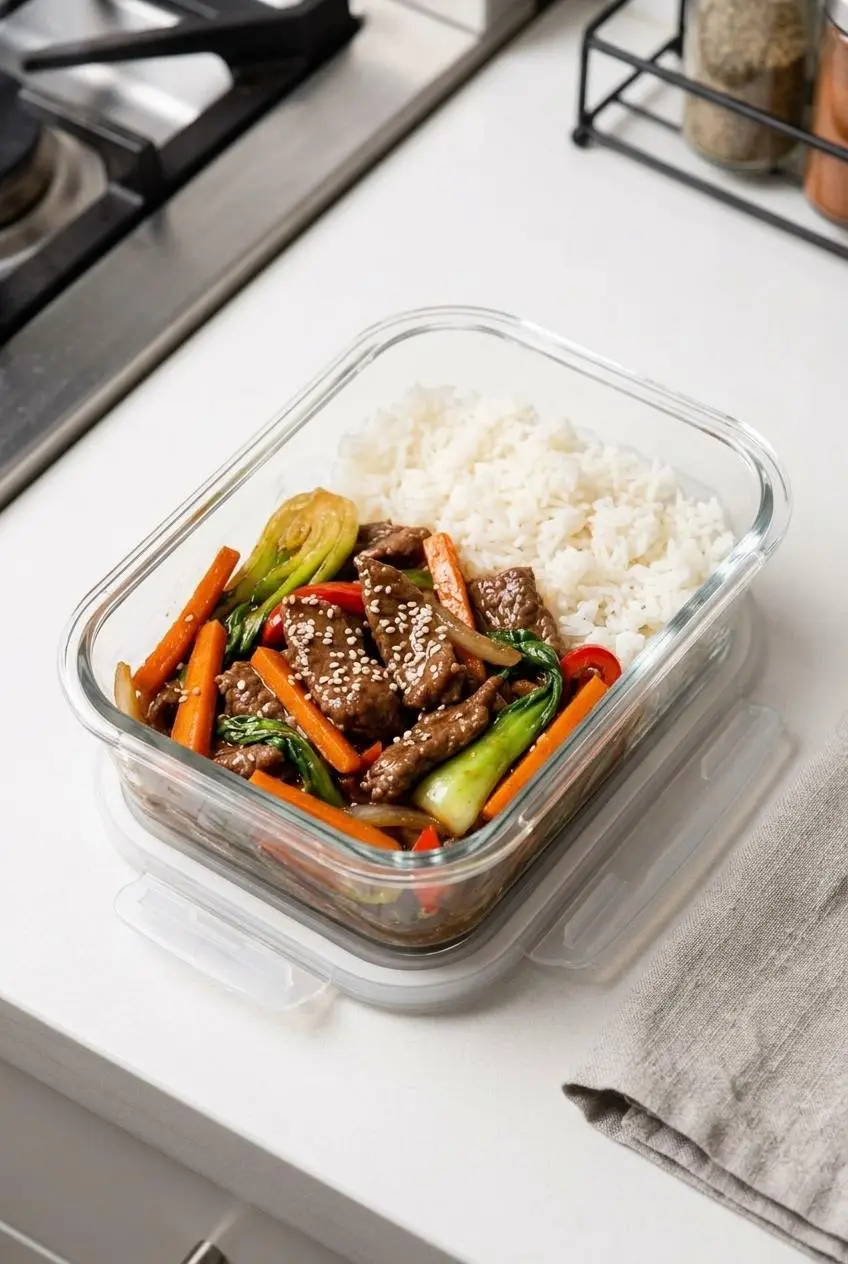
For a faster dinner, slice the vegetables, separate the bok choy stems from the leaves, and mix the sauce before you begin cooking. Keep the cornstarch slurry well stirred before it goes into the hot skillet.
Cool leftovers promptly, transfer them to an airtight container, and keep them chilled. Reheat a portion gently in a hot skillet with a splash of water to loosen the sauce, stopping as soon as the beef is heated through and the vegetables are warm. High microwave power can make the beef firm and the bok choy limp.
For a different fast rice-bowl dinner on another night, try this Korean beef bowl.
Delicious Serving Ideas and Variations
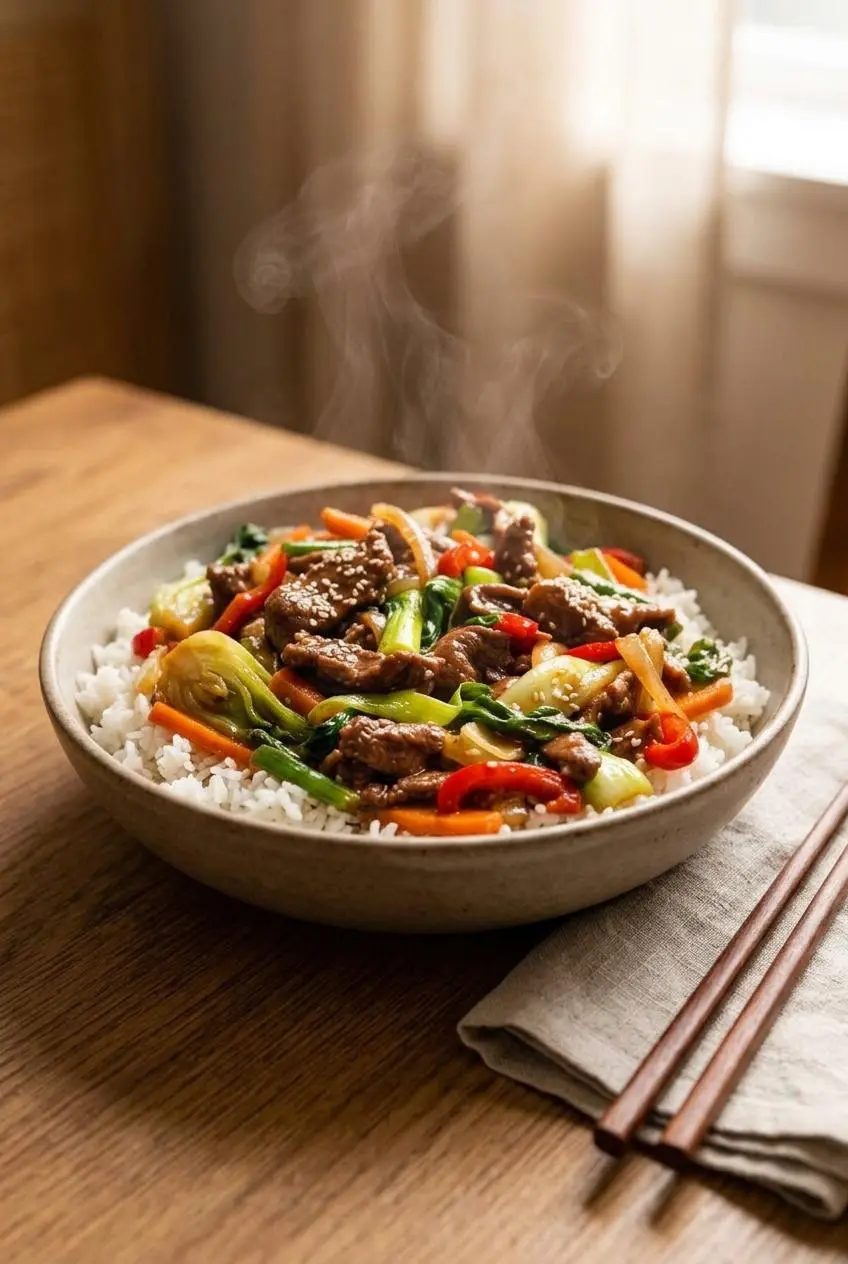
Steamed white rice is ideal for catching the glossy sauce, while sesame seeds add a subtle toasted finish. For extra aroma, optionally finish the pan with a small splash of toasted sesame oil and a touch of freshly grated ginger just before serving.
Tossing with Noodles vs Steamed Rice
Serve the stir fry over hot jasmine rice for a fragrant, classic pairing, or choose brown rice for a nuttier base. Cooked ramen or udon noodles can also be tossed through the finished sauce for a more substantial noodle dinner. For another noodle-focused option, this beef ramen stir fry is a flavorful direction to try.
Keep the noodle portion separate until the stir fry is finished, then fold it into the pan just long enough to coat. Adding noodles too early can absorb the sauce before it has thickened around the beef and vegetables.
Customizing Heat and Flavor Twists
- Spicy Szechuan-style finish: Add chili crisp or red pepper flakes at the table for warmth and crunch without changing the core sauce.
- Extra-crunchy vegetables: Swap in snap peas or thin broccoli florets, adding firm pieces with the carrots so they have time to become crisp-tender.
- Sweet-savory variation: A little honey or brown sugar with rice vinegar creates a teriyaki-style direction, though it will make the sauce sweeter and brighter.
For a low-carb cauliflower rice bowl, spoon the finished beef and vegetables over hot cauliflower rice. The savory sauce and crisp vegetables make the lighter base feel like a complete meal.
Conclusion
This stir fry rewards careful prep with tender strips of beef, vegetables that still have bite, and a sauce that turns glossy in minutes. The biggest difference comes from slicing across the grain, rinsing the velveted beef well, and using high heat.
Once you recognize the sizzle of a properly heated pan and the shine of thickened sauce, this becomes an easy weeknight rhythm worth repeating.
Frequently Asked Questions
What Is the Best Cut of Beef for Stir Fry?
Flank steak and top sirloin are excellent choices because they have satisfying beef flavor and become tender when sliced thinly across the grain. Flank steak has a visible grain that makes correct slicing straightforward. Top sirloin offers a naturally tender texture and even-cooking strips. Rump steak is another strong quick-cooking option for this method.
How Does Velveting Make Stir Fry Beef So Tender?
Baking soda changes the pH on the surface of the beef, helping the muscle proteins stay less tightly contracted during high-heat cooking. Use the baking soda for 20 minutes only. Rinse the beef thoroughly afterward to remove the baking soda flavor. Sear the beef quickly so it stays tender inside.
Why Did My Beef Stir Fry Turn Out Watery?
A watery stir fry usually means the ingredients steamed instead of seared. Overcrowding the skillet traps moisture and cools the pan. Wet beef or vegetables release water quickly into the sauce. Wait for the sauce to bubble so the cornstarch can thicken it into a glaze.
How Do I Store and Reheat Leftover Beef Stir Fry?
Cool leftovers promptly, keep them in an airtight container in the refrigerator, and reheat only the portion you plan to eat. Warm the stir fry gently in a hot skillet rather than blasting it with high microwave power. Add a small splash of water if the sauce has tightened during chilling. Remove it from the heat once the beef and vegetables are warmed through to protect their texture.
Beef Stir Fry Recipe

Equipment
- large non-stick pan or wok
- Colander
- bowl
Ingredients
Velveting the beef (tenderising)
- 7 oz beef rump steak or flank, or any other quick cooking steak cut
- 1/2 tsp baking soda / bi-carbonate soda, for velveting
Sauce
- 2 tbsp soy sauce, light or all-purpose NOT dark soy
- 1 tbsp oyster sauce
- 2 tbsp Chinese cooking wine OR Mirin
- 1 tsp white sugar
- 1/2 tsp sesame oil, toasted (brown) not untoasted (yellow)
- 1 pinch white pepper, substitute with black pepper
Sauce thickener
- 3 tsp cornstarch / corn flour
- 1/2 cup water, separated
Stir Fry
- 1 1/2 tbsp peanut oil
- 1 garlic clove, finely minced with a knife
- 1/2 small onion, sliced (yellow, brown or white)
- 1/2 red capsicum / bell pepper, sliced into 7mm / 1/3″ thick slices
- 1 small carrot, peeled, halved lengthwise and sliced thinly on the diagonal
- 2 bok choy, cut leaves from stems, cut thick stems lengthways to make them all roughly the same width
- 2 green onion, cut into 1.5″/3cm pieces, firm white end separated from soft green parts
To Serve
- Steamed white rice
- Sesame seeds (optional)
Instructions
Velvet beef (tenderise)
- Place the sliced beef in a bowl, sprinkle it with the baking soda, and toss with your fingers until coated. Leave it for 20 minutes only so the surface tenderizes without becoming soft.
- Transfer the beef to a colander and rinse it thoroughly under cold tap water, then shake and pat away excess moisture. The strips should look clean and lightly damp rather than soaked before returning to the bowl.
Cook stir fry
- Whisk together the sauce ingredients, then spoon out 1 1/2 tablespoons to coat the rinsed beef. Stir the cornstarch into the remaining sauce until smooth, then mix in the water.
- Heat the peanut oil in a large nonstick pan or wok over high heat, then add the onion and garlic for 10 seconds. The oil should sizzle sharply and the garlic should smell fragrant without browning.
- Add the coated beef and stir fry it quickly over the high heat. Move on when the strips change from deep red to light brown on the outside but are not cooked through.
- Add the bell pepper, carrot, bok choy stems, and white green onion pieces, then stir fry for 1 minute. The vegetables should stay brightly colored, with carrots and stems retaining a crisp-tender snap.
- Pour in the prepared sauce and stir continuously as it heats. Once the liquid bubbles, it will quickly become thicker and begin to cling to the beef and vegetables.
- Add the bok choy leaves and green onion tops, then toss for 30 seconds to 1 minute. Stop when the leaves are just wilted and the sauce has a smooth, glossy sheen.
- Serve immediately with steamed white rice and sesame seeds, if desired. The finished stir fry should be saucy enough to coat the rice without pooling thin liquid underneath.