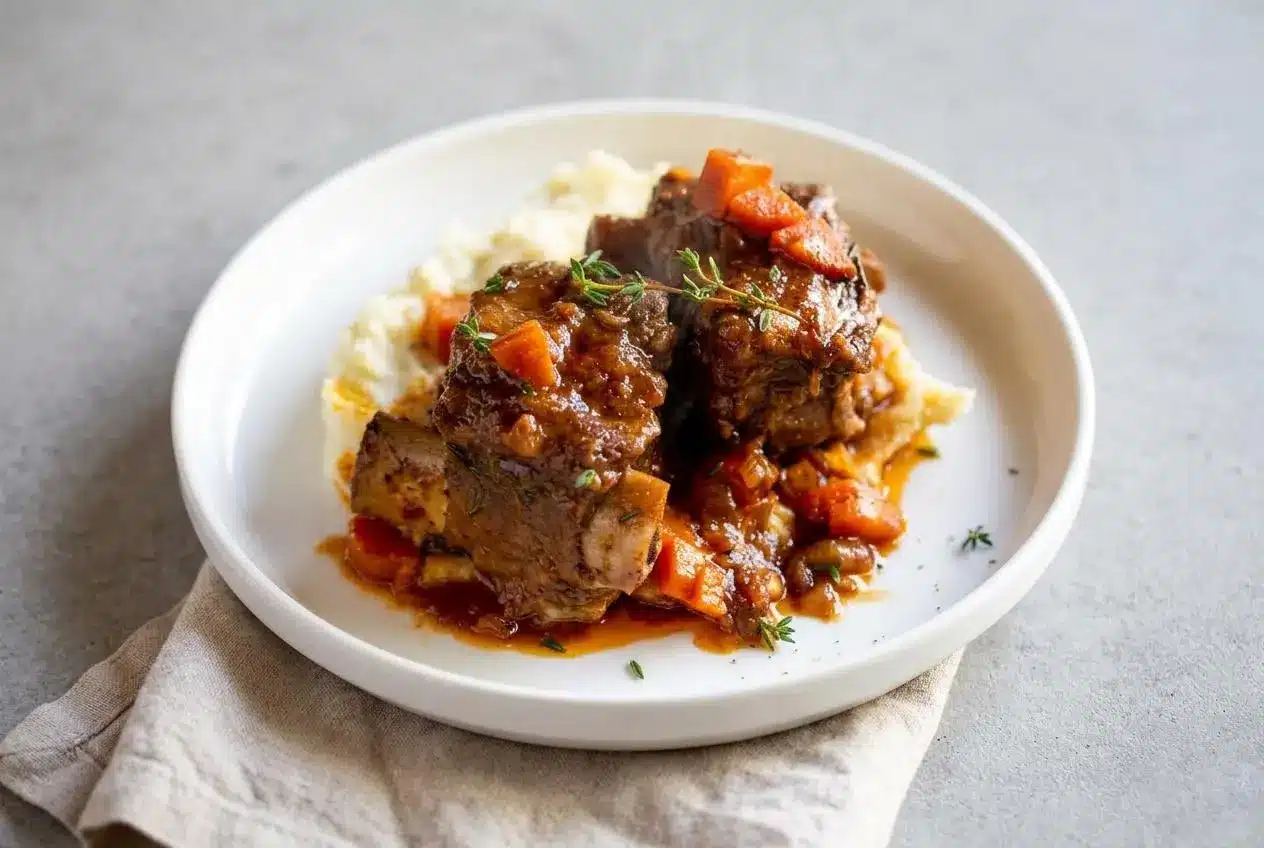
Sear bone-in short ribs, deglaze with red wine, then braise them in broth and aromatics at 350 °F and 325 °F for 2 1/2 to 2 3/4 hours, until the meat is fork-tender.
This short ribs recipe turns well-marbled beef into a rich, savory dinner with tender meat and a deeply flavored pan gravy. The Dutch oven does the patient work while onions, carrots, herbs, wine, and broth build the braising liquid.
The aroma shifts from browned beef to warm rosemary and thyme as the ribs cook low and slow. The final rest makes the gravy shine.
Use a heavy Dutch oven with a snug lid so the braising liquid stays steady and the ribs cook gently rather than drying out.
Ingredients for Tender Short Ribs
Each ingredient supports the finished dish: beef brings richness, flour helps create body, aromatics add sweetness, and wine and tomato paste balance the savory gravy.
- 3 Tablespoons olive oil
- 1 yellow onion, diced
- 3 carrots, chopped
- 8 whole beef short ribs, bone-in
- salt and pepper, to taste
- 1/4 cup all-purpose flour
- 1 cup dry red wine (such as Cote du Rhone or Pinot Noir)
- 2 1/2 cups low-sodium beef broth
- 2 Tablespoons tomato paste
- 2 sprigs fresh thyme
- 2 sprigs fresh rosemary
Bone-in ribs bring marbling and connective tissue that gradually soften into succulent, spoon-tender meat. The flour coating encourages a golden crust and lightly thickens the gravy. Onion and carrots lend mellow sweetness, while dry red wine cuts through the richness and lifts the browned bits from the pot.
Tomato paste gives the broth deeper color and savory backbone without making it taste like tomato sauce. Whole thyme and rosemary sprigs perfume the pot gently, so the beef stays the main event.
I pat the ribs very dry with paper towels before seasoning and flouring them, because a dry surface browns into a more even golden crust.
How to Make Tender Braised Short Ribs
The key to tender ribs is steady heat, not a hard boil. Brown the meat well, capture the fond with wine, and keep the pot covered while the connective tissue softens.
- Heat the oven to 350 °F.
Set the rack so the covered Dutch oven sits level and has room for heat to circulate. - Warm 1 tablespoon of olive oil in a large Dutch oven or oven-safe pot with a lid over medium-high heat, then cook the onion and carrots for a few minutes while stirring.
When the vegetables smell sweet and look lightly softened, transfer them to a plate. - Season the short ribs with salt and pepper, then coat every side with flour.
The flour should cling in a thin, even layer with no thick patches that could burn. - Add the remaining 2 tablespoons of olive oil and raise the heat to high, then brown the ribs for about 45 seconds per side.
Work in batches if needed so the beef forms a dark crust instead of releasing liquid and steaming. - Move the browned ribs to a plate and pour the wine into the hot pot.
Scrape the browned fond from the bottom as the wine bubbles, then let it boil for 2 minutes. - Pour in the beef broth, season with salt and freshly ground black pepper, and stir in the tomato paste.
Taste the liquid before adding the ribs back, adjusting the seasoning if it needs more savory depth. - Return the ribs and vegetables to the pot, then add the whole thyme and rosemary sprigs.
The ribs should sit in the braising liquid with their tops still visible. - Cover the pot and braise at 350 °F for 2 hours, then lower the oven to 325 °F and continue cooking for 30 to 45 minutes.
The meat is ready when it is nearly falling from the bone and a paring knife slides into the center with almost no resistance. - Keep the lid on and let the pot rest for 20 minutes before serving, then skim the fat that rises to the surface.
As the steam settles, the separated fat becomes easier to spot and remove with a spoon. - Spoon the ribs over mashed potatoes and finish each portion with gravy from the pot.
The meat should pull apart easily while the potatoes catch every bit of the savory sauce. - Transfer leftover short ribs to a sealed container and refrigerate for 3-4 days depending on the freshness of your ingredients.
Keep the ribs nestled with some braising liquid so they stay moist when warmed.
Do not judge doneness by time alone. Most ribs reach their best texture when the meat has climbed into the 190 to 200 °F range and the collagen has had enough gentle heat to relax. If the knife meets resistance, the ribs need more covered cooking, not more aggressive heat.
Essential Ingredients and Meat Selection
Choosing the right ribs matters as much as the braising method. Look for thick pieces with visible marbling and a sturdy bone, since both contribute flavor and help the meat stay intact while it becomes tender.
English Cut vs Flanken Cut Ribs
For a Dutch oven braise, choose bone-in English-cut short ribs. They are cut between the bones into thick, individual portions, with enough meat and connective tissue to benefit from a long, moist cook.
- English-cut ribs: Thick, block-like portions that become exceptionally tender during a 2 1/2- to 2 3/4-hour braise. Choose pieces with even thickness and streaks of fat running through the meat.
- Flanken-cut ribs: Thin strips cut across several bones. They cook much faster and suit high-heat grilling or quick marinades better than this slow Dutch oven method.
- Boneless ribs: They can work for braising, but bone-in ribs offer more structure and give the gravy a fuller, meatier character.
Trim only large, hard pieces of exterior fat if they seem excessive. Leave the fine marbling inside the meat alone because it protects the ribs during the long braise and contributes to their silky texture.
Aromatics, Herbs, and Liquid Choices
The onion and carrots form a classic aromatic base that becomes sweet and savory as it cooks. Tomato paste concentrates the beefy flavor, while thyme and rosemary add a woodsy herbal finish that does not overpower the meat.
Dry red wine is especially useful here because its acidity balances rendered beef fat and loosens the fond from the pot. Choose a wine you would enjoy drinking, but avoid anything very sweet.
If you prefer to cook without wine, deglaze with extra low-sodium beef broth plus a small splash of balsamic vinegar or Worcestershire sauce. Unsweetened tart cherry juice can also bring fruitiness and tang, though it will make the gravy slightly sweeter and darker.
Troubleshooting and Success Tips for Tender Ribs
Short ribs are forgiving when you know what the pot is telling you. Most problems come down to heat, time, or handling the rendered fat.
- The ribs are tough or rubbery: They are usually undercooked. Keep the pot covered and return it to a 325 °F oven for another 30 to 45 minutes, checking again with a paring knife rather than turning up the heat.
- The pot is smoking during searing: Use oil that can handle high heat, avoid extra-virgin olive oil for this stage, and brown the ribs in smaller batches. Crowding makes moisture pool in the pot, while overheated oil can scorch.
- The gravy tastes flat: Scrape the bottom of the pot thoroughly when adding wine. Those browned bits hold concentrated beef flavor, and leaving them behind means leaving flavor behind.
- The sauce seems greasy: Let the covered pot stand for the full 20 minutes, then skim the clear surface fat with a wide spoon or use a fat separator. Take your time and avoid stirring the fat back into the gravy.
- The gravy looks thin: Remove the ribs once tender, then simmer the liquid briefly on the stovetop until it coats a spoon more generously. Watch closely so the herbs and fond do not scorch on the bottom.
- The vegetables are very soft: That is expected in a long braise. Their job is to enrich the gravy, and they can be served alongside the ribs or pressed into the sauce for a fuller texture.
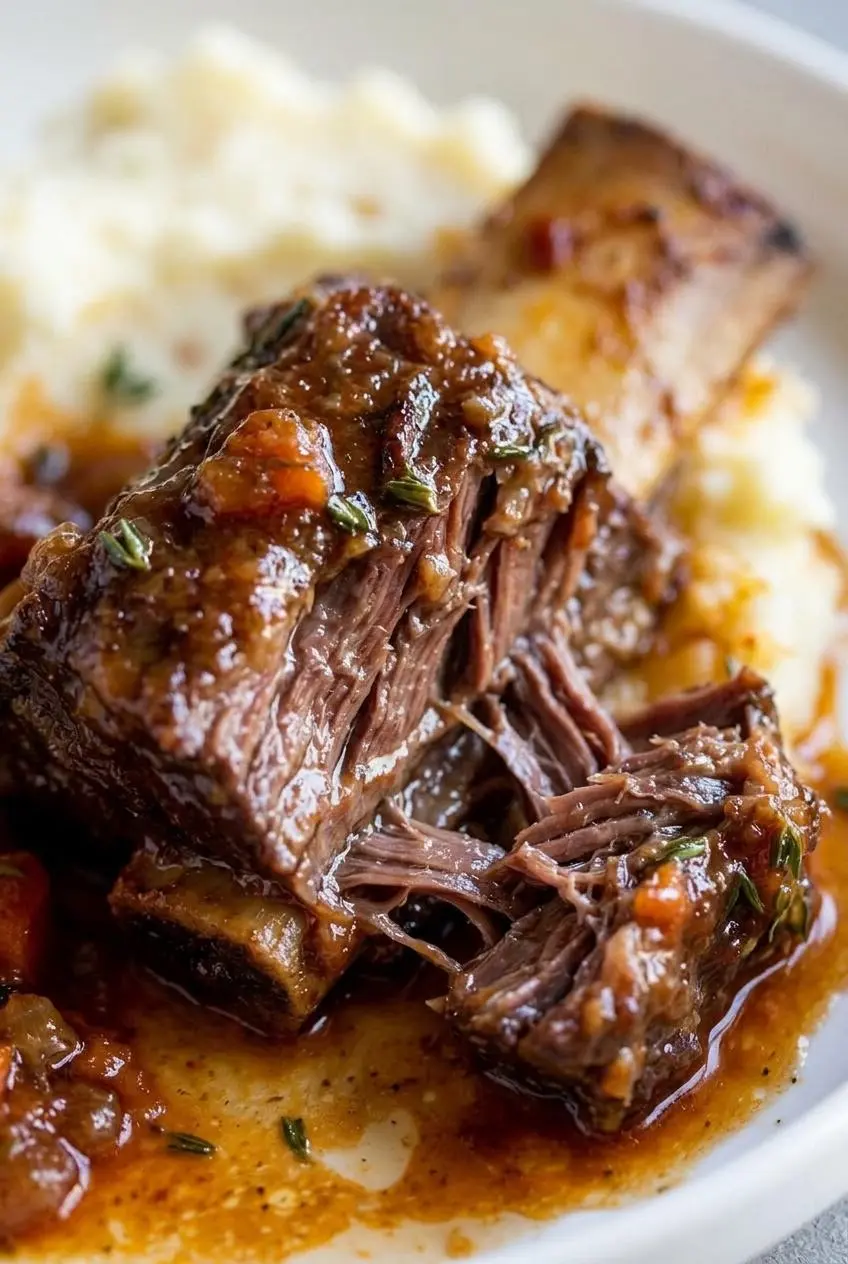
Collagen begins changing as the meat approaches the 190 to 200 °F range, but tenderness is still a physical cue. A fork should twist easily, and a paring knife should slide in with barely any push. That is the moment to stop cooking.
Make-Ahead, Storage, and Reheating
Braised beef often tastes even more settled after it has chilled because the savory flavors have time to mingle in the liquid. It also makes removing excess fat far easier.
- For make-ahead serving: Cool the ribs in their braising liquid, chill them until the surface fat firms, then lift away the fat cap before warming. Keep the ribs covered with liquid so the meat stays protected.
- For refrigeration: Store leftovers in an airtight container at 40 °F or below and use them within 3 to 4 days, following refrigerated leftover storage guidance.
- For reheating: Warm the ribs covered in a 300 °F oven or gently on the stovetop with some gravy. Heat leftovers to 165 °F, as outlined for reheating cooked leftovers, and avoid a rolling boil that can tighten the meat.
Reheat only the portions you plan to serve when possible. The braising liquid is your insurance against dryness, so add a spoonful around the ribs before covering the dish.
Alternative Cooking Methods and Variations
The Dutch oven creates the most concentrated gravy, but other methods can fit a different schedule or flavor mood. Treat these as optional paths and keep the classic braise as written when you want the red wine pan sauce.
Slow Cooker Conversion
For slow cooker short ribs, brown the meat and soften the aromatics on the stovetop first. Deglaze the pot carefully, then transfer the ribs, vegetables, herbs, and braising liquid to the slow cooker.
Cook on low for 6 to 8 hours, until the meat yields easily to a fork. This method is wonderfully hands-off, though the liquid may be looser than Dutch oven gravy, so reduce it gently on the stovetop if you want a thicker finish.
Instant Pot Pressure Cooking
Use the sauté setting to brown the ribs and cook the aromatics, then add the wine and scrape the pot completely clean. Clearing the bottom well helps prevent a burn warning during pressure cooking.
Cook on high pressure for 45 minutes, followed by a 15-minute natural pressure release. The ribs should be tender, but if they still feel firm near the bone, return them to pressure for a little longer rather than serving them early.
Oven-Baked BBQ Glazed Option
For a barbecue-style variation, season short ribs, wrap them tightly in foil, and roast at 275 °F for 3.5 to 4 hours. This produces soft meat without the wine-based braising liquid.
Unwrap the ribs, brush them with barbecue sauce, and broil uncovered for 3 to 5 minutes. Stay nearby because the sugars in the sauce can darken quickly. For another hearty use for tender shredded beef, turn leftovers into braised short rib ragu.
Serving Suggestions for Short Ribs
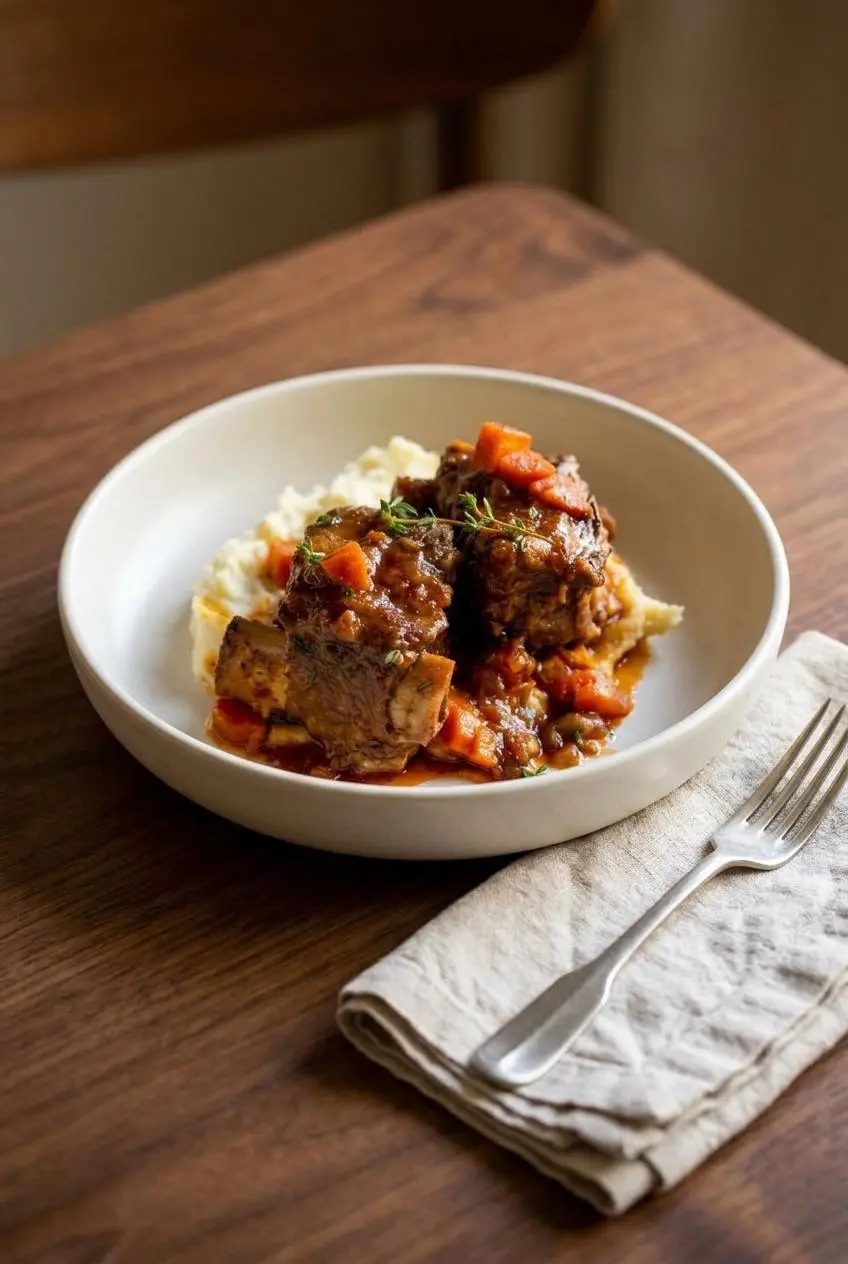
Rich short ribs need something ready to catch the gravy. Choose a creamy starch, a roasted vegetable, or a crisp side that brings contrast to the savory beef.
- Garlic mashed potatoes: Their creamy texture holds the pan gravy beautifully and makes the meal feel like classic comfort food.
- Parmesan polenta: Soft polenta gives the tender beef a restaurant-style base without competing with the rosemary and thyme.
- Buttered egg noodles: Toss them lightly and spoon the ribs and gravy over the top for an easy, cozy dinner.
- Roasted root vegetables: Carrots, parsnips, or potatoes bring caramelized edges that work well with the deep beef flavor.
For a fresh contrast, serve a crisp wedge salad alongside the ribs. Spoon strained or skimmed gravy generously over each serving, then add a few of the soft braised carrots and onions.
Conclusion
Patient Dutch oven braising turns well-browned short ribs into tender beef with a glossy, savory gravy. The slow shift from 350 °F to 325 °F gives the connective tissue time to soften without rushing the meat.
Let the ribs rest, skim the surface fat, and serve them with mashed potatoes or another comforting side ready for plenty of gravy. A relaxed pot makes a memorable dinner.
Frequently Asked Questions
What Is the Best Cut of Beef Short Ribs to Buy?
Choose bone-in English-cut short ribs for this method. Look for thick portions with visible marbling and an even amount of meat on each bone. Their connective tissue softens during the long braise, creating tender, juicy portions that hold together well.
Why Are My Braised Short Ribs Tough After Cooking?
Tough ribs are usually undercooked, even if they have already spent a long time in the oven. Keep the pot covered and return it to 325 °F for another 30 to 45 minutes. Check with a fork or paring knife. The meat should offer almost no resistance when it is ready.
Can You Make Braised Short Ribs Ahead of Time?
Yes. Cooling the ribs in their braising liquid gives the flavors time to settle. Chill the pot until the surface fat firms, then lift off the fat before reheating. Warm the ribs gently with plenty of gravy so the meat stays moist.
What Can I Substitute for Red Wine in Short Ribs?
Use low-sodium beef broth with a small splash of balsamic vinegar or Worcestershire sauce for tang and savory depth. Unsweetened tart cherry juice is another optional choice when you want a brighter, slightly fruity flavor. Whichever liquid you choose, scrape the bottom of the pot well to dissolve the browned fond into the gravy.
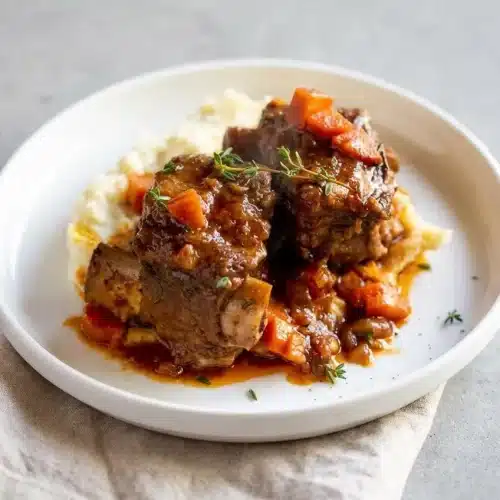
Short Ribs Recipe

Equipment
- Large dutch oven or oven-safe pot with lid
- Plate
- Tongs
- Spoon for skimming fat
Ingredients
- 3 Tablespoons olive oil
- 1 yellow onion diced
- 3 carrots chopped
- 8 whole beef short ribs bone-in
- salt and pepper to taste
- 1/4 cup all-purpose flour
- 1 cup dry red wine (such as Cote du Rhone or Pinot Noir)
- 2 1/2 cups low-sodium beef broth
- 2 Tablespoons tomato paste
- 2 sprigs fresh thyme
- 2 sprigs fresh rosemary
Instructions
- Heat the oven to 350 °F. Set the rack so the covered Dutch oven sits level and has room for heat to circulate.
- Warm 1 tablespoon of olive oil in a large Dutch oven or oven-safe pot with a lid over medium-high heat, then cook the onion and carrots for a few minutes while stirring. When the vegetables smell sweet and look lightly softened, transfer them to a plate.
- Season the short ribs with salt and pepper, then coat every side with flour. The flour should cling in a thin, even layer with no thick patches that could burn.
- Add the remaining 2 tablespoons of olive oil and raise the heat to high, then brown the ribs for about 45 seconds per side. Work in batches if needed so the beef forms a dark crust instead of releasing liquid and steaming.
- Move the browned ribs to a plate and pour the wine into the hot pot. Scrape the browned fond from the bottom as the wine bubbles, then let it boil for 2 minutes.
- Pour in the beef broth, season with salt and freshly ground black pepper, and stir in the tomato paste. Taste the liquid before adding the ribs back, adjusting the seasoning if it needs more savory depth.
- Return the ribs and vegetables to the pot, then add the whole thyme and rosemary sprigs. The ribs should sit in the braising liquid with their tops still visible.
- Cover the pot and braise at 350 °F for 2 hours, then lower the oven to 325 °F and continue cooking for 30 to 45 minutes. The meat is ready when it is nearly falling from the bone and a paring knife slides into the center with almost no resistance.
- Keep the lid on and let the pot rest for 20 minutes before serving, then skim the fat that rises to the surface. As the steam settles, the separated fat becomes easier to spot and remove with a spoon.
- Spoon the ribs over mashed potatoes and finish each portion with gravy from the pot. The meat should pull apart easily while the potatoes catch every bit of the savory sauce.
- Transfer leftover short ribs to a sealed container and refrigerate for 3-4 days depending on the freshness of your ingredients. Keep the ribs nestled with some braising liquid so they stay moist when warmed.