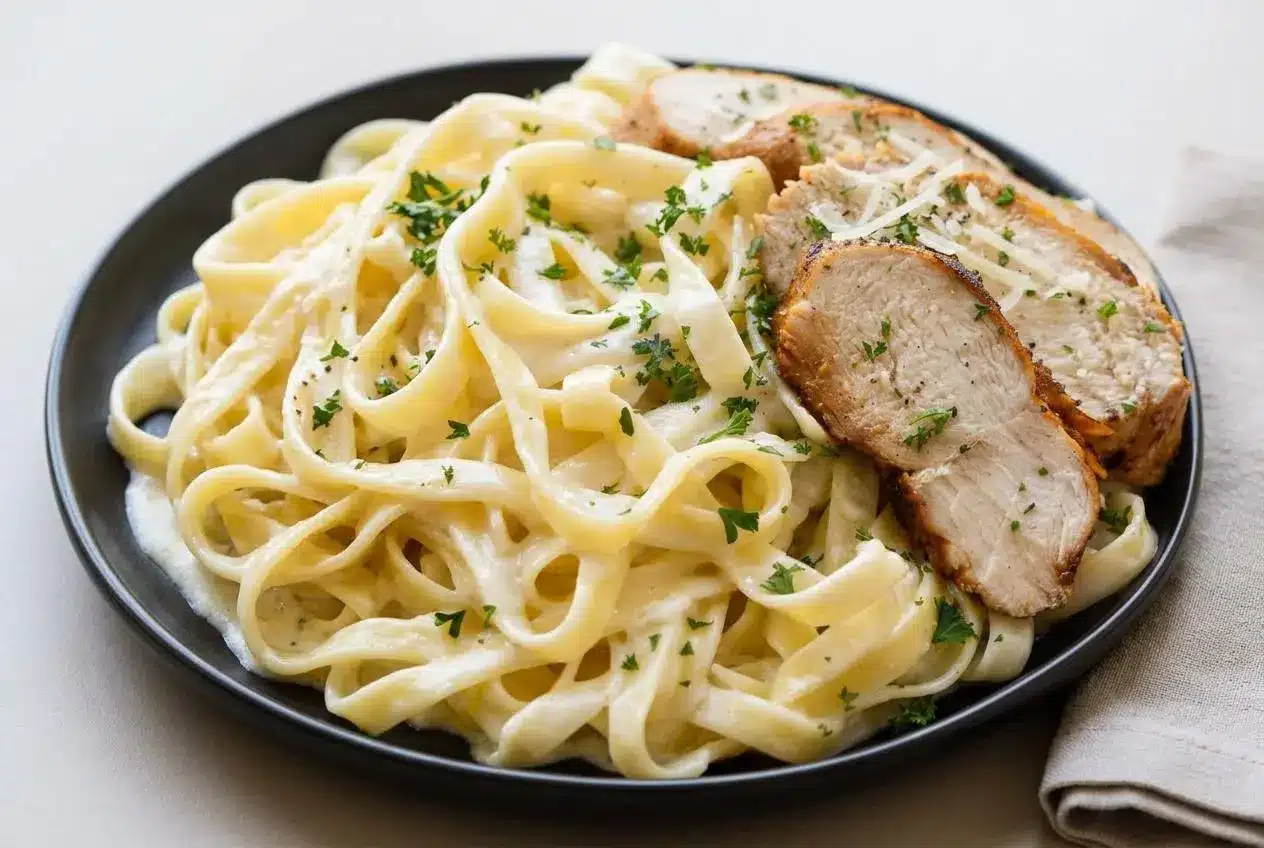
Olive Garden chicken Alfredo pairs golden pan-seared chicken with fettuccine in a rich garlic butter sauce made with cream, milk, and Parmesan.
This olive garden chicken alfredo brings the restaurant-style comfort of creamy pasta to your own skillet, with juicy sliced chicken and a glossy cheese sauce.
The key is gentle heat, especially once the Parmesan goes in. That’s where the velvety texture happens.
Set the cream, milk, and grated Parmesan out while the pasta water heats so they lose their refrigerator chill before meeting the warm roux.
Essential Ingredients for Olive Garden Chicken Alfredo
Each ingredient supports the finished dish, from golden chicken and silky pasta to the buttery roux that gives the garlic cream sauce body and balance.
- 16 ounces fettucine
- 2 boneless, skinless chicken breasts
- 2 tablespoons olive oil
- salt
- black pepper
- 2 tablespoons, plus 1/2 cup unsalted butter
- 1 tablespoon garlic, (minced)
- 2 tablespoons all-purpose flour
- 2 cups heavy cream
- 1 cup whole milk
- 3/4 cup, plus more for passing grated Parmesan cheese, (plus more for topping)
- 1/8 teaspoon white pepper
- 2 tablespoons parsley, (chopped)
Butter and flour form a white roux that helps the sauce hold together instead of feeling thin. Heavy cream supplies richness, while whole milk keeps the sauce pourable. Garlic adds savory warmth, and freshly grated Parmesan melts far more smoothly than dry shaker cheese.
For a deeper look at the creamy garlic-and-cheese foundation, this Olive Garden Alfredo sauce guide focuses on the sauce itself.
I grate Parmesan from a block while it is close to room temperature, using the fine side of a box grater so it disappears into the warm sauce quickly.
Selecting and Preparing the Chicken Breasts
Pat the chicken completely dry before seasoning it with salt and black pepper. Surface moisture creates steam, while dry chicken can develop the browned crust that gives each slice more flavor.
Use an instant-read thermometer at the thickest part of each breast as it finishes cooking. The method uses 165 °F (74 °C) as the endpoint, then gives the chicken a 7 to 10 minute rest before slicing so the juices settle back into the meat.
The Dairy and Cheese Emulsion Base
Heavy cream and whole milk create a sauce that is rich without becoming overly heavy. Bringing them closer to room temperature helps them whisk smoothly into the warm butter-and-flour mixture.
Keep the Parmesan at room temperature too, then add it over medium-low heat. The sauce should look glossy and coat the back of a spoon. If you want a subtle finishing lift, a little lemon zest or a pinch of nutmeg can be added to an individual serving rather than changing the main pan.
How to Make Olive Garden Chicken Alfredo
Work in the order below so the pasta, chicken, and sauce come together while everything is warm. A rested chicken breast and a gently melted cheese sauce make a noticeable difference at the table.
- Boil the 16 ounces fettucine in well-salted water following the package timing, then drain it.
Leave the pasta warm and slightly firm so it can finish absorbing sauce later. - Blot the 2 chicken breasts dry with paper towels, then season both sides generously with salt and black pepper.
A dry, evenly seasoned surface will brown more readily in the skillet. - Warm 2 tablespoons olive oil in a 12-inch skillet over medium-high heat, then place in the chicken and leave it untouched for 5 to 7 minutes.
When the underside is deeply golden, it should release more easily from the pan. - Turn the chicken, add 2 tablespoons butter, and cook for another 5 to 7 minutes until an instant-read thermometer reaches 165 °F (74 °C).
Move the chicken to a plate, rest it for 7 to 10 minutes, then slice and loosely cover with aluminum foil. - Melt the remaining 1/2 cup butter in a clean, large high-sided skillet over medium-low heat, then stir in 1 tablespoon minced garlic for about 1 minute.
The garlic should smell fragrant and stay pale rather than brown. - Whisk in 2 tablespoons all-purpose flour and keep whisking for 1 minute, then take the skillet off the heat and slowly whisk in 2 cups heavy cream and 1 cup whole milk.
The roux should foam lightly and turn smooth with no dry flour streaks. - Return the skillet to medium-low heat, then stir in 3/4 cup grated Parmesan cheese and 1/8 teaspoon white pepper until the cheese melts.
Keep the heat gentle so the sauce becomes glossy instead of bubbling hard around the edges. - Toss the drained fettucine through the sauce, then let it sit briefly before dividing it among plates with the sliced chicken.
The pasta will take on more sauce as it rests; finish with 2 tablespoons chopped parsley and pass extra Parmesan at the table.
The sauce may look loose at first, but warm fettuccine absorbs some of the cream as it sits. Give it about two minutes in the skillet before judging the thickness. If it tightens more than you like, stir in a small splash of reserved pasta water until the noodles are evenly coated.
Pro Tips to Avoid Grainy or Separated Sauce
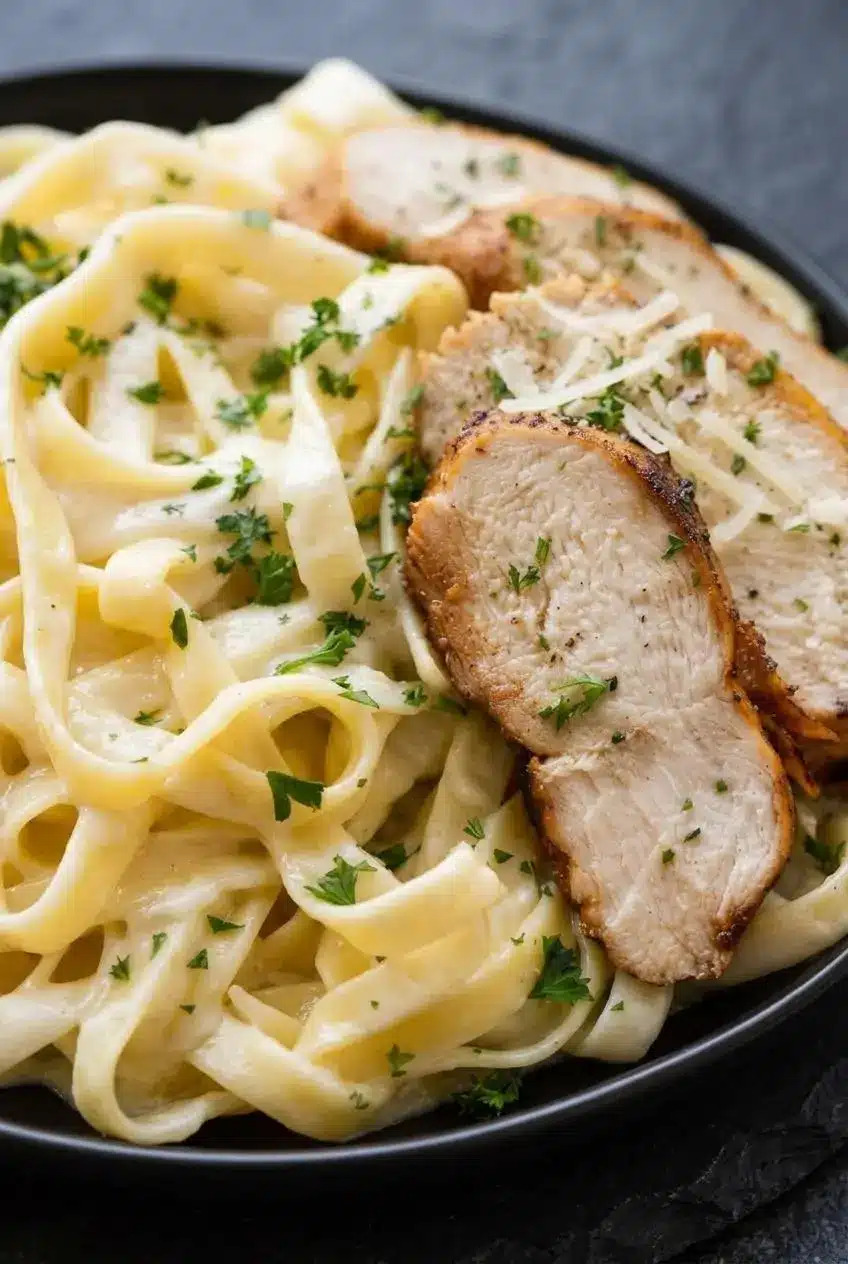
Alfredo sauce stays smooth when heat and cheese are handled patiently. These small adjustments prevent the most common skillet problems.
- Grainy sauce: Parmesan can clump when it hits a very hot pan. Remove the skillet from direct heat briefly, add room-temperature freshly grated cheese, and stir until it melts.
- Oily sauce: A rapid boil after the cheese goes in can push the fat out of the emulsion. Lower the heat immediately and whisk gently until the sauce looks unified again.
- Broken sauce: Warm a little cream or reserved starchy pasta water separately, then whisk it in gradually. The added moisture can help bring the sauce back to a creamy consistency.
- Thick sauce: Pasta continues drinking up sauce after tossing. Loosen it with reserved pasta water a splash at a time rather than turning up the heat.
- Flat flavor: Taste only after the Parmesan has melted. The cheese contributes salt, so seasoning too early can make the finished pasta overly salty.
Delicious Variations and Add-Ins
Keep the main skillet recipe as written, then choose one optional direction when you want a different texture or a little more color on the plate.
Crispy Breaded Chicken Alfredo Option
For a crisp chicken version, replace the pan-seared breasts with Italian-seasoned breadcrumb cutlets. Pan-fry the cutlets until golden and crisp, then slice them just before serving over the sauced pasta. Keep the cutlets on top rather than stirring them into the sauce so the coating stays crunchy.
Fresh Broccoli Florets Add-In
Steam broccoli florets separately until tender-crisp, then fold them into the finished fettuccine right before serving. The mild vegetable flavor and bright color cut through the richness without changing the garlic Parmesan profile. For a baked pasta direction, try this chicken broccoli Alfredo bake.
Lighter Half-and-Half Modification
You can use half-and-half in place of heavy cream for a less rich sauce, but expect a softer texture. Simmer it gently over low heat a little longer so the roux has time to thicken the dairy without scorching it. Avoid a hard boil, which is especially likely to make a lower-fat sauce separate.
Storage and Gentle Reheating Tips
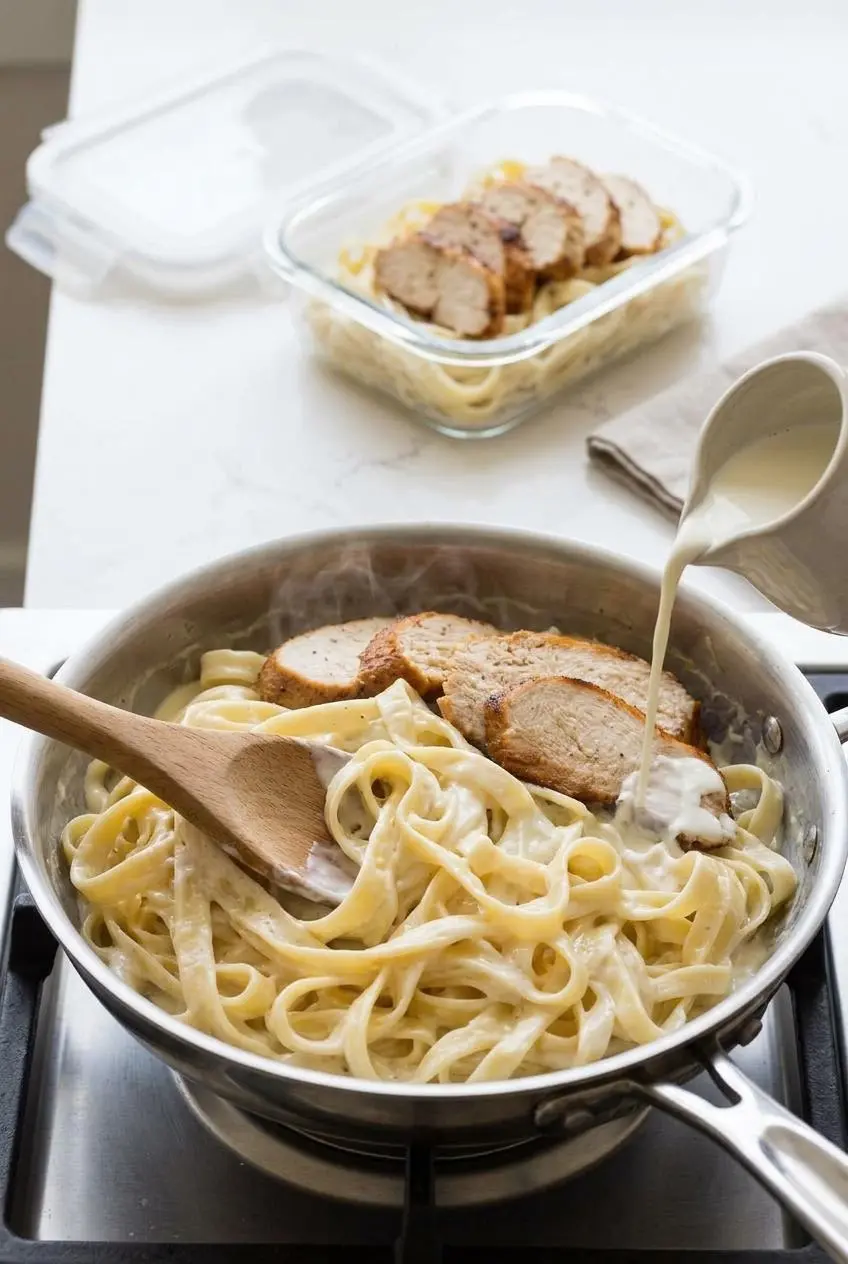
Cool leftovers promptly, then keep the pasta and chicken in airtight containers in the refrigerator. If possible, store a little extra sauce with the pasta because fettuccine continues to absorb moisture as it rests.
For the best texture, reheat a portion in a skillet over low heat with a splash of milk or cream. Stir often and add moisture gradually until the sauce looks creamy again. A microwave can work on a lower setting in short bursts, but pause to stir so the edges do not overheat while the center stays cool.
Cream-based pasta is at its best when reheated gently rather than aggressively. High heat can turn a once-silky sauce oily, while slow warming gives the butter, dairy, and cheese a chance to come back together.
Best Sides and Serving Suggestions
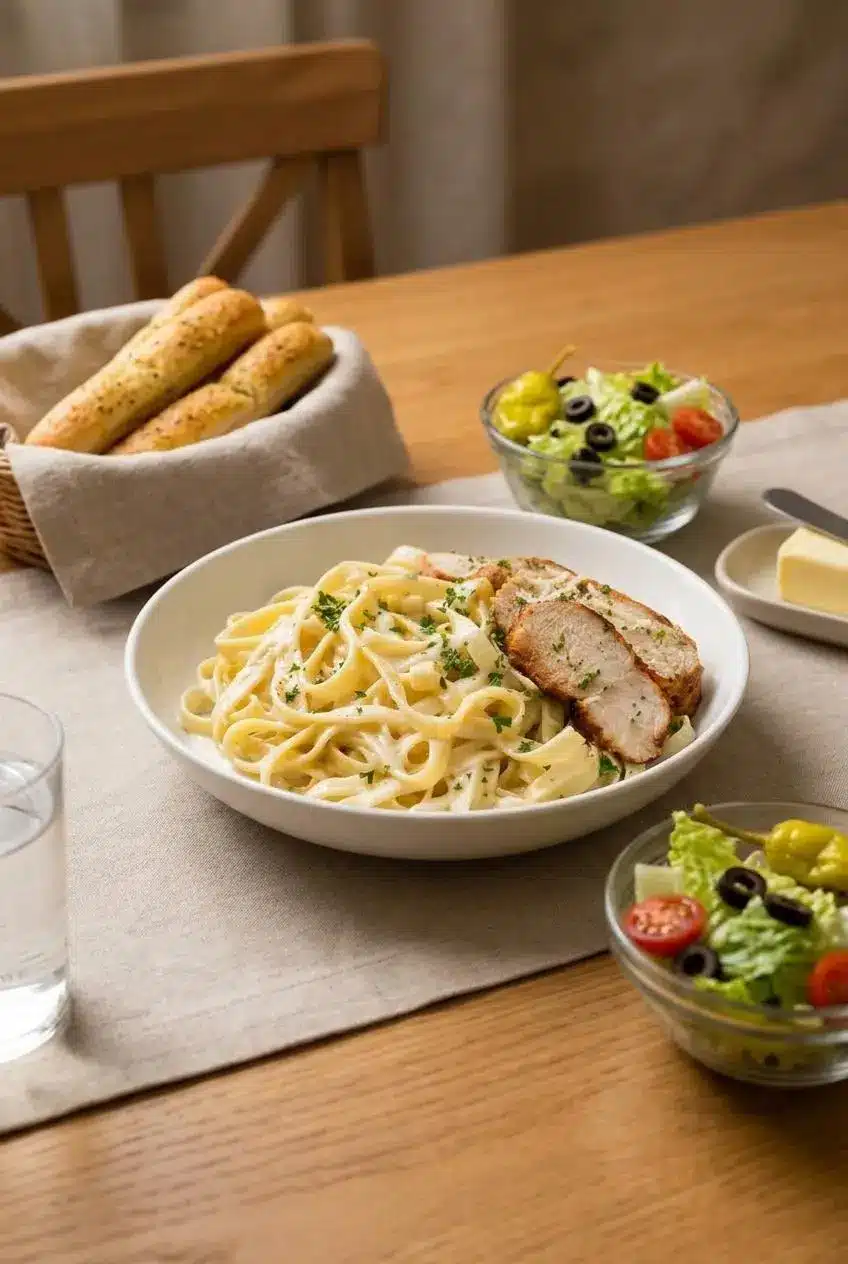
A fresh, crisp side dish keeps this rich pasta dinner from feeling too heavy. Serve the chicken Alfredo while the sauce is still glossy and the chicken is warm.
- Italian house salad: Toss crisp greens with tangy Italian dressing, pepperoncini, black olives, and crunchy croutons.
- Garlic butter breadsticks: Warm breadsticks are ideal for gathering up the extra sauce left on the plate.
- Roasted asparagus: Roast asparagus until the tips are browned and the stalks are tender for a savory green side that balances the cream sauce.
- Roasted broccoli: A little caramelization gives broccoli enough bold flavor to stand beside the Parmesan-rich pasta.
Conclusion
This creamy chicken Alfredo succeeds because every stage has a purpose: brown the chicken deeply, rest it before slicing, and build the garlic cream sauce slowly over gentle heat.
Finish with freshly grated Parmesan and give the fettuccine a moment to settle into the sauce. A glossy skillet of pasta is always a good reason to gather around the table.
Frequently Asked Questions
What Makes Olive Garden Chicken Alfredo Sauce So Rich?
The richness comes from several layers working together: Butter and flour create a lightly thickened roux. Heavy cream brings a full, velvety texture. Whole milk keeps the sauce fluid enough to coat fettuccine. Freshly grated Parmesan adds salty, nutty depth as it melts.
How Do I Prevent My Alfredo Sauce From Separating or Turning Grainy?
Use finely grated Parmesan from a block and let it come closer to room temperature before cooking. Add it over low or medium-low heat, and do not let the sauce boil once the cheese is incorporated. If the sauce begins to look oily, remove it from the heat and slowly whisk in a little warm cream or pasta water.
What Is the Best Way to Reheat Leftover Chicken Alfredo?
Warm the pasta slowly in a skillet over low heat with a splash of milk or cream. Stir steadily as the sauce loosens, adding a little more liquid only if needed. Reheat only until the pasta and chicken are warmed through, since prolonged heat can dry the chicken and split the sauce.
Can I Use Pre-Grated Parmesan Cheese for This Copycat Recipe?
You can, but freshly grated Parmesan is the better choice for a smooth sauce. Packaged shredded or shaker Parmesan often contains anti-caking ingredients that can make the sauce feel grainy. Grate a block finely and add it gradually for the glossiest finish.
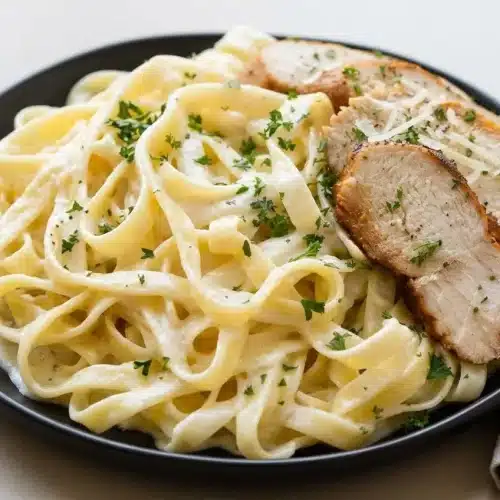
Olive Garden Chicken Alfredo

Equipment
- 12-inch skillet
- Large high-sided skillet
- Instant-read thermometer
- Whisk
- Tongs
Ingredients
- 16 ounces fettucine
- 2 boneless, skinless chicken breasts
- 2 tablespoons olive oil
- salt
- black pepper
- 2 tablespoons plus 1/2 cup unsalted butter
- 1 tablespoon garlic (minced)
- 2 tablespoons all-purpose flour
- 2 cups heavy cream
- 1 cup whole milk
- 3/4 cup plus more for passing grated Parmesan cheese (plus more for topping)
- 1/8 teaspoon white pepper
- 2 tablespoons parsley (chopped)
Instructions
- Boil the 16 ounces fettucine in well-salted water following the package timing, then drain it. Leave the pasta warm and slightly firm so it can finish absorbing sauce later.
- Blot the 2 chicken breasts dry with paper towels, then season both sides generously with salt and black pepper. A dry, evenly seasoned surface will brown more readily in the skillet.
- Warm 2 tablespoons olive oil in a 12-inch skillet over medium-high heat, then place in the chicken and leave it untouched for 5 to 7 minutes. When the underside is deeply golden, it should release more easily from the pan.
- Turn the chicken, add 2 tablespoons butter, and cook for another 5 to 7 minutes until an instant-read thermometer reaches 165 °F (74 °C). Move the chicken to a plate, rest it for 7 to 10 minutes, then slice and loosely cover with aluminum foil.
- Melt the remaining 1/2 cup butter in a clean, large high-sided skillet over medium-low heat, then stir in 1 tablespoon minced garlic for about 1 minute. The garlic should smell fragrant and stay pale rather than brown.
- Whisk in 2 tablespoons all-purpose flour and keep whisking for 1 minute, then take the skillet off the heat and slowly whisk in 2 cups heavy cream and 1 cup whole milk. The roux should foam lightly and turn smooth with no dry flour streaks.
- Return the skillet to medium-low heat, then stir in 3/4 cup grated Parmesan cheese and 1/8 teaspoon white pepper until the cheese melts. Keep the heat gentle so the sauce becomes glossy instead of bubbling hard around the edges.
- Toss the drained fettucine through the sauce, then let it sit briefly before dividing it among plates with the sliced chicken. The pasta will take on more sauce as it rests; finish with 2 tablespoons chopped parsley and pass extra Parmesan at the table.