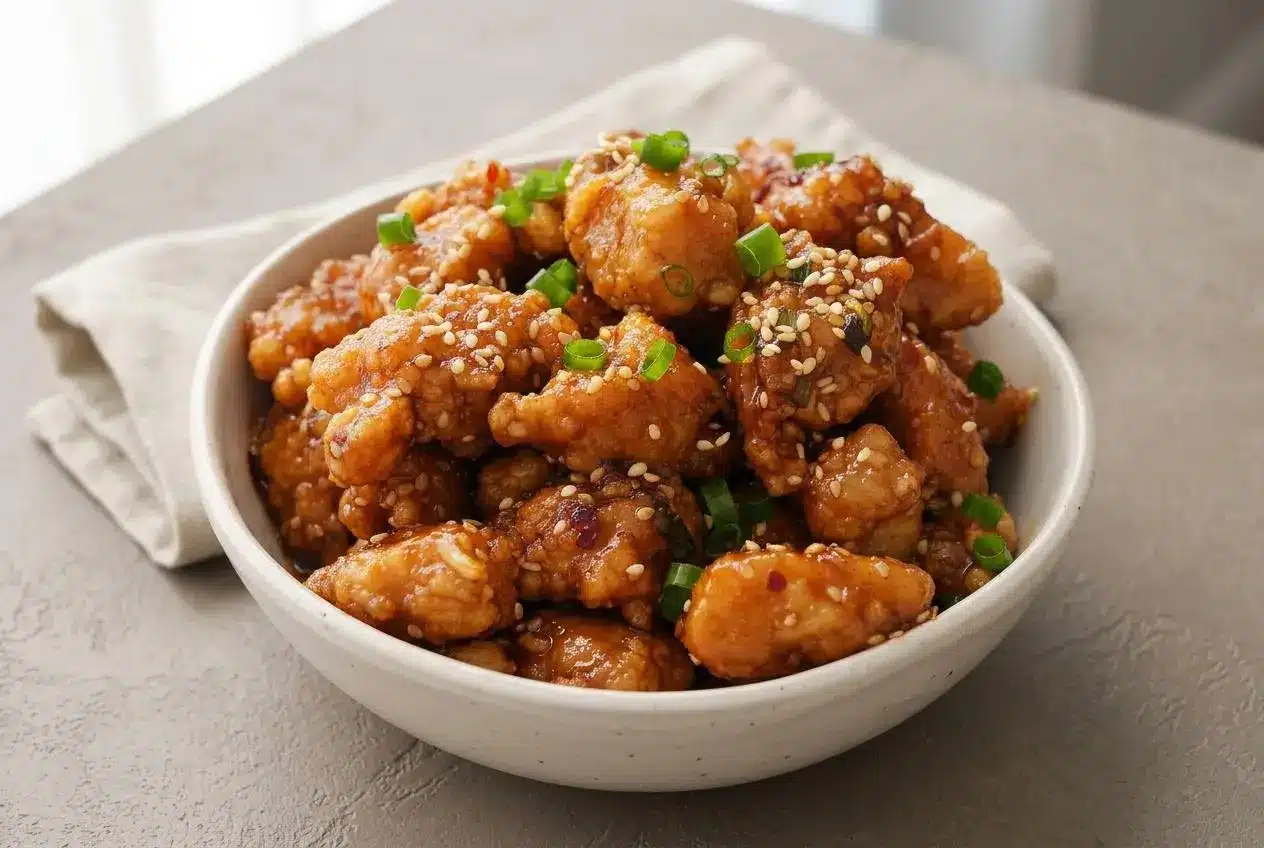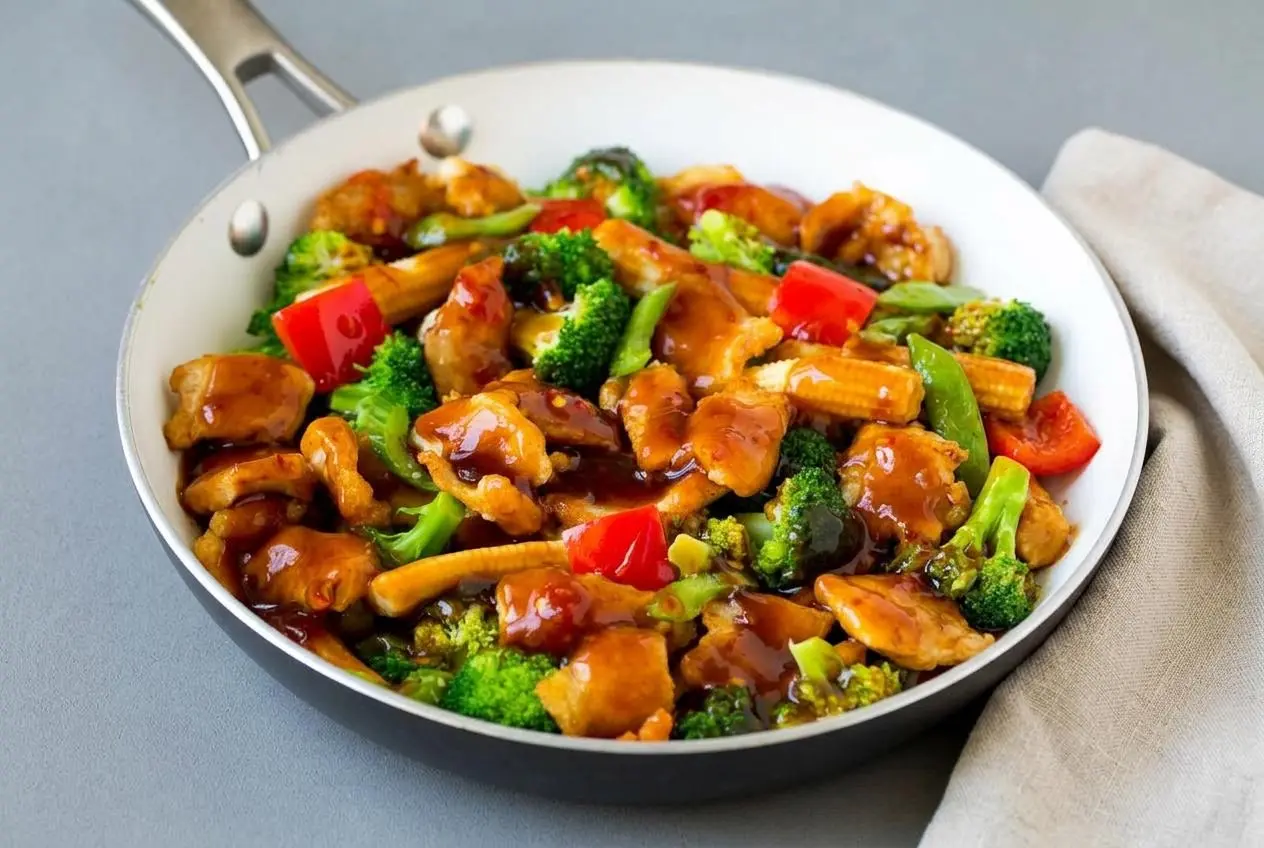
Hunan chicken is a spicy Chinese stir-fry of thinly sliced chicken and crisp vegetables in a savory chili, garlic, soy, and vinegar sauce.
Hunan chicken brings the fragrant sizzle of garlic, browned chicken, and a glossy chili sauce to the table in 35 minutes. It is built for a fast weeknight dinner with tender meat and vegetables that still have some snap.
The sauce leans savory and tangy rather than sugary, while sambal oelek brings adjustable heat. The key is a hot pan and a quick finish.
Have every ingredient sliced, measured, and within reach before heating the skillet, because stir-frying moves quickly once the oil is hot.
What Is Hunan Chicken?
Hunan chicken takes its name from Hunan province in China, a region known for assertive chile heat, deep savory flavor, and bright acidic notes. Traditional Hunan cooking often uses fresh or pickled chiles and fermented ingredients, creating a direct, lingering heat rather than the tongue-tingling numbness associated with Sichuan peppercorns.
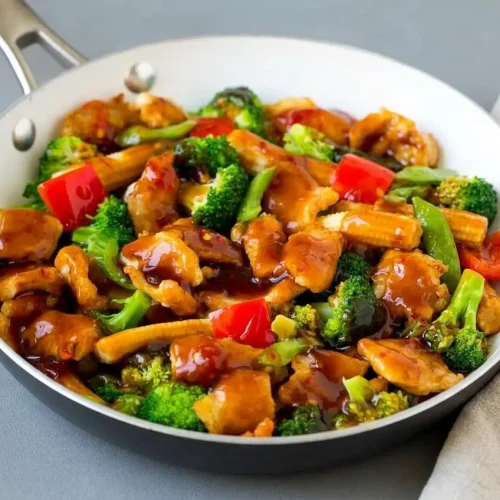
This version has the vegetable-rich, glossy character many Americans expect from Chinese takeout, with broccoli, celery, bell pepper, and baby corn tucked into the stir-fry. The honey softens the edge of the chili paste without turning the sauce sweet. If you prefer a sweeter glaze-style dinner, sweet teriyaki chicken offers a very different flavor direction.
Essential Ingredients for Homemade Hunan Chicken
Each ingredient earns its place: cornstarch supports tender chicken and a glossy sauce, vegetables bring crunch and color, and the sauce balances salty umami, tang, sweetness, and chile heat.
- 2 tablespoons vegetable oil
- 1 pound boneless skinless chicken breasts (thinly sliced)
- 1/4 cup + 2 teaspoons cornstarch (divided use)
- salt and pepper to taste
- 1 cup broccoli florets
- 1/2 cup celery (thinly sliced)
- 1 red bell pepper (cored, seeded and diced)
- 1 cup canned baby corn (drained and halved)
- 1 1/2 teaspoons minced garlic
- 1/2 cup chicken broth
- 2 tablespoons soy sauce
- 2 tablespoons oyster sauce
- 2 teaspoons rice vinegar
- 1 teaspoon honey
- 2 teaspoons chili paste (such as sambal oelek)
Thinly sliced chicken breast cooks fast, and the first portion of cornstarch forms a light velvet-like coating that helps it stay moist under high heat. Broccoli, celery, bell pepper, and baby corn offer different kinds of crunch, so every bite feels lively rather than soft.
Soy sauce provides salt and depth, oyster sauce gives the stir-fry its rounded savory backbone, rice vinegar adds lift, and honey smooths the sharp edges. Chili paste supplies the heat, so it is the easiest flavor to adjust without changing the rest of the balance.
I like to slice chicken while it is still slightly firm from the refrigerator, because thin, even pieces brown more evenly and finish at the same time.
The Savory and Spicy Stir-Fry Sauce
Whisk the chicken broth, soy sauce, oyster sauce, rice vinegar, honey, chili paste, and remaining cornstarch until no dry starch remains at the bottom of the bowl. Mixing it before the skillet gets busy keeps the garlic from sitting in hot oil too long and helps the sauce thicken evenly instead of forming pale starchy lumps.
The broth loosens the sauce enough to coat the vegetables, while the cornstarch activates once the mixture reaches a lively simmer. Look for bubbles that become slower and glossier as the sauce clings to the chicken and fills the skillet with a savory chile aroma.
Selecting the Best Vegetables for Texture
Broccoli catches the sauce in its tiny florets, celery stays crisp and fresh-tasting, and red bell pepper brings sweetness and color. Baby corn adds a firm, juicy bite that holds up well during the final toss. Cut the broccoli into similarly sized florets so the pieces soften at the same pace.
The goal is crisp-tender vegetables, not vegetables cooked until limp. Their bright color and clean snap balance the richer sauce and keep the stir-fry from feeling heavy.
Authentic Additions: Fermented Black Beans and Fresh Chilis
For a more traditional Hunan-inspired direction, optionally bloom crushed fermented black beans, fresh ginger slices, and fresh red chiles in the hot oil before the sauce goes in. The black beans add a concentrated savory funk, while fresh chiles give a cleaner, more immediate burn than chili paste alone.
Fresno chiles work well when you want bright red color and moderate heat. Jalapeños are easier to find and bring a greener, grassier flavor. Keep these additions separate from the main ingredient list, since the stir-fry is fully balanced without them.
How to Make Hunan Chicken Step-by-Step
Use a large skillet or pan and work in batches if the chicken cannot sit in one uncrowded layer. A carbon steel wok is excellent, but a wide skillet works well when you let it heat thoroughly and avoid crowding the surface.
- Add the chicken and 1/4 cup cornstarch to a resealable plastic bag, then seal and shake until the slices are evenly coated.
The chicken should look lightly dusted with no obvious dry pockets of starch. - Set a large pan over high heat and warm the vegetable oil.
The oil should look fluid and shimmer across the surface before the chicken goes in. - Arrange the chicken in a single layer and season it with salt and pepper.
Leave the slices undisturbed at first so their undersides can develop color instead of releasing moisture. - Sear the chicken for 3-4 minutes per side until browned, cooking in batches when needed.
Look for golden edges and opaque centers; cook the chicken to a minimum internal temperature of 165°F. - Transfer the browned chicken to a paper towel-lined plate.
The plate will catch excess surface oil while the vegetables cook. - Add the broccoli, celery, and bell pepper to the pan, season with salt and pepper, and stir-fry for 4-5 minutes before adding the baby corn.
The vegetables should turn brighter and soften slightly while keeping a crisp bite. - Stir in the minced garlic and cook for 30 seconds, then return the chicken to the pan.
The garlic should smell fragrant and look just translucent, not dark brown. - Whisk the chicken broth, soy sauce, oyster sauce, rice vinegar, honey, chili paste, and 2 teaspoons cornstarch in a small bowl.
Scrape the bottom of the bowl with the whisk to make sure the cornstarch is fully suspended. - Pour the sauce into the pan and simmer for 1-2 minutes, tossing everything until coated.
Serve when the sauce bubbles into a glossy glaze that clings to the chicken and vegetables.
Serve immediately over rice if desired. The skillet will be at its best when the chicken is glossy, the sauce is warm and clingy, and the vegetables still have definition.
Hunan Chicken vs Szechuan Chicken: Key Differences
Both dishes can be spicy, but the heat and flavor profile are noticeably different. Hunan heat tends to feel direct and chile-forward, while Szechuan dishes often build layers of spice, sweetness, garlic, and the distinctive sensation of Sichuan peppercorns.
- Heat source: Hunan chicken commonly uses fresh or pickled chiles for straightforward heat. Szechuan chicken often uses dried chiles and Sichuan peppercorns, which create a citrusy, numbing mala sensation.
- Flavor: Hunan chicken is savory, tangy, and hot, with vinegar often adding a sharp finish. Szechuan chicken can taste sweeter and more garlicky, often with deeper chile oil flavor.
- Texture and produce: Hunan chicken usually includes a generous mix of vegetables. Szechuan versions may feature dried chiles, peanuts, or cashews more prominently.
- General Tso’s chicken: General Tso’s is usually battered, fried, and coated in a sweeter, thicker sauce. Hunan chicken is stir-fried and keeps its vegetables more central to the dish.
If you enjoy exploring different styles of spicy chicken, spicy bang bang chicken delivers another chile-focused option with a richer, creamier profile.
Pro Tips for Stir-Fry Success and Troubleshooting
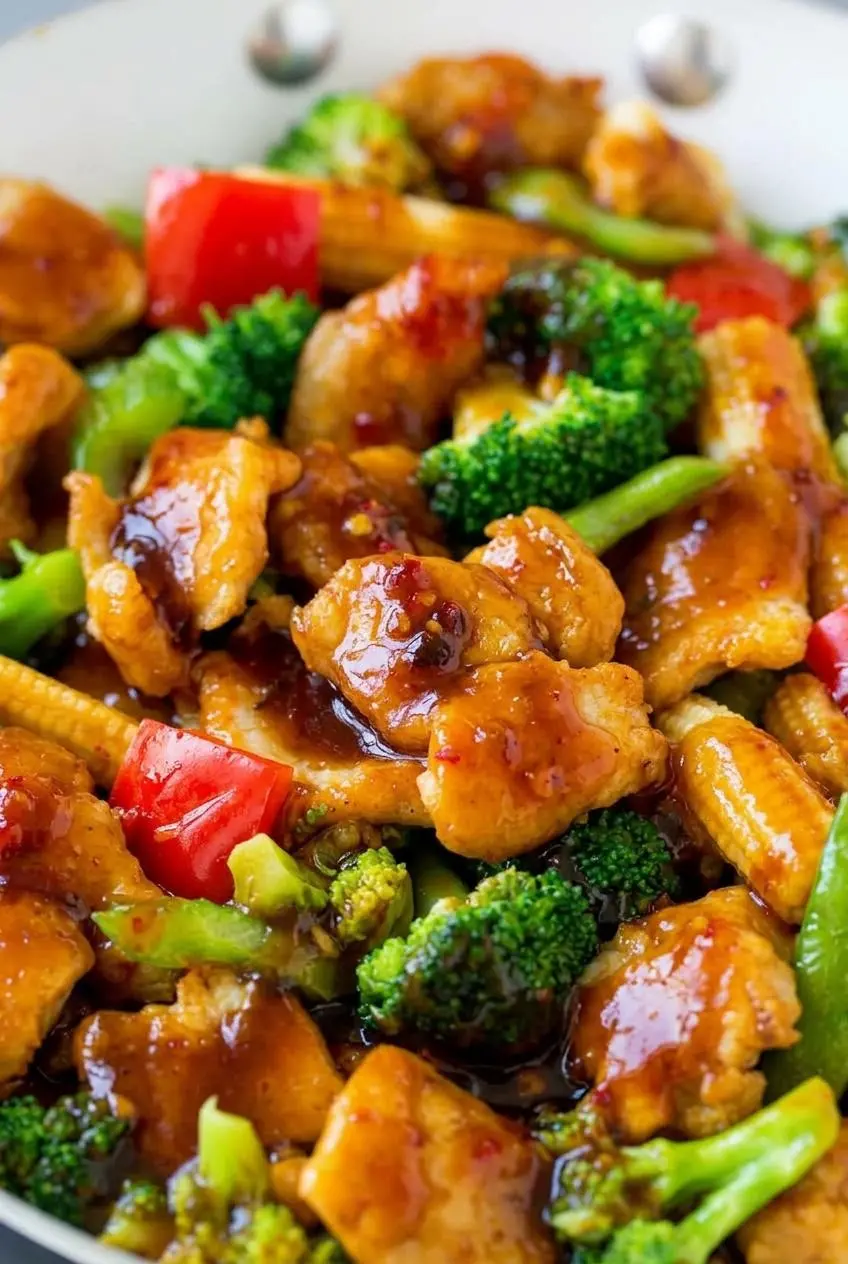
Great stir-fry texture comes from heat control and timing. Once the chicken starts releasing liquid, a crowded skillet can quickly turn searing into steaming, so give each batch room to brown.
How to Velvet Chicken for Maximum Tenderness
The cornstarch coating is a streamlined form of velveting. It creates a fine protective layer around the thin chicken slices, helping them retain moisture while the exterior browns quickly. Do not use more cornstarch than the method calls for, or the coating can become pasty rather than delicate.
For cleaner slices, place the chicken in the freezer for 20 minutes before cutting it. The firmer texture makes it easier to slice thinly across the grain, which helps breast meat stay tender when it hits the hot pan.
Fixing Common Skillet Mistakes
- Watery sauce: The skillet may be too cool or the vegetables may have released excess moisture. Bring the sauce back to an active simmer for an extra 60 seconds; if needed, stir together a small amount of cornstarch and water separately, then add it gradually.
- Soggy vegetables: Overcooking is usually the culprit. Keep the heat high, stir frequently, and stop when the broccoli brightens and the celery still has snap.
- Pale chicken: Too much chicken in the pan traps steam. Cook in batches and leave the slices untouched for about 90 seconds before turning.
- Burnt garlic: Garlic cooks much faster than the vegetables. Add it only during the final 30 seconds, when the pan is still hot but the vegetables have already softened.
- Too much heat: Use 1 teaspoon chili paste for a mild family-friendly version, then add more at the table if desired. Bell pepper keeps the dish colorful and sweet without adding heat.
Storage, Make-Ahead, and Reheating Guidelines
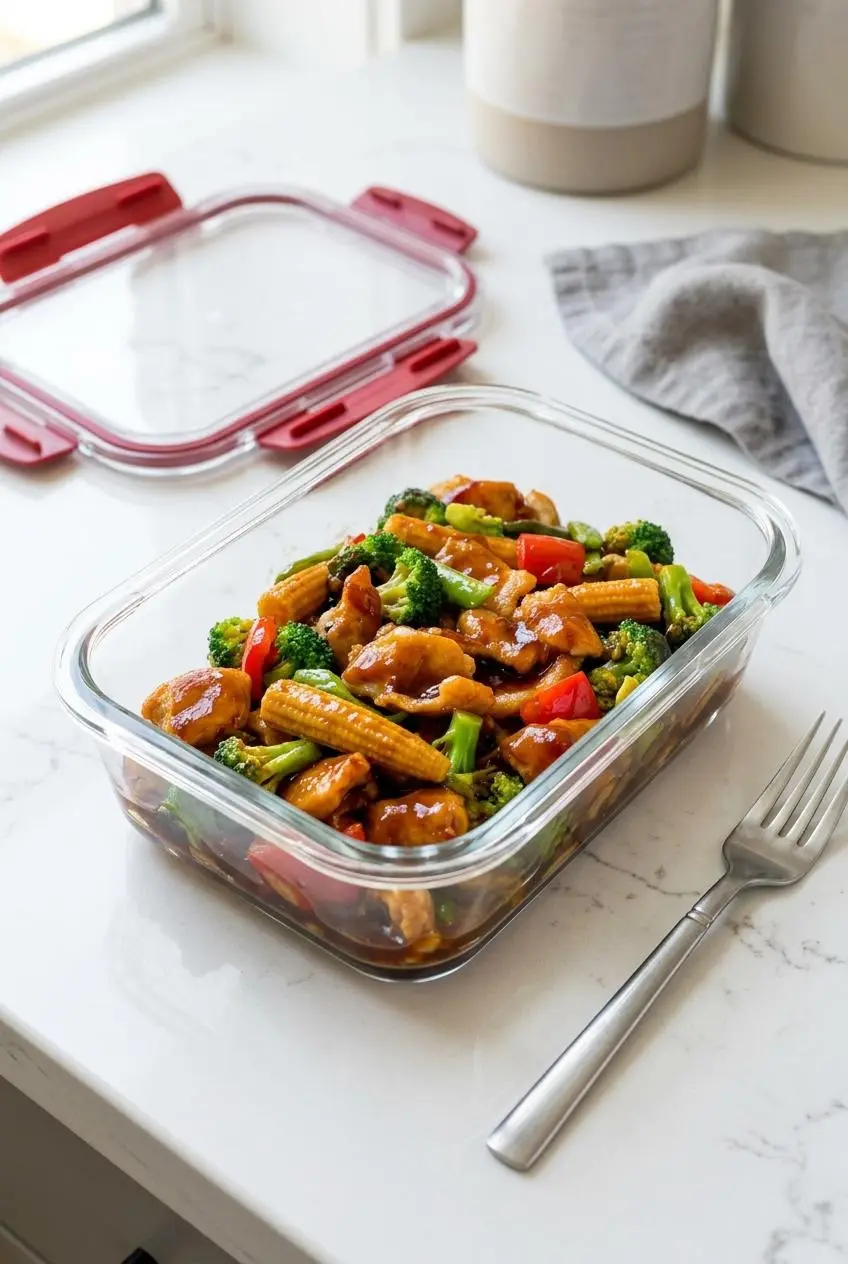
For leftovers, transfer the cooled stir-fry to an airtight container and keep it chilled. Cooked chicken can be refrigerated for up to 4 days with proper handling and cold storage practices for cooked poultry.
Reheat a portion in a hot skillet with a splash of chicken broth or water, stirring just until the sauce loosens and turns glossy again. This approach is gentler on the vegetables than prolonged heating. A microwave also works for convenience, but add a small splash of liquid and heat in brief intervals to avoid drying the chicken.
You can slice the chicken, chop the vegetables, and whisk the sauce before cooking so dinner moves quickly later. Keep the raw chicken separate from the prepared vegetables and sauce until it is time to cook.
Serving Suggestions for a Complete Meal
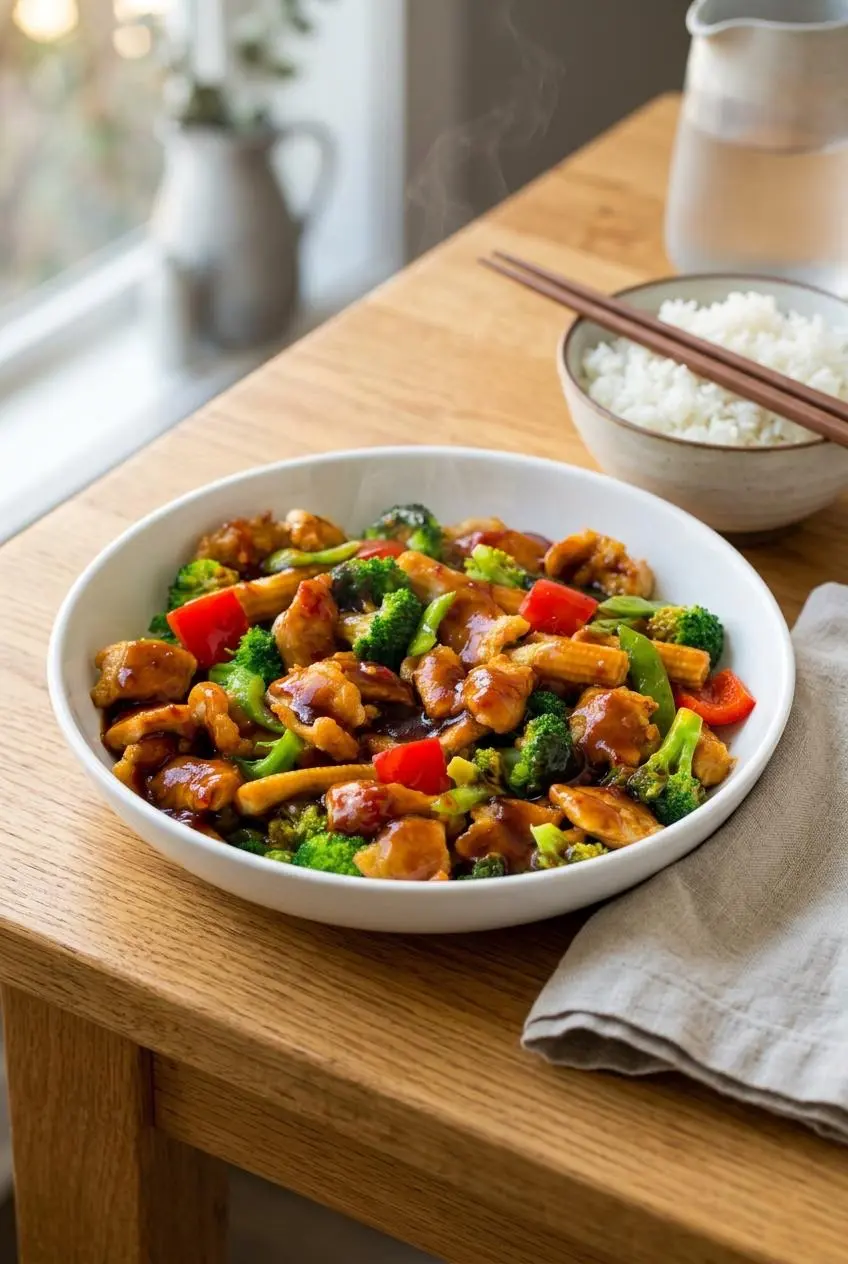
Steamed jasmine rice is a natural match for the glossy sauce, while brown rice adds a nuttier contrast. Simple noodles also work well when you want the sauce to coat every strand.
- Serve with a chilled smashed cucumber salad to cool the chile heat and add a clean, crunchy contrast.
- Pair it with mild egg drop soup for a comforting takeout-style meal.
- Add a cool, crunchy crisp Asian chicken salad when you want extra vegetables alongside the hot stir-fry.
Conclusion
This 35-minute stir-fry delivers browned chicken, crisp vegetables, and a bold sauce without relying on a heavy sweet glaze. Batch-sear the chicken, keep the garlic late in the process, and let the sauce simmer only until it turns glossy.
For deeper savory character, try the optional fermented black beans and fresh chiles another time. Serve the stir-fry hot from the pan, when every vegetable still has its best bite.
Frequently Asked Questions
What Is the Difference Between Hunan Chicken and Szechuan Chicken?
Hunan chicken has direct savory heat from chiles, often balanced with vinegar. Szechuan chicken uses Sichuan peppercorns, which add their signature citrusy, numbing sensation. Hunan dishes are often more vegetable-forward, while Szechuan dishes may feature dried chiles, chile oil, and nuts. General Tso’s chicken is typically sweeter and fried, making it quite different from both.
Can I Use Chicken Thighs Instead of Chicken Breasts?
Yes. Boneless skinless chicken thighs work well and stay naturally juicy during high-heat cooking. Slice them thinly and cook them in batches just as you would breast meat. Thighs have a richer flavor and may need close attention because uneven pieces can cook at different rates.
How Do I Control or Reduce the Spice Level?
Use 1 teaspoon chili paste for a mild version, or use the full 2 teaspoons for a more pronounced kick. Taste the finished sauce before adding extra heat. For more heat, add additional chili paste gradually or include fresh red chiles as an optional variation. For less heat, skip fresh chiles and let the bell pepper provide sweetness and color.
How Do You Keep Chicken Breast Tender in a Stir-Fry?
Coat the thin chicken slices evenly with cornstarch before they go into the pan. This light barrier helps the chicken retain moisture during fast, high-heat cooking. Also, avoid overcooking and crowding the skillet. Batch cooking helps the chicken brown quickly instead of sitting in its own released juices.
Can I Make This Dish Gluten-Free?
Yes, with careful ingredient swaps. Use gluten-free tamari in place of standard soy sauce and choose certified gluten-free oyster sauce or a gluten-free vegetarian stir-fry sauce. Check the label on the chili paste as well, since brands can vary. The chicken, vegetables, cornstarch, broth, rice vinegar, and honey can remain the same.
Hunan Chicken

Equipment
- Large pan or skillet
- Resealable Plastic Bag
- Small mixing bowl
- Whisk
Ingredients
- 2 tablespoons vegetable oil
- 1 pound boneless skinless chicken breasts thinly sliced
- 1/4 cup + 2 teaspoons cornstarch divided use
- salt and pepper to taste
- 1 cup broccoli florets
- 1/2 cup celery thinly sliced
- 1 red bell pepper cored, seeded and diced
- 1 cup canned baby corn drained and halved
- 1 1/2 teaspoons minced garlic
- 1/2 cup chicken broth
- 2 tablespoons soy sauce
- 2 tablespoons oyster sauce
- 2 teaspoons rice vinegar
- 1 teaspoon honey
- 2 teaspoons chili paste such as sambal oelek
Instructions
- Add the chicken and 1/4 cup cornstarch to a resealable plastic bag, then seal and shake until the slices are evenly coated. The chicken should look lightly dusted with no obvious dry pockets of starch.
- Set a large pan over high heat and warm the vegetable oil. The oil should look fluid and shimmer across the surface before the chicken goes in.
- Arrange the chicken in a single layer and season it with salt and pepper. Leave the slices undisturbed at first so their undersides can develop color instead of releasing moisture.
- Sear the chicken for 3-4 minutes per side until browned, cooking in batches when needed. Look for golden edges and opaque centers; cook the chicken to a minimum internal temperature of 165°F.
- Transfer the browned chicken to a paper towel-lined plate. The plate will catch excess surface oil while the vegetables cook.
- Add the broccoli, celery, and bell pepper to the pan, season with salt and pepper, and stir-fry for 4-5 minutes before adding the baby corn. The vegetables should turn brighter and soften slightly while keeping a crisp bite.
- Stir in the minced garlic and cook for 30 seconds, then return the chicken to the pan. The garlic should smell fragrant and look just translucent, not dark brown.
- Whisk the chicken broth, soy sauce, oyster sauce, rice vinegar, honey, chili paste, and 2 teaspoons cornstarch in a small bowl. Scrape the bottom of the bowl with the whisk to make sure the cornstarch is fully suspended.
- Pour the sauce into the pan and simmer for 1-2 minutes, tossing everything until coated. Serve when the sauce bubbles into a glossy glaze that clings to the chicken and vegetables.