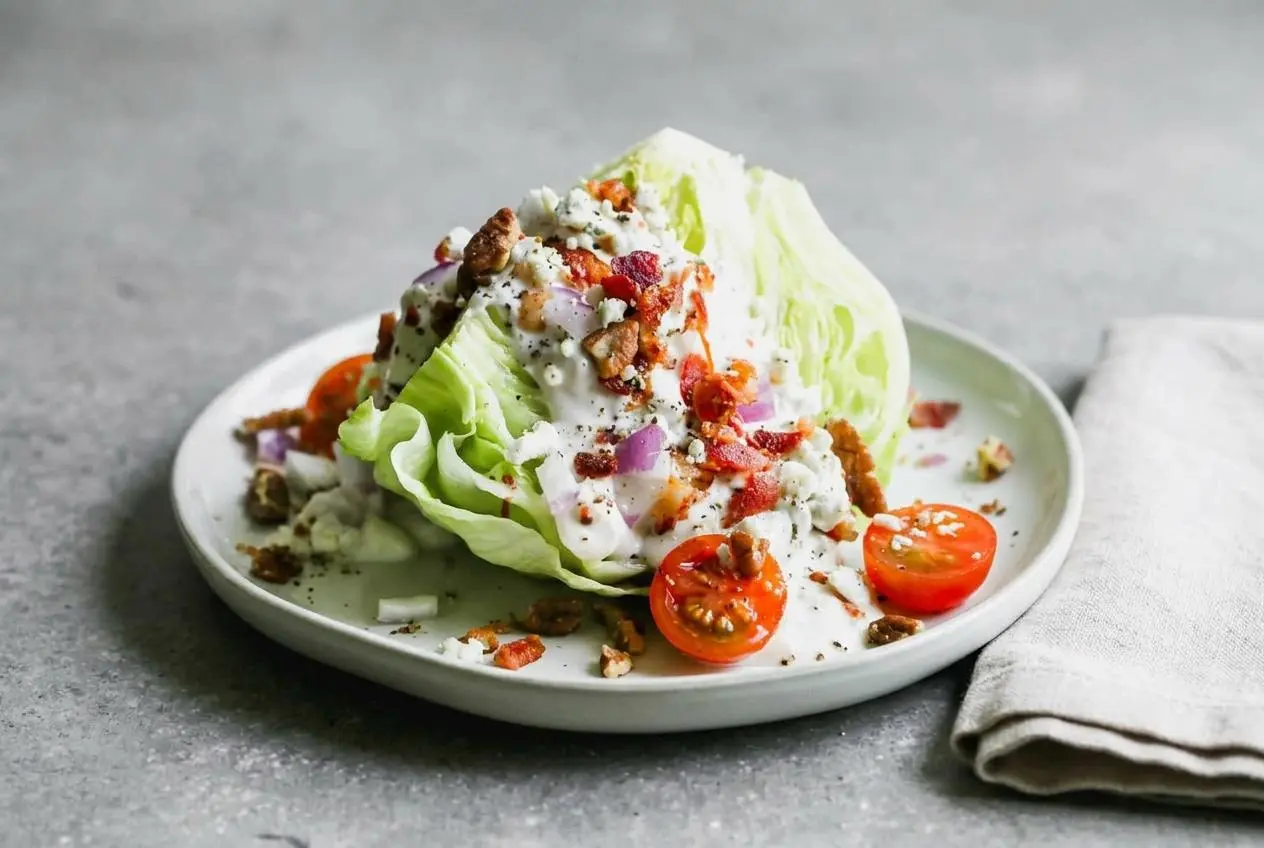
A classic steakhouse salad starts with a chilled quarter of iceberg lettuce, thick blue cheese dressing, crisp bacon, tomatoes, onion, and blue cheese crumbles.
This wedge salad brings that steakhouse contrast home: ice-cold lettuce that snaps under a fork, velvety tangy dressing, smoky bacon, and bright tomatoes.
The dressing clings to the folds instead of flooding the plate, while the toppings land in every crisp crevice. The chill makes the difference.
Keep the lettuce cold and dry until the moment you plate it.
Essential Ingredients for the Ultimate Wedge Salad
Each ingredient contributes something distinct: iceberg provides structure, bacon adds smoky richness, tomatoes and vinegar bring acidity, and the creamy dressing ties every crunchy layer together.
For the salad
- 1 head iceberg lettuce
- 8 slices bacon, cooked, cooled and crumbled
- 1 1/2 cups cherry tomatoes, halved
- 1/2 cup red onion, chopped
- pecans, or walnuts, toasted (optional)
Easy Homemade Blue Cheese Dressing
- 1 cup sour cream, light
- 1/2 cup mayonnaise
- 3 Tablespoons buttermilk
- 3 teaspoons red wine vinegar
- 1/2 teaspoon Worcestershire sauce
- 1/4 teaspoon garlic salt
- 1/2 teaspoon freshly ground black pepper, or to taste
- 4 ounces blue cheese, reserve a few spoonfuls for garnish
Iceberg is the essential foundation because its tightly layered leaves can carry a generous blanket of dressing without immediately collapsing. Sour cream and mayonnaise create body, while buttermilk loosens the mixture enough to pour in thick ribbons. Red wine vinegar and Worcestershire keep the dressing from tasting flat, and the tomatoes add welcome juiciness against the salty bacon.
I look for an iceberg head that feels firm, heavy for its size, and tightly packed, since loose outer leaves do not hold a plated wedge nearly as well.
Choosing the Right Head of Iceberg
Choose a dense, compact head with pale green leaves and no soft or browned patches. A heavy head signals closely packed layers, which create the sturdy, crackly texture that makes this salad satisfying. Delicate greens can be tasty in other salads, but they do not have the structure for a heavy blue cheese dressing.
Cherry tomatoes work well when they are ripe but still firm. Halve them so they settle into the lettuce folds rather than rolling across the plate. If they seem especially juicy, remove the seedy centers before using them.
Selecting and Rendering the Best Bacon
Thick-cut bacon gives the salad a meatier chew alongside its crisp edges. Cut it into pieces before cooking so each bite browns evenly and becomes easy to scatter over the wedges. Cooked bacon should be deeply golden brown with an aromatic sizzle in the skillet, then cool on paper towels so the topping stays crisp.
The optional toasted pecans or walnuts add a warm, buttery crunch. Sprinkle them on at the end so they stay distinct from the creamy dressing.
The Perfect Blue Cheese Balance
A creamy, moderately pungent blue cheese gives the dressing character without overpowering the vegetables. Point Reyes blue cheese offers a rich, mellow profile, while Roquefort tastes sharper and more assertive. Either can work well if you enjoy its flavor.
Mash some of the blue cheese into the sour cream, mayonnaise, and buttermilk mixture so its savory tang reaches every spoonful. Hold back the reserved crumbles for the top, where they deliver little bursts of blue cheese flavor and a pleasingly uneven steakhouse finish.
How to Make a Classic Wedge Salad
The dressing needs time to chill so the flavors settle and the texture becomes thick enough to cling to the iceberg. Stir the dressing ingredients thoroughly in a medium bowl, pressing some of the cheese against the side of the bowl as you mix.
- Combine the sour cream, mayonnaise, buttermilk, red wine vinegar, Worcestershire sauce, garlic salt, black pepper, and most of the blue cheese in a medium bowl, then refrigerate for at least 30 minutes.
The chilled dressing should fall from a spoon in a thick ribbon rather than run like a thin sauce. - Cut the bacon into pieces and cook it in a skillet over medium heat until the pieces are evenly browned and crisp, then transfer them to a paper towel-lined plate.
Listen for the sizzle to quiet slightly as the bacon finishes rendering, and let the crumbles cool before topping the lettuce. - Cut the iceberg lettuce head in half, then divide each half into halves or thirds, depending on the size of the head, to form intact wedges.
Keep the core attached to each wedge so the inner layers stay together on the plate. - Set the lettuce wedges on individual plates, spoon the chilled dressing over them, and finish with bacon, tomatoes, red onion, reserved blue cheese, and black pepper to taste.
The toppings should settle into the lettuce folds while the dressing stays thick and neatly pooled around the base.
For a more restaurant-style finish, spoon a small amount of dressing onto the plate before setting down each wedge. This gives the lettuce a stable base and catches any toppings that slip down the sides.
How to Cut and Prep Iceberg Lettuce for Maximum Crispness
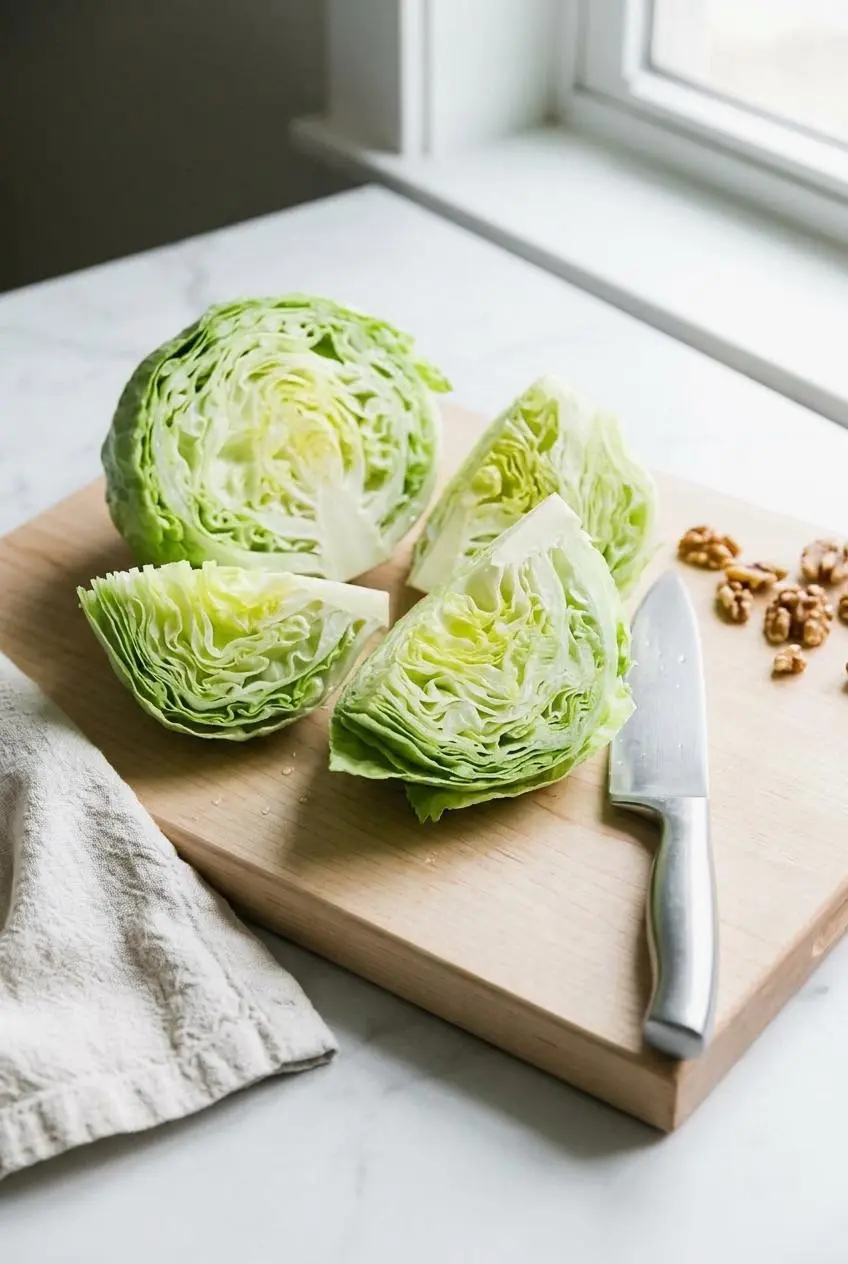
Dense iceberg needs a little care because water can hide between its tightly packed leaves. Start by removing any damaged outer leaves. Use the tip of a chef’s knife to cut around the core, then twist and pull it out without splitting the head.
Rinse the whole head briefly under cold running water, turning it so water reaches the outer folds. Shake it firmly over the sink, then place it core-side down on clean towels. Let gravity pull moisture from the center before cutting. Pat the exterior dry, then slice with a sharp knife in one clean downward motion rather than sawing through the leaves.
To help dressing reach the inner leaves without breaking the wedge apart, make one shallow slit across the cut surface, stopping well before the core. The wedge should still hold its shape, but the dressing can settle into more of its folds.
For an extra-cold snap, wrap the cut wedges in damp paper towels and give them a 10-minute freezer chill just before plating. Do not leave them there longer than needed. The goal is intensely cold lettuce, not frozen leaves.
Step-by-Step Wedge Salad Prep and Assembly
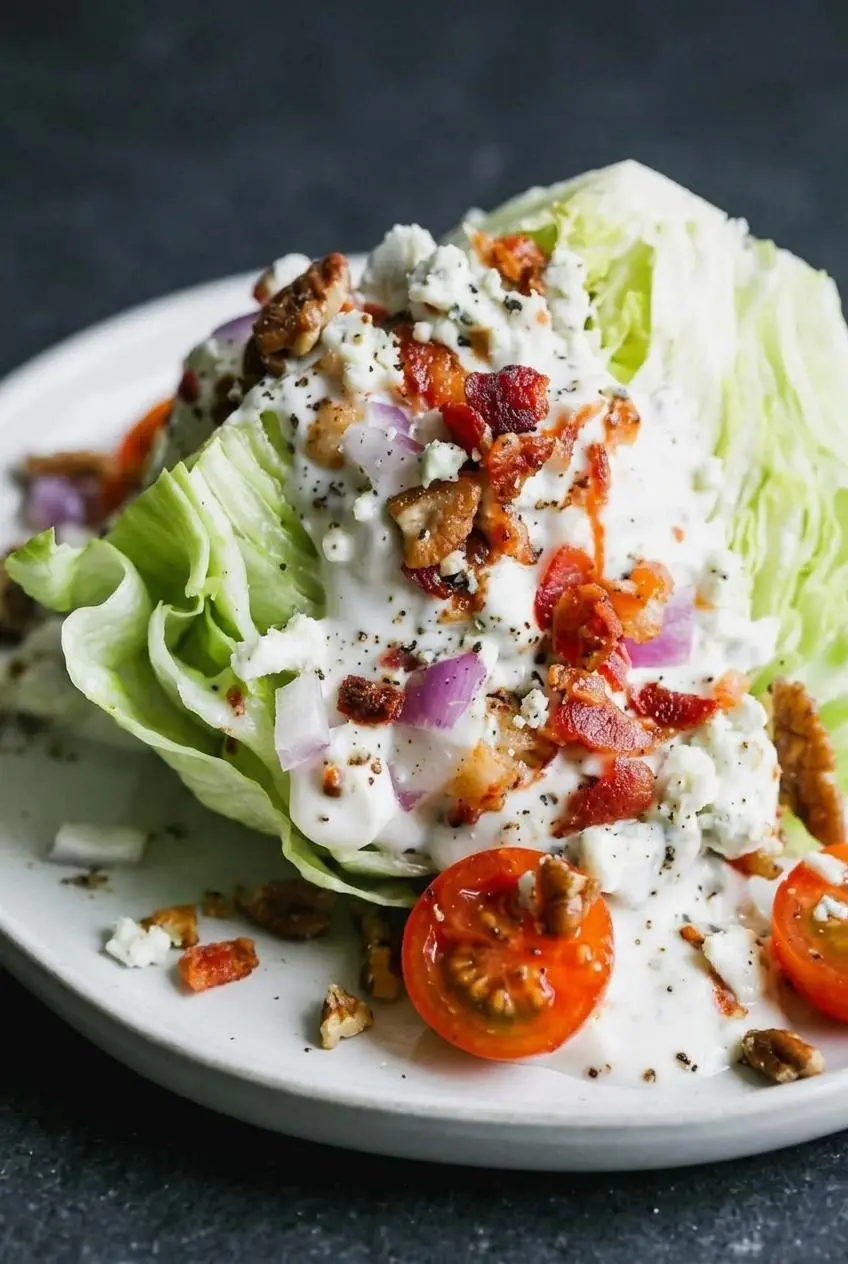
Keep the components separate until serving time. Cold lettuce, cooled bacon, and chilled dressing create the clean contrast that makes a steakhouse wedge feel special.
- Start with a chilled plate or shallow bowl. The low temperature helps the iceberg stay firm while you assemble the salad.
- Add a small spoonful of dressing beneath the wedge if you want a plated restaurant look and a place for loose toppings to land.
- Set the wedge cut-side up, then spoon dressing over the top and into the shallow slit.
- Scatter bacon first, followed by tomatoes, red onion, reserved blue cheese, and optional nuts. Heavier toppings grip better when they land on the dressing instead of bare lettuce.
- Serve right away. Dressing the wedges too far ahead softens the leaves and dulls their signature crunch.
Recipe Tips and Troubleshooting
- Watery runoff: Tomatoes are usually the culprit. Seed especially juicy tomatoes before halving them, then let any excess moisture drain away before assembling.
- Harsh raw onion: Soak chopped red onion in ice water for 10 minutes, then drain and dry it well. The flavor becomes milder without losing its crisp bite.
- Dressing too thick: Stir in buttermilk a few drops at a time until the dressing slowly falls from a spoon. Add gradually because a loose dressing slides right off the lettuce.
- Dressing too thin: Chill it longer before serving. The sour cream and mayonnaise firm up when cold, helping the dressing cling to the wedges.
- Lettuce feels limp: Dry it more thoroughly and chill it before plating. Moisture trapped between leaves quickly turns a crisp wedge into a slippery one.
- Toppings keep tumbling off: Use chilled shallow bowls and spoon dressing onto the base first. The shallow shape contains pooling dressing and runaway tomatoes.
- Bacon loses its crunch: Let it cool completely on paper towels before it meets the dressing. Warm bacon softens quickly against cold, creamy toppings.
If you want another layer of savory crunch, toast panko breadcrumbs in the rendered bacon fat until golden, then sprinkle them over the finished salad. Keep this optional addition separate from the main preparation so the crumbs stay crisp.
Serving Suggestions and Delicious Variations
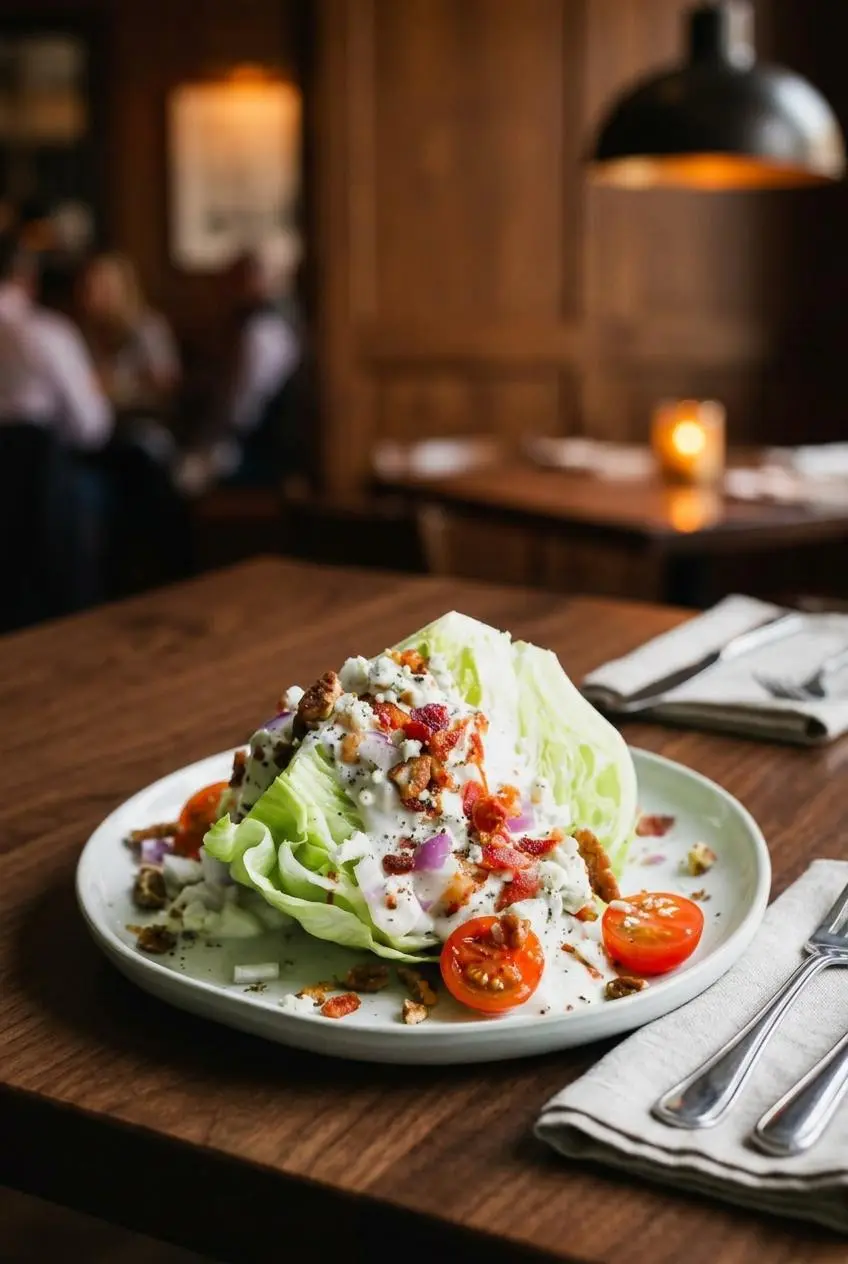
A wedge salad can be a bold starter, a steakhouse side dish, or a complete dinner with a few optional changes. Build it right before serving so the cold lettuce and creamy dressing keep their contrast.
Traditional Wedge vs. Chopped Wedge Presentation
Traditional quartered wedges make the strongest presentation. They look dramatic on individual plates, and guests can cut through crisp layers with their fork and knife. This format works especially well for a sit-down dinner.
For a chopped wedge salad, cut the iceberg into bite-sized squares after washing and drying it. Toss lightly with dressing, then add bacon, tomatoes, onion, and blue cheese on top. It is easier to eat with a fork and especially useful for buffet-style meals or casual gatherings. If you enjoy that chopped, bacon-and-blue-cheese style, a classic Cobb salad is another satisfying option.
Non-Blue Cheese Dressing Options
Blue cheese has a loyal following, but it is not everyone’s favorite. Keep the iceberg wedge format and swap the dressing for one of these optional alternatives:
- Buttermilk herb ranch: A creamy ranch with chives and dill gives a cool, mild flavor that still clings well to iceberg.
- Creamy green goddess: Fresh herbs bring a greener, brighter flavor that pairs nicely with tomatoes and bacon.
- Thousand Island: This sweeter, tangier choice gives the salad a retro steakhouse feel and works well with sharp cheddar or feta in place of blue cheese.
When changing the dressing, choose a thick one. Thin vinaigrettes run quickly through iceberg layers and do not give the classic creamy wedge effect.
Steakhouse Entree Wedge With Sliced Beef
Turn the salad into dinner by topping the dressed wedges with warm slices of grilled flank steak, grilled chicken breast, or seasoned shrimp. Add the protein just before serving so it stays warm while the lettuce remains cold and crisp.
Serve it alongside grilled ribeye, prime rib, or baked potatoes for a classic steakhouse spread. For a beef-forward salad meal with greens, try this grilled steak salad.
For a larger dinner table, offer the bacon, tomatoes, onion, nuts, and cheese in separate bowls. Guests can build their own balance of tangy, smoky, crunchy toppings without weighing down every wedge.
Conclusion
The best wedge salad is all about contrast: cold, dry iceberg with a loud crunch, thick tangy blue cheese dressing, smoky bacon, and bright tomatoes. Keep each component chilled or cooled as needed, then assemble just before serving.
Use the classic toppings or make it your own with chopped lettuce, a different creamy dressing, or a hearty protein. A well-built wedge always brings a little steakhouse comfort to the table.
Frequently Asked Questions
How Far in Advance Can I Make a Wedge Salad?
Make the blue cheese dressing several days ahead and keep it chilled in a covered container. Cook and cool the bacon in advance, then keep it separate so it retains its crisp texture. Wash, dry, and cut the lettuce close to serving time, and do not add dressing until the plates are ready.
Can I Substitute Another Lettuce for Iceberg in a Wedge Salad?
Little Gem lettuce is the closest substitute because it has compact leaves and a sturdy crunch. Romaine hearts also work when cut lengthwise into substantial sections. Skip delicate greens such as butter lettuce because creamy dressing and heavy toppings can flatten them quickly.
What Is the Best Way to Keep Iceberg Lettuce Wedges Crisp?
Wash the whole head, drain it upside down, and dry it thoroughly before cutting. Wrap cut wedges in damp paper towels and keep them in the coldest part of the refrigerator until plating. For extra snap, use the brief 10-minute freezer chill immediately before serving.
What if I Do Not Like Blue Cheese?
Use a thick buttermilk ranch, creamy green goddess, or Thousand Island dressing instead. Replace blue cheese crumbles with feta or shaved Parmesan for a milder salty finish. Keep the bacon, tomatoes, and onion for the same crunchy steakhouse character.
Why Does My Blue Cheese Dressing Turn Watery on the Plate?
Water trapped in iceberg leaves can thin the dressing as soon as it hits the plate. Juicy unseeded tomatoes release liquid into the dressing and create runoff. Dry the lettuce carefully, drain the tomatoes, and keep the dressing chilled until the last minute.
Wedge Salad

Equipment
- Medium bowl
- Skillet
- Paper towels
- Chef knife
Ingredients
For the salad
- 1 head iceberg lettuce
- 8 slices bacon cooked, cooled and crumbled
- 1 1/2 cups cherry tomatoes halved
- 1/2 cup red onion chopped
- pecans, or walnuts toasted (optional)
Easy Homemade Blue Cheese Dressing
- 1 cup sour cream light
- 1/2 cup mayonnaise
- 3 Tablespoons buttermilk
- 3 teaspoons red wine vinegar
- 1/2 teaspoon Worcestershire sauce
- 1/4 teaspoon garlic salt
- 1/2 teaspoon freshly ground black pepper or to taste
- 4 ounces blue cheese reserve a few spoonfuls for garnish
Instructions
- Combine the sour cream, mayonnaise, buttermilk, red wine vinegar, Worcestershire sauce, garlic salt, black pepper, and most of the blue cheese in a medium bowl, then refrigerate for at least 30 minutes. The chilled dressing should fall from a spoon in a thick ribbon rather than run like a thin sauce.
- Cut the bacon into pieces and cook it in a skillet over medium heat until the pieces are evenly browned and crisp, then transfer them to a paper towel-lined plate. Listen for the sizzle to quiet slightly as the bacon finishes rendering, and let the crumbles cool before topping the lettuce.
- Cut the iceberg lettuce head in half, then divide each half into halves or thirds, depending on the size of the head, to form intact wedges. Keep the core attached to each wedge so the inner layers stay together on the plate.
- Set the lettuce wedges on individual plates, spoon the chilled dressing over them, and finish with bacon, tomatoes, red onion, reserved blue cheese, and black pepper to taste. The toppings should settle into the lettuce folds while the dressing stays thick and neatly pooled around the base.