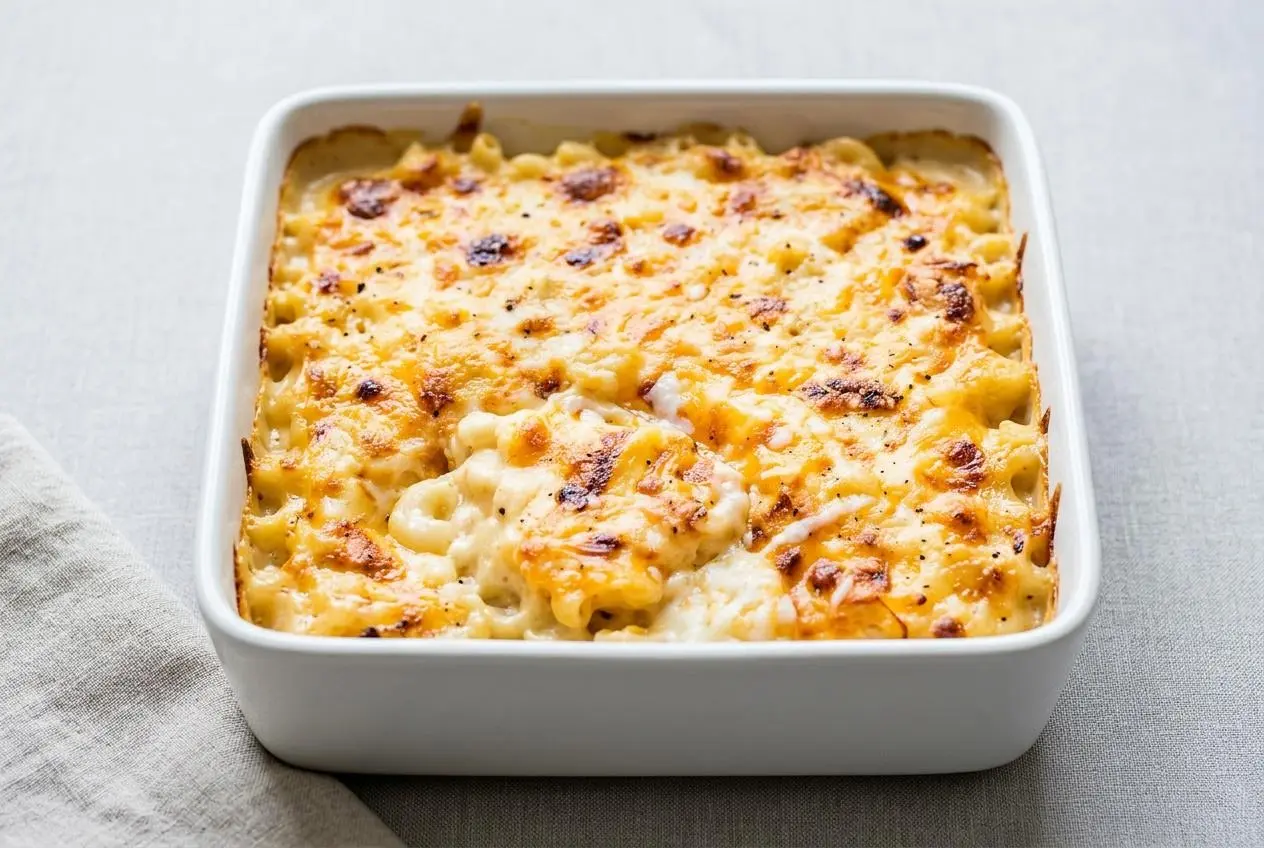
The secret to creamy baked mac and cheese is freshly shredded cheddar and Gruyere melted into a smooth roux-based sauce off the heat, then baked only until bubbly and lightly golden.
This mac and cheese recipe turns elbow pasta, cheddar, Gruyere, and a rich dairy sauce into a golden baked casserole with plenty of gooey cheese in every scoop.
The smell of bubbling cheese and warm paprika makes this pure weeknight comfort. The layered middle is the best part.
Grate the cheese while the pasta water heats so it is ready the moment the sauce comes off the burner.
Key Secrets for Creamy Mac and Cheese
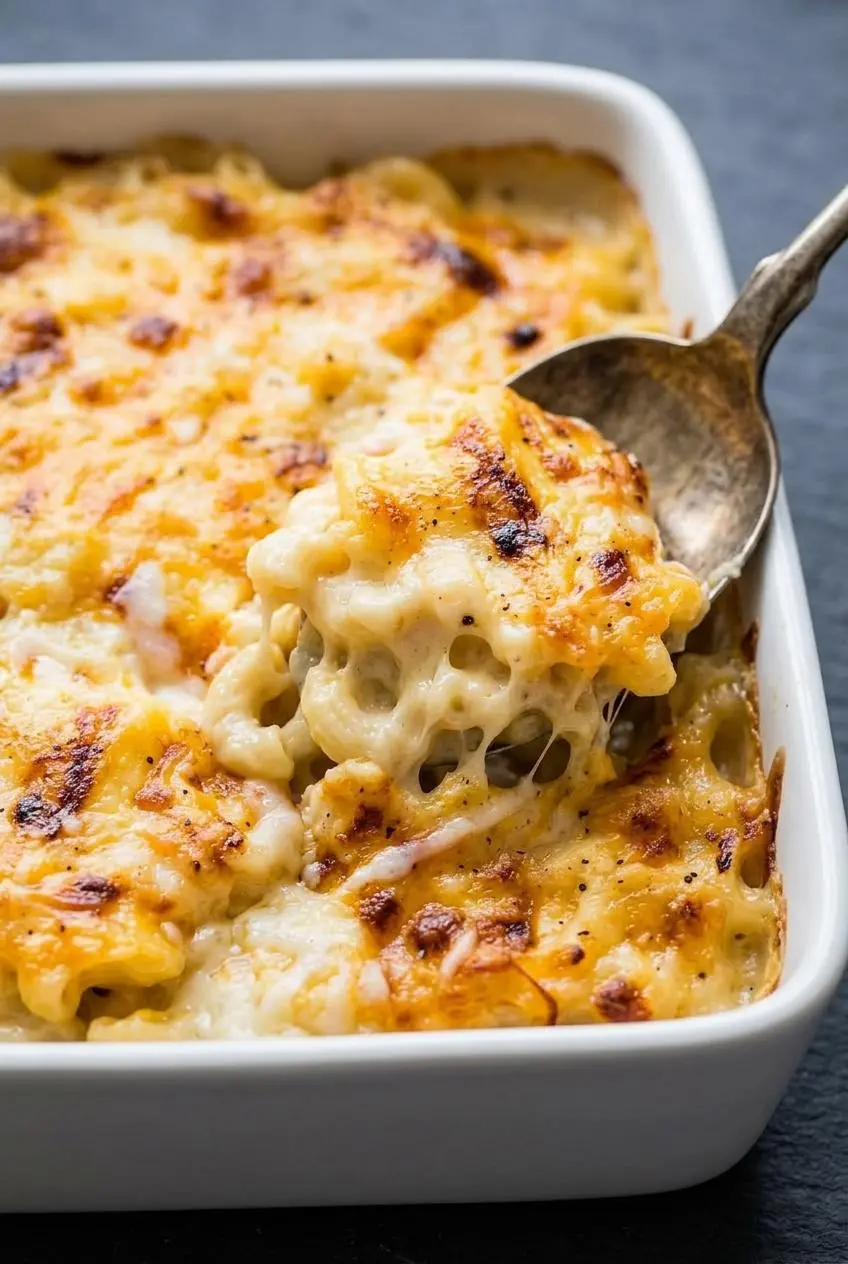
Three choices keep this casserole creamy instead of grainy, oily, or dry. Start with cheese grated from whole blocks, cook the pasta slightly firm, and add the cheese only after the thickened sauce leaves direct heat.
- Grate the cheese fresh. Packaged shreds often contain anti-caking starches that can leave a sauce chalky or grainy instead of smooth.
- Keep the elbows firm. Pasta cooked 1 minute shy of package al dente finishes in the oven without turning soft or soaking up too much sauce.
- Control the heat. A hot roux can thicken dairy beautifully, but cheese needs gentler heat. Stir it in away from the burner for a velvety emulsion.
- Stop baking when the edges bubble. The center should look creamy, while the perimeter gently bubbles and the top turns lightly golden.
Essential Ingredients and Why They Work
Each ingredient supports a creamy, structured casserole: pasta provides bite, butter and flour build the sauce, dairy adds moisture, and the cheeses bring melt, flavor, and a golden finish.
- 1 lb. dried elbow pasta
- 1/2 cup unsalted butter
- 1/2 cup all purpose flour
- 1 1/2 cups whole milk
- 2 1/2 cups half and half
- 4 cups shredded medium cheddar cheese (divided (measured after shredding))
- 2 cups shredded Gruyere cheese (divided (measured after shredding))
- 1/2 Tbsp. salt
- 1/2 tsp. black pepper
- 1/4 tsp. paprika (smoked paprika is our favorite!)
The butter and flour form a béchamel-style roux that gives the cheese sauce structure. Whole milk keeps the flavor clean, half-and-half adds richness, and paprika gives the finished dish a gentle warmth and deeper color.
I grate the cheddar and Gruyere from cold blocks, then let the shreds sit briefly while the sauce thickens so they melt evenly without clumping.
The Perfect Cheese Blend: Sharp Cheddar and Gruyere
Medium cheddar gives this dish its familiar savory flavor, while sharp cheddar can add a more pronounced tang. Gruyere melts smoothly and brings a subtle nutty character that rounds out the cheddar. Swiss is a workable substitute for Gruyere when needed, though its flavor is milder. Gruyere’s melting character also shines in classic cheese fondue.
The Milk and Cream Ratio for Ideal Viscosity
Whole milk and half-and-half work together here for a sauce that coats the macaroni rather than pooling thinly at the bottom of the dish. The milk keeps the dairy flavor balanced, while the half-and-half supplies enough fat for a plush texture without making the casserole feel greasy.
How to Make Creamy Baked Mac and Cheese Step by Step
Build the sauce steadily and watch its texture rather than rushing it. The roux should smell lightly nutty, the dairy should thicken before the cheese goes in, and the finished casserole should come out saucy beneath its golden top.
- Heat the oven to 325 degrees F, then grease a 3 qt baking dish (9×13″).
Set the dish aside so the pasta and sauce can go straight into a prepared pan. - Boil the elbow pasta in a large pot of salted water until it is 1 minute less than the package al dente time, then drain it and add a light drizzle of olive oil.
The noodles should still feel firm in the center and separate easily instead of sticking together. - Shred the cheddar and Gruyere, toss them together, and divide the mixture into three portions: about 3 cups for the sauce, 1 1/2 cups for the middle, and 1 1/2 cups for the top.
Mixing the cheeses first gives each layer the same cheddar-and-Gruyere balance. - Melt the butter in a large saucepan over medium heat, whisk in the flour, and cook for approximately 1 minute while whisking often.
The roux should look like a glossy, damp paste and develop a faint nutty aroma without browning deeply. - Whisk in about 2 cups of the half and half gradually, then whisk in the remaining half and half and the whole milk in a slow stream.
Keep whisking until the sauce is completely smooth with no floury lumps around the edges of the pan. - Cook the dairy mixture over medium heat, whisking very often, until it becomes very thick.
It should resemble condensed soup loosened slightly with milk and should cling heavily to the whisk. - Take the saucepan off the heat, stir in the salt, pepper, paprika, and 1 1/2 cups of the cheese mixture, then add another 1 1/2 cups and stir until smooth.
The sauce should become glossy and velvety as the cheese melts, with no oily sheen on top. - Combine the drained pasta and cheese sauce in a large mixing bowl, then spread half into the baking dish, add 1 1/2 cups of cheese, and cover with the remaining pasta.
The middle cheese layer creates stretchy pockets throughout the finished casserole. - Scatter the final 1 1/2 cups of cheese over the top and bake for 15 minutes.
Take it out when the cheese is bubbling around the edges and the surface is lightly golden brown.
Cooking the Elbow Macaroni to Firm Al Dente
Stopping the pasta 1 minute early matters because the elbows continue softening as they sit in hot sauce and bake. Fully cooked noodles can absorb more sauce in the oven, leaving the casserole thicker and less creamy. Draining promptly and tossing with the small amount of oil helps keep the elbows distinct.
Building the Golden Roux and Simmering Dairy
Whisk the butter and flour until every bit of flour is moistened. The mixture should look like wet sand at first, then turn smooth and fragrant as it cooks. Add the dairy gradually so the roux can absorb it without forming lumps. Once the sauce reaches that semi-thinned condensed-soup texture, it has enough body to hold the cheese and pasta together.
Melting the Cheese Off the Heat
Direct boiling heat is the usual reason cheese sauce breaks into oily clumps. Pulling the saucepan off the burner gives the cheddar and Gruyere enough residual warmth to melt while protecting their smooth texture. Stir patiently between additions until the sauce looks uniform and glossy.
Layering and Baking for Maximum Creaminess
The cheese layer between the pasta creates a soft, gooey center instead of concentrating all the cheese on top. Use the 9×13-inch dish so the casserole bakes evenly, then keep the oven time brief. A bubbly edge and pale golden crust signal that it is ready without overcooking the sauce.
Troubleshooting and Success Tips
Most mac and cheese problems come down to heat, sauce thickness, or baking too long. These fixes keep the texture on track without changing the main method.
- Grainy sauce: The cheese likely hit excessive heat or came from pre-shredded bags. Remove the pan from heat and whisk in a warm splash of milk until the sauce looks smoother. Add cheese gradually next time.
- Oily or separated sauce: The sauce became too hot after the cheese went in. Take it off the heat immediately and whisk gently until the dairy and cheese come back together. Avoid boiling once cheese has been added.
- Lumpy sauce: Dairy added too quickly can seize around the roux. Whisk steadily while pouring in a thin stream, giving the sauce time to smooth out before adding more.
- Dry baked macaroni: The pasta may have cooked too long before baking, or the casserole stayed in the oven past the bubbly-edge stage. Keep the elbows firm and remove the dish as soon as the cheese is lightly browned.
- Soft, swollen noodles: Pasta cooked fully before baking absorbs more sauce. Start checking the package time early and drain the elbows when they still have a firm center.
- Flat flavor: Taste the cheese sauce before combining it with the pasta. The cheddar provides savory depth, Gruyere adds nuttiness, and the pepper and paprika should come through without overpowering the cheese.
Make-Ahead and Reheating Guidance
For smoother party prep, shred the cheese, measure the seasonings, and grease the baking dish ahead. Cook the pasta, make the sauce, and assemble the casserole close to baking time so the elbows do not continue absorbing sauce while they sit.
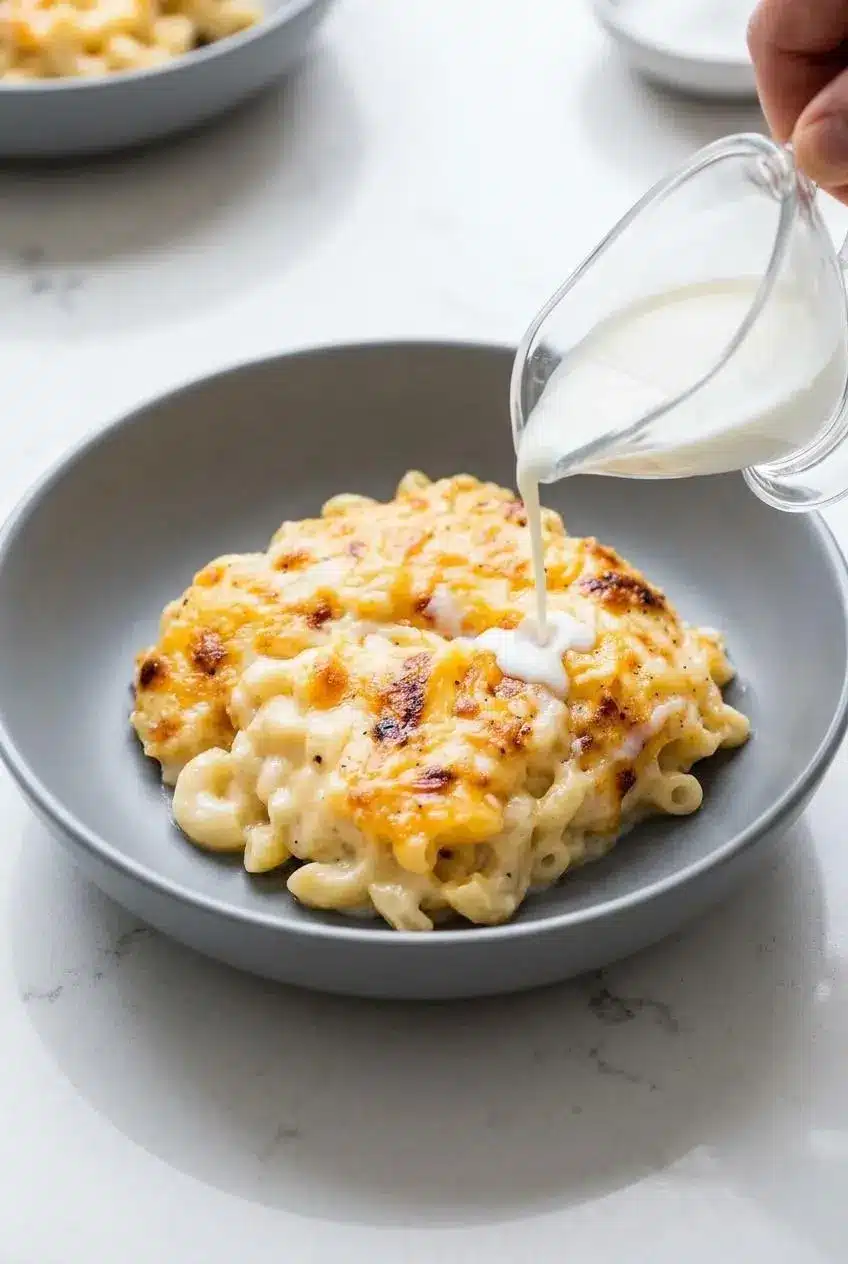
If you have leftovers, let them cool, cover them well, and keep them chilled. Reheat individual portions gently with a splash of milk stirred into the pasta; the added moisture helps the sauce loosen and come back together. Warm only until heated through, since aggressive reheating can make the cheese release oil.
A large portion reheats best covered at first to retain moisture. Once it is warm and creamy again, uncover briefly if you want the cheese on top to regain some color. Avoid repeatedly reheating the entire dish when smaller portions will do.
Delicious Variations and Serving Ideas
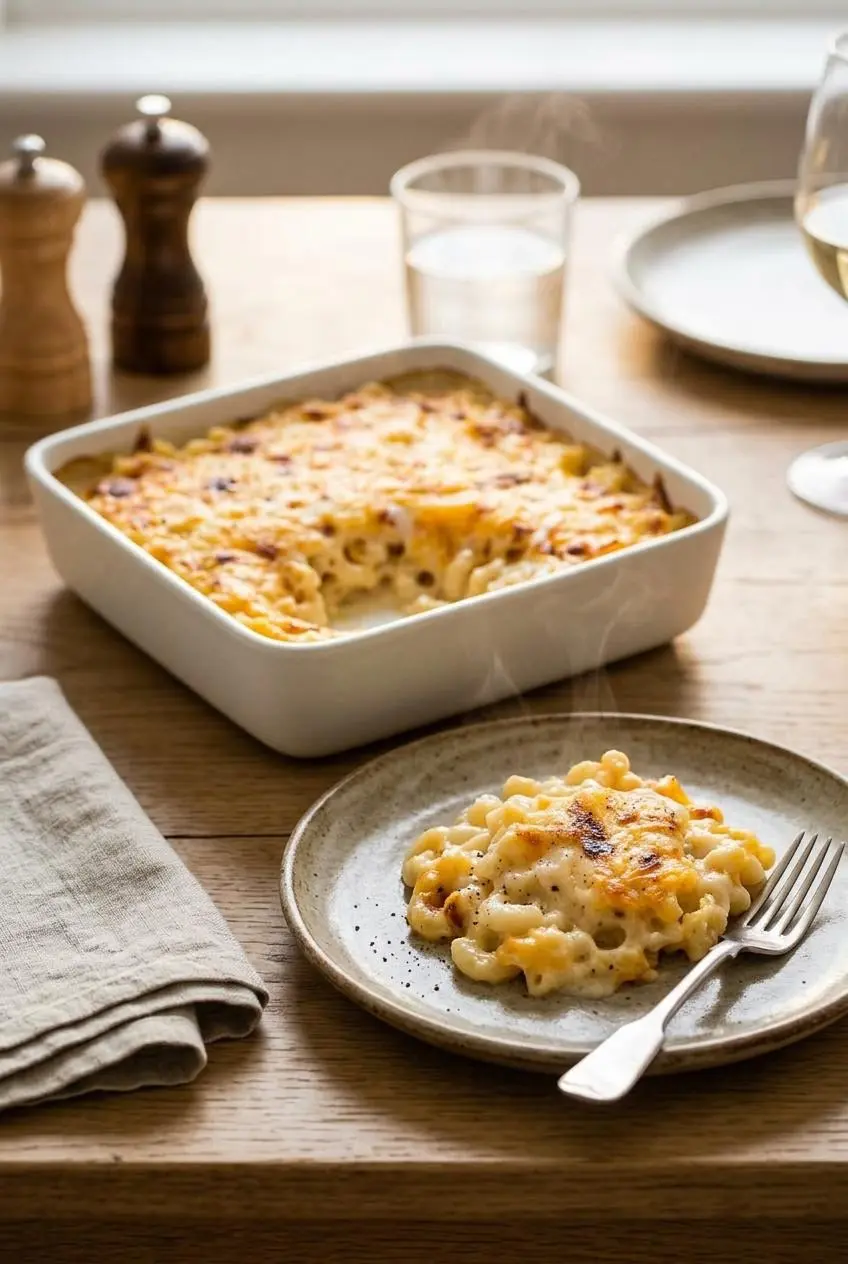
The cheddar-Gruyere casserole is rich enough to stand on its own, but optional toppings and add-ins can take it in different directions without changing the core dish.
Buttered Panko Parmesan Crunchy Topping
For a crisp contrast, toss panko breadcrumbs with melted butter, grated Parmesan, and smoked paprika, then scatter the mixture over the cheese before baking. The panko turns golden and crunchy while the pasta underneath stays soft and saucy. Add this only as an optional topping, since the main recipe finishes with cheese alone.
Easy 15-Minute Stovetop Version
For a no-bake meal, combine the hot drained pasta with the finished cheese sauce and serve it straight away instead of layering it in the dish and baking. The texture will be looser and creamier, with no browned crust. For another fast, saucy pasta idea, try creamy shells and cheese.
Hearty Flavor Add-Ins: Bacon and Roasted Chiles
Keep add-ins optional and use them to complement, not bury, the cheese flavor.
- Crispy bacon: Fold chopped bacon into the pasta for a salty, smoky bite that pairs naturally with cheddar.
- Roasted chiles or jalapeños: Add diced roasted chiles for mellow warmth, or jalapeños for a sharper, brighter heat.
- Dry mustard and nutmeg: Whisk a pinch into the roux for a more savory, old-school cheese sauce flavor.
- Smoked paprika: Use it in place of regular paprika when you want a gentle barbecue-style smokiness.
Serve this mac and cheese with smoky barbecue, roasted greens, or a crisp garden salad to balance its richness. It also fits right into a holiday spread or game-day meal alongside ham and cheese sliders.
Conclusion
This baked mac and cheese delivers creamy sauce, tender elbows, stretchy cheese layers, and a bubbly golden top in every scoop.
Grate the cheese from blocks, keep the pasta slightly firm, and melt the cheese gently off the burner for dependable comfort-food results. Serve it while the middle is still gloriously gooey.
Frequently Asked Questions
What Cheeses Work Best for Homemade Mac and Cheese?
Sharp or medium cheddar brings the classic bold, savory flavor. Gruyere adds a smooth melt and subtle nuttiness, while Swiss can stand in for Gruyere when needed. Combining a flavorful cheese with a creamy-melting cheese gives the sauce balance.
Why Is Freshly Grated Block Cheese Better Than Pre-Shredded?
Freshly grated cheese melts more cleanly into the sauce. Bagged shredded cheese often includes anti-caking starches such as cellulose or potato starch, which can make the sauce feel grainy or powdery. Grating cold blocks also gives you finer, more even shreds.
How Do I Prevent My Baked Mac and Cheese From Drying Out?
Cook the pasta 1 minute less than al dente so it does not overabsorb sauce in the oven. Make sure the cheese sauce reaches its thick, glossy stage before mixing it with the pasta. Bake at 325 degrees F only until the edges bubble and the top turns lightly golden.
Can I Assemble Mac and Cheese Ahead of Time and Bake Later?
For the creamiest texture, prep the cheese, seasonings, and baking dish ahead, then assemble close to baking. Holding cooked pasta in sauce can make the noodles absorb more moisture. If an assembled dish must be chilled, keep it covered and let it lose its chill before baking so it heats more evenly.
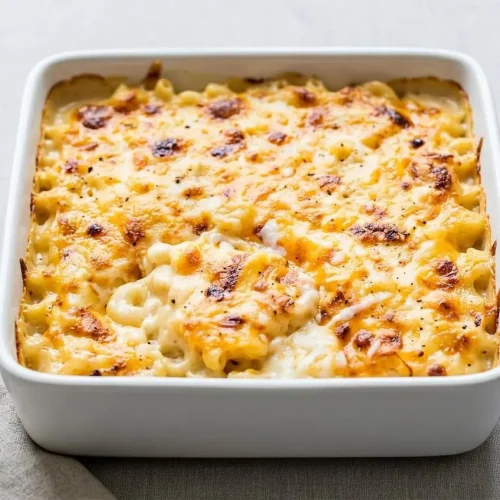
Mac and Cheese Recipe

Equipment
- 9×13-inch baking dish
- Large saucepan
- Box grater
- Whisk
Ingredients
- 1 lb. dried elbow pasta
- 1/2 cup unsalted butter
- 1/2 cup all purpose flour
- 1 1/2 cups whole milk
- 2 1/2 cups half and half
- 4 cups shredded medium cheddar cheese divided (measured after shredding)
- 2 cups shredded Gruyere cheese divided (measured after shredding)
- 1/2 Tbsp. salt
- 1/2 tsp. black pepper
- 1/4 tsp. paprika smoked paprika is our favorite!
Instructions
- Heat the oven to 325 degrees F, then grease a 3 qt baking dish (9×13″). Set the dish aside so the pasta and sauce can go straight into a prepared pan.
- Boil the elbow pasta in a large pot of salted water until it is 1 minute less than the package al dente time, then drain it and add a light drizzle of olive oil. The noodles should still feel firm in the center and separate easily instead of sticking together.
- Shred the cheddar and Gruyere, toss them together, and divide the mixture into three portions: about 3 cups for the sauce, 1 1/2 cups for the middle, and 1 1/2 cups for the top. Mixing the cheeses first gives each layer the same cheddar-and-Gruyere balance.
- Melt the butter in a large saucepan over medium heat, whisk in the flour, and cook for approximately 1 minute while whisking often. The roux should look like a glossy, damp paste and develop a faint nutty aroma without browning deeply.
- Whisk in about 2 cups of the half and half gradually, then whisk in the remaining half and half and the whole milk in a slow stream. Keep whisking until the sauce is completely smooth with no floury lumps around the edges of the pan.
- Cook the dairy mixture over medium heat, whisking very often, until it becomes very thick. It should resemble condensed soup loosened slightly with milk and should cling heavily to the whisk.
- Take the saucepan off the heat, stir in the salt, pepper, paprika, and 1 1/2 cups of the cheese mixture, then add another 1 1/2 cups and stir until smooth. The sauce should become glossy and velvety as the cheese melts, with no oily sheen on top.
- Combine the drained pasta and cheese sauce in a large mixing bowl, then spread half into the baking dish, add 1 1/2 cups of cheese, and cover with the remaining pasta. The middle cheese layer creates stretchy pockets throughout the finished casserole.
- Scatter the final 1 1/2 cups of cheese over the top and bake for 15 minutes. Take it out when the cheese is bubbling around the edges and the surface is lightly golden brown.