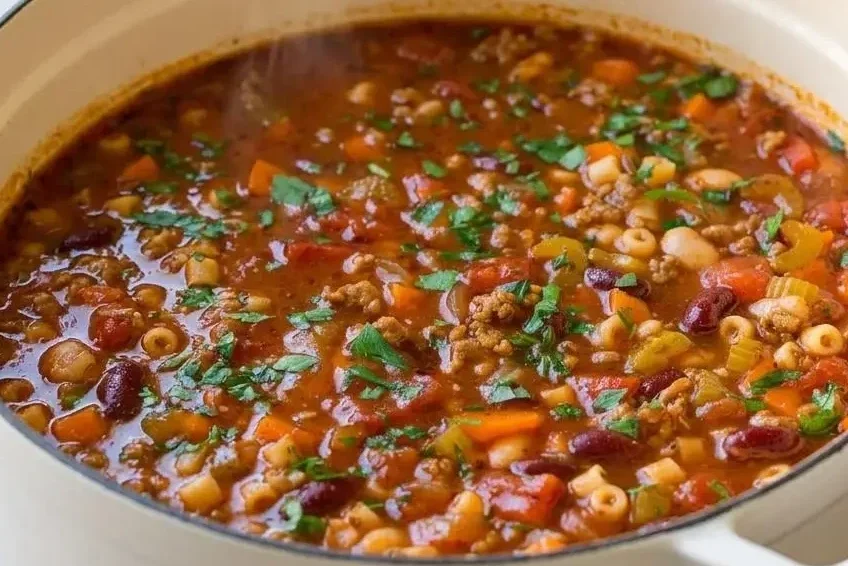
Pasta e fagioli is a hearty Italian American soup of ground beef, ditalini, beans, vegetables, and herbs simmered in a rich tomato broth.
This pasta e fagioli soup brings together tender vegetables, creamy Great Northern beans, firm kidney beans, and savory beef in every spoonful.
The herb-scented tomato broth tastes even richer once the vegetables soften and the pasta joins the pot. The separate-pasta trick makes all the difference.
Chop the onion, carrots, celery, and garlic before heating the pot so the cooking moves smoothly once the beef is browned.
Core Ingredients for Authentic Flavor
Each ingredient supports the soup’s hearty character, from the savory beef and aromatic vegetables to the tomato broth, herbs, beans, and pasta that give it body and balance.
- 2 Tbsp olive oil, (divided)
- 1 lb lean ground beef
- 1 1/2 cups chopped yellow onion
- 1 cup diced carrots ((about 2 medium))
- 1 cup diced celery ((about 3 stalks))
- 3 cloves garlic, (minced (1 Tbsp))
- 3 (8 oz) cans tomato sauce
- 2 14.5 oz cans low-sodium chicken broth
- 1/2 cup water, (then more as desired)
- 1 (15 oz) can diced tomatoes
- 2 tsp granulated sugar
- 1 1/2 tsp dried basil
- 1 tsp dried oregano
- 3/4 tsp dried thyme
- 1/2 tsp dried marjoram
- Salt and freshly ground black pepper
- 1 cup dry ditalini pasta
- 1 (15 oz) can dark red kidney beans, drained and rinsed
- 1 (15 oz) can great northern beans, drained and rinsed
- Finely shredded Romano or Parmesan cheese (for serving)
- 3 Tbsp minced fresh parsley
The onion, carrot, and celery form a classic soffritto-style foundation that turns sweet and savory as it cooks. Garlic sharpens that base, while basil, oregano, thyme, and marjoram give the tomato broth its familiar Italian-style warmth. Tomato sauce creates body, diced tomatoes add texture, and a touch of sugar rounds out their acidity.
I rinse canned beans well before adding them because it keeps the broth cleaner-tasting and lets the herbs come through more clearly.
The Perfect Bean Combination
Dark red kidney beans keep their shape and add a pleasantly firm bite. Great Northern beans are softer and creamier, so they gently thicken the broth as they warm. Cannellini beans work well in place of Great Northern beans when that is what you have.
For a fuller-bodied soup without cream or flour, mash or blend a small portion of the beans with some broth, then stir it back into the pot. Leave most of the beans whole so the soup still has distinct texture.
Best Pasta Shapes for Hearty Soup
Ditalini is ideal because its tiny tubes are close in size to the beans and catch the tomato broth. Tubetti or small shells can also work as optional swaps, though their cooking time may differ. Check any alternate pasta shortly before the package’s stated al dente time so it does not soften too far.
Flavor Boost: The Parmesan Rind Secret
If you have a clean, leftover Parmesan rind, you can drop it into the simmering broth as an optional flavor booster. It adds deep savory character as it softens, then can be removed before serving. This is especially useful when the broth needs more richness without changing its rustic texture.
Step-by-Step Stovetop Instructions
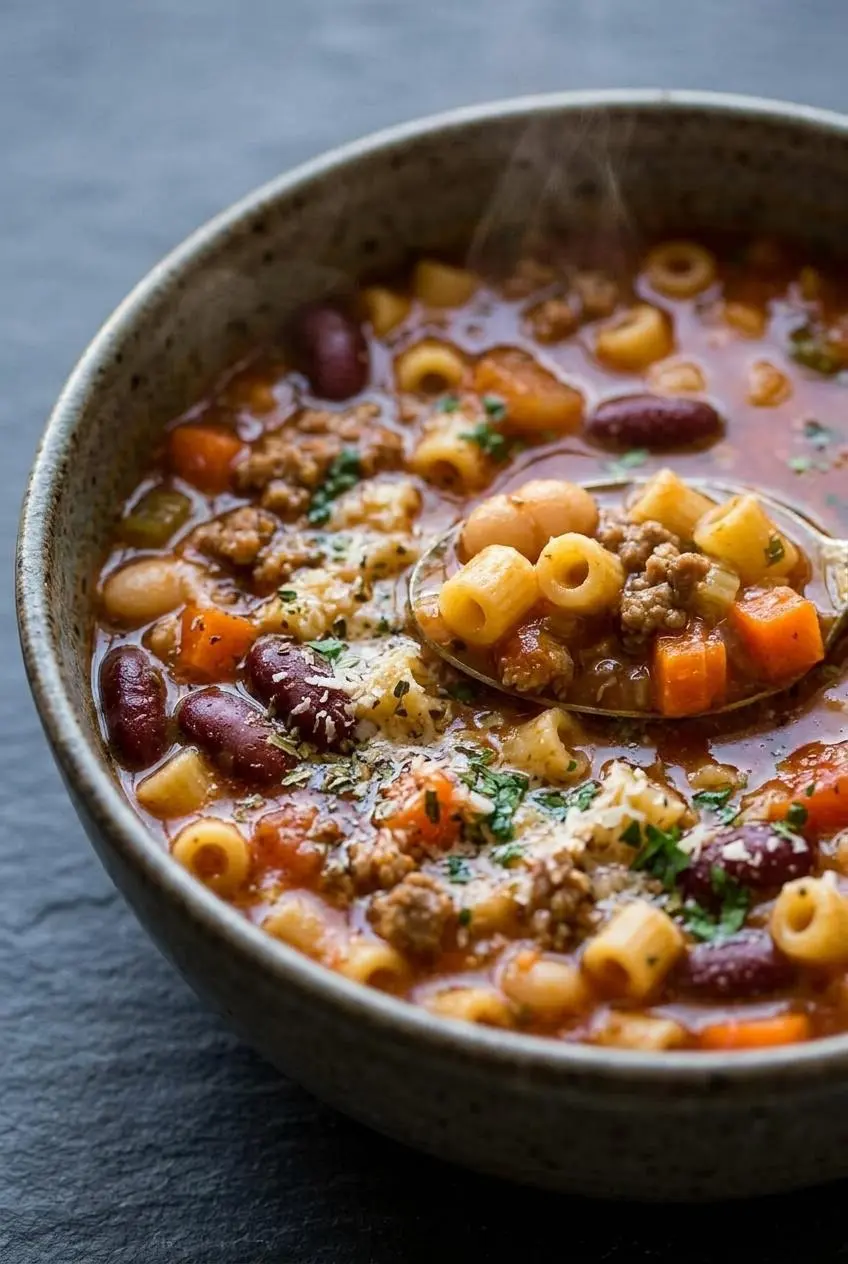
Build flavor in stages: brown the beef first, cook the vegetables until sweet and tender, then let the herbs and tomato broth simmer gently before adding the beans and pasta.
- Warm 1 Tbsp olive oil in a large pot over medium-high heat, then add the ground beef and break it into small pieces as it cooks.
Continue until the beef is fully cooked and browned in spots, with no pink meat remaining. - Spoon off and drain the rendered fat, then move the beef to a plate and pour the remaining 1 Tbsp olive oil into the pot.
The pot should have a light coating of oil but no heavy layer of grease. - Add the onion, carrots, and celery and cook over medium-high heat for about 6 minutes, then stir in the garlic for 1 minute.
The vegetables should look softened and glossy, and the garlic should smell fragrant without browning. - Return the beef to the pot and add the chicken broth, tomato sauce, water, diced tomatoes, sugar, basil, oregano, thyme, marjoram, salt, and pepper.
Stir until the tomato sauce loosens into an even, herb-speckled broth. - Bring the soup to a boil, lower the heat to medium-low, cover, and simmer for about 15 to 20 minutes, stirring occasionally.
Keep the broth at a gentle bubble until the carrots and celery are fully tender. - While the soup simmers, cook the ditalini according to the package directions and drain it when al dente.
Taste a piece shortly before it is done so the center is tender with a slight bite. - Stir the drained pasta, kidney beans, and Great Northern beans into the soup, adding more broth or water if you prefer a looser consistency.
The beans should heat through while still holding their shape and the pasta should remain distinct in the broth. - Cook for 1 more minute, then stir in the parsley and serve with Romano or Parmesan cheese.
The parsley should stay bright green, and the cheese should melt lightly over the hot soup.
For a bowl served right away, you can cook the pasta in the soup pot. For leftovers, keep the pasta separate until serving. Pasta starch keeps absorbing liquid as it sits, which can leave the broth thick and the noodles overly soft.
Slow Cooker and Instant Pot Adaptations
These methods keep the same tomato, beef, bean, and herb profile while shifting the timing to suit your day. In both versions, add cooked pasta near the end so it stays pleasantly al dente.
Crockpot Slow Cooker Method
Brown the beef in a skillet, drain excess fat, then cook the onion, carrots, celery, and garlic briefly in the same skillet. Transfer them to the slow cooker with the tomato sauce, broth, water, diced tomatoes, sugar, and dried herbs.
Cook on Low for 6 to 7 hours or High for 3 to 4 hours, until the vegetables are tender and the broth smells deeply herbed. Stir in the rinsed beans and cooked ditalini during the final 20 minutes, just long enough to warm everything through without turning the pasta mushy.
Instant Pot Pressure Cooker Method
Use the Sauté setting to brown the beef, drain the fat, and cook the onion, carrot, celery, and garlic until softened. Add a splash of the broth and scrape up the browned bits from the bottom before adding the remaining liquids, tomatoes, sugar, and herbs.
Layer the liquid ingredients beneath the thicker tomato ingredients, and do not stir dry pasta into the bottom of the pot before sealing. Cook on High pressure for 4 minutes, use a quick release, then stir in the rinsed beans and al dente pasta on Warm until heated through.
Common Mistakes and Troubleshooting
A few small adjustments can rescue the broth and protect the pasta texture without changing the soup’s character.
Fixing Overly Thick Broth
- Problem: The soup looks more like a stew after the pasta and beans are added. Cause: Pasta starch and beans naturally absorb broth. Fix: Stir in warm low-sodium chicken broth or water gradually until the consistency suits you.
- Problem: The broth feels thin before serving. Cause: The vegetables and beans have not added enough body yet. Fix: Simmer gently a little longer, or blend a small portion of beans and broth, then return it to the pot.
Preventing Soggy Leftover Pasta
Cook the ditalini separately whenever you expect leftovers. Store it apart from the soup base and add a portion to each bowl while reheating. This keeps the pasta from drinking up the broth and helps the tomato base stay balanced.
Balancing Flavors and Acidity
- Problem: The broth tastes flat. Cause: Tomato soups often need a final adjustment after simmering. Fix: Add a pinch of salt, a little freshly grated Romano, or a tiny splash of red wine vinegar.
- Problem: The surface looks oily. Cause: The meat released more fat than expected. Fix: Skim the surface gently with a spoon before adding the beans and pasta.
- Problem: The herbs seem muted. Cause: The broth may need more time to meld. Fix: Keep it at a quiet simmer until the tomato aroma smells rounded rather than sharp.
Storage and Reheating Tips
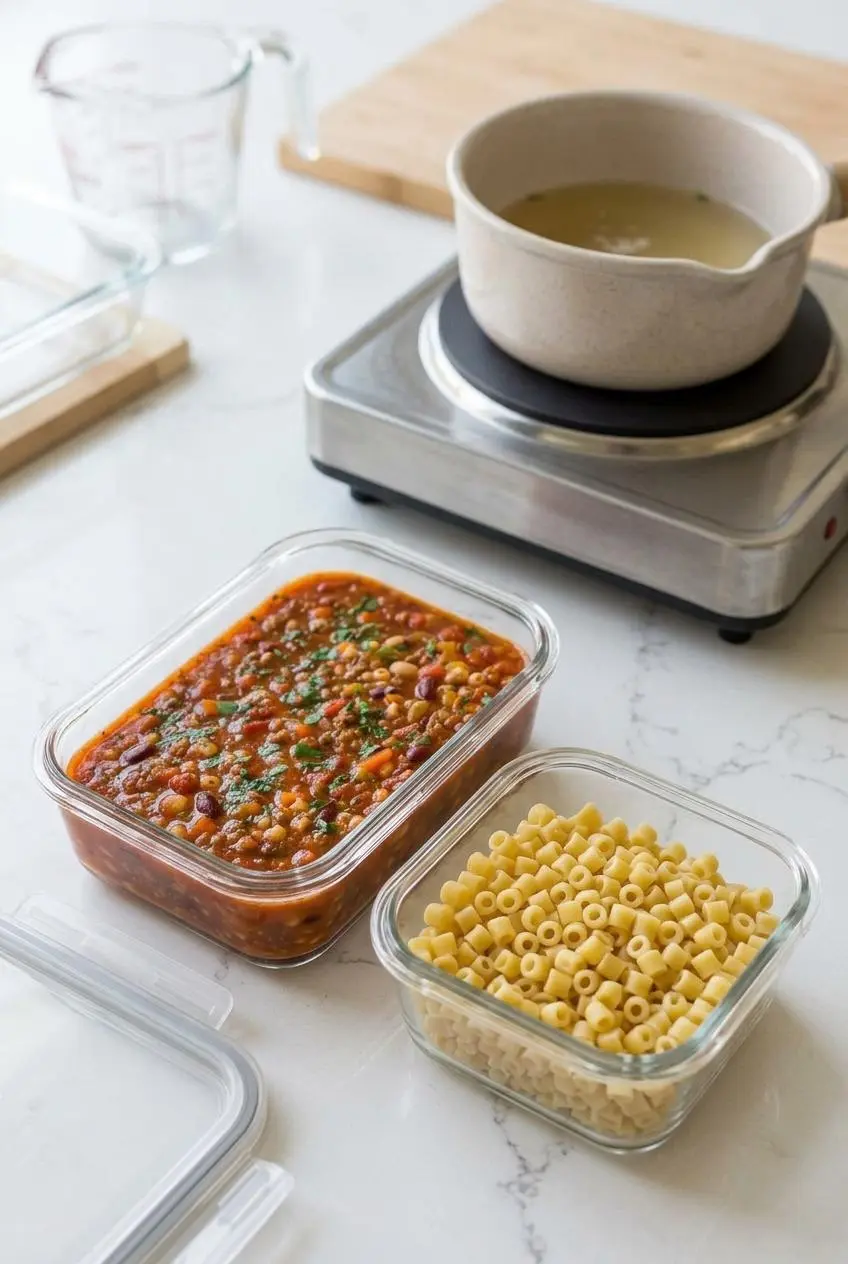
For the best leftover texture, keep the soup base and cooked ditalini in separate airtight containers. Cool leftovers promptly, then refrigerate them within 2 hours and use them within 3 to 4 days for safe leftover storage.
Refrigerator Storage and Leftover Prep
Portion the soup base into containers once it has stopped steaming heavily, and keep the pasta apart so it does not swell in the broth. If you have extra cooked noodles that will not be used for soup, turn them into a leftover pasta frittata instead of letting them go to waste.
Keeping the Soup Base Separate
Separate storage is the key move for this kind of soup. The bean, beef, vegetable, and tomato base holds its hearty flavor well, while freshly cooked ditalini keeps every reheated bowl from becoming overly thick or soft.
Reheating and Broth Refreshing
Warm the soup gently on the stovetop, stirring occasionally, or heat an individual portion in the microwave until hot throughout. Add a splash of warm broth or water if it has tightened in the refrigerator, then stir in pasta just before serving.
Delicious Variations and Serving Suggestions
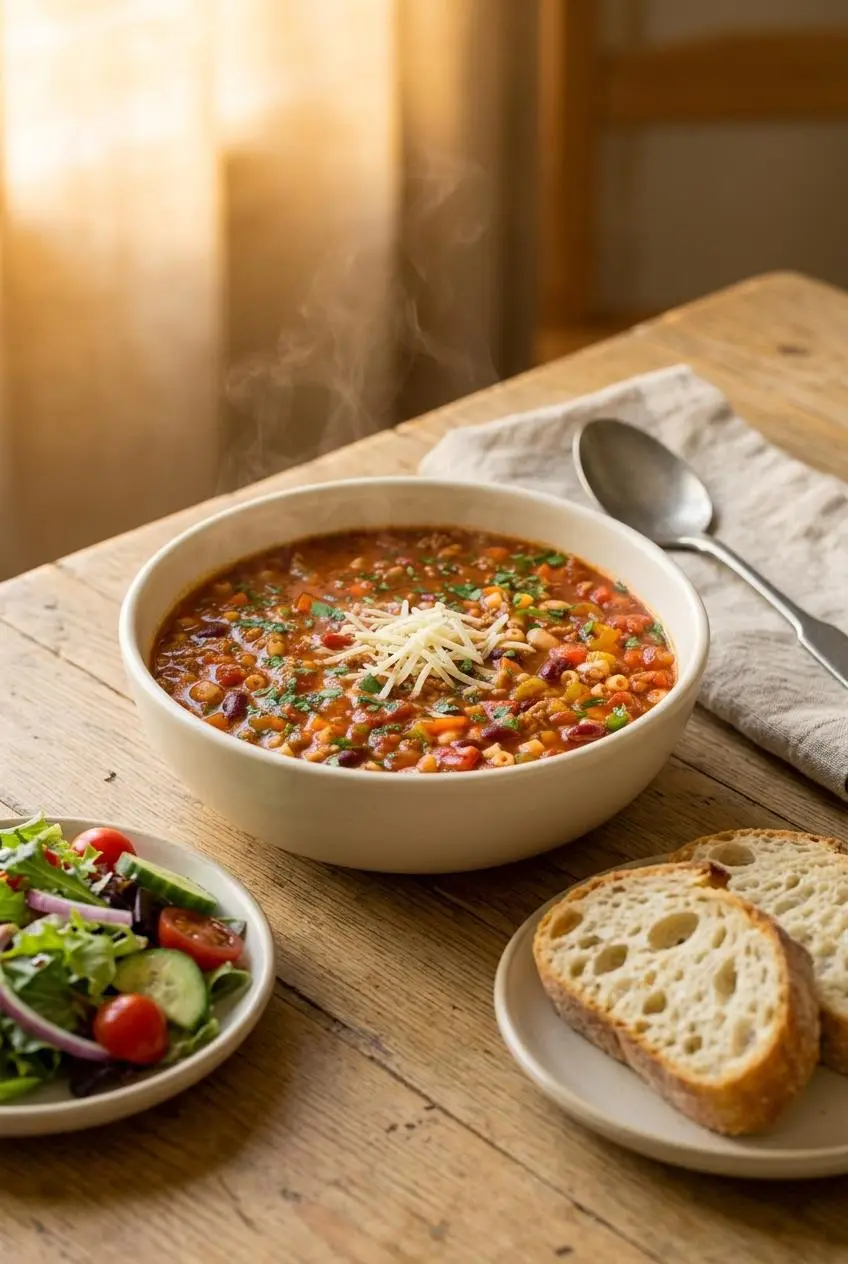
These optional changes keep the comforting tomato-and-bean identity intact while letting you tailor the soup to your table.
Spicy Italian Sausage Variation
Replace the lean ground beef with sweet or spicy Italian sausage for a richer, more fennel-forward bowl. Spicy sausage adds gentle heat, while sweet sausage gives the broth a rounded, savory flavor. Drain the rendered fat carefully so the soup stays robust rather than greasy.
Vegetarian and Vegan Adaptation
For a meatless version, omit the beef, use vegetable stock, and add an extra can of cannellini beans for more body. A little smoked paprika is optional if you want a deeper savory edge. For a vegan bowl, skip the Romano or Parmesan and finish with parsley and black pepper.
Gluten-Free Adaptation
Use certified gluten-free small pasta shells, corn ditalini, or brown rice elbows. Boil them separately and add them to each bowl just before serving, which helps prevent cloudiness and protects their texture in the tomato broth.
What to Serve with Pasta e Fagioli
- Warm garlic breadsticks or crusty ciabatta are perfect for catching the last of the broth.
- A crisp garden salad with red wine vinaigrette adds a fresh, tangy contrast to the rich soup.
- A caprese pasta salad makes a bright, tomato-forward side for a casual Italian-style dinner.
- Set out extra Romano or Parmesan and cracked black pepper so everyone can finish their bowl to taste.
If you want greens, fold baby spinach or chopped Tuscan kale into the hot soup at the very end. The leaves should wilt while keeping some color and structure.
Conclusion
A good pot of pasta e fagioli comes down to patient browning, softened vegetables, and a gentle simmer that lets the herbs settle into the tomato broth.
Cook the ditalini to true al dente, keep it separate when saving leftovers, and finish each bowl with fresh parsley and shredded Romano. Dinner will feel especially cozy.
Frequently Asked Questions
What Is the Difference Between Pasta Fagioli and Minestrone Soup?
Pasta e fagioli centers on beans, pasta, and often meat in a rich tomato-based broth. Minestrone is more vegetable-driven and commonly includes a wider mix of seasonal vegetables. Both are hearty Italian-style soups, but pasta e fagioli puts beans and pasta at the center of the bowl.
Should I Cook the Pasta Separately or in the Soup Pot?
Cook it in the soup pot if you plan to serve the entire batch right away. Cook it separately if you expect leftovers. Separate pasta prevents the noodles from absorbing too much broth and becoming overly soft in storage.
How Should I Store Pasta e Fagioli?
Keep the soup base and pasta in separate airtight containers. Reheat the broth first, loosen it with a little broth or water if needed, then add pasta to the bowl. This approach preserves the hearty broth and gives the pasta a much better texture.
What Beans Are Traditionally Used in Pasta e Fagioli?
Cannellini beans, Great Northern beans, and dark red kidney beans are all excellent choices. White beans add a creamy, tender texture. Kidney beans offer a firmer bite, making the combination especially satisfying in a thick tomato broth.
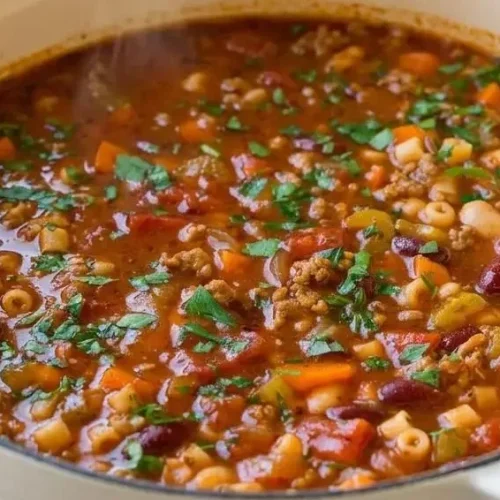
Pasta e Fagioli Soup

Equipment
- Large Pot
Ingredients
- 2 Tbsp olive oil (divided)
- 1 lb lean ground beef
- 1 1/2 cups chopped yellow onion
- 1 cup diced carrots (about 2 medium)
- 1 cup diced celery (about 3 stalks)
- 3 cloves garlic minced (1 Tbsp)
- 3 (8 oz) cans tomato sauce
- 2 14.5 oz cans low-sodium chicken broth
- 1/2 cup water then more as desired
- 1 (15 oz) can diced tomatoes
- 2 tsp granulated sugar
- 1 1/2 tsp dried basil
- 1 tsp dried oregano
- 3/4 tsp dried thyme
- 1/2 tsp dried marjoram
- Salt and freshly ground black pepper
- 1 cup dry ditalini pasta
- 1 (15 oz) can dark red kidney beans drained and rinsed
- 1 (15 oz) can great northern beans drained and rinsed
- Finely shredded Romano or Parmesan cheese for serving
- 3 Tbsp minced fresh parsley
Instructions
- Warm 1 Tbsp olive oil in a large pot over medium-high heat, then add the ground beef and break it into small pieces as it cooks. Continue until the beef is fully cooked and browned in spots, with no pink meat remaining.
- Spoon off and drain the rendered fat, then move the beef to a plate and pour the remaining 1 Tbsp olive oil into the pot. The pot should have a light coating of oil but no heavy layer of grease.
- Add the onion, carrots, and celery and cook over medium-high heat for about 6 minutes, then stir in the garlic for 1 minute. The vegetables should look softened and glossy, and the garlic should smell fragrant without browning.
- Return the beef to the pot and add the chicken broth, tomato sauce, water, diced tomatoes, sugar, basil, oregano, thyme, marjoram, salt, and pepper. Stir until the tomato sauce loosens into an even, herb-speckled broth.
- Bring the soup to a boil, lower the heat to medium-low, cover, and simmer for about 15 to 20 minutes, stirring occasionally. Keep the broth at a gentle bubble until the carrots and celery are fully tender.
- While the soup simmers, cook the ditalini according to the package directions and drain it when al dente. Taste a piece shortly before it is done so the center is tender with a slight bite.
- Stir the drained pasta, kidney beans, and Great Northern beans into the soup, adding more broth or water if you prefer a looser consistency. The beans should heat through while still holding their shape and the pasta should remain distinct in the broth.
- Cook for 1 more minute, then stir in the parsley and serve with Romano or Parmesan cheese. The parsley should stay bright green, and the cheese should melt lightly over the hot soup.