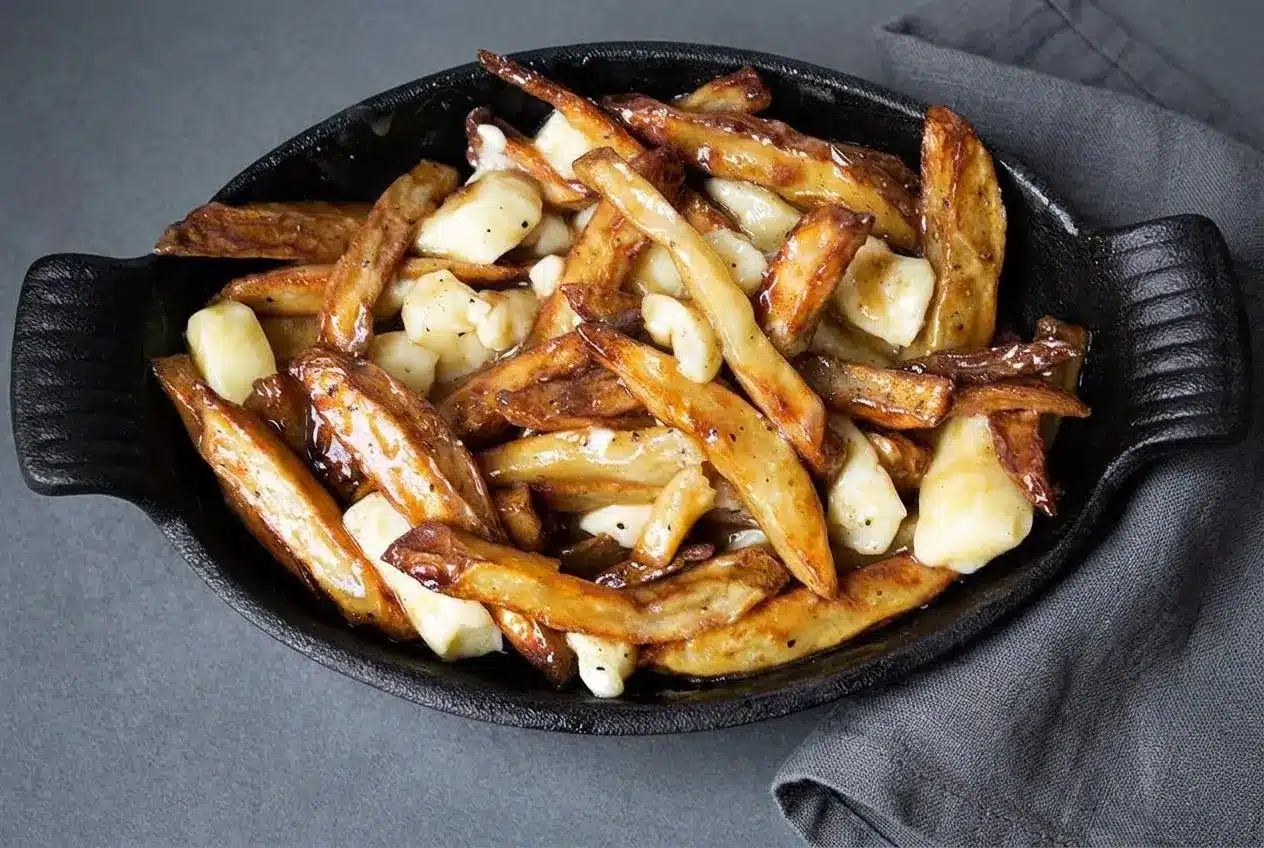
Authentic Canadian poutine pairs crisp double-fried russet potatoes with fresh white cheddar cheese curds and piping-hot beef and chicken gravy that gently softens the curds.
This poutine recipe brings together golden fries, savory brown gravy, and that unmistakable curd squeak in one gloriously messy bowl.
The aroma of butter-toasted flour and simmering broth makes the wait worthwhile. The double-fry is where the crunch happens.
Set the cheese curds out while the potatoes cook so they are no longer fridge-cold when it is time to assemble.
Essential Ingredients for Authentic Poutine
Each ingredient earns its place: potatoes provide crunch and a fluffy center, broth builds savory depth, and curds add the signature soft pull and fresh dairy richness.
Poutine Gravy
- 3 Tbsp cornstarch
- 2 Tbsp water
- 6 Tbsp unsalted butter
- 1/4 cup unbleached all purpose flour
- 20 oz beef broth
- 10 oz chicken broth
- Pepper, to taste
For Deep Fried Fries
- 2 lbs Russet potatoes ((3-4 medium potatoes))
- Peanut or other frying oil
Toppings
- 1 – 1 1/2 cups white cheddar cheese curds ((Or torn chunks of mozzarella cheese would be the closest substitution))
Russets give the fries their ideal contrast: a dry, crisp shell around a soft interior. The beef broth supplies dark, meaty depth, while chicken broth rounds it out so the gravy stays savory without tasting heavy. Butter and flour create the body, and the cornstarch slurry lets you fine-tune the finish.
I prefer curds that feel springy rather than wet or sticky, because they soften under hot gravy while still keeping that pleasant little squeak.
Choosing the Right Potatoes for Crispy Fries
Russet potatoes are high in starch and relatively low in moisture, which helps them release steam during frying instead of holding onto it. That matters because trapped moisture makes fries limp quickly. Waxy potatoes can cook through, but they tend to give a denser center and a less shattering crust.
Cut the potatoes into even 1/2-inch sticks so they blanch and brown at the same pace. Uneven pieces are the usual reason one batch contains both pale, soft fries and overly dark stragglers.
The Perfect Dual-Broth Gravy Foundation
The gravy uses two parts beef broth to one part chicken broth. Beef brings the robust brown-gravy character associated with Quebec poutine, while chicken broth lightens the flavor enough that it coats the fries instead of overwhelming them. Pepper is all this gravy needs at first; taste after it thickens before deciding whether it needs salt.
The Cheese Curd Rule and Substitutions
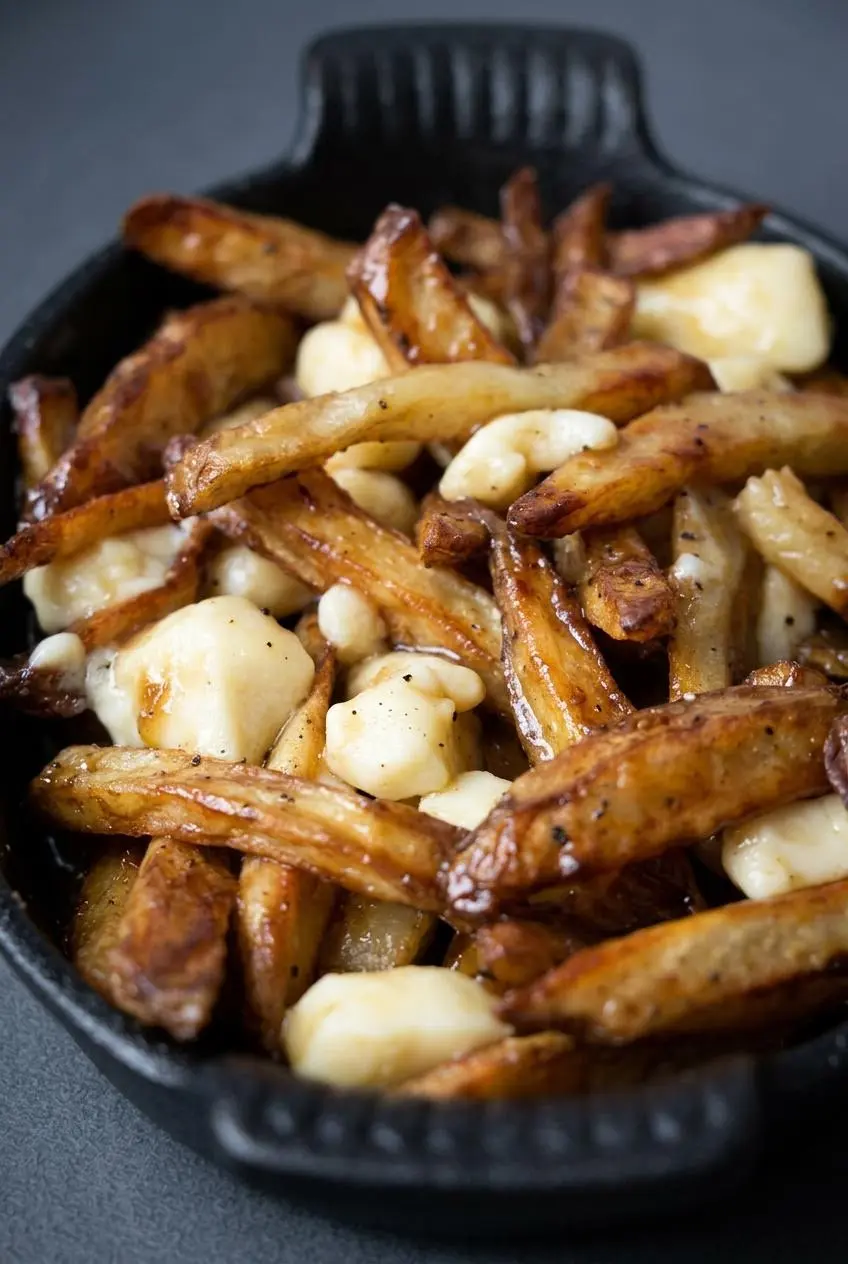
Fresh white cheddar cheese curds are the traditional choice because they are mild, elastic, and sturdy enough to soften without disappearing into the gravy. Their squeak comes from the fresh curd structure rubbing against your teeth, and it is a texture shredded cheese simply cannot provide.
Bring the curds toward room temperature before serving. Cold curds steal heat from the gravy and stay firm, while room-temperature curds relax at the edges and keep a slight pull in the center.
If curds are hard to find, tear full-fat, low-moisture block mozzarella into irregular bite-size pieces. It offers the closest mild flavor and melting resistance. Mild white cheddar can work in a pinch, but avoid finely shredded cheese, which melts too fast and turns the layers into a blanket of cheese rather than proper poutine.
Mastering Authentic Poutine Gravy
A good poutine gravy should be glossy enough to cling to a fry, yet fluid enough to settle between the potatoes and curds. The butter-and-flour roux creates flavor and structure, while the slurry gives you control over the final thickness.
Give the roux the full cooking time. At first it looks pale and pasty; after about 5 minutes of steady stirring, it turns deep golden and smells nutty. That toasted flavor is the difference between a flat gravy and one with real depth. If you enjoy building dark, savory roux-based sauces, this classic gumbo recipe uses the same useful principle of patiently developing color.
Whisk in the broths gradually and bring the pan to a boil so the roux fully smooths out. Add only part of the cornstarch slurry first, then let the gravy simmer briefly before deciding whether it needs more. It thickens quickly once it bubbles.
For a brighter finish, you can stir in a teaspoon of apple cider vinegar and a pinch of cracked black pepper just before serving. This is optional and stays outside the classic ingredient list, but the gentle acidity can cut through the richness nicely.
Step-by-Step Guide: How to Make Poutine
Make the gravy first, then fry the potatoes and assemble immediately. Keeping the components hot and moving quickly at the end protects the fries from soaking up too much gravy before they reach the table.
Prepare the Gravy
- Stir the cornstarch and water together in a small bowl until no dry patches remain, then set it aside.
The mixture should look smooth and loose, with no white lumps settled at the bottom. - Melt the butter in a large saucepan, add the flour, and stir regularly for about 5 minutes.
The roux is ready when it turns golden brown and gives off a warm, nutty aroma. - Whisk in the beef broth and chicken broth, bring the gravy to a boil, then stir in about half of the cornstarch mixture and simmer for about 1 minute.
Add more slurry in small additions only if needed, then season with pepper and salt to taste when the gravy lightly coats a spoon.
For Deep-Fried Fries
- Cut the potatoes into 1/2-inch sticks, cover them completely with cold water in a large bowl, and soak for at least 1 hour.
The water will turn cloudy as surface starch washes away from the cut potatoes. - Heat frying oil in a deep fryer or large, wide, heavy pot to 300°F, then drain the potatoes and blot them very dry with paper towels.
Dry potatoes should feel matte rather than wet, which helps them fry instead of steam. - Fry the potatoes at 300°F for 5 to 8 minutes, then transfer them to a wire rack and raise the oil temperature to 375°F.
After the first fry, the potatoes should be tender and pale with little to no browning. - Return the potatoes to the 375°F oil and fry until golden brown, then move them to a paper towel-lined bowl.
The finished fries should look deeply golden and feel crisp at the edges.
To Prepare Poutine
- Place the hot fries in a large clean bowl, season lightly with salt, and use tongs to toss them with hot gravy until mostly coated.
The fries should glisten with gravy while their edges still hold their shape. - Add the cheese curds, toss once more with the hot fries and gravy, then finish with freshly ground pepper and serve immediately.
The curds should soften slightly and stay distinct rather than melt into a smooth sauce.
Cold Soaking and Starch Removal
Soaking is the quiet step that makes the frying stages more reliable. Cold water pulls excess starch from the surface, reducing the chance that the outside browns before the center has cooked. Drain well and dry thoroughly afterward, because damp potatoes can splatter and lose crispness.
Two-Stage Frying Method for Maximum Crunch
The first fry at 300°F cooks the potato interior without coloring it much. Let the fries rest on the rack while the oil heats to 375°F, then use the second fry to create the crisp golden exterior. Skipping the first stage often leaves you choosing between undercooked centers and overly dark crusts.
Oven and Air Fryer Cooking Alternatives
For a lower-oil option, soak and dry the potato sticks as directed, then toss them lightly with oil. Bake them on a preheated sheet pan or cook them in an air fryer until crisp and golden, turning or shaking as needed for even browning. These fries will be less traditional than deep-fried potatoes, but they still make a satisfying base for hot gravy and curds.
Proper Layering and Assembly Sequence
Use a large bowl for assembly instead of pouring all the gravy over a piled plate of fries. Tossing lets a measured amount of hot gravy reach more surfaces, while the curds warm from the fries and sauce. Add gravy until the fries are mostly coated, not submerged. Poutine is comfort food, not potato soup.
Poutine Success Tips and Troubleshooting
- Thin gravy: Let it return to a gentle simmer, then whisk in more of the prepared cornstarch slurry in small increments. Give each addition a moment to thicken before adding another.
- Gravy that is too thick: Whisk in a little warm broth until it loosens to a pourable consistency. Cold broth can make the gravy seize or cool down too quickly.
- Lumpy gravy: Whisk steadily while adding the broth. If small lumps appear, keep whisking as the mixture heats, since the roux usually smooths out once the liquid reaches a boil.
- Soggy fries: Dry the soaked potatoes thoroughly, use both frying stages, and assemble only when the gravy is hot. Lukewarm gravy sinks in fast and dulls the crust.
- Curds that stay hard: Let them lose their chill before assembly, then toss them with steaming fries and gravy. They should soften at the edges while staying pleasantly chewy.
- Fry batches that brown unevenly: Avoid crowding the pot. Too many potatoes at once lower the oil temperature and encourage steaming instead of crisping.
Storage, Make-Ahead, and Reheating Instructions
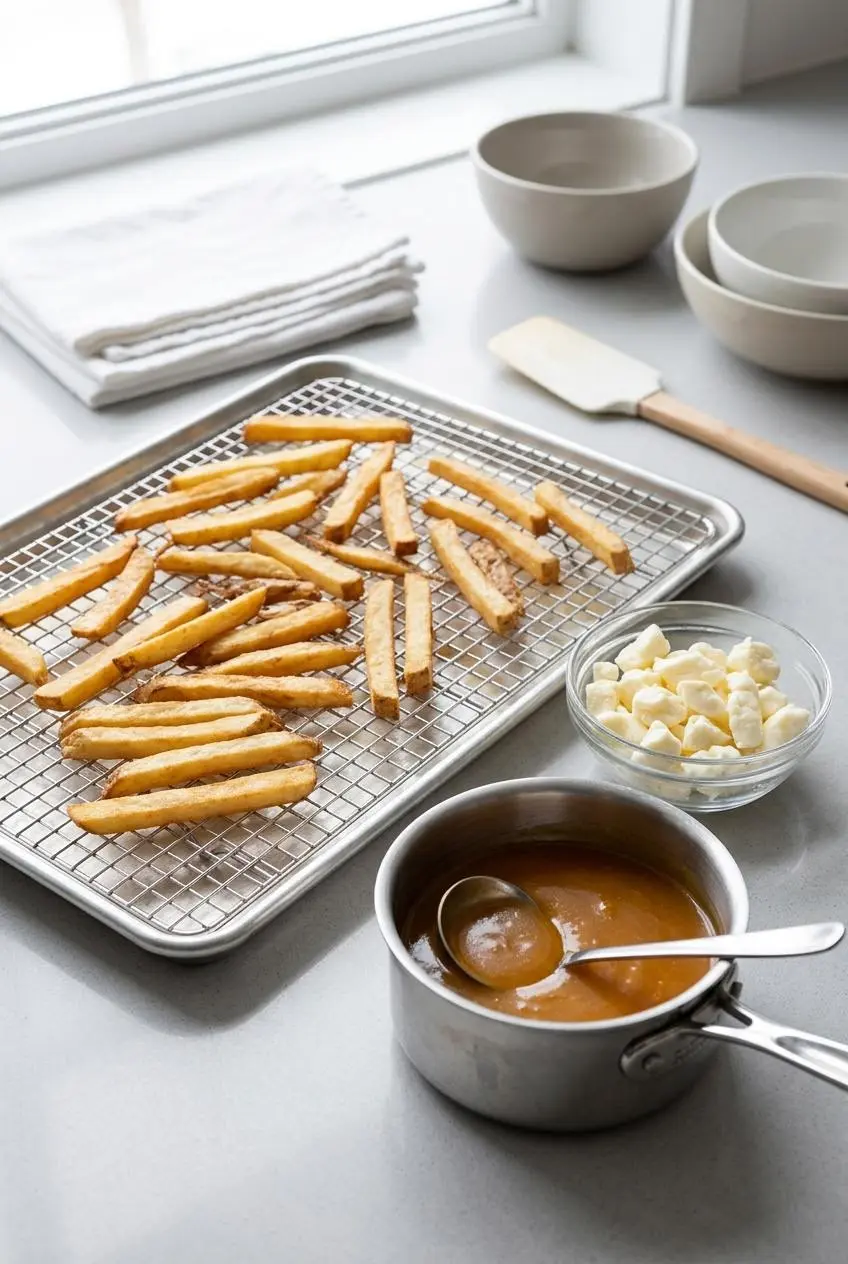
Make the gravy ahead if it helps your schedule, then cool it and keep it covered in the refrigerator until you are ready to warm it gently on the stovetop. Stir often as it reheats and loosen it with a splash of broth if it has thickened.
For leftovers, keep the fries, gravy, and curds separate whenever possible. Re-crisp the fries in a hot oven or air fryer, warm the gravy in a saucepan, and assemble fresh portions just before eating. Microwaving assembled poutine softens the fries quickly and leaves the curds less appealing.
Keep cheese curds chilled until you set them out for serving, and return any unused curds to the refrigerator promptly. A covered container helps protect their fresh, springy texture.
Delicious Variations and Serving Ideas
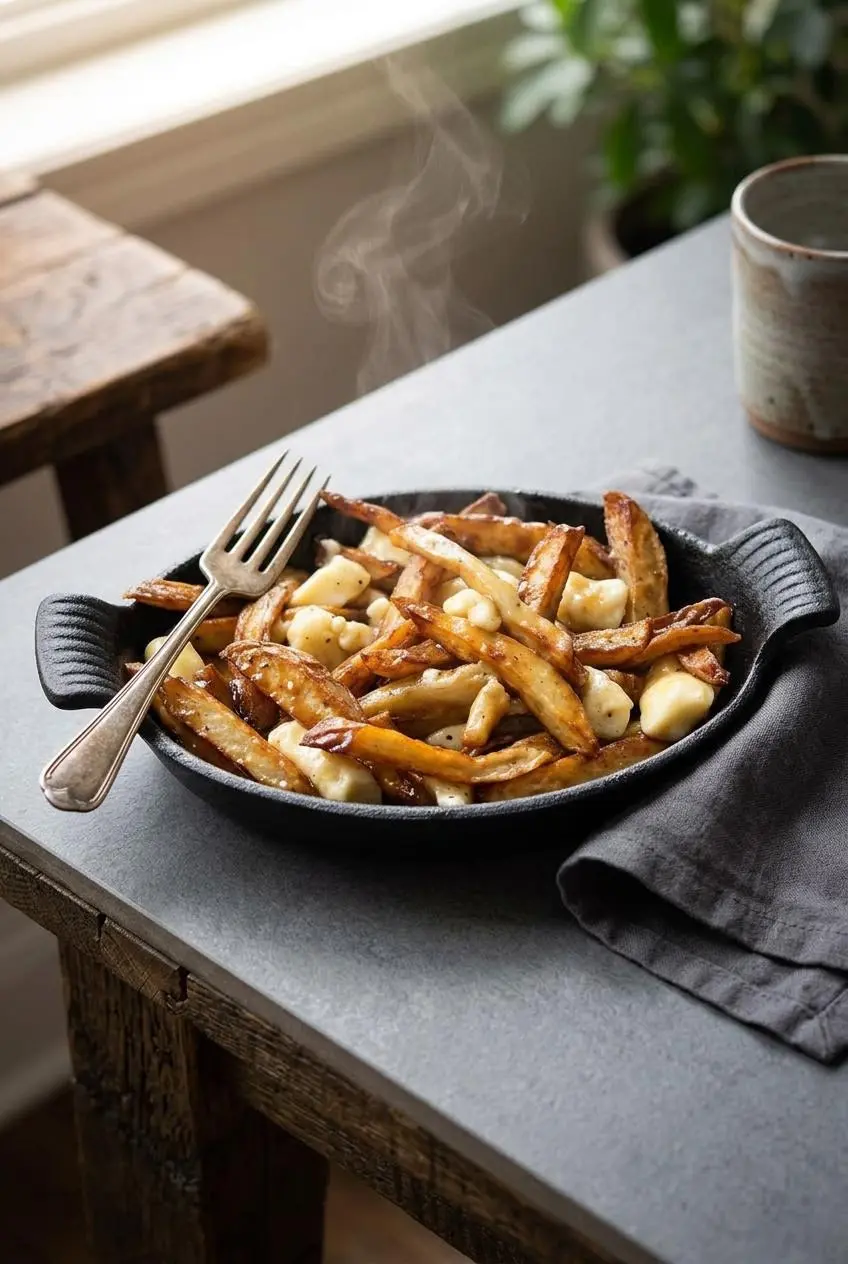
Classic poutine needs no extra topping, but optional additions can turn it into a fuller meal without changing the character of the original bowl. Serve it immediately in shallow, wide bowls with forks so every bite catches fries, gravy, and curds together.
- Pair it with smash burgers for an unapologetically hearty dinner.
- Serve a crisp Greek salad alongside it when you want something bright and briny to balance the rich gravy.
- For another cozy meat-and-potatoes dinner on a different night, try a hearty cottage pie.
Vegetarian Wild Mushroom Gravy Option
For a meat-free variation, replace the beef and chicken broth with a rich vegetable stock and build extra savory flavor with sautéed cremini or wild mushrooms, fresh thyme, and a small splash of balsamic vinegar. The mushrooms give the gravy earthy depth, while balsamic adds a subtle tang that keeps it from tasting flat.
Hearty Meat-Topped Poutine Ideas
For a restaurant-style loaded bowl, add one of these optional toppings after tossing the fries with gravy and curds:
- Slow-cooked pulled pork: Its tender strands catch the gravy and add smoky, savory richness.
- Braised beef brisket: Use juicy shredded or chopped brisket for a deeper beef-forward version.
- Caramelized onions: Their sweetness works especially well with the peppery gravy and sharp dairy flavor of the curds.
Conclusion
Homemade poutine is at its best when the gravy is steaming, the fries still crackle, and the curds have softened just enough to pull apart with each forkful.
Soak the potatoes, respect the two frying temperatures, and assemble with room-temperature curds and hot gravy. That small bit of timing brings the whole bowl together beautifully.
Frequently Asked Questions
What Kind of Cheese Is Best for Authentic Poutine?
Fresh white cheddar cheese curds are the traditional standard. They have a mild dairy flavor that does not overpower the gravy. They soften under heat while keeping their shape and elastic bite. Fresh curds also provide the signature squeak that defines classic poutine.
Can I Make Poutine Gravy Ahead of Time?
Yes. Prepare the gravy in advance, cool it, and keep it covered in the refrigerator until needed. Rewarm it gently over low heat, whisking in a splash of broth if it becomes thicker than you like.
What Is the Closest Substitute for Cheese Curds?
Torn pieces of whole-milk, low-moisture block mozzarella are the closest substitute. Tear it into irregular chunks instead of grating it. Its mild flavor and slower melt better resemble curds than finely shredded cheese. Mild white cheddar is another option, though it melts more readily.
How Do You Reheat Leftover Poutine Without It Getting Soggy?
Reheat the components separately. Crisp the fries in a hot oven or air fryer, warm the gravy gently on the stovetop, then combine them with curds just before serving. This gives the fries their best chance of recovering a crisp exterior.
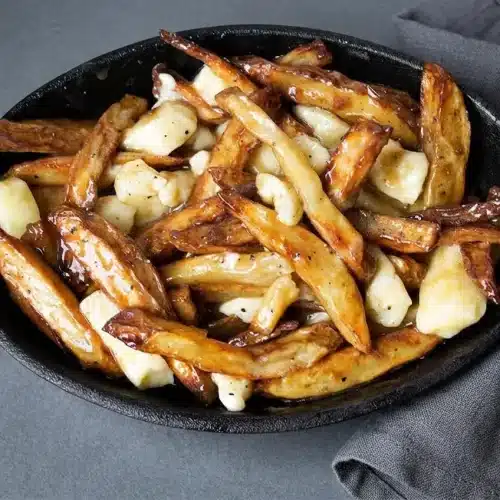
Poutine Recipe

Equipment
- Deep fryer or large heavy pot
- Whisk
- Large saucepan
- Wire cooling rack
- Tongs
Ingredients
Poutine Gravy
- 3 Tbsp cornstarch
- 2 Tbsp water
- 6 Tbsp unsalted butter
- 1/4 cup unbleached all purpose flour
- 20 oz beef broth
- 10 oz chicken broth
- Pepper, to taste
For Deep Fried Fries
- 2 lbs Russet potatoes ((3-4 medium potatoes))
- Peanut or other frying oil
Toppings
- 1 – 1 1/2 cups white cheddar cheese curds ((Or torn chunks of mozzarella cheese would be the closest substitution))
Instructions
Prepare the Gravy
- Stir the cornstarch and water together in a small bowl until no dry patches remain, then set it aside. The mixture should look smooth and loose, with no white lumps settled at the bottom.
- Melt the butter in a large saucepan, add the flour, and stir regularly for about 5 minutes. The roux is ready when it turns golden brown and gives off a warm, nutty aroma.
- Whisk in the beef broth and chicken broth, bring the gravy to a boil, then stir in about half of the cornstarch mixture and simmer for about 1 minute. Add more slurry in small additions only if needed, then season with pepper and salt to taste when the gravy lightly coats a spoon.
For Deep-Fried Fries
- Cut the potatoes into 1/2-inch sticks, cover them completely with cold water in a large bowl, and soak for at least 1 hour. The water will turn cloudy as surface starch washes away from the cut potatoes.
- Heat frying oil in a deep fryer or large, wide, heavy pot to 300°F, then drain the potatoes and blot them very dry with paper towels. Dry potatoes should feel matte rather than wet, which helps them fry instead of steam.
- Fry the potatoes at 300°F for 5 to 8 minutes, then transfer them to a wire rack and raise the oil temperature to 375°F. After the first fry, the potatoes should be tender and pale with little to no browning.
- Return the potatoes to the 375°F oil and fry until golden brown, then move them to a paper towel-lined bowl. The finished fries should look deeply golden and feel crisp at the edges.
To Prepare Poutine
- Place the hot fries in a large clean bowl, season lightly with salt, and use tongs to toss them with hot gravy until mostly coated. The fries should glisten with gravy while their edges still hold their shape.
- Add the cheese curds, toss once more with the hot fries and gravy, then finish with freshly ground pepper and serve immediately. The curds should soften slightly and stay distinct rather than melt into a smooth sauce.