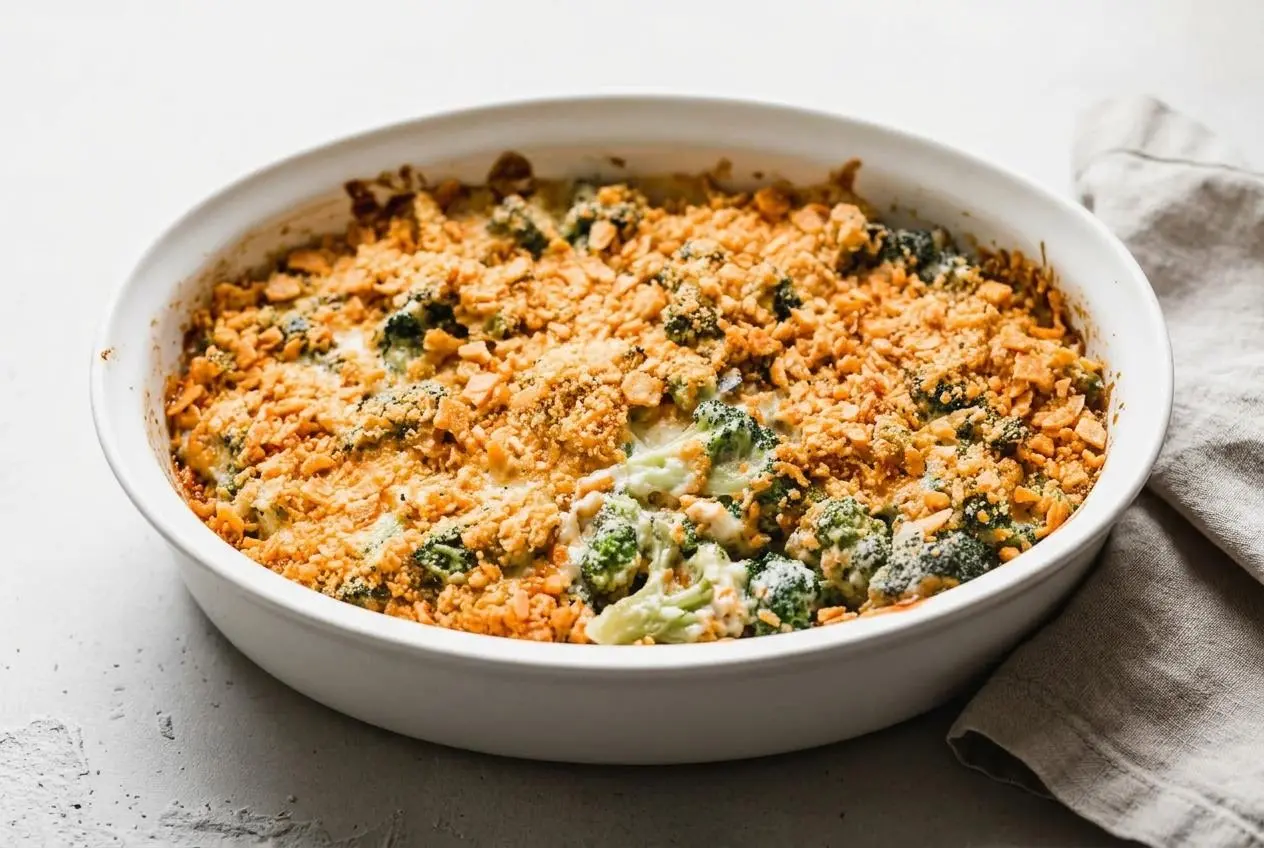
This broccoli cheese casserole pairs tender blanched florets with a creamy cheddar sauce and a crunchy cheese cracker crust, then bakes until hot and bubbly.
Broccoli cheese casserole is a rich, comforting side dish that works just as well beside a weeknight steak as it does on a holiday table. The brief blanch keeps the broccoli green and pleasantly firm beneath the sauce.
Sharp cheddar brings big flavor, while crushed cheese crackers brown into a savory top layer. The key is keeping excess moisture out from the start.
Drain the broccoli thoroughly after blanching, then give the colander a few firm shakes before it meets the sauce.
Essential Ingredients for the Best Broccoli Cheese Casserole
Each ingredient earns its place: broccoli brings fresh texture, soup and mayonnaise create richness, eggs help the filling set, cheddar adds bold flavor, and crackers supply the crisp finish.
- 6 cups fresh broccoli florets (about 2 bunches)
- 10.5 ounce can cream of mushroom soup ((or homemade))
- 1 cup mayonnaise
- 2 large eggs
- 2 Tablespoons dried minced onion
- 1 cup freshly grated sharp cheddar cheese
- 1 cup cheese crackers (, crushed)
The condensed soup gives the sauce its savory backbone, while mayonnaise makes it silky and full-bodied. Eggs bind the creamy mixture as it bakes, helping it set around the broccoli instead of separating into a greasy layer. Freshly grated sharp cheddar melts more smoothly than bagged shreds, which often contain anti-caking starches. The crackers bring the salty, golden crunch that makes every scoop interesting.
I grate cheddar from a block right before mixing because the finer, fresher shreds disappear into the sauce much more evenly.
Eggs and cheese do similar structural work in a broccoli cheese quiche, but this casserole stays softer and spoonable thanks to its creamy sauce.
Fresh Broccoli vs Frozen Broccoli
Fresh broccoli gives the most reliable tender-crisp texture here. Cut larger florets into bite-size pieces so they cook evenly, and blanch them for the full two minutes. They should turn bright emerald green without becoming soft.
Frozen broccoli can work when that is what you have. Thaw it completely, then press it dry in clean kitchen towels or paper towels before adding it to the sauce. Frozen florets hold a surprising amount of water, and that moisture can loosen the filling and leave the topping limp.
Whether using fresh or frozen broccoli, avoid leaving water trapped in the florets. A careful drain is more useful than trying to bake away extra liquid later.
Choosing and Shredding the Best Cheese
Sharp cheddar is the best fit because its flavor holds up against the rich soup and mayonnaise. Buy a block and shred it yourself for a smoother melt and fuller cheddar taste. Mild cheddar works, but it can fade into the creamy filling.
If you want a slightly more rounded flavor, stir a pinch of ground nutmeg or up to 1/2 teaspoon dry ground mustard into the sauce mixture. Both are optional flavor boosters and do not replace any ingredient in the casserole.
Cheese crackers make a flavorful crust with a distinct cheddar edge. Ritz-style crackers create a more buttery finish, while seasoned breadcrumbs make a finer, more uniform crust. Whichever you choose, add the crumbs shortly before baking so they stay dry and crisp.
Canned Soup vs Scratch-Made Sauce
Cream of mushroom soup gives this casserole its familiar, savory character and keeps assembly fast. Its concentrated texture also helps the sauce cling to the broccoli rather than pooling at the bottom of the dish.
For a homemade alternative, make a quick roux with butter and flour, then whisk in broth and heavy cream until thickened. Use it as a creamy replacement only after it has cooled slightly, so it blends smoothly with the eggs and mayonnaise. For another cozy use of broccoli and cheddar in a creamy format, try broccoli cheese soup.
How to Make Broccoli Cheese Casserole
This method moves quickly, so have the casserole dish greased and the crackers crushed before you start mixing. The broccoli needs to be dry, the sauce needs to be smooth, and the topping needs an even layer.
- Heat a large pot of water until it reaches a rolling boil, then add the broccoli florets and cook for 2 minutes.
Watch for the florets to turn bright green while still feeling firm at the center. - Drain the broccoli very well in a colander and set it aside while you prepare the creamy mixture.
Let steam escape and shake away as much water as possible so the finished casserole stays thick. - Whisk the mushroom soup, mayonnaise, eggs, dried minced onion, and freshly grated cheddar in a large mixing bowl until evenly combined.
The sauce should look smooth and creamy, with no visible streaks of egg or pockets of unmixed cheese. - Add the drained broccoli to the bowl and fold until every floret is coated, then transfer the mixture to a greased 2 qt casserole dish or 8-inch dish.
Spread the broccoli into an even layer so the center and edges bake at the same pace. - Scatter the crushed cheese crackers evenly over the top and bake uncovered at 400°F for 40 to 45 minutes.
The casserole is ready when the edges actively bubble and the cracker crust is deep golden brown.
If you use an instant-read thermometer for extra reassurance, egg-based casseroles reach the recommended endpoint at 160°F in the center. Insert it into the creamy middle rather than through the cracker topping.
Troubleshooting and Texture Tips
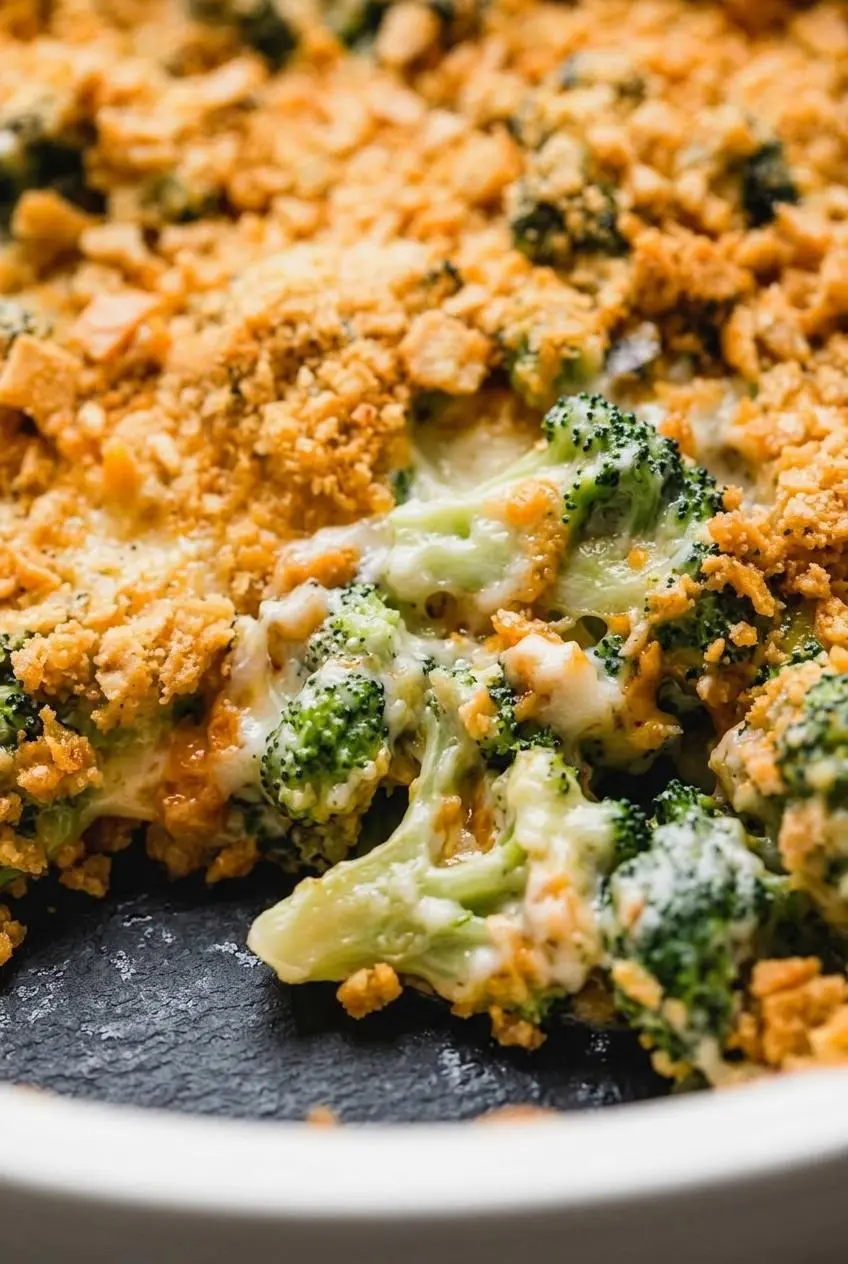
A creamy casserole depends more on moisture control than complicated technique. These fixes address the issues that most often get between you and a neat, cheesy scoop.
- Watery filling: Broccoli was likely under-drained after blanching, or frozen broccoli went in damp. Drain fresh florets well, and thaw and press frozen florets dry before mixing.
- Soft, soggy topping: The crackers absorbed moisture before baking. Keep them separate until the casserole is ready for the oven, then sprinkle them on in an even layer.
- Greasy-looking sauce: Make sure the eggs are thoroughly whisked into the soup and mayonnaise before the cheese goes in. They help stabilize the filling as it bakes and give it a more cohesive texture.
- Broccoli that feels mushy: Keep the blanching time to 2 minutes. The oven finishes the cooking, so the florets do not need to be tender before they go into the dish.
- Crust browning too quickly: Move the casserole to a lower oven rack if the crumbs darken before the center bubbles. The topping should be golden, not scorched.
Let the hot casserole stand on the counter for 5 minutes before serving. That brief pause gives the sauce a chance to settle, so it clings to the broccoli instead of running across the plate.
Make-Ahead, Storage, and Reheating
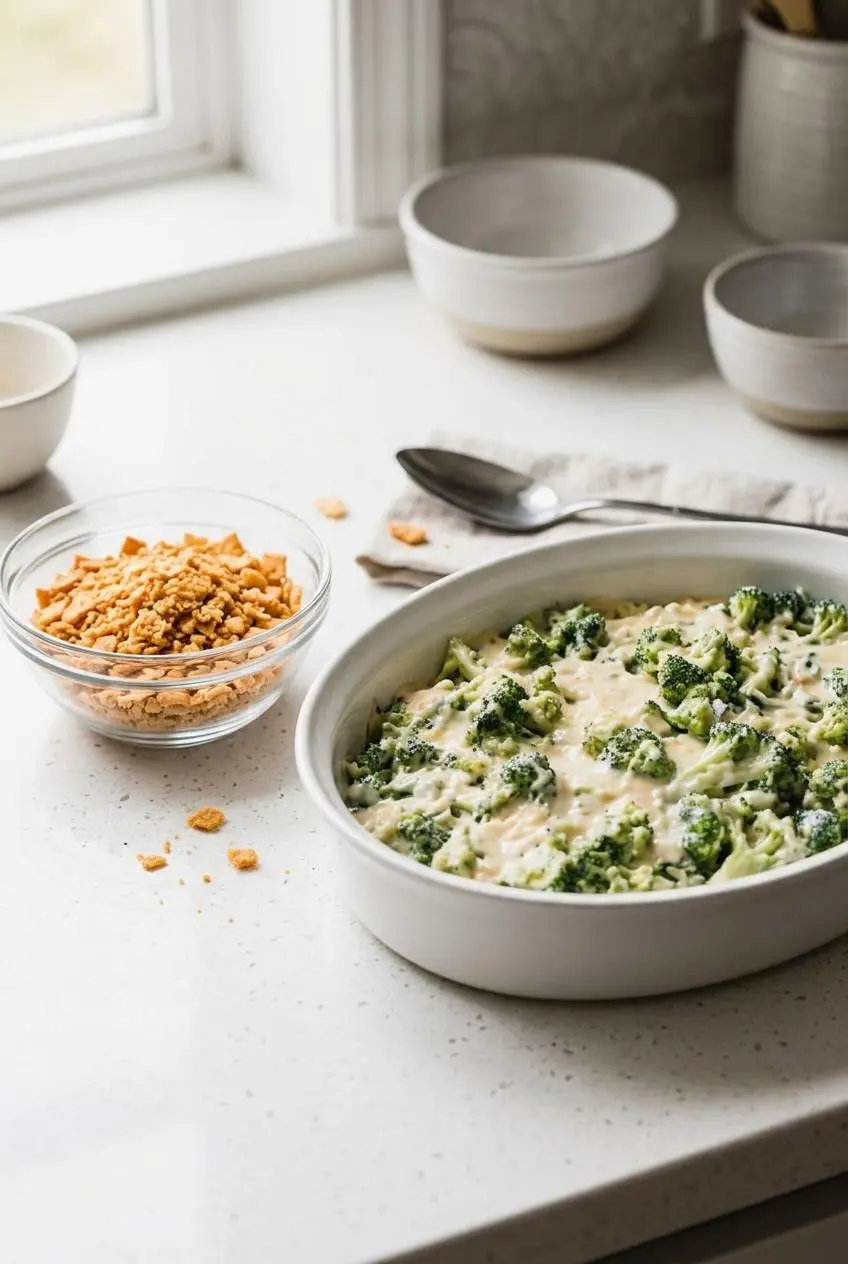
For holiday prep, assemble the broccoli and sauce mixture in the casserole dish, cover it, and chill it until baking time. Keep the crushed cheese crackers in a separate airtight container, then add them immediately before the dish goes into the oven. This protects their crunch.
Store cooled leftovers in a covered airtight container in the refrigerator. For the best texture, reheat portions in the oven until the filling is hot and the topping crisps again. A microwave warms the casserole quickly, but it softens the cracker crust.
If the topping has lost some crunch after storage, warm the casserole uncovered in the oven rather than tightly covering it. Keep an eye on the surface so the crumbs deepen in color without burning.
Flavorful Variations and Serving Suggestions
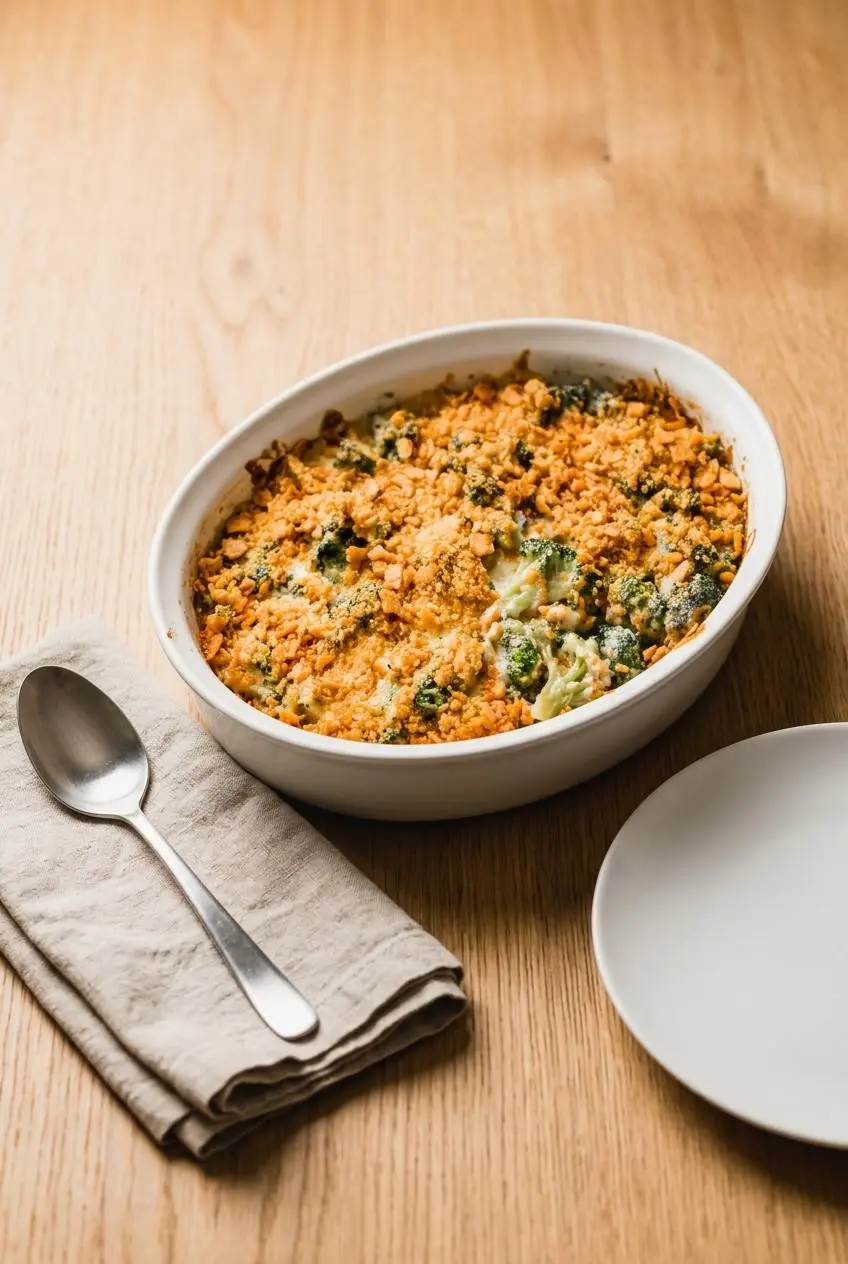
The classic version is satisfying on its own, but a few optional changes can shift it toward a heartier dinner, a rice casserole, or a low-carb bake. Keep these ideas separate from the main method so the original creamy balance stays intact.
Broccoli Rice Cheese Casserole
Fold cooked long-grain white or brown rice into the broccoli and sauce mixture for a more substantial Southern-style broccoli rice bake. The rice absorbs some sauce and creates a denser, spoonable casserole, so make sure the broccoli is especially well drained before combining everything.
Use this version when you want the casserole to fill more of the plate alongside a simple protein. It is especially useful for casual family dinners when a vegetable side needs a little more staying power.
Keto and Low-Carb Swaps
For a low-carb variation, replace the condensed soup with a cream cheese-based sauce and skip the cracker topping. Crushed pork rinds give a crisp, savory finish, while grated Parmesan creates a more delicate browned top.
These swaps change the flavor profile and produce a richer, tangier casserole than the classic version. Keep the broccoli dry and avoid overcooking it, since the creamy filling is still vulnerable to excess vegetable moisture.
What to Serve with Broccoli Casserole
- Serve it beside roasted turkey or baked glazed ham for a comforting holiday vegetable side.
- Pair it with grilled steak and garlic mashed potatoes for a hearty weeknight plate.
- Add a crisp green salad to balance the rich cheddar sauce and buttery cracker topping.
- Fold in shredded chicken or diced ham to turn the casserole into a more filling dinner bake. For another family-style option, try this cheesy chicken casserole.
For a holiday spread with more than one vegetable option, this casserole sits nicely alongside a green bean casserole, roasted turkey, and a bright salad.
Conclusion
This broccoli cheese casserole delivers the comfort of creamy cheddar sauce with a deeply golden cracker top and broccoli that still has some bite. The two-minute blanch and thorough draining make the biggest difference in the finished texture.
Use freshly grated cheddar, keep the topping dry until baking, and give the casserole a short rest before scooping. You will get creamy centers, crisp edges, and a side dish worth serving often.
Frequently Asked Questions
Can I Use Frozen Broccoli Instead of Fresh for This Casserole?
Yes. Thaw frozen broccoli completely before using it. Press the thawed florets dry with paper towels or clean kitchen towels. Remove as much moisture as possible before mixing the broccoli into the cheese sauce. Frozen broccoli is usually softer than fresh, so handle it gently when folding it into the filling.
Why Did My Broccoli Cheese Casserole Turn Out Watery?
Excess water from the broccoli is the usual culprit. Drain fresh broccoli thoroughly after its 2-minute blanch. Never add frozen broccoli while it is still icy or wet. Pat damp florets dry before they go into the sauce, then bake until the edges are actively bubbling.
Can I Make Broccoli Cheese Casserole Ahead of Time?
Yes, assemble the broccoli and creamy filling in the baking dish, cover it, and chill it until you are ready to bake. Store the crushed cheese crackers separately in an airtight container. Add the topping just before baking for the best crisp texture. Let the chilled dish sit briefly while the oven heats so the casserole dish is not going straight from refrigerator to a hot oven.
What Is the Best Way to Reheat Leftover Broccoli Casserole?
Reheat it in the oven for the best chance of restoring the crisp topping. Warm the casserole uncovered until the center is hot and the crumbs have crisped again. Use a microwave only when speed matters more than crunch, since it softens the crackers. For small portions, use an oven-safe dish so the topping gets heat from all sides.
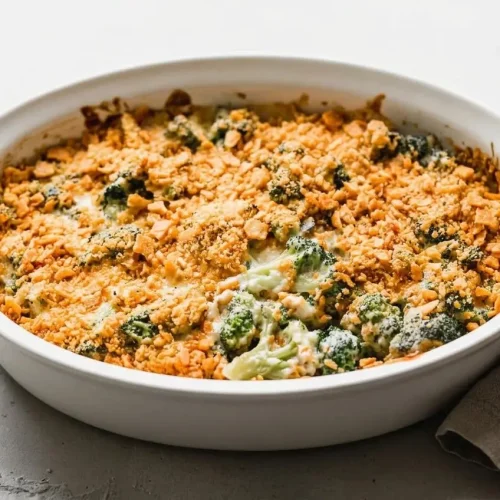
Broccoli Cheese Casserole

Equipment
- Large Pot
- Large Mixing Bowl
- greased 2 qt casserole dish
Ingredients
- 6 cups fresh broccoli florets about 2 bunches
- 10.5 ounce cream of mushroom soup can (or homemade)
- 1 cup mayonnaise
- 2 large eggs
- 2 Tablespoons dried minced onion
- 1 cup freshly grated sharp cheddar cheese
- 1 cup cheese crackers crushed
Instructions
- Heat a large pot of water until it reaches a rolling boil, then add the broccoli florets and cook for 2 minutes. Watch for the florets to turn bright green while still feeling firm at the center.
- Drain the broccoli very well in a colander and set it aside while you prepare the creamy mixture. Let steam escape and shake away as much water as possible so the finished casserole stays thick.
- Whisk the mushroom soup, mayonnaise, eggs, dried minced onion, and freshly grated cheddar in a large mixing bowl until evenly combined. The sauce should look smooth and creamy, with no visible streaks of egg or pockets of unmixed cheese.
- Add the drained broccoli to the bowl and fold until every floret is coated, then transfer the mixture to a greased 2 qt casserole dish or 8-inch dish. Spread the broccoli into an even layer so the center and edges bake at the same pace.
- Scatter the crushed cheese crackers evenly over the top and bake uncovered at 400°F for 40 to 45 minutes. The casserole is ready when the edges actively bubble and the cracker crust is deep golden brown.