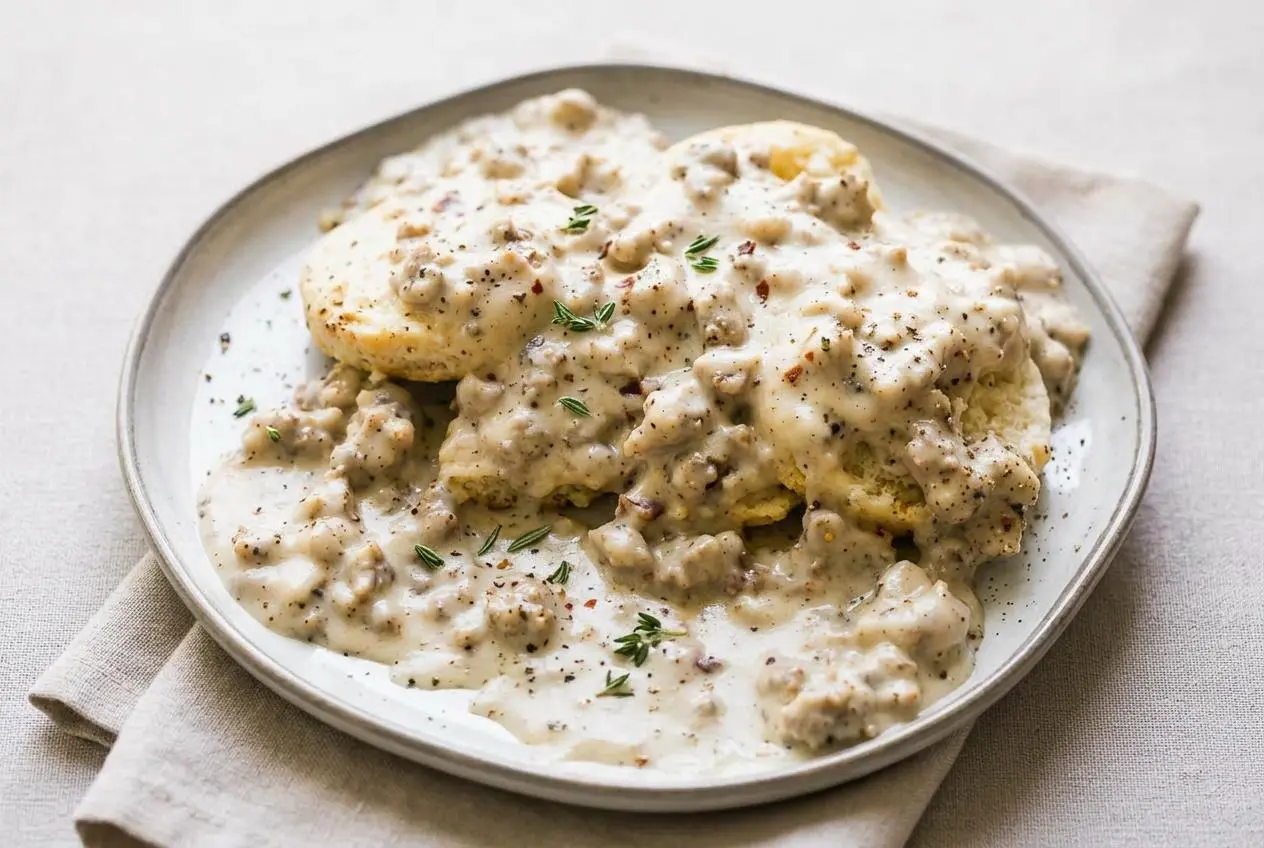
Brown pork sausage, build a quick roux with its drippings, flour, and butter, then gently simmer half and half until the gravy is thick, peppery, and ready for warm biscuits.
This biscuits and gravy recipe brings together flaky buttermilk biscuits and savory country gravy in about 15 minutes. The key is letting the sausage brown well, then keeping the heat gentle once the dairy goes in.
It’s the kind of warm, peppery breakfast that makes a regular morning feel like a weekend. Watch for that glossy spoon-coating finish.
Warm the biscuits before starting the gravy so they are ready the moment the sauce reaches its best texture.
Essential Ingredients for Biscuits and Gravy
Every ingredient earns its place here: sausage creates savory richness, flour provides structure, half and half makes the gravy velvety, and herbs and pepper keep the flavor balanced.
- 8 Flakey Buttermilk Biscuits
- 1 pound pork sausage
- 2 Tablespoon + 1 teaspoon(s)s all-purpose flour ((18 g))
- 2 1/2 cups half and half ((600 ml))
- 1 Tablespoon butter ((14 g))
- 1/8 teaspoon dried thyme ((0.25 g))
- 1/8 teaspoon dried crushed rosemary ((0.25 g))
- 1/8 teaspoon crushed red pepper flakes ((0.25 g))
- freshly ground black pepper (, to taste)
Pork sausage seasons the gravy from the start and leaves flavorful browned bits in the pan. Flour and butter turn the rendered fat into a thickening base, while half and half gives the finished gravy a rich, smooth body. Thyme, rosemary, red pepper flakes, and black pepper brighten that richness instead of letting it taste flat.
I like to use a coarse grind of black pepper here because it stays noticeable against the creamy gravy instead of disappearing into it.
Sausage Selection and Fat Ratios
Choose bulk pork breakfast sausage with moderate fat and mild country or sage seasoning. The rendered fat helps carry the flour and forms the foundation of the roux, while the browned sausage brings most of the savory flavor.
After browning, blot away most of the excess grease with a paper towel, but leave a light coating and the browned bits behind. Removing every bit of fat can leave the flour dry and the gravy less cohesive. Leaving a pool of grease, though, makes the finished sauce feel oily rather than velvety.
Milk vs Half-and-Half: Choosing Your Creaminess
- Half and half: The choice used here. It creates a fuller, silkier gravy that thickens readily over gentle heat.
- Whole milk: An optional swap for a lighter, more traditional country-style gravy with a softer dairy flavor.
- 2 percent milk: It makes a thinner-bodied gravy and needs especially patient simmering to reach a satisfying consistency.
Keep the heat at medium-low with any dairy choice. A quiet simmer with slow bubbles is what you want, not a hard boil that can make the gravy look grainy or separated.
Seasoning Strategy for Balanced Southern Flavor
Freshly ground black pepper is the defining seasoning in a classic sausage gravy, giving the mild dairy base a sharp, earthy lift. Thyme adds a gentle woodsy note, rosemary brings a fragrant edge, and red pepper flakes offer warmth without making the standard version aggressively hot.
For an optional deeper savory profile, add a tiny grating of fresh nutmeg or a pinch of smoked paprika after cooking. Use a restrained hand so those flavors support the sausage rather than taking over.
Step-by-Step Cooking Technique
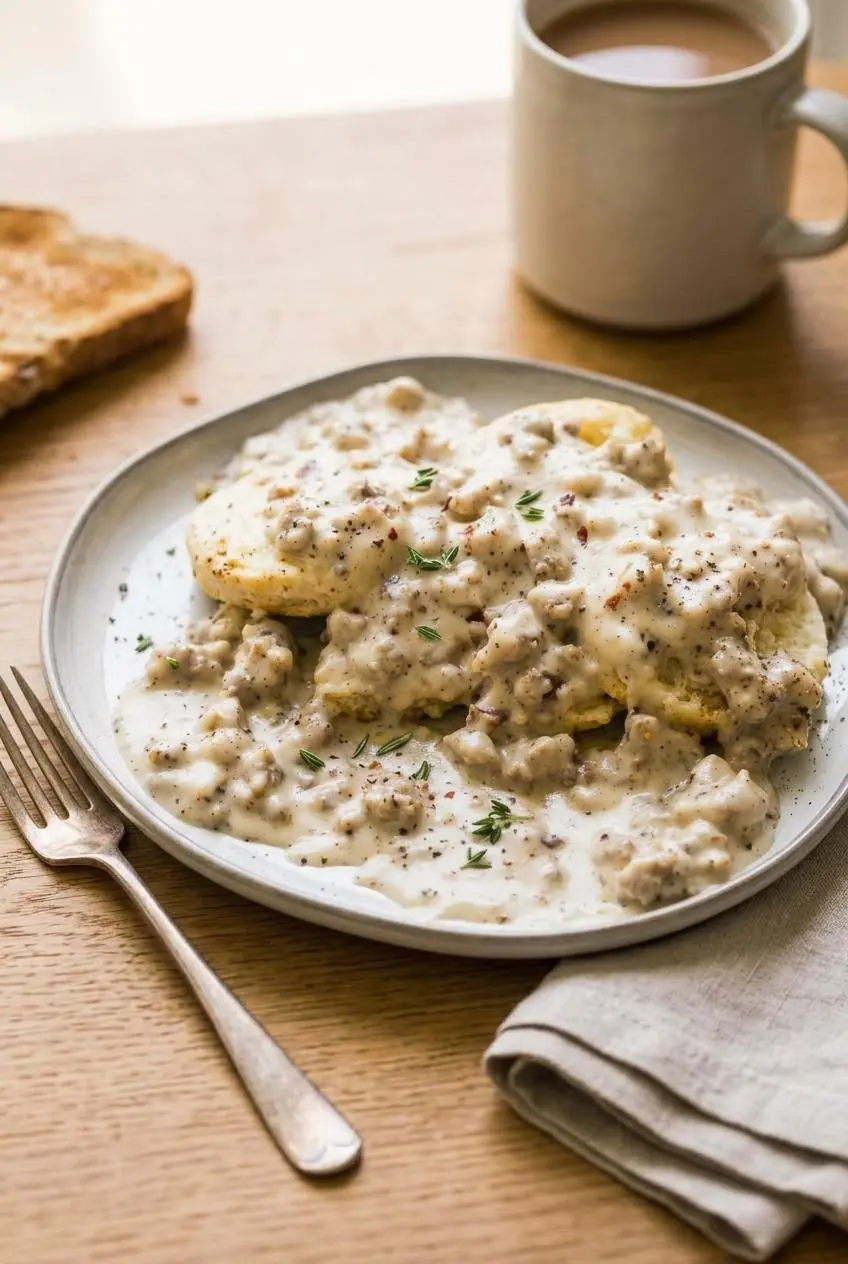
Good gravy starts with browned sausage and ends with a gentle simmer. Each stage develops flavor or controls texture, so resist the urge to rush the pan.
- Cook the pork sausage in a large saucepan until it is browned and broken into small crumbles, then blot away most of the excess grease with a paper towel.
Leave the browned bits on the pan bottom because they add deep, savory flavor to the gravy. - Stir in the flour and butter, then slowly work in the half and half over medium-low heat while stirring often for several minutes.
The mixture should smell lightly toasty before becoming smooth and thick with slow, gentle bubbles. - Stir in the dried thyme, dried crushed rosemary, crushed red pepper flakes, and freshly ground black pepper.
Taste after the seasonings bloom in the warm gravy, then add more black pepper if you want a stronger peppery finish. - Split the warm biscuits and spoon the hot sausage gravy over the cut sides.
The gravy should settle into the crumb while the biscuit tops keep some flaky texture.
Choosing the Right Biscuits: Homemade vs Shortcut
Tall homemade flaky buttermilk biscuits give you crisp layers and a tender interior that drinks in gravy beautifully. Warm refrigerated or frozen biscuits are a convenient choice when the gravy is the main event. Either way, split them while warm instead of slicing them far ahead, which helps the inside stay soft and ready for the sauce.
For serving, spoon gravy over only part of each biscuit if you want to preserve more of the top crust. Fried eggs or crisp hash browns make fitting breakfast companions.
Mastering the Roux and Gravy Consistency
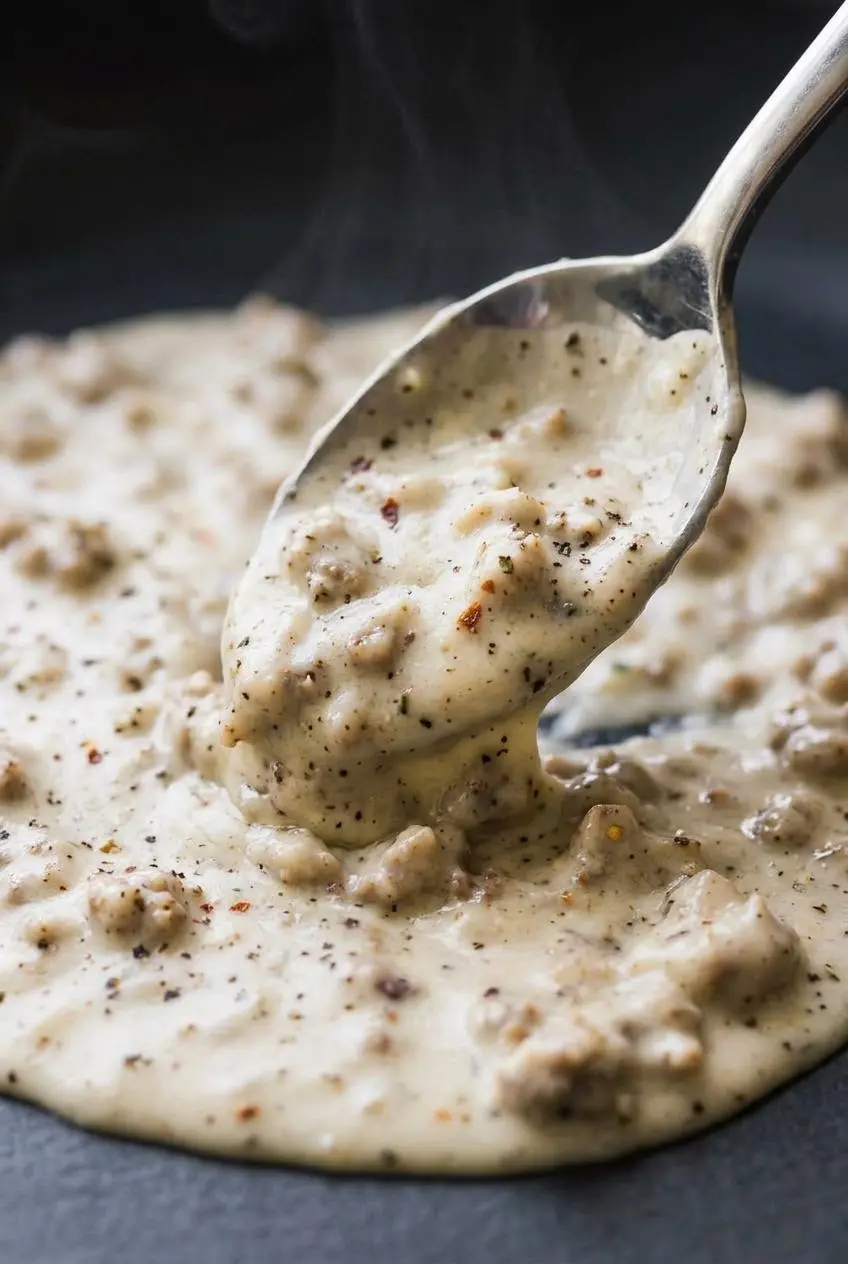
The roux is what turns sausage drippings and dairy into gravy rather than a loose cream sauce. Fat coats the flour particles first, then the starches swell gradually as the half and half heats, creating a smooth, stable thickness.
The often-mentioned 3:2:1 gravy rule is a shorthand for balancing fat, flour, and liquid, but it is not a fixed formula that overrides this dish’s measured ingredients. For this gravy, focus on the pan: the flour needs enough fat to disperse smoothly, and the dairy needs gentle heat and regular stirring to hydrate the starches evenly.
The gravy is ready when it coats the back of a spoon and a finger drawn through it leaves a distinct trail. Take it off the heat while it is slightly looser than your ideal serving texture because it thickens as it cools.
- Gravy looks greasy: Too much rendered fat remained in the pan. Stir steadily over low heat and let the sauce come together before deciding whether it needs more dairy.
- Gravy tastes floury: The flour did not cook long enough in the hot sausage fat. Keep stirring until the raw flour aroma changes to a mild toasted scent before the dairy fully thickens.
- Gravy seems bland: Add more freshly ground black pepper before reaching for extra salt. Sausage seasoning varies widely, and pepper gives the classic character.
How to Avoid Flour Lumps
Stir the flour through the sausage and butter before the dairy is fully incorporated. This coats the flour in fat, helping prevent dry pockets from turning into stubborn lumps later.
Pour the half and half in gradually while whisking or stirring continuously, especially at the beginning. Keep the saucepan at medium-low so the starches have time to swell evenly. If a small lump appears, press it against the side of the pan while stirring rather than adding dry flour to the hot gravy.
Quick Fixes for Over-Thickened Gravy
If the gravy reduces too much, warm a little milk or half and half separately and whisk it in one tablespoon at a time over low heat. Stop when the sauce flows easily from the spoon but still coats it.
If the gravy is thinner than you want, keep it at a gentle simmer and stir often until it tightens. Avoid turning the heat up high, which can scorch the bottom or upset the dairy texture. Give it a minute off the heat before judging the final thickness.
Flavor Twists and Variations
Keep the main version intact, then adjust a portion or a future batch when you want a different kind of breakfast plate.
Spicy Southern Sausage Gravy
- Use hot breakfast sausage for deeper chile flavor throughout the gravy.
- Add a pinch of cayenne pepper for a sharper heat that arrives after the creamy first bite.
- Finish with extra cracked black pepper for bolder warmth without changing the gravy’s texture.
For a more playful brunch use of these flavors, try a sausage gravy breakfast pizza instead of serving the gravy over biscuits.
Lighter Milk-Based Country Gravy
Substitute whole milk for the half and half if you prefer a lighter country gravy. It will taste less rich and may take a little more patient stirring to thicken, but it can still be creamy and satisfying when kept at a gentle simmer.
Serve this lighter version with fresh fruit or a side of eggs for a balanced breakfast plate.
Storage, Make-Ahead, and Reheating

Make the gravy ahead when it helps your morning run more smoothly, then reheat it gently just before serving. Cool it promptly, transfer it to an airtight container, and keep it chilled. Cooked pork dishes can be refrigerated at 40 °F or below for 3 to 4 days, or frozen at 0 °F for 2 to 3 months, as outlined in pork storage time and temperature guidance.
For the best texture, warm the gravy in a skillet or saucepan over low heat. Whisk in a splash of fresh milk or half and half as it loosens, stirring frequently until the sauce looks glossy again. Avoid blasting it in a hot microwave without stirring, since the edges can overheat before the center warms through.
Freeze biscuits separately if you choose to store the gravy frozen. Reheat the gravy gently after thawing, then warm the biscuits separately so they retain their flaky structure instead of becoming soggy beneath the sauce.
Conclusion
Biscuits and gravy works because a few careful moves make a big difference: brown the sausage deeply, cook the flour until it smells lightly toasted, and let the dairy simmer gently until it coats a spoon.
Bring it to the table hot, with warm split biscuits and a generous finish of black pepper. That first spoonful should be creamy, savory, and wonderfully comforting.
Frequently Asked Questions
What Is the Best Type of Sausage to Use for Sausage Gravy?
Use bulk pork breakfast sausage with moderate fat content. Mild sage or country-style sausage gives the gravy classic breakfast flavor without overpowering the herbs. The rendered fat helps the flour form a smooth roux, so very lean sausage may produce a less rich result.
How Do You Fix Sausage Gravy That Is Too Thick or Too Thin?
For thick gravy, whisk in warm milk or half and half a small splash at a time over low heat. For thin gravy, maintain a gentle simmer and stir until excess moisture cooks off. Remember that gravy thickens further after it leaves the heat, so wait briefly before making another adjustment.
Can You Reheat Sausage Gravy Without It Separating?
Yes. Reheat it slowly in a saucepan or skillet over low heat. Whisk often and add a small splash of fresh milk or half and half as needed to restore a creamy texture. Avoid rapid boiling, which can make the dairy look grainy.
Can Sausage Gravy Be Made Ahead of Time?
Yes. Prepare it ahead, cool it promptly, and store it covered in the refrigerator. Warm it slowly before breakfast and whisk in a little dairy if it has thickened while chilled. Bake or warm the biscuits close to serving time so their layers stay tender and flaky.

Biscuits and Gravy Recipe

Equipment
- Large saucepan
- Paper towel
- stirring spoon
Ingredients
- 8 Flakey Buttermilk Biscuits
- 1 pound pork sausage
- 2 Tablespoon + 1 teaspoon(s)s all-purpose flour ((18 g))
- 2 1/2 cups half and half ((600 ml))
- 1 Tablespoon butter ((14 g))
- 1/8 teaspoon dried thyme ((0.25 g))
- 1/8 teaspoon dried crushed rosemary ((0.25 g))
- 1/8 teaspoon crushed red pepper flakes ((0.25 g))
- freshly ground black pepper (, to taste)
Instructions
- Cook the pork sausage in a large saucepan until it is browned and broken into small crumbles, then blot away most of the excess grease with a paper towel. Leave the browned bits on the pan bottom because they add deep, savory flavor to the gravy.
- Stir in the flour and butter, then slowly work in the half and half over medium-low heat while stirring often for several minutes. The mixture should smell lightly toasty before becoming smooth and thick with slow, gentle bubbles.
- Stir in the dried thyme, dried crushed rosemary, crushed red pepper flakes, and freshly ground black pepper. Taste after the seasonings bloom in the warm gravy, then add more black pepper if you want a stronger peppery finish.
- Split the warm biscuits and spoon the hot sausage gravy over the cut sides. The gravy should settle into the crumb while the biscuit tops keep some flaky texture.