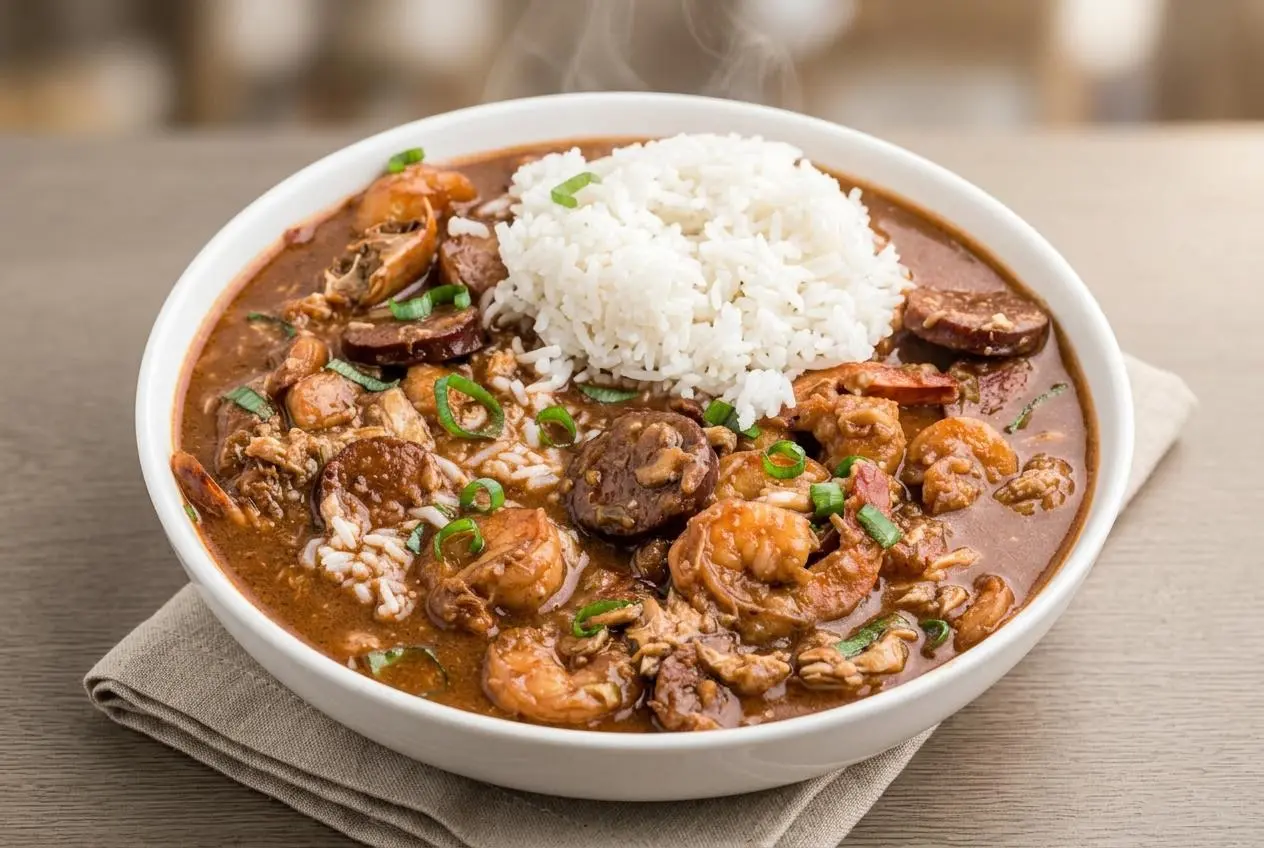
Traditional gumbo is a Louisiana stew built on a slow-cooked dark roux, the Holy Trinity of onions, celery, and bell pepper, and a hearty mix of sausage and seafood, simmered low and served over rice.
If you have ever stood over a pot and watched a stockpot fill the kitchen with a deep, smoky aroma, you already understand why this gumbo recipe earns its reputation as pure Southern comfort. This one leans into that same slow-building richness, layering a dark roux, smoked sausage, and fresh seafood into a stew that tastes like it took all day, because it kind of does.
What makes this version work is patience in exactly the right place. Get the roux dark enough and everything else falls into line, and that first spoonful over warm rice is the payoff for standing at the stove.
Keep a flat wooden spoon moving through the roux the entire time it cooks. It scrapes the bottom of the pot evenly and stops the flour from catching in one spot, which is the fastest way to end up with burnt specks instead of a silky base.
Ingredients
Every ingredient here builds a specific layer of this gumbo, from the roux that thickens and deepens flavor to the proteins that add richness, smokiness, and briny sweetness in the final simmer.
- 1 Cup All Purpose Flour
- 1 Cup Canola Oil
- 2 Cups Yellow Onions (chopped)
- 1 Cup Green Bell Peppers (chopped)
- 1 Cup Celery (chopped)
- 2 Links Andouille Sausage (sliced)
- 2 Links Smoked Sausage (sliced)
- 1 Tablespoon Creole Seasoning
- 1 teaspoon Dried Thyme (Dried)
- 1 Tablespoon Garlic Powder
- 1 Tablespoon Onion Powder
- 2 Tablespoons Garlic (Fresh Minced)
- 4 Each Bay Leaves (Whole)
- 5 Cups Seafood Stock
- 5 Cups Chicken Broth
- 1/2 Cup Fresh Parsley (Chopped)
- 2/3 Cup Green Onions (Chopped)
- 2 Pounds Crabs (Whole)
- 2 Pounds Large Shrimp
- 8 Ounces Fresh Lump Crab Meat
The flour and oil form the roux, the backbone that gives gumbo its color, nutty depth, and thickness long before anything else hits the pot. The Holy Trinity of onions, bell peppers, and celery melts into that roux to build a sweet, savory foundation, while the andouille and smoked sausage bring smoky richness that seasons the whole stew as it simmers. Seafood stock and chicken broth add body and savoriness, and the crab, shrimp, and lump crab meat go in last, keeping their tenderness instead of turning tough or rubbery.
I always pat the shrimp completely dry before they touch the pot. Wet shrimp cool down the simmering liquid and steam instead of poaching, which softens that snappy bite you want in the finished bowl.
How to Make Authentic Gumbo
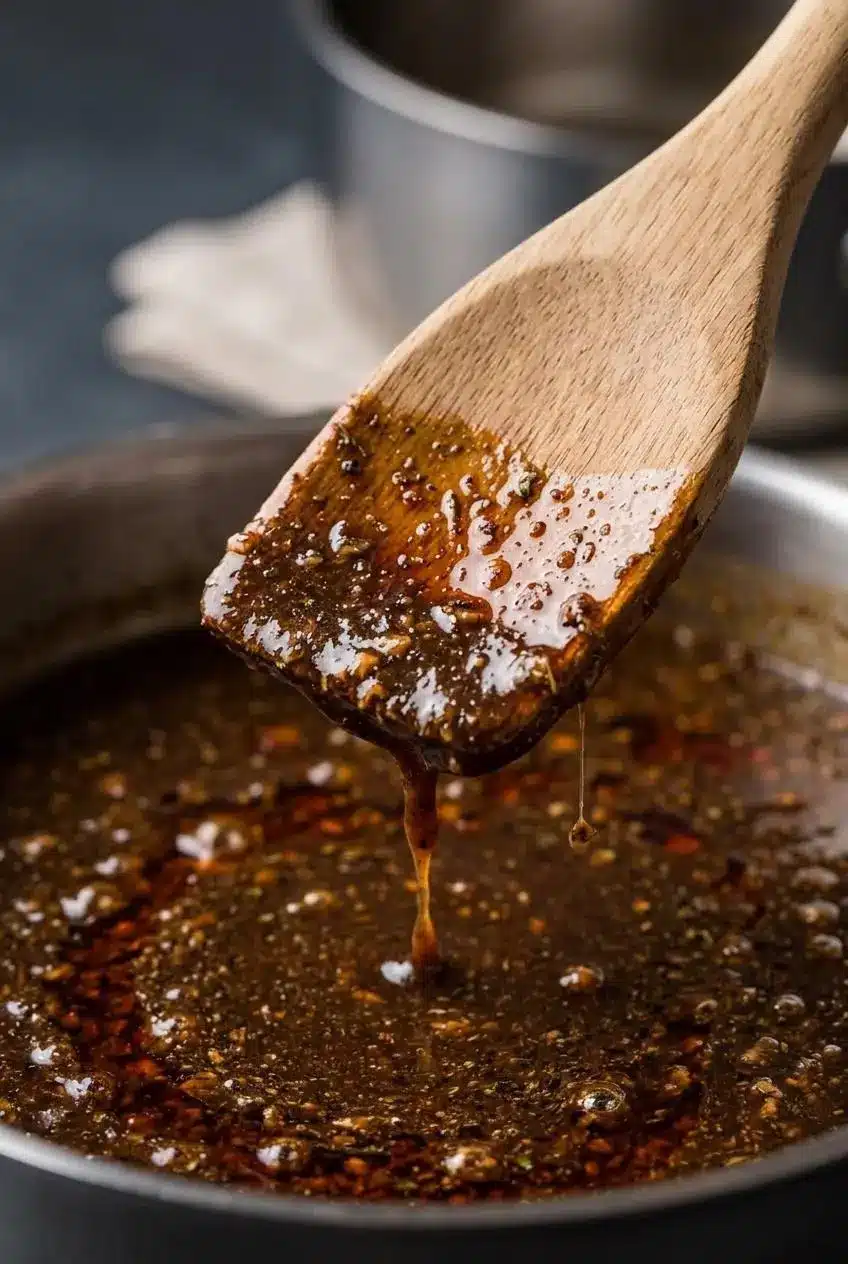
This is where the gumbo recipe comes together, and the roux stage decides almost everything about the final flavor. Move slowly here and the rest of the pot practically cooks itself.
- Pour the canola oil into a heavy Dutch oven and set the burner to medium heat.
Let the oil warm for a minute or two until it shimmers slightly across the surface. - Whisk in the flour and stir constantly, scraping the bottom of the pot with every pass.
Watch the mixture move from a pale, sandy paste through tan, peanut butter, and finally a deep chocolate brown, with a roasted, coffee-like aroma signaling it is ready. - Add the chopped onions, green bell peppers, and celery directly into the hot roux.
Listen for a sharp crackle as the vegetables hit the pot, and stir until they soften and turn translucent. - Stir in the andouille and smoked sausage, mixing everything together for about 3 minutes.
The sausage should pick up a little color and release its smoky fat into the vegetables. - Sprinkle in the Creole seasoning, thyme, garlic powder, and onion powder, stirring to coat everything evenly.
The spices should smell fragrant and slightly toasted as they hit the hot pot. - Pour in the seafood stock and chicken broth slowly, stirring the entire time to keep the roux smooth.
Add the bay leaves and fresh minced garlic once the liquid is fully incorporated. - Lower the heat until the pot holds a gentle simmer, then cover with a lid.
The surface should show slow, lazy bubbles rather than a hard boil. - Let the gumbo simmer this way for 90 minutes, stirring occasionally.
The liquid will thicken slightly and turn a deeper, richer brown as the flavors concentrate. - While the pot simmers, cook the rice and prepare any side dishes.
This keeps everything ready to serve the moment the gumbo finishes. - Add the crab, shrimp, lump crab meat, green onions, and parsley, and bring the pot back to a boil.
Cook on a slow, steady boil for 15 minutes, then turn off the heat as soon as the shrimp turn opaque and pink.
How to Make Rich Gumbo Stock from Scratch
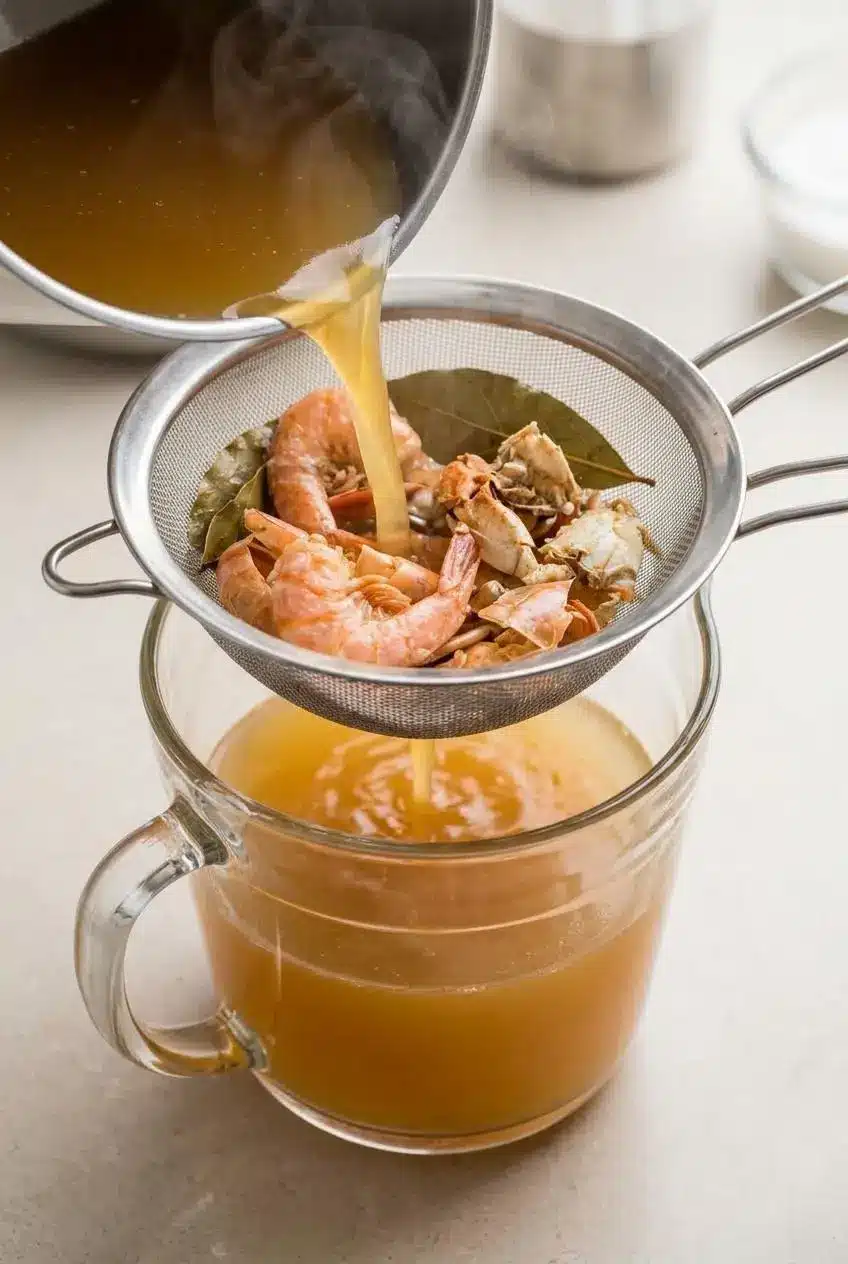
Save the shrimp shells and any leftover crab pieces instead of tossing them, because they hold most of the deep seafood flavor you want in this pot. Simmering shells builds a homemade stock that beats plain water or thin store-bought broth every time.
Toss the shrimp shells, crab shells, and any spare crab legs into a saucepan with enough water to cover them by a couple of inches. Add a bay leaf, a few peppercorns, and a rough chop of onion or celery scraps if you have them on hand. Bring the water to a gentle simmer, uncovered, and let it cook slowly so the shells release their briny sweetness into the liquid without turning bitter. Strain out the solids and use the liquid in place of some of the seafood stock in the main pot. This approach turns what would be kitchen waste into one of the most flavorful ingredients in the entire gumbo.
If you enjoy building deep seafood flavor from scratch like this, the same shell-simmering trick works beautifully in a creamy clam chowder, another coastal favorite that leans on shellfish for its backbone.
Understanding Gumbo Ingredients: The Trinity and Beyond
The ratio behind the roux is simple to remember: equal parts oil and flour by volume, which is exactly what this recipe uses with 1 cup of each. That balance gives the roux enough fat to cook the flour slowly without scorching, while still thickening the pot once stock is added.
The Holy Trinity of onions, bell peppers, and celery is the flavor engine of Cajun and Creole cooking. Onions bring sweetness as they cook down, bell peppers add a slight vegetal brightness, and celery contributes a savory, almost herbal backbone. Together they soften into the roux and dissolve into the stew, so their flavor spreads through every spoonful rather than standing out as separate chunks.
Andouille sausage and standard smoked sausage play different roles even though both go into the pot. Andouille carries a coarser grind, a heavier garlic presence, and a smokier, spicier profile that holds up through 90 minutes of simmering. Standard smoked sausage is milder and softer, rounding out the heat from the andouille without competing with it. Using both together gives the gumbo layered smokiness instead of one flat note.
Understanding the Holy Trinity and Roux
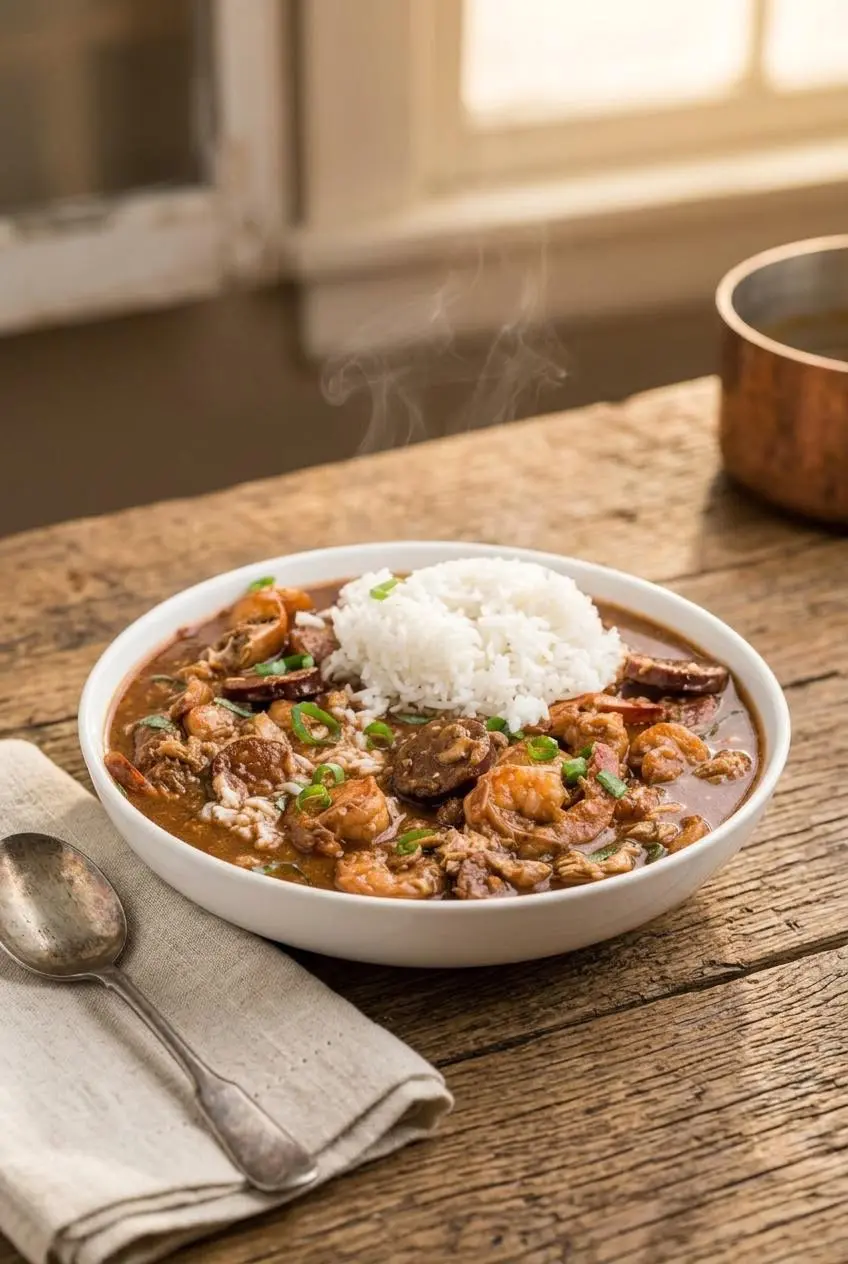
The roux and the Trinity work as a team. The roux provides color, thickness, and a toasted backbone, while the vegetables soften into that base and carry brightness and sweetness through the rest of the cook. Getting both right early in the process sets the tone for everything that follows.
Cajun vs Creole Styles
Cajun gumbo, the style this recipe follows, skips tomatoes entirely and leans on the dark roux for color and depth. Creole gumbo, more associated with New Orleans city cooking, often includes diced or fire-roasted tomatoes for brightness and a slightly different color profile. Neither style is more correct than the other, but they do produce noticeably different bowls.
To Tomato or Not to Tomato
The tomato question comes up in nearly every Louisiana kitchen conversation about gumbo. Cajun cooks in the rural parishes traditionally see tomatoes as an outsider ingredient that muddies the roux’s dark color and smoky flavor. Creole cooks in New Orleans, shaped by more Spanish and Italian influence, welcome tomatoes as a natural addition that adds acidity and a lighter red hue. If you want to try the Creole route, stir in a can of diced or fire-roasted tomatoes along with the stock, keeping everything else the same.
The Role of Okra vs Filé Powder
Okra and filé powder both act as thickeners, but they work in very different ways. Sliced okra releases a natural mucilage as it cooks, giving the gumbo body and a slightly silky texture. Filé powder, made from ground sassafras leaves, thickens through starch and adds an earthy, slightly herbal note. Filé must go in off the heat, stirred into the pot after it comes off the stove, because prolonged boiling turns it stringy and unpleasant.
Okra-Free Filé Gumbo
If okra texture isn’t your thing, skip it and lean on filé powder instead. Remove the pot from the heat completely, then stir in about a teaspoon of filé powder per bowl right before serving, or stir a small amount into the whole pot once it is off the burner. Never let filé simmer or boil, since that is what causes the ropey, stringy consistency people complain about.
Troubleshooting Your Gumbo Recipe
Even an experienced cook can hit a snag with gumbo, usually somewhere around the roux or the okra. Here is how to catch problems early and fix them before they ruin the pot.
Okra Slime Fixes
- Slimy texture in the finished stew: this happens when raw okra goes straight into the simmering liquid. Sauté the sliced okra separately in a hot pan with a little oil or a splash of vinegar for several minutes first, until the ropey strands cook away, then add it to the pot.
- Okra breaking down into mush: overcooking softens okra past the point of hol
Gumbo Recipe
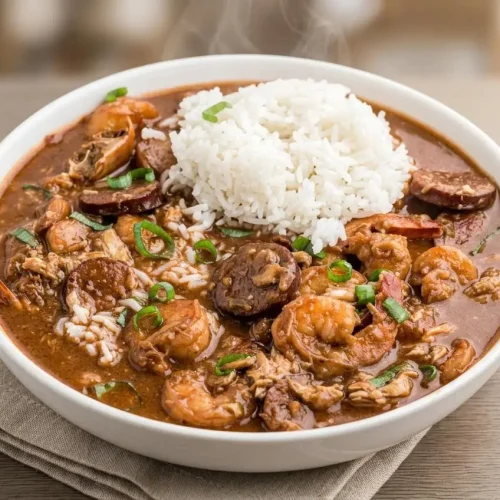
This authentic gumbo recipe features a slow-cooked, rich dark roux, savory Holy Trinity vegetables, smoky sausage, and fresh, tender seafood simmered to absolute Southern comfort perfection.Equipment
- 1 Dutch Oven
- 1 Roux Spoon
Ingredients
- 1 Cup All Purpose Flour
- 1 Cup Canola Oil
- 2 Cups Yellow Onions chopped
- 1 Cup Green Bell Peppers chopped
- 1 Cup Celery chopped
- 2 Links Andouille Sausage sliced
- 2 Links Smoked Sausage sliced
- 1 Tablespoon Creole Seasoning
- 1 teaspoon Dried Thyme Dried
- 1 Tablespoon Garlic Powder
- 1 Tablespoon Onion Powder
- 2 Tablespoons Garlic Fresh Minced
- 4 Each Bay Leaves Whole
- 5 Cups Seafood Stock
- 5 Cups Chicken Broth
- 1/2 Cup Fresh Parsley Chopped
- 2/3 Cup Green Onions Chopped
- 2 Pounds Crabs Whole
- 2 Pounds Large Shrimp
- 8 Ounces Fresh Lump Crab Meat
Instructions
- Pour the canola oil into a heavy Dutch oven and set the burner to medium heat. Let the oil warm for a minute or two until it shimmers slightly across the surface.
- Whisk in the flour and stir constantly, scraping the bottom of the pot with every pass. Watch the mixture move from a pale, sandy paste through tan, peanut butter, and finally a deep chocolate brown, with a roasted, coffee-like aroma signaling it is ready.
- Add the chopped onions, green bell peppers, and celery directly into the hot roux. Listen for a sharp crackle as the vegetables hit the pot, and stir until they soften and turn translucent.
- Stir in the andouille and smoked sausage, mixing everything together for about 3 minutes. The sausage should pick up a little color and release its smoky fat into the vegetables.
- Sprinkle in the Creole seasoning, thyme, garlic powder, and onion powder, stirring to coat everything evenly. The spices should smell fragrant and slightly toasted as they hit the hot pot.
- Pour in the seafood stock and chicken broth slowly, stirring the entire time to keep the roux smooth. Add the bay leaves and fresh minced garlic once the liquid is fully incorporated.
- Lower the heat until the pot holds a gentle simmer, then cover with a lid. The surface should show slow, lazy bubbles rather than a hard boil.
- Let the gumbo simmer this way for 90 minutes, stirring occasionally. The liquid will thicken slightly and turn a deeper, richer brown as the flavors concentrate.
- While the pot simmers, cook the rice and prepare any side dishes. This keeps everything ready to serve the moment the gumbo finishes.
- Add the crab, shrimp, lump crab meat, green onions, and parsley, and bring the pot back to a boil. Cook on a slow, steady boil for 15 minutes, then turn off the heat as soon as the shrimp turn opaque and pink.
Notes
Roux tip: Keep a flat wooden spoon moving through the roux the entire time it cooks to scrape the bottom of the pot evenly and prevent the flour from catching and burning. Shrimp tip: Pat the shrimp completely dry before adding them to the pot to prevent cooling down the simmering liquid and steaming the seafood. Okra tip: Sauté sliced okra separately in a hot pan with oil or vinegar before adding it to the pot to prevent a slimy texture in the finished gumbo. Nutrition information is an estimate based on common ingredients and serving sizes. Values may vary depending on brands, portions, and substitutions.