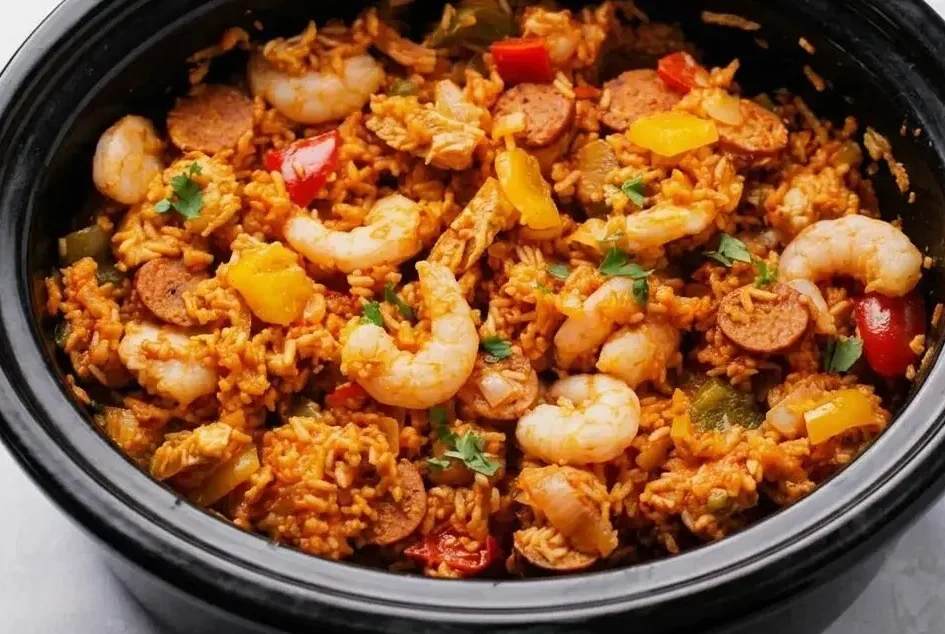
Cook chicken, andouille, vegetables, and seasonings first, then add the rice for the final stretch and shrimp for the last 15 to 20 minutes. This timing creates a smoky, hearty jambalaya with tender seafood and distinct rice grains.
Slow Cooker Jambalaya brings chicken, spicy sausage, peppers, tomatoes, and rice together in one comforting pot. The aroma turns rich and smoky long before dinner is ready.
The key is patience with the rice and restraint with the shrimp. Those final minutes make all the difference.
Grease the slow cooker well and keep the lid closed during the rice stage whenever possible, since escaping steam can leave grains unevenly cooked.
Key Ingredients for Authentic Flavor
Each ingredient contributes something important: smoky depth from sausage, savory moisture from broth and tomatoes, heat from jalapeños, and structure from rice that absorbs the seasoned cooking liquid.
- 1 package andouille sausage
- 1/2 pound uncooked shrimp (peeled and de-veined)
- 1 large boneless skinless chicken breast (pounded to even thickness)
- 3 bell peppers (one each of green, red, and yellow or orange, diced)
- 1 white or yellow onion (diced)
- 2-3 jalapeños (seeds and stems removed)
- 1 1/2 cups uncooked white rice
- 2 cups low sodium chicken broth
- 1 30-ounce can crushed tomatoes
- 1 tablespoon minced garlic
- 3 tablespoons store-bought or homemade cajun seasoning
- 1/2 teaspoon each salt and pepper (or to taste)
- cilantro or parsley, for topping (optional)
Andouille sausage gives jambalaya its signature smoky, peppery backbone, while chicken makes the dish satisfying without competing with the spices. The peppers, onion, and jalapeños soften into the tomatoes and create a sweet, savory base with a lively kick. This flavor combination also makes a nice slow cooker alternative to a traditional jambalaya recipe.
Use standard long-grain white rice here. It absorbs the broth gradually and keeps a little definition when timed well. Quick-cooking rice softens too fast, while brown rice needs a different amount of liquid and a longer cook than this method provides. Parboiled rice can work when you prefer grains with a firmer bite.
Low-sodium chicken broth matters because andouille and Cajun seasoning already bring salt. Starting with a gentler broth gives you room to adjust the finished dish instead of discovering that the pot is overly salty at the table.
I like to taste the Cajun seasoning before adding it, since blends vary wildly in salt and heat from one jar to the next.
How to Make Slow Cooker Jambalaya
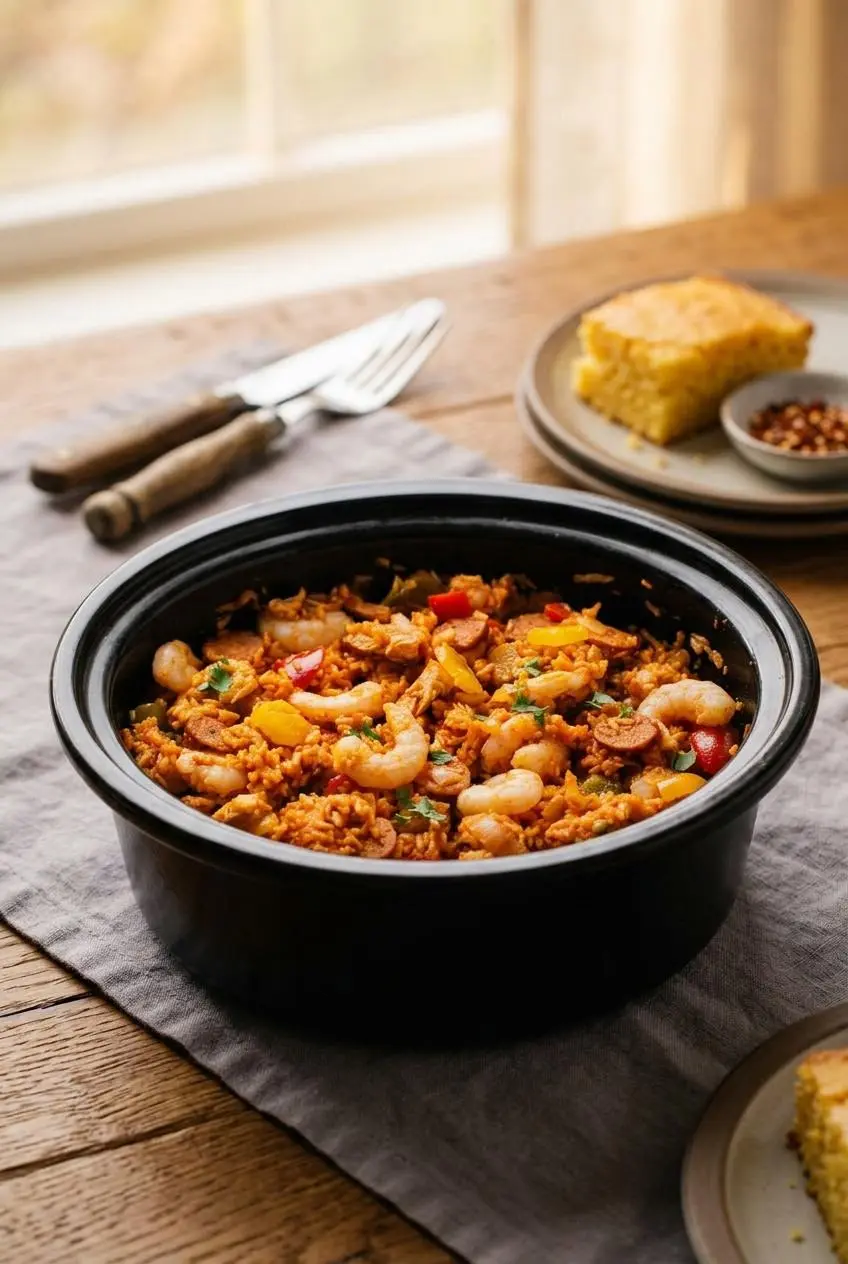
This is a true one-pot method, but the ingredients do not all go in at once. Give the chicken, sausage, vegetables, and tomatoes time to build flavor first, then add rice and shrimp in separate stages so neither turns soft or rubbery.
- Cut the andouille into slices about 1/4 inch thick, cut the chicken into 1-inch pieces, and remove any shrimp tails that remain.
Keep the shrimp chilled and separate while the chicken, sausage, and vegetables begin cooking. - Add the sausage, chicken, bell peppers, onion, jalapeños, chicken broth, crushed tomatoes, garlic, Cajun seasoning, salt, and pepper to a greased slow cooker, then stir well and cook covered on low for 3 to 4 hours.
The mixture should smell smoky and spicy, with broth lightly bubbling around the edges. - Stir in the uncooked white rice, cover again, and cook on low for another 1 to 2 hours until the rice is tender.
Serve after stirring in the shrimp for the final 15 to 20 minutes, when it is firm, opaque pink, and cooked through.
Building the Flavor Base
The first cooking stage gives the chicken, andouille, peppers, onion, jalapeños, tomatoes, and garlic time to mingle. The pepper-onion-jalapeño combination brings sweetness, freshness, and heat, while the sausage seasons the liquid as it cooks.
Stir everything thoroughly at the beginning so the Cajun seasoning disperses through the tomatoes and broth. Near the end of this stage, look for gentle bubbling around the perimeter and vegetables that have softened into the sauce. That is the right moment to move on to rice.
When to Add the Rice
Add the uncooked rice only after the initial 3 to 4 hours on low. Stir it through the hot liquid, then press any floating grains beneath the surface with the spoon. Fully submerged rice cooks more evenly and avoids dry, chewy patches near the top.
Check the rice near the end of its 1 to 2 hour cooking window. A properly cooked grain should be tender but still offer slight resistance when bitten. If it feels chalky in the center, it needs more time in the covered cooker.
For a slightly sturdier grain, you can toast the uncooked rice in a skillet with a tablespoon of olive oil for three minutes before adding it. This optional step adds a subtle nutty flavor and can help the grains hold their shape, but it is not required for the main method.
The Secret to Tender Shrimp
Add shrimp at the very end, about 20 minutes before serving, and keep the cooker covered while it finishes. Shrimp cook quickly in the hot jambalaya, so adding them with the chicken would leave them tough by the time the rice is ready.
Start checking after 15 minutes. The shrimp are ready when they turn opaque pink and feel firm with a gentle curve. If they curl into tight little circles, they have likely cooked longer than needed.
Troubleshooting Common Jambalaya Issues
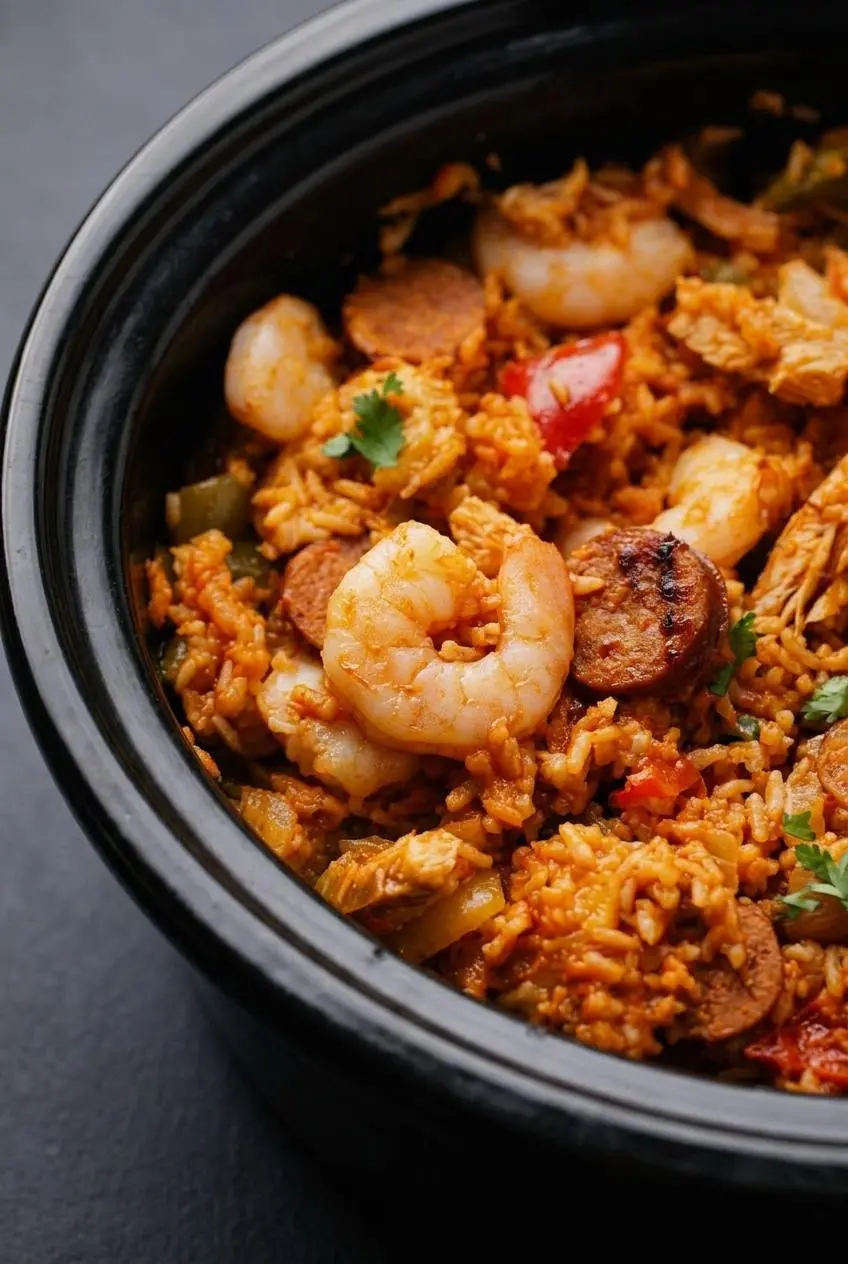
Slow cookers hold moisture differently, and tomatoes can release more liquid than expected. A few focused adjustments can rescue the texture without changing the bold flavor of the dish.
Fixing Watery Broth
- Too much liquid remains after the rice is cooked: Mix 1 tablespoon cornstarch with a little broth until smooth, then stir it into the cooker. Let the jambalaya sit covered briefly so the sauce can thicken.
- The rice is floating instead of absorbing: Stir gently and press the grains below the liquid line. Rice needs direct contact with the broth to hydrate evenly.
- The tomatoes made the pot thinner than expected: Leave the lid slightly ajar for a short period near the end, watching closely so the rice does not dry out.
Jambalaya should be moist and spoonable, not brothy like soup. Give it a final stir before serving, since rice continues to settle and absorb liquid as it rests.
Rescuing Hard Rice
- The grains are still firm in the middle: Stir the pot, make sure the rice is submerged, cover, and continue cooking until the center is tender.
- The top layer is dry: Fold that rice into the saucier center of the cooker rather than adding more ingredients immediately.
- The rice became too soft: Serve the jambalaya promptly and avoid extended holding. Next time, use standard long-grain or parboiled rice and add it only during the final cooking stage.
Quick-cooking rice is the most common reason for mushy jambalaya. It is designed to hydrate fast, which works against the long, moist environment of a slow cooker.
Popular Variations and Substitutions
Keep the main method intact, then make one optional adjustment at a time so the rice timing stays predictable.
- Budget-friendly chicken and sausage version: Omit the shrimp and make the dish with chicken and andouille only. The sausage still provides plenty of smoky character, and a slow cooker chicken chili is another comforting option when poultry is the focus.
- Lighter sausage swap: Use smoked turkey sausage in place of andouille for a leaner option. Expect a milder smoky flavor, so taste before adding extra Cajun seasoning.
- Milder family version: Use fewer jalapeños, removing all seeds and ribs for gentler heat. Keep the Cajun seasoning as written, then offer hot sauce at the table for anyone who wants more fire.
- Extra-spicy version: Add an additional diced jalapeño or a dash of cayenne. Add heat gradually because the spice strengthens as the dish cooks.
Storage and Reheating Guidelines
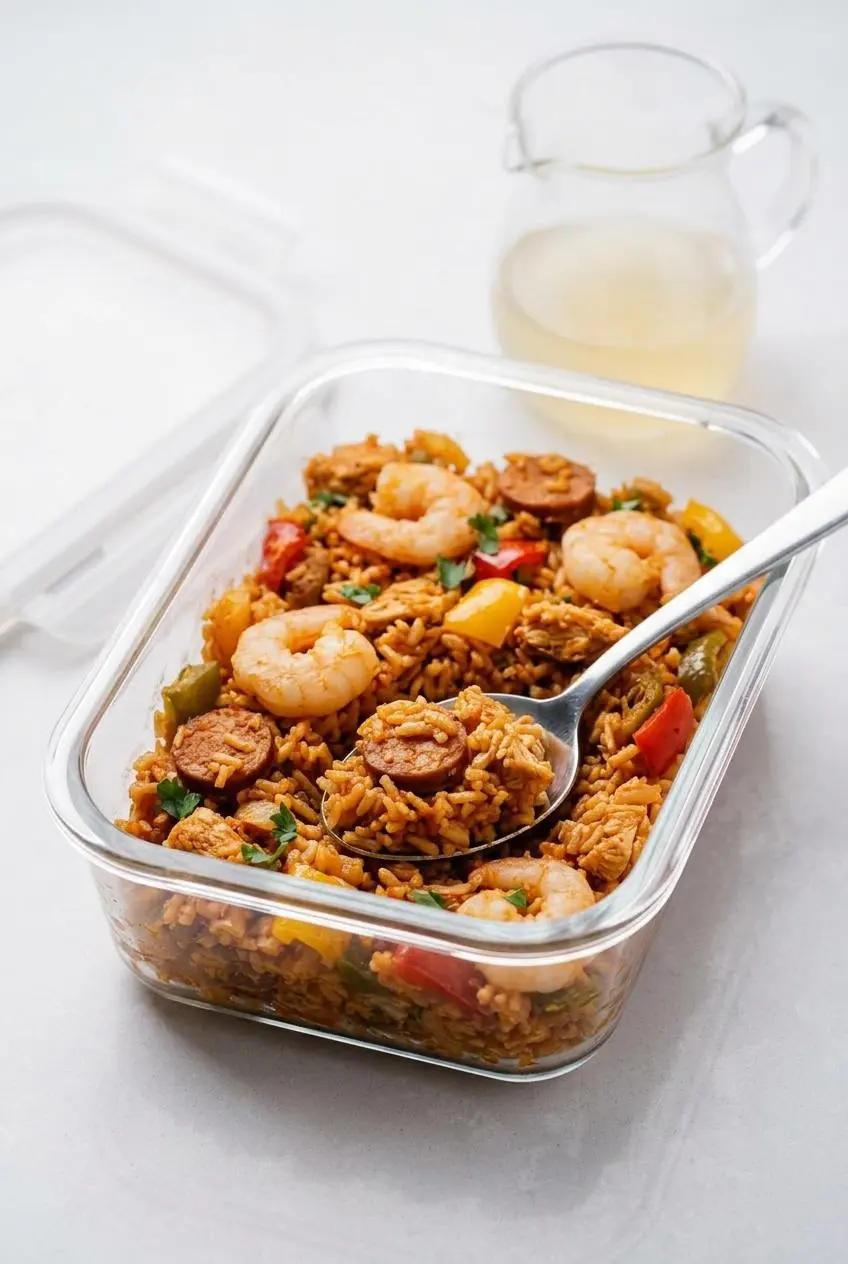
Transfer leftovers to shallow, covered containers and refrigerate them promptly. Perishable leftovers should be chilled within two hours, as outlined in USDA leftover storage guidance.
Reheat individual portions gently on the stovetop with a splash of chicken broth, stirring only as needed to loosen the rice. High heat and aggressive stirring can turn the grains pasty, so warm the jambalaya just until hot throughout.
Because shrimp and rice both change texture after chilling, store the garnish separately and add fresh cilantro or parsley after reheating. Keep leftovers chilled and use them promptly for the best flavor and texture.
Conclusion
This slow cooker meal delivers the smoky sausage, spicy tomatoes, tender chicken, and comforting rice you want from jambalaya without needing a separate pot for the grains.
Watch the rice closely near the end, then give shrimp only its final 15 to 20 minutes. That small bit of timing turns a good pot of jambalaya into a satisfying dinner.
Frequently Asked Questions
Can I Put Uncooked Rice in the Slow Cooker?
Yes. Add uncooked long-grain white rice during the final 1 to 2 hours of cooking, after the chicken, sausage, and vegetables have cooked. Stir it well and make sure every grain is submerged in the broth and tomatoes.
Why Did My Jambalaya Turn Out Mushy?
Mushy jambalaya usually comes from adding rice too early, using quick-cooking rice, or leaving the finished pot cooking too long. Use standard long-grain white rice or parboiled rice, and start checking it near the end of the rice cooking window.
Should Jambalaya Have a Lot of Liquid?
No. It should be moist, thick, and hearty rather than soupy. If the sauce is too thin after the rice is tender, stir in a slurry made from 1 tablespoon cornstarch and a little broth.
Can I Use Brown Rice Instead of White Rice?
Brown rice is not a good fit for this timing method because it needs substantially more liquid and a longer cook. Use white long-grain rice here, or prepare brown rice separately and stir it in only to warm through at the end.
How Do I Prevent the Shrimp From Becoming Rubbery?
Add shrimp only during the final 15 to 20 minutes of cooking. Check for opaque pink flesh and a firm texture, then serve soon after. Do not add shrimp at the beginning with the chicken and sausage.
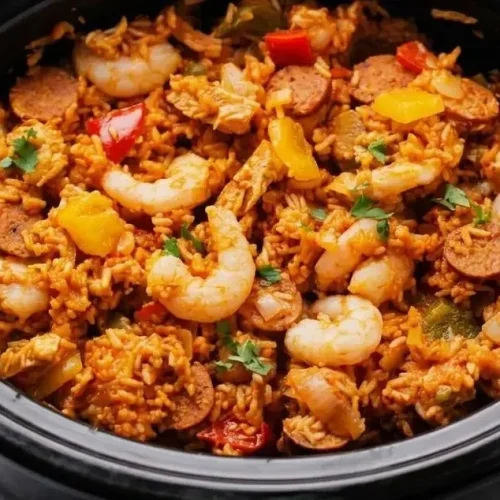
Slow Cooker Jambalaya

Equipment
- Slow cooker
Ingredients
- 1 package andouille sausage
- 1/2 pound uncooked shrimp (peeled and de-veined)
- 1 large boneless skinless chicken breast (pounded to even thickness)
- 3 bell peppers (one each of green, red, and yellow or orange, diced)
- 1 white or yellow onion (diced)
- 2-3 jalapeños (seeds and stems removed)
- 1 1/2 cups uncooked white rice
- 2 cups low sodium chicken broth
- 1 30-ounce can crushed tomatoes
- 1 tablespoon minced garlic
- 3 tablespoons store-bought or homemade cajun seasoning
- 1/2 teaspoon each salt and pepper (or to taste)
- cilantro or parsley for topping (optional)
Instructions
- Cut the andouille into slices about 1/4 inch thick, cut the chicken into 1-inch pieces, and remove any shrimp tails that remain. Keep the shrimp chilled and separate while the chicken, sausage, and vegetables begin cooking.
- Add the sausage, chicken, bell peppers, onion, jalapeños, chicken broth, crushed tomatoes, garlic, Cajun seasoning, salt, and pepper to a greased slow cooker, then stir well and cook covered on low for 3 to 4 hours. The mixture should smell smoky and spicy, with broth lightly bubbling around the edges.
- Stir in the uncooked white rice, cover again, and cook on low for another 1 to 2 hours until the rice is tender. Serve after stirring in the shrimp for the final 15 to 20 minutes, when it is firm, opaque pink, and cooked through.