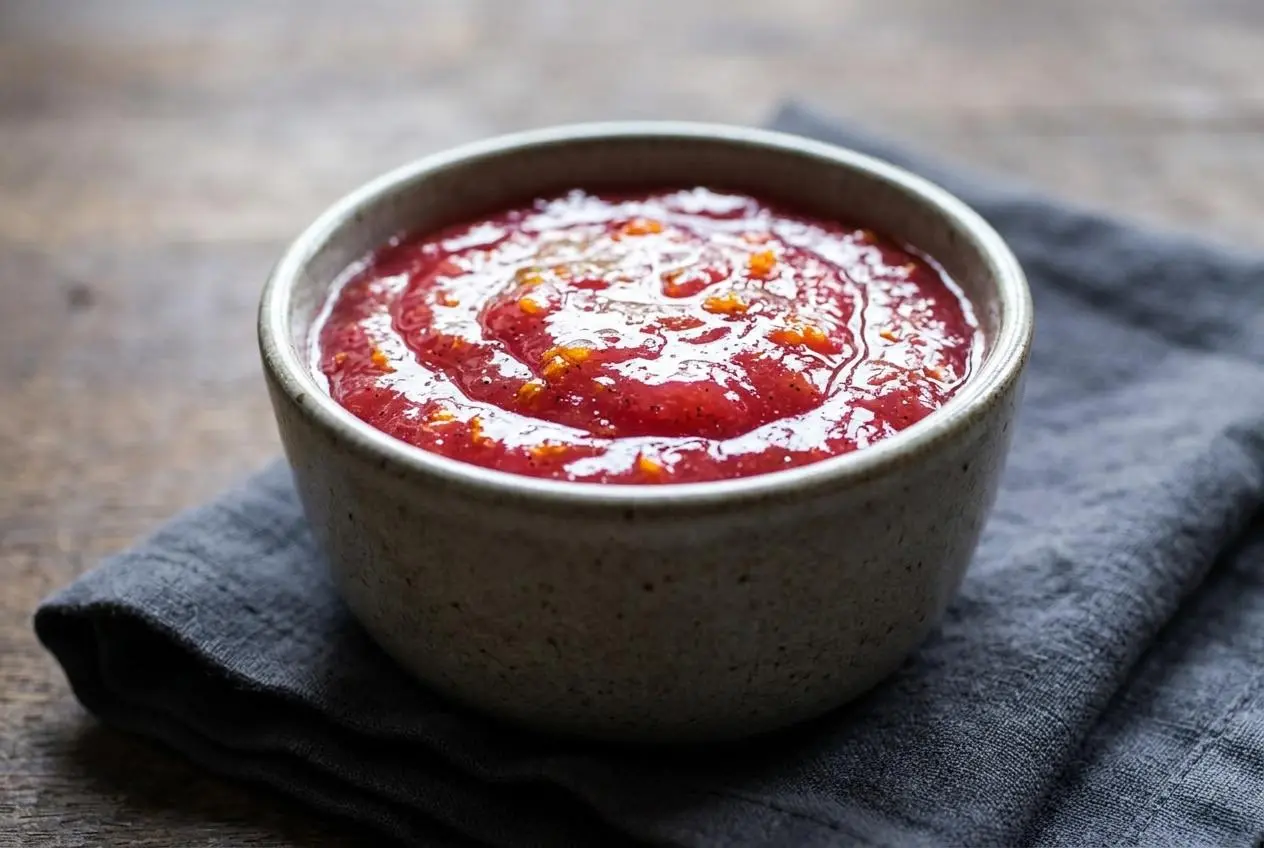
Rhubarb Freezer Jam comes together by cooking rhubarb with orange, sugar, and vanilla until thick, glossy, and sweet tart, then chilling it in jars for a bright spreadable set.
This is a pectin-free jam with a clean rhubarb flavor and a soft, luscious texture. Orange brightens the fruit, sugar helps the mixture thicken, and vanilla rounds out the tart edge.
If you like preserves that taste vivid instead of flat and sugary, this one delivers. The big trick is knowing what the bubbling fruit should look, smell, and feel like.
A digital thermometer helps, but watching the bubbles tighten and the jam turn glossy matters just as much.
Essential Ingredients and Their Roles
Each ingredient here earns its place, building flavor, shine, acidity, aroma, and the structure that helps the jam set up beautifully once chilled.
- 1 lb 10 oz (750g) Rhubarb stalks
- 1 Tbs Orange Zest from about 1 large orange
- 1/3 C (70g) Orange Juice fresh squeezed, from about 1 large orange
- 1 3/4 C (400g) Organic Cane Sugar
- 1/2 Vanilla Bean
Rhubarb brings the tart backbone and the soft fruit fibers that cook down into jam. Orange zest and juice add brightness and acidity, which help the mixture gel more effectively. Sugar does more than sweeten. It concentrates the fruit and supports the final texture. Vanilla softens the sharp edge and gives the finished jam a warm, rounded finish.
I like rhubarb stalks that feel firm and heavy with smooth skin, because limp stalks tend to cook up a little duller in both color and flavor.
Sourcing and Preparing Rhubarb Stalks
Good jam starts before the pot goes on the stove. Choose crisp rhubarb stalks with fresh-looking ends and avoid stalks that feel rubbery or dried out.
Trim off the leafy tops completely and discard them. Rhubarb leaves should not be eaten, and rhubarb leaves are considered poisonous, so only use the stalks.
Wash the stalks well, then cut them into even pieces so they break down at the same pace. If a stalk is especially thick, split it lengthwise first. That small step helps the whole batch cook evenly instead of leaving you with random stringy chunks.
If you end up with extra stalks after trimming, tender rhubarb muffins are a smart way to use them while they’re still fresh.
The Crucial Role of Acid and Sugar
This recipe depends on balance. The orange juice adds acidity, which helps the fruit and sugar cook into a jammy texture instead of a loose fruit sauce.
Sugar is just as important. If you reduce it blindly in this pectin-free version, the mixture is much more likely to stay runny. For a lower-sugar approach, use a pectin specifically designed for low-sugar jams rather than simply cutting back the cane sugar here.
How to Make Rhubarb Freezer Jam
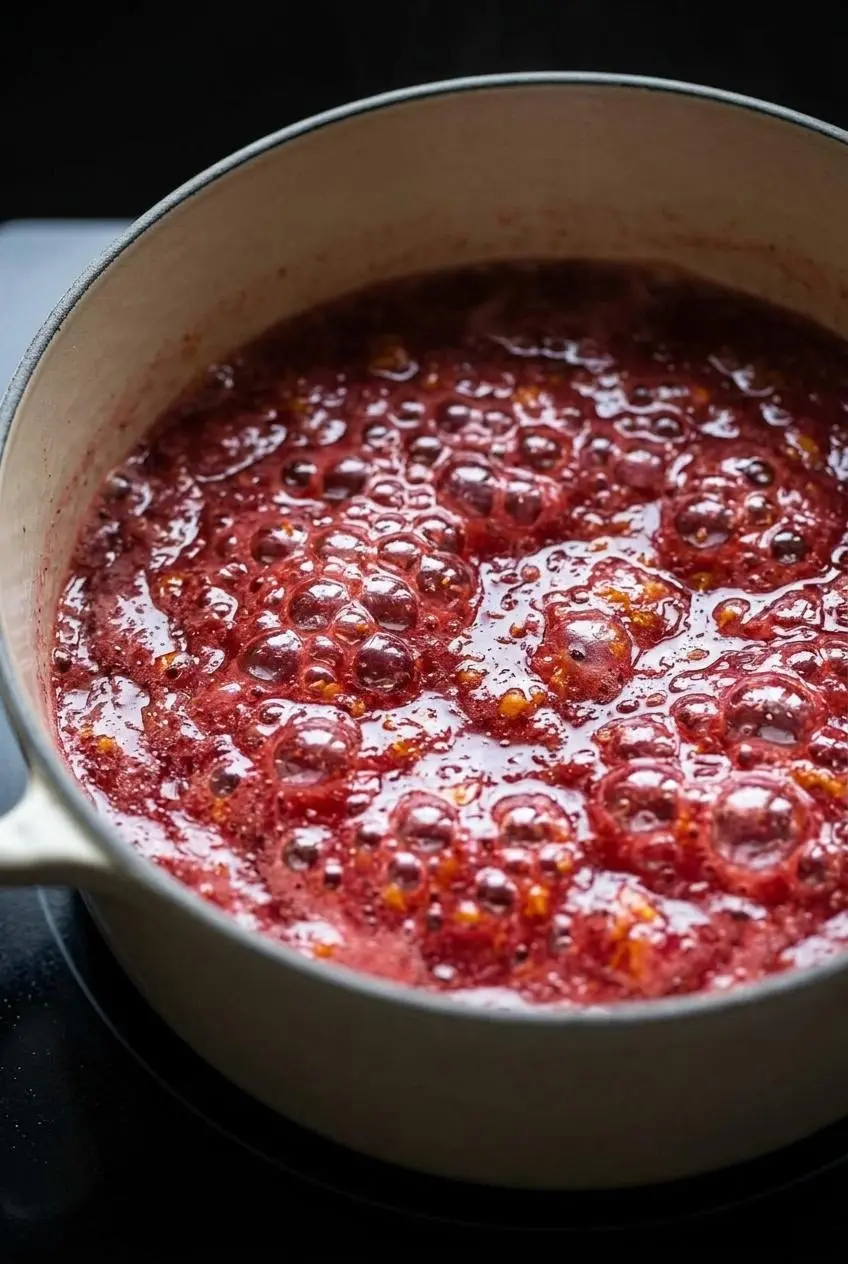
This method works best when you stay close to the stove and watch the changes in the pot. The mixture starts loose and grassy, then turns deeper, glossier, and more concentrated as it cooks.
Prepare
- Wash the jars and lids in hot soapy water or run them through the dishwasher, then let them dry fully.
Starting with clean jars keeps the finished jam tidy and ready to fill as soon as the cooking is done. - Set out a large heavy-bottomed nonreactive saucepan or a Dutch oven that holds at least 4 quarts.
The pot needs extra room because the jam will rise and bubble actively once it reaches a full boil. - Trim off both ends of the rhubarb, including any leafy parts, and discard them, then wash the stalks and cut them into 1/2 to 1 inch pieces.
If any stalks are thick, split them through the center first so the pieces soften and break down evenly. - Split the vanilla bean and scrape out the seeds, keeping both the seeds and the pod.
Having them ready now makes it easier to add the pod early for infusion and the seeds later for a cleaner vanilla finish.
To Make the Jam
- Combine the rhubarb, orange juice, orange zest, sugar, and vanilla pod in the pot, then stir until the fruit is well coated.
As the sugar sits on the cut rhubarb, it begins pulling out juices that help the batch start cooking evenly. - Set the pot over medium-high heat and bring the mixture to a simmer, then raise the heat to high and cook until it boils hard, stirring often.
The fruit will first look chunky and wet, then quickly loosen into a vivid pink mixture with fast, noisy bubbles. - Spoon off any foam that gathers on the surface and discard it.
Removing the foam helps the jam look clearer and more jewel-like in the jar. - Keep the jam bubbling while stirring and adjusting the heat as needed, and press the rhubarb with a spoon to break it down.
The sharp grassy scent will mellow into a sweeter, deeper aroma as the fruit collapses and the mixture thickens. - Cook until a thermometer reads between 220 to 222°F (104 to 105°C), which usually takes about 15 to 20 minutes, then take the pot off the heat and briefly set the bottom in shallow water to stop the cooking.
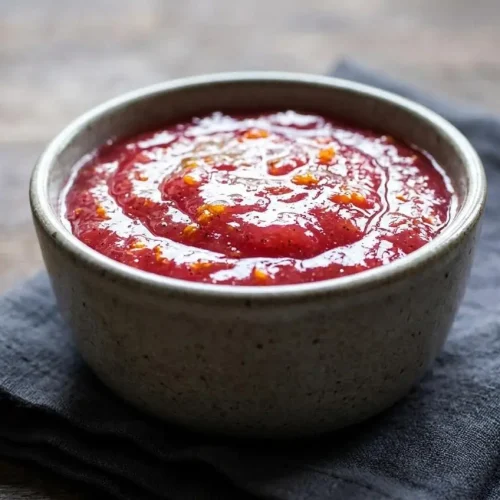
At this stage the bubbles look thicker, the spoon leaves a short trail, and the jam coats the back of the spoon with a glossy sheen. - Stir in the scraped vanilla seeds.
This keeps the tiny specks fragrant and visible instead of cooking them flat for the entire boil. - Let the jam cool for 10 minutes, stirring now and then, then remove the vanilla pod.
That short rest helps the fruit settle into the syrup so the texture stays more even in the jars. - Spoon the jam into the clean jars, leaving about 1/2 inch headspace, add the lids, cool to room temperature, then chill in the refrigerator overnight to finish setting before freezing.
The headspace matters because the jam expands as it freezes, and the finished texture firms up noticeably as it gets fully cold.
Understanding Rhubarb Jam Chemistry
Pectin-free jam can feel a little mysterious until you know what is happening in the pot. Rhubarb does not behave like a berry jam made with boxed pectin. Instead, this batch relies on fruit fibers, acidity, evaporation, and enough sugar concentration to create a soft gel once chilled.
The orange juice is doing real work here. Its acidity helps the mixture tighten as water cooks off, while the sugar binds with the fruit and thickens the syrup. That is why the pot needs a real boil, not a lazy simmer. If the mixture never concentrates enough, it stays loose.
The texture cue matters too. Early on, the bubbles look wide and watery. Closer to the end, they look tighter and thicker, almost glossy, and the spoon drags through the jam with more resistance. If you dip a cold spoon in near the end, the coating should cling with a shiny sheet rather than slide off like juice.
This jam is for the refrigerator and freezer, not the pantry. It is not shelf-stable and should stay chilled or frozen for safe storage.
Troubleshooting and Success Cues
If jam-making has ever left you with a syrupy jar, this is the section that saves the batch. Most problems come down to moisture, temperature, or uneven fruit pieces.
- Jam seems too runny: The mixture probably needed a little more concentration. Return it to the pot, add a small splash of citrus juice if it tastes flat, and boil again until it looks glossy and thicker.
- Not sure it is ready: Try the cold spoon test. Chill a spoon in the freezer, drop a little hot jam onto it, then wait a few seconds. If the jam moves slowly and wrinkles lightly when nudged, it is close to set.
- Fruit pieces float in the jar: Let the jam rest for the full cooling time and stir gently now and then before filling the jars. That helps the fruit stay suspended instead of drifting upward.
- Texture is watery with frozen rhubarb: Thaw it fully and drain off excess liquid before cooking. Frozen rhubarb works well, but it usually releases more water than fresh stalks.
- Jam scorches at the bottom: Use a heavy-bottomed pot and stir more often once the boil gets strong. Sugar-rich fruit can catch fast when the heat is too aggressive.
Fresh rhubarb usually gives a slightly brighter texture with more defined fruit pieces. Frozen rhubarb breaks down faster and can taste just as good, but the batch often turns softer sooner and needs careful draining so the final jam does not lean loose.
Freezer Storage and Safe Thawing
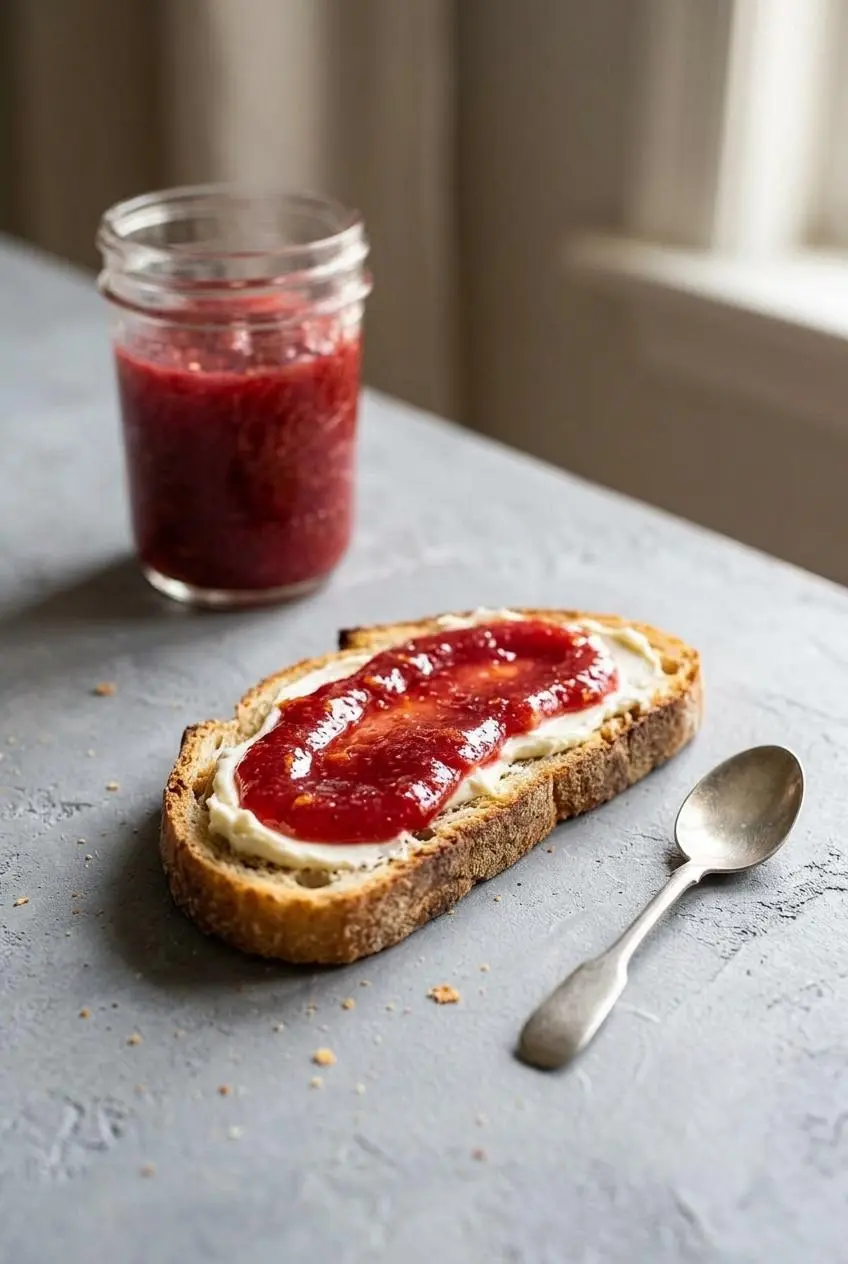
Once cooled and packed, this jam needs cold storage. Freezer and refrigerator jams are not shelf-stable and should be kept refrigerated for up to 3 weeks or frozen for up to 1 year, as explained in storage guidance for freezer and refrigerator jams.
Leave about 1/2 inch headspace in each jar so the jam has room to expand as it freezes. Use jars in good condition, and skip any container with chips, cracks, or a poor-fitting lid.
For thawing, move a jar to the refrigerator and let it thaw there overnight. Avoid thawing it on the counter, which is a poor choice for this kind of preserve.
Once thawed, it is excellent on toast, swirled into yogurt, or spooned over warm homemade crepes for breakfast.
Rhubarb Jam Variations to Try
The base recipe stands well on its own, but rhubarb is friendly to a few smart variations. If you’re in a rhubarb mood, sweet rhubarb bars are another easy direction to take.
The Classic Strawberry Rhubarb Blend
Strawberries are the most popular partner for rhubarb, and they shift the flavor from sharp and citrusy to rounder and more candy-like. This variation is best treated as a separate pectin-based method rather than folded into the official recipe above.
- Mash the strawberries with the rhubarb before cooking so the fruit distributes evenly.
- If you use a boxed pectin such as Sure-Jell, follow that pectin’s directions for fruit ratio and boil time instead of the no-pectin method here.
- Pectin versions usually cook faster and set more firmly, while the pectin-free version tastes deeper and softer.
- Frozen rhubarb can work in the blend, but it should be thawed and drained first so the strawberry flavor does not get washed out.
Honey Sweetened Homestead Jam
Honey changes more than sweetness. It adds its own flavor and moisture, so it does not behave like a direct one-for-one swap for the cane sugar in this recipe.
- For a honey-sweetened batch, use a low-sugar or calcium-activated pectin designed for alternative sweeteners.
- Expect a softer set and a more floral flavor than the classic version.
- If you want less refined sugar, do not simply cut the sugar in the official recipe and replace the rest with honey at random.
- Orange still pairs beautifully here, and vanilla keeps the honey from tasting too one-note.
Conclusion
This jam rewards attention more than effort. Once you understand the visual cues and keep the boil strong enough, you get a bright, sweet-tart spread with real rhubarb character.
Keep the sugar balance intact, watch for that glossy finish, and give the jars time to chill fully. Then enjoy every spoonful while rhubarb season still feels close.
Frequently Asked Questions
Can I reduce the sugar in this freezer jam recipe?
Not in the official pectin-free method if you want the same set. Sugar helps the jam thicken and balance rhubarb’s strong tartness. If you want less sugar, use a pectin made for low-sugar jam.
How do I fix runny rhubarb freezer jam?
Cook it a bit longer if it still looks loose and syrupy. A splash of citrus juice can help if the flavor needs brightness. Use the cold spoon test to check whether it thickens and wrinkles slightly as it cools.
Are rhubarb leaves safe to use?
No. Use only the stalks. Trim the leafy tops off completely and discard them. Wash the stalks well before cutting and cooking.
Can I use frozen rhubarb instead of fresh?
Yes, it works well for jam. Thaw it fully and drain away excess liquid first. Expect a slightly softer texture because frozen rhubarb breaks down faster.
Rhubarb Freezer Jam

Equipment
- Dutch oven
- Digital food thermometer
- Long-handled wooden spoon
- Three 1/2 pint mason jars with lids
Ingredients
- 1.625 lb Rhubarb stalks (10 oz / 750g)
- 1 Tbs Orange Zest from about 1 large orange
- 1/3 C Orange Juice (70g) fresh squeezed, from about 1 large orange
- 1 3/4 C Organic Cane Sugar (400g)
- 1/2 Vanilla Bean
Instructions
Prepare
- Wash the jars and lids in hot soapy water or run them through the dishwasher, then let them dry fully. Starting with clean jars keeps the finished jam tidy and ready to fill as soon as the cooking is done.
- Set out a large heavy-bottomed nonreactive saucepan or a Dutch oven that holds at least 4 quarts. The pot needs extra room because the jam will rise and bubble actively once it reaches a full boil.
- Trim off both ends of the rhubarb, including any leafy parts, and discard them, then wash the stalks and cut them into 1/2 to 1 inch pieces. If any stalks are thick, split them through the center first so the pieces soften and break down evenly.
- Split the vanilla bean and scrape out the seeds, keeping both the seeds and the pod. Having them ready now makes it easier to add the pod early for infusion and the seeds later for a cleaner vanilla finish.
To Make the Jam
- Combine the rhubarb, orange juice, orange zest, sugar, and vanilla pod in the pot, then stir until the fruit is well coated. As the sugar sits on the cut rhubarb, it begins pulling out juices that help the batch start cooking evenly.
- Set the pot over medium-high heat and bring the mixture to a simmer, then raise the heat to high and cook until it boils hard, stirring often. The fruit will first look chunky and wet, then quickly loosen into a vivid pink mixture with fast, noisy bubbles.
- Spoon off any foam that gathers on the surface and discard it. Removing the foam helps the jam look clearer and more jewel-like in the jar.
- Keep the jam bubbling while stirring and adjusting the heat as needed, and press the rhubarb with a spoon to break it down. The sharp grassy scent will mellow into a sweeter, deeper aroma as the fruit collapses and the mixture thickens.
- Cook until a thermometer reads between 220 to 222°F (104 to 105°C), which usually takes about 15 to 20 minutes, then take the pot off the heat and briefly set the bottom in shallow water to stop the cooking. At this stage the bubbles look thicker, the spoon leaves a short trail, and the jam coats the back of the spoon with a glossy sheen.
- Stir in the scraped vanilla seeds. This keeps the tiny specks fragrant and visible instead of cooking them flat for the entire boil.
- Let the jam cool for 10 minutes, stirring now and then, then remove the vanilla pod. That short rest helps the fruit settle into the syrup so the texture stays more even in the jars.
- Spoon the jam into the clean jars, leaving about 1/2 inch headspace, add the lids, cool to room temperature, then chill in the refrigerator overnight to finish setting before freezing. The headspace matters because the jam expands as it freezes, and the finished texture firms up noticeably as it gets fully cold.