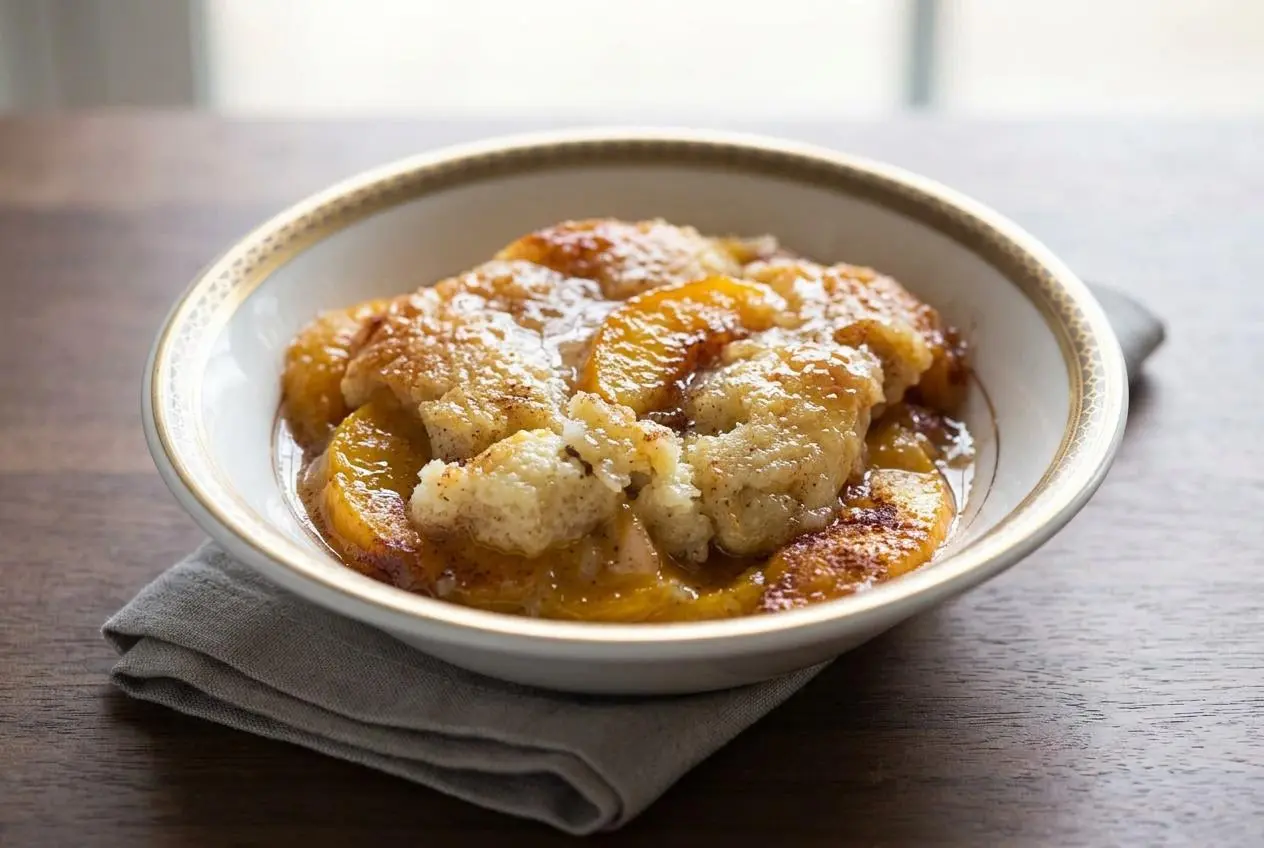
To make Old Fashioned Peach Cobbler, melt butter in the baking dish, pour in a simple batter without stirring, spoon sweet peaches over the top, and bake until golden and bubbly.
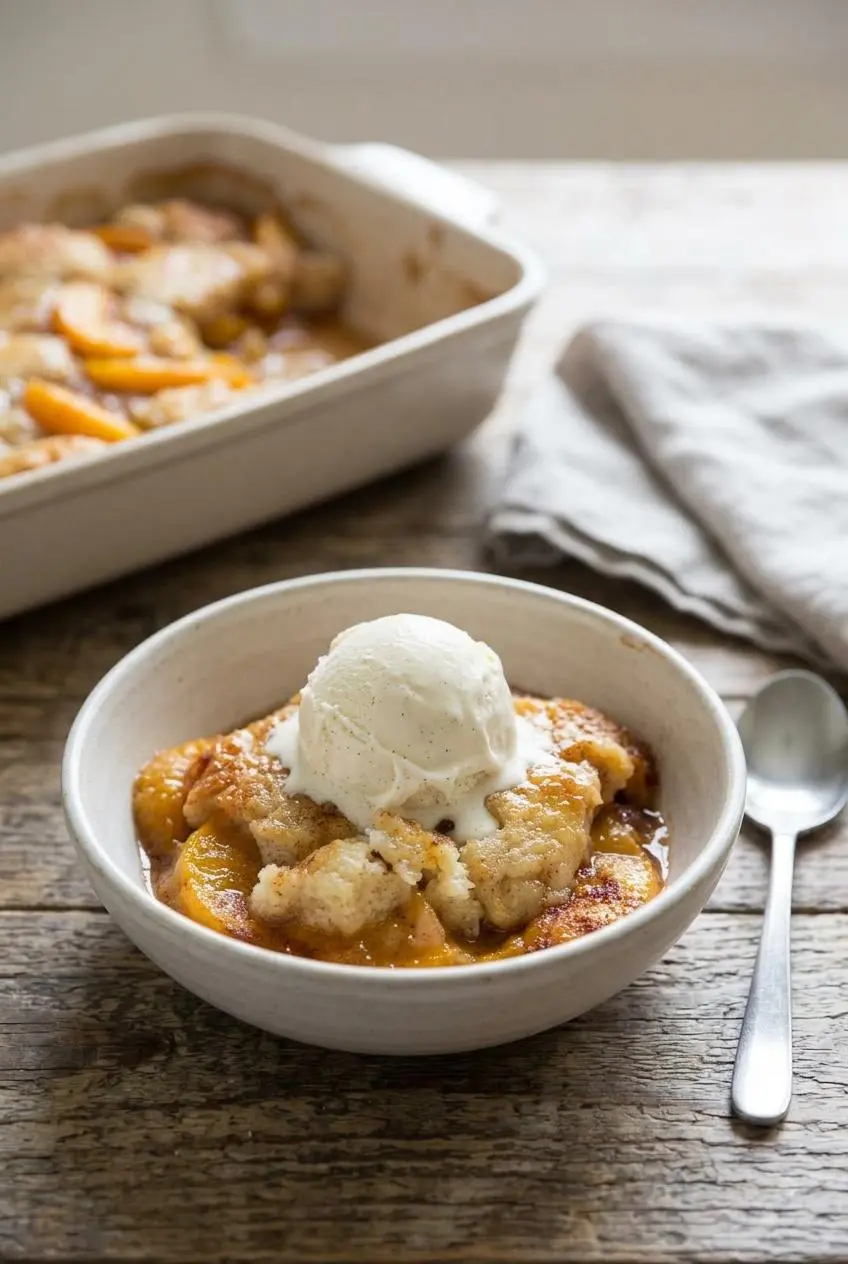
Old Fashioned Peach Cobbler is a classic Southern-style dessert with tender fruit underneath and a cake-like topping that rises up around the peaches as it bakes. It’s warm, buttery, and finished with plenty of cinnamon.
You’ll like this version because the method is straightforward, the layering makes sense once you see it, and the result lands right between soft cake and bubbling fruit. The no-stir trick is the whole magic.
Use a light-colored 9×13 inch baking dish if you can, since it helps the edges brown evenly without pushing the butter too far.
Ingredients
Each ingredient has a job here, from building the tender topping to drawing out peach juices and creating those buttery, caramelized edges.
Peach Filling
- 5 peaches, peeled and sliced
- 3/4 cup granulated sugar
- 1/4 teaspoon salt
Cobbler Batter
- 6 Tablespoons butter
- 1 cup all-purpose flour
- 1 cup granulated sugar
- 2 teaspoons baking powder
- 1/4 teaspoon salt
- 3/4 cup milk
- ground cinnamon
The peaches bring the juicy base, while sugar helps them release liquid and turn glossy in the saucepan. Baking powder is what gives the topping its lift, so the batter rises instead of baking up heavy.
Melted butter is just as important. It forms the rich bottom layer and helps the edges turn crisp and caramelized as the cobbler bakes. The milk keeps the batter loose, and the right texture should look more like thin pancake batter than cookie dough.
You can add a little lemon zest to the peaches or a light sprinkle of turbinado sugar over the top as optional flavor boosts, but the classic version works beautifully as written.
I like peaches that give slightly when pressed but still hold a clean slice. Very soft peaches taste great, but they can collapse into jam before the topping finishes baking.
How to Make Old Fashioned Peach Cobbler
Prepare Peaches
- Combine the sliced peaches, sugar, and salt in a saucepan and stir until the fruit is coated evenly.
The sugar will start pulling moisture from the peaches almost right away, which is exactly what you want. - Set the pan over medium heat and cook for a few minutes, then take it off the heat once the sugar has dissolved and the peaches have released their juices.
The mixture should look glossy and lightly syrupy, not dry or grainy.
Assemble and Bake
- Heat the oven to 350 degrees F, place the sliced butter in a 9×13 inch baking dish, and set the dish in the oven while it preheats.
Pull the dish out as soon as the butter is melted and before it starts browning or smelling nutty. - Whisk the flour, sugar, baking powder, and salt in a large bowl, then stir in the milk just until a smooth batter forms and pour it over the melted butter.
The batter should spread easily into an even layer and look like a thin pancake batter. - Spoon the peaches and their juices over the batter and scatter ground cinnamon generously across the top.
Leave the layers alone and let some open spots remain, so the batter has room to rise up around the fruit. - Bake for about 38 to 40 minutes until the top is golden and the fruit is bubbling around the edges.
You’ll know it is ready when the kitchen smells like cinnamon and caramelized peaches and the center no longer looks pale.
Let the cobbler rest for 15 minutes before serving. That short pause helps the juices settle so you get spoonable fruit instead of a runny puddle.
Why This Recipe Works: The Science of No-Stir Layering
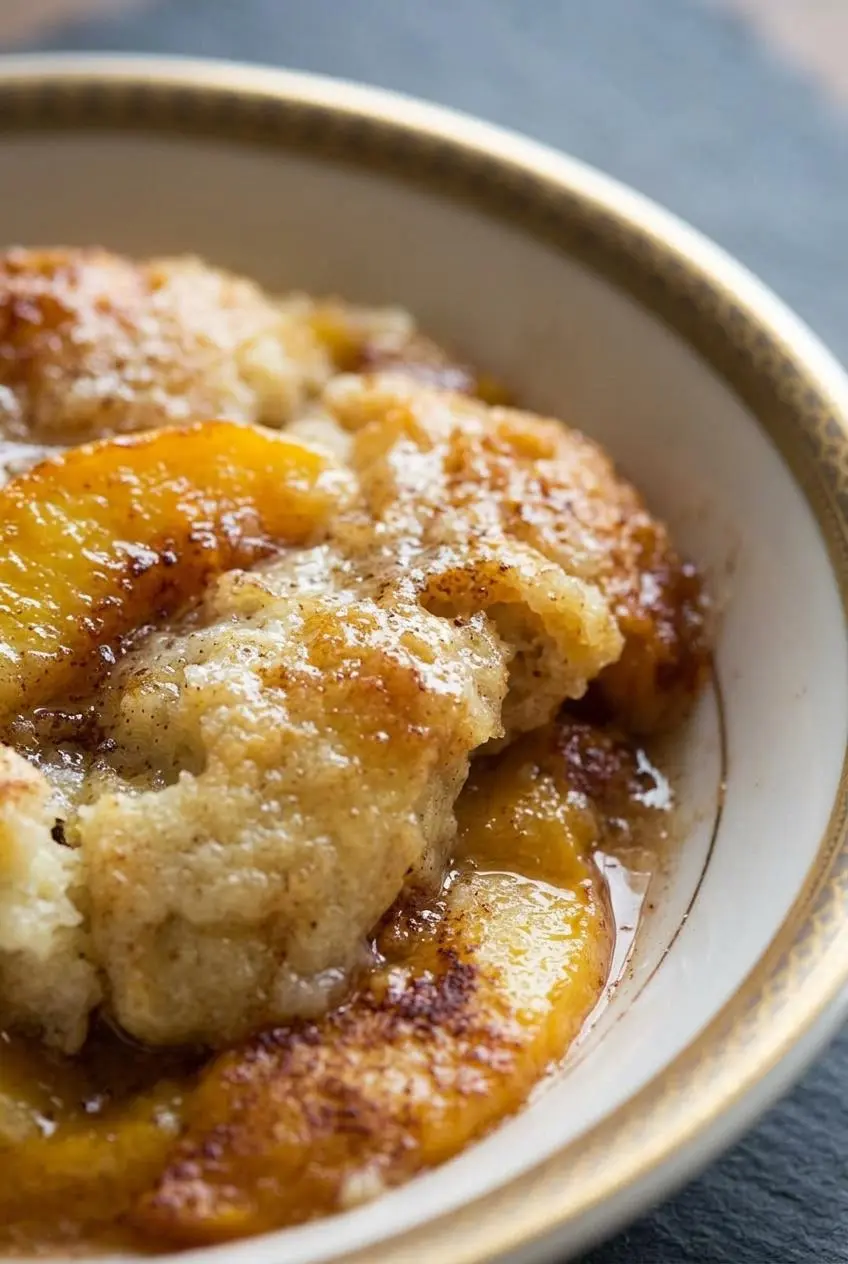
This method matters because the unusual layering is what gives an old-fashioned cobbler its distinct texture. If you’ve ever wondered why the butter, batter, and peaches stay separate going into the oven, here’s the practical answer.
The baking powder reacts with the milk in the batter and creates tiny air pockets as the cobbler bakes. That lift helps the batter rise upward through the heavier peach layer, so you end up with a soft, cake-like top instead of a dense slab underneath.
Meanwhile, the melted butter sits on the bottom and around the edges of the baking dish. As the batter bakes in that butter, the perimeter turns golden and a little crisp, with a lightly caramelized edge that tastes like the best corner piece in the pan.
Stirring ruins that setup. Once the layers are mixed together, the batter loses its clean path to rise, the butter gets absorbed too early, and the cobbler can turn flat, gummy, or oddly heavy. It still bakes, but it stops being the classic version people expect.
That’s why this dessert looks a bit backwards when you assemble it. The batter goes in first, the peaches go on top, and the oven takes it from there.
Fresh, Frozen, or Canned Peaches: The Ultimate Prep Guide
You can make this cobbler with fresh, frozen, or canned peaches, as long as you handle the moisture level well. The topping is forgiving, but too much liquid in the fruit can leave the middle soggy.
- Fresh peaches: For easy peeling, drop them into boiling water for about 30 seconds, then transfer them to cool water and slip the skins off with your fingers or a paring knife. Fresh peaches give the brightest flavor and the best texture for the classic version.
- Frozen peaches: Thaw them fully first, then drain them very well before cooking with the sugar and salt. If they go into the pan still icy or watery, the filling can overwhelm the batter.
- Canned peaches: They work well when fresh fruit is out of season, but drain them partially so the filling does not get too loose. If the peaches are packed in heavy syrup, reduce the granulated sugar by 1/4 cup to keep the cobbler from turning overly sweet.
If you use canned peaches, you can usually skip the brief saucepan step unless you want to warm them and concentrate the syrup a little. Frozen peaches benefit most from careful draining, while fresh peaches benefit most from that quick stovetop simmer.
For a deeper fruit flavor, you can even start with smoky grilled peaches before folding them into the filling. That’s optional, but it gives the cobbler a slightly darker, caramelized edge.
Do you need to peel the peaches? For the smoothest old-fashioned texture, yes. The blanching step keeps it easy and fast.
Troubleshooting: How to Avoid a Watery or Soggy Cobbler
This is the section that saves dessert. Most cobbler problems come down to fruit moisture, batter texture, or disturbing the layers.
- Watery filling: Very ripe peaches release a lot of juice as they cook. If your fruit looks especially wet in the saucepan, stir in 1 tablespoon of cornstarch so the juices thicken as the cobbler bakes.
- Soggy center: Canned peaches with too much syrup or frozen peaches that were not drained well can flood the batter. Pour off the extra liquid before layering the fruit.
- Dense topping: Too much flour is usually the culprit. Spoon flour into the measuring cup and level it off rather than scooping directly from the bag, which can pack in too much.
- Gummy patches: Dry ingredients that were not whisked well can leave flour pockets in the batter. Mix the flour, sugar, baking powder, and salt thoroughly before adding the milk.
- Flat cobbler: Stirring the layers together knocks out the structure of the recipe. Keep the melted butter on the bottom, the batter in the middle, and the peaches on top.
- Runny servings: Cutting in too soon makes the juices spill. Let the cobbler cool for 15 minutes so the filling can thicken naturally.
If the top browns before the center looks set, the dish may be running hot or dark. A lighter baking dish usually gives you a more even bake, while glass and ceramic tend to bake a little more gently than dark metal pans.
How to Store and Reheat Peach Cobbler
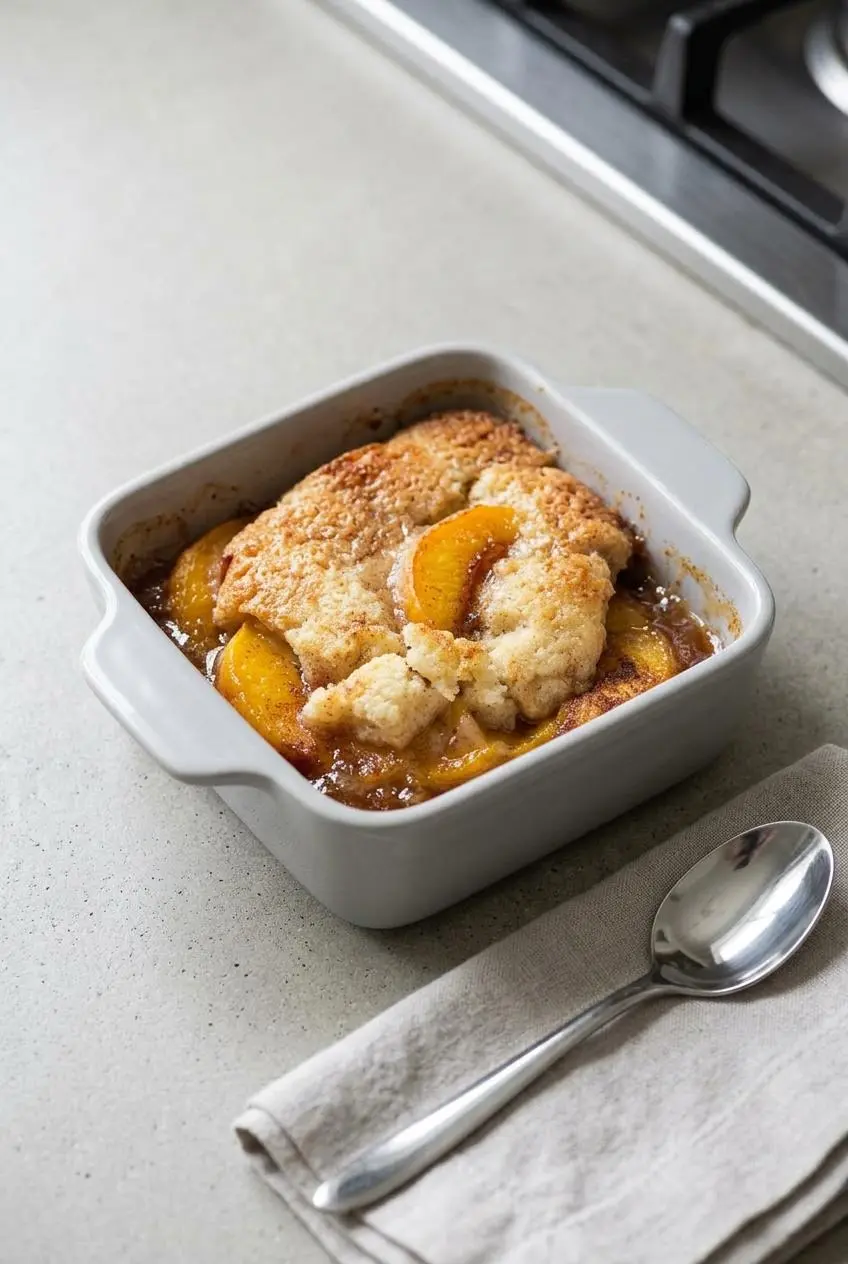
Leftover cobbler is best handled with texture in mind. Let it cool before covering, then refrigerate it so the fruit stays in good shape and the dairy in the batter stays properly chilled. Since this recipe contains milk, keeping leftovers cold matters, and perishable foods should be kept below 40 °F.
For reheating, use the oven rather than the microwave when you want the topping to perk back up. Place the baking dish or a portion in an oven-safe dish and warm it at 350 degrees F until the center is hot and the edges look lively again. The microwave works in a pinch, but it tends to soften the top.
If you want to get ahead, prep the peaches and batter separately and hold them chilled until you’re ready to assemble and bake. For the best texture, keep the batter and fruit separate until the cobbler goes into the oven.
Variations to Try
This base recipe is the classic cake-style version, but you can nudge the flavor or texture in a few different directions without changing the heart of it.
Spiced Southern Cobbler
For a warmer, deeper flavor, add a little nutmeg, a pinch of cloves, and a pinch of ginger to the dry batter mixture along with the cinnamon. This leans into that cozy Southern dessert feel and works especially well when the peaches are very sweet.
Easy Canned Peach Dump Cobbler
If speed is the goal, use canned peaches, drain them partially, and skip the stovetop peach step. If you prefer a shortcut batter style with self-rising flour, make it by combining all-purpose flour with baking powder and salt, then keep the no-stir layering method exactly the same.
Pecan Biscuit Topping Cobbler
If you want more crunch and a rustic finish, swap the cake-like top for biscuit dough and add chopped candied pecans. A splash of heavy cream in the dough gives that style a richer bite, and it turns the dessert into something closer to a skillet cobbler.
For individual portions, ramekins or mini peach cobblers are a fun option for dinner parties or small-batch baking.
Conclusion
This cobbler earns its place because it gives you soft, juicy peaches, a golden top, and buttery edges without a complicated method. Once you understand the layering, it feels easy in the best way.
Keep the layers unstirred, give the fruit a few minutes to turn syrupy, and let the baked cobbler rest before serving. A scoop of vanilla ice cream on top doesn’t hurt either.
Frequently Asked Questions
Can I Use Canned Peaches Instead of Fresh?
Yes. Drain them partially so the filling does not get too loose. If they are packed in heavy syrup, reduce the sugar in the filling by 1/4 cup. You can also skip the saucepan step if the canned peaches are already soft and juicy.
Why Do You Not Stir the Batter and Melted Butter?
Leaving the layers alone helps the batter rise through the peaches as it bakes. That is what creates the classic cake-like top and buttery crust around the edges. If you stir everything together, the cobbler can bake up flatter and heavier.
How Do I Prevent My Cobbler From Becoming Too Watery?
Start with peaches that are ripe but not collapsing soft. Simmer fresh peaches briefly so the sugar can draw out and concentrate their juices. If the fruit is very juicy, add 1 tablespoon of cornstarch to the saucepan mixture before baking.
Can I Make Peach Cobbler Ahead of Time?
Yes. You can prepare the peaches and batter separately, keep them chilled, and assemble right before baking. You can also bake the cobbler earlier and warm it in a 350 degrees F oven before serving. Oven reheating keeps the topping livelier than the microwave.
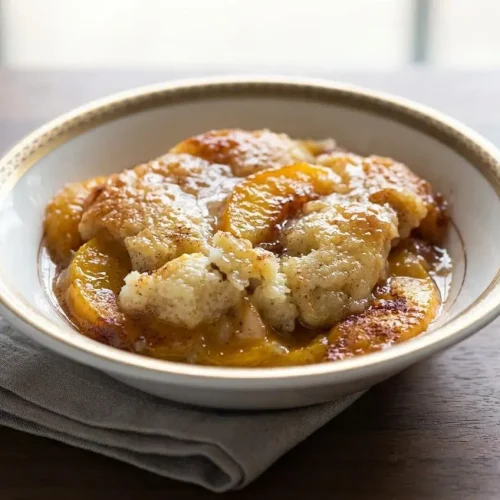
Old Fashioned Peach Cobbler

Equipment
- 9×13-inch baking dish
- Saucepan
- large bowl
Ingredients
Peach Filling
- 5 peaches peeled and sliced
- 3/4 cup granulated sugar
- 1/4 teaspoon salt
Cobbler Batter
- 6 Tablespoons butter
- 1 cup all-purpose flour
- 1 cup granulated sugar
- 2 teaspoons baking powder
- 1/4 teaspoon salt
- 3/4 cup milk
- ground cinnamon
Instructions
Prepare Peaches
- Combine the sliced peaches, sugar, and salt in a saucepan and stir until the fruit is coated evenly. The sugar will start pulling moisture from the peaches almost right away, which is exactly what you want.
- Set the pan over medium heat and cook for a few minutes, then take it off the heat once the sugar has dissolved and the peaches have released their juices. The mixture should look glossy and lightly syrupy, not dry or grainy.
Assemble and Bake
- Heat the oven to 350 degrees F, place the sliced butter in a 9×13 inch baking dish, and set the dish in the oven while it preheats. Pull the dish out as soon as the butter is melted and before it starts browning or smelling nutty.
- Whisk the flour, sugar, baking powder, and salt in a large bowl, then stir in the milk just until a smooth batter forms and pour it over the melted butter. The batter should spread easily into an even layer and look like a thin pancake batter.
- Spoon the peaches and their juices over the batter and scatter ground cinnamon generously across the top. Leave the layers alone and let some open spots remain, so the batter has room to rise up around the fruit.
- Bake for about 38 to 40 minutes until the top is golden and the fruit is bubbling around the edges. You’ll know it is ready when the kitchen smells like cinnamon and caramelized peaches and the center no longer looks pale.