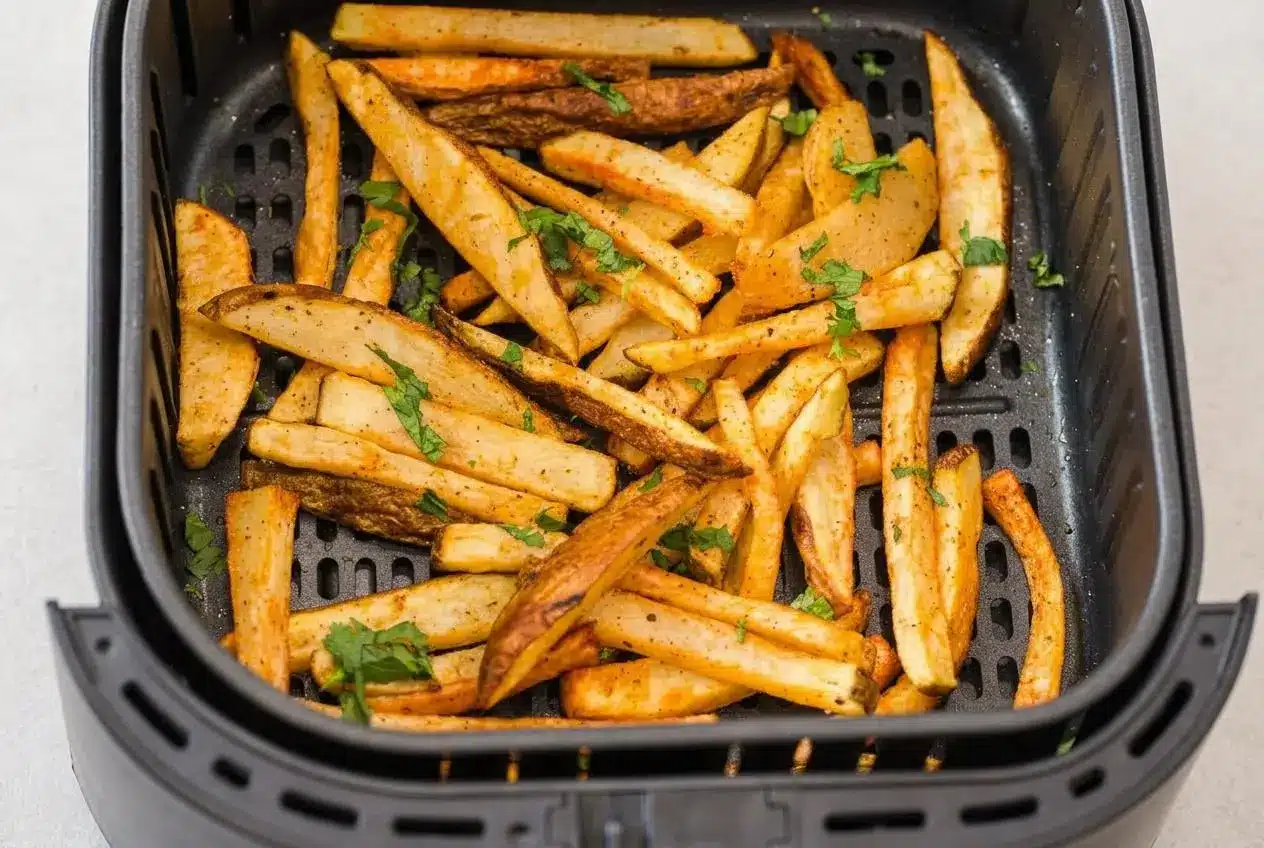
For the crispiest fries, use Russet potatoes, soak the cut potatoes to wash away excess starch, dry them very well, and cook them in two stages so the centers turn fluffy before the outside gets deeply golden.
These air fryer french fries are the from-scratch kind that actually deliver on crunch. You get a crisp shell, tender middle, and seasoning that sticks instead of sliding off.
They also solve the usual problems like pale color, soggy edges, and uneven cooking. The final high-heat blast is the part that changes everything.
Preheat the air fryer if your model runs best that way, and keep a towel ready because dry potatoes crisp far better than damp ones.
Why This Is the Only Air Fryer Fries Recipe You’ll Ever Need
This method combines the steps that matter most and skips the ones that waste time. The hot soak helps the potatoes cook up fluffier, and the two-temperature air fry gives you better control over both the inside and the crust.
You start by softening the potatoes gently so they cook through without browning too fast. Then you finish them at a higher temperature for that deep golden color and crisp texture that makes fries worth making at home.
It is also practical for real kitchens. If your air fryer is a basket style, you may need to cook in batches. If it is an oven style, you may get a bit more room, but the same rule applies: give the fries space so hot air can move around them.
Key Ingredients for the Crispiest Fries
Each ingredient has a job here, from building the fluffy interior to helping the edges brown, crisp, and hold onto the seasoning.
- 1 lb russet potatoes ((2 large or 3 medium potatoes))
- 1 Tbsp olive oil
- 1/2 tsp salt (or to taste)
- ⅛ tsp ground black pepper (or to taste)
- ⅛ tsp garlic powder
- ⅛ tsp paprika
Russets give you that classic fry texture with a dry, fluffy middle. Olive oil helps the surface color evenly and crisp instead of drying out. Salt wakes everything up, while black pepper, garlic powder, and paprika add warmth, savoriness, and a little color.
The Best Potatoes: Russet vs. Yukon Gold
The potato choice really does change the result. If you want fries that feel most like classic diner or steakhouse fries, Russets win.
| Potato Type | Starch/Moisture Content | Final Fry Texture |
|---|---|---|
| Russet | Higher starch, lower moisture | Fluffy inside with a crisp, dry exterior |
| Yukon Gold | Moderate starch, slightly more moisture | Creamier center with a softer, less crackly crust |
Yukon Gold potatoes are still a good option if that is what you have. They make very tasty fries, just with a more buttery interior and slightly less rigid crunch. For the most classic crispy fries, stick with Russets.
The Role of Oil and Starch
A small amount of oil matters more than it seems. It helps the seasonings cling, encourages even browning, and gives the fries that lightly blistered finish instead of a dry, leathery one.
As for soaking, think of it as a texture insurance policy. Cut potatoes release cloudy starch into the water, and getting rid of that excess helps prevent fries from cooking up sticky or gummy on the outside.
I always grab Russets that are fairly even in shape because straight-sided potatoes are much easier to cut into fries that finish at the same time.
How to Make Air Fryer French Fries (The Ultimate Method)
This is the part that makes homemade fries actually crisp. Uniform cutting, a quick soak, thorough drying, and a two-stage cook work together so you get tender centers first and real crunch at the end.
Step 1: Cut and Soak for a Fluffy Interior
Cut the potatoes into even ¼-inch sticks so the thinner pieces do not burn before the thicker ones are done. A quick hot water soak for about 10 to 15 minutes is a smart shortcut when you want better texture without waiting around for a long soak.
If you compare methods, no soak usually gives the least crisp result, a cold soak helps, and a hot soak tends to move things along faster. You will notice the water turn cloudy, which is a useful sign that the potatoes are releasing starch.
- Scrub the potatoes well, then slice them into even ¼-inch thick strips.
Uniform pieces cook at the same pace, so you avoid a mix of burnt tips and underdone centers. - Place the cut potatoes in water to rinse away surface starch, then let them soak briefly before draining.
The water will look cloudy, and that is a good sign the fries are heading toward a fluffier texture.
Step 2: Dry Thoroughly and Season
This is one of the most important steps in the whole recipe. If water is still clinging to the potatoes, the air fryer has to steam it off before the fries can brown, and that slows down crisping.
Dry the potatoes with a clean kitchen towel or paper towels until the surface feels dry, not tacky. Toss with the oil first so every fry gets lightly coated, then add the salt, pepper, garlic powder, and paprika for even seasoning.
- Pat the soaked fries completely dry, transfer them to a large bowl, and toss with the olive oil.
The fries should look lightly glossy with no visible wet spots. - Sprinkle in the salt, black pepper, garlic powder, and paprika, then toss again until the fries are evenly coated.
You should see the spices distributed across the surface instead of collecting at the bottom of the bowl.
Step 3: The Two-Temperature Air Fry for Ultimate Crunch
The first stretch at 380 °F cooks the potatoes through and starts the exterior drying. Then the hotter finish at 400 °F pushes the outside into deep golden, crisp territory very quickly, so keep an eye on them near the end.
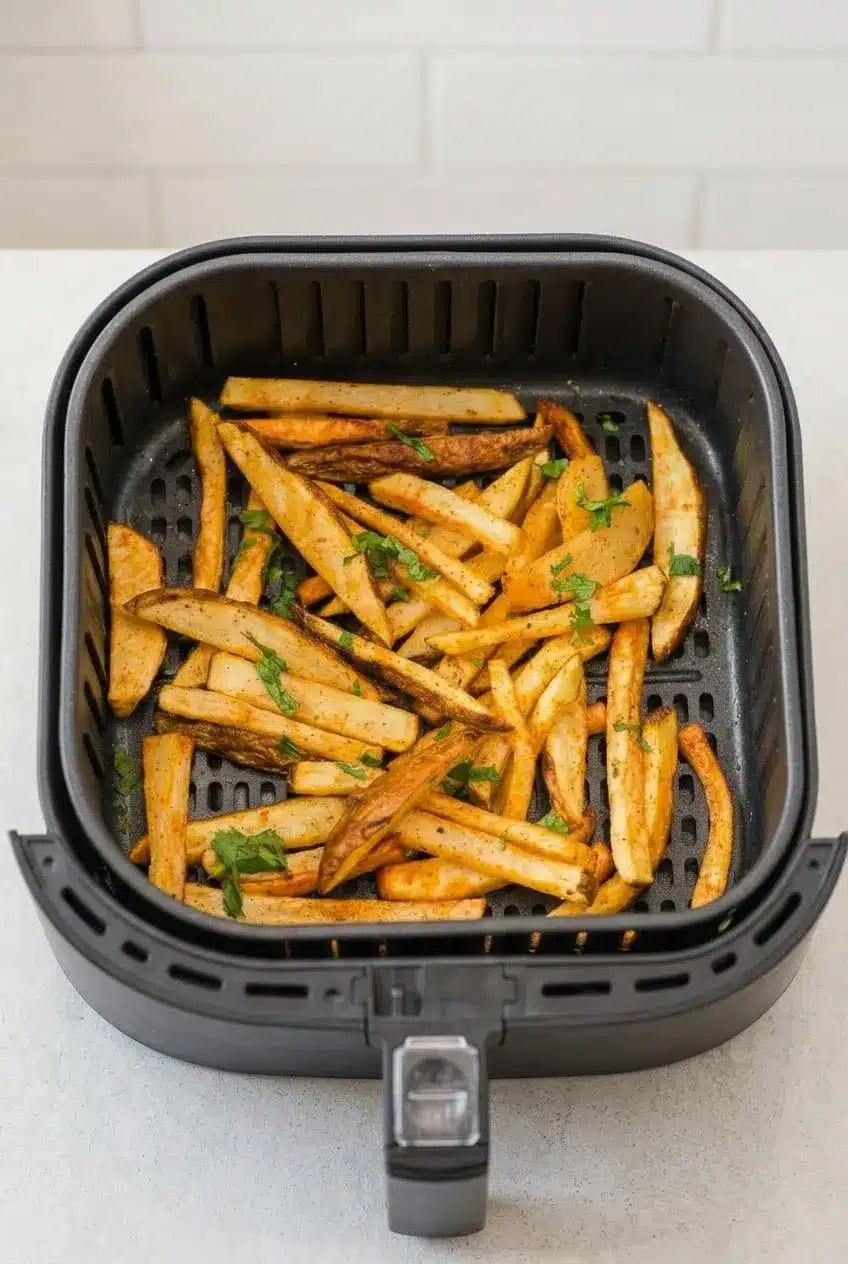
Shake the basket during cooking so fresh hot air can hit new sides of the fries. When they are done, they should be deep golden brown rather than pale yellow, and if you shake them in a bowl, they should make a light hollow rattle.
- Arrange the fries in the air fryer basket and cook at 380 °F for 10 minutes.
They should look tender and slightly dry on the surface, with only light browning at this stage. - Shake or toss the fries, raise the heat to 400 °F, and cook for 6 to 8 more minutes until crisp and golden.
Watch closely during this final stretch because the color deepens fast once the edges start to brown. - Serve the fries warm once they are deeply golden and crisp to your liking.
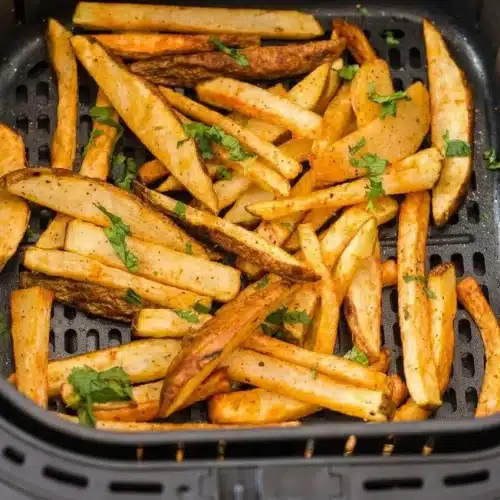
The best batch has a fluffy center, crisp edges, and that faint rattle when the fries bump against each other.
Essential Tips for Guaranteed Crispiness
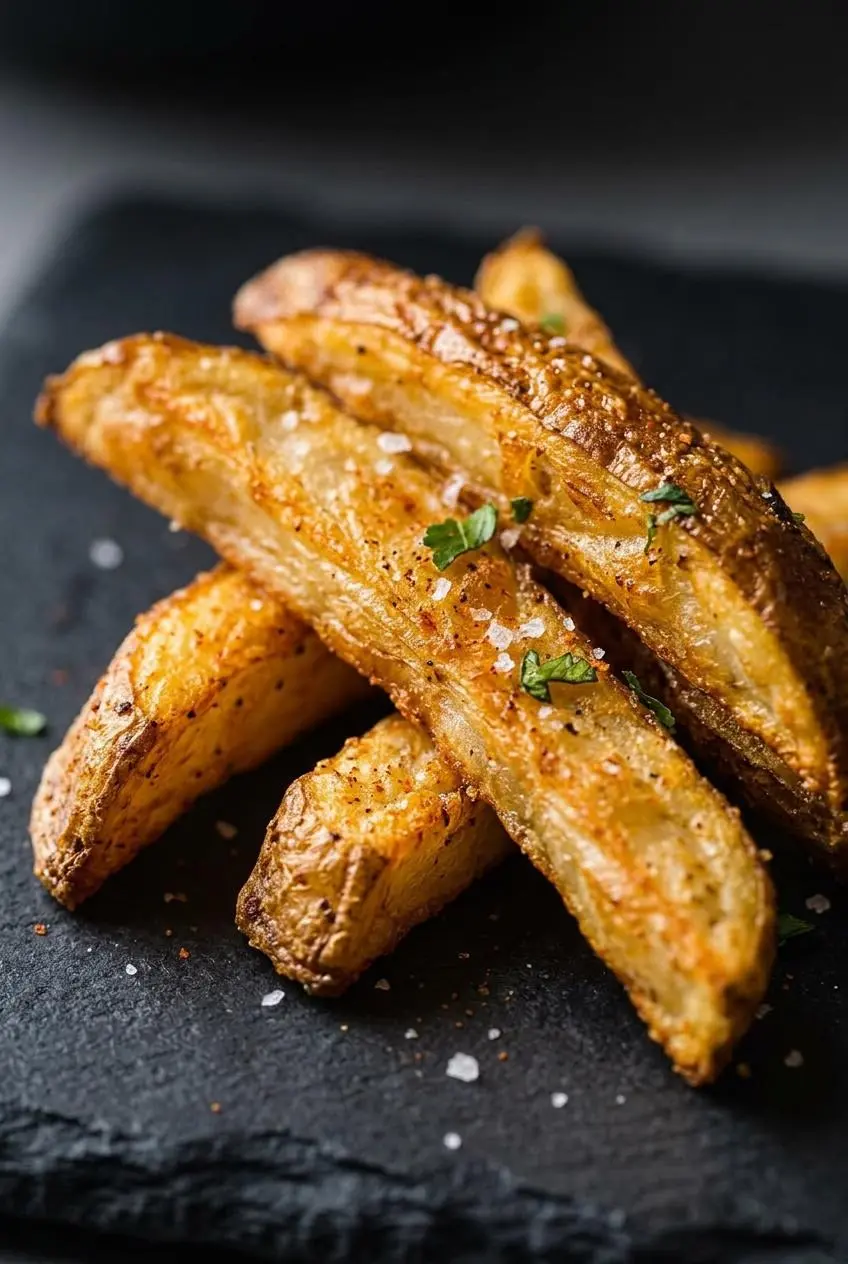
If your fries have ever come out limp, patchy, or oddly pale, these are the fixes that make the biggest difference.
Work in a Single Layer
Overcrowding is the fastest route to soggy fries. When the basket is too full, the potatoes trap steam and soften each other instead of crisping. Cook in batches if you need to, especially with smaller basket models.
The same crisping rules also help with other potato recipes like air fryer hash browns, where space and surface dryness matter just as much.
The Cornstarch Trick (Optional)
If you want an extra crunchy surface, add a very light dusting of cornstarch with the seasonings. It gives the fries a slightly more crackly coating, almost like a delicate shell.
Go lightly. Too much can leave a powdery finish instead of a crisp one.
Re-crisp All Batches Before Serving
If you cook in batches, pile them all back into the basket for a brief final blast at 400 °F right before serving. Even 1 to 2 minutes can wake up the texture again and make the whole batch feel freshly cooked.
This is especially handy when dinner timing gets messy. Fries are not patient food.
Flavor Variations and Dipping Sauces
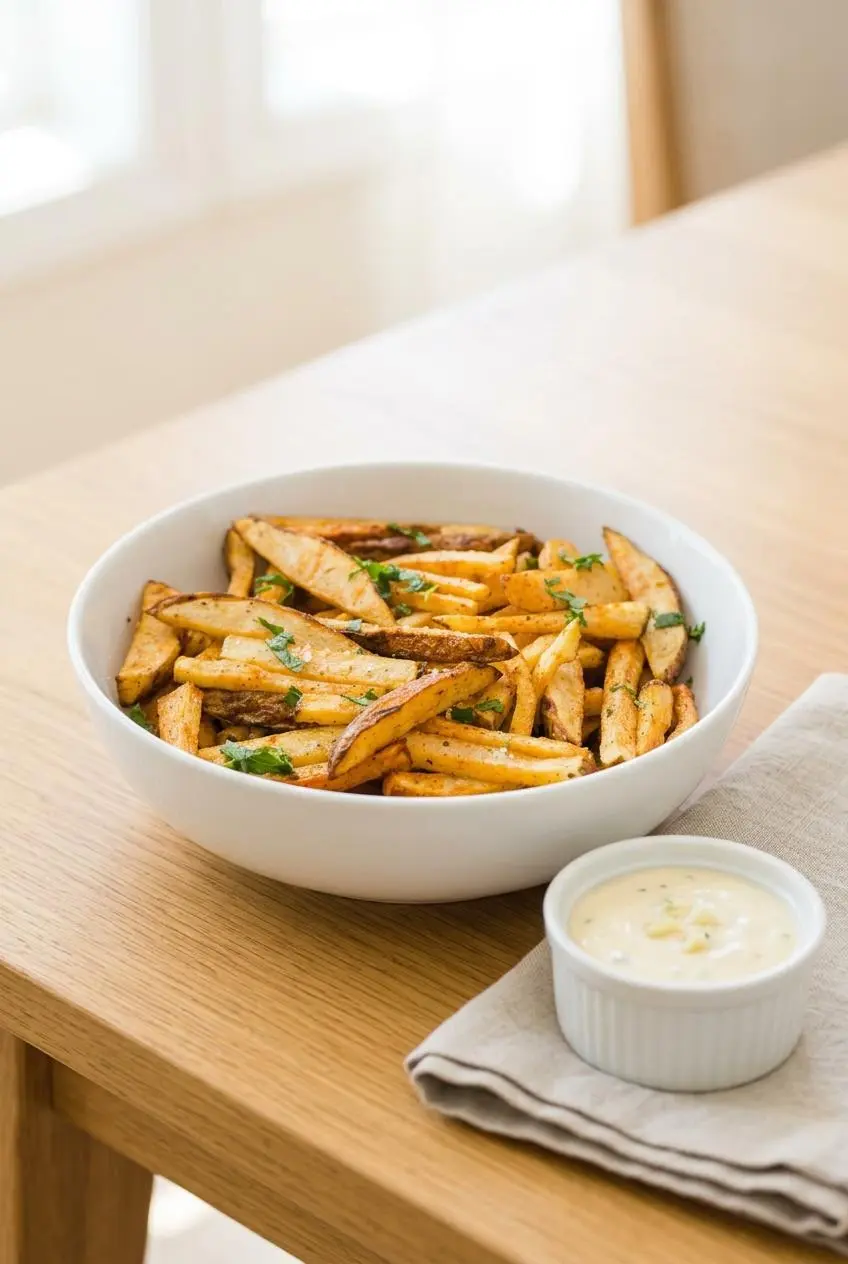
Once you have the base method down, you can change the personality of the fries without changing the main recipe. Keep the seasonings optional and add them after oiling so they stick more evenly.
Creative Seasoning Blends
These blends work best as optional swaps for the base seasoning. Add them lightly at first, then taste after cooking.
| Variation | What It Adds | Best For |
|---|---|---|
| Cajun blend | Paprika, cayenne, onion powder, and a bolder kick | Spicy fries with burgers or sandwiches |
| Old Bay style | Salty, savory, slightly celery-like flavor | Seafood nights or snack fries |
| Ranch herb blend | Onion, garlic, dried herbs, and tangy savory notes | Game day platters |
| Italian herb and Parmesan | Dried herbs with a cheesy finish | Fries served with sandwiches or roasted chicken |
Must-Try Dipping Sauces
Ketchup is always welcome, but fries get a lot more interesting with a stronger dip. Stir together mayo and sriracha for a quick spicy fry sauce, or mix mayo with grated garlic and lemon for an easy aioli-style dip.
If you want something cool and savory, ranch works well, and a homemade French onion dip turns the fries into a very good snack plate.
For a full meal, serve the fries alongside a burger or simple air-fried protein. They fit especially well alongside French onion burgers.
Variation: Crispy Sweet Potato Fries
Sweet potato fries use a similar approach, but they cook a bit faster and brown faster because of their natural sugars. Watch the second high-heat phase closely.
They also stay a little softer and less rigid than Russet fries, even when well cooked. That is normal. If you like vegetable-style fries in general, baked zucchini fries are another fun route.
Troubleshooting: From Soggy to Superb
Most fry problems come down to moisture, crowding, or uneven size. The good news is that they are easy to fix on the next batch.
| Problem | Likely Cause | Solution |
|---|---|---|
| Soggy or steamed fries | Basket too full, potatoes not soaked, or fries still damp before cooking | Cook in a single layer, do the soak, and dry the potatoes very thoroughly before oiling |
| Burnt or dark fries | Pieces cut too thin or left too long during the high-heat finish | Cut thicker, more even sticks and watch closely once the temperature goes up |
| Unevenly cooked fries | Mixed sizes or not enough shaking during cooking | Cut the fries uniformly and shake the basket so different sides get direct heat |
| Bland fries | Not enough salt or seasoning added too unevenly | Toss with oil first, season evenly, and add a little more salt while the fries are still hot if needed |
Storing and Reheating for Maximum Crunch
Leftover fries lose texture fast if they are sealed while still hot, so let them cool completely first. Then store them in an airtight container in the refrigerator and keep them properly chilled for food safety, following safe cold storage practices for leftovers.
To reheat, return the fries to the air fryer at 375 °F for 3 to 5 minutes, or until hot and crisp again. This brings back far more texture than the microwave, which tends to make fries limp and chewy.
If you know you will have leftovers, keep sauces separate and reheat only the amount you plan to eat. Smaller batches re-crisp more evenly.
Conclusion
The best air fryer fries come from a few smart choices, not extra fuss. Russet potatoes, a quick soak, very dry surfaces, and a two-temperature cook give you the best shot at deeply crisp, golden fries with fluffy centers.
Once you see how much the final hotter stage changes the texture, it is hard to go back. Grab the potatoes, heat the air fryer, and enjoy fries that actually crunch.
Frequently Asked Questions
Why are my air fryer French fries soggy?
Soggy fries usually come from three things. The basket is too crowded, the potatoes were not soaked, or the fries were not dried well enough before cooking. Keep them in a single layer when possible. Dry them until no surface moisture remains, then use the two-stage cook so they have time to crisp properly.
What is the best potato for French fries?
Russet potatoes are the best choice for classic French fries because they give you the fluffiest centers and the crispest edges. Yukon Golds work too, but they make a creamier fry with a slightly softer crust.
How do I cook frozen French fries in an air fryer?
Cook frozen fries at 400 °F for 10 to 15 minutes, shaking the basket halfway through. They usually do not need extra oil, and they are done when they are hot, golden, and crisp on the edges.
How do I reheat fries in an air fryer?
Reheat fries at 375 °F for 3 to 5 minutes until they are warmed through and crisp again. Spread them out instead of piling them up so the hot air can do its job.
Air Fryer French Fries

Equipment
- Air fryer
- large bowl
- Kitchen towel
Ingredients
- 1 lb russet potatoes (2 large or 3 medium potatoes)
- 1 Tbsp olive oil
- 1/2 tsp salt (or to taste)
- ⅛ tsp ground black pepper (or to taste)
- ⅛ tsp garlic powder
- ⅛ tsp paprika
Instructions
- Scrub the potatoes well, then slice them into even ¼-inch thick strips. Uniform pieces cook at the same pace, so you avoid a mix of burnt tips and underdone centers.
- Place the cut potatoes in water to rinse away surface starch, then let them soak briefly before draining. The water will look cloudy, and that is a good sign the fries are heading toward a fluffier texture.
- Pat the soaked fries completely dry, transfer them to a large bowl, and toss with the olive oil. The fries should look lightly glossy with no visible wet spots.
- Sprinkle in the salt, black pepper, garlic powder, and paprika, then toss again until the fries are evenly coated. You should see the spices distributed across the surface instead of collecting at the bottom of the bowl.
- Arrange the fries in the air fryer basket and cook at 380°F for 10 minutes. They should look tender and slightly dry on the surface, with only light browning at this stage.
- Shake or toss the fries, raise the heat to 400°F, and cook for 6 to 8 more minutes until crisp and golden. Watch closely during this final stretch because the color deepens fast once the edges start to brown.
- Serve the fries warm once they are deeply golden and crisp to your liking. The best batch has a fluffy center, crisp edges, and that faint rattle when the fries bump against each other.