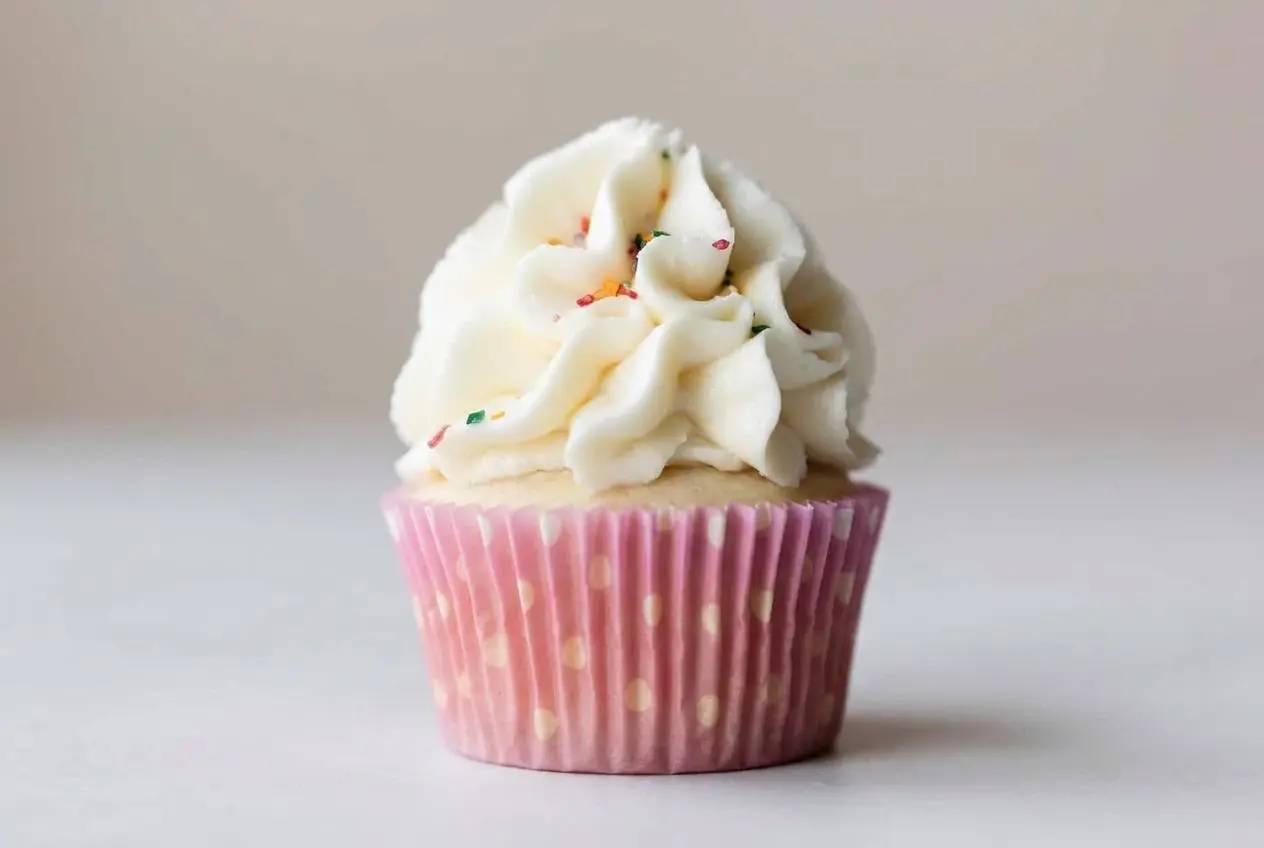
This buttercream frosting is a classic American frosting made by beating softened butter with confectioners’ sugar, vanilla, and cream until light, smooth, and fluffy. It’s sweet, pipeable, and perfect for cakes, cupcakes, cookies, and fillings.
Buttercream frosting is one of those baking basics that pays off fast. When the butter is at the right softness and the sugar is fully worked in, the texture turns creamy instead of gritty and the swirls hold their shape beautifully.
This version is reliable, flexible, and easy to adjust for spreading or piping. The small details matter here, and they make a big difference.
Sift the sugar before you start and have the butter and liquid at room temperature so the frosting comes together smoothly.
Why This Is the Best Buttercream Recipe
This is the kind of frosting home bakers come back to because it works without fuss. You get a classic sweet vanilla flavor, a soft fluffy texture, and enough flexibility to spread it thickly on a cake or pipe neat swirls onto cupcakes.
It also leaves room for adjustment. You can make it slightly thicker for decorating, softer for swooping over sheet cakes, or a touch less sweet with a few smart tweaks. That makes it a solid go-to American buttercream for birthdays, holidays, and everyday baking.
Key Ingredients for Perfect Buttercream
Each ingredient has a real job here, from building structure and sweetness to controlling texture, richness, and that smooth finish.
- 1 cup (16 Tbsp; 226g) unsalted butter, softened to room temperature
- 4 – 5 cups (480-600g) confectioners’ sugar
- 1/4 cup (60ml) heavy cream, half-and-half, or whole milk, at room temperature
- 2 teaspoons pure vanilla extract
- salt, to taste
Butter is the foundation of the whole frosting. It gives the frosting body, richness, and that creamy mouthfeel you want in a good vanilla buttercream. Softened butter creams more evenly, so it traps air as you beat it and creates a lighter, fluffier texture instead of dense or streaky frosting.
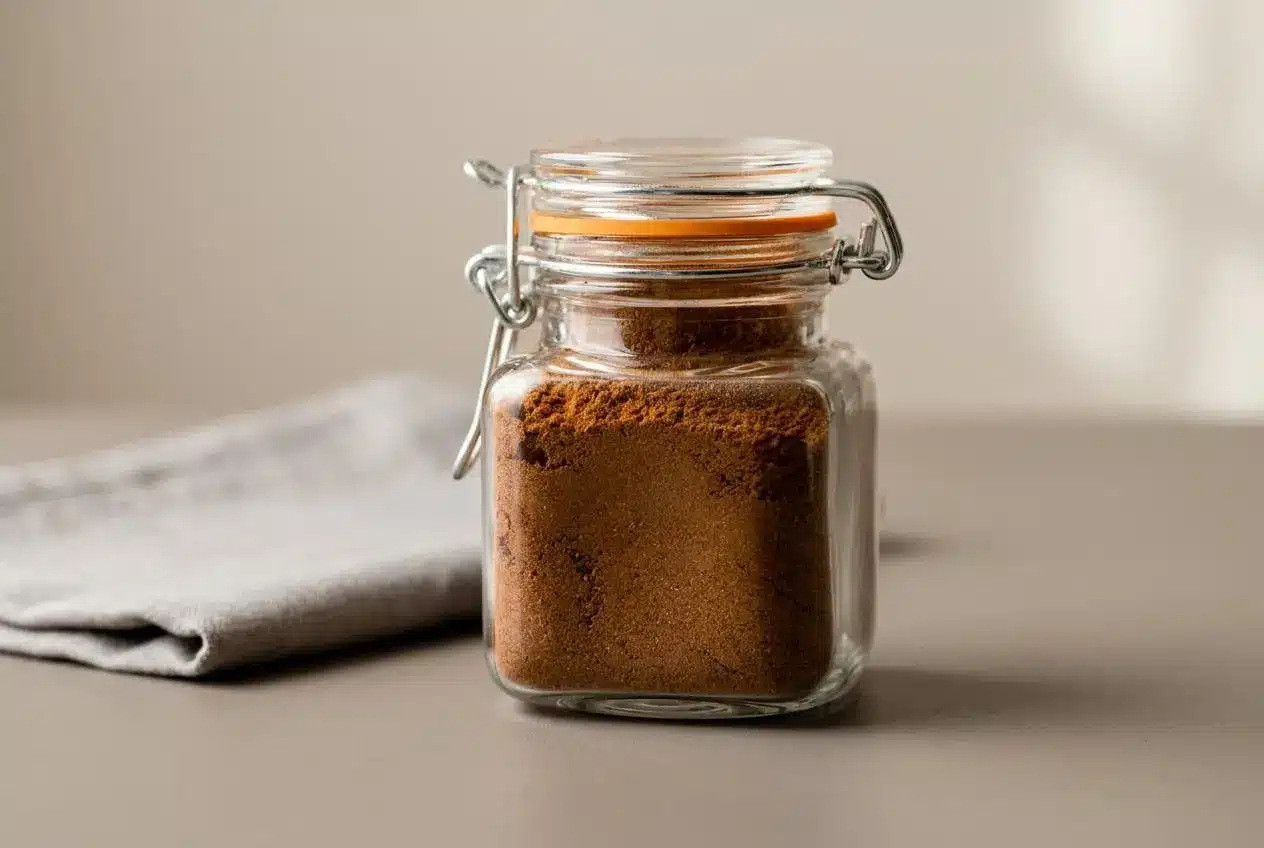
Confectioners’ sugar is the right sugar here because it dissolves into the butter much more smoothly than granulated sugar. Granulated sugar stays coarse, which can leave the frosting sandy and heavy. Sifting the sugar helps even more, especially if you want a polished finish for piping.
The cream, half-and-half, or milk controls consistency. Heavy cream gives the richest texture, while milk keeps the frosting a bit lighter. This liquid loosens the mixture just enough so the sugar blends in smoothly and the frosting becomes spreadable or pipeable instead of stiff.
Vanilla rounds out the sweetness and gives the frosting its classic bakery-style flavor. Salt matters too. Even a small pinch helps balance the sugar so the frosting tastes sweeter in a good way, not flat or cloying.
For the most consistent texture, measure the sugar by weight if you can. Powdered sugar compacts easily in measuring cups, and a kitchen scale keeps the frosting from turning too thick before you mean it to.
I always let the butter sit until it yields easily when pressed but still holds its shape, because butter that is too soft can make the whole bowl feel greasy fast.
How to Make Buttercream Frosting Step-by-Step
- Beat the softened butter with a handheld mixer or a stand mixer fitted with the paddle on medium speed for about 2 minutes.
The butter should look creamy, noticeably paler, and slightly fuller once enough air has been worked in. - Add 4 and 1/2 cups confectioners’ sugar, the heavy cream, and the vanilla extract, then start mixing on low speed for 30 seconds.
Beginning slowly keeps the sugar in the bowl and helps the ingredients come together without lumps. - Raise the mixer to medium-high speed and beat for 2 full minutes.
The frosting should become fluffy, smooth, and soft enough to spread, and it should stop feeling gritty between your fingers. - Taste the frosting and add a pinch of salt if it tastes overly sweet.
A small amount can brighten the vanilla and make the sweetness feel more balanced. - Adjust the texture if needed by mixing in up to 1/2 cup more confectioners’ sugar if the frosting is too thin or more heavy cream if it is too thick.
Add the cream only 1 Tablespoon at a time so you can fine-tune the consistency without making it loose. - Use the frosting right away, or cover it tightly and store it if you are not using it immediately.
After chilling or freezing and thawing, a quick beat on medium speed and a small splash of heavy cream or milk can bring back a creamy, pipeable texture.
The most important stage is the first one. Beating the butter alone gives it a head start, which means a lighter final frosting. If you rush that part, the frosting can still work, but it usually feels heavier and looks less fluffy.
The second key is ingredient temperature. Room temperature butter and room temperature liquid blend more smoothly, while cold liquid can make the mixture look split for a bit. If that happens, keep mixing before assuming it is ruined.
Tips for the Smoothest, Fluffiest Frosting
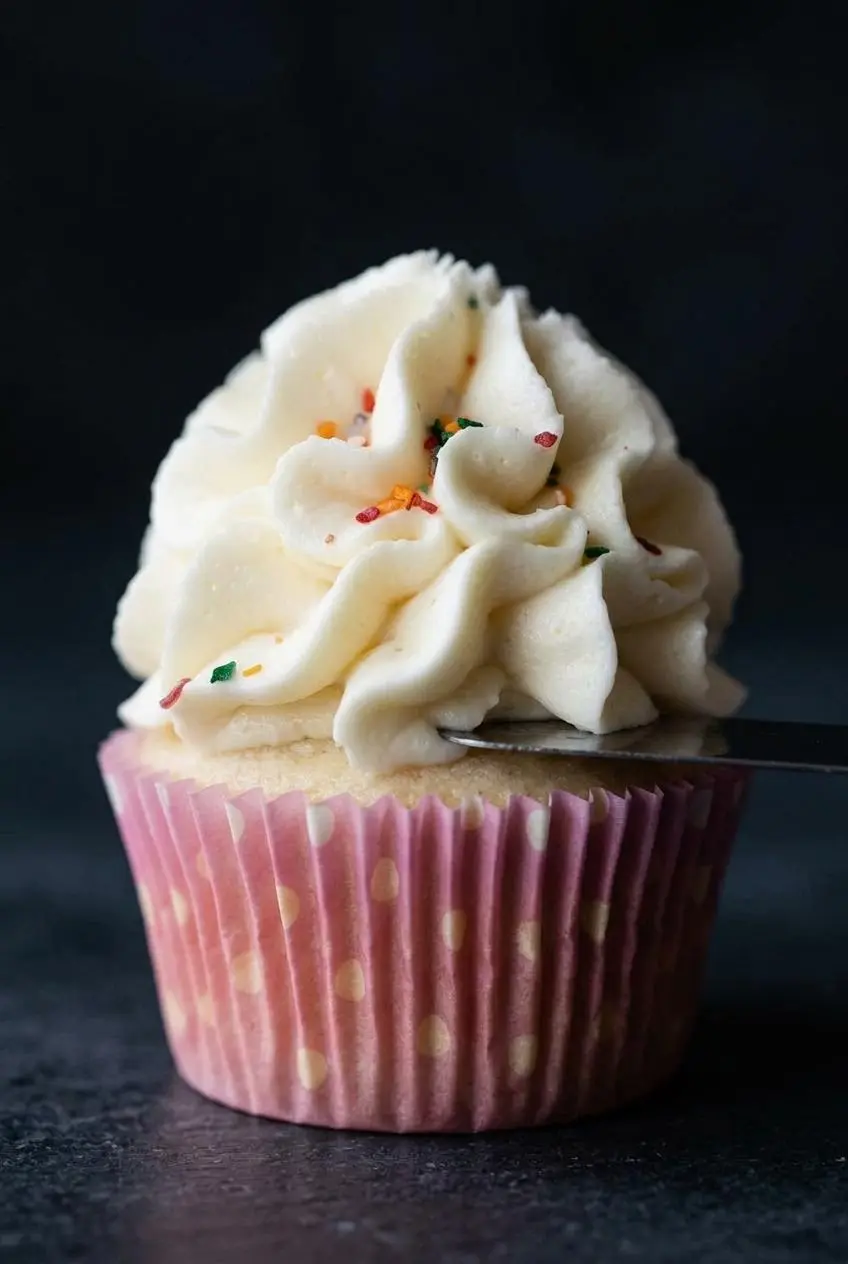
Little technique choices matter a lot with buttercream. These are the details that keep it soft, silky, and easy to spread or pipe.
The Importance of Room Temperature Butter
Room temperature butter should feel soft when you press it, but it should not look shiny, greasy, or partly melted. You want it pliable enough for the mixer to whip air into it, because that air is what helps create a fluffy texture.
If the butter is too cold, the frosting often turns lumpy and stubborn, with tiny butter bits that never quite smooth out. If the butter is too warm, the frosting can look loose, greasy, or almost soupy. In that case, extra sugar may thicken it somewhat, but the texture usually gets better if you start with butter at the right softness in the first place.
How to Get an Air-Bubble-Free Finish
If you want a super smooth finish for cake decorating, reduce the speed after the frosting is fully whipped and let the paddle mix on low for a few minutes. That gentle mixing pushes out many of the larger air bubbles without knocking all the fluff out.
If you are using a handheld mixer, stir the finished frosting with a spatula for a minute or two. It takes a little extra arm work, but it helps create cleaner edges and smoother swirls.
For a Less Sweet Frosting
American buttercream is naturally sweet, so balancing it matters. Start with a pinch of salt. That does not make the frosting salty. It simply rounds out the flavor so the sweetness feels less sharp.
If you want a tangier edge, beat in some room-temperature full-fat block cream cheese with the butter at the beginning. This keeps the frosting in buttercream territory but gives it a slightly less sweet finish. If you would rather go fully in that direction, a full cream cheese frosting is a better fit.
A little lemon juice in a citrus variation can also cut the sweetness. Another helpful move is to stop at the lower end of the sugar range if the texture already looks right for how you plan to use it.
Buttercream Troubleshooting Guide
If your frosting isn’t quite right, here’s how to fix it.
| Problem | Likely Cause | How to Fix It |
|---|---|---|
| Grainy or Gritty | Unsifted confectioners’ sugar, not enough mixing, or butter that was too cool to blend smoothly | Sift the sugar, beat the frosting for the full time, and let it sit briefly if needed before beating again so the sugar can dissolve more fully. |
| Separated or Curdled | Ingredients were at different temperatures, especially cold liquid added to softened butter | Keep beating on medium-high speed until it comes back together. Most of the time, it smooths out once the mixture fully emulsifies. |
| Too Thin or Runny | Butter was too warm, too much liquid was added, or the kitchen is very warm | Beat in more confectioners’ sugar within the recipe range. If the butter feels overly soft, let the bowl cool slightly before mixing again. |
| Too Thick or Stiff | Too much sugar packed into the cups or not enough liquid for the texture you need | Add more heavy cream, half-and-half, or milk 1 Tablespoon at a time, mixing well after each addition. |
| Too Sweet | That is common with American buttercream, especially with higher amounts of sugar | Add a pinch of salt, use the lower end of the sugar range when possible, or add a little tang through cream cheese or citrus. |
| Yellowish Color | Natural butter color, especially with richer or darker yellow butter | Beat the butter longer until it looks paler. For decorating, a tiny touch of violet food coloring can help visually counter some yellow tones. |
Most buttercream problems are texture problems, and texture problems are usually fixable. Once you know whether the frosting needs more air, more sugar, more liquid, or more mixing time, the solution gets much less dramatic.
Easy Buttercream Flavor Variations
This base frosting takes other flavors really well, so you can change the mood without changing the core method.
| Variation | What to Change | Best For |
|---|---|---|
| Chocolate | Add cocoa powder with the sugar or melted and cooled chocolate at the end | Chocolate cakes, brownies, sandwich cookies |
| Lemon or Citrus | Add fresh zest and, if you like, a little lemon juice | Vanilla cakes, berry desserts, spring cupcakes |
| Coffee | Stir instant espresso powder into the liquid before mixing | Chocolate cakes, mocha cupcakes, richer desserts |
Chocolate Buttercream
For a chocolate version, add 1/2 cup of unsweetened cocoa powder along with the powdered sugar. You can also melt 4 ounces of unsweetened or semi-sweet chocolate, let it cool, and beat it in at the end.
Both options deepen the flavor, but they can thicken the frosting a bit. Keep a little extra cream nearby so you can loosen the texture if needed.
Lemon or Citrus Buttercream
For a bright citrus twist, mix in 1 to 2 tablespoons of fresh lemon zest or orange zest. A teaspoon of lemon juice works too, and it helps trim some of the sweetness.
Zest gives the cleanest flavor without thinning the frosting much, while juice adds a sharper tang. If you use juice, add it gradually so the consistency stays easy to spread or pipe.
American vs. Swiss vs. Italian Buttercream: A Quick Guide
If you have ever wondered why some frostings are sweeter or silkier than others, the method is the big difference.
| Type | What It Is | Sweetness Level | Difficulty | Best For |
|---|---|---|---|---|
| American | Butter whipped with confectioners’ sugar, vanilla, and liquid | Sweetest | Easiest | Classic birthday cakes, cupcakes, quick frosting jobs |
| Swiss Meringue | Egg whites and sugar heated, whipped, then beaten with butter | Less sweet | Moderate | Silky finishes, elegant layer cakes |
| Italian Meringue | Hot sugar syrup streamed into whipped egg whites, then finished with butter | Less sweet | Most advanced | Very smooth frosting, stable decorative work |
American buttercream is the easiest place to start because it does not require cooked sugar or meringue. It is also the best fit when you want something quick, rich, and sturdy enough for piping.
How to Store, Freeze, and Make Ahead
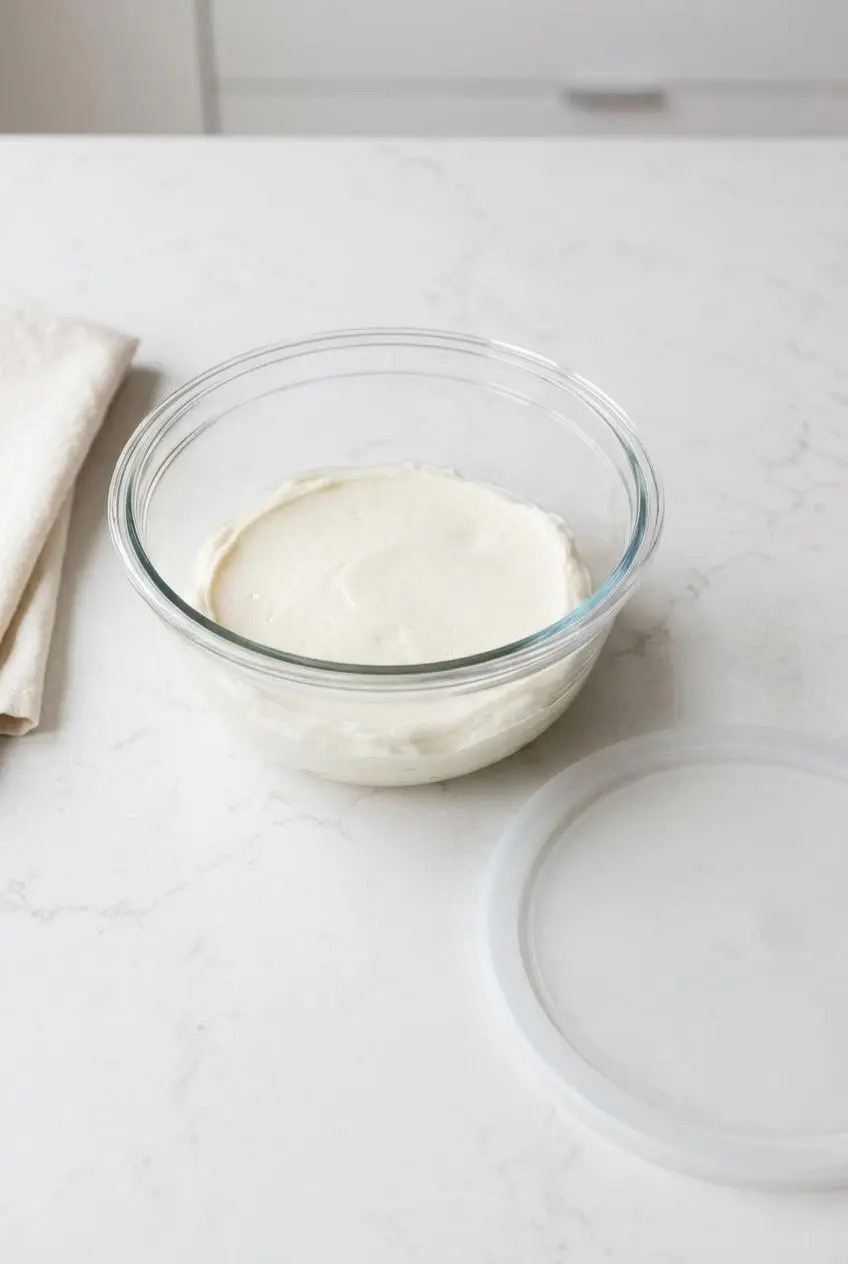
You can use this frosting right away or hold it for later if you store it tightly covered so it does not dry out.
At room temperature, this style of traditional vanilla buttercream can usually be kept for up to 2 days in an airtight container when the sugar concentration is high enough to keep it in the non-TCS range, as outlined in buttercream room temperature storage guidance.
For longer storage, refrigerate it for up to 1 week or freeze it for up to 3 months in a tightly covered container. Those timelines are built right into the recipe method, so if you plan ahead, this frosting is very make-ahead friendly.
To use chilled frosting again, let it come back toward room temperature first, then beat it briefly until smooth and creamy. If it seems too firm after that, add a small splash of heavy cream or milk and mix again until the texture loosens.
After freezing, thaw the frosting in the refrigerator before re-whipping it. Once it is smooth again, check the consistency before piping or spreading, since it may need that small splash of liquid to feel fluffy again.
Ways to Use Your Buttercream
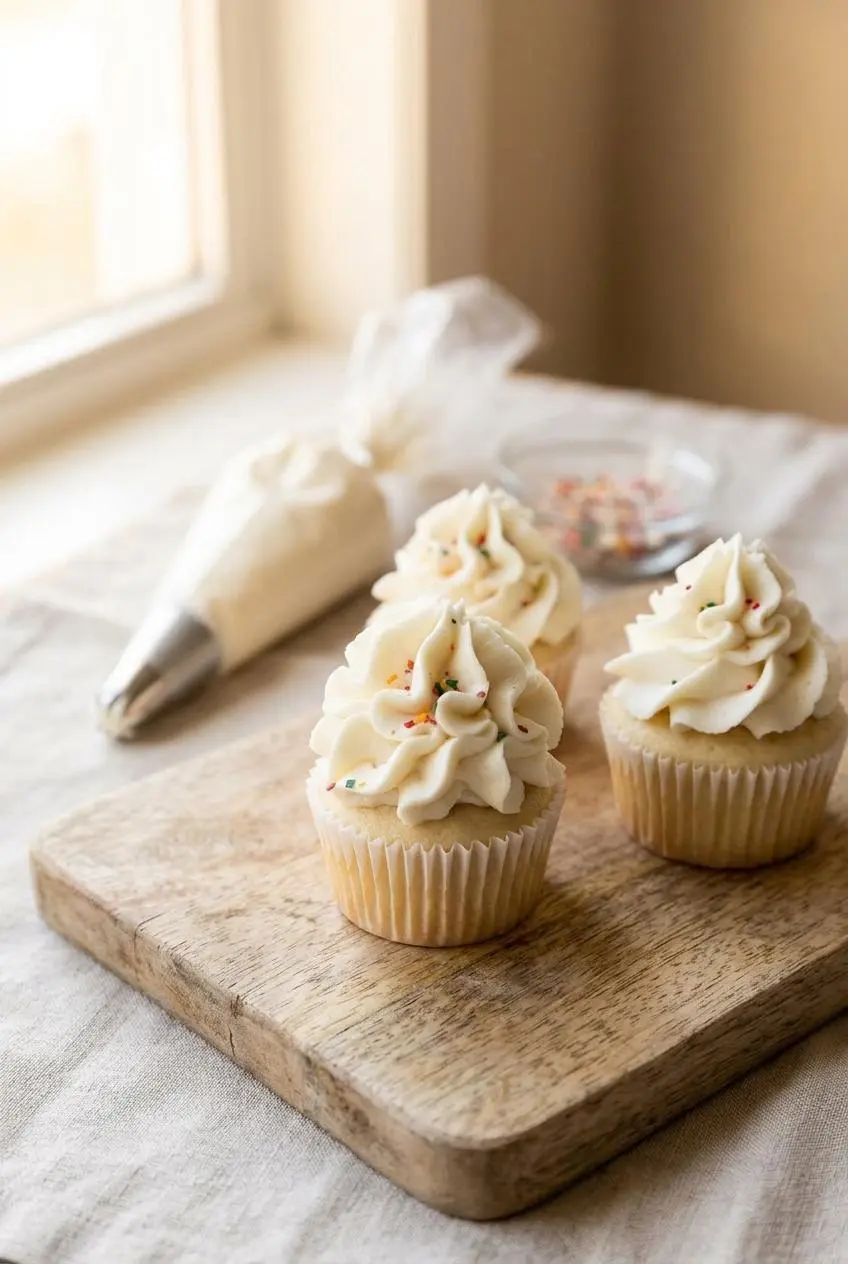
This recipe makes about 2.5 cups, which is enough for 24 cupcakes or a 9×13-inch cake, and it works in more places than people sometimes expect.
- Pipe decorative swirls onto cupcakes for a classic bakery look.
- Fill and frost layer cakes, including our classic coconut cake.
- Spread it over brownies, bars, or delicious pumpkin bars when you want a sweeter, fluffier finish.
- Use it as a filling for whoopie pies or sandwich cookies.
Conclusion
This buttercream is creamy, fluffy, and dependable, which is exactly what a good classic frosting should be. Once you know how the butter should look and how the texture should feel, it becomes much easier to get right.
Start with properly softened butter, adjust the consistency slowly, and don’t rush the mixing. A smooth bowl of frosting is very close.
Frequently Asked Questions
How Do You Fix Grainy Buttercream Frosting?
Use sifted confectioners’ sugar so you start with a finer texture. Beat the frosting for the full mixing time so the sugar has time to blend in properly. If it still feels gritty, let it rest for 20 to 30 minutes, then beat it again until smoother.
Can I Use Salted Butter Instead of Unsalted?
Yes. If you use salted butter, skip the added salt at first and taste the frosting before adding any more. Unsalted butter gives you more control, but salted butter can still make a very good frosting.
How Much Frosting Does This Recipe Make?
This recipe yields about 2.5 cups of frosting. That is enough to generously frost 12 to 16 cupcakes, lightly frost 24 cupcakes, or fill and frost a standard two-layer 8-inch or 9-inch cake.
Why Did My Buttercream Curdle or Separate?
This usually happens when the ingredients are at different temperatures, such as cool cream meeting softer butter. Keep beating on medium-high speed before changing anything else. In most cases, the frosting comes back together into a smooth emulsion.
Buttercream Frosting

Equipment
- Electric Mixer (Handheld or Stand Mixer)
Ingredients
- 1 cup unsalted butter, softened to room temperature (16 Tbsp; 226g)
- 4 – 5 cups confectioners’ sugar (480-600g)
- 1/4 cup heavy cream, half-and-half, or whole milk, at room temperature (60ml)
- 2 teaspoons pure vanilla extract
- salt, to taste
Instructions
- Beat the softened butter with a handheld mixer or a stand mixer fitted with the paddle on medium speed for about 2 minutes. The butter should look creamy, noticeably paler, and slightly fuller once enough air has been worked in.
- Add 4 and 1/2 cups confectioners’ sugar, the heavy cream, and the vanilla extract, then start mixing on low speed for 30 seconds. Beginning slowly keeps the sugar in the bowl and helps the ingredients come together without lumps.
- Raise the mixer to medium-high speed and beat for 2 full minutes. The frosting should become fluffy, smooth, and soft enough to spread, and it should stop feeling gritty between your fingers.
- Taste the frosting and add a pinch of salt if it tastes overly sweet. A small amount can brighten the vanilla and make the sweetness feel more balanced.
- Adjust the texture if needed by mixing in up to 1/2 cup more confectioners’ sugar if the frosting is too thin or more heavy cream if it is too thick. Add the cream only 1 Tablespoon at a time so you can fine-tune the consistency without making it loose.
- Use the frosting right away, or cover it tightly and store it if you are not using it immediately. After chilling or freezing and thawing, a quick beat on medium speed and a small splash of heavy cream or milk can bring back a creamy, pipeable texture.