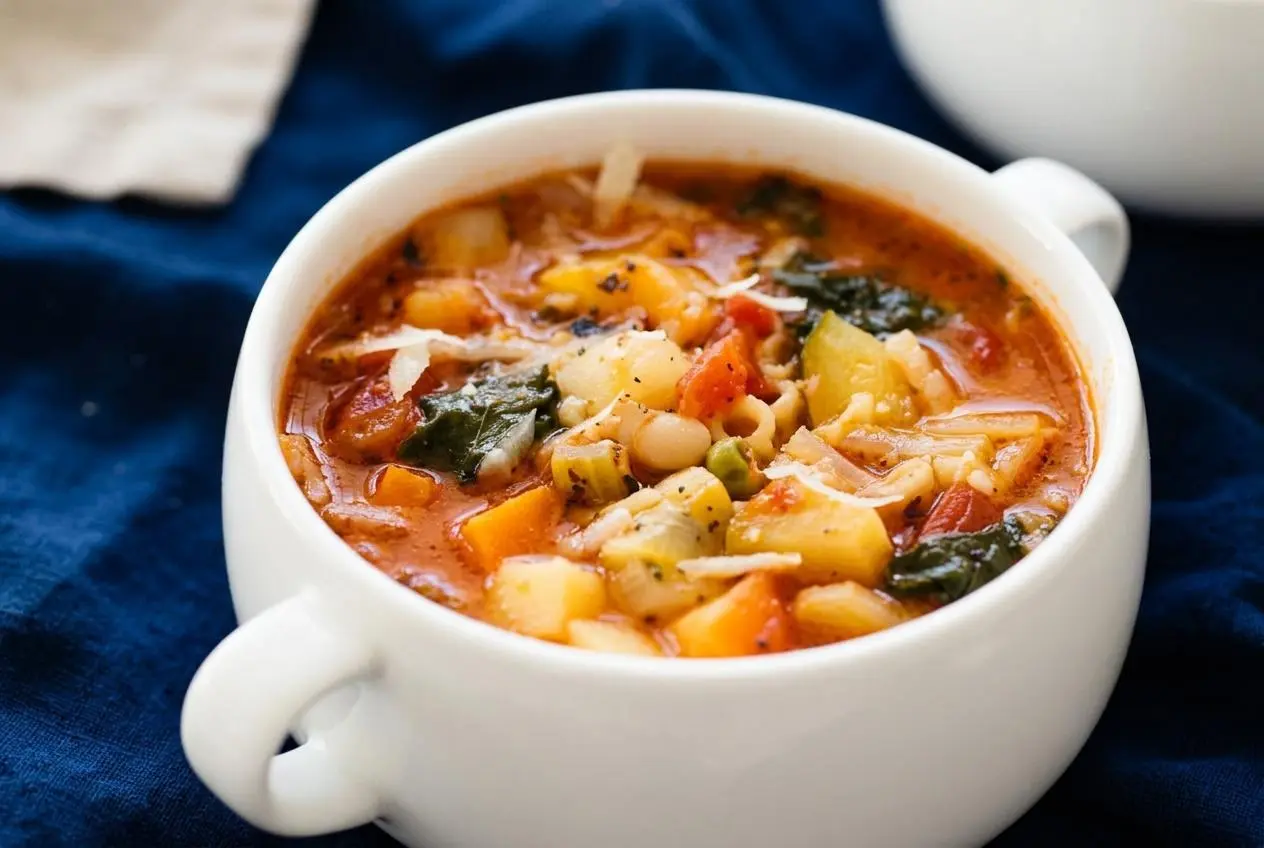
Minestrone Soup is a hearty Italian vegetable soup with beans, pasta, and a rich tomato broth. This version keeps it thick, savory, and easy to pull off in one pot, with plenty of room for seasonal vegetables.
Minestrone Soup is the kind of dinner that lands right between cozy and practical. You get tender vegetables, creamy beans, small pasta, and a broth that tastes like it simmered all afternoon.
What I love most is how flexible it is without feeling random. Use the vegetables that fit the season, finish it with lemon and olive oil, and the whole pot wakes up. That last step is the magic.
Chop your vegetables to roughly the same size so the soup cooks evenly and every spoonful gets a little of everything.
Ingredients
These are the exact ingredients I use for a full, satisfying pot with great body and plenty of texture.
- 4 tablespoons extra-virgin olive oil, divided
- 1 medium yellow onion, chopped
- 2 medium carrots, peeled and chopped
- 2 medium ribs celery, chopped
- ¼ cup tomato paste
- 2 cups chopped seasonal vegetables (potatoes, yellow squash, zucchini, butternut squash, green beans or peas all work)
- 4 cloves garlic, pressed or minced
- ½ teaspoon dried oregano
- ½ teaspoon dried thyme
- 1 large can (28 ounces) diced tomatoes, with their liquid (or 2 small 15-ounce cans)
- 4 cups (32 ounces) vegetable broth
- 2 cups water
- 1 teaspoon fine sea salt
- 2 bay leaves
- Pinch of red pepper flakes
- Freshly ground black pepper
- 1 cup whole grain orecchiette, elbow or small shell pasta
- 1 can (15 ounces) Great Northern beans or cannellini beans, rinsed and drained, or 1 ½ cups cooked beans
- 2 cups baby spinach, chopped kale or chopped collard greens
- 2 teaspoons lemon juice
- Freshly grated Parmesan cheese, for garnishing (optional)
I personally love cannellini beans here because they turn a little creamy in the broth, but Great Northern beans stay nicely defined too. For greens, spinach melts in fast, while kale and collards give the soup a sturdier, wintry feel.
The best vegetables to use by season
This soup shines when the vegetables match the time of year. Keep the amount the same and choose from the vegetables already built into the recipe.
| Season | Great choices |
|---|---|
| Spring | Peas, green beans, potatoes |
| Summer | Zucchini, yellow squash, green beans |
| Fall | Butternut squash, potatoes, kale |
| Winter | Potatoes, butternut squash, collard greens |
If you enjoy soups that lean hard into vegetables, a hearty cabbage soup is another cozy option for the cold-weather rotation.
Picking the pasta shape that holds up best
Small pasta works best because it stays spoon-friendly and mixes into the vegetables instead of taking over the bowl. Orecchiette, elbow, and small shells all do the job, but they each feel a little different.
Orecchiette gives you slightly chewier bites and catches broth nicely. Elbows make the soup feel classic and extra cozy. Small shells are my favorite for leftovers because they hold their shape well and tuck beans and broth into each spoonful. If you love tiny pasta in soups, Chicken Pastina Soup is another good example of why the little shapes work so well.
How to Make Minestrone Soup
- I start by warming 3 tablespoons of the olive oil in a large Dutch oven or stockpot over medium heat, then I add the onion, carrot, celery, tomato paste, and a pinch of salt once the oil is shimmering.
Stir often for 7 to 10 minutes, until the vegetables soften and the onion turns translucent. This is where the broth gets its backbone, so I don’t rush it. - Next, I stir in the seasonal vegetables, garlic, oregano, and thyme.
I keep everything moving for about 2 minutes, just until the garlic smells fragrant and the herbs wake up. You want aroma, not browned garlic. - Then I pour in the diced tomatoes with their juices, the broth, and the water, and add the salt, bay leaves, and red pepper flakes.
I finish this step with plenty of freshly ground black pepper so the pot already tastes layered before it even simmers. - I turn the heat up to medium-high and bring the soup to a boil, then partially cover the pot, leaving about a 1-inch gap for steam to escape.
After that, I lower the heat as needed to keep it at a gentle simmer. That steady bubble is what you want, not a wild boil. - After 15 minutes of simmering, I remove the lid and add the pasta, beans, and greens.
I let the soup simmer uncovered for 20 minutes more, until the pasta is al dente and the greens are tender. The pot should look hearty and thick, but still brothy enough to ladle. - I take the pot off the heat, fish out the bay leaves, and stir in the lemon juice and the remaining tablespoon of olive oil.
Then I taste and adjust with more salt and pepper until the flavors really pop. A shower of Parmesan on top is optional, but honestly, it’s very hard to regret.
A simple way to get a deeper broth
If you want a more savory finish, you can simmer a Parmesan rind in the broth and remove it before serving. It’s completely optional, but it adds that slow-cooked depth people usually assume took much longer.
What is the secret to a good minestrone soup?
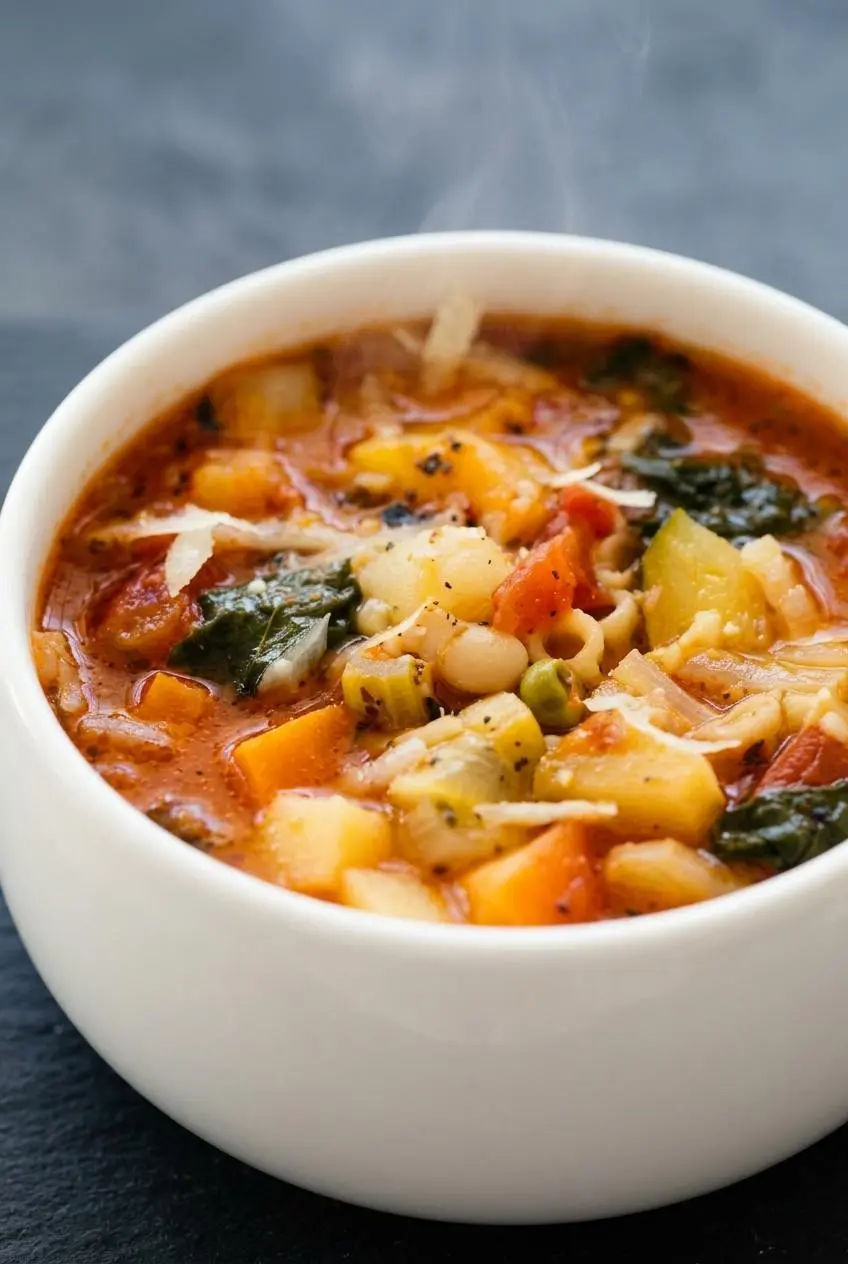
The secret is layered flavor. A good minestrone starts with onion, carrot, celery, and tomato paste cooked long enough to taste sweet and savory, then it gets balanced at the end with salt, pepper, lemon juice, and a little olive oil.
A lot of home cooks ask why one pot tastes rich and another tastes flat even with similar ingredients. Usually, it comes down to two moments: the very beginning and the very end.
Why the soffritto base matters so much
That first mix of onion, carrot, and celery is your soffritto, and it does the heavy lifting. When you cook it until softened and lightly sweet, the soup starts tasting rounded instead of raw.
Tomato paste matters just as much. Give it those full 7 to 10 minutes with the vegetables and it loses that sharp canned edge. Rush this part and the broth can taste flat, with a tomato note that feels a little unfinished.
Why the last 2 minutes matter
The finish is what makes the soup taste complete instead of merely cooked. Lemon juice brightens the tomatoes and beans, while the last tablespoon of olive oil adds a soft richness that lingers in the best way.
And then there’s the final seasoning. Taste the soup after everything is in, then add more salt and pepper if it needs it. That final adjustment is often the difference between good soup and “wait, why is this so good?” soup.
Pasta in the pot or pasta on the side
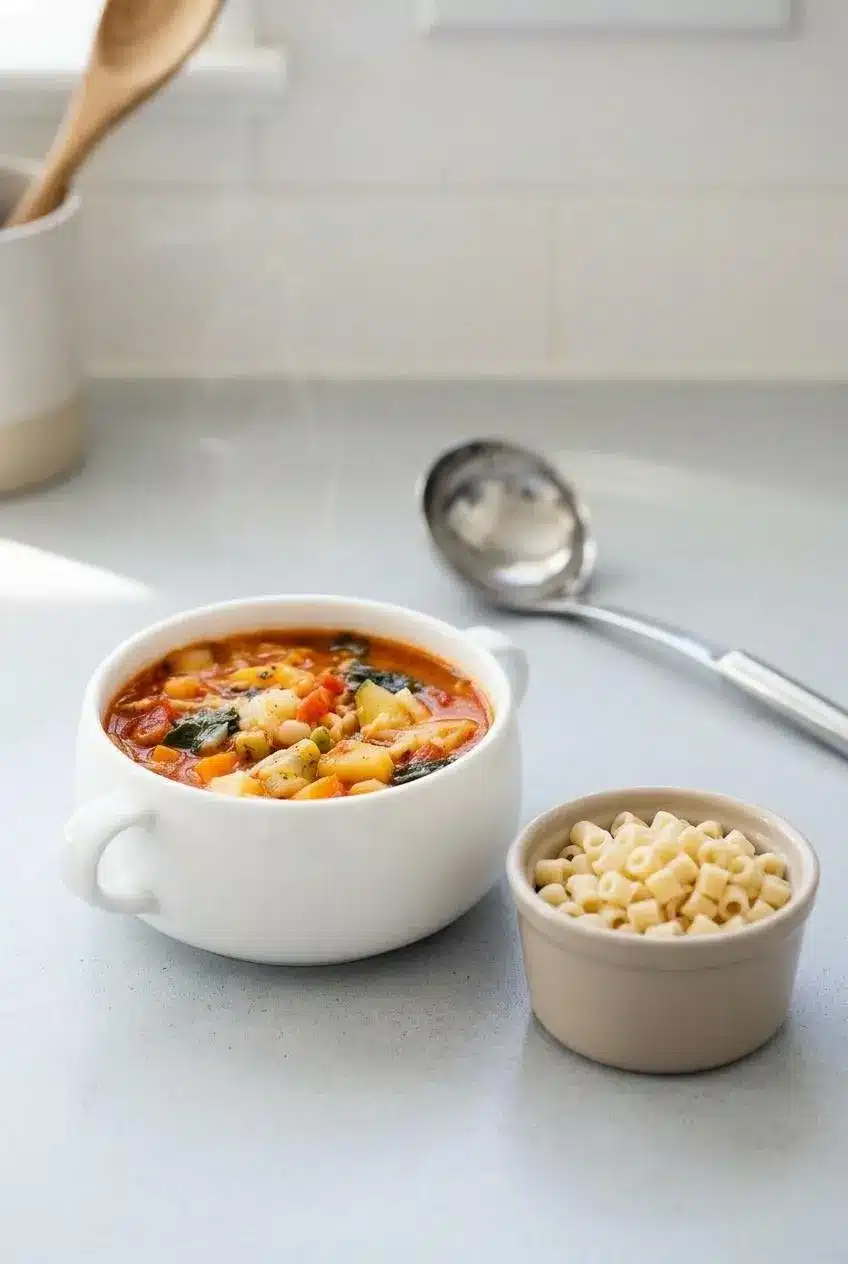
Both methods work, but they give you different results. Cooking pasta in the soup makes the broth a little starchier and heartier right away, while separate pasta gives you better control over leftovers.
| Method | Best for | Trade-off |
|---|---|---|
| Pasta in the pot | Day-one texture and richer body | Pasta keeps absorbing broth as it sits |
| Pasta on the side | Meal prep and leftovers | Broth tastes slightly less thick at first |
When to cook pasta separately
If you’re planning ahead, separate pasta is the smarter move. It keeps the broth from tightening up too much in the fridge and helps the noodles stay pleasant instead of overly soft.
This approach is also the one I’d choose if you want to freeze part of the soup. Freeze the soup base and cook fresh pasta when you reheat, and the texture stays much closer to fresh.
The best pasta texture for day one
For a pot you’re serving right away, I like cooking the pasta directly in the soup. The starch slips into the broth and gives it extra body, which makes the whole thing feel more generous and satisfying.
That’s the cozy version. It tastes like the soup and pasta were meant to be together from the start, because they were.
Slow cooker and Instant Pot options that still taste balanced
You can absolutely make this soup with other methods, but the best flavor still comes from building the base well and adding pasta and greens later so they don’t overcook.
Slow cooker timing
For the best result, start the onion, carrot, celery, and tomato paste on the stove first if you can, then move everything except the pasta, greens, lemon juice, and final olive oil to the slow cooker. Cook until the vegetables are tender and the broth tastes developed, then add the pasta near the end or cook it separately.
Stir in the greens once the soup is nearly done, then finish with lemon juice, the last bit of olive oil, and any extra salt and pepper. Slow cookers are forgiving, but pasta definitely is not.
Instant Pot timing
For the Instant Pot, use sauté mode to build the onion, carrot, celery, and tomato paste base first, then add the rest of the soup ingredients except the pasta, greens, lemon juice, and final olive oil. Pressure cook briefly, use a quick release, and then stir in the pasta and greens after pressure cooking so they keep a better texture.
Finish the same way you would on the stove: lemon juice, olive oil, and a final taste for seasoning. That last taste matters just as much here.
Fixing bland, watery, or too thick minestrone
Minestrone is forgiving, which is one reason I love it. If the pot misses the mark, you can usually pull it back with a few simple adjustments.
How to fix a bland broth
If the broth tastes bland, the first fix is usually more salt and black pepper. After that, a little lemon juice can sharpen everything up fast, and the optional Parmesan rind adds extra savory depth while the soup simmers.
Sometimes bland soup is really underdeveloped soup. If your soffritto stage was rushed, the flavors may never have fully built. The next batch will thank you for those extra few minutes at the start.
What to do if the soup gets too thick
Pasta keeps soaking up liquid as the soup sits, so a thick pot the next day is completely normal. Just loosen it with a splash of broth or water while reheating, then taste again and adjust seasoning if needed.
If you prefer a looser, brothy bowl from the start, serve the soup a little sooner after the pasta reaches al dente.
What if the pasta turns too soft?
Soft pasta usually comes from either overcooking in the pot or sitting in the broth too long after cooking. It’s still edible, just less lively.
For future batches, stop at al dente and consider the separate-pasta route if you expect leftovers. It’s the easiest fix, and it works every time.
How to make it more like the restaurant style version
If you’re craving that restaurant-style bowl, you’re probably after a tomato-forward broth with tender vegetables, beans, pasta, and a savory finish. This soup already heads in that direction, especially with the tomato paste, diced tomatoes, beans, and Parmesan on top.
For that vibe, you can lean into kidney beans instead of white beans, add a little more herb presence, or make it heartier with a bit of meat as an optional variation. If that sounds like your kind of comfort food, my Sausage and White Bean Soup scratches a similar cozy itch.
Serving ideas that make it a full meal
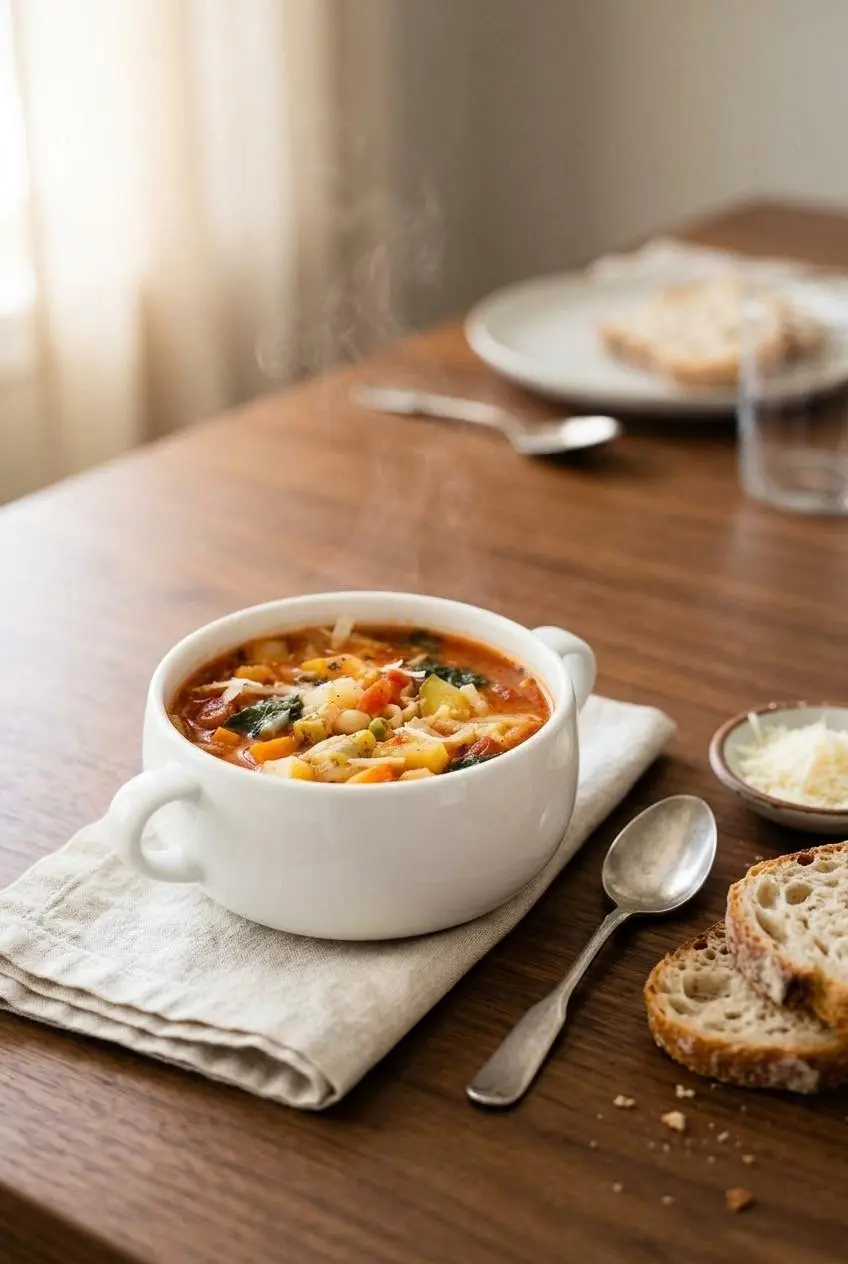
This soup can carry dinner on its own, but a few small extras make it feel complete. Crusty bread or garlic bread is the obvious favorite because the broth deserves a good swipe.
I also love it with grated Parmesan, a spoonful of pesto, fresh basil or parsley, or a handful of crunchy croutons. If you want something fresh on the side, a simple green salad balances the rich tomato broth beautifully.
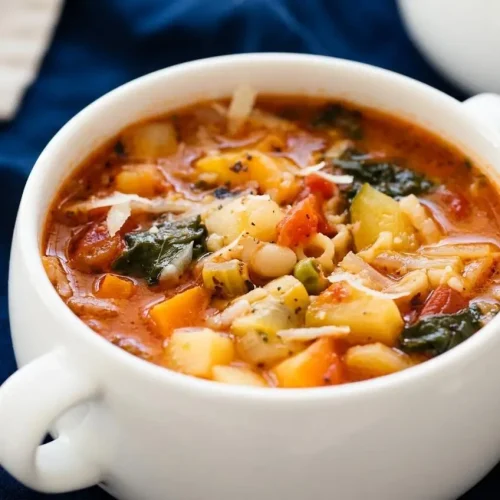
Minestrone Soup

Equipment
- large Dutch oven or stockpot
Ingredients
- 4 tablespoons extra-virgin olive oil divided
- 1 medium yellow onion chopped
- 2 medium carrots peeled and chopped
- 2 medium ribs celery chopped
- ¼ cup tomato paste
- 2 cups chopped seasonal vegetables potatoes, yellow squash, zucchini, butternut squash, green beans or peas all work
- 4 cloves garlic pressed or minced
- ½ teaspoon dried oregano
- ½ teaspoon dried thyme
- 1 large can (28 ounces) diced tomatoes with their liquid (or 2 small 15-ounce cans)
- 4 cups (32 ounces) vegetable broth
- 2 cups water
- 1 teaspoon fine sea salt
- 2 bay leaves
- Pinch of red pepper flakes
- Freshly ground black pepper
- 1 cup whole grain orecchiette, elbow or small shell pasta
- 1 can (15 ounces) Great Northern beans or cannellini beans rinsed and drained, or 1 ½ cups cooked beans
- 2 cups baby spinach, chopped kale or chopped collard greens
- 2 teaspoons lemon juice
- Freshly grated Parmesan cheese for garnishing (optional)
Instructions
- I start by warming 3 tablespoons of the olive oil in a large Dutch oven or stockpot over medium heat, then I add the onion, carrot, celery, tomato paste, and a pinch of salt once the oil is shimmering.
Stir often for 7 to 10 minutes, until the vegetables soften and the onion turns translucent. This is where the broth gets its backbone, so I don’t rush it. - Next, I stir in the seasonal vegetables, garlic, oregano, and thyme.
I keep everything moving for about 2 minutes, just until the garlic smells fragrant and the herbs wake up. You want aroma, not browned garlic. - Then I pour in the diced tomatoes with their juices, the broth, and the water, and add the salt, bay leaves, and red pepper flakes.
I finish this step with plenty of freshly ground black pepper so the pot already tastes layered before it even simmers. - I turn the heat up to medium-high and bring the soup to a boil, then partially cover the pot, leaving about a 1-inch gap for steam to escape.
After that, I lower the heat as needed to keep it at a gentle simmer. That steady bubble is what you want, not a wild boil. - After 15 minutes of simmering, I remove the lid and add the pasta, beans, and greens.
I let the soup simmer uncovered for 20 minutes more, until the pasta is al dente and the greens are tender. The pot should look hearty and thick, but still brothy enough to ladle. - I take the pot off the heat, fish out the bay leaves, and stir in the lemon juice and the remaining tablespoon of olive oil.
Then I taste and adjust with more salt and pepper until the flavors really pop. A shower of Parmesan on top is optional, but honestly, it’s very hard to regret.
Notes
Conclusion
This is the kind of soup that earns a regular spot in the dinner rotation: hearty, flexible, and deeply satisfying without being fussy. You get a thick vegetable-packed tomato broth, tender beans, and pasta in one dependable pot.
If you remember one thing, make it this: build flavor early and season again at the end. Add the Parmesan rind if you want extra depth, then serve it hot and enjoy every last spoonful.
FAQ
What is the secret to making the best minestrone soup?
Cook the onion, carrot, celery, and tomato paste until they’re properly softened and fragrant, then season again at the end. The final lemon juice and olive oil bring the whole soup into focus.
Can I freeze minestrone soup?
Yes, but it freezes best without the pasta if you want the nicest texture later. I like to freeze the soup base, then cook fresh pasta when reheating and add a splash of broth or water if it needs loosening.
How do I keep Minestrone Soup from getting too thick or the pasta too soft?
Cook the pasta just to al dente and know that it will keep absorbing broth as the soup sits. For meal prep, cook the pasta separately and add extra broth or water when reheating leftovers.
What vegetables can I add to minestrone soup?
Use the vegetables already built into this soup: potatoes, yellow squash, zucchini, butternut squash, green beans, peas, spinach, kale, or collard greens. Choose what fits the season and cut everything evenly so it cooks at the same pace.
Can I make this minestrone soup in a slow cooker or Instant Pot?
Yes. Both methods work well if you build the flavor base first when possible and add the pasta and greens later so they stay tender instead of overdone. Taste and adjust the seasoning before serving.
Is this minestrone soup vegan and gluten free?
As written, it’s vegetarian. For vegan servings, skip the Parmesan garnish. For a gluten-free version, use a gluten-free pasta that holds up well in soup.