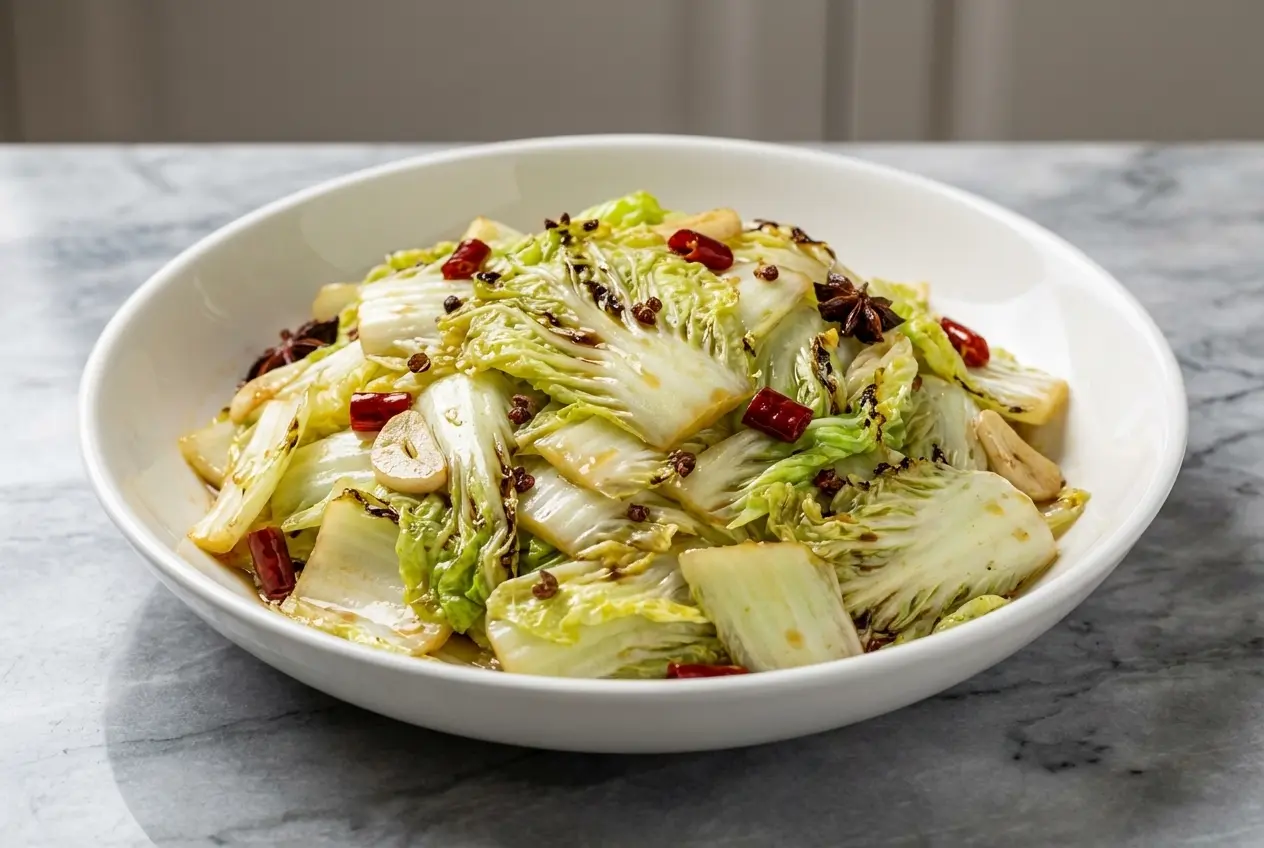
Some nights, the side dish steals the whole show, and this is one of those nights. Cabbage Stir Fry turns an everyday head of cabbage into something glossy, savory, tangy, and just crisp enough to keep every bite lively.
In my kitchen, this is the kind of fast vegetable dish I lean on when dinner needs help in a hurry. It is perfect for busy weeknights, quick lunches, or whenever you want a foolproof way to get tender-crisp cabbage with bold flavor in just minutes.
Why You’ll Love This Recipe
Lightning fast: This dish moves from cutting board to table in almost no time, which makes it a true weeknight hero. When I need a quick side dish that still tastes special, this is one of my favorite stir-frying recipes.
Big, balanced flavor: The combination of soy sauce, Chinese black vinegar, sugar, dried red chiles, and Sichuan peppercorns gives you savory depth, gentle sweetness, bright tang, and that signature tingle that keeps you coming back for another bite.
Tender-crisp every time: I use a simple restaurant-style trick, cooking the thicker cabbage pieces first and the leaves second, so the texture stays lively instead of turning limp and watery.
The secret twist: A drizzle of toasted sesame oil after the pan comes off the heat makes the whole dish smell incredible. I discovered that adding it at the end preserves its nutty aroma, and that final flourish gives this Cabbage Stir Fry a finish that tastes far more polished than the effort suggests.
Ingredients and Substitutions
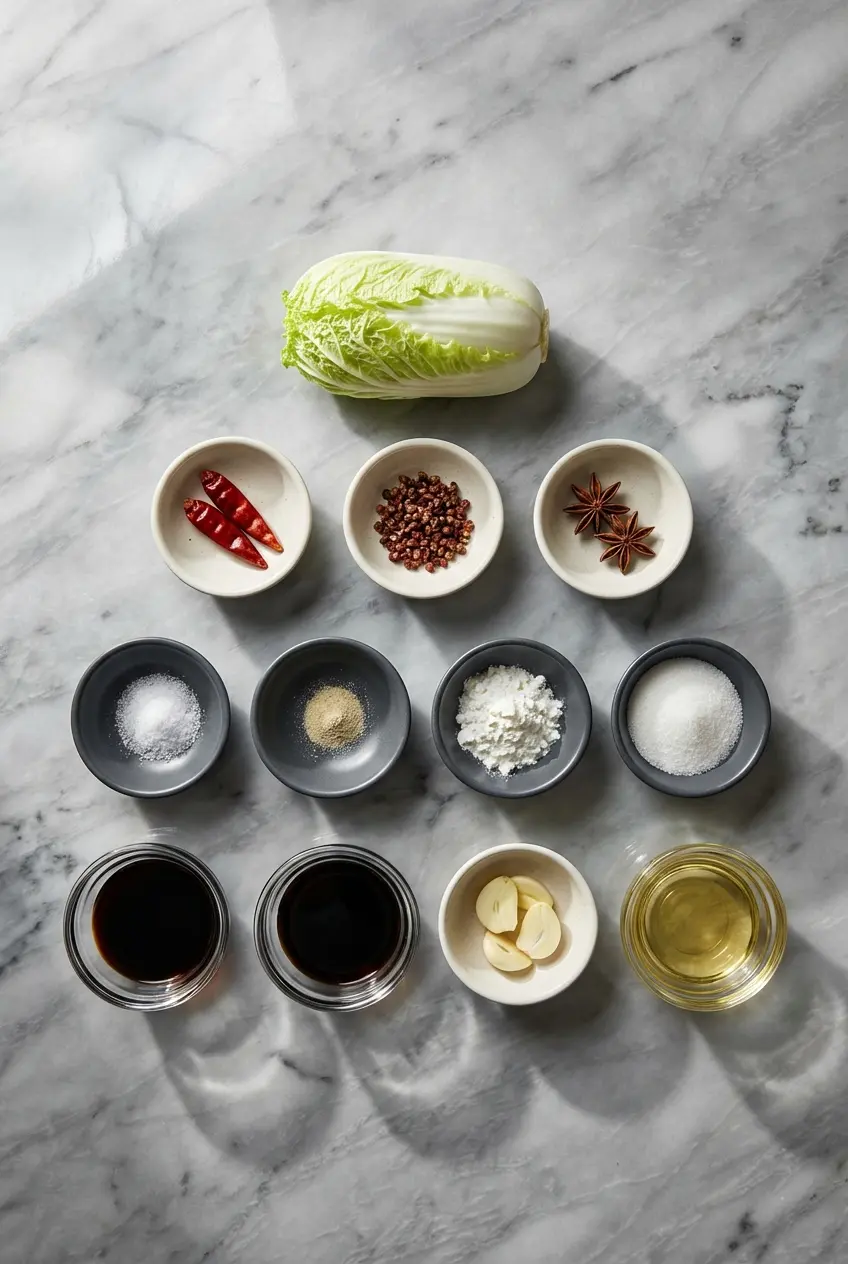
These ingredients are simple, but each one pulls its weight. Together, they create a fast, glossy sauce and the bold aromatic backbone that makes the cabbage taste anything but ordinary.
Ingredients
- 450 g (1 lb) napa or green cabbage (1 very small head)
- 2 dried red Sichuan chiles
- ¼ teaspoon red Sichuan peppercorns, gently crushed Rounded
- 2 points star anise
- ¼ teaspoon fine sea salt
- 1 or 2 pinches white pepper
- 1 teaspoon cornstarch
- 1 tablespoon granulated sugar
- 1 tablespoon regular soy sauce
- 1 tablespoon black vinegar
- 3 garlic cloves, sliced
- 2 tablespoons canola or other neutral oil
Ingredient Notes & Substitutions
Cabbage: Both Napa cabbage and Green cabbage work beautifully here, but they cook a little differently. Napa is softer, juicier, and slightly sweeter, while green cabbage gives you a firmer, crunchier bite that holds up especially well in a hot wok.
Chinese black vinegar: This ingredient brings a deep, malty tang that plain vinegar cannot quite match. If you do not have it, a mix of two parts balsamic vinegar to one part rice vinegar gets surprisingly close and keeps the sauce balanced.
Sichuan peppercorns and chiles: These create that classic ma la character, the mix of gentle heat and a lightly numbing, citrusy tingle. If Sichuan chiles are hard to find, dried arbol chiles are a good stand-in, and if you prefer less numbness, you can simply reduce or skip the peppercorns.
Soy sauce: Regular soy sauce gives the stir-fry its savory backbone and color. For a gluten-free option, swap in tamari or coconut aminos, and if you want a lower sodium version, coconut aminos is the easiest choice.
Cornstarch: Do not skip this small spoonful. It is what gives the sauce that silky, glossy cling instead of leaving a puddle at the bottom of the plate.
Toasted sesame oil: Even though it is not in the main ingredient list above, I highly recommend finishing the dish with 1 teaspoon after cooking. Used off the heat, it adds a warm nutty aroma that tastes unmistakably like a top-notch stir-fry from a good kitchen.
How to Make Cabbage Stir Fry
Prep the cabbage and sauce
- Trim the base from the cabbage, separate the leaves, and rinse them well. Cut everything into roughly 1 ½-inch pieces, then keep the thicker bottom stem pieces in one pile and the more delicate leafy parts in another so they cook evenly.
- Dry the cabbage thoroughly before it goes anywhere near the pan. A salad spinner works well, but paper towels do the job too, and this step matters because dry cabbage fries and chars while wet cabbage steams.
- Remove the stems and seeds from the dried red chiles, then snip or tear them into ½ to ¾-inch pieces. Place them in a small container with the gently crushed Sichuan peppercorns and the star anise so your aromatics are ready to go.
- In a small bowl, stir together the salt, white pepper, cornstarch, sugar, and soy sauce until the starch and sugar dissolve. Add the black vinegar, then set the cabbage, garlic, aromatics, and sauce right by the stove, because once the pan is hot, this recipe moves very fast.
Build the flavor in the pan
- Set a wok or large skillet over high heat and let it get very hot, hot enough that a drop of water vanishes on contact. Swirl in the oil to coat the surface, then add the chiles, Sichuan peppercorns, and star anise and stir-fry quickly until they smell fragrant and begin to toast, darken, and char at the edges.
- Lower the heat to medium, add the sliced garlic, and stir and toss for 15 to 30 seconds until it smells fragrant but not browned. Add the thicker cabbage stem pieces and keep them moving for 1 minute, just until they begin to soften while still keeping their shape.
Finish the stir-fry
- Turn the heat back up to high and add the remaining cabbage leaves. Stir, fold, and flip for 30 to 60 seconds, just until the leaves wilt and turn glossy while the thicker pieces stay crisp-tender.
- Pour half the sauce around the perimeter of the pan rather than straight into the center, then toss to coat. Repeat with the rest of the sauce and stir-fry for 1 minute more, until the liquid turns lightly thickened and shiny and clings to the cabbage.
- Take the pan off the heat and, if using, drizzle over 1 teaspoon toasted sesame oil. Give everything one last toss, then serve right away while the cabbage is still vibrant, aromatic, and tender-crisp.
Secrets for a Perfect Stir Fry
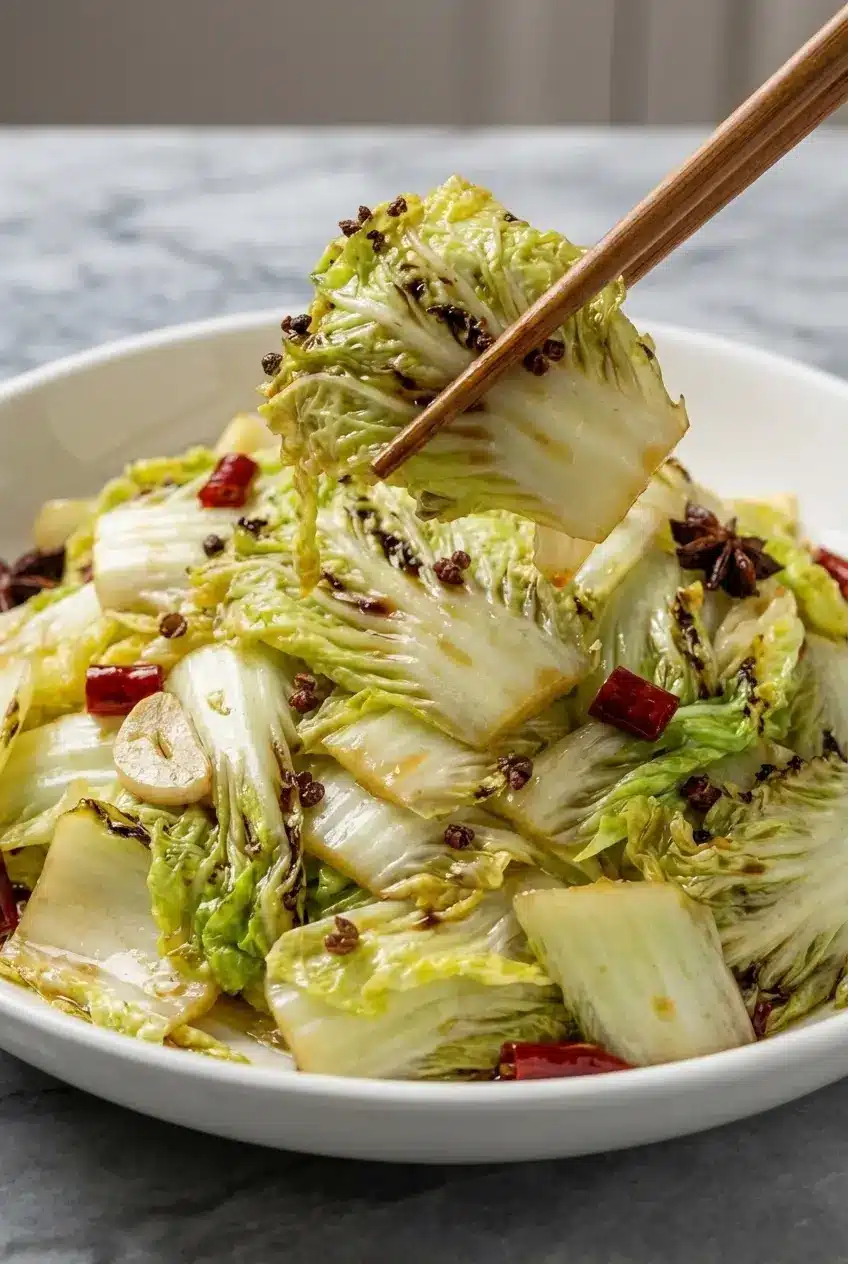
The glossy sauce trick: Cornstarch may seem like a tiny ingredient, but it does important work. The moment it hits the hot pan, the starch swells and thickens the sauce so it coats the cabbage in a light, velvety sheen instead of sliding off and turning watery.
High heat matters: This is where stir-frying earns its reputation. A properly heated wok or skillet sears the surface quickly, giving the cabbage a little smoky edge and preserving that fresh snap, while low heat draws out too much moisture and leaves the whole dish limp.
Finish, do not fry, the sesame oil: Toasted sesame oil is all about aroma, and high heat can flatten its best qualities in a hurry. Drizzling it in off the heat keeps its nutty perfume intact, and that is exactly why the final bite tastes fuller and more layered.
Choosing the Best Cabbage for Stir-Frying
Napa cabbage: This oblong cabbage has pale stems and soft, crinkly leaves with plenty of moisture. It cooks very quickly and gives you a more delicate, sweet, silky result, which is why it is so often used in dishes like Bao Chao Bai Cai.
Green cabbage: This is the round, sturdy supermarket classic with tightly packed leaves and a more assertive cabbage flavor. It stays firmer in the pan, so if you love a pronounced tender-crisp texture, this is the one I reach for most often.
Savoy cabbage: Savoy sits nicely between Napa and green cabbage. Its ruffled leaves are tender, but the head still has enough structure to hold up in a hot stir-fry, making it a lovely middle-ground choice.
Red cabbage: It is striking on the plate, but it can be a little trickier. The texture is tougher, and the color can shift toward blue as it cooks, though the black vinegar in this recipe helps preserve some of that jewel-toned brightness.
Wok vs. Skillet: Mastering the Technique
Why a wok shines: A wok gives you different heat zones, with intense heat at the bottom and gentler heat up the sides. That shape makes it easier to keep ingredients moving and cook a fast vegetable dish without losing the crisp bite.
A skillet works too: If a wok is not in your kitchen, use the largest heavy skillet you have, ideally cast iron or sturdy stainless steel. The key is heat retention, because a thin pan cools down too quickly once the cabbage hits the surface.
Do not crowd the pan: This matters even more with a skillet. If the pan looks packed, cook the cabbage in two batches so it fries instead of steaming, and keep stirring constantly so the leaves and stems cook evenly.
Get it screaming hot: Whether you use a wok or skillet, the pan should be fully heated before the oil goes in. That first strong sizzle is what gives stir-frying its speed, its aroma, and its best texture.
Pro Tips & Troubleshooting
Pro Tips
- Have every ingredient measured and set by the stove before you start. Mise en place is not a fancy extra here, it is the reason the cooking process feels calm instead of chaotic.
- Keep the cabbage stems and leaves separate while prepping. Giving the tougher pieces a 1-minute head start is the easiest way to get an even tender-crisp finish.
- Dry cabbage is essential for good stir-frying. Use a salad spinner or pat thoroughly with paper towels so the pan can sear the cabbage instead of steaming it.
- Pour the sauce around the edge of the hot pan in two additions. This helps it thicken evenly and keeps the center of the pan hot.
Common Mistakes to Avoid
- Bland flavor: Add another small splash of soy sauce or a pinch of salt if needed. A touch more black vinegar, a few extra Sichuan peppercorns, or the finishing sesame oil can also wake the whole dish up.
- Soggy cabbage: This usually comes down to one of three things, wet cabbage, low heat, or overcrowding. Next time, dry it well, preheat the pan longer, and work in smaller batches if needed.
- Sauce too thin: Keep the heat high so the sauce can bubble and tighten quickly. If it still needs help, stir together 1/2 teaspoon cornstarch with 1 teaspoon water and add it a little at a time.
- Sauce too thick: Loosen it with 1 tablespoon of water or broth and toss until the cabbage is lightly coated rather than sticky.
- Overcooked texture: The cabbage should still have life to it. Once the leaves are wilted and glossy, it is time to finish and serve.
Serving & Storage
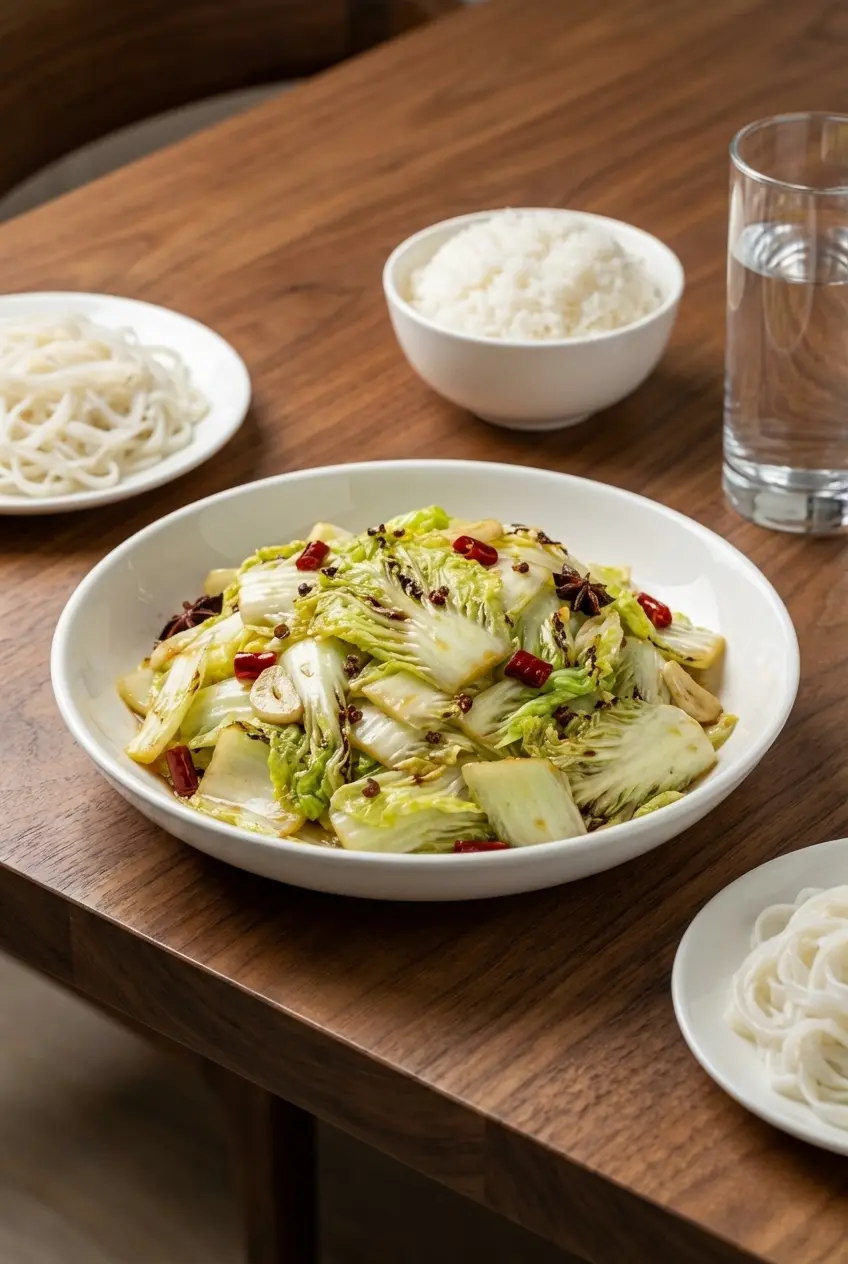
Serving Suggestions
This stir-fry is wonderful spooned over steamed jasmine rice, brown rice, or quinoa, where every grain catches a little of that savory-tangy sauce. It also makes an excellent vegetable side for bolder mains, especially something like Korean ground beef, where the crisp cabbage brings balance to a rich, hearty bowl.
If you want to turn it into more of a full meal, pair it with rice noodles or ramen. A finishing sprinkle of toasted sesame seeds and thinly sliced green onions adds crunch, freshness, and that extra little restaurant-style touch.
Storing and Reheating Leftovers
Store leftovers in an airtight container in the refrigerator for up to 3 days. The cabbage will soften a bit as it sits, but the flavors stay delicious and often deepen overnight.
For the best texture, reheat the cabbage briefly in a hot skillet or wok for 1 to 2 minutes, just until warmed through. The microwave works in a pinch, but it will give you a softer result with less of that fresh stir-fried bite.
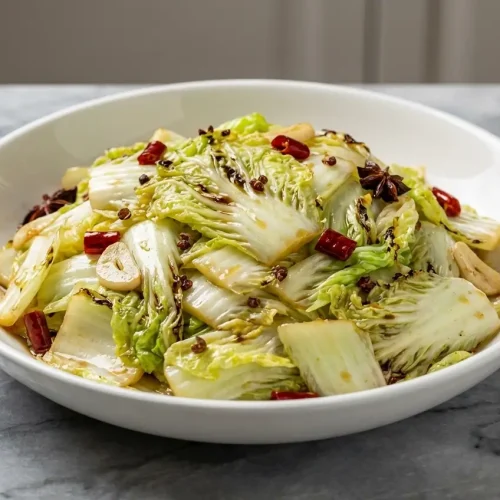
Easy Sichuan Cabbage Stir Fry

Equipment
- Wok or large skillet
- Small bowl
- Salad spinner (optional)
Ingredients
- 450 g (1 lb) napa or green cabbage (1 very small head)
- 2 dried red Sichuan chiles
- ¼ teaspoon red Sichuan peppercorns, gently crushed Rounded
- 2 points star anise
- ¼ teaspoon fine sea salt
- 1 or 2 pinches white pepper
- 1 teaspoon cornstarch
- 1 tablespoon granulated sugar
- 1 tablespoon regular soy sauce
- 1 tablespoon black vinegar
- 3 garlic cloves, sliced
- 2 tablespoons canola or other neutral oil
Instructions
Prep the Cabbage and Sauce
- Trim the base from the cabbage, separate the leaves, and rinse them. Cut into 1 ½-inch pieces, keeping the thick bottom stem pieces separate from the delicate leafy parts.
- Dry the cabbage thoroughly using a salad spinner or paper towels. This is key for frying, not steaming.
- Remove stems and seeds from the dried chiles and tear them into ½-inch pieces. Place in a small container with the crushed Sichuan peppercorns and star anise.
- In a small bowl, stir together the salt, white pepper, cornstarch, sugar, and soy sauce until dissolved. Stir in the black vinegar. Keep all prepped components near the stove.
Build the Flavor in the Pan
- Set a wok or large skillet over high heat until a drop of water evaporates instantly. Swirl in the oil, then add the chiles, Sichuan peppercorns, and star anise. Stir-fry for about 30 seconds until fragrant and lightly toasted.
- Lower heat to medium, add the sliced garlic, and stir-fry for 15-30 seconds until fragrant. Add the thicker cabbage stem pieces and stir-fry for 1 minute until they begin to soften.
Finish the Stir-fry
- Turn heat back to high and add the remaining cabbage leaves. Stir and flip for 30-60 seconds, just until the leaves wilt and turn glossy.
- Pour half the sauce around the perimeter of the pan and toss to coat. Repeat with the remaining sauce and stir-fry for 1 minute more, until the sauce thickens and clings to the cabbage.
- Remove the pan from the heat. If using, drizzle with 1 teaspoon toasted sesame oil and give it a final toss. Serve immediately.
Notes
Conclusion
This Cabbage Stir Fry is the kind of recipe that earns a permanent place in the weeknight rotation, because it is fast, deeply flavorful, and built on little techniques that make a big difference. The hot pan, the staged cooking, and that final sesame oil finish all work together to keep the cabbage glossy and tender-crisp.
If you enjoy vegetable dishes that punch above their weight, this one is well worth making again and again. And if that sweet-savory, fast-cooking style is already your thing, sticky sesame cauliflower fits right into the same dinner mood.
Frequently Asked Questions
What is the best type of cabbage for stir-frying?
How do you stir-fry cabbage without it getting soggy?
What variations can I make to this cabbage stir fry recipe?
What can I use as a substitute for Chinese black vinegar?
Is this recipe healthy and how can I make it gluten-free?
How should I store and reheat leftovers for the best texture?