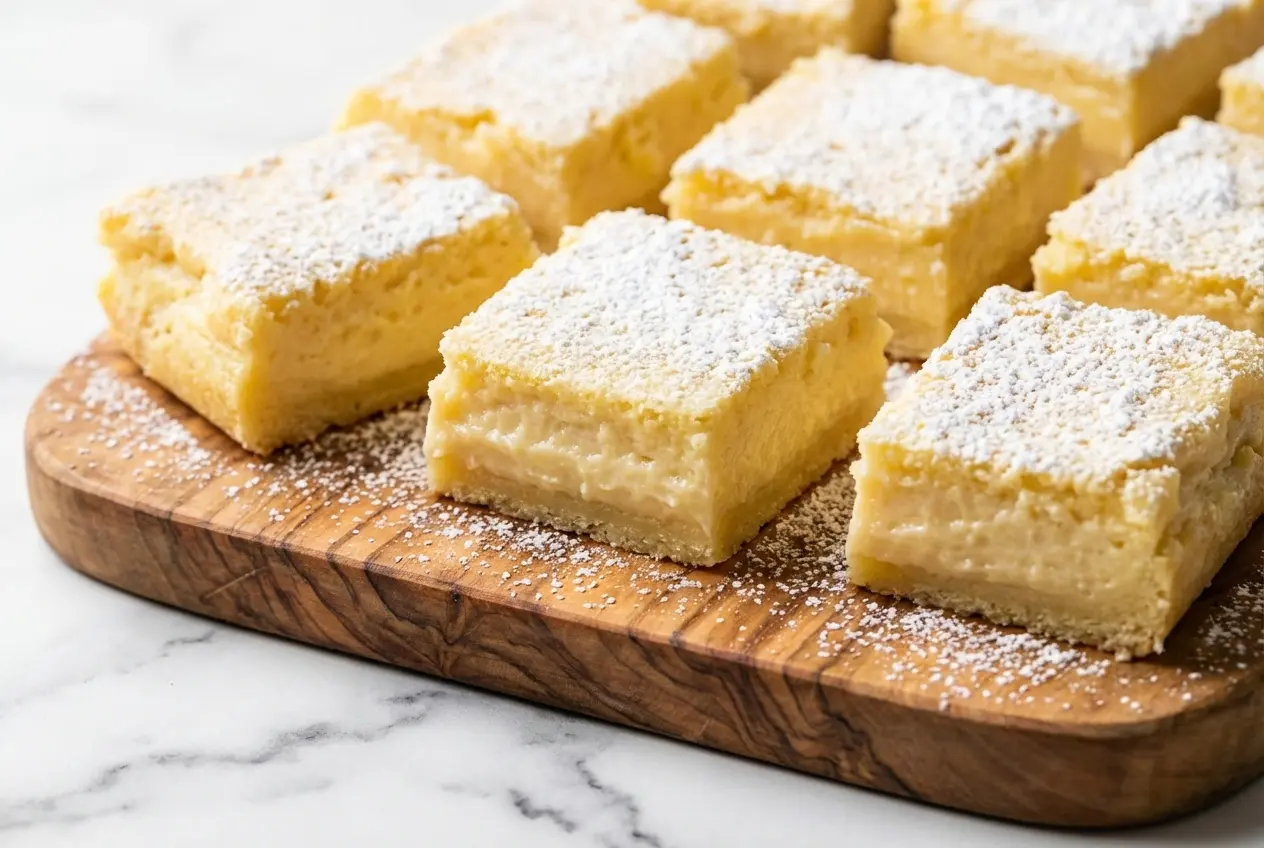
There is something about a bright lemon dessert on a spring afternoon that makes the whole kitchen feel sunnier. Lemon Custard Cake is the kind of bake I pull out for potlucks, Easter tables, and slow weekend afternoons when I want something that feels a little special without being fussy.
What makes it so charming is the magic cake effect. One very thin batter heads into the oven, then comes out with three beautiful textures, a soft base, a creamy custard center, and a delicate fluffy top that practically melts on your tongue.
Why You’ll Love This Recipe
Big lemon flavor: In my kitchen, the real game changer is steeping the lemon zest in room temperature milk for 15 to 20 minutes before it ever touches the batter. That simple pause pulls deep citrus aroma from the zest without loading the cake with extra acidity.
Dreamy texture: This magic custard cake bakes up light, fluffy, creamy, tart, and completely melt-in-your-mouth. You get a tender cake layer, a silky creamy center, and just enough structure underneath to slice it neatly once chilled.
More reliable results: I discovered early on that room temperature ingredients make all the difference here. They help the batter stay smooth, support proper batter separation, and keep the melted butter from clumping when the milk goes in.
Ingredients and Substitutions
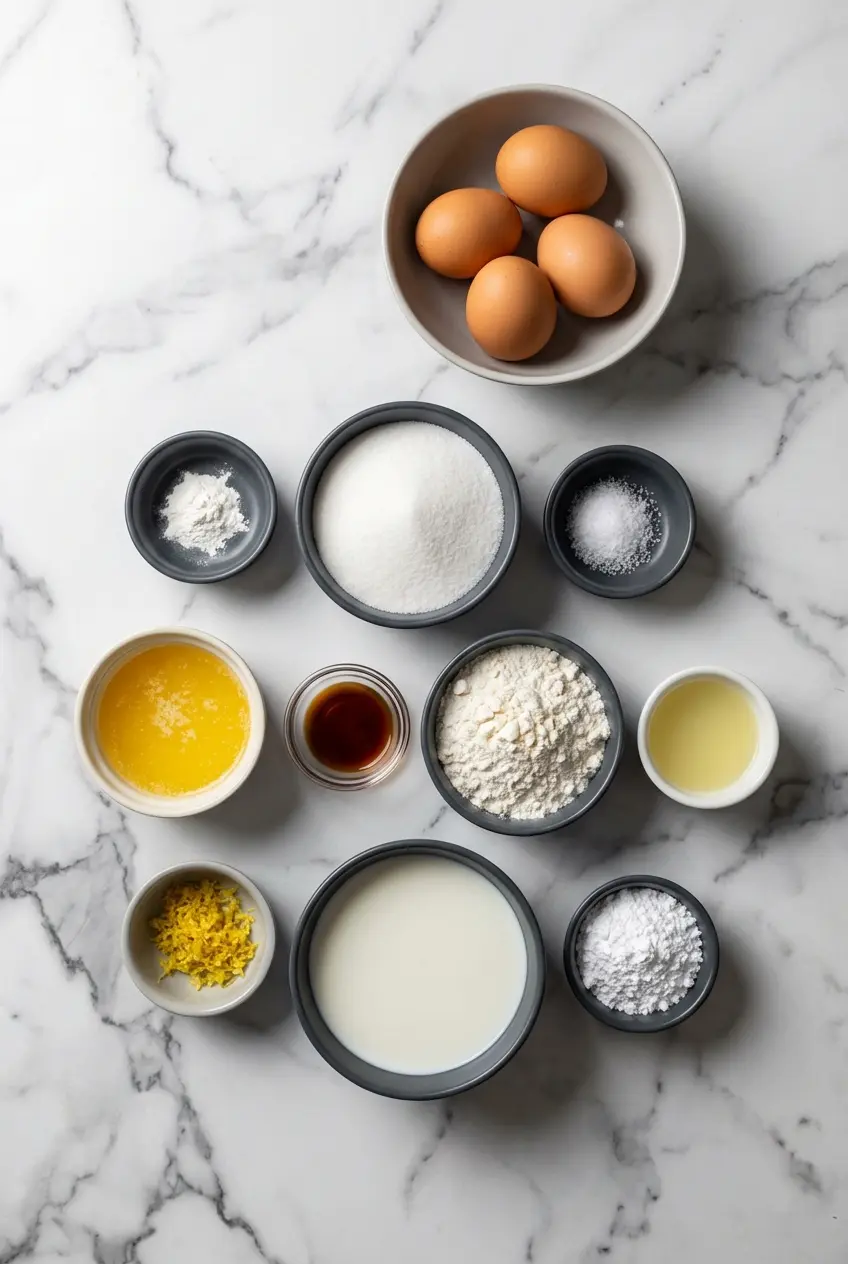
A short list of baking staples does all the heavy lifting here. Fresh lemon, whole milk, and well-whipped egg whites are what give this cake its signature flavor and magical layers.
Ingredients
- 4 large eggs, room temperature
- 1/4 teaspoon cream of tartar
- 3/4 cup sugar
- 1/2 teaspoon kosher salt
- 1/2 cup unsalted butter, melted and cooled (1 stick)
- 1 teaspoon vanilla paste or extract
- 3/4 cup all-purpose flour, sifted
- 1/4 cup lemon juice
- 2 tablespoons finely grated lemon zest
- 1 3/4 cup whole milk, room temperature
- Powdered sugar for dusting
Ingredient Notes & Substitutions
Room temperature ingredients: This recipe is far more forgiving when the eggs and milk have lost their chill. Cold milk can make the melted butter seize into little bits, and that works against the smooth batter you want before folding in the egg whites.
Fresh lemons: Fresh zest and juice are the soul of this cake. I would skip bottled lemon juice here because it gives acidity, but not the fragrant oils that live in the zest and make the finished cake smell lively and fresh.
Meyer lemons: If you can find them, Meyer lemons make a lovely variation. They bring a sweeter, slightly floral note that turns this into a softer, gentler Meyer lemon custard cake.
Whole milk: Whole milk gives the custard layer its richer body because the lemon oils disperse beautifully in the milk fat. Lower-fat milk can work in a pinch, but the creamy center will not taste quite as lush.
Dairy-free swap: A high-fat oat milk and a vegan butter substitute can be used if needed. The cake still bakes, but the custard texture is usually a touch less rich and a little less silky.
Cream of tartar: This little ingredient helps stabilize the egg whites so they hold strong stiff peaks. That matters more than it may seem, because the whipped egg whites are what help build the fluffy cake layer on top.
How to Make Lemon Custard Cake
Prep the Pan and Infuse the Milk
- Set your oven to 325°F (165°C) with a rack in the middle position. Line an 8×8 inch baking dish with parchment paper so the cake lifts out easily once chilled.
- Stir the finely grated lemon zest into the 1 3/4 cups of room temperature milk and let it stand for 15 to 20 minutes. During that short steep, the milk picks up the fragrant oils from the zest and takes on a fuller lemon perfume.
Whip the Egg Whites and Build the Base Batter
- Separate the eggs carefully, making sure no yolk slips into the whites. In a stand mixer fitted with the whisk attachment, beat the egg whites with the cream of tartar on medium-high speed for 3 to 5 minutes, until they hold stiff peaks and look glossy rather than dry, then transfer them to a separate bowl.
- Using the same mixer bowl, add the yolks and whisk on medium-high for about 1 minute until foamy. With the mixer running, slowly drizzle in the sugar and keep beating for 2 to 3 minutes, until the mixture turns pale, creamy, and slightly thickened.
- Add the kosher salt, melted and cooled butter, and vanilla paste or extract. Beat until everything is fully blended and the mixture looks smooth and satiny.
Finish the Batter
- Switch to the paddle attachment and mix in the sifted flour on medium-low speed until the batter is smooth. Add the lemon juice, then slowly pour in the zest-infused milk and beat until everything is evenly combined, scraping down the sides and bottom of the bowl with a silicone spatula so no floury patches remain.
- Fold the whipped egg whites into the thin batter in three additions. Be gentle here, and do not chase every last lump, because a few visible pockets of egg whites are exactly what help the top bake into that signature fluffy cake layer.
Bake and Chill
- Pour the loose batter into the prepared baking dish and bake for 45 to 55 minutes. The top should turn lightly golden, and the center should still give a slight jiggle when you gently move the pan.
- Let the cake cool completely at room temperature, then cover and refrigerate for at least 1 hour, though overnight gives the neatest slices. Finish with a generous dusting of powdered sugar, then cut into 9 squares and serve cool or at room temperature.
Secrets for Perfect Flavor and Texture
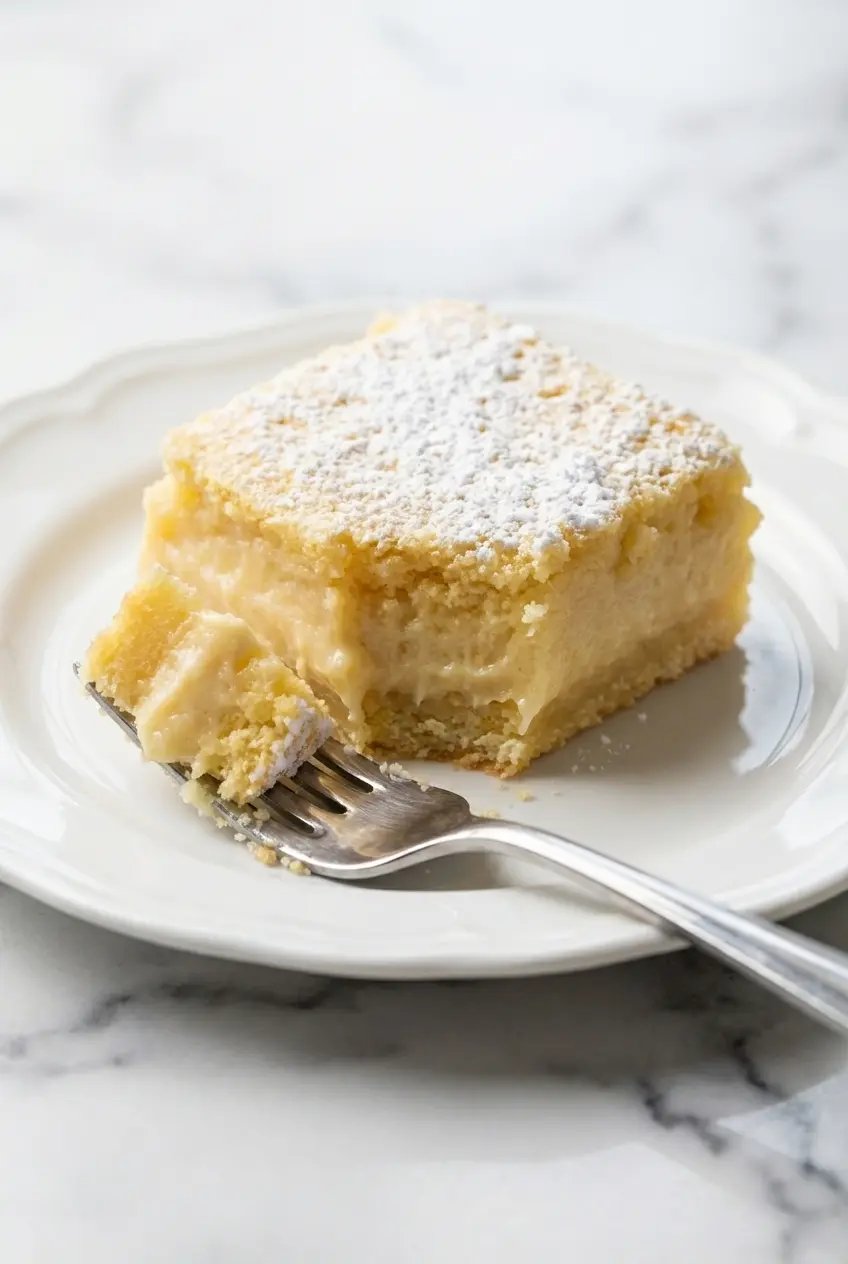
The most important flavor trick in this recipe is that brief lemon zest infusion. Citrus essential oils are fat-soluble, so the whole milk acts like a carrier and spreads that lemon aroma through every layer instead of delivering all the flavor in one sharp burst from the juice alone.
That is why the cake tastes bright but still balanced. The center ends up silky and fragrant, almost like the airy elegance of creamy lemon mousse, while the top stays light instead of heavy or wet.
The other secret sits in the egg whites. If you fold until the batter looks perfectly smooth, you flatten the air pockets that help create the top layer, so leave a few small streaks and lumps behind and trust the process.
Doneness matters just as much as mixing. Pull the cake when the top is golden and the middle still has a gentle wobble, because baking until fully firm usually turns the custard from silky to rubbery.
The Science of Magic Cake Layers
This is one of those old-fashioned bakes that feels like kitchen magic, but the answer is really all about density and batter separation. The batter starts off extremely thin, which lets the ingredients settle and organize themselves as the heat works through the pan.
The richer egg yolk and milk portion sinks and sets into the bottom and middle, forming a base with a creamy center above it. Meanwhile, the lighter whipped egg whites rise and bake into the fluffy cake layer, giving magic custard cake its signature three-part texture.
If you have ever made lemon impossible pies, the idea feels familiar. Both desserts rely on the same kind of natural layer formation in the oven, where one batter transforms as heat and structure take over.
Pro Tips & Troubleshooting
Pro Tips for Success
- Set out the eggs and milk well before you start so they are truly at room temperature, not just slightly less cold.
- Use a perfectly clean mixing bowl for the egg whites. Even a trace of fat can keep them from reaching stiff peaks.
- Whip the egg whites until they stand tall and hold their shape, but stop before they become dry and grainy.
- Fold with a silicone spatula and a light hand. Small pockets of egg white in the batter are a good sign here.
- An 8×8 inch baking dish is the right size for proper layer formation and even baking.
Troubleshooting Common Mistakes
- If the batter looks very watery, that is completely normal. This recipe depends on a thin batter to create the distinct layers.
- If the batter looks slightly curdled after the lemon juice and milk go in, do not panic. The acidity can make it look a little odd before baking, but it smooths out in the oven.
- If your cake did not separate into layers, the egg whites were likely overmixed into the batter, or the pan size changed the depth of the bake.
- If the custard layer turns rubbery, the cake was probably baked too long. A slight jiggle in the center is the cue to watch for.
- When whipping egg whites, the same clean-bowl rule that matters for a classic lemon meringue pie matters here too, because any fat left behind makes the foam less stable.
Serving & Storage
Serving Ideas
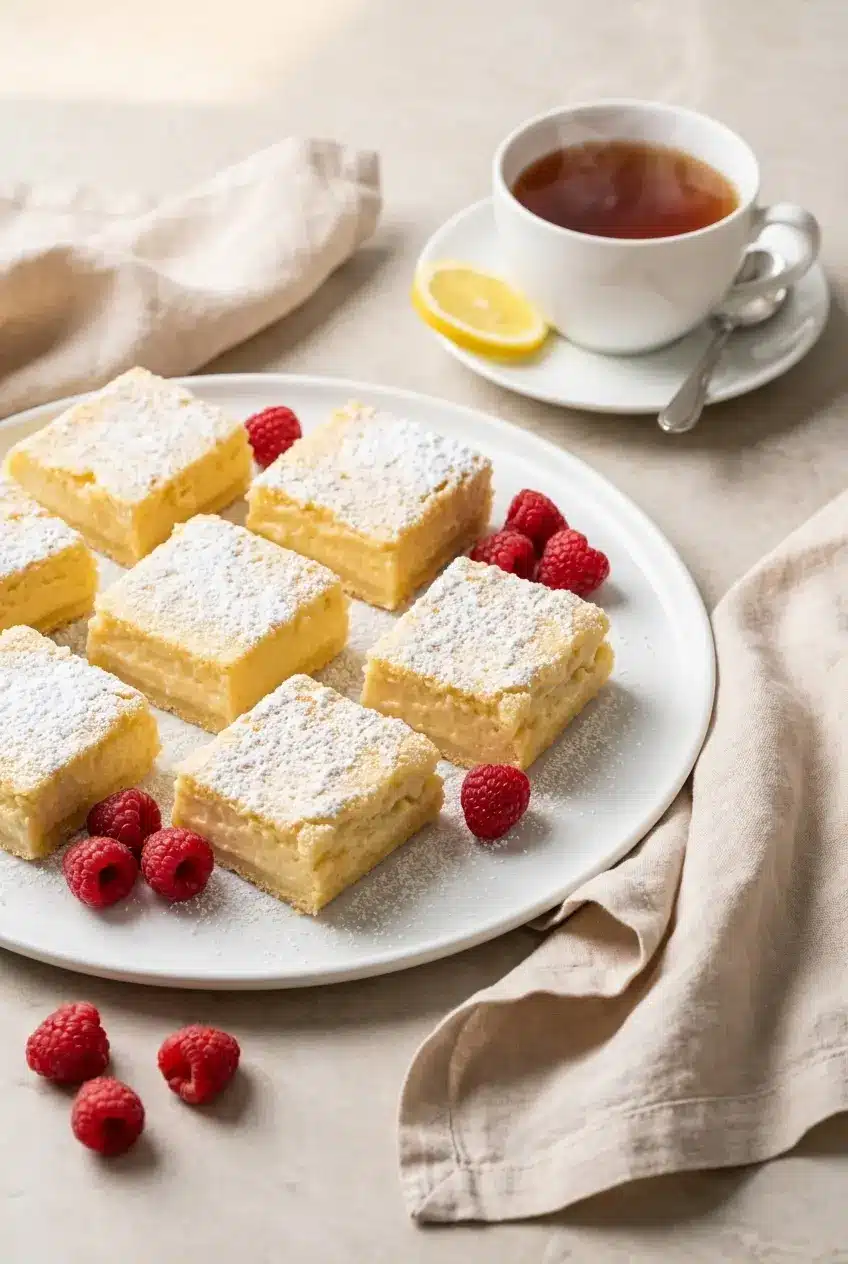
This cake shines brightest when served well chilled or just cool from the fridge. I like it with softly whipped cream, a few fresh raspberries, and a snowfall of powdered sugar with a little twist of lemon peel on top.
For those neat bakery-style squares, use a sharp knife dipped in warm water, then wipe the blade completely clean before every single cut. It takes an extra minute, but the creamy center stays tidy instead of smearing across the edges.
A hot mug of Earl Grey is a beautiful partner for the citrus notes in this cake. If you love elegant make-ahead desserts with clean slices and a bright finish, a homemade lemon tart scratches that same itch in a slightly more classic way.
Storage & Make-Ahead
The chilling step is not optional here. The custard layer needs that cold rest to firm up properly, otherwise the slices will slump and the middle will feel too loose.
Store leftovers in an airtight container in the refrigerator and keep them covered so the cake stays fresh and the top does not dry out. It is at its best within a few days, and I think the flavor is even better after an overnight chill.
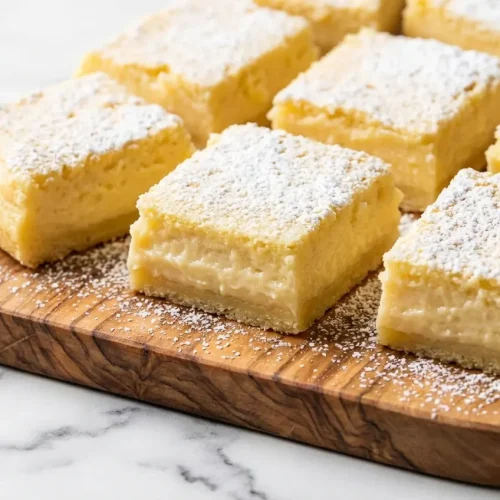
Lemon Custard Cake

Equipment
- 8×8-inch Baking Dish
- Parchment Paper
- Stand mixer with whisk and paddle attachments
- Silicone spatula
Ingredients
- 4 large eggs, room temperature
- 1/4 teaspoon cream of tartar
- 3/4 cup sugar
- 1/2 teaspoon kosher salt
- 1/2 cup unsalted butter, melted and cooled (1 stick)
- 1 teaspoon vanilla paste or extract
- 3/4 cup all-purpose flour, sifted
- 1/4 cup lemon juice
- 2 tablespoons finely grated lemon zest
- 1 3/4 cup whole milk, room temperature
- Powdered sugar for dusting
Instructions
Prep the Pan and Infuse the Milk
- Preheat your oven to 325°F (165°C) with a rack in the middle position. Line an 8×8 inch baking dish with parchment paper for easy removal.
- Stir the finely grated lemon zest into the room temperature milk and let it stand for 15 to 20 minutes to allow the citrus oils to infuse.
Whip the Egg Whites and Build the Base Batter
- Carefully separate the eggs. In a clean bowl, beat the egg whites with the cream of tartar on medium-high speed for 3 to 5 minutes until stiff, glossy peaks form, then set aside in a separate bowl.
- In the mixer bowl, whisk the egg yolks for 1 minute until foamy. Gradually add the sugar and continue beating for 2 to 3 minutes until the mixture is pale and thickened.
- Mix in the kosher salt, melted butter, and vanilla until the batter is smooth and satiny.
Finish the Batter
- Switch to a paddle attachment and mix in the sifted flour on low speed. Add the lemon juice and then slowly pour in the infused milk, beating until evenly combined and scraping down the sides of the bowl.
- Gently fold the whipped egg whites into the batter in three additions using a silicone spatula. Do not overmix; leave a few small visible pockets of egg white to help create the top layer.
Bake and Chill
- Pour the thin batter into the prepared dish and bake for 45 to 55 minutes. The top should be golden and the center should have a slight jiggle.
- Let the cake cool completely at room temperature, then refrigerate for at least 1 hour to set the custard. Dust with powdered sugar before slicing into 9 squares.
Notes
Conclusion
This cake earns its magic with a few smart details, especially steeping the lemon zest in the milk and trusting that loose, almost suspiciously watery batter. Those two choices are what turn simple pantry ingredients into something creamy, fluffy, bright, and unforgettable.
Make it once and you will see why it becomes a repeat bake for family dinners and spring gatherings. Have fun with it, dust it generously, and do not be surprised when everyone asks for the recipe.
Frequently Asked Questions
Why didn’t my cake separate into three layers?
Why does the batter look so watery and slightly curdled?
How can I tell when the custard cake is perfectly baked?
How should I store leftover lemon custard cake?