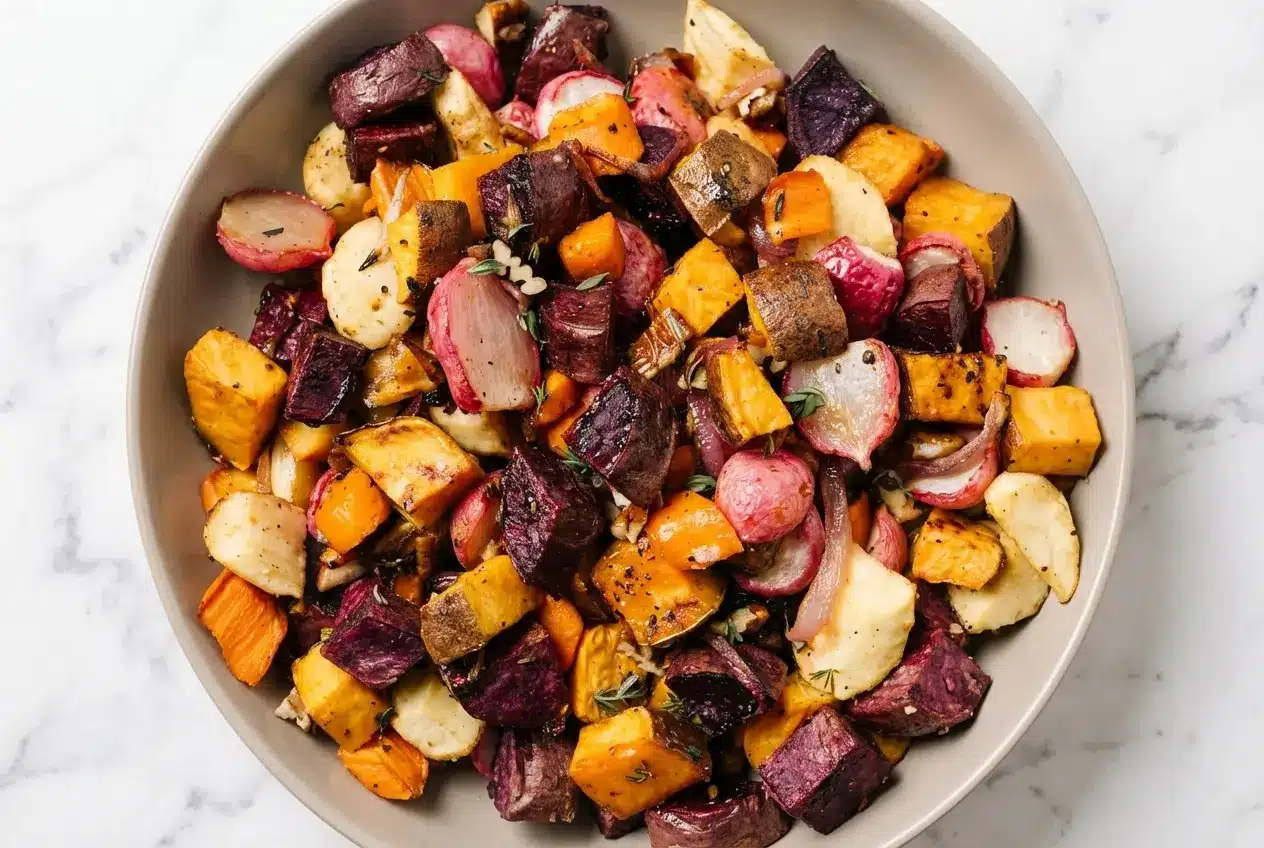
When the air turns sharp and the oven starts doing half the work of heating the house, this is the kind of side dish I crave. In my kitchen, maple roasted vegetables are the tray that disappears first, because they bring that perfect mix of sweet edges, earthy centers, and deep savory color.
This version is made for busy US home cooks who want something holiday-worthy without any fuss. It is naturally vegan, gluten-free, and just right for Thanksgiving, Sunday supper, or any cold-weather table that needs a little glow.
Why You’ll Love This Recipe
Crispy, not sticky: I use a delayed glaze method, and it changes everything. The vegetables roast first with only olive oil, salt, and pepper for 25 minutes, so they get a head start on browning before the sweet glaze ever touches the pan.
A smarter maple glaze: In the final 15 minutes, I toss them with pure maple syrup, apple cider vinegar, and 1 teaspoon of Dijon mustard. That timing encourages caramelization instead of scorching, which is the difference between glossy, golden edges and bitter burnt sugar.
Balanced flavor in every bite: The Dijon mustard quietly does two jobs at once. It helps emulsify the glaze and gives the sweetness a sharp, savory backbone that keeps these root vegetables from tasting flat.
Holiday-table friendly: This is one of those crowd-pleasing sides that fits almost anywhere. Alongside classics like a potato kugel recipe, it brings color, texture, and that cozy fall flavor everyone reaches for.
Ingredients and Substitutions
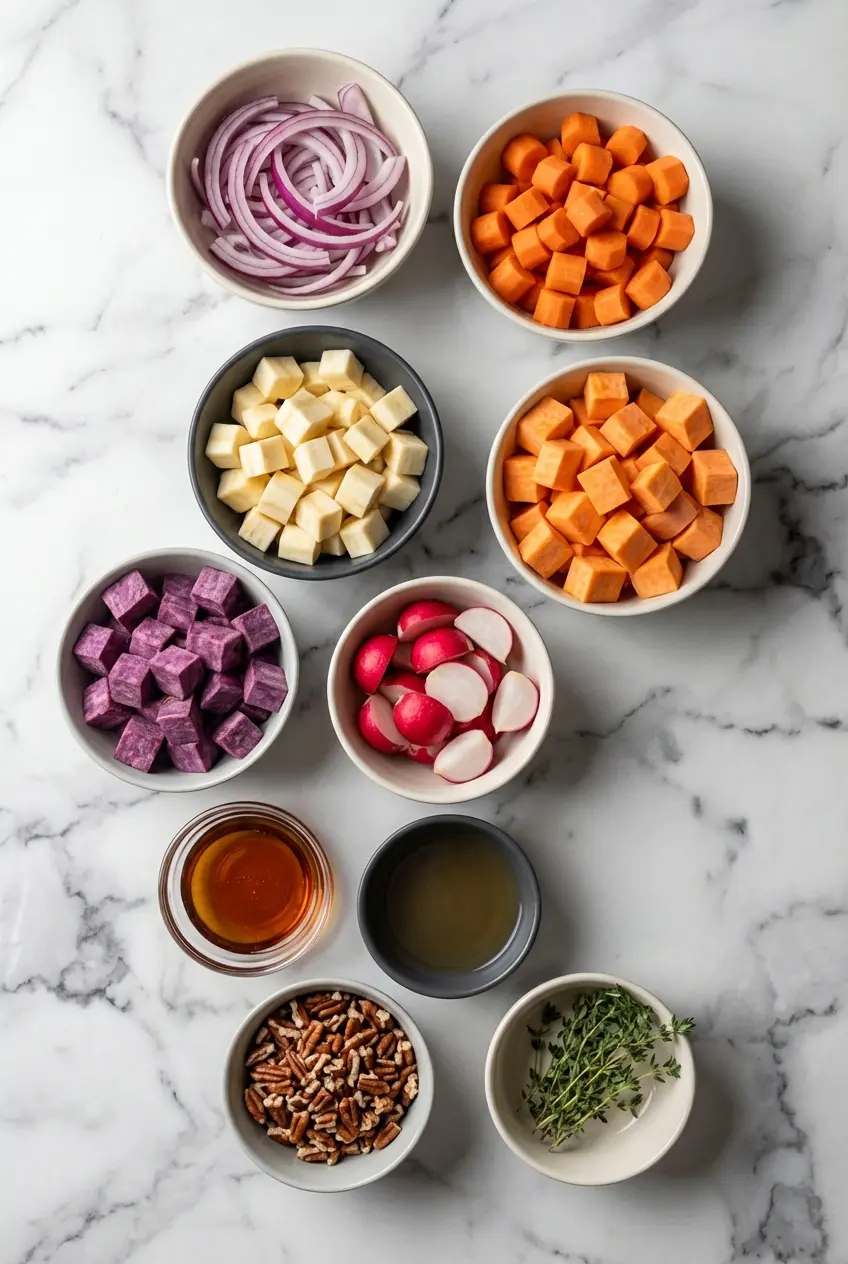
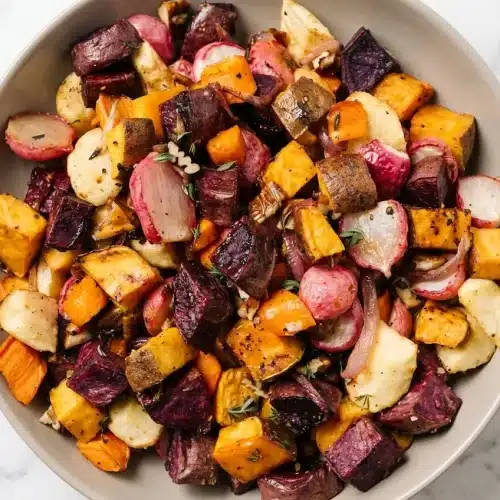
A mix of colorful root vegetables, a little olive oil, and a late-added maple glaze create the sweet, savory contrast that makes this dish shine.
Ingredients
- 1 red onion, sliced
- 2 large carrots, peeled and diced to 1″ cubes
- 2 large parsnips, peeled and diced to 1″ cubes
- 1 large orange sweet potato, diced to 1″ cubes
- 1 large purple sweet potato, diced to 1″ cubes
- 1 bunch radishes, ends trimmed and halved
- 2 tablespoons olive oil
- 4 tablespoons maple syrup
- 1 teaspoon apple cider vinegar
- 1 teaspoon sea or kosher salt
- 1 teaspoon cracked black pepper
- 1/3 cup chopped pecans
- 1 tablespoon fresh thyme
Ingredient Notes & Substitutions
Pure maple syrup: Use the real thing here, not imitation pancake syrup. Pure maple syrup gives cleaner flavor and better caramelization, while corn-syrup-based blends tend to taste flat and burn more aggressively under high heat roasting.
Dijon mustard: Even though it is not listed in the core ingredient array, this chef’s little secret is worth adding to the glaze. I whisk in 1 teaspoon Dijon mustard with the maple syrup and apple cider vinegar, because it smooths the glaze and gives the sweetness a savory edge.
Apple cider vinegar: This small spoonful wakes everything up. If you want a darker, deeper finish, balsamic vinegar works nicely, and if you like a sweet heat profile, hot honey can stand in for part of the maple element.
Root vegetables: The best roasting mix is one with a similar size and density, which is why a uniform dice matters so much. Brussels sprouts or broccoli can join the party too, but they should be added halfway through the cooking time so they do not overcook before the denser vegetables soften.
Peels and texture: I always peel woody carrots and parsnips for the best bite. Thin-skinned sweet potatoes can keep some skin if you enjoy a more rustic texture, as long as they are scrubbed well and cut into even pieces.
How to Make maple roasted vegetables
Prep the Oven and Vegetables
- Heat your oven to 425°F, the sweet spot for high heat roasting and strong browning. Line two baking sheets with parchment paper so the vegetables release easily and the glaze does not weld itself to the pan later.
- Place the sliced and diced vegetables in a large mixing bowl. If you have washed them just before cooking, dry them well first so they roast instead of steam.
Start with the Savory Roast
- Drizzle the vegetables with the olive oil, then season with the sea or kosher salt and cracked black pepper. Toss until every piece looks lightly coated and glossy, with no dry floury-looking spots.
- Spread the vegetables evenly over the two baking sheets, giving them breathing room so the hot air can circulate. Roast for 25 minutes, until the edges begin to deepen in color and the kitchen smells sweet, earthy, and savory.
Whisk the Delayed Glaze
While the vegetables roast, whisk together the maple syrup, apple cider vinegar, and 1 teaspoon Dijon mustard in a small bowl until the mixture is smooth and unified, with no streaks of mustard left behind.
Finish the Caramelization
- Pull the pans from the oven after the initial roast and pour the glaze over the vegetables right on the baking sheets. Toss carefully to coat the pieces evenly, making sure that shiny maple mixture reaches the corners and cut sides where the best caramelization happens.
- Return the pans to the oven for 10 minutes. Give the vegetables a stir at this stage so they brown evenly, then scatter the chopped pecans over the top and roast for 5 minutes more, until the vegetables are crisp at the edges, golden in spots, and the pecans smell toasty.
- Take the pans out and toss everything with the fresh thyme while the vegetables are still hot. Serve right away for that best sweet, savory, earthy, and crunchy bite.
Secrets for Perfect Caramelization
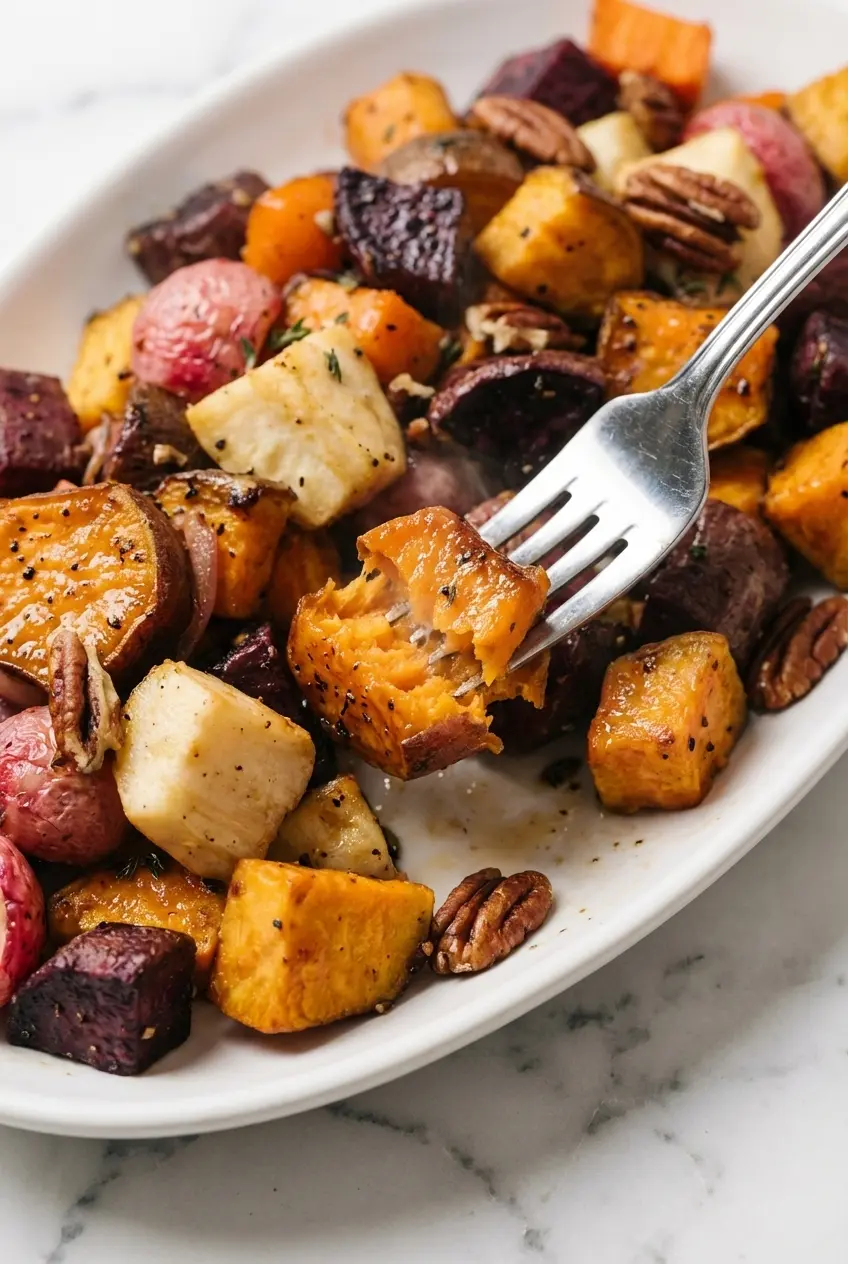
The delayed glaze is not just a neat trick, it is kitchen logic. Maple syrup is rich in natural sugars, and if it sits in a 425°F oven for the full roast, those sugars can scorch on the baking sheet long before the root vegetables are properly tender.
By roasting the vegetables first in oil, salt, and pepper, you give them time to dry on the surface and build a savory crust. That is when the chemical process known as the Maillard reaction starts lending those deep roasted flavors.
Uniform dice matters just as much as timing. When carrots, parsnips, sweet potatoes, and radishes are cut into 1-inch cubes or close to it, they finish cooking together instead of leaving you with some pieces burnt and others still firm in the center.
I also prefer parchment paper for this recipe because it protects the glaze from catching too hard on the metal. You still get rich color, but cleanup is kinder, and the vegetables keep more of that glossy maple finish.
Pro Tips & Troubleshooting
Pro Tips
- Dry the vegetables thoroughly after washing. Extra surface moisture is the fastest way to lose crisp edges.
- Use two baking sheets, not one crowded tray. Space is what gives roasted vegetables their browning power.
- Cut everything into a uniform dice, about 1 inch, so the root vegetables cook at the same pace.
- Peel woody carrots and parsnips, but keep thin sweet potato skins if you like extra texture.
- A sturdy side like this sits beautifully beside roast meats, casseroles, and holiday spreads, especially with comforting favorites already on the table.
Common Mistakes to Avoid
- Overcrowding the pans traps moisture, and overcrowding causes vegetables to steam instead of brown.
- Using imitation pancake syrup gives you weaker flavor and a much higher risk of burnt, sticky patches.
- Adding the pecans at the start will leave them dark, bitter, and far past toasty by the end of roasting.
- Skipping the stir midway through the glazed stage often means one side burns while the other side stays pale.
Serving & Storage
Serving Ideas
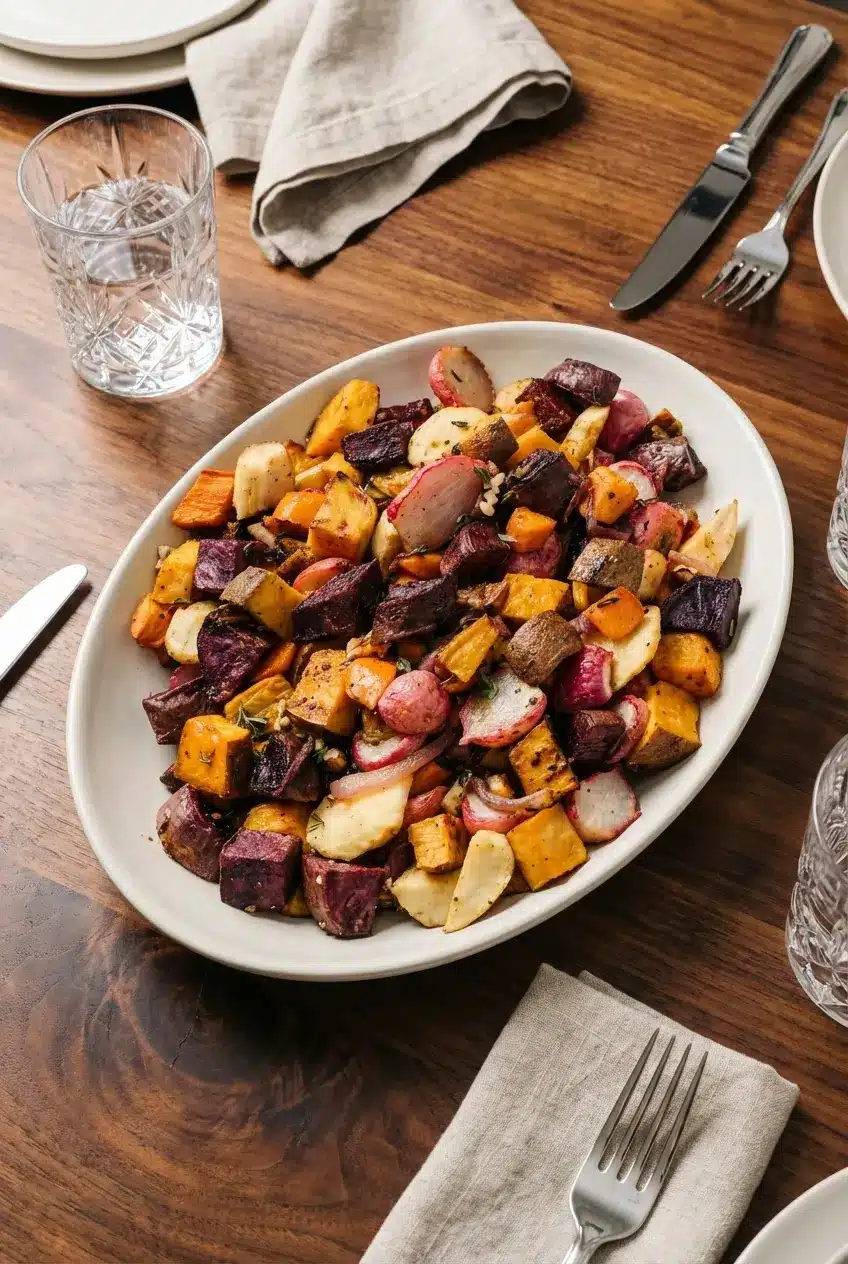
These maple roasted vegetables belong on a Thanksgiving side dish spread, but I serve them all season long with roasted turkey, roast beef, or pork chops. Their sweet-savory glaze also loves a creamy topping, so a handful of crumbled goat cheese or feta over the hot vegetables is never a bad idea.
Leftovers fold beautifully into a grain bowl with quinoa and tahini dressing, and a slice of warm sourdough bread turns that bowl into a real cold-weather meal. The crunchy pecans and bright thyme keep the whole thing from feeling heavy.
Storage & Make-Ahead Strategies
If you are planning ahead for Thanksgiving, chop all the vegetables 1 to 2 days in advance and keep them in airtight containers in the fridge. This is one of my favorite holiday moves, because the hardest prep is already done when the oven schedule gets busy.
Store leftovers in the refrigerator and reheat them in a 400°F oven or an air fryer for 5 to 7 minutes. The microwave is convenient, but microwaves make roasted veggies mushy by softening the crisp exterior with trapped moisture.
Maple Roasted Vegetables

Equipment
- Baking Sheets
- Parchment Paper
- Mixing Bowls
Ingredients
- 1 red onion, sliced
- 2 large carrots, peeled and diced to 1″ cubes
- 2 large parsnips, peeled and diced to 1″ cubes
- 1 large orange sweet potato, diced to 1″ cubes
- 1 large purple sweet potato, diced to 1″ cubes
- 1 bunch radishes, ends trimmed and halved
- 2 tablespoons olive oil
- 4 tablespoons maple syrup
- 1 teaspoon apple cider vinegar
- 1 teaspoon sea or kosher salt
- 1 teaspoon cracked black pepper
- 1/3 cup chopped pecans
- 1 tablespoon fresh thyme
Instructions
Prep the Oven and Vegetables
- Heat your oven to 425°F, the sweet spot for high heat roasting and strong browning. Line two baking sheets with parchment paper so the vegetables release easily and the glaze does not weld itself to the pan later.
- Place the sliced and diced vegetables in a large mixing bowl. If you have washed them just before cooking, dry them well first so they roast instead of steam.
Start with the Savory Roast
- Drizzle the vegetables with the olive oil, then season with the sea or kosher salt and cracked black pepper. Toss until every piece looks lightly coated and glossy, with no dry floury-looking spots.
- Spread the vegetables evenly over the two baking sheets, giving them breathing room so the hot air can circulate. Roast for 25 minutes, until the edges begin to deepen in color and the kitchen smells sweet, earthy, and savory.
Whisk the Delayed Glaze
- While the vegetables roast, whisk together the maple syrup, apple cider vinegar, and 1 teaspoon Dijon mustard (optional, but highly recommended) in a small bowl until the mixture is smooth and unified, with no streaks of mustard left behind.
Finish the Caramelization
- Pull the pans from the oven after the initial roast and pour the glaze over the vegetables right on the baking sheets. Toss carefully to coat the pieces evenly, making sure that shiny maple mixture reaches the corners and cut sides where the best caramelization happens.
- Return the pans to the oven for 10 minutes. Give the vegetables a stir at this stage so they brown evenly, then scatter the chopped pecans over the top and roast for 5 minutes more, until the vegetables are crisp at the edges, golden in spots, and the pecans smell toasty.
- Take the pans out and toss everything with the fresh thyme while the vegetables are still hot. Serve right away for that best sweet, savory, earthy, and crunchy bite.
Notes
Conclusion
Once you roast the vegetables first and glaze them later, it is hard to go back. That delayed maple finish gives you the best of both worlds, deep savory browning and glossy caramelized sweetness, without the bitter burnt spots.
I hope this tray finds a place on your fall table, whether it is a weeknight dinner or the big holiday feast. If you are building a full cozy menu, a plate of these followed by mini apple pies feels like autumn done right.