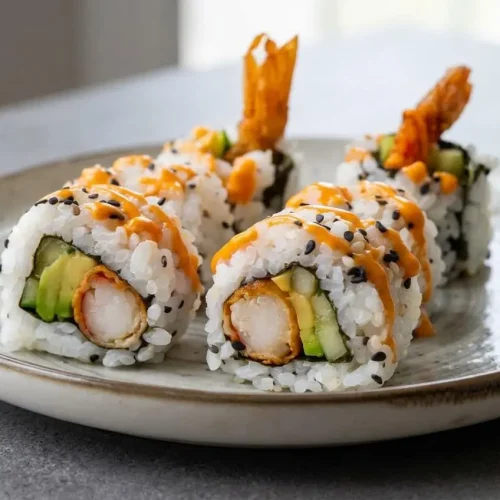
Shrimp Tempura Roll

This inside-out shrimp tempura roll pairs crisp battered shrimp, creamy avocado, and fresh cucumber in seasoned sushi rice and nori. Make the tempura from scratch or use a prepared frozen shortcut.
Equipment
- wooden paddle
- Spatula
- chopsticks
- makisu sushi mat
- Plastic wrap
- Sharp knife
Ingredients
Sushi Rice
- 1 cup Japanese sushi rice
- 2 tablespoons rice vinegar
- 1 teaspoon sugar
- Good pinch of salt
Shrimp Tempura
- 8 shrimp tempura either buy frozen prepared shrimp tempura or make them yourself
- 8 large cleaned and deveined shrimp/prawns
- 1 cup tempura flour
- Ice cold water refer to tempura flour package instructions for the amount
- ¼ cup plain all purpose flour
- Oil for frying I've used sunflower oil
Filling
- 2 seaweed nori sheets
- ½ avocado
- ½ cucumber
- Sesame seeds
- Optional sriracha mayonnaise for drizzling
Instructions
Cook Sushi Rice
- Rinse the rice in a small pot, drain, then add 1 ¼ cups water and set over medium-high heat. The final rinse water should look nearly clear rather than milky.
- Cover the pot and turn the heat to low once boiling begins, then cook for 15–20 minutes. The rice should absorb the water.
- Warm the vinegar, sugar, and salt together in another small saucepan for a couple of minutes while the rice cooks. The sugar should disappear into the warm liquid.
- Move the covered rice pot off the burner and let it steam for 5–10 minutes. Keep the lid closed to retain the steam.
- Spoon the rice into a large bowl, add the seasoning, and distribute it with gentle folding strokes using a wooden paddle or spatula. The grains should remain distinct rather than turning into a mashed mass.
Make Shrimp Tempura
- For prepared shrimp tempura, follow the package frying or baking directions instead of the scratch preparation below. The coating should finish crisp and the shrimp cooked as directed.
- Check that the raw shrimp are peeled and deveined with tails attached, then rinse gently and pat thoroughly dry. No visible surface water should remain.
- Make six shallow cuts along the underside of each shrimp, spacing them down its length without cutting through. Each shrimp should remain in one piece.
- Rest the cut side against the board and press along the back toward the tail with controlled fingertip pressure. The shrimp should lengthen and lie flatter without becoming crushed.
- Snip the sharp tail tips diagonally while leaving the tails attached. The ends should look neatly trimmed.
- Turn each shrimp in the all-purpose flour and shake away loose flour. A thin dusting should cover the surface.
- Sift the tempura flour into a separate bowl and add ice-cold water in the amount specified on its package. The mixture should match the package's intended batter consistency.
- Use chopsticks to bring the batter together with brief, light strokes. Small flour lumps should remain.
- Warm the frying oil in a pot over medium-high heat and test it with a small drop of batter. The batter should rise to the surface rather than linger at the bottom.
- Coat the shrimp in batter, let the excess fall away, and carefully lower them into the oil in small batches. Leave space between them so the coating can fry evenly.
- Fry for 2–3 minutes, then lift the shrimp onto a paper-towel-lined plate to drain. Look for a lightly golden coating and cooked shrimp with firm, opaque flesh.
Make Shrimp Tempura Rolls
- Cover the makisu bamboo mat with plastic wrap, set out water, a sharp knife, and a clean towel, then halve a nori sheet and lay it shiny-side down. The wrap should cover the mat where the sticky rice will touch.
- Cut the avocado and cucumber into slender strips. Keep the pieces narrow enough to form an even filling line.
- Dampen your fingers and distribute a thin layer of rice across the nori. The rice should cover the sheet lightly, without a compressed or bulky layer.
- Scatter sesame seeds over the rice, press lightly, and turn the sheet rice-side down for uramaki, or leave it unflipped for nori-outside maki. For the inside-out version, the bare nori should now face upward.
- Arrange cucumber and avocado across the center, then add two shrimp with their tails pointing toward opposite ends. The filling should form one centered horizontal line.
- Bring the near edge of the mat over the filling and tuck the ingredients inward as you begin rolling forward. The first turn should enclose the filling snugly.
- Continue rolling with steady, gentle pressure, using the mat to help shape the cylinder and tidy its ends. The roll should hold together without squeezed-out filling.
- Transfer the roll to a cutting board and drape plastic wrap over it with extra extending beyond every side. The wrap should support the rice exterior during cutting.
- Wet the knife, halve the roll, and divide the sections into 6 or 8 pieces, wiping and rewetting the blade between cuts. The slices should retain their rounded shape rather than flattening.
- Remove every piece of plastic wrap and repeat assembly with the remaining ingredients. The finished yield should be four rolls.
- Arrange the uncovered pieces on a serving plate and add the optional sriracha mayonnaise drizzle if desired. The sesame-coated rice and filling should remain neatly intact.
Notes
Ingredient tip: Choose one shrimp route only. Either use eight prepared frozen shrimp tempura or make eight from scratch using the raw shrimp, flours, water, and frying oil.
Texture tip: Keep the tempura batter ice-cold and slightly lumpy by mixing briefly with chopsticks so the coating fries up light and crisp instead of chewy.
Rice tip: Let the seasoned sushi rice lose its visible steam and cool to about body temperature before assembling so the nori does not turn chewy.
Slicing tip: Drape plastic wrap over the roll to support the exterior, and wipe and rewet your sharp blade between cuts to prevent crushed slices.
Storage: Serve soon after rolling for the best crunch. Refrigerate any leftovers promptly in a covered container with sauces kept separate, knowing the rice will firm up and the tempura coating will soften.
Nutrition information is an estimate based on common ingredients and serving sizes. Values may vary depending on brands, portions, and substitutions.