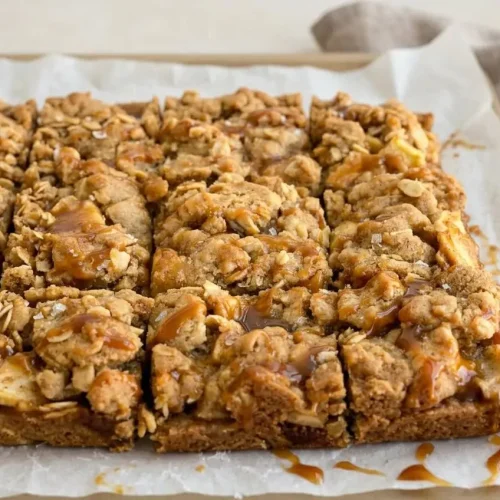
Salted Caramel Apple Pie Bars

Salted caramel apple pie bars layer thinly sliced spiced apples and gooey caramel between a chewy oat base and golden crumb topping. Pre-baked in an 8x8 pan and finished with flaky sea salt.
Equipment
- 8x8 pan
- Parchment Paper
- Large Mixing Bowl
- Paddle attachment
Ingredients
Apple Filling
- 1 lb thinly sliced apples (about 2 large apples)
- 1 tablespoon lemon juice
- 2 tablespoons flour
- 2 tablespoons granulated sugar
- ½ teaspoon cinnamon
- ⅕ teaspoon nutmeg
- pinch of salt
Oat Bottom/Topping
- ¾ cup salted butter
- ¾ cup brown sugar
- 1 teaspoon vanilla
- ¾ teaspoon salt
- ½ teaspoon baking soda
- ¼ teaspoon cinnamon
- 1 cup all-purpose flour
- 1 cup old fashioned oats
- 3 ounces caramel (kraft bits, homemade or from the jar)
- 1 tablespoons heavy whipping cream (Use this if melting caramels vs. jarred)
- flaked sea salt for topping
Instructions
- Heat the oven to 350°F and coat an 8x8-inch baking pan with cooking spray before fitting parchment inside. Keep enough parchment above opposite sides to form handles, with the paper tucked neatly into the corners.
- Peel the apples, cut them into very thin slices, and toss in a small bowl with the lemon juice, flour, granulated sugar, cinnamon, salt, and nutmeg; set aside. The slices should have an even, lightly spiced coating without pockets of dry flour.
- Beat the butter, brown sugar, and vanilla in a large mixing bowl using a paddle attachment until aerated. Look for a lighter, fluffy mixture rather than dense streaks of butter and sugar.
- Mix in the salt, baking soda, cinnamon, flour, and oats just until the dough comes together. The oats will make it look thick and somewhat sandy, but the mixture should hold when pressed.
- Distribute half the dough across the prepared pan, press it into an even bottom layer, and bake for 8 minutes. This initial bake gives the crust a head start before the moist filling goes on, though it won’t yet look fully browned.
- During the crust bake, microwave firm caramel with the cream in 30-second intervals, stirring after each interval, or warm caramel sauce without cream. Stop when the caramel flows smoothly from the spoon, without firm pieces remaining.
- Arrange the coated apples closely over the hot crust, gently compact the layer, and pour the warm caramel across the fruit. The apples may initially look like a tall mound, but overlapping them tightly reduces empty spaces beneath the topping.
- Pinch off portions of the remaining oat dough and scatter them over the apples as uneven dollops. Leave gaps between the pieces rather than smoothing them into a solid lid, so caramel can bubble through.
- Return the pan to the oven for 28 to 33 minutes, then remove it and immediately scatter flaked sea salt over the surface. Golden-brown edges and caramel actively bubbling through the topping are the signs to watch for before removing the pan.
- Leave the bars in the pan until completely cool before lifting and cutting. The center should feel settled rather than warm and loose, with caramel that stays between the layers instead of flowing outward.
Notes
Ingredient tip: Slice the apples evenly to about 1/8 inch thick and nest them closely together so the fruit bakes evenly without leaving hollow spaces under the topping.
Caramel tip: Only add the heavy whipping cream when melting firm caramel bits or block caramel; omit the cream if using thick jarred or homemade caramel sauce so the filling does not turn runny.
Serving tip: Let the pan cool completely at room temperature and then chill it until firm before lifting with the parchment handles and pressing straight down with a sharp knife, wiping the blade between cuts.
Storage: Store completely cooled leftovers in a tightly covered container in the refrigerator with parchment paper between stacked layers to prevent sticking.
Nutrition information is an estimate based on common ingredients and serving sizes. Values may vary depending on brands, portions, and substitutions.