Portuguese Custard Tarts

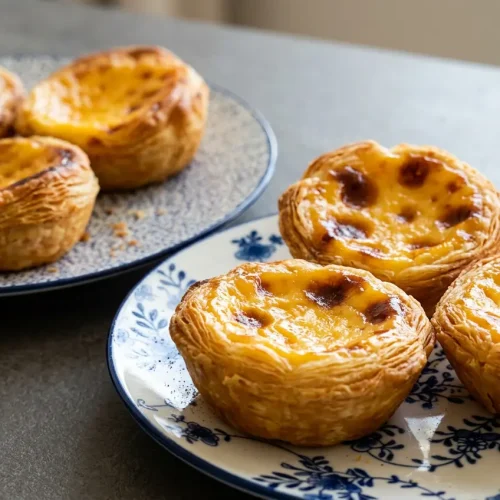
These Portuguese custard tarts combine crisp spiral puff pastry shells with a smooth egg-yolk filling infused with cinnamon, lemon peel, and vanilla, baked at high heat until dark spots appear on top.
Equipment
- Small mixing bowl
- Whisk
- Small saucepan
- mesh strainer
- Rolling Pin
- Tart molds or cupcake pan
- Cookie sheet
Ingredients
- 1 pkg frozen puff pastry
- 3 tbsp all-purpose flour
- 1¼ cup whole milk
- 1⅓ cup granulated sugar
- ⅔ cup water
- ½ tsp vanilla
- 1 whole cinnamon stick
- ¼ tsp cinnamon
- ½ lemon peel not zest
- 6 large egg yolks
Instructions
- Unbox the puff pastry and leave it on the counter to begin thawing about 45 minutes before baking. Use this interval to prepare the custard filling.
- Make a smooth slurry in a small bowl with 3 tbsp flour and ¼ cup whole milk, then whisk in the 6 yolks and remaining 1 cup milk. Check the slurry for flour lumps before adding the yolks and remaining milk.
- Combine ⅔ cup water, 1⅓ cup sugar, the cinnamon stick, and broad pieces of lemon peel in a small saucepan over medium-high heat, then boil for 1 minute or until the syrup reaches 220°F. The syrup should contain no visible sugar grains when you take it off the heat and remove the cinnamon stick and peel.
- Ladle a thin, steady stream of the milk-and-egg mixture into the hot syrup while whisking continuously, stopping once ⅓ to ½ of the milk mixture has been incorporated. Keep the addition gradual so the mixture blends smoothly rather than forming scrambled egg pieces.
- Whisk the warmed syrup mixture into the milk-and-egg mixture still in the bowl. Continue whisking throughout the addition to keep the custard uniform.
- Pass the custard through a mesh strainer into a clean bowl, then whisk in 1 tsp vanilla and ¼ tsp cinnamon and set it aside. The strained filling should look smooth, without egg fragments or larger aromatic pieces.
- Heat the oven to 475°F and, if desired, wipe the molds lightly with butter rather than cooking spray. The butter coating is optional and should be light.
- Roll the puff pastry to approximately ¼ inch thick, then form a tight log starting along its longest edge. The cut end should show closely packed pastry spirals.
- Slice the log crosswise into discs approximately ½ inch thick and set a disc in each mold. Each round should sit with its spiral facing upward, ready for pressing.
- Dampen both thumbs with water and press the center of each disc outward, then work the pastry up the mold walls. Aim for a thin shell that reaches the top without leaving a thick mound at the bottom.
- Pour custard into each shell until it is ⅔ full, and set individual pastry molds on a cookie sheet before placing them in the oven. Leave the remaining headroom empty to allow for bubbling without overflow.
- Bake for 15–17 minutes, using the cupcake-pan adjustments below when applicable. Look for dark spots across the custard rather than an entirely blackened surface.
- Let the tarts cool before gently releasing them from their molds or cupcake pan. The shells should hold their shape as you lift them out.
- Finish with a light sprinkle of cinnamon and powdered sugar if desired. Keep the dusting light so the blistered tops remain visible.
Special Instructions for Using Cupcake Pans
- Allow an additional 2–3 minutes of baking when using a standard cupcake pan, if needed. The centers should feel firm rather than jiggly.
- Shorten the baking time by 2–3 minutes when using a mini cupcake pan. Check for firm centers in these smaller tarts as well.
Notes
Ingredient tip: Use broad pieces of lemon peel with minimal bitter white pith rather than finely grated zest so you can easily remove the peel from the syrup.
Shaping tip: Keep a small bowl of water nearby to wet your thumbs before pressing the center of each pastry disc outward and thinly up the mold walls.
Custard tip: Whisk the initial flour-and-milk slurry until completely lump-free, temper gradually with steady whisking, and strain the mixture through a mesh sieve for a smooth filling.
Baking tip: Fill each pastry shell only two-thirds full to prevent spillover during baking, and let the tarts cool before unmolding so the delicate shells stay intact.
Nutrition information is an estimate based on common ingredients and serving sizes. Values may vary depending on brands, portions, and substitutions.