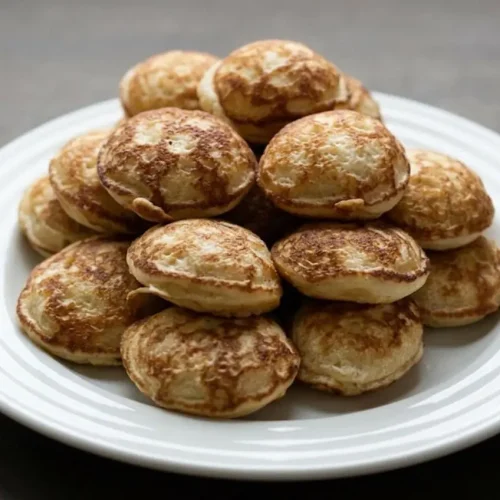
Poffertjes Recipe

This poffertjes recipe makes 40 tiny Dutch yeast pancakes with golden, buttery edges and pillowy centers in 1 hour 30 minutes, including a 1-hour rise and quick stovetop cooking.
Equipment
- Aebleskiver Pan/Ebelskiver Pan
Ingredients
- 1 tbsp SAF Instant Yeast
- 1 1/2 cup warm milk (90 to 100 degrees F)
- 1 3/4 cup white flour (All Purpose Flour)
- 1 tbsp sugar
- 1/2 tsp salt
- 1 large egg
- 4 tbsp Butter (for generously greasing the pan)
Instructions
- Bring the milk to 90 to 100°F, mix in the yeast, and leave it for 5 minutes while measuring the dry ingredients. Keep the milk lukewarm, not steaming hot, to give the yeast suitable conditions.
- Combine the flour, sugar, and salt with a whisk in a large bowl. An evenly blended dry mixture distributes sweetness and seasoning throughout the batter.
- Add the yeast-milk mixture and the egg to the bowl, then stir only until no dry flour remains. Leave small lumps alone rather than working the batter until perfectly smooth.
- Drape a clean kitchen towel over the bowl and allow a 1-hour rise at room temperature. Look for roughly twice the starting volume and a bubbly surface; a 30-minute rise is a compromise when pressed for time, but the full hour develops more flavor.
- Preheat a poffertjes or aebleskiver pan for 3 minutes over medium to medium-high heat, then coat every cavity generously with butter. The butter should melt readily and cover the surfaces where the batter will touch.
- Portion batter with a small cookie scoop until each cavity is about halfway full, adding warm milk to the bowl one tablespoon at a time only if needed. The mixture should fall from the scoop without needing to be scraped out as a firm lump.
- Give the first side 1 to 2 minutes, then catch the edge with a wooden skewer and roll each pancake over within its cavity. Bubbles across the top and a golden underside signal the turn while the upper center remains soft.
- Allow another 1 to 2 minutes for the second side to cook. Both faces should develop a golden-brown color, with a cooked, tender center rather than wet batter.
- Remove the pancakes using the skewer or a small fork, then butter the empty cavities before adding the next batch. A fresh coating helps the next round release without tearing its delicate edges.
Notes
Texture tip: Turn each pancake with a wooden skewer as soon as the underside is golden and the top bubbles while the center still looks soft so the inside stays tender rather than dry.
Ingredient tip: Keep the milk lukewarm between 90 and 100°F so excessive heat does not harm the yeast, and if the risen batter stays stuck in the scoop, stir in warm milk one tablespoon at a time until it drops easily.
Pan alternatives: If you do not have a poffertjes pan, fill an aebleskiver pan halfway, scoop small rounds onto a buttered flat skillet for flatter mini pancakes, or bake in a buttered mini muffin tin at 350°F for 12 to 15 minutes.
Storage and reheating: Cook all prepared batter rather than refrigerating it, store cooked leftovers promptly in a covered container in the refrigerator at 40°F or below, and reheat gently in an oven-safe dish in the oven before adding butter and powdered sugar.
Nutrition information is an estimate based on common ingredients and serving sizes. Values may vary depending on brands, portions, and substitutions.