Malasadas Recipe

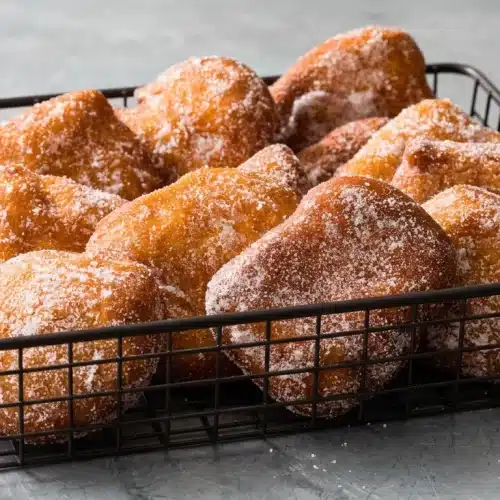
This homemade malasadas recipe yields 12 pillowy, chewy Portuguese yeast doughnuts coated in crisp granulated sugar after rising twice and frying in about 4 hours.
Equipment
- Stand Mixers (Inexpensive)
- The Best Slotted Spoons
Ingredients
- 2 1/4 cups bread flour (12 1/3 ounces/350 grams)
- 1/4 cup sugar (1 3/4 ounce/50 grams), plus 1 cup for coating
- 2 1/4 teaspoons instant or rapid-rise yeast
- 1/2 teaspoon salt
- 3/4 cup whole milk
- 2 large eggs
- 2 tablespoons unsalted butter melted and cooled
- 1 tablespoon vegetable oil plus 2 quarts
Instructions
- Combine the bread flour, 1/4 cup sugar, yeast, and salt with a whisk in the stand mixer bowl, then whisk the milk, eggs, and cooled melted butter in another bowl before pouring them into the dry mixture. The wet mixture should look evenly blended before it meets the flour.
- Attach the dough hook and run the mixer on low for about 2 minutes, then knead on medium for about 8 minutes. Look for an evenly mixed, glossy, sticky dough that still clings to the bowl’s bottom and sides.
- Scrape the dough into a greased large bowl with a greased rubber spatula, cover with plastic wrap, and leave at room temperature for 1½ to 2 hours. Proceed when the dough has doubled in volume.
- Coat a rimmed baking sheet with 1 tablespoon vegetable oil, ease the risen dough onto it, gently press out the gas, and divide it into 12 equal portions spaced across the sheet. The portions should remain soft and tacky rather than firm enough to roll on a floured counter.
- Pat the portions into 3½-inch disks with greased hands, then cover the sheet with plastic and let rise at room temperature for 30 to 45 minutes. Aim for about ⅜-inch thickness when shaping and a puffy appearance after this second rise.
- Position a wire rack inside another rimmed baking sheet, then pour the remaining 2 quarts oil into a large Dutch oven and heat over medium-high to 350°F. The oil should measure about 1½ inches deep.
- Lower 4 disks gently into the oil and fry for about 3 minutes, turning them halfway through and adjusting the burner to keep the oil between 325°F and 350°F. Both sides should develop a golden-brown crust.
- Lift the fried malasadas onto the rack with a slotted spoon or spider skimmer, bring the oil back to 350°F, and cook the remaining disks in 2 more batches. The rack allows excess oil to drain away from the crust.
- Add the remaining 1 cup sugar to a large bowl, gently coat each warm malasada individually, and arrange them on a platter for immediate serving. A fine layer of sugar should cling to the golden exterior.
Notes
Texture tip: Expect a uniform, shiny, sticky dough after kneading that clings to the mixer bowl rather than pulling away cleanly, and avoid adding extra flour.
Ingredient handling: Grease your hands and rubber spatula before dividing and patting the soft dough into even disks so the portions do not stick or tear.
Frying tip: Stick to 4 dough disks per batch and let the oil return to 350°F between batches so later malasadas do not turn out pale or oily.
Coating tip: Drain the fried pastries briefly on the wire rack, then toss them in granulated sugar while warm so the coating adheres properly.
Storage: Serve freshly fried whenever possible, or let leftover plain malasadas cool before placing them in a covered container.
Nutrition information is an estimate based on common ingredients and serving sizes. Values may vary depending on brands, portions, and substitutions.