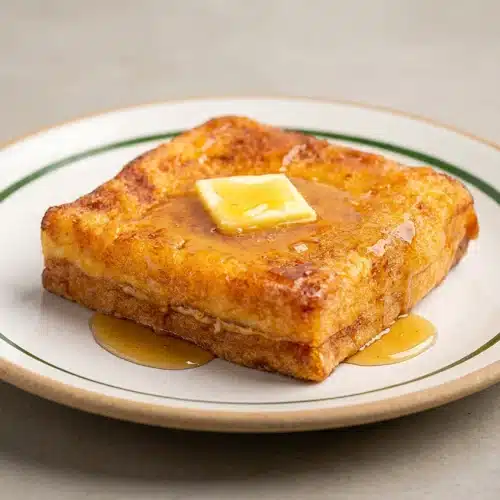
Hong Kong French Toast

Hong Kong French toast pairs a crisp, golden-brown egg crust with soft white bread and warm, creamy peanut butter. Shallow-fried and oil-basted in 17 minutes, it is served hot with butter and syrup.
Equipment
- Cutting board
- Serrated Knife
- Medium bowl
- Heavy-bottomed skillet
- large spoon
Ingredients
- 2 slices soft white bread ((preferably 2 days old))
- 2 teaspoons creamy peanut butter
- 1 large egg
- ¼ cup vegetable oil or any neutral oil
- 1 thin slice unsalted butter
- Golden syrup or pancake syrup
Instructions
- Build the sandwich on a cutting board by covering one face of a bread slice with peanut butter and placing the second slice over it, then remove every brown crust with a serrated knife. Set the trimmed sandwich aside with its soft edges exposed.
- Separate the egg, reserving the yolk, and beat the white with a fork in a clean, dry, grease-free medium bowl. Stop when fine bubbles fill the white and its volume has doubled, without taking it to soft peaks.
- Blend the reserved yolk into the foamy white, then pour the coating into a rimmed plate. Mix only until the yolk and white come together.
- Warm the oil in a small, heavy-bottomed skillet over medium-high heat. The oil needs to be ready for the egg-droplet test before the sandwich goes in.
- Line a separate plate with a paper towel and keep it beside the skillet. This gives the fried sandwich an absorbent surface for its brief draining rest.
- Dip the sandwich edges into the egg first, coat both broad faces, and allow 1 minute for absorption. The egg should cover the perimeter as well as the top and bottom.
- Drop a little egg coating into the oil to check its readiness. Bubbling around the droplet is the signal to begin frying.
- Carefully lower the coated sandwich into the skillet, reduce the heat to medium, and use a large spoon to bathe its upper face and edges with hot oil. Continue until the underside develops a golden-brown crust.
- Turn the sandwich carefully, cook the second face until golden brown, and move it to the paper-towel-lined plate for 10 seconds. Both broad faces should now have an evenly browned egg coating.
- Move the drained toast to a serving plate, add the unsalted butter and syrup, and serve hot. The butter will soften against the freshly fried crust.
Notes
Ingredient tip: Use slightly dried-out soft white bread rather than very moist fresh slices so the sandwich absorbs the egg coating without becoming fragile or tearing.
Assembly tip: To help keep peanut butter from leaking out during frying, keep the spread concentrated near the middle and leave a narrow clean border around the edges.
Texture tip: Beat the egg white in a clean, dry, grease-free bowl before adding the yolk so grease or yolk residue does not interfere with foaming.
Frying tip: Lower the heat to medium right after placing the sandwich in the skillet so the egg coating does not darken too fast before the peanut butter filling warms.
Storage: This toast is meant to be fried and eaten fresh, though plain leftovers can be kept covered and chilled with butter and syrup stored separately.
Nutrition information is an estimate based on common ingredients and serving sizes. Values may vary depending on brands, portions, and substitutions.