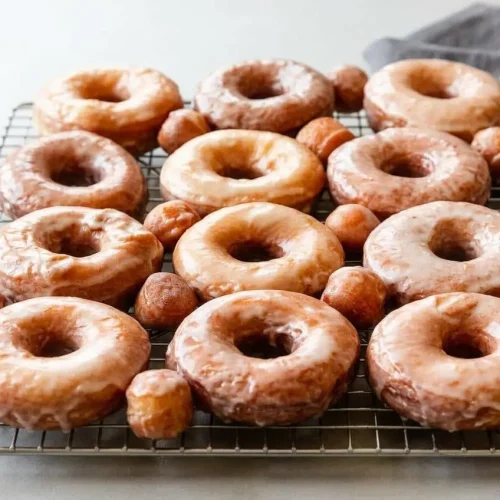
Glazed Doughnuts Recipe

This recipe guides you through making classic fried yeast doughnuts at home with a soft, airy crumb and a thin vanilla glaze. The steps are clear, ensuring a pillowy texture and delicious bakery-style flavor.
Equipment
- Stand mixer
- Large heavy-bottomed pot or Dutch oven
- Oil Thermometer
- Doughnut Cutter
- Baking Sheets
- Cooling Rack
Ingredients
Doughnuts
- 1 cup whole milk, warmed to about 110°F (43°C) (240ml)
- 2 1/4 teaspoons instant or active dry yeast (1 standard packet) (7g)
- 1/3 cup granulated sugar, divided (65g)
- 2 large eggs
- 6 Tablespoons unsalted butter, melted and slightly cooled (85g)
- 1 teaspoon pure vanilla extract
- 1/4 teaspoon ground nutmeg
- 1/2 teaspoon salt
- 4 cups all-purpose flour (spooned & leveled), plus more as needed (500g)
- 1-2 quarts vegetable oil
Donut Glaze
- 2 cups confectioners’ sugar, sifted (240g)
- 1/3 cup heavy cream, half-and-half, or whole milk (80ml)
- 1/2 teaspoon pure vanilla extract
Instructions
Make and Knead the Dough
- Whisk the warm milk, yeast, and 1 Tablespoon of the sugar in the bowl of a stand mixer, then cover loosely and let it stand for 5 to 10 minutes. The mixture should turn foamy and frothy on top, and the yeast should smell active and bready.
- Add the remaining sugar, eggs, melted butter, vanilla, nutmeg, salt, and 2 cups of the flour, then mix on low speed for 1 minute. The mixture will look thick and shaggy at first, which is exactly what you want before the rest of the flour goes in.
- Add the remaining flour and mix on medium speed for about 2 minutes, scraping the bowl as needed and adding more flour 1 Tablespoon at a time only if the dough will not pull in from the sides. The dough should come together into a soft mass that still feels slightly sticky rather than dry or stiff.
- Knead the dough in the mixer for 5 to 7 minutes, or knead by hand on a lightly floured surface for 5 to 7 minutes, adding only tiny sprinkles of flour if it gets too sticky to handle. It should feel soft, slightly tacky, and spring back slowly when poked, and a small piece should stretch thin enough for a windowpane test without tearing right away.
First Rise (Proofing)
- Lightly grease a large bowl, place the dough inside, and turn it so the surface is lightly coated, then cover the bowl. The light coating helps prevent drying, which keeps the outside of the dough soft as it rises.
- Set the bowl in a warm spot and let the dough rise for 1.5 to 2 hours, or until doubled in size. The dough should look puffed and airy, and this first rise can take the full time, so patience really matters here.
Shape the Doughnuts
- Press down the risen dough to release the air, then turn it onto a lightly floured surface and roll it to 1/2 inch thick. The dough should roll easily and still feel soft, not tight or heavily floured.
- Cut the dough with a 3 to 3.5-inch doughnut cutter and gather the scraps to cut more pieces. Try not to overwork the scraps, because the rerolled batch is the first place toughness tends to show up.
Second Rise
- Arrange the cut doughnuts and holes on parchment-lined baking sheets, cover loosely, and let them rest for 30 minutes while the oil heats. They should puff a bit and look lighter, which helps them fry up with a softer interior.
- Set a cooling rack over a baking sheet before frying begins. This gives the hot doughnuts a place to drain without trapping steam underneath.
Fry the Doughnuts
- Pour the vegetable oil into a large heavy pot, attach an oil thermometer, and heat over medium until the oil reaches 375°F (191°C). This temperature is the sweet spot for quick browning and a cooked-through center without an oily finish.
- Fry 2 to 3 doughnuts at a time for 1 minute on the first side, then flip and fry 1 minute on the second side. They should turn evenly golden brown and feel light when lifted from the oil.
- Lift the doughnuts out with a slotted metal spoon or spatula and place them on the prepared rack, then repeat with the rest and turn off the heat when finished. If the oil temperature drops or climbs too much, pause briefly and let it return to range before frying the next batch.
Make the Glaze and Finish
- Whisk the confectioners’ sugar, cream, and vanilla until smooth and pourable. The glaze should look silky and thin enough to coat without turning translucent and watery.
- Dip each warm doughnut into the glaze, coating both sides, then return it to the rack to let the excess drip off. Warm doughnuts help the glaze melt slightly into a thin even layer that sets after about 20 minutes.
Notes
Dough Texture: For a light and fluffy result, knead the dough until it's soft, slightly tacky, and passes the windowpane test. Avoid adding too much flour, as this can make the doughnuts dense.
Frying Tip: Keep the oil at a steady 375°F (191°C). If the oil is too cool, the doughnuts will absorb too much and turn out greasy.
Storage: These doughnuts are best the day they are made. Store any leftovers in an airtight container at room temperature; refrigeration can make them stale faster.
Nutrition information is an estimate based on common ingredients and serving sizes. Values may vary depending on brands, portions, and substitutions.