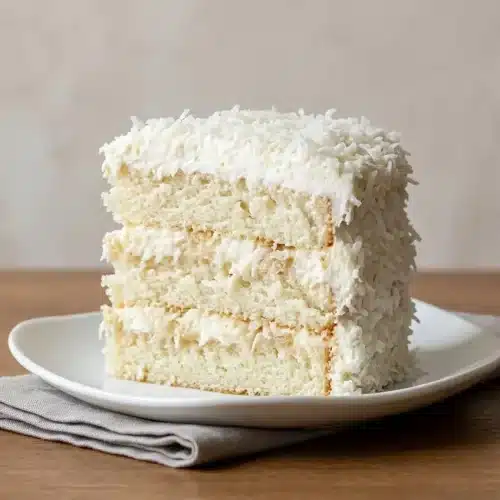
Coconut Cloud Cake

A light, ultra-moist sheet cake soaked with sweet cream of coconut and finished with a fluffy cream cheese whipped frosting and shredded coconut. It is the ultimate chilled tropical dessert.
Equipment
- 9 x 13 pan
- Large Mixing Bowl
- Stand Mixer or Hand Mixer
- Small bowl
- Fork
- Toothpick
Ingredients
WHITE COCONUT CAKE
- 2 3/4 cups unbleached cake flour
- 1 3/4 cups granulated sugar
- 1 tablespoon baking powder
- 1/2 teaspoon salt
- 12 tablespoons unsalted butter, softened
- 4 large egg whites
- 1 large egg
- 1 cup heavy cream
- 1 teaspoon pure vanilla extract
- 2 tablespoons coconut extract
- 1 can cream of coconut (15 oz)
COCONUT WHIPPED CREAM FROSTING
- 1 package cream cheese, room temperature (8 oz)
- 1/2 cup granulated sugar
- 1 teaspoon pure vanilla extract
- 2 teaspoons coconut extract
- 2 cups heavy whipping cream
- 1 1/2 cups sweetened coconut, shredded
Instructions
CAKE DIRECTIONS
- Heat the oven to 350 degrees and prepare a 9 x 13 pan by greasing and flouring it, or coat it with baking spray. The pan should be evenly covered so the tender cake releases cleanly after baking.
- Add the cake flour, sugar, baking powder, and salt to a large mixing bowl and mix on low just until combined. The dry mixture should look even in color with no streaks of baking powder or salt.
- Beat in the softened butter a little at a time until the mixture turns crumbly, then add the egg whites one at a time and beat in the whole egg. At the right crumb stage, the mixture looks sandy and soft rather than pasty or smooth.
- Whisk the heavy cream with the vanilla extract and coconut extract in a small bowl. The liquid mixture should look fully blended and lightly creamy.
- Pour the cream mixture into the batter slowly and beat for about 3 minutes until fluffy. The finished batter should look lighter, smoother, and a little fuller in volume.
- Spread the batter in the pan and tap or gently bounce the pan on the counter to release trapped air. This quick burping step helps pop large bubbles so the baked cake stays even instead of forming tunnels.
- Bake for 35 to 40 minutes, checking for doneness with a toothpick in the center. The cake is ready when the top is lightly golden and the toothpick comes out clean.
- Set the hot cake on a rack and poke holes all over the surface with a fork right away. The crumb should still feel hot and springy, which helps the soak sink in instead of pooling on top.
- Pour the cream of coconut evenly over the cake and let it cool completely before frosting. As it rests, the surface will look glossy at first, then gradually lose the wet shine as the cake absorbs the liquid.
FROSTING
- Beat the cream cheese, sugar, vanilla extract, and coconut extract in a large bowl until smooth. The base should look creamy and lump-free before the whipped cream goes in.
- Drizzle in the heavy whipping cream slowly while mixing. The mixture will loosen first, which is normal and helps it whip evenly.
- Beat on high for 3 to 5 minutes until stiff peaks form, then scrape the sides and bottom of the bowl. The frosting is ready when it looks thick, glossy, and holds a peak that stands up instead of folding over.
- Spread the frosting over the cooled cake, finish with shredded coconut, and refrigerate the covered pan. The top should look fluffy and softly textured, with the coconut clinging to the surface instead of sliding off.
Notes
Preparation tip: Stir the cream of coconut very well before pouring it over the cake, because the rich solids often settle and cling to the top of the can.
Equipment tip: Chill your mixing bowl and beaters in the freezer for 10 minutes before whipping the heavy cream frosting to achieve maximum volume.
Ingredient tip: Separate egg whites while they are cold as they structuralize cleaner, but let them warm to room temperature before mixing for optimal rise.
Storage: This cake must stay covered and refrigerated. Keep your refrigerator at or below 40 °F for perishable foods to protect dairy-based desserts.
Nutrition information is an estimate based on common ingredients and serving sizes. Values may vary depending on brands, portions, and substitutions.