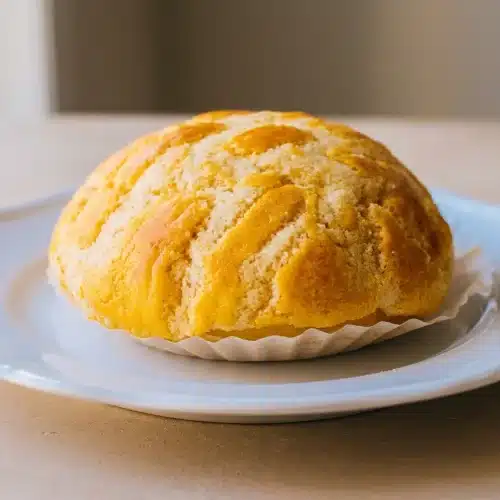
Chinese Pineapple Buns

Chinese pineapple buns pair fluffy enriched milk bread with a sweet, crackly golden cookie crust. Made with a simple yeast dough and a hand-mixed topping, this batch yields 12 bakery-style rolls.
Equipment
- Stand mixer with dough hook
- Mixing Bowl
- Baking Sheet
- Kitchen towel
- Plastic wrap
- Pastry brush
Ingredients
- 2/3 cup heavy cream at room temperature
- 1 cup milk at room temperature
- 1 large egg at room temperature
- 1/3 cup sugar
- 1/2 cup cake flour
- 3 1/2 cups bread flour
- 1 tablespoon active dry yeast
- 1 1/2 teaspoons salt
- ¼ cup dry milk powder
- 1¼ cups all-purpose flour
- ½ teaspoon baking soda
- ¼ teaspoon baking powder
- 2/3 cup superfine sugar it’s very important that it’s superfine
- ¼ cup vegetable shortening can subsitute lard or butter
- 2 tablespoons milk
- 1 egg yolk
- 1/8 teaspoon vanilla extract
Instructions
- Load the mixer bowl with the heavy cream, milk, whole egg, sugar, cake flour, bread flour, yeast, and salt in that sequence, then knead with the dough hook on “stir” for 15 minutes, pausing occasionally to gather the dough together. The enriched mixture should gradually form a more cohesive dough.
- Leave the bowl in a warm place for 1 hour beneath a damp towel. Look for the dough to reach about 1.5 times its starting size.
- Run the mixer on “stir” for another 5 minutes to knock back the trapped air. The dough should look smoother as the larger bubbles disappear.
- Turn the dough onto a lightly floured work surface, divide it into 12 equal portions, and round each portion into a bun. Aim for evenly shaped rounds so the batch rises consistently.
- Arrange the rounds on a baking sheet and cover them with a clean, dry kitchen towel for a second 1-hour rise. The buns should become visibly fuller and puffy.
- During this rise, place the dry milk powder in a separate mixing bowl and rub any clumps apart with your fingertips. The powder should feel uniform rather than pebbly.
- Mix the all-purpose flour, baking soda, baking powder, and superfine sugar into the milk powder, then work in the shortening, milk, egg yolk, and vanilla by hand. The mixture should gather into a dough rather than remain loose and sandy.
- Add more milk only if needed, working in a teaspoon at a time, then cover the topping tightly with plastic wrap and leave it at room temperature. Stop adding milk as soon as the dough holds together.
- After the second rise, set the oven to 350°F and divide the topping into 12 equal portions, rolling each into a ball. Each bun should have a matching portion of cookie dough.
- Flatten the topping balls into circles on a clean surface and lay one circle over each risen bun. Let the topping rest over the dome without pressing down the bread.
- Brush the tops with egg yolk and bake at 350°F for 12–13 minutes. Look for golden tops with cracks opening across the cookie crust.
Notes
Ingredient tip: Bring the heavy cream, milk, and whole egg to room temperature before mixing, and rub any dry milk powder clumps apart with your fingertips so the cookie topping turns out uniform.
Topping handling: Flatten the delicate cookie dough rounds between sheets of parchment paper or plastic wrap to prevent sticking, and use a wide spatula to support each circle as you transfer it onto the risen dough.
Baking cue: Keep each cookie disc slightly smaller than the proofed bun so the edges stay clear of the hot pan without scorching, and brush on the egg yolk lightly so the crust stays centered.
Storage: Cool plain buns completely before placing them in a well-sealed container away from moisture, and warm leftovers gently while noting that storage softens the initial crisp texture.
Nutrition information is an estimate based on common ingredients and serving sizes. Values may vary depending on brands, portions, and substitutions.