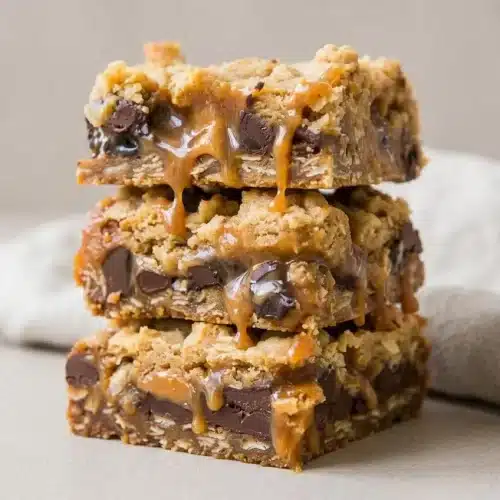
Carmelitas Recipe

Chewy rolled oat cookie bars layered with gooey caramel and rich chocolate chips. Par-bake the buttery crust, assemble the filling, and chill completely for neat, tender squares.
Equipment
- 8x8 inch pan
- Aluminum Foil
- microwave-safe mixing bowl
Ingredients
- 3/4 cup butter melted (1 1/2 stick; I use unsalted butter but salted may be used)
- 3/4 cup light brown sugar packed
- 1 tablespoon vanilla extract
- 1 cup all-purpose flour
- 1 cup whole-rolled old fashioned oats not instant or quick cook
- 1 teaspoon baking soda
- 1/2 teaspoon salt or to taste
- 35 caramel squares unwrapped
- 1/2 cup heavy cream
- 1 cup semi-sweet chocolate chips or chunks
Instructions
- Set the oven to 350°F, then fit aluminum foil into an 8x8-inch pan and coat it with cooking spray. Leave foil extending above opposite sides so the finished slab has handles for lifting.
- Microwave the butter in a large microwave-safe bowl on high for about 90 seconds, until melted. The butter should be liquid with no solid pieces remaining.
- Whisk the brown sugar and vanilla into the melted butter. The mixture should look evenly blended, without pockets of dry sugar.
- Stir in the flour, rolled oats, baking soda, and a pinch of the listed salt if desired. Expect a thick, coarse mixture with visible oat flakes rather than a pourable batter.
- Press roughly half of the oat mixture into the lined pan with a spatula or the back of a spoon, reserving the rest. A level layer reaching all four corners will support the filling evenly.
- Bake the bottom crust for 10 minutes and prepare the caramel during this first bake. The surface should begin to set but does not need to be deeply browned.
- Combine the caramel squares, heavy cream, and salt to taste in a large microwave-safe bowl, then microwave on high in 60-second intervals, stirring between intervals, for about 4 to 5 minutes total. Stop when stirring produces a smooth sauce without unmelted candy pieces.
- Alternatively, melt the caramel squares and cream in a medium saucepan over medium-low heat, stirring almost continuously. The filling is ready when it becomes uniform and flows from the spoon in a thick ribbon.
- Take the crust out after its 10-minute bake and distribute the chocolate chips or chunks across it. Even coverage gives each square a chocolate layer rather than isolated pockets.
- Pour the warm caramel gradually over the chocolate, moving across the pan as you pour. The sauce should cover the chocolate without collecting entirely in one spot.
- Break the reserved oat mixture into crumbs and scatter them over the filling. Loose clusters with small gaps allow caramel to peek through the topping.
- Bake the assembled bars for another 15 to 18 minutes. Look for lightly browned edges and gentle bubbling near the center.
- Leave the bars in their pan until completely cool, allowing up to 4 hours at room temperature, or use the refrigerator to help them firm with foil covering the top. The center should hold its shape instead of flowing when you begin cutting.
Notes
Cooling tip: Give the baked bars sufficient time to cool completely for up to 4 hours at room temperature, or chill them in the refrigerator, to ensure the molten caramel sets firmly before cutting.
Neat slicing: Fit your pan with a foil sling before baking to lift the whole slab out cleanly. Use a warm, sharp chef's knife and wipe the blade clean between cuts for bakery-style squares.
Storage: Place sliced squares in an airtight container separated by sheets of parchment paper. Store in the refrigerator if you prefer a firmer, chewier bite.
Nutrition information is an estimate based on common ingredients and serving sizes. Values may vary depending on brands, portions, and substitutions.
Nutrition
Calories: 339kcalCarbohydrates: 43gProtein: 3gFat: 18gSaturated Fat: 10gCholesterol: 33mgSodium: 270mgPotassium: 120mgFiber: 2gSugar: 29gVitamin A: 250IUCalcium: 45mgIron: 1mg
Tried this recipe?Let us know how it was!