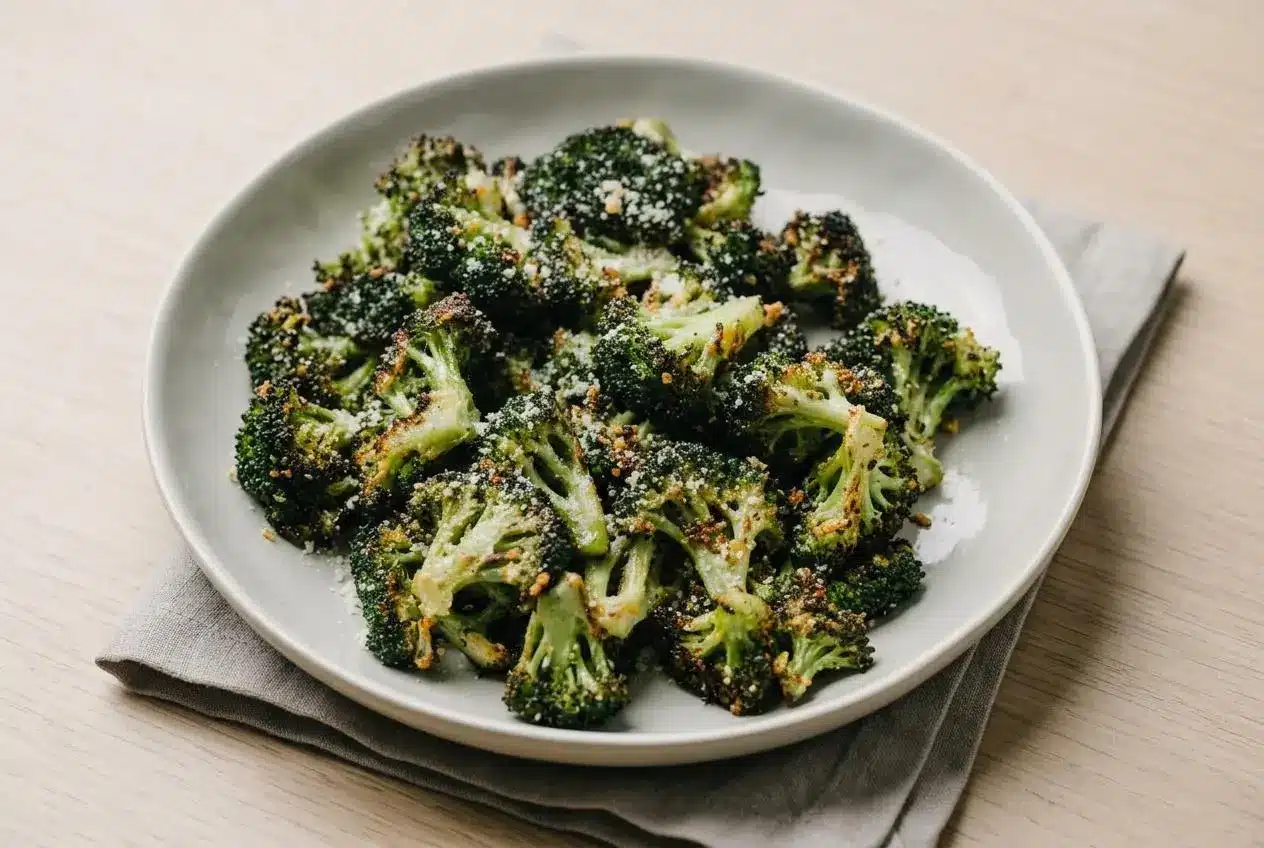
Roasted Parmesan Broccoli turns out crisp and flavorful when dry florets are coated with oil, garlic, and grated parmesan, then roasted at 425 °F in a single layer until the edges brown.
Roasted parmesan broccoli is an easy weeknight side with garlicky flavor, nutty cheese, and those deeply golden florets everyone picks first.
It cooks fast, pairs with almost anything, and the texture is much better when you know how to manage moisture and sheet pan space. The crispy tips are worth it.
Dry the broccoli well before it hits the bowl, or the oven will steam it instead of roast it.
Choosing Your Ingredients
Each ingredient pulls its weight here, from building crisp edges and savory depth to helping the cheese cling to the florets instead of sliding onto the pan.
- 2 medium heads broccoli (divided into florets, about 6 cups)
- 3 tbsp olive oil
- 1/3 c grated parmesan cheese (plus 2 tbsp for garnish)
- 2 cloves garlic (minced)
- 1 tsp Italian seasoning
- 1/2 tsp garlic powder
- 1/2 tsp kosher salt
Broccoli florets give you two textures in one bite: tender stems and frilly tops that catch heat and brown quickly. Olive oil helps the surface roast instead of dry out, and it also gives the parmesan something to grab onto.
Grated parmesan works better than shredded here. The fine texture sticks to the broccoli, melts quickly, and forms crisp little cheesy edges. Shredded parmesan is heavier and more likely to slide off, clump on the baking sheet, and brown unevenly. Pre-packaged canned parmesan also tends to melt less smoothly, so you miss some of that delicate caramelized coating.
The garlic pairing matters too. Fresh minced garlic gives the broccoli a sharper, real garlic flavor, while garlic powder spreads that flavor more evenly over the whole pan. Italian seasoning rounds everything out with a dry herb note that holds up well in the oven, and kosher salt sharpens the cheese and vegetable sweetness.
For high-heat roasting, extra light olive oil, avocado oil, or safflower oil are practical choices because they tolerate heat well without taking over the flavor. Extra virgin olive oil can still work, but its flavor is stronger and it can be more temperamental at this temperature.
I reach for finely grated parmesan here every time because it coats the florets more evenly and gives you those lacy, toasty bits instead of cheesy puddles.
How to Make Roasted Parmesan Broccoli
- Heat the oven to 425 degrees F and place a rack in the lower third, then line a baking sheet with parchment paper.
The lower rack gives the broccoli stronger bottom heat, which helps the undersides brown and crisp. - Cut the broccoli into florets and place them in a large mixing bowl, then toss with the olive oil until every piece is lightly coated.
The oil should leave the surface glossy without pooling in the bottom of the bowl. - Add 1/3 c parmesan cheese, minced garlic, Italian seasoning, garlic powder, and salt, then toss again until the florets are evenly covered.
You want the seasonings and cheese to cling to the tops and crevices rather than gather in clumps. - Spread the broccoli on the prepared baking sheet in an even layer with a little space between pieces.
If the florets are touching too much, they will soften from trapped steam instead of developing crisp edges. - Roast for 20 to 22 minutes, flipping the broccoli halfway through and rotating the pan when it goes back into the oven.
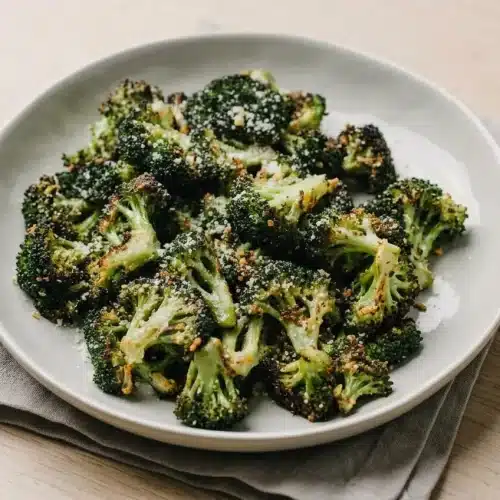
The broccoli is ready when the floret tips are golden brown, the cheese smells sweet and nutty, and a paring knife slips into the stems with little resistance. - Take the pan out, sprinkle with the remaining parmesan cheese, and serve warm right away.
The final cheese softens over the hot broccoli while the first layer stays crisp and toasty.
How to Achieve the Crispiest Texture
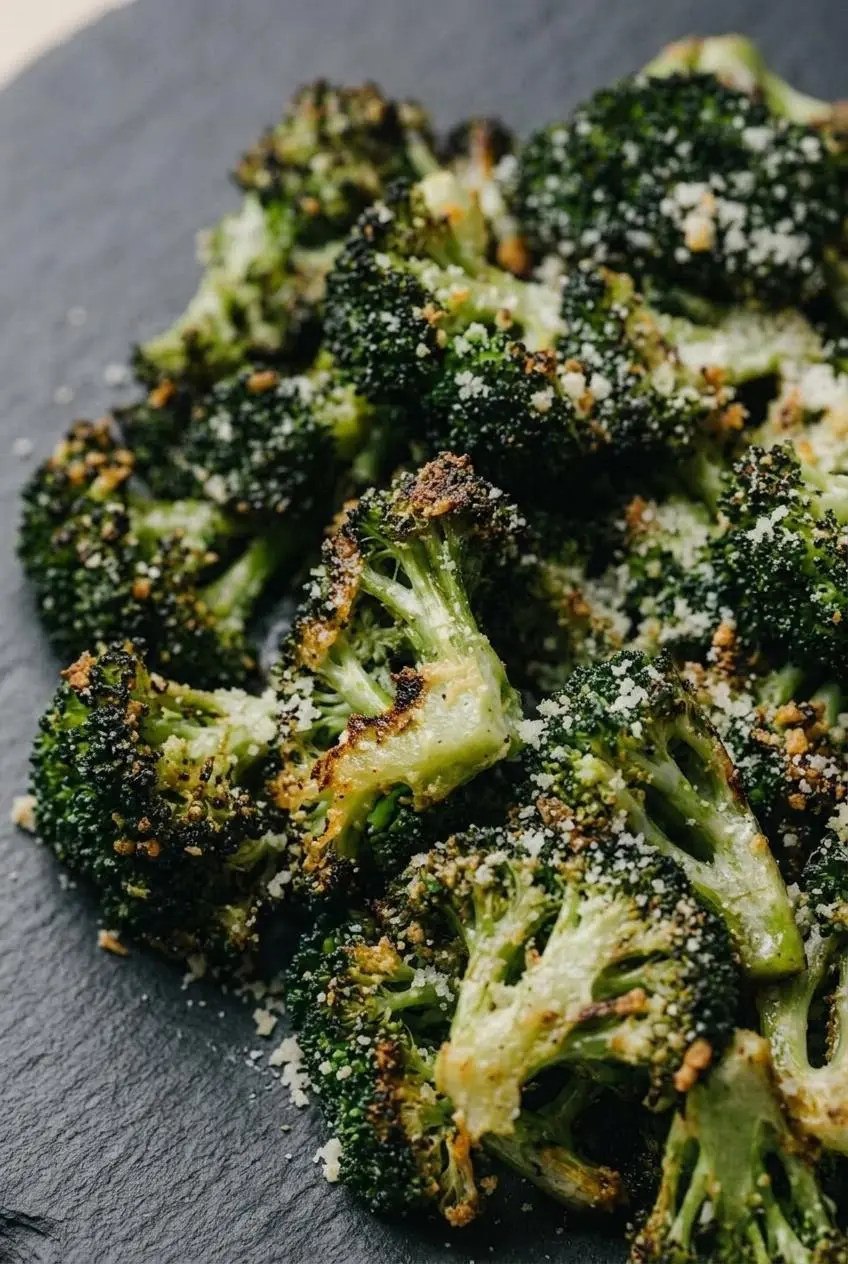
If your goal is crunchy edges instead of soft broccoli, moisture control is the whole game.
- Wash first, then dry thoroughly. Water trapped in the florets creates steam in the oven, which keeps the broccoli from browning well.
- After rinsing, shake off the excess water, pat the florets dry, and let them air-dry for a bit if they still feel damp in the creases.
- Toss with oil only after the broccoli is dry. The oil helps the surface roast and color more evenly.
- Give the florets room on the baking sheet. Crowding traps steam and leads to mushy tops and pale stems.
- Keep an eye on size. Small florets finish faster, while thicker stalks need more time before they turn tender.
A helpful doneness test is the paring knife check. Slide the tip into one of the thicker stems. It should meet only light resistance. If the tops look dark but the stem still feels firm, the florets were likely cut too large or the pan was too crowded.
The lower third oven rack helps more than it seems. It gives the bottom of the pan stronger direct heat, so the broccoli gets better browning underneath while the tops roast and crisp.
Troubleshooting Burnt Garlic
Garlic burns fast, especially when it is minced finely and exposed directly to the hot pan.
- If the garlic tastes bitter, the pieces were probably sitting on the pan instead of tucked onto the broccoli. Toss well so the minced garlic sticks under the floret canopy where it has a little protection.
- Garlic powder helps because it spreads savory flavor across the whole batch without adding more little pieces that can scorch.
- If you know your oven runs hot, use thinly sliced garlic instead of a very fine mince. Larger pieces brown more slowly.
- If the cheese or garlic keeps burning before the broccoli softens, avoid pushing the oven hotter. This recipe works best at 425 degrees F because the broccoli can roast through before the cheese turns bitter.
The same logic applies to the parmesan. Very high heat can darken the cheese too quickly, especially on thinner florets. If you want a little insurance, hold back part of the cheese and add it near the end or as a hot garnish after roasting.
Gourmet Enhancements and Alternatives
This is already a strong weeknight side, but a few optional upgrades can steer it in different directions without changing the base recipe.
The Gourmet Contessa Twist
Right after roasting, toss the hot broccoli with toasted pine nuts, fresh lemon zest, a squeeze of lemon juice, and torn basil. The lemon lifts the richness of the cheese, the basil adds freshness, and the pine nuts echo that nutty parmesan flavor in a more dinner-party direction.
If you’re building an Italian-style meal around those flavors, lemon parmesan pasta makes a natural main dish alongside it.
The Crunchy Breadcrumb Variation
For extra dry crunch, toss the florets with 1/4 cup of panko breadcrumbs along with the cheese. The crumbs toast in the oven and give you a crisp coating that feels a little more snacky and a little more golden around the edges.
This version works especially well if you want more texture contrast next to softer mains like pasta, baked fish, or roast chicken.
Alternative Cooking Methods: Air Fryer Option
Yes, you can make this in the air fryer. Cook the coated broccoli at 380 degrees F for 8 to 10 minutes, then shake the basket halfway through so the florets brown evenly.
The air fryer gives you speedy crisp edges, but it works best in batches. If the basket is overloaded, the broccoli softens instead of roasting. You may also notice that very small florets cook faster than thick stem pieces, so check a few pieces near the end.
Storage and Reheating Guide
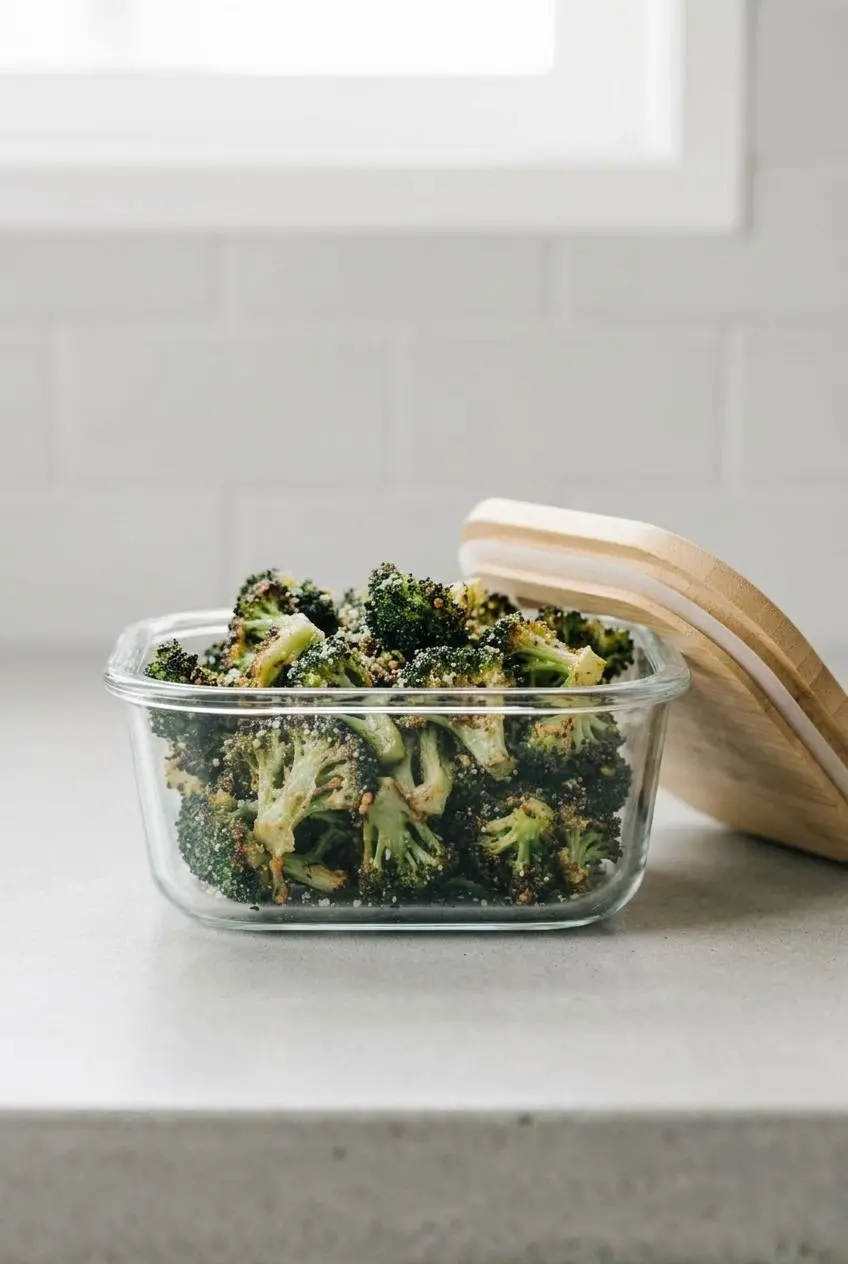
If you have leftovers, cool the broccoli and store it covered in the refrigerator. Because this dish includes parmesan, chilled storage matters for both quality and dairy handling, and food safety guidance for dairy ingredients supports keeping cheese-based foods properly refrigerated.
For the best texture, reheat it in the oven or air fryer instead of the microwave. A hot oven revives the edges better, while the microwave tends to soften the coating and make the broccoli a little damp.
If you know you will reheat leftovers, undercook the first batch very slightly rather than roasting it to the deepest possible color. That gives the broccoli a little room to warm through later without tipping into dry or bitter territory.
Perfect Meal Pairings
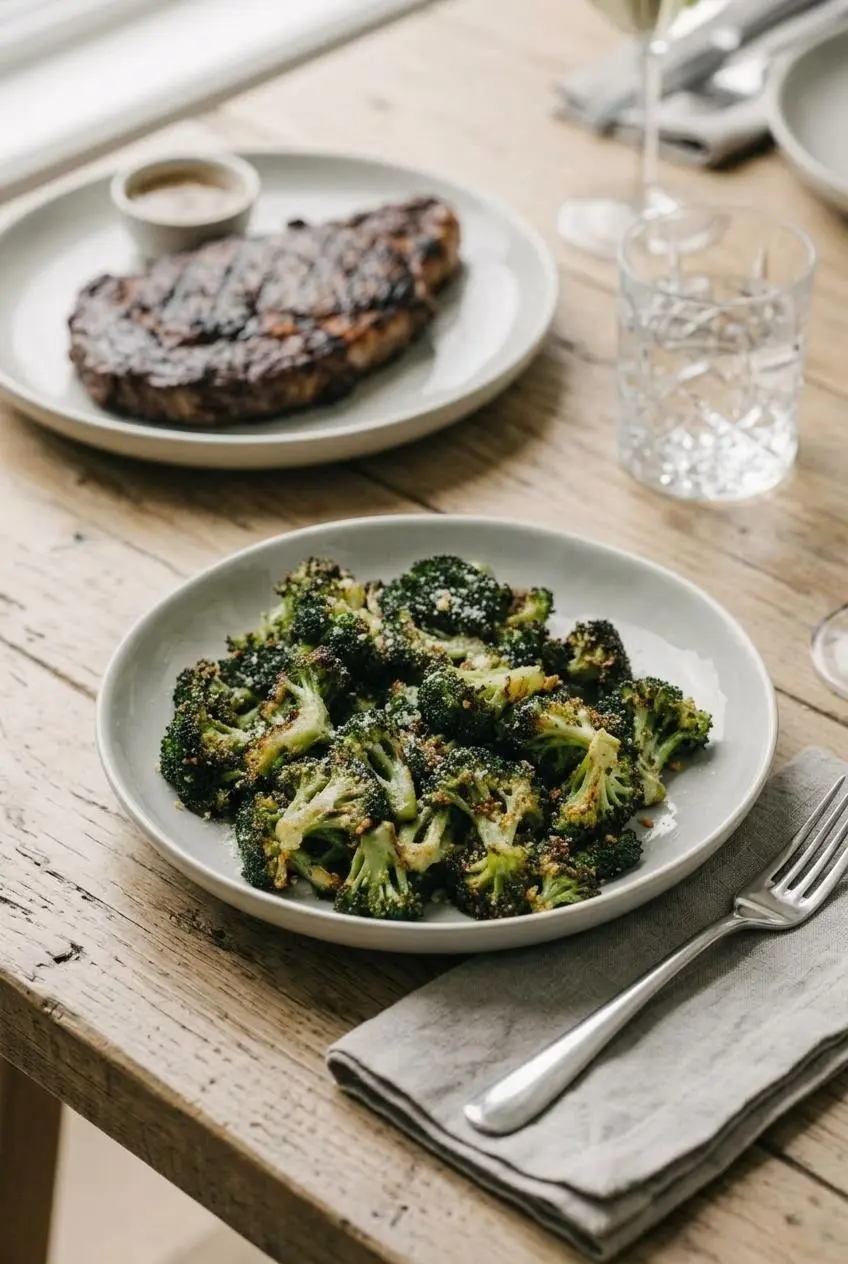
This side fits almost any dinner where you want something green, savory, and a little crisp.
- Serve it with baked chicken breast when you want a straightforward weeknight plate.
- Pair it with grilled ribeye steak when you want the salty cheese and charred broccoli to stand up to a richer main.
- Set it next to garlic butter shrimp pasta for a fast dinner with big flavor contrast between roasty and silky.
- Try it with pesto cream gnocchi if you want a softer, richer main and a vegetable side with real texture.
- Add roasted baby potatoes for a hearty starch on the same kind of comfort-food menu.
Conclusion
This broccoli earns a regular spot on the dinner table because it is quick, garlicky, and crisp in all the right places. The parmesan adds savory depth without turning the dish heavy.
If you remember one thing, make it this: dry the florets thoroughly before they ever touch the oil. That small step changes everything.
Frequently Asked Questions
Can I use frozen broccoli for roasting?
Yes, but fresh broccoli gives the best crisp texture. Frozen broccoli carries extra moisture, so it needs more time in the oven to let that water cook off. If you crowd the pan, it will steam and turn soft much faster. Expect less browning on the tips than you get with fresh florets.
How do I prevent the cheese from burning?
Keep the oven at 425 degrees F for this recipe. Watch the pan closely once the broccoli is nearly done, especially if your florets are small. If you want a buffer, hold back some parmesan and add it near the end or right after roasting. Very high heat can darken the cheese before the stems turn tender.
What oil is best for roasting at high temperatures?
Extra light olive oil is a solid choice because it has a neutral flavor and handles oven heat well. Avocado oil or safflower oil also work nicely. Extra virgin olive oil can be used, but its stronger flavor and lower tolerance for high heat make it less ideal here.
Can I make this dairy-free?
Yes. Use nutritional yeast or a dairy-free parmesan alternative in place of the parmesan cheese. The flavor will be a little different, but you can still get that savory, cheesy effect. Nutritional yeast will not melt the same way, so the coating will be less crisp and lacy.
Roasted Parmesan Broccoli

Equipment
- Baking Sheet
- Parchment Paper
- Large Mixing Bowl
Ingredients
- 2 medium heads broccoli (divided into florets, about 6 cups)
- 3 tbsp olive oil
- 1/3 c grated parmesan cheese (plus 2 tbsp for garnish)
- 2 cloves garlic (minced)
- 1 tsp Italian seasoning
- 1/2 tsp garlic powder
- 1/2 tsp kosher salt
Instructions
- Heat the oven to 425 degrees F with a rack positioned in the lower third. Line a baking sheet with parchment paper.
- Divide the broccoli into florets, then transfer to a large mixing bowl. Add the olive oil, then toss until the broccoli is well coated with the oil. Add 1/3 c parmesan cheese, minced garlic, Italian seasoning, garlic powder, and salt. Toss well once again, until the florets are evenly coated with parmesan and seasonings.
- Arrange the florets in an even layer on the prepared baking sheet, leaving a bit of room in between each piece.
- Transfer to the oven and roast 20 to 22 minutes. Remove the sheet from the oven once halfway through and flip the broccoli to ensure even browning; rotate the pan when you return to the oven. The broccoli is ready once the edges of the florets are golden brown and the stems are tender; you should be able to insert the tip of a paring knife into the stem and meet little resistance.
- Remove from the oven and garnish with the remaining parmesan cheese. Serve warm, right away. Enjoy!