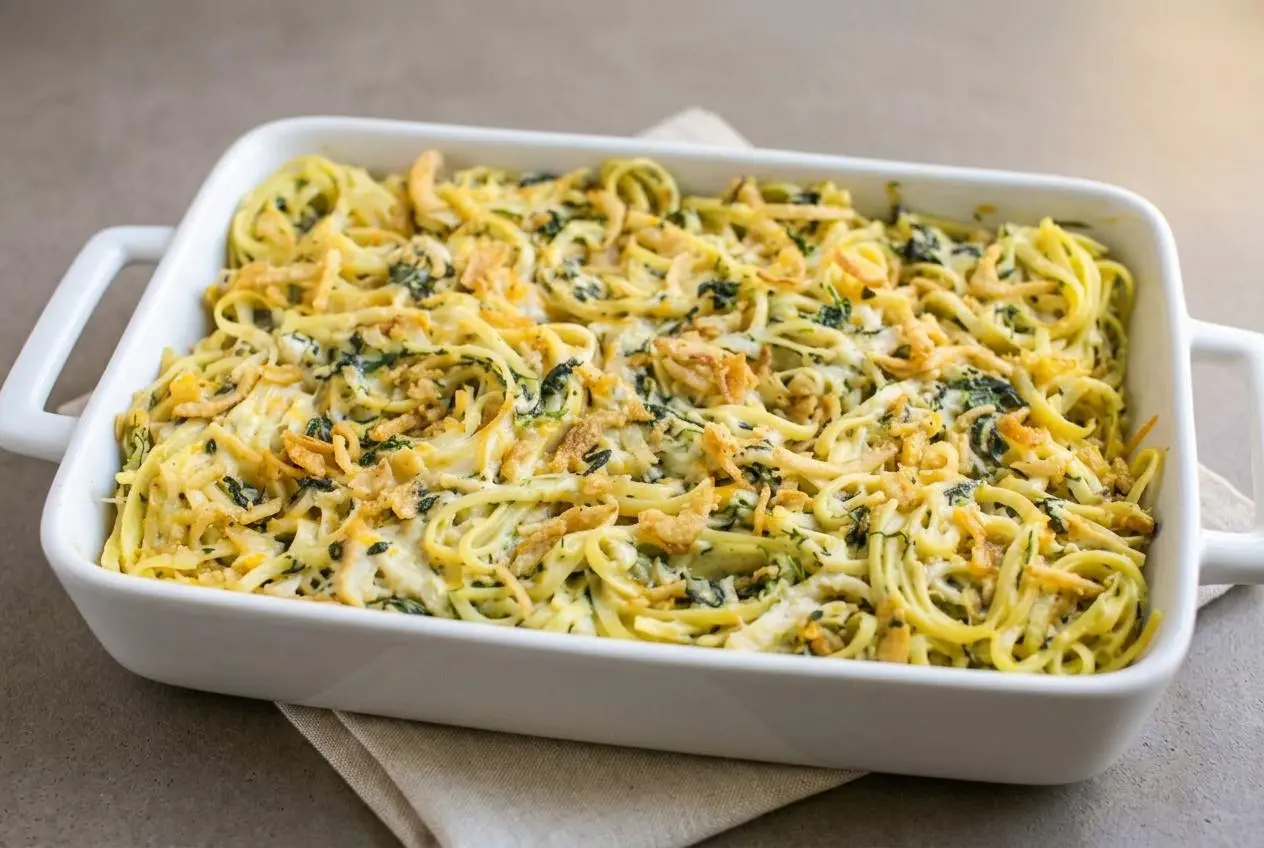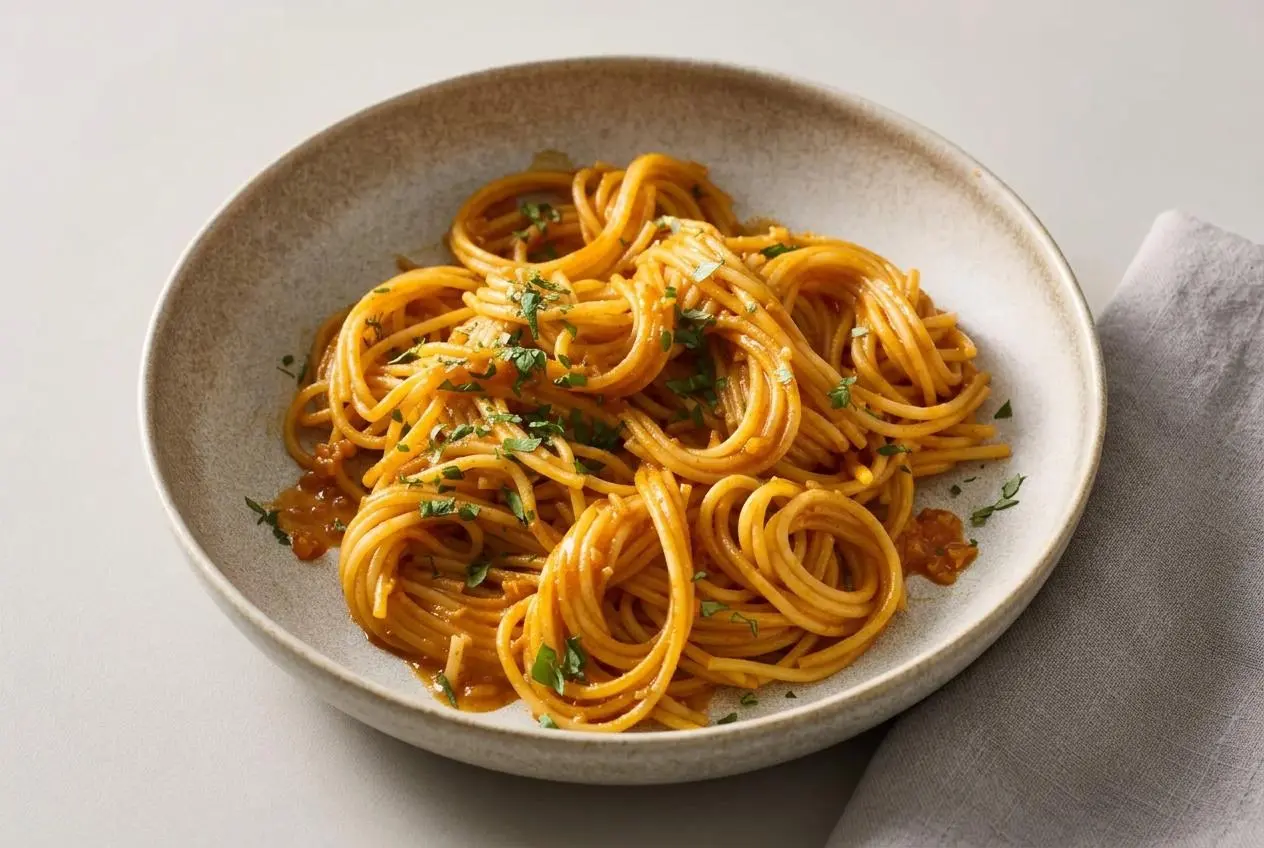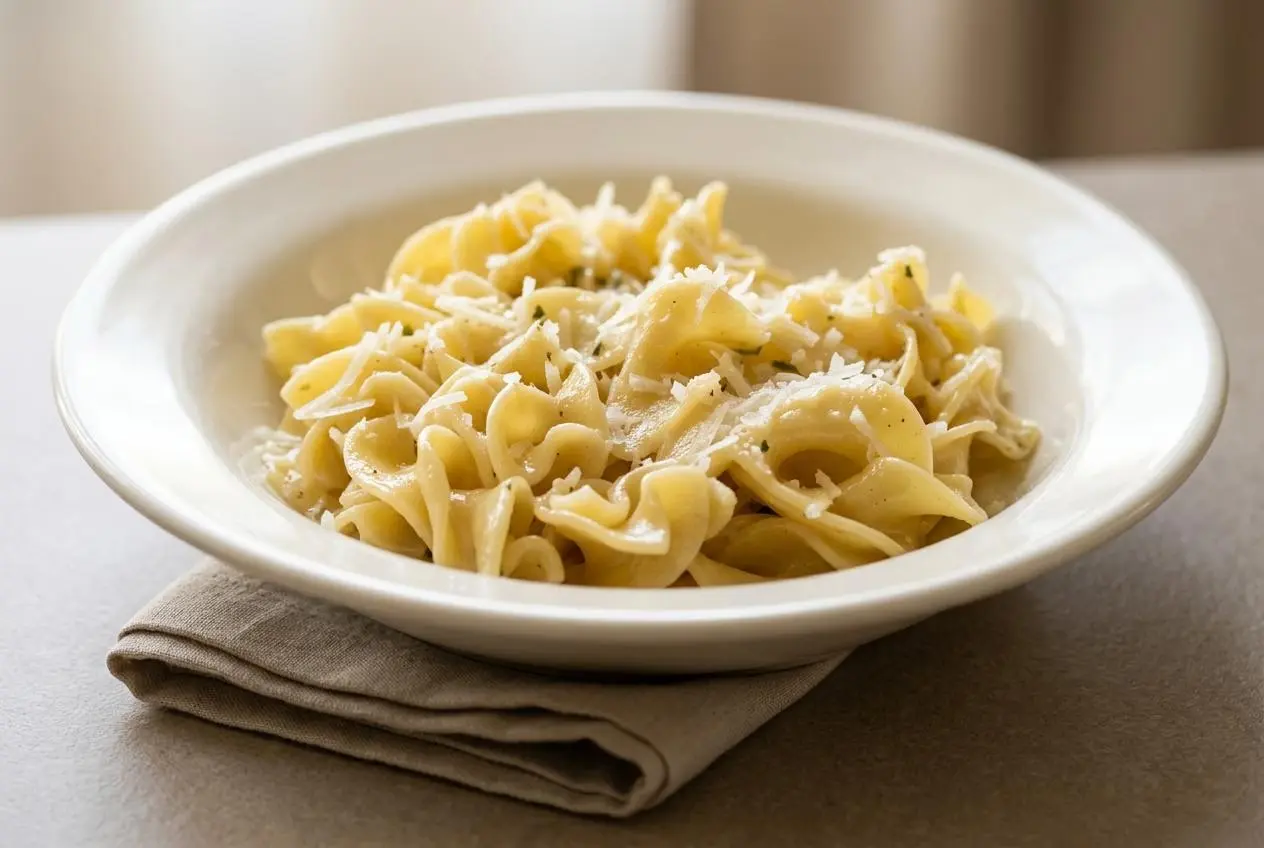
Noodles with eggs come together in under 25 minutes by tossing hot buttered pasta with whisked eggs, parmesan, and parsley off direct heat until they form a glossy, velvety coating.
Noodles with eggs turn a pot of pasta into a rich, buttery comfort meal with a sauce that clings to every strand. The key is using the skillet’s lingering warmth rather than active burner heat.
The butter smells lightly nutty, the parmesan turns savory, and the eggs become silky instead of scrambled. The creamy window is quick.
Have the egg mixture whisked and the skillet ready before you drain the noodles so the pasta stays hot and loose.
Key Ingredients for Perfect Noodles With Eggs
Each ingredient supports the final texture and flavor: noodles provide starch, butter supplies richness, eggs create body, parmesan adds savory depth, and parsley and pepper brighten the finish.
- 1 lb thin noodles
- 4 eggs
- 1/3 cup freshly grated parmesan cheese
- 2 tablespoons parsley, chopped
- salt (to taste)
- 1/4 teaspoon black pepper
- 4 tablespoons butter
Thin noodles are especially good here because their surface starch helps the butter and eggs cling together. Drain them while they are still al dente, with a little bite, and do not rinse them. Cold water removes the starch that helps create a smooth, cohesive coating.
Freshly grated parmesan melts more evenly than pre-shredded cheese and brings salty, nutty flavor to the egg mixture. Its fine texture also helps the sauce stay smooth rather than turning grainy. Parsley adds a clean, fresh edge that keeps the richness from feeling heavy, while black pepper gives each bite a gentle warmth.
I like to let the eggs sit at room temperature while the pasta water heats so they blend more smoothly with the parmesan and warm butter.
Choosing the Right Pasta Shape
Thin spaghetti is the closest match for this method because it heats quickly and catches the egg coating in a fine, even layer. Angel hair also works, though it cooks fast and needs close attention so it does not soften too much before it reaches the skillet.
Fettuccine gives a heartier bite and carries more sauce on each strand, while wide egg ribbons feel softer and more substantial. Broad noodles work well when you want a bowl with the cozy texture of classic chicken and noodles, but thin pasta gives the creamiest, most evenly coated result here.
- Thin spaghetti: light, glossy, and ideal for a quick egg coating.
- Angel hair: delicate and fast-cooking, with a very fine sauce layer.
- Fettuccine: thicker and more substantial, with a richer mouthfeel.
- Wide egg noodles: tender ribbons that hold pockets of buttery sauce.
The Role of Real Butter and Fresh Eggs
Butter creates the warm fat base that lets the eggs coat the pasta instead of setting into dry pieces. Use butter that melts cleanly and smells fragrant, but do not let it brown deeply or smoke. The noodles should hit the skillet when the butter is melted and gently foaming.
Fresh eggs bring the structure for the creamy egg sauce. As you toss, their proteins thicken from the residual warmth of the pasta and skillet, while the yolks help emulsify the butter. This dish gets its velvet texture from that balance of starch, fat, and egg, not from heavy cream.
Step-by-Step Method: How to Make Creamy Noodles With Eggs
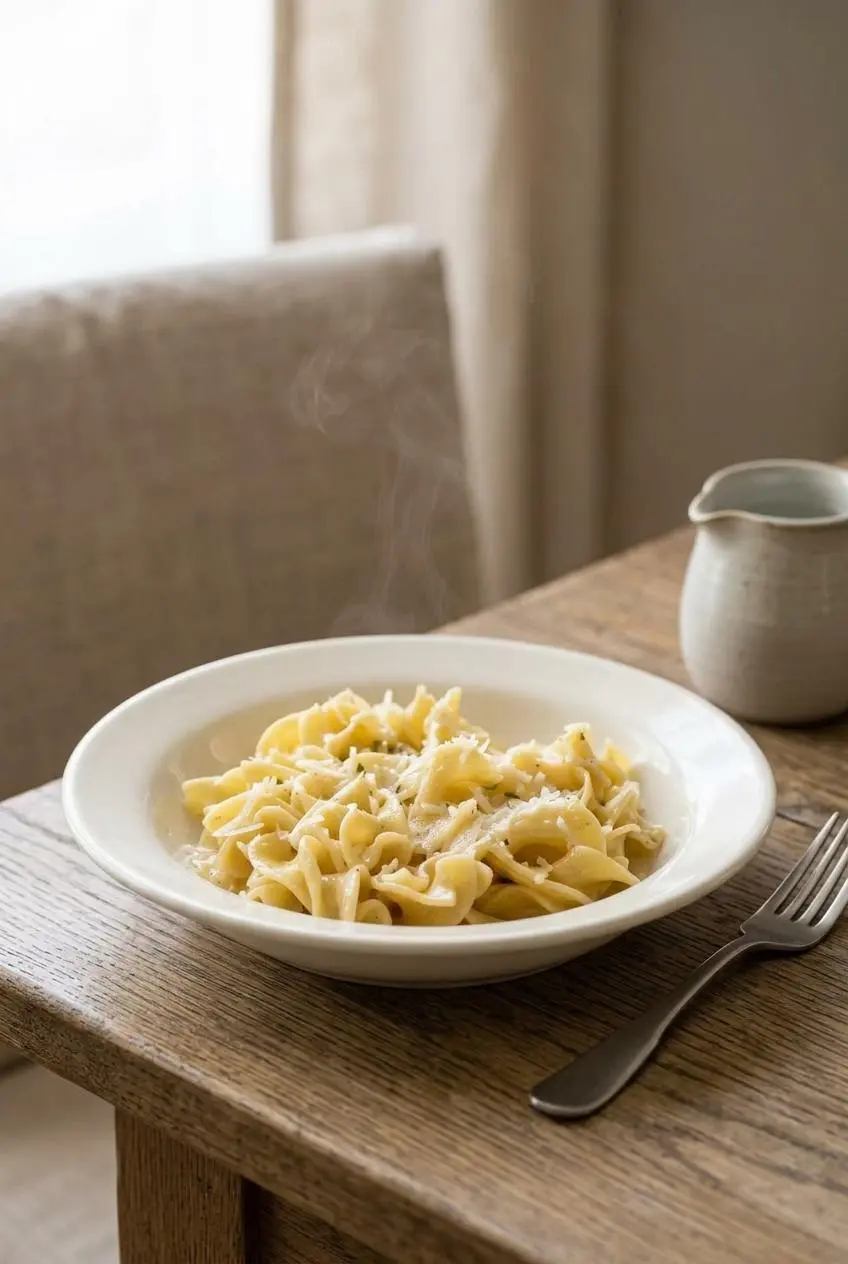
Work quickly once the noodles are drained. Hot pasta, melted butter, and constant tossing give the eggs enough gentle heat to thicken into a smooth coating before they can form curds.
- Bring a large pot of lightly salted water to a boil, then cook the thin noodles until al dente.
The strands should be tender but still offer a slight resistance when bitten. - While the noodles cook, whisk the eggs, parmesan cheese, parsley, salt, and black pepper in a mixing bowl.
Keep whisking until the cheese is distributed throughout the eggs and no streaks remain. - Set a large nonstick skillet over medium heat and melt the butter as the pasta nears doneness.
The butter should foam gently and smell warm and nutty without darkening. - Drain the cooked noodles promptly and transfer them directly to the buttered skillet.
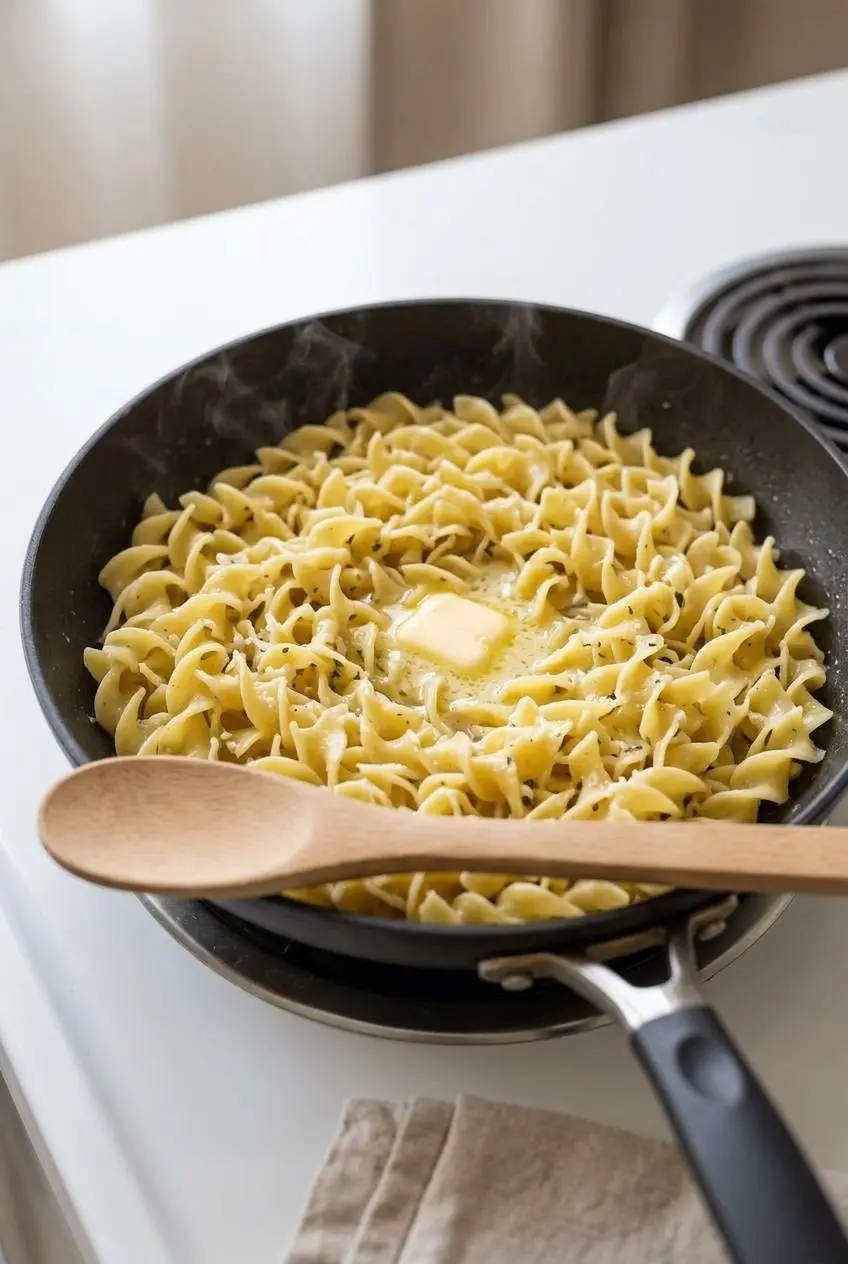
Steam should rise from the pasta, showing that it is hot enough to help thicken the egg mixture. - Toss the noodles through the butter until every strand looks glossy.
The pasta should move freely in the skillet rather than sitting in a clump. - Remove the skillet from direct heat, pour in the egg mixture, and stir rapidly with a flat wooden spoon for less than a minute.
The sauce should turn creamy and thick with a shiny sheen as it coats the noodles. - Stop stirring as soon as the coating looks smooth and serve immediately.
The finished noodles should look velvety, not dry or dotted with firm egg curds.
The crucial moment comes after the egg mixture goes in. The hot noodles and skillet continue cooking the eggs even after the pan leaves the burner. Keep the pasta moving so the warmth spreads evenly, and watch for the change from loose egg to a soft, glossy sauce. If the skillet stays over high heat, the eggs can set before they have time to emulsify.
Troubleshooting Common Mistakes and Texture Tips
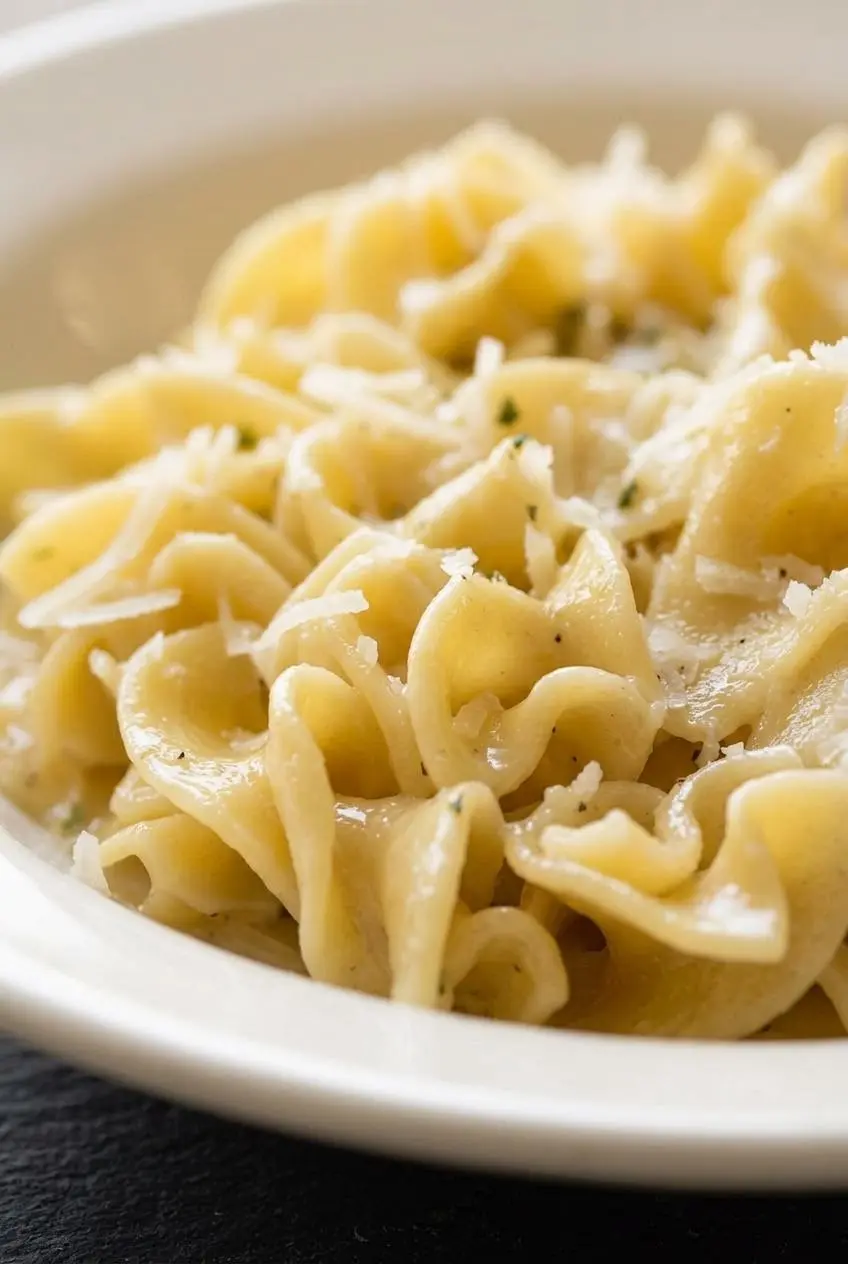
A creamy finish depends more on heat control than speed. These quick fixes help when the sauce looks too tight, too loose, or more like scrambled eggs than a smooth pasta coating.
- Egg curds formed in the pan: The skillet was likely too hot. Remove it from heat immediately and toss hard to distribute the remaining sauce. A few small curds will not ruin the flavor, but serve the pasta promptly before they firm further.
- The noodles look dry or thick: Reserve about 2 tablespoons of hot pasta water before draining. Stir it in gradually while tossing until the sauce loosens and regains its glossy finish.
- The sauce seems watery: Keep tossing off heat for a brief moment. The eggs and parmesan need a little time to thicken around the hot noodles, so avoid returning the skillet to high heat.
- The pasta clumped while draining: Transfer it straight from the colander to the melted butter. Letting noodles sit gives their starch time to turn sticky, making them harder to separate later.
- The flavor seems flat: Taste after the parmesan has melted, then adjust the salt and pepper. Parmesan already brings salt, so seasoning too early can make the final dish overly salty.
If you wanted distinct curds, fluffy scrambled eggs are the better destination. For this pasta, though, the goal is a unified coating with no obvious pieces of cooked egg.
Never rinse the noodles under cold water for this style of pasta. The surface starch is doing useful work, helping the butter and eggs bind into a sauce that hugs the strands instead of sliding to the bottom of the bowl.
Popular Variations and Easy Add-Ins
Keep the main technique intact by cooking any additions separately or adding them at the end. That way, the buttered noodles stay hot and the egg mixture still has the gentle heat it needs to turn creamy.
- Cheesy cheddar and pepper noodle bowl: Fold in sharp cheddar and extra cracked black pepper for a bolder, tangier finish. Add the cheddar at the end so it melts into the warm noodles without taking over the parmesan.
- Garlic butter and herb noodle toss: Sauté garlic briefly in the butter before adding the noodles, then finish with extra parsley or other tender herbs. Keep the garlic pale and fragrant, since browned garlic can taste bitter.
- Lemon and red pepper flakes: Add lemon zest and a pinch of red pepper flakes after tossing for brightness and gentle heat. This variation is especially nice when the butter and cheese feel extra rich.
- Mushrooms or spinach: Sauté mushrooms until browned, or wilt spinach separately, then fold either into the finished pasta. Adding vegetables after the sauce forms helps preserve the creamy coating.
Asian Soy and Scallion Egg Noodles
For an Asian-inspired bowl, use noodles that suit the texture you want, then add a splash of soy sauce, toasted sesame oil, minced garlic, and thinly sliced scallions as optional flavor boosters. Stir these into the warm noodles before folding in the egg mixture, using a light hand so the soy sauce does not overpower the butter and parmesan.
Another approach is to finish the bowl with a fried egg instead of mixing eggs into the pasta. Break the yolk over the noodles for an instant rich sauce, or use soft jammy eggs for a gentler yolk and a more composed bowl.
Hearty Breakfast Skillet With Bacon and Ham
Turn this into a breakfast or brunch skillet by folding in crispy diced bacon, diced ham, or browned breakfast sausage. Cook the meat separately, then add it with the buttered noodles so its fat and moisture do not interfere with the egg emulsion.
Sautéed mushrooms fit naturally with bacon or ham and add an earthy contrast to the creamy noodles. Serve the skillet hot with fresh sliced fruit or a crisp green salad dressed with a light vinaigrette for a meal that feels balanced without losing its comfort-food appeal.
Storing and Gently Reheating Leftovers
Cool any remaining pasta promptly, transfer it to an airtight container, and keep it chilled. Egg dishes should be refrigerated at 40 °F or below as part of safe egg handling and refrigeration practices.
For the best texture, warm leftovers in a nonstick skillet over low heat with a little butter or a splash of water. Stir frequently and stop as soon as the noodles are hot and loosened. A microwave can work in a pinch, but strong heat often tightens the egg proteins, making the pasta rubbery and causing the sauce to separate.
This pasta is at its creamiest right after cooking, so avoid making the finished dish far ahead. If you need to get organized, whisk the egg and cheese mixture while the water heats and have the skillet ready before draining the noodles.
Conclusion
Noodles with eggs offer rich, buttery comfort in a 25-minute meal that keeps both the cost and effort manageable. Parmesan, parsley, butter, and hot pasta turn into something far silkier than their parts suggest.
Keep the skillet off direct heat when the eggs go in, toss without hesitation, and serve while the sauce is glossy. That small bit of heat control makes every forkful feel warm and satisfying.
Frequently Asked Questions
How Do You Keep the Eggs From Scrambling When Mixed With Hot Noodles?
Take the skillet off the burner before adding the whisked eggs and cheese. Toss continuously with a flat wooden spoon so the pasta’s residual warmth thickens the mixture gradually. Move quickly, but do not return the pan to high heat. The sauce should become glossy within moments, while direct heat creates firm egg curds.
Can I Use Ramen or Instant Noodles for Noodles With Eggs?
Yes. Cook ramen or instant noodles without the seasoning packet, drain them, and toss them in melted butter before adding the whisked egg mixture. Because these noodles soften quickly, watch them closely during boiling. Use the same off-heat tossing method so the eggs coat the noodles rather than scramble.
What Is the Best Cheese to Use in Noodles With Eggs?
Freshly grated parmesan is the best match for the buttery egg sauce because it melts finely and brings savory depth. Pecorino Romano gives a saltier, sharper flavor if you prefer more bite. Finely shredded sharp cheddar also works as an optional change for a bolder, more familiar cheesy flavor. Add it at the end and stir until just melted to avoid an oily texture.
How Do You Reheat Leftover Noodles With Eggs Without Drying Them Out?
Warm the noodles in a nonstick skillet over low heat with a little butter or water. Stir often to loosen the sauce and keep the noodles from catching on the pan. Stop heating once the pasta is warmed through and creamy again. Prolonged or aggressive heat can make the egg coating firm and dry.
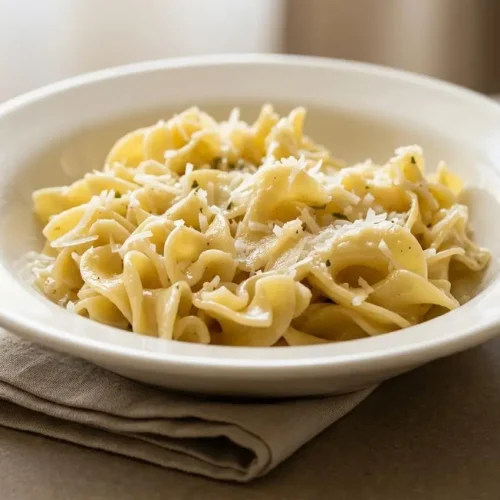
Noodles With Eggs

Equipment
- Large Pot
- Mixing Bowl
- Whisk
- Large nonstick skillet
- Colander
- Flat wooden spoon
Ingredients
- 1 lb thin noodles
- 4 eggs
- 1/3 cup freshly grated parmesan cheese
- 2 tablespoons parsley, chopped
- salt to taste
- 1/4 teaspoon black pepper
- 4 tablespoons butter
Instructions
- Bring a large pot of lightly salted water to a boil, then cook the thin noodles until al dente. The strands should be tender but still offer a slight resistance when bitten.
- While the noodles cook, whisk the eggs, parmesan cheese, parsley, salt, and black pepper in a mixing bowl. Keep whisking until the cheese is distributed throughout the eggs and no streaks remain.
- Set a large nonstick skillet over medium heat and melt the butter as the pasta nears doneness. The butter should foam gently and smell warm and nutty without darkening.
- Drain the cooked noodles promptly and transfer them directly to the buttered skillet. Steam should rise from the pasta, showing that it is hot enough to help thicken the egg mixture.
- Toss the noodles through the butter until every strand looks glossy. The pasta should move freely in the skillet rather than sitting in a clump.
- Remove the skillet from direct heat, pour in the egg mixture, and stir rapidly with a flat wooden spoon for less than a minute. The sauce should turn creamy and thick with a shiny sheen as it coats the noodles.
- Stop stirring as soon as the coating looks smooth and serve immediately. The finished noodles should look velvety, not dry or dotted with firm egg curds.