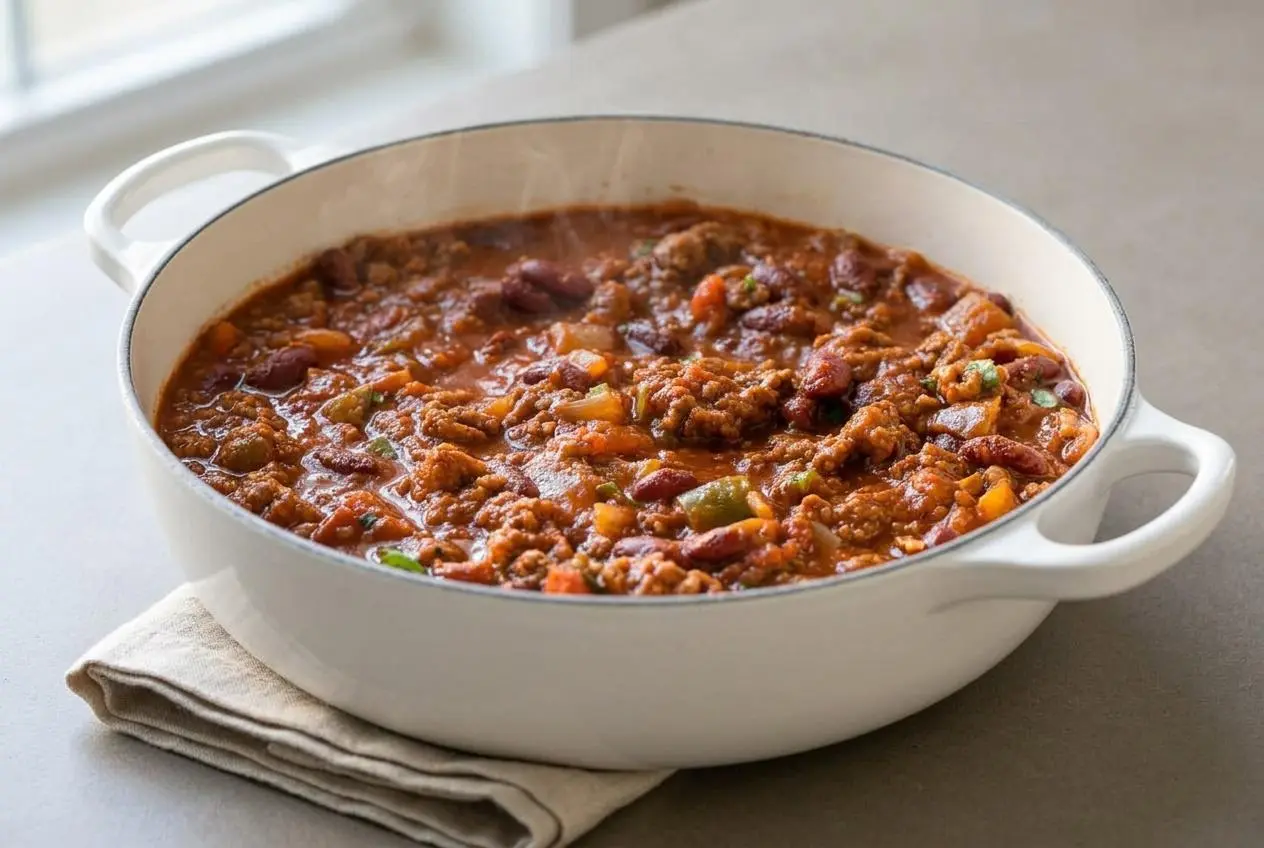
Make classic beef and bean chili by browning seasoned ground beef with onion, jalapeño, and garlic, then simmering it with beans, tomatoes, broth, and beer until thick and richly flavored.
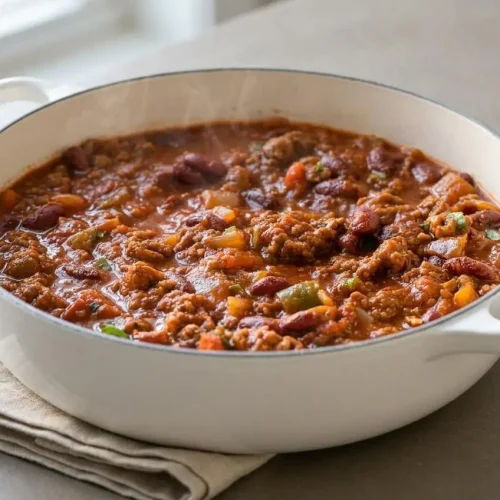
Beef and Bean Chili is a hearty stovetop dinner with tender beef crumbles, sturdy kidney beans, and a tomato base that turns smoky and savory as it simmers.
The pot should bubble gently, not furiously, so the spices meld and the sauce reduces without scorching. That deep, warm aroma is your cue that dinner is close.
Use a heavy large pot and stir along the bottom occasionally once the chili starts to thicken.
Ingredients for Beef and Bean Chili
Each ingredient builds the chili’s character: beef adds savory richness, tomatoes create body, beans provide structure, and spices bring warmth, color, and a balanced finish.
- 2 pounds lean ground beef
- 1 onion (diced)
- 1 jalapeño (seeded and finely diced)
- 4 cloves garlic (minced)
- 2½ tablespoons chili powder (divided, or to taste)
- 1 teaspoon cumin
- 1 green bell pepper (seeded and diced)
- 1 (14.5 ounce) can crushed tomatoes
- 1 (19 ounce) can canned red kidney beans (drained and rinsed)
- 1 (14.5 ounce) can canned diced tomatoes (with juices)
- 1½ cups beef broth
- 1 cup beer
- 1 tablespoon tomato paste
- 1 tablespoon brown sugar (optional)
- salt and black pepper (to taste)
Lean ground beef gives the chili a clean, beefy flavor while limiting the greasy layer that can form on top. Crushed tomatoes make the base velvety, diced tomatoes add texture, and rinsed kidney beans keep the broth clearer. Broth, beer, and tomato paste pull the savory flavors together.
I like to work part of the chili powder into the raw beef before it hits the pot, because the seasoning reaches every little crumble instead of sitting only in the sauce.
How to Make Beef and Bean Chili
- Mix the ground beef with 1½ tablespoons of the chili powder until the seasoning is evenly distributed.
The meat should look lightly rust-colored before cooking. - Cook the seasoned beef, onion, jalapeño, and garlic in a large pot, breaking up the meat as it browns; drain off excess fat.
Look for deep brown spots on the beef and a fragrant, softened onion mixture. - Stir in the remaining ingredients, scraping the browned bits from the bottom of the pot as the liquid comes up to a boil; lower the heat and simmer uncovered for 45 to 60 minutes.
Keep the chili at a steady, gentle bubble until it looks thick, glossy, and spoonable. - Spoon the chili into bowls and finish with cheddar cheese, green onions, cilantro, or other favorite toppings.
The heat from the chili should soften the toppings without making them disappear into the pot.
If you want a temperature check while browning the beef, cook ground beef to 160 °F, as outlined in ground beef cooking temperature guidance.
Key Ingredients and Flavor Boosters
Small choices in beef, beans, and seasoning make the difference between a flat chili and one with real depth.
Choosing the Right Ground Beef and Beans
An 85/15 ground beef blend offers a useful middle ground when available: enough fat for flavor and browning, without leaving a heavy oil slick. The lean ground beef in this chili also works well, especially when the pot is simmered gently rather than boiled hard.
Dark red kidney beans are the classic choice because their skins stay firm during a long simmer. For an optional three-bean medley, replace part of the kidney beans with pinto beans for a softer, creamier bite or black beans for an earthier flavor and darker color. Drain and rinse all canned beans before adding them so excess canning starch does not cloud the sauce.
For another hearty bowl built around lean meat and beans, try this high protein beef chili.
Aromatics, Spices, and Deglazing Liquids
Chili powder and cumin wake up in the hot beef drippings, releasing a fuller aroma than they would in a cold liquid. As the onion, jalapeño, and garlic cook, the spices should shift toward a deep mahogany shade. Keep the heat moderate so garlic does not burn.
The broth and beer loosen the browned layer on the bottom of the pot. Those browned bits carry concentrated savory flavor, so scrape them into the liquid rather than leaving them behind. Tomato paste adds a darker, fuller backbone, while the optional brown sugar rounds out sharp tomato acidity.
For an optional deeper finish, stir in a tablespoon of unsweetened cocoa powder near the end of cooking. A small splash of apple cider vinegar added just before serving can brighten a chili that tastes heavy or muted.
Tips for Perfect Chili Texture and Flavor
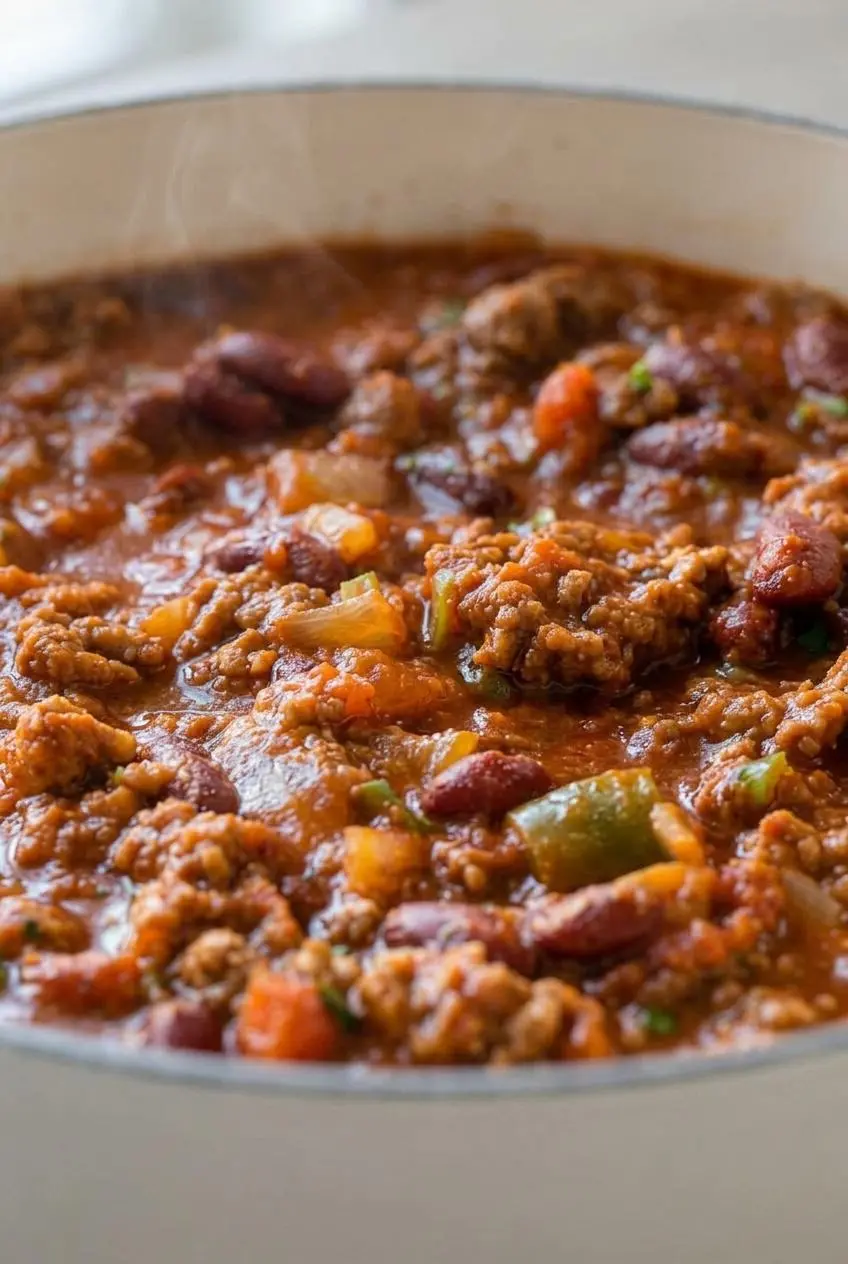
Thick chili comes from patient reduction, not a rushed fix. Keep the lid off and let moisture leave slowly while the beans and tomatoes settle into the sauce.
How to Thicken Chili Naturally
- Chili looks thin: Simmer uncovered for an additional 15 minutes on medium-low heat. Gentle bubbling reduces excess liquid without breaking up the beans.
- Chili needs more body: Press about a half-cup of cooked beans against the side of the pot with a wooden spoon, then stir them back in. Their natural starch thickens the sauce while keeping the flavor intact.
- Chili tastes watery: Give it more time before adding salt or more spices. As the liquid reduces, the existing seasoning becomes more noticeable.
- Chili seems greasy: Skim or drain excess fat after browning the beef. Removing it early keeps the finished surface cleaner and the tomato flavor brighter.
Masa harina is another optional classic thickener if you enjoy a subtle corn flavor, but uncovered simmering and bean mashing keep the texture closest to the original pot of chili.
Slow Cooker and Instant Pot Adaptations
For a slow cooker version, brown the beef, onion, jalapeño, and garlic first, then transfer everything to the cooker. Cook on low for 6 to 8 hours or on high for 3 to 4 hours. Use slightly less added liquid because a covered cooker does not reduce the sauce as quickly.
For an electric pressure cooker, brown the beef and aromatics first, add the remaining ingredients, then cook at high pressure for 15 minutes followed by a natural release. If the chili needs more thickness afterward, simmer it uncovered using the sauté setting. For another hands-off beef dinner, this slow cooker beef stew uses the same patient, low-heat approach.
Want more heat? Add chipotle as an optional flavor change for smoky spice, or leave the jalapeño seeds in for a sharper kick. Start cautiously, since chipotle can take over the whole pot quickly.
Storage, Reheating, and Freezing Guide
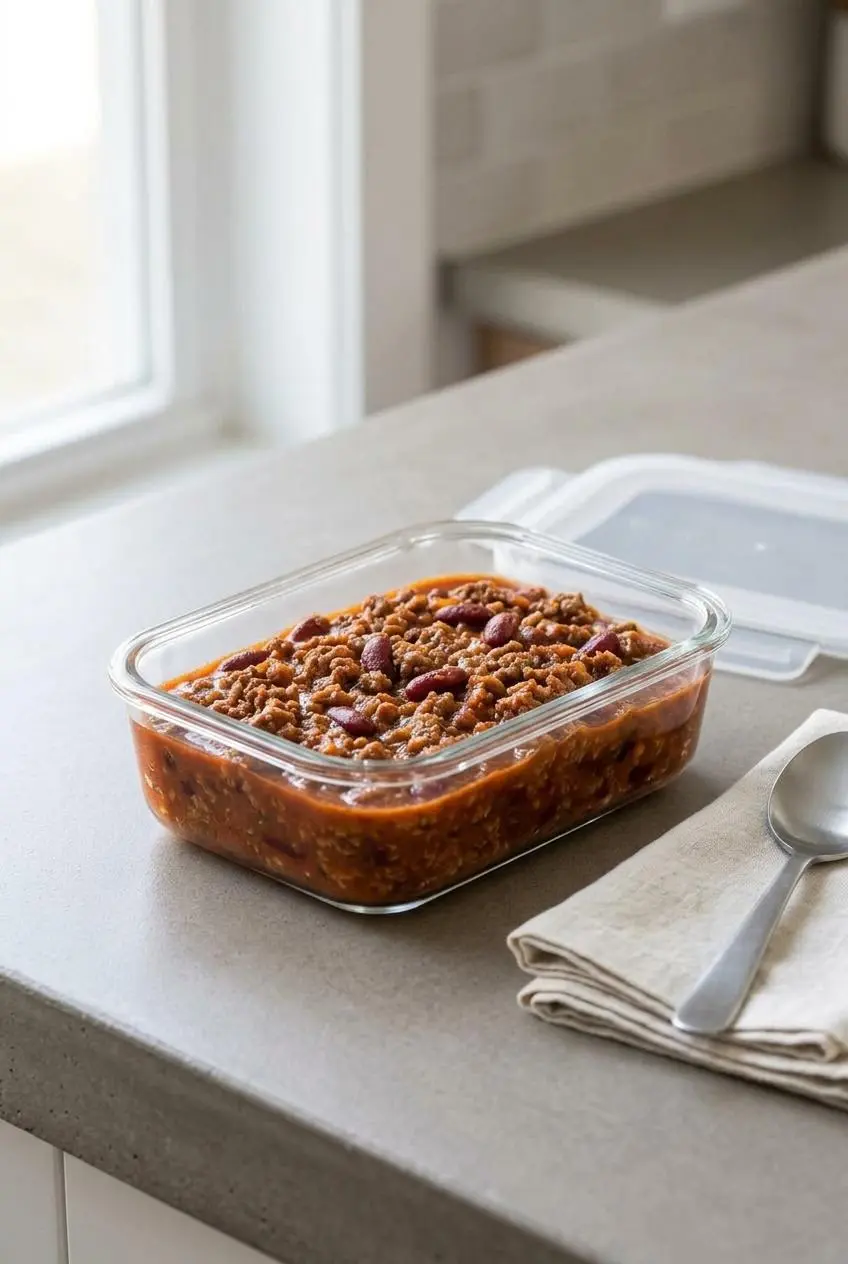
Chili often tastes more rounded after it has chilled because the spices continue to mingle with the beef, beans, and tomato base. Cool it promptly, transfer it to airtight containers, and keep it chilled until you are ready to reheat.
Warm leftovers slowly on the stovetop over low heat, stirring often. If the chili has tightened up in the container, add a splash of beef broth or water until the sauce returns to a thick, spoonable consistency.
For freezing, portion cooled chili into airtight freezer containers or heavy-duty freezer bags, leaving room for expansion. Thaw it in the refrigerator before reheating, then warm it gently and loosen the sauce with a little broth if needed.
Serving Ideas and Side Dish Pairings
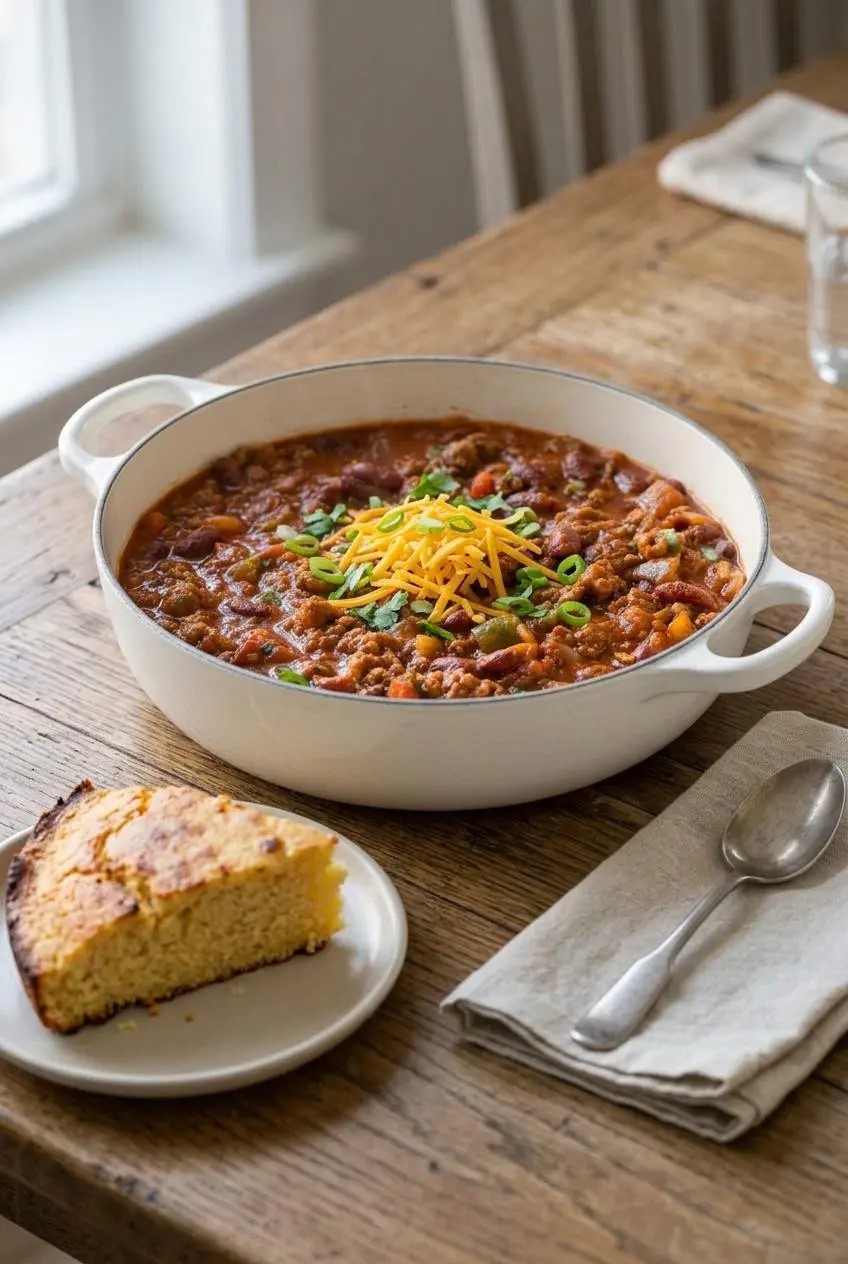
A thick bowl of chili can stand alone, but the right side dish turns it into a cozy, full meal.
- Serve it with warm skillet cornbread for a classic contrast of soft crumb and rich sauce.
- Spoon it over baked russet potatoes or steamed white rice when you want a more filling dinner.
- Set out shredded sharp cheddar, diced red onion, sour cream, pickled jalapeños, cilantro, and tortilla chips so everyone can build their own bowl.
- For a lighter plate, ladle chili over roasted sweet potatoes, cauliflower rice, or crisp salad greens.
Keep crunchy toppings separate until serving. Tortilla chips stay crisp longer, and fresh cilantro keeps its bright flavor instead of wilting into the hot chili.
Conclusion
This beef and bean chili delivers a rich one-pot dinner with savory beef, sturdy beans, and warm spices in every spoonful. The tomatoes reduce into a thick sauce that clings to the meat instead of pooling around it.
Give the uncovered simmer the time it needs, and the pot will reward you with deep flavor and a satisfyingly hearty texture.
Frequently Asked Questions
How Do I Fix Chili That Is Too Thin?
Simmer it uncovered on medium-low heat so extra moisture can evaporate. Mash a spoonful or two of beans against the pot wall, then stir them into the sauce. Avoid turning up the heat too much, since a hard boil can cause sticking before the chili thickens.
Can I Make Beef and Bean Chili Ahead of Time?
Yes. Make it, cool it promptly, and refrigerate it in an airtight container. The flavors usually taste more blended after chilling, and gentle stovetop reheating helps preserve the thick texture.
What Are the Best Canned Beans to Use for Chili?
Dark red kidney beans are a strong choice because they hold their shape through simmering. Pinto beans add a softer texture, while black beans bring an earthier flavor. Any of them work well when drained and rinsed first.
How Long Can You Freeze Homemade Chili?
Freeze cooled chili in airtight containers or heavy-duty freezer bags, leaving room for expansion. Thaw it in the refrigerator before reheating, and add a splash of broth or water if the sauce needs loosening.
Beef and Bean Chili

Equipment
- Large Pot
Ingredients
- 2 pounds lean ground beef
- 1 onion diced
- 1 jalapeño seeded and finely diced
- 4 cloves garlic minced
- 2½ tablespoons chili powder divided, or to taste
- 1 teaspoon cumin
- 1 green bell pepper seeded and diced
- 1 can crushed tomatoes 14.5 ounce
- 1 can canned red kidney beans 19 ounce, drained and rinsed
- 1 can canned diced tomatoes 14.5 ounce, with juices
- 1½ cups beef broth
- 1 cup beer
- 1 tablespoon tomato paste
- 1 tablespoon brown sugar optional
- salt and black pepper to taste
Instructions
- Mix the ground beef with 1½ tablespoons of the chili powder until the seasoning is evenly distributed. The meat should look lightly rust-colored before cooking.
- Cook the seasoned beef, onion, jalapeño, and garlic in a large pot, breaking up the meat as it browns; drain off excess fat. Look for deep brown spots on the beef and a fragrant, softened onion mixture.
- Stir in the remaining ingredients, scraping the browned bits from the bottom of the pot as the liquid comes up to a boil; lower the heat and simmer uncovered for 45 to 60 minutes. Keep the chili at a steady, gentle bubble until it looks thick, glossy, and spoonable.
- Spoon the chili into bowls and finish with cheddar cheese, green onions, cilantro, or other favorite toppings. The heat from the chili should soften the toppings without making them disappear into the pot.