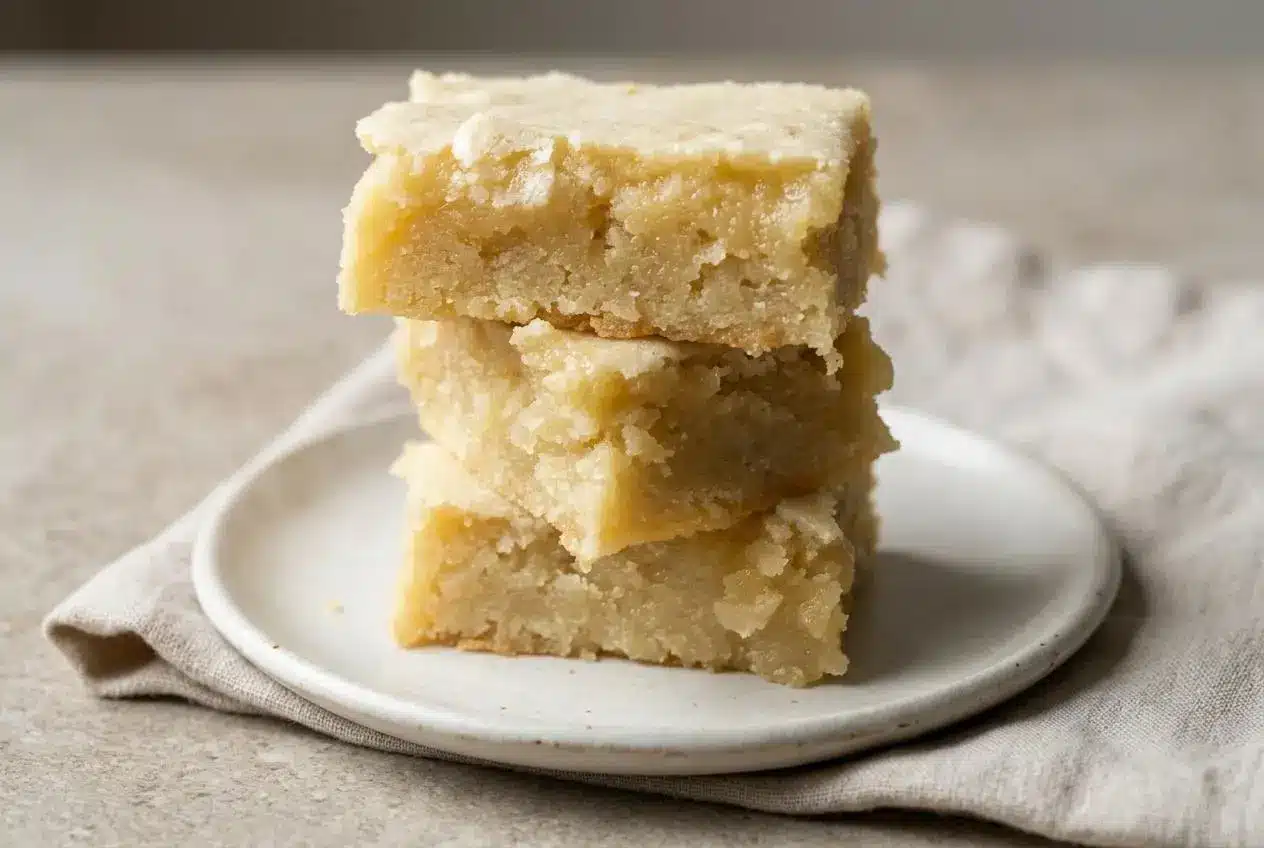
This almond bars recipe makes 36 buttery, chewy squares in a 13×9-inch pan. Beat eggs and sugar until pale, mix in melted butter, flour, and almond extract, then bake at 325°F for 30 to 35 minutes.
These are brownie-style almond bars, with a dense, tender center rather than a separate cookie crust. Pure almond extract gives them that unmistakable bakery aroma, while sliced almonds bring a toasted crunch to the delicate top.
Melted butter makes the batter easy to mix, but the egg-and-sugar stage deserves a little attention. Beating that mixture until thick and pale helps create lift without baking powder. Finish with optional confectioners’ sugar or a glaze, depending on how sweet you like your treats. The pale-yellow stage makes the difference.
Set out an offset spatula before mixing; this thick batter needs spreading rather than pouring.
Why These Almond Bars Turn Out Chewy
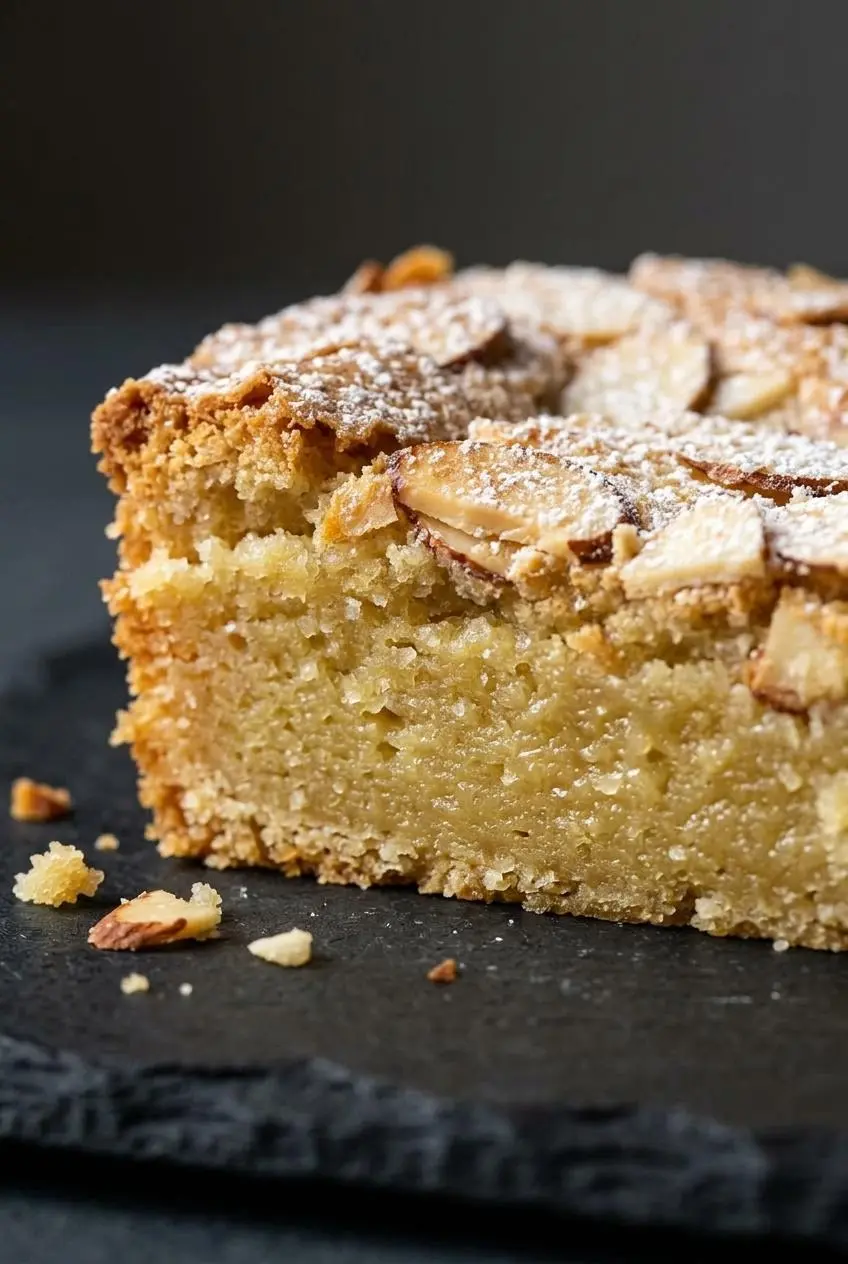
Melted butter and a whipped egg mixture give these bars their particular balance: rich and dense inside, with a thin, delicate crust on top. They belong to a different family than layered almond pastries.
- Brownie-style almond bars: A single batter made with melted butter produces a chewy, blondie-like crumb, with no separate crust to prepare.
- Glazed shortbread or sheet bars: These range from crumbly shortbread to softer, frosted sugar cookie bars; their dough and texture differ from this egg-rich batter.
- Norwegian almond bars: Layered versions pair a pressed butter crust with an almond paste topping, creating a more pastry-like dessert.
A glaze changes the finish, not the underlying style. Adding icing to these chewy bars won’t turn them into shortbread.
Ingredients You Will Need and Why They Matter
Butter supplies richness, eggs and flour build structure, and sugar helps create the chewy crumb and delicate crust. Almond extract adds aroma, sliced almonds provide crunch, and the optional confectioners’ sugar gives the surface a sweet finish.
- 4 eggs
- 2 cups sugar
- 1 cup butter, melted (no substitutes)
- 2 cups all-purpose flour
- 2 1/2 teaspoons almond extract
- 1 cup cups sliced almonds (increase or decrease as desired)
- 1/2 cup confectioners’ sugar (optional)
Real melted butter gives the bars their full buttery flavor and rich mouthfeel. Keep the no-substitutes instruction here: margarine, oil, and shortening don’t behave identically or deliver the same flavor. Melting the butter also means there’s no butter-and-sugar creaming stage.
Eggs and granulated sugar do more than bind and sweeten. Beating them together incorporates air, while the eggs help the batter set in the oven. Sugar contributes moisture retention and chewiness, along with the delicate surface crust. There’s no baking powder in this recipe.
All-purpose flour gives the bars enough structure to slice. Measure it without packing it into the cup; excess flour can make a dense bar feel dry rather than pleasantly chewy.
Almond extract supplies concentrated almond flavor without adding the bulk of almond paste. Pure almond extract works well here, but almond paste is a different ingredient and isn’t a direct replacement.
Sliced almonds add texture and toast as the bars bake. Use 1 cup as the standard amount, adjusting as desired. The confectioners’ sugar is optional, so you can leave the toasted almond surface uncovered if you prefer.
I let the melted butter cool on the counter until it feels warm rather than hot before adding it to the beaten eggs.
How to Make Almond Bars Step-by-Step
Plan on about 15 minutes of preparation and 30 to 35 minutes of baking, plus complete cooling before slicing. Heat the oven to 325°F and butter a 13×9-inch baking pan before starting the batter.
- Whip the eggs with the sugar until thick and pale yellow, then incorporate the slightly cooled melted butter, flour, and almond extract until evenly combined.
The mixture should change from an airy, lemon-colored egg foam into a thick, glossy batter with no visible flour pockets. - Use a spatula to distribute the batter evenly across the buttered 13×9-inch pan, then scatter sliced almonds over the surface if desired and press them in lightly.
An even layer helps the center and edges bake together, while gentle contact with the batter helps the almonds stay attached. - Bake at 325°F for 30 to 35 minutes, testing the middle with a toothpick near the end of the baking window.
A clean toothpick signals doneness, and the center may look slightly puffed without the edges becoming dark brown. - Set the pan on a cooling rack, add a light dusting of the optional confectioners’ sugar if desired, and leave the bars in the pan until completely cool.
The slight oven puff will settle as the crumb firms, giving the slab enough structure for neat slicing. - Divide the cooled slab into a grid with 9 portions along the long side and 4 along the short side.
This produces 36 small bars with firm edges and a chewy center.
Watch the egg mixture rather than relying on an invented beating time. It should look visibly lighter and thicker before the remaining ingredients go in. Once you add the flour, concentrate on combining everything evenly rather than continuing to whip for volume.
The finished batter won’t flow into the corners by itself. Spread it all the way to the edges, smoothing high spots so one section doesn’t bake faster than another. An offset spatula makes this easier without repeatedly dragging almonds through the batter.
Expert Tips and Troubleshooting for Perfect Bars
Use raw sliced almonds for the topping. They toast during baking, so pre-toasting gives them a head start they usually don’t need.
- Dry or dark edges: Baking past the clean-toothpick stage can dry the perimeter before you notice a change in the middle. Check the center within the stated baking window instead of waiting for a deeply browned top.
- A deeply sunken center: Insufficient whipping or an underbaked center can contribute. Beat the eggs and sugar until visibly thick and pale, then confirm the center is baked before removing the pan; slight settling is normal.
- Curdled-looking batter: Hot butter can set bits of egg on contact. Let the butter cool slightly before incorporating it.
- Over-browned almonds: Skip pre-toasting. If your oven consistently browns toppings too quickly, adding the almonds partway through baking is an optional adjustment, though they may adhere less securely.
- Loose almond topping: Gently press the slices against the raw batter rather than leaving them piled loosely on top.
How to Cut Clean Bakery-Style Squares
For easier removal, optionally line the pan with a foil or parchment sling before greasing it, leaving enough overhang to lift the cooled slab. Keep the lining smooth against the corners so it doesn’t fold into the batter.
Wait until the bars cool completely before lifting or cutting. A disposable plastic knife can pass through the chewy crumb with less dragging; wipe it between cuts if crumbs or sugar build up. Mark the grid first to avoid ending with a narrow strip of uneven pieces.
Scaling the Recipe for an 8×8 Pan
For a smaller batch, halve the ingredients: use 2 eggs, 1 cup sugar, 1/2 cup melted butter, 1 cup flour, 1 1/4 teaspoons almond extract, and 1/2 cup sliced almonds. If using confectioners’ sugar, halve that to 1/4 cup as well.
Spread the batter in a buttered 8×8-inch pan and keep the oven at 325°F. Begin checking a little earlier than the full batch, but use the clean center toothpick as your guide rather than assuming a fixed shorter baking time.
Delicious Variations and Topping Ideas
Choose an optional finish or flavor adjustment without changing the main ingredient list. Almond extract is assertive, so additions work best when they complement it rather than compete with it.
- Vanilla-almond flavor: Add a little vanilla butter flavoring alongside the almond extract for a warmer bakery-style aroma.
- Honey-roasted crunch: Use crushed honey-roasted almonds as an optional topping for a sweeter, more pronounced crunch, watching their color during baking.
- Unadorned almond top: Skip the optional confectioners’ sugar to keep the toasted almonds visible and the finish less sweet.
Sweet Almond Glaze Drizzle
Whisk confectioners’ sugar with a splash of milk and a few drops of almond extract until smooth. Add the liquid gradually: the glaze should fall from the whisk in a ribbon, not run like milk.
Drizzle it over completely cooled bars before slicing. Choose this instead of the powdered sugar dusting, and let the surface set before packing so the glaze doesn’t smear.
Norwegian and Almond Paste Bar Variations
Norwegian-style layered bars often use a pressed shortbread crust beneath an almond paste mixture. The separate-crust approach is similar in structure to shortbread crust lemon bars, although the topping and flavor are different.
Almond paste contains ground almonds and sugar; extract is a concentrated liquid flavoring. Don’t substitute canned sweet almond filling for paste, since its softer consistency and different formulation can change how a layer sets. For that pastry-style result, use a formula developed for almond paste rather than stirring it into this batter.
Browned Butter and Sea Salt
For an optional nuttier variation, brown half the butter until its milk solids turn golden and smell toasted, then melt the remaining butter into it. Cool the mixture before proceeding.
A little flaky sea salt can balance the sweetness. Browning evaporates some moisture, so expect a modest texture change rather than assuming this version will be identical to the melted-butter bars.
Storage and Packing Guide
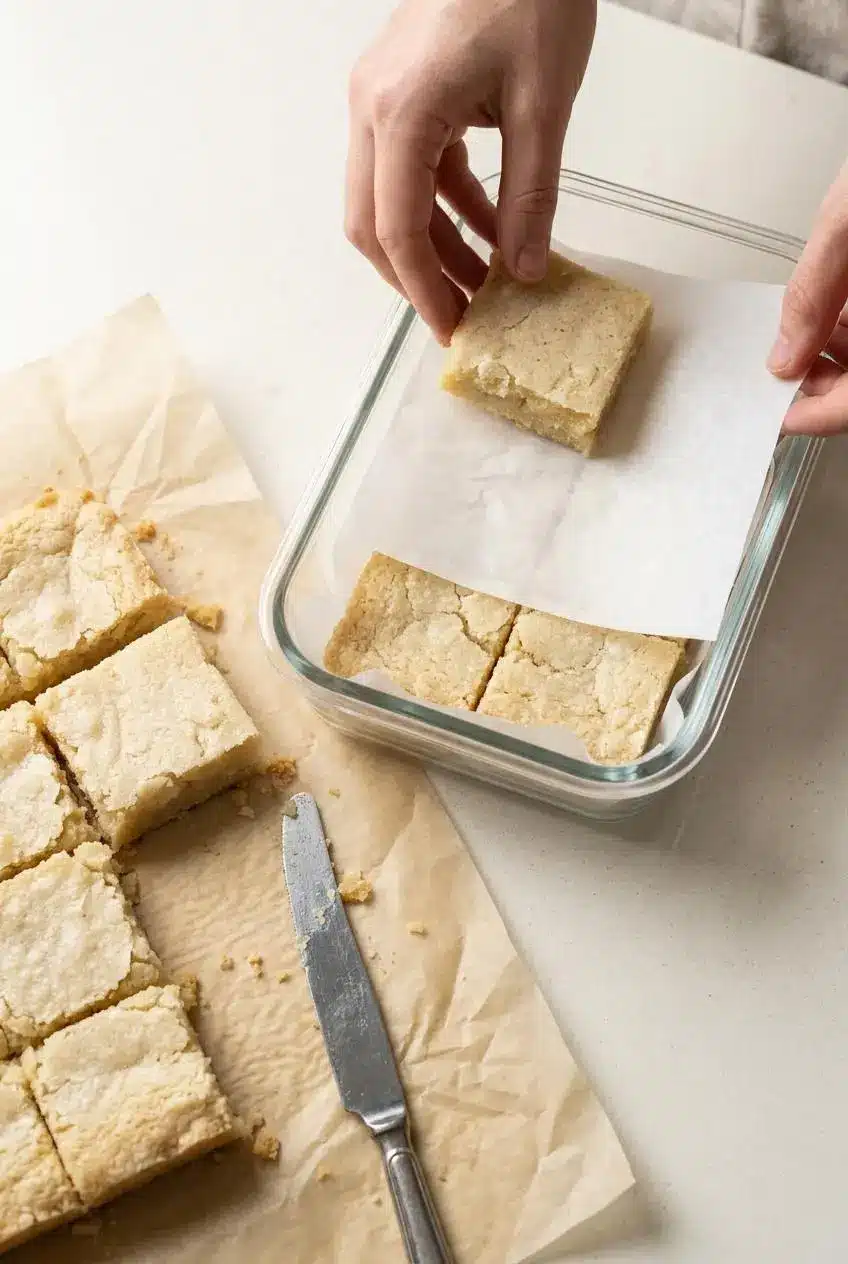
Cool the bars completely before closing them in a container. Trapped warmth creates condensation, which can soften the almond topping and dissolve the powdered sugar.
Use a well-sealed container and separate layers with parchment or wax paper to protect the tops. Keep heavily decorated pieces in a single layer when possible, and don’t stack bars while the glaze is still wet.
For the neatest presentation, reserve a final light dusting of confectioners’ sugar for serving. Keep the container closed between servings so the cut edges don’t dry out unnecessarily. These texture-protection steps don’t establish a storage shelf life.
Serving Suggestions for Holidays and Gatherings
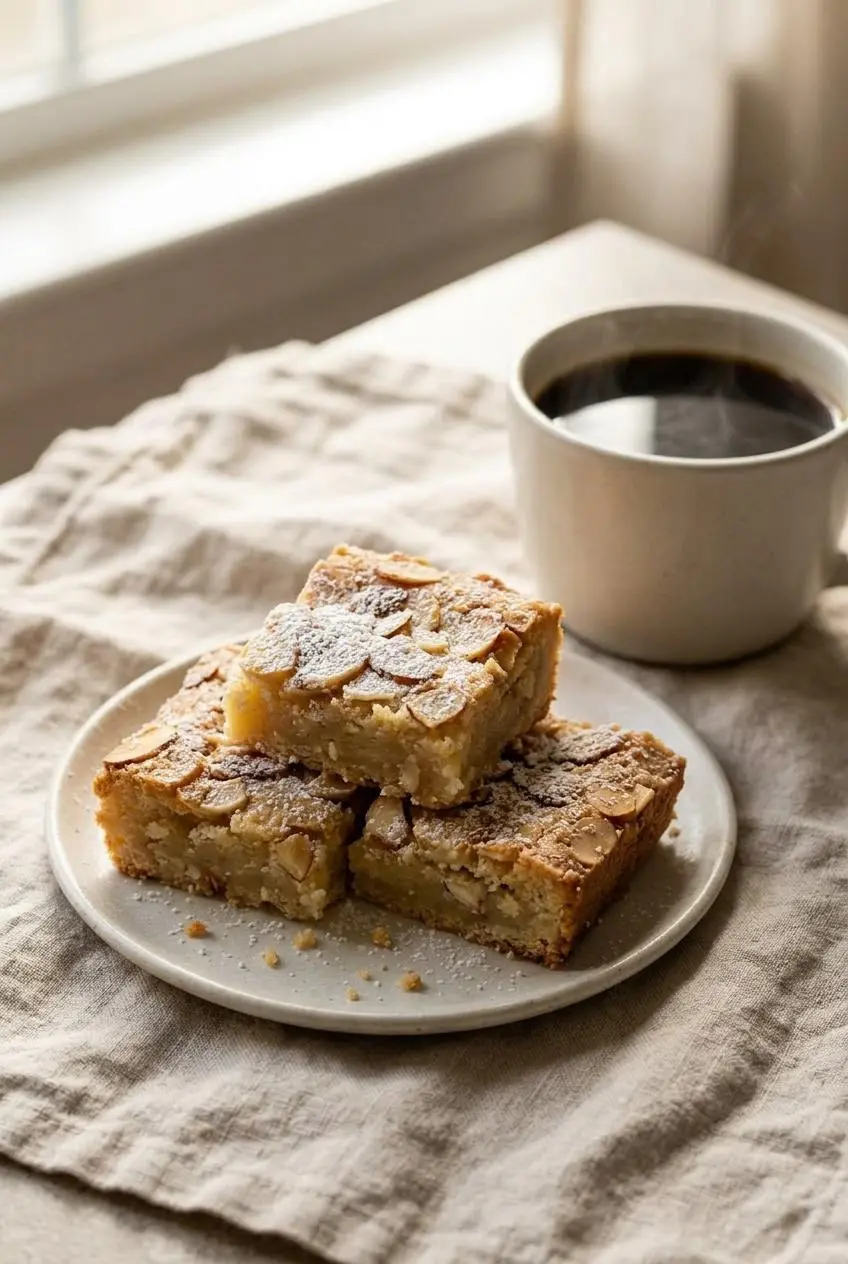
The 36-piece cutting grid makes these rich bars a comfortable size for Christmas cookie exchanges, brunch trays, and potluck dessert platters. For gift boxes, separate layers with parchment so the almond tops don’t scrape against neighboring bars.
Serve at room temperature or slightly chilled with black coffee or espresso. The unsweetened drink balances the sweet, buttery crumb without competing with the almond aroma.
For a varied holiday platter, pair them with colorful cranberry bliss bars. Leave a little space between different toppings to keep the presentation tidy.
Conclusion
These almond bars deliver a chewy, buttery center with toasted almond crunch. Give the eggs and sugar time to become thick and pale, then stop baking when the center toothpick comes out clean.
Start with the powdered sugar finish, or try the optional browned butter and flaky salt combination for a nuttier batch. Let the slab cool fully, and the slicing will be much easier.
Frequently Asked Questions
Can You Give Me an Easy Recipe for Almond Bars?
Beat 4 eggs with 2 cups sugar until thick and pale lemon-colored, then mix in 1 cup cooled melted butter, 2 cups flour, and 2 1/2 teaspoons almond extract. Spread in a buttered 13×9-inch pan, top with 1 cup sliced almonds if desired, and bake at 325°F for 30 to 35 minutes, until a center toothpick comes out clean. Cool completely before cutting into 36 bars.
Can I Use Real Butter Instead of Shortening in Almond Bars?
Yes. This recipe calls for real melted butter, with no substitutes. Butter provides the characteristic flavor and rich, chewy texture; shortening won’t give an identical result.
Should I Toast the Sliced Almonds Before Baking the Bars?
No. Raw sliced almonds toast on the surface while the bars bake. Pre-toasted almonds can become too dark, especially in an oven that browns toppings quickly.
How Should I Pack Almond Bars for Holiday Cookie Trays?
Let the bars cool completely, then pack them in a well-sealed container with parchment between layers. Allow any glaze to set before packing, and save a final powdered sugar dusting for serving if you want a fresh-looking finish.
What Is the Difference Between Almond Extract and Almond Paste in Bar Cookies?
Almond extract is a concentrated liquid flavoring used in this brownie-style batter. Almond paste is a thick mixture of ground almonds and sugar used in some layered Norwegian-style bars; it isn’t interchangeable with extract.
Almond Bars Recipe

Equipment
- 13×9-inch baking pan
Ingredients
- 4 eggs
- 2 cups sugar
- 1 cup butter, melted (no substitutes)
- 2 cups all-purpose flour
- 2 1/2 teaspoons almond extract
- 1 cup cups sliced almonds (increase or decrease as desired)
- 1/2 cup confectioners’ sugar (optional)
Instructions
- Whip the eggs with the sugar until thick and pale yellow, then incorporate the slightly cooled melted butter, flour, and almond extract until evenly combined. The mixture should change from an airy, lemon-colored egg foam into a thick, glossy batter with no visible flour pockets.
- Use a spatula to distribute the batter evenly across the buttered 13×9-inch pan, then scatter sliced almonds over the surface if desired and press them in lightly. An even layer helps the center and edges bake together, while gentle contact with the batter helps the almonds stay attached.
- Bake at 325°F for 30 to 35 minutes, testing the middle with a toothpick near the end of the baking window. A clean toothpick signals doneness, and the center may look slightly puffed without the edges becoming dark brown.
- Set the pan on a cooling rack, add a light dusting of the optional confectioners’ sugar if desired, and leave the bars in the pan until completely cool. The slight oven puff will settle as the crumb firms, giving the slab enough structure for neat slicing.
- Divide the cooled slab into a grid with 9 portions along the long side and 4 along the short side. This produces 36 small bars with firm edges and a chewy center.